Cold rooms, short fan run times and lingering water can all add to bathroom condensation. Small changes to heating and bathing habits help control moisture.

Bathroom condensation often persists because moisture keeps building up after the obvious fixes are in place. The room’s temperature, how long the extractor runs and what happens to wet surfaces after bathing all affect where that moisture goes. A fan can help, but it has to move enough damp air out of the room, and the water left on glass or tiles can keep adding humidity after the shower has ended.
Ventilation specialists Rob Stevens, HVAC trade manager at Aspect, and Michael Zohouri, founder of Pyramid Eco, point to five habits that can leave walls, windows and mirrors damp. The practical takeaway is to reduce the steam you create, keep air moving and clear away water before it evaporates back into the room. These measures work together: less moisture entering the air gives ventilation less to remove, while warmer surfaces are less likely to collect what remains.
Keep the room from getting too cold
Turning off the bathroom heating may seem like an easy way to trim energy use, but cold surfaces make condensation more likely. Water vapour from a hot shower can settle as droplets on chilly walls, tiles and mirrors. The air may feel warm enough while the room’s surfaces are still cold, which is why condensation can appear even when the bathroom doesn’t feel especially uncomfortable.
Stevens recommends keeping the room at a reasonably consistent temperature with heat emitters such as radiators or heated towel rails. The aim isn’t to make the bathroom hot; it’s to avoid a sharp contrast between the warm, damp air and cold surfaces. That distinction matters: heating can reduce the conditions that encourage droplets to form, but it doesn’t remove moisture from the air. Ventilation and surface drying still have a part to play.

Add an elegant touch to your bathroom with this heated towel rail, made with a beautiful brushed brass finish.
Give the extractor time to clear the air
Switching off the extractor as soon as a shower ends leaves moisture suspended in the room. Noise and concern about electricity use can make that tempting, but Stevens and Zohouri recommend running the fan for at least 20 minutes afterwards. The extra run time gives the fan a chance to remove damp air after the main burst of steam has passed; stopping it with the shower can leave the room still humid.
A fan with a timer can handle the run-on period automatically. The Envirovent SIL100 model from Amazon is one example with a timer. If condensation continues despite allowing the fan to run, the cause may be that air isn’t being cleared effectively; the habit alone can’t guarantee that every bathroom will dry quickly.

Cut down on steam at the source
Long, very hot showers release more moisture into the bathroom. Stevens suggests keeping the water warm rather than very hot and shortening the time spent under it. A timer can help make that change easier to stick to. Taken together, these adjustments reduce the amount of steam that has to be cleared, which can matter in a room where ventilation has limited capacity.
That doesn’t mean avoiding a comfortable shower. It means limiting the amount of steam that ventilation has to remove once you’re done. Here’s the thing: extraction is a response to moisture already in the room, while shortening or tempering a shower reduces the load in the first place. A small change at the source can make the rest of the routine easier.
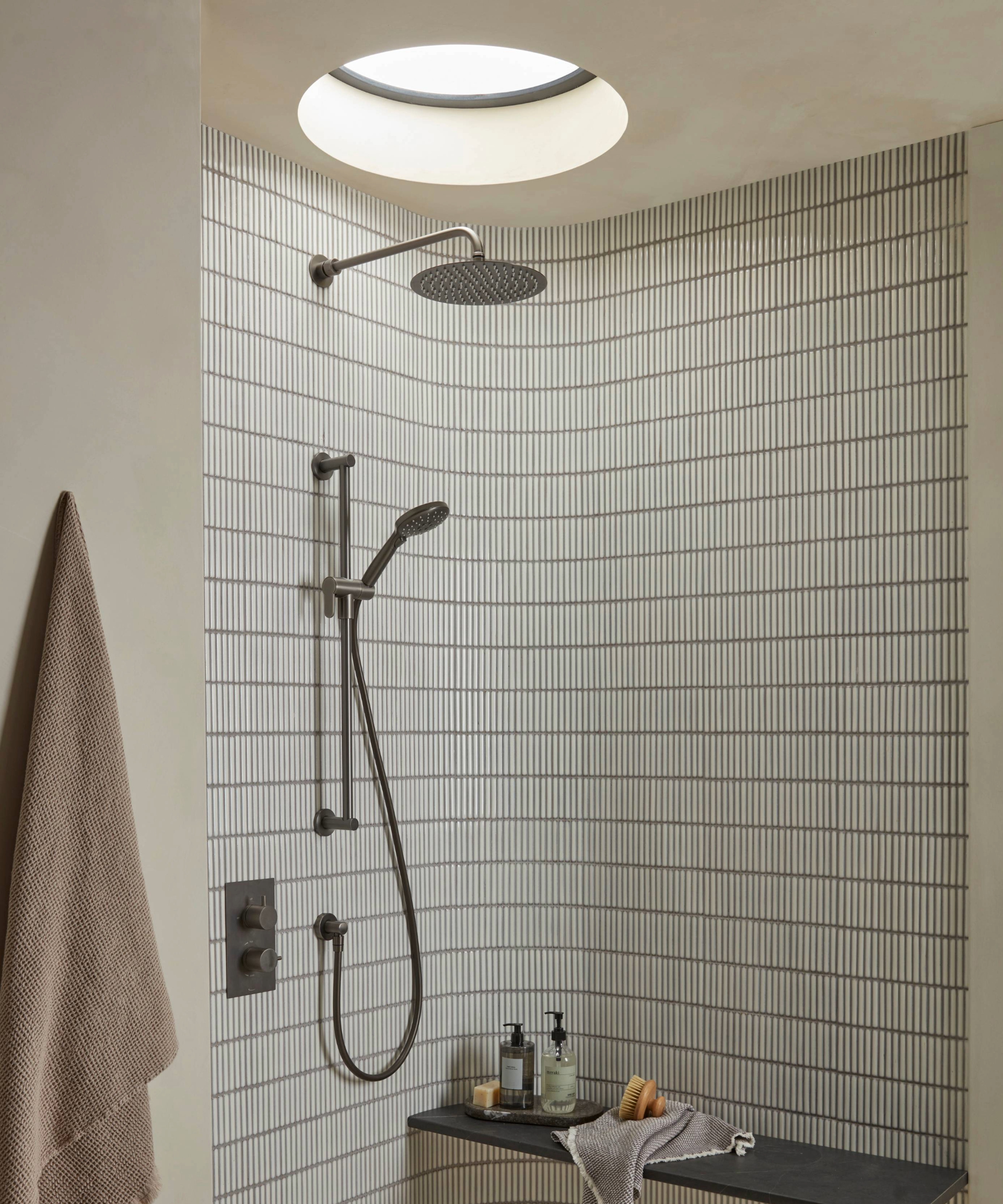
Start a bath with cold water
When filling a bathtub, Stevens advises running the cold tap first and adding warm water gradually. Starting with very hot water can send steam into the room before anyone gets in, allowing moisture to settle on cooler windows, walls and mirrors. The sequence changes how much steam is released during filling, so it’s a simple adjustment that doesn’t depend on remembering to act after the room is already damp.
It’s a small change, but this is more significant than it looks: the bath can raise humidity before bathing even begins. If you’re working through persistent condensation, consider the whole routine, from filling the tub to clearing the room afterwards. One habit won’t solve every cause, yet reducing early steam can help avoid adding moisture unnecessarily.

Remove water from surfaces after bathing
Water left on a shower tray, screen or bathroom tiles doesn’t disappear; as it evaporates, it adds moisture back into the air. Stevens recommends wiping down wet areas with a squeegee and cloth, or using a window vacuum, to limit that extra source of humidity. This targets liquid water directly, rather than relying on the extractor to remove it only after it has returned to the air.
It’s a small daily task, but it addresses moisture that a fan alone may take longer to clear. The trade-off is practical: wiping down takes a little effort after each bath or shower, while leaving water on surfaces extends the drying process. A tool can make the routine quicker, though the basic principle is simply to remove as much standing water as possible.

Voted the best window vac by our review panel, this device will leave your surfaces squeaky-clean and condensation-free.
Why these habits work best together
Bathroom condensation is usually a chain of effects: bathing adds water vapour, cooler surfaces give that moisture somewhere to settle, and damp surfaces can keep feeding humidity back into the room. The five habits address different points in that chain. Lowering steam at the source, keeping the room from getting too cold, giving the fan time to run and wiping up water each play a distinct role.
None is a guaranteed fix on its own. That said, if you're working in this space at home, a consistent routine can help you identify which part is being missed: persistent dampness after showers may point to ventilation that isn’t clearing the air, while droplets on cold surfaces underline the role of temperature. And this is the part most people overlook: the room’s drying process continues after you leave it.
Some steam after a shower or bath is inevitable. As Zohouri puts it, the key is having a way to deal with the moisture: if it stays in the room, it will settle somewhere. The numbers here are underwhelming; five habits aren’t a dramatic technical fix, but their value is in reducing moisture at several stages of the same routine. In practice, a warm room, a timed extractor and a quick wipe down form a more complete response than any one measure alone. For more guidance, see how to stop condensation, what causes condensation on windows and the signs your bathroom extractor fan may not be working properly.


Discussion
Sign in to join the discussion.