Peak Design’s folding station has two 25W Qi2.2 pads, an adjustable stand and a wired USB-C output, but its wall adapter costs extra.
A desk stand built for two devices
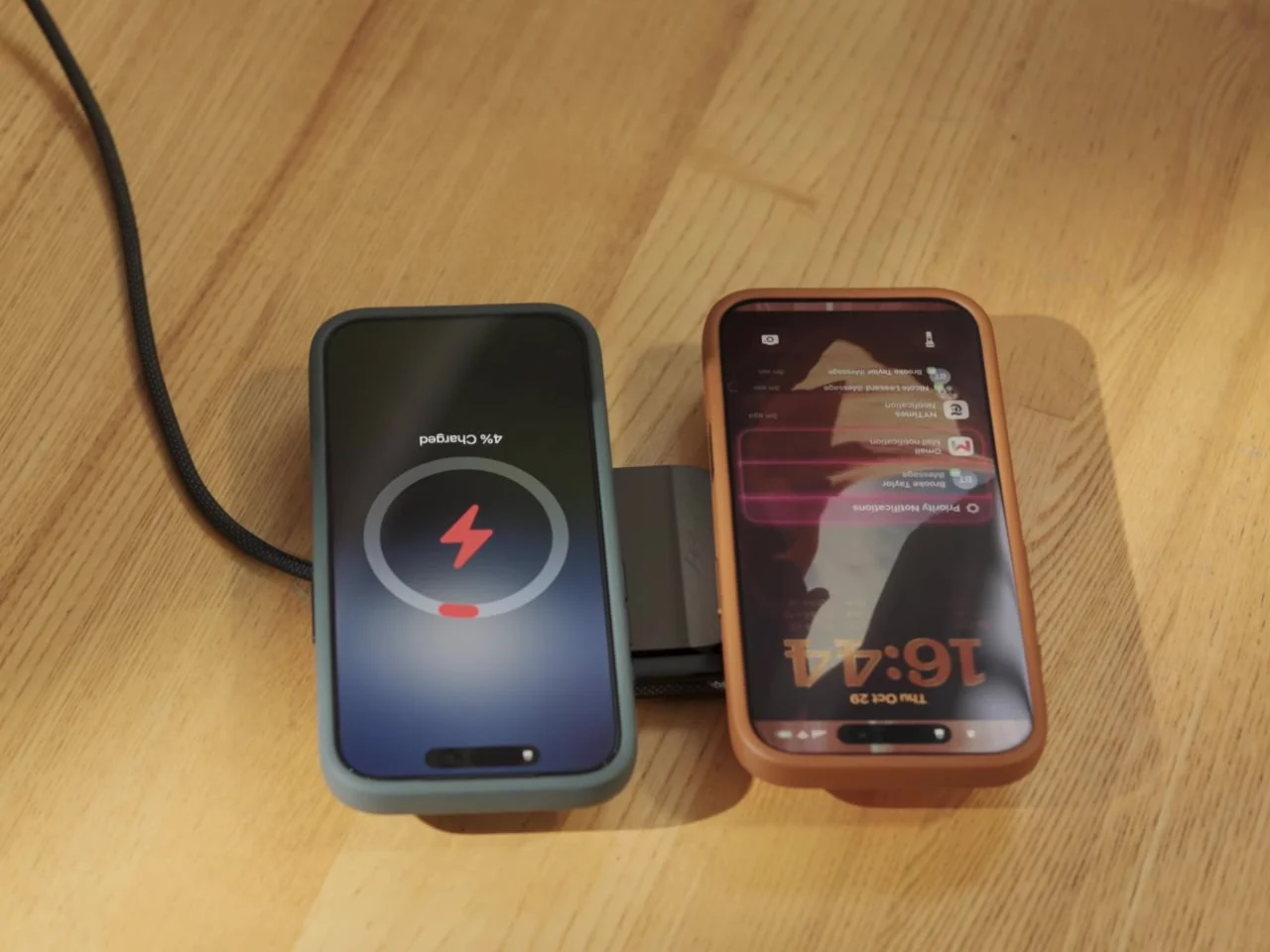
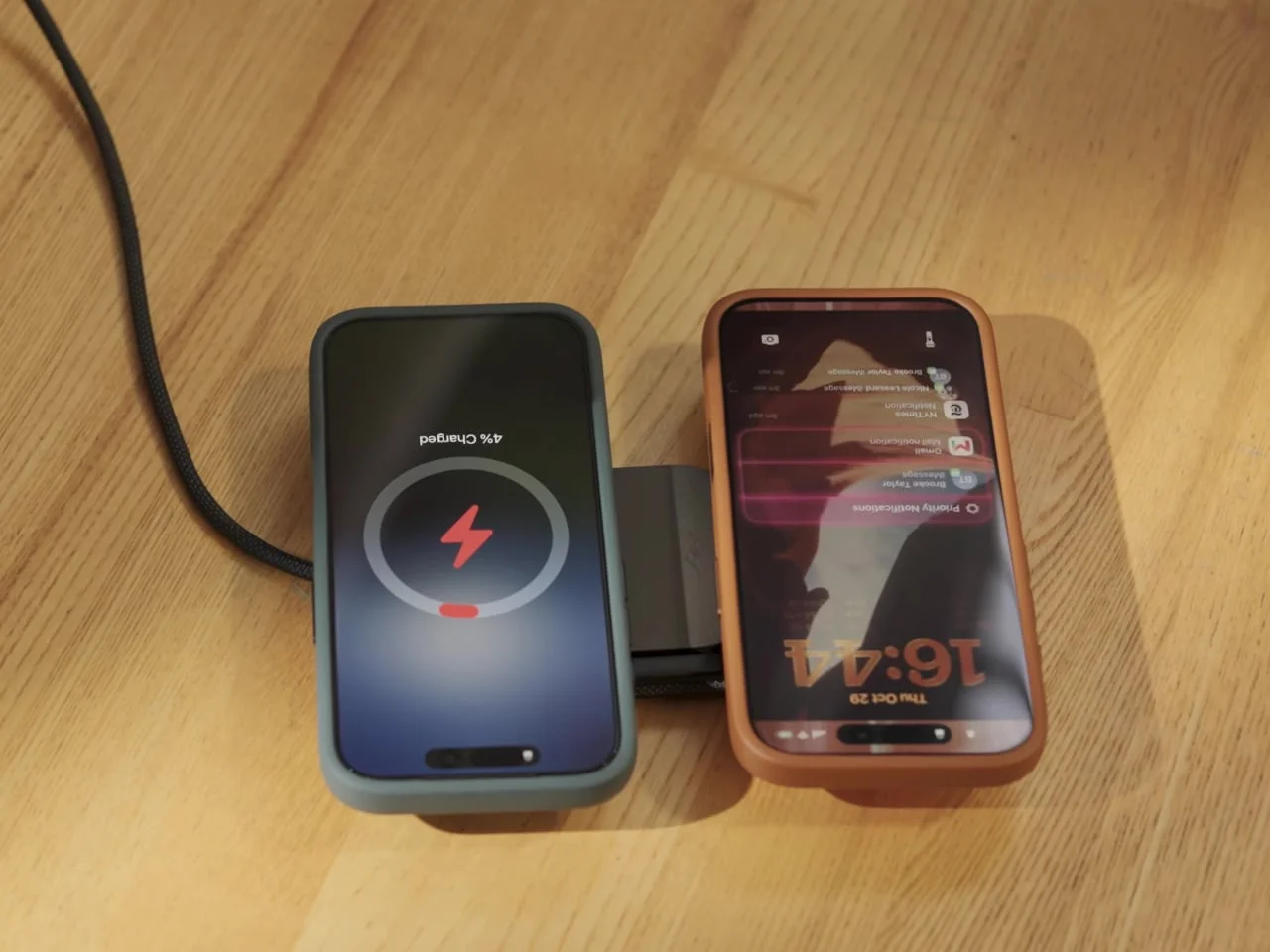
Peak Design’s Charging Station tackles a familiar desk problem: a stand built for one phone leaves a second device looking for space. Its two magnetic charging pads can each deliver up to 25W, and a hinged arm lets the station shift between an upright phone stand and a flat two-phone charger. That flexibility is the point; the design gives both devices a proper charging spot without asking one to settle for an accessory pad.
This is a practical answer to a small but persistent annoyance. Many people keep a phone and another compatible device close at hand, yet charging stands often assume the phone is the only thing that needs a dedicated place. Peak Design’s approach makes the second pad part of the main design, rather than treating it as an afterthought. That could make a crowded desk or bedside table feel more orderly, though the benefit depends on owning two devices that can use the magnetic pads.
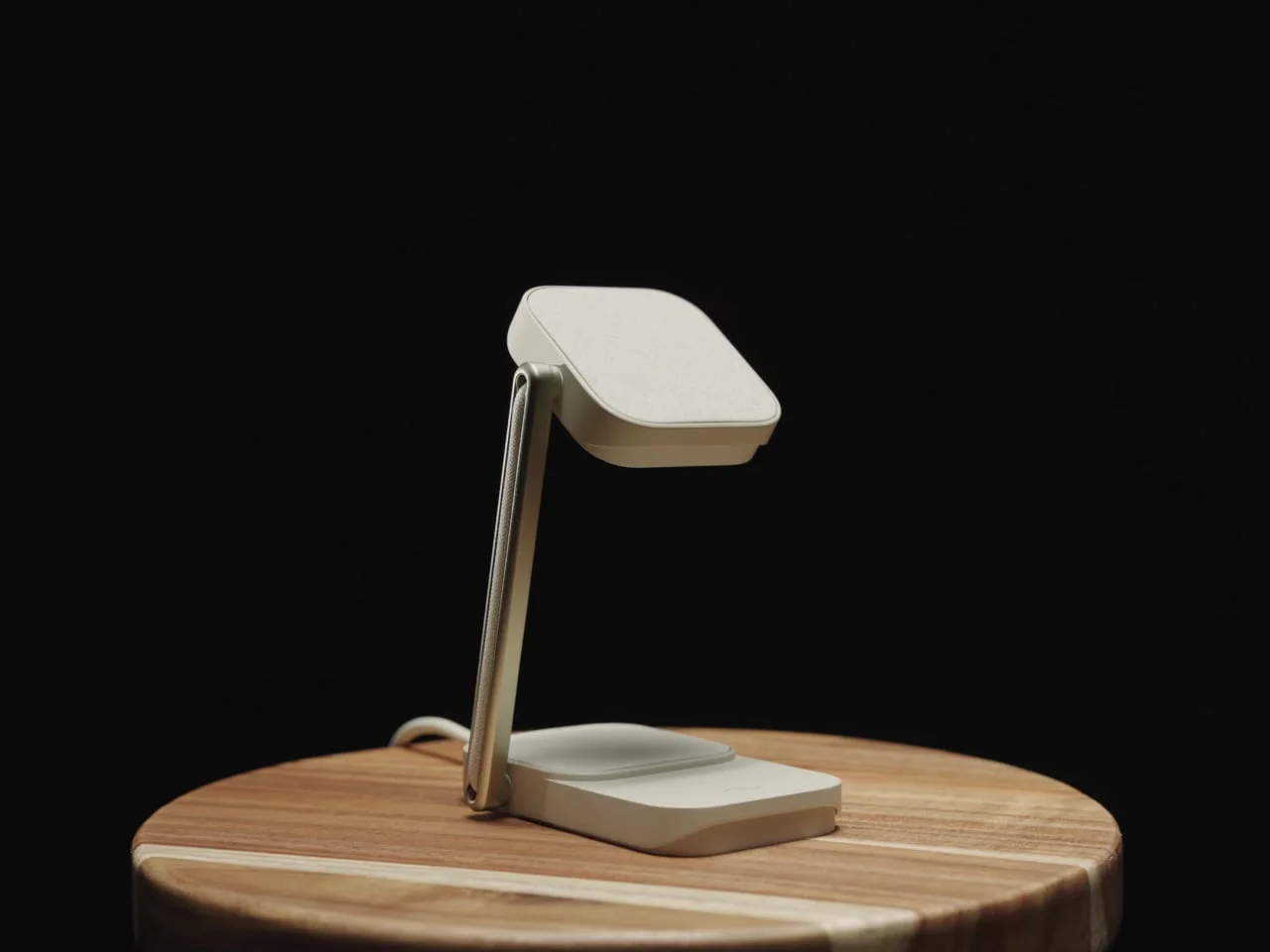
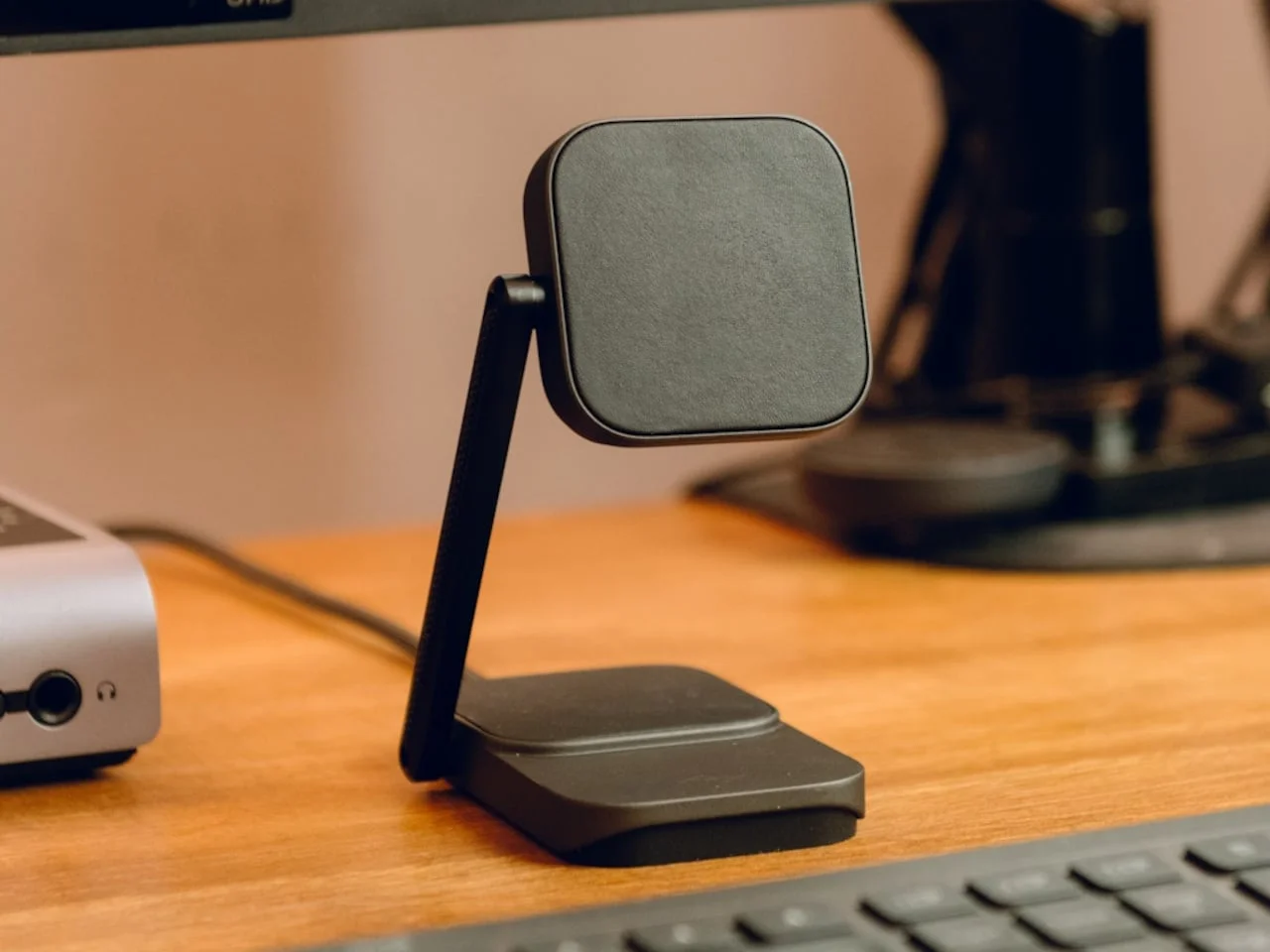
Peak Design builds the station around a slim metal arm and two rounded-square pads. The chassis combines die-cast aluminum and zinc, with a machined aluminum stem at the hinge. Laminated Clarino covers the charging surfaces, while a TPU foot helps keep the base from slipping. It comes in Black and Moon, both understated finishes that should sit easily on a desk or bedside table.
Those material choices give the product a more considered feel than a basic plastic charging dock, but they also make the construction part of the purchase decision. The arm and hinge need to support repeated repositioning, while the base needs enough grip to stay put as a user removes a phone. Peak Design’s listed materials suggest attention to those contact points. The real test, as with any movable stand, is how firmly the joints hold their position after regular use.
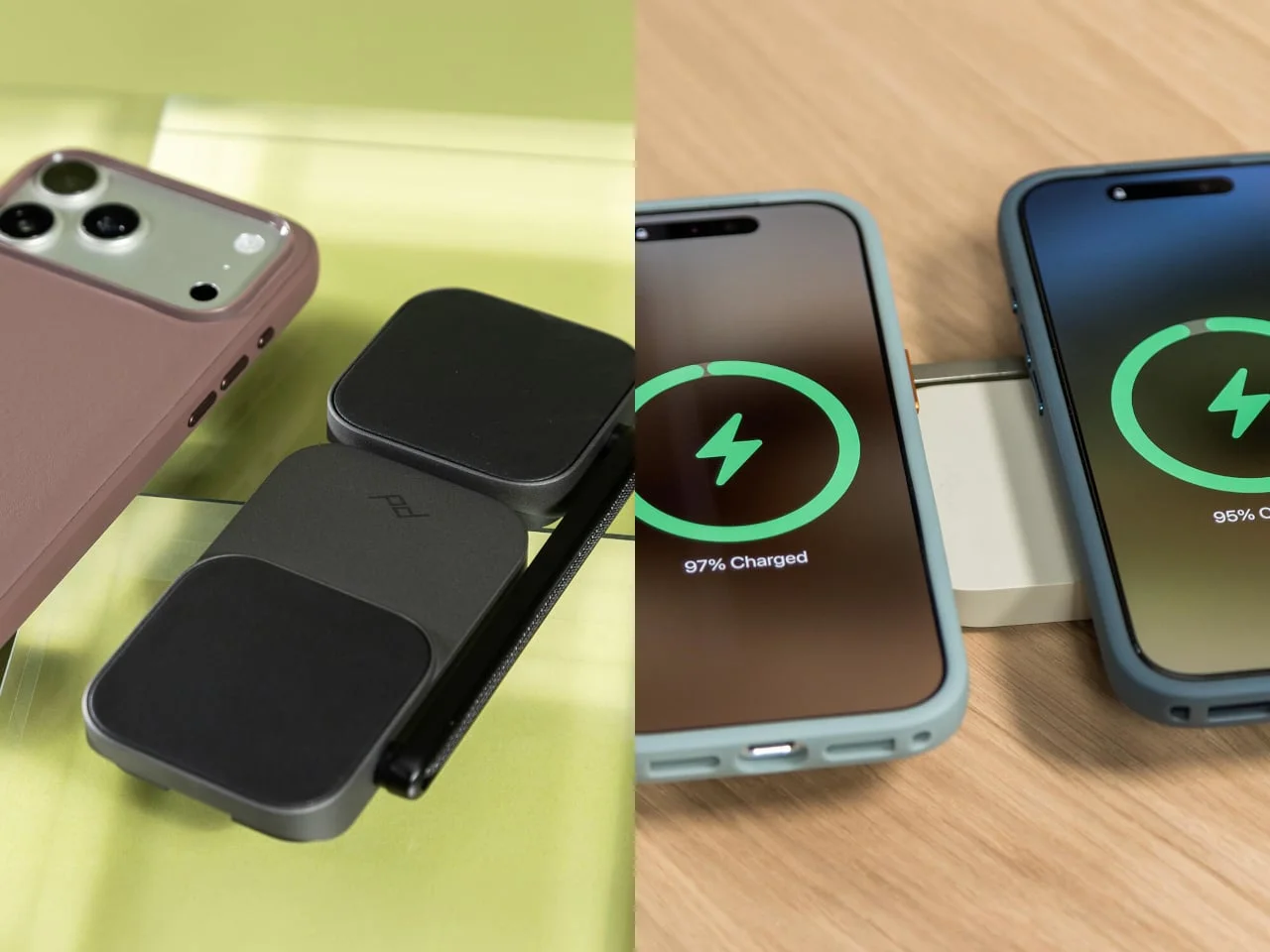
An adjustable stand that packs flat
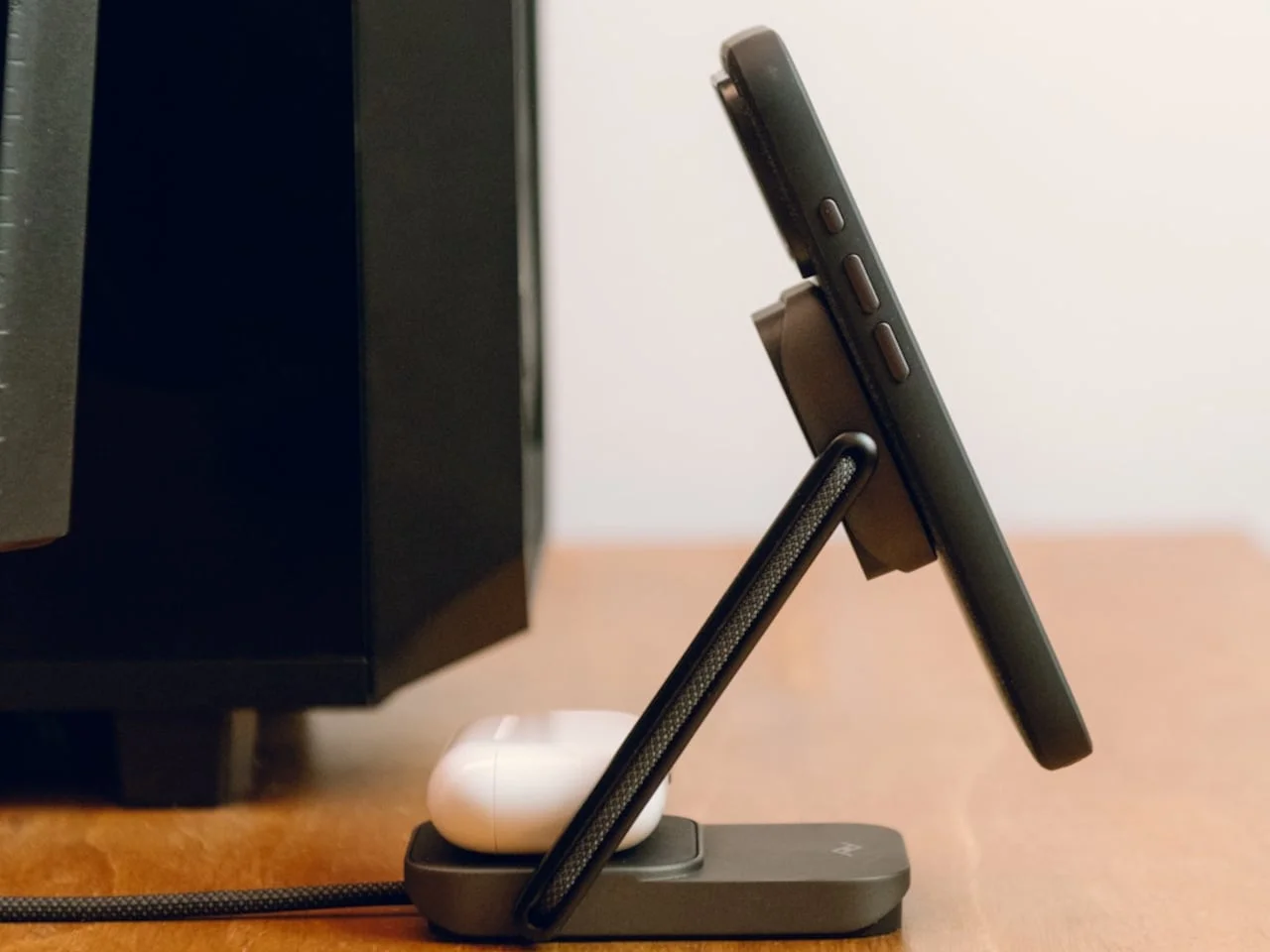
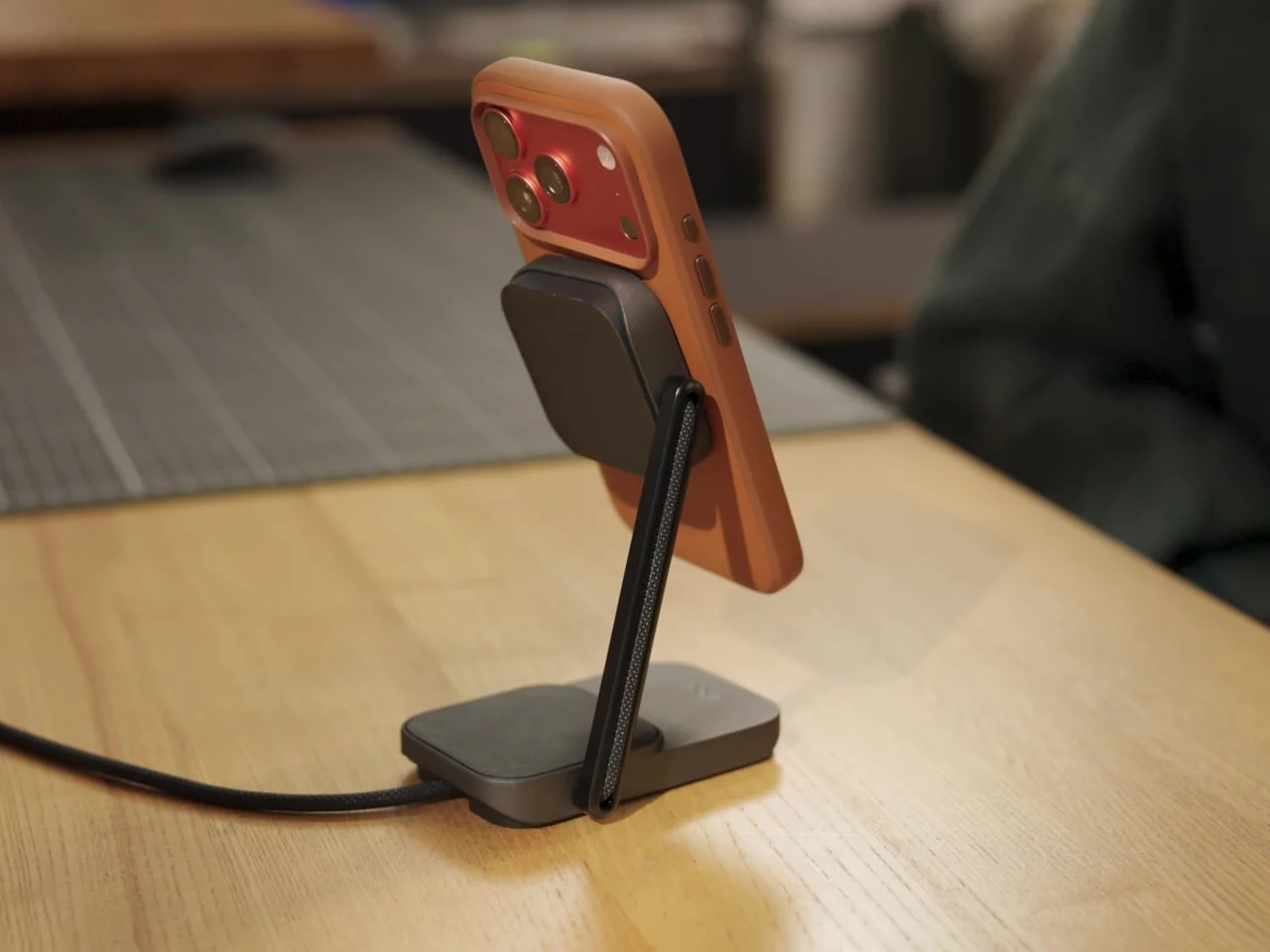
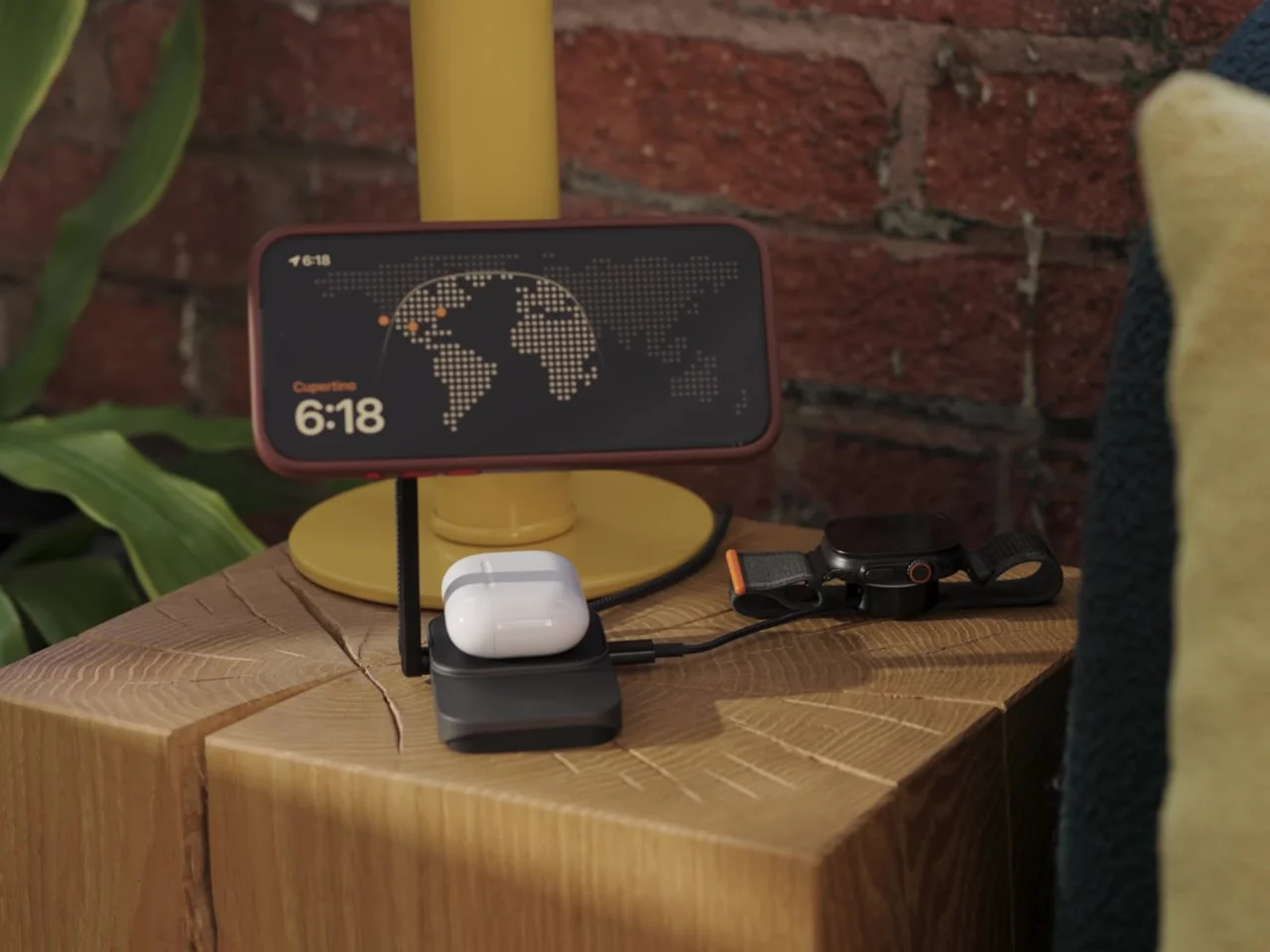
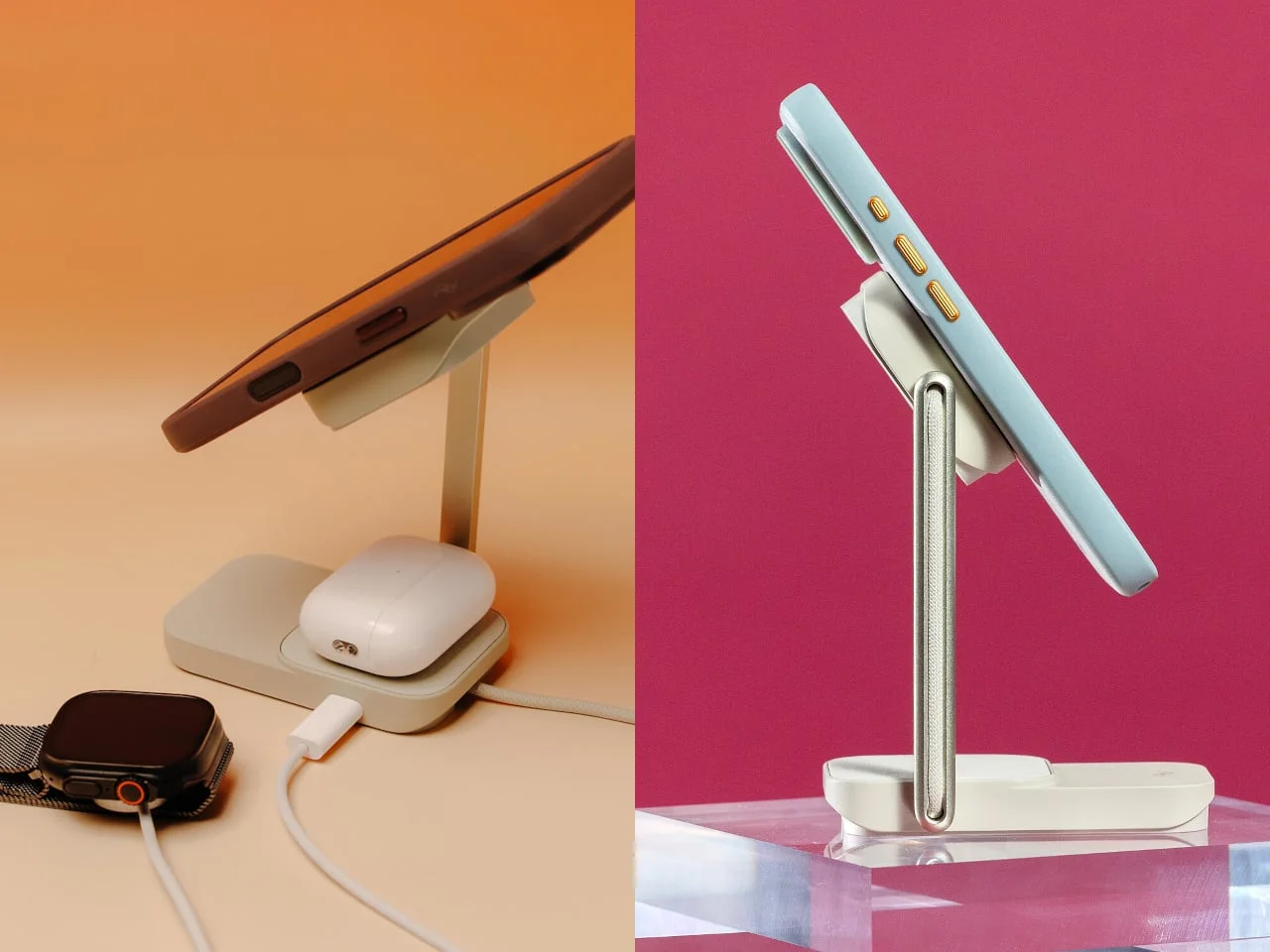
Two hinges move the arm and upper pad independently, so a phone can sit at a useful viewing angle for a video call or a quick calendar check. The magnets hold a phone in portrait or landscape orientation. With the station upright, the lower pad can also hold an earbud case while the phone stays raised.
That range of positions gives the stand more day-to-day purpose than a fixed angled dock. A raised phone can remain visible while someone checks a notification or follows a call, and rotating it sideways can suit video. The lower pad adds another use when the phone is in place, although the earbud case still needs to be compatible with the magnetic charging setup. Here's the thing: adjustability matters most when the stand stays on a desk and gets used throughout the day.
Fold the arm down and both Qi2.2 pads can charge compatible phones at up to 25W each, according to Peak Design. The rating applies to the station’s capacity; a phone will draw only as much power as its own charging hardware supports.
That distinction is easy to miss in a headline specification. A charger’s maximum output describes what it can provide under supported conditions, not what every phone will receive. Compatibility, the device’s own limits, and the power supply all shape the result. So the 25W figure is a ceiling for buyers to compare, not a promise that two phones will charge at that speed in every setup.
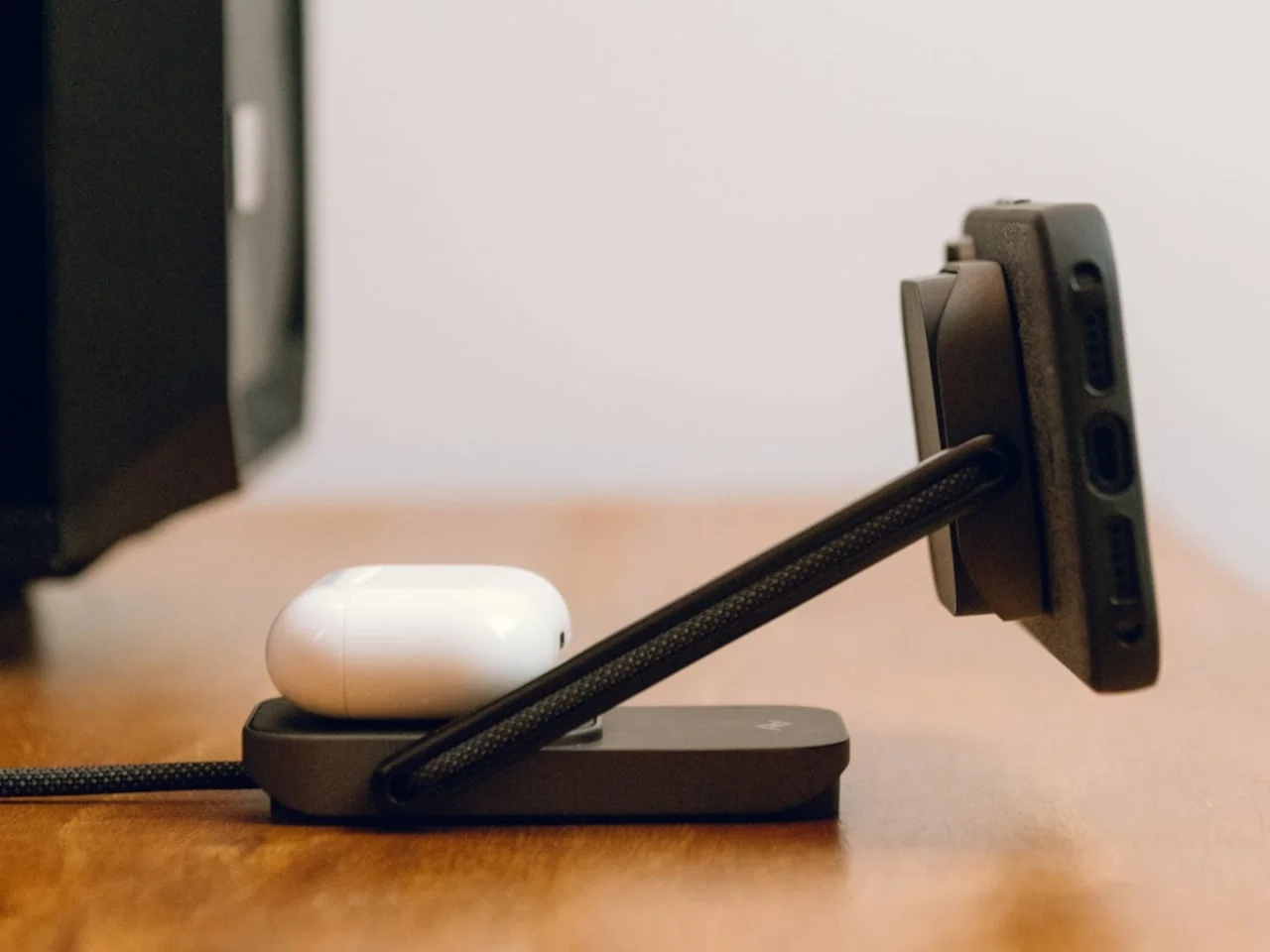
Its folded dimensions are 6.3 by 2.7 by 0.6 inches, with the arm tucked alongside the body. At 9.7 ounces, it’s a noticeable addition to a travel bag, but the flat profile is easier to pack than a fixed desktop stand.
That makes the station portable in shape, though not especially light compared with the idea of carrying only a cable and a small charger. It’s better suited to someone who wants a stable charging setup at a temporary desk or bedside than to a traveler counting every ounce. The folded form also has a useful storage advantage: it takes up less awkward space than a stand that can’t collapse.
Extra wired charging, with an adapter to buy
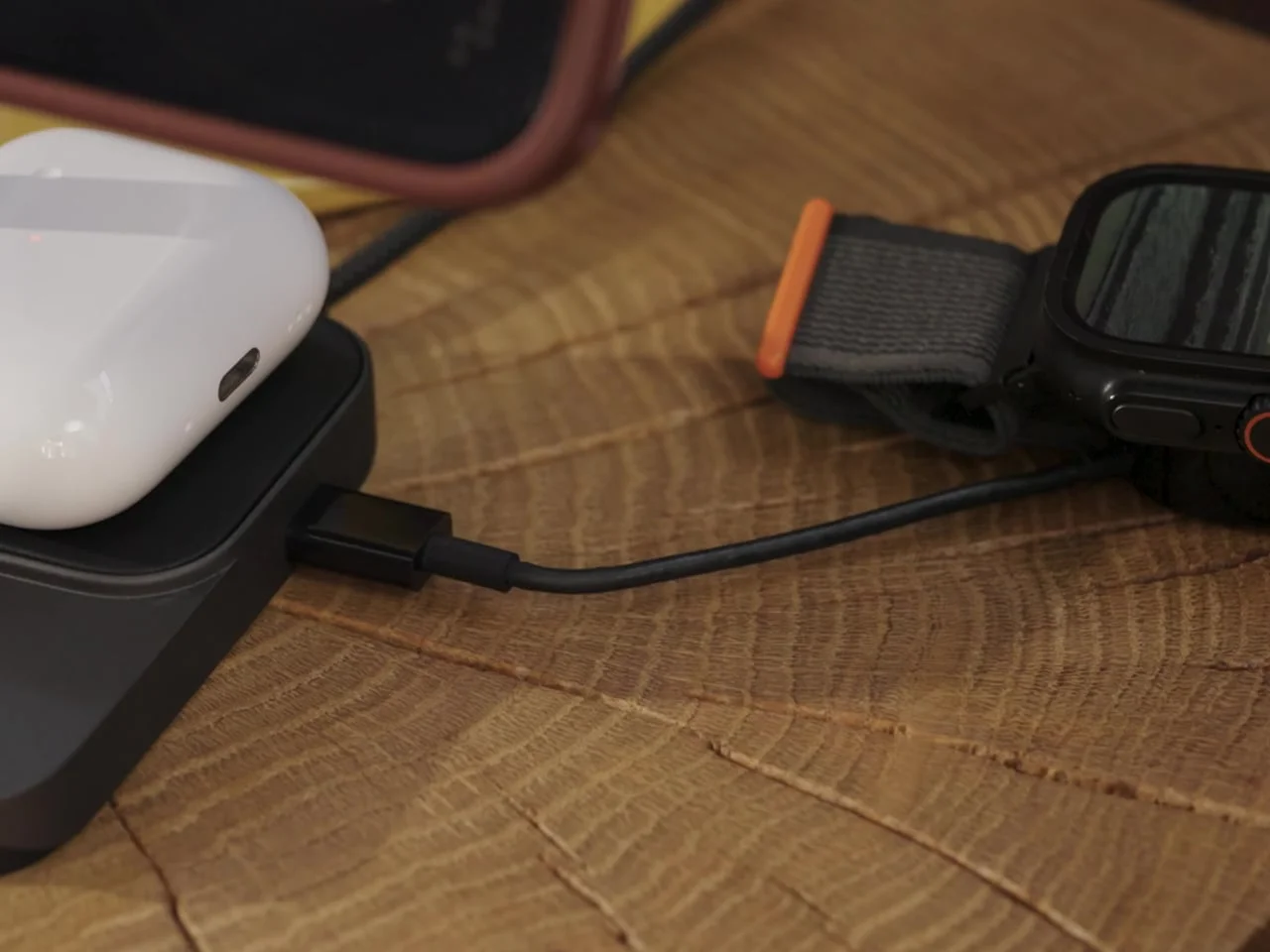
A USB-C output adds a place to connect a third device, but it’s a wired 7.5W connection intended for smaller accessories. A watch still needs its own cable or puck, so the station doesn’t provide three-device wireless charging. The extra port can, however, keep an accessory cable within reach.
That port broadens the station’s usefulness, but its modest output sets clear expectations. It’s suited to a smaller accessory, not a second high-speed phone connection. And this is the part most people overlook: adding a port doesn’t eliminate the cables and charging pieces that come with devices such as watches. If you're working in this space, you’ll recognize the tradeoff: a cleaner charging area can still require a few separate components.
The station costs $99.95, and Peak Design doesn’t include a wall adapter. The package does come with a fabric-wrapped USB-C cable rated for 100W. Peak Design calls for a power supply of at least 45W to run the station, and 75W or more for maximum dual-charging speed. Buyers will need to account for that adapter, especially if their existing charger is already in use.
The missing adapter changes the real cost and convenience calculation. A buyer who already has a suitable power supply may be able to use it, but someone without one will need to add that purchase and check its output rating. The included cable’s 100W rating describes the cable’s capacity; it doesn’t replace the need for a wall supply with enough power. The numbers here are underwhelming if you expected the $99.95 price to cover a complete charging setup.
What the design changes for everyday charging
Peak Design’s station is most compelling as a piece of desk organization: it combines a viewing stand, two wireless charging positions, and a low-power wired output in a form that folds flat. That’s a tidy set of jobs for one accessory. The compromises are just as clear: the full charging speed depends on compatible phones and a sufficiently powerful adapter, while the third device still needs a cable or its own charging puck.
For someone who regularly charges two phones or a phone and an earbud case, the second magnetic pad could earn its space. For a single-phone setup, much of the station’s appeal rests on its adjustable arm, materials, and ability to fold away. This is more significant than it looks for a category crowded with single-purpose stands: the product treats charging posture and storage as part of the same problem. Whether that earns the price will come down to how often you use both pads and whether you already own the required power supply.
The post Peak Design’s Charging Station Folds Flat to Charge Two Phones first appeared on Yanko Design.


Discussion
Sign in to join the discussion.