Designers say the single overhead fitting is a dated habit. Layering wall, table and floor lamps creates warmer, more flexible rooms.
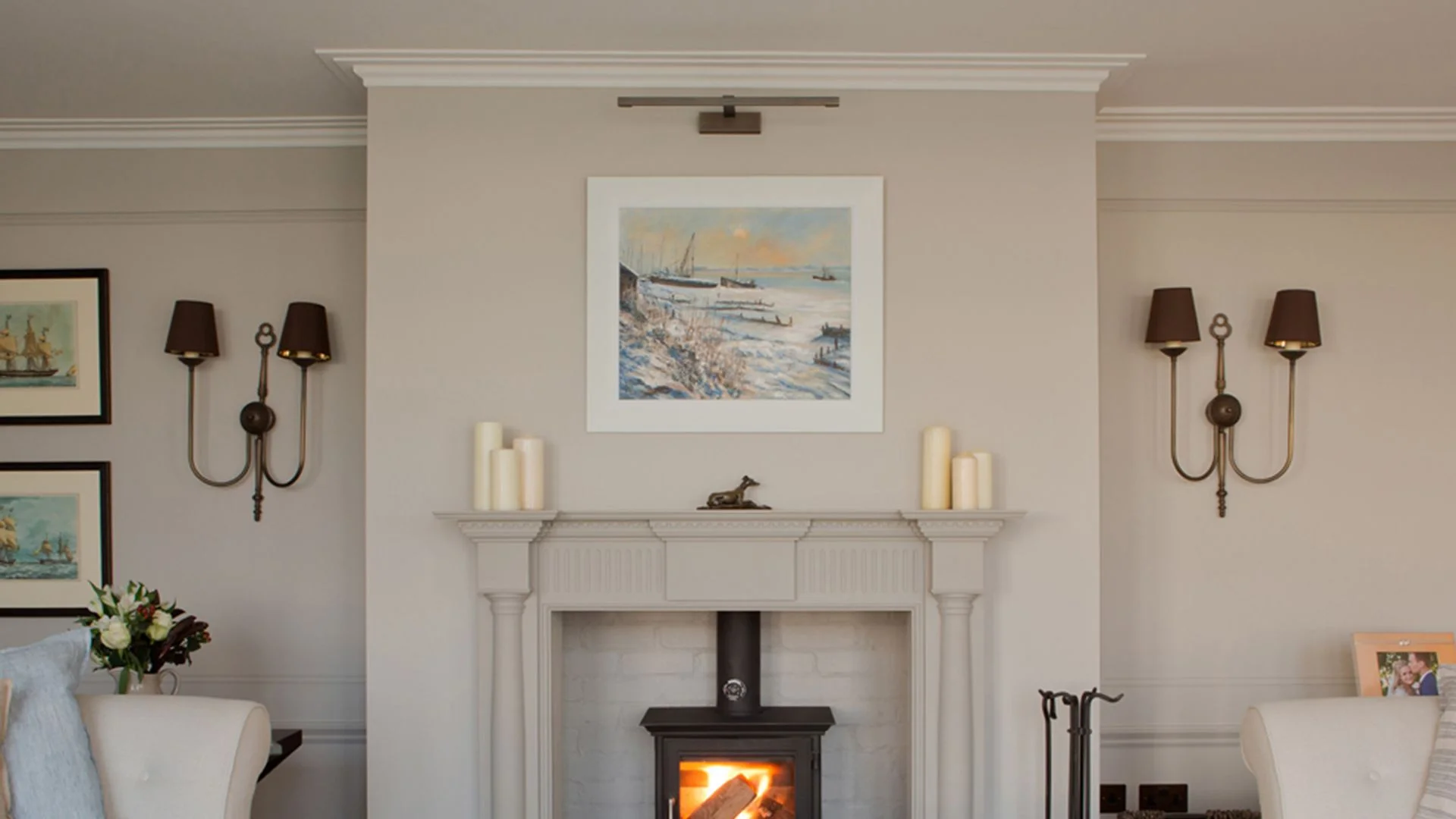
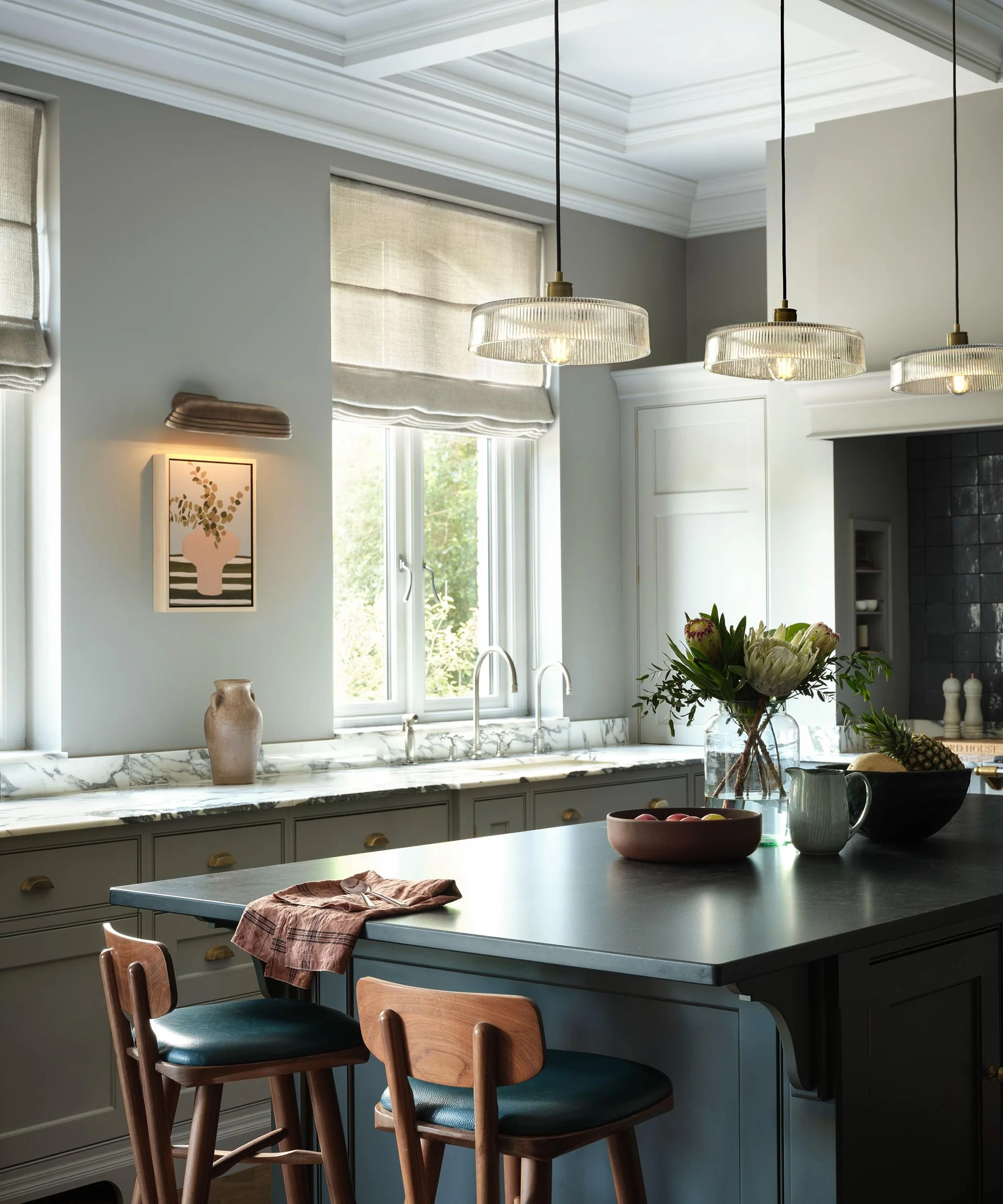
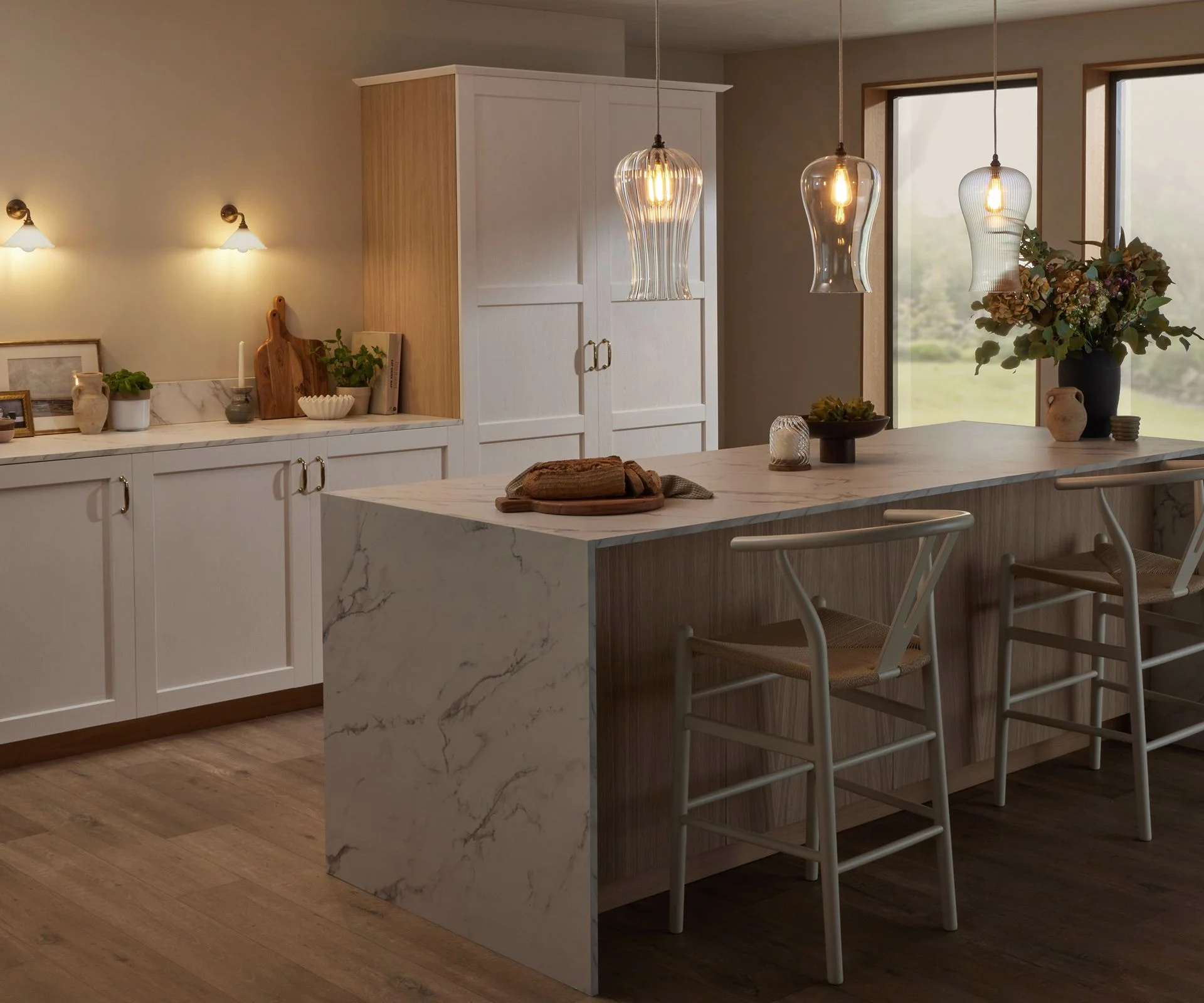 *A single big light isn't always necessary. Over a kitchen island, a few smaller pendants can work better.* (Image credit: Glow Lighting)
The one-dimensional effect is only part of the problem. There are now so many alternatives that the central fitting has become almost optional. Eloise Pfeiffer, interior designer at Pfeiffer Design, says she doesn't reach for one by default. If a room has enough well-planned layers, it doesn't need a ceiling fitting to anchor it. In living rooms and bedrooms especially, she prefers a combination of wall lights, floor lamps and table lamps, which creates a warmer feel than relying on one overhead source.
Sophie Chapman, associate and interior designer at The Vawdrey House, takes the same line. In most rooms, particularly living rooms and bedrooms, she'd rather have several sources working together than one dominant fitting. Wall lights can carry much of that load, with table lamps and floor lamps alongside, and perhaps a discreet ceiling fitting for good measure.
## Why choose wall lights over the big light?
Ditching the central fitting leaves a gap, and something has to fill it. Mara Rypacek Miller, founder of Industville, thinks wall lights are one of the strongest options. In smaller rooms, several fittings can spread light evenly enough to serve as the main source. They also do something a ceiling fitting can't: they add depth. Light placed at different points fills in the dark patches and builds a layered scheme.
Miller's other argument is about what wall lights reveal. They can pick out architectural details, artwork or textured finishes. They can also divide an open-plan space into zones, so the dining end and the sofa end don't blur together. Angle a fitting upward and the light pulls your eye to the ceiling, which makes a room feel taller. That's a small trick with a real effect.
Daniel Fosbery, lighting designer at Fosbery Studio, lists the practical case. Wall lights save floor space compared with table and floor lamps. They wash a softer layer of light around the edges of a room in the evening, and because they sit off to the side, they avoid the glare of a ceiling fitting. They can be angled onto artwork, and they make excellent task lights beside a bed or as part of your home office lighting.
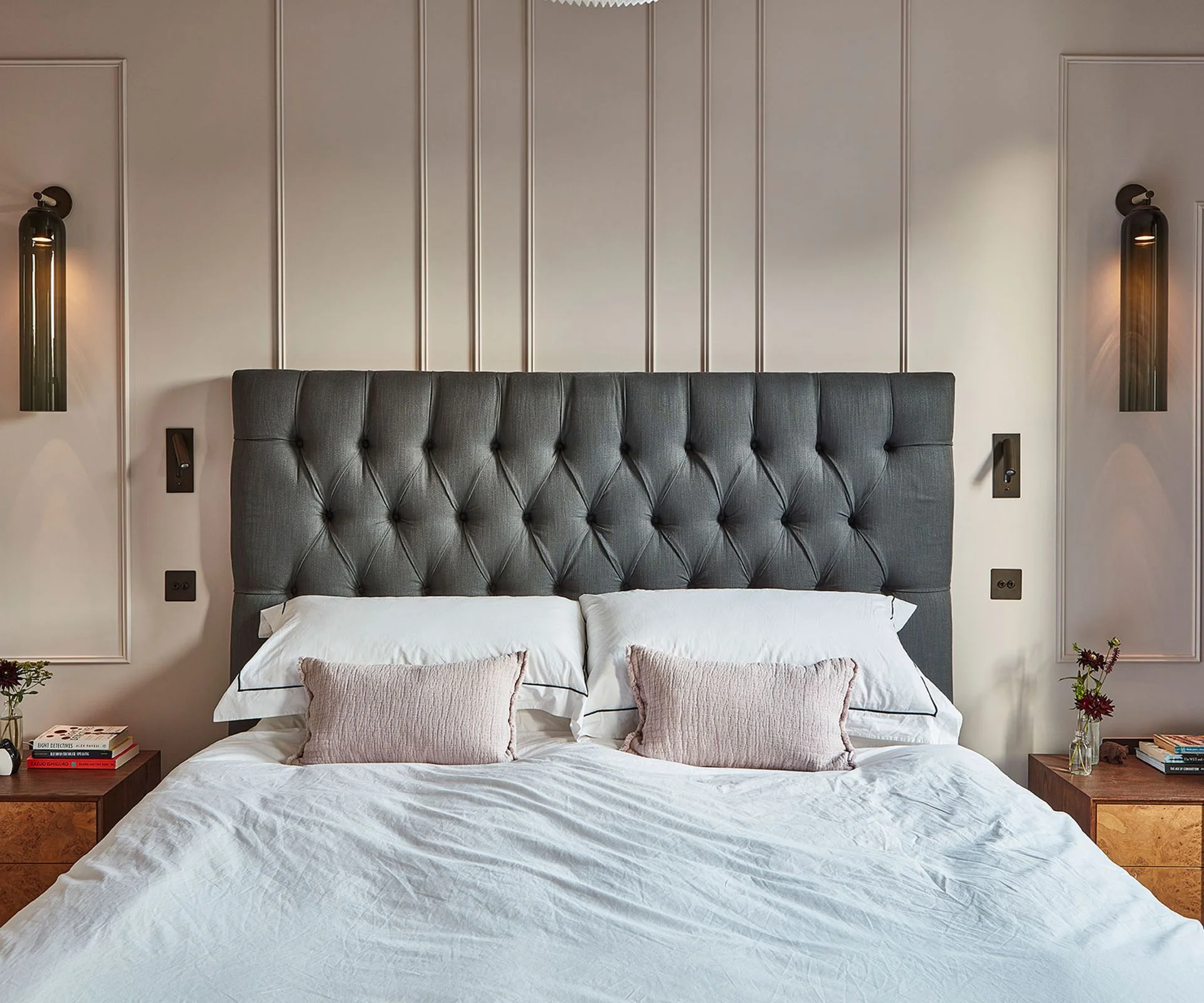 *Softer, layered light suits spaces like bedrooms, where wall lights do their best work.* (Image credit: 82mm Photography, Malcolm Menzies; Design: The Vawdrey House)
### Shop wall lights
Wall washer: Mony Light Up & Downlight by 17 Stories
A reeded glass fitting that throws light across the wall. It works equally well beside a bathroom mirror or on a bedroom wall, and comes in brass or black. View on WayfairSimple design: Enid Wall Light by Dunelm
A quieter option for when the fitting should stay in the background. Its soft linen shade and brushed gold-coloured base give off a cosy glow without drawing attention. View on DunelmTactile finish: Yellow Travertine Wall Lamp
A natural travertine shade on a solid wooden base adds texture to a wall. It gives off a warm white light that suits a bedroom or living space. View on Amazon
## What is the best way to position wall lights?
Here's where most people get it wrong. A wall light only earns its place when it's positioned well. Height, angle and location determine whether it provides practical light and whether it flatters the room's proportions and features. Put one in the wrong spot and it just looks like an afterthought.
Miller's rule of thumb is to aim for eye level, roughly 160cm off the floor. She's quick to add that the right height depends on the fitting, what it's for and what sits around it. Decorative pieces can be placed to highlight architectural features or to throw a softer wash of light.
Chapman's advice is to plan wall lights into the scheme from the start instead of bolting them on at the end. Before choosing a fitting, decide what it's meant to do. Is it task lighting? Is it there to show off artwork or joinery, bring light down to eye level, or simply add evening atmosphere? Once that's clear, the style, position and output become much easier to settle. She also looks at the room's architecture. Wall lights should relate to doorways, fireplaces, artwork, headboards and joinery. Placed at random, they look random.
Position also depends on the room itself. In a bathroom, Miller favours wall lights on either side of the mirror, which light the face evenly and avoid the shadows that overhead lighting casts. In bigger rooms, several wall lights at different points let you light individual areas rather than depending on one central source. Her caveat is important: pair them with ambient light, or the wall lights can't do their job properly.
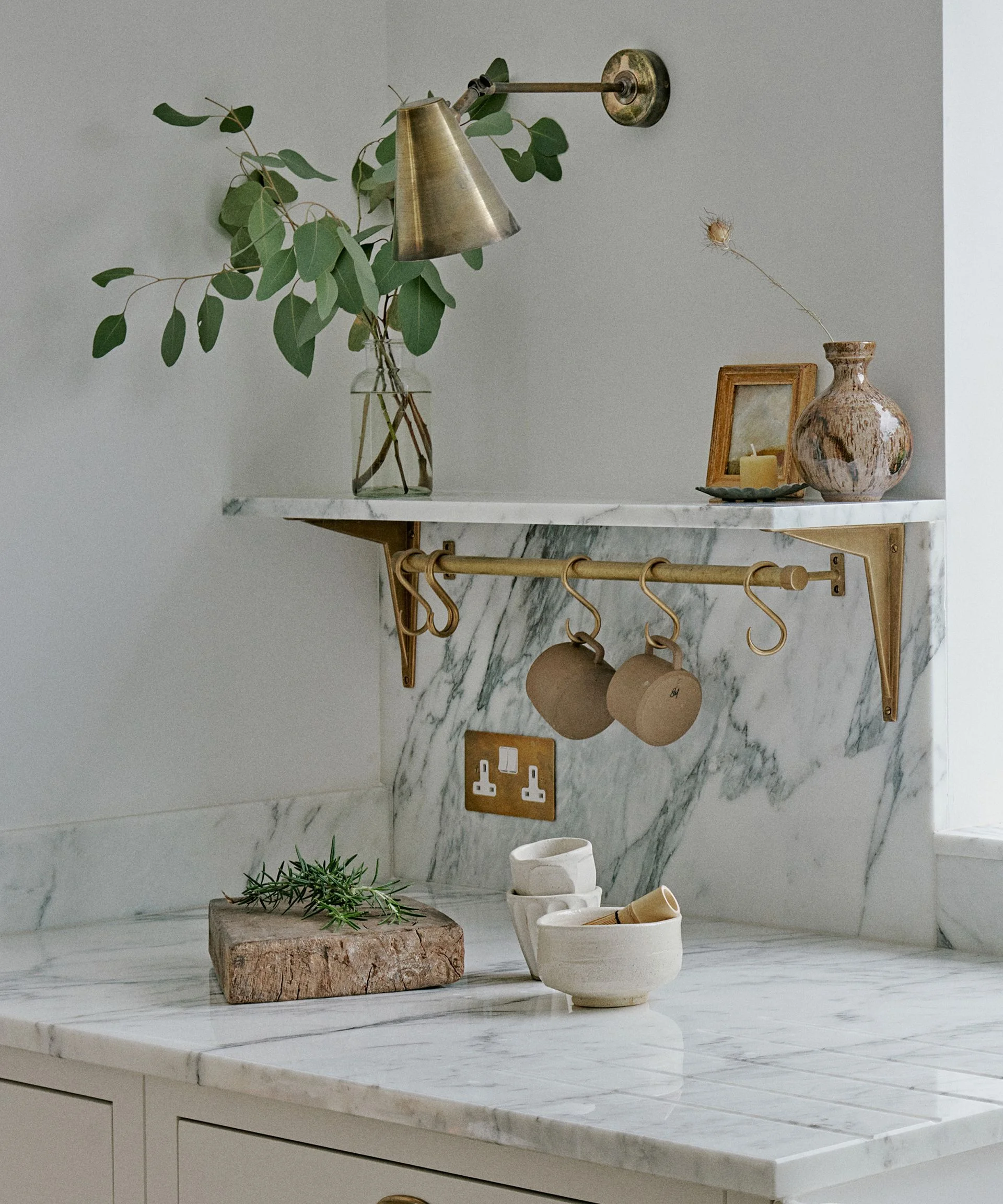 *Targeted wall lights earn their keep when they're doing a specific job, whether that's a task or a feature.* (Image credit: Fosbery Studio)
## How many wall lights does a room need?
Getting the amount right is harder than it sounds. Too many fittings look like overkill, and too few leave you squinting at a book. But there's no magic number, and anyone who promises one is selling something.
Chapman is firm on this. The right count depends on the room's size and proportions, the other lights in place, and what the wall lights are supposed to do. A pair either side of a fireplace or a bed might be plenty. A long hallway, though, may need a repeated series to set up an even rhythm.
Pfeiffer makes the same point from a different angle. Start with the function, not the quantity. Wall lights can give task light, accent light or a gentle glow, and the first question is always what you need them to do in that particular space. Position matters as much as number. Eye level is a sensible starting point, but the ceiling height and the style of fitting should change it. The options run from directional reading lights and picture lights to decorative sconces and uplighters, and each one changes the room differently.
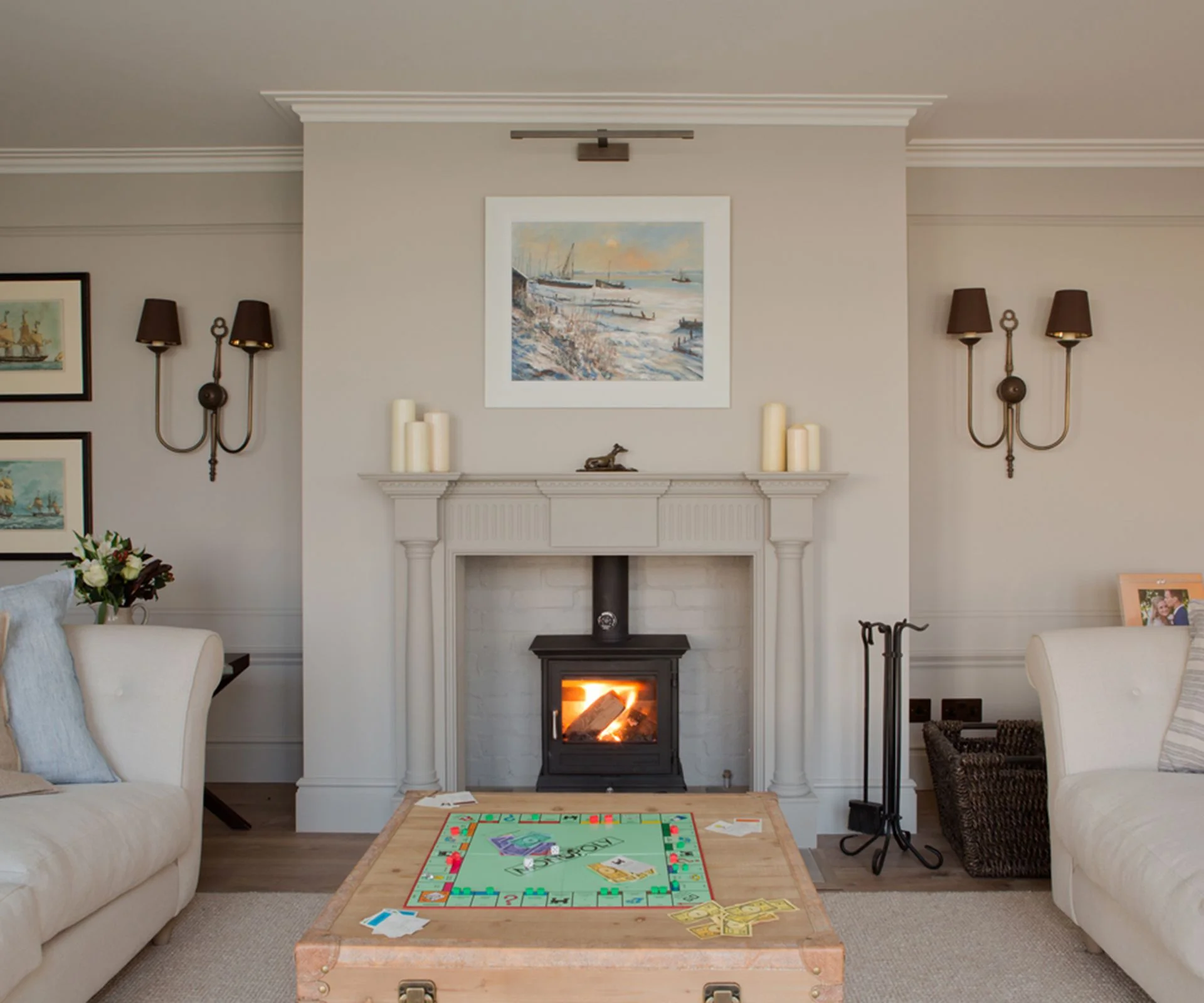 *Wall light placement has to respond to the room's proportions and to the other features around it.* (Image credit: Siobhan Doran; Design: The Vawdrey House)
## Which wall lights suit which rooms?
Wall lights aren't one product. Just as there's no single type of ceiling fitting, the category stretches from decorative sconces to shaded wall lights, directional reading lights, picture lights, and fittings that wash light up or down a wall. Each has a different job, and each needs to suit the wider house design it sits in.
Chapman's rule is that the fitting should follow the function. In a bedroom, she might pair a decorative wall light with a separate directional reading spotlight, so the room has ambience and a proper place to read. In a hallway, an uplight or wall washer can draw attention to architectural details. Picture lights earn their place where artwork is the focal point.
Miller pushes back on the idea that wall lights should match. They don't have to come in pairs, and they don't have to be identical across a room. Mixing styles can look more layered, as long as each fitting has a clear purpose. The thread that ties them together can be a shared material, finish, shape or scale.
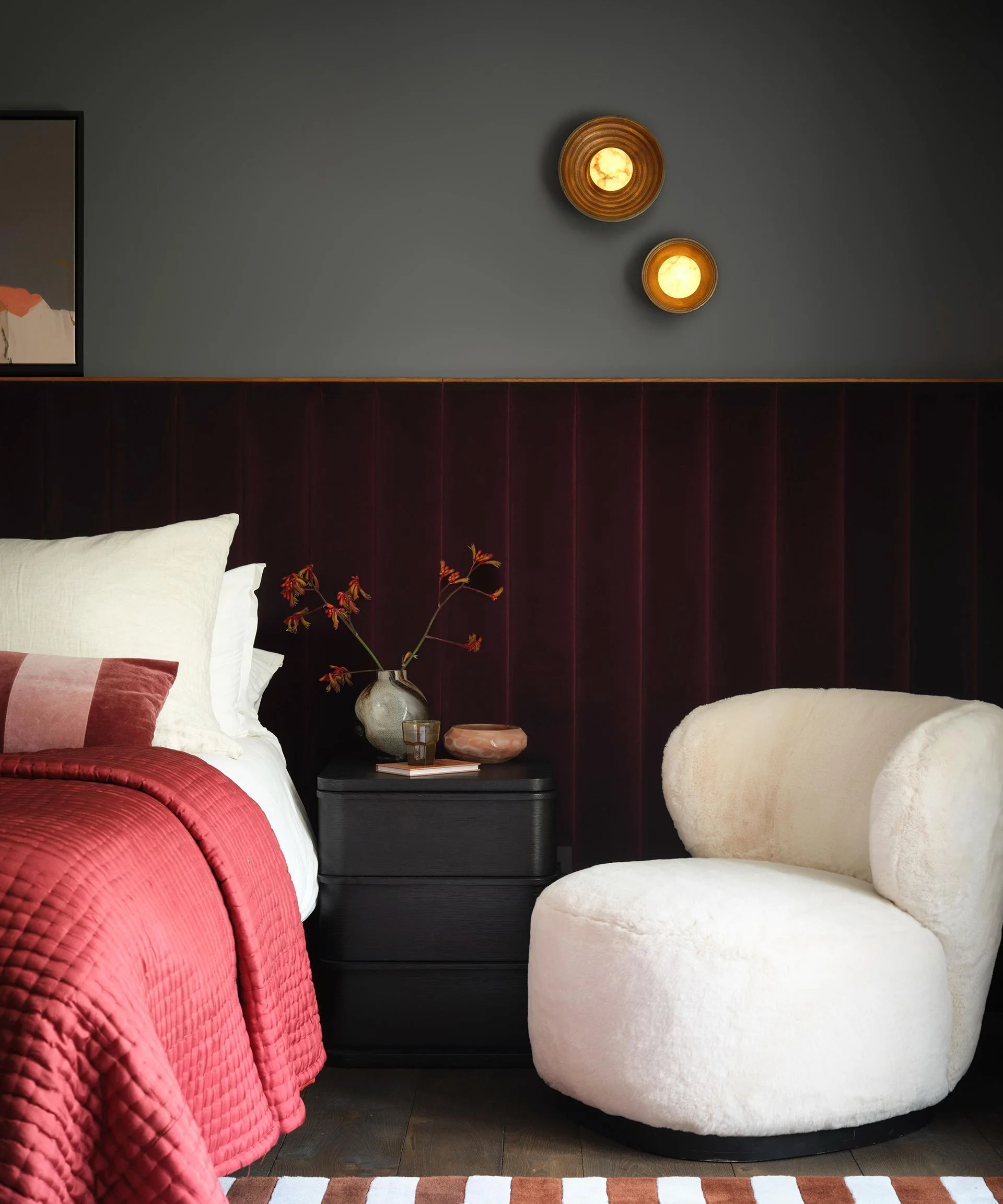 *Wall lights can do the illuminating and add some design character at the same time.* (Image credit: Industville)
## What should wall lights be layered with?
Wall lights are good, but they're rarely enough on their own. Think of them as one layer in a scheme that also includes ambient light, task light and accent light. That combination is what gives you flexibility in how a room gets used and the mood it can set, whether you're reading at night, hosting dinner or just winding down. The big light tried to do all of that with one switch. Your room will work better with several.
Mike Whitfield, luxury interiors expert at LUSSO, doesn't see wall lights as an afterthought. His approach is to layer them with pendants, giving each fitting a specific job. A pendant can pull the eye toward a dining table while the rest of the room stays softer and lower.
Don't count fittings. Whitfield's advice is to walk the room and ask where light is actually needed. Think about your kitchen island, where a bit of light helps you get through the first coffee of the morning, or the sofa where you unwind in the evening. Room size sets the number, and the functions set the placement. That's a more useful brief than "two sconces and a pendant," and it's one reason the conversation keeps circling back to biodynamic lighting.
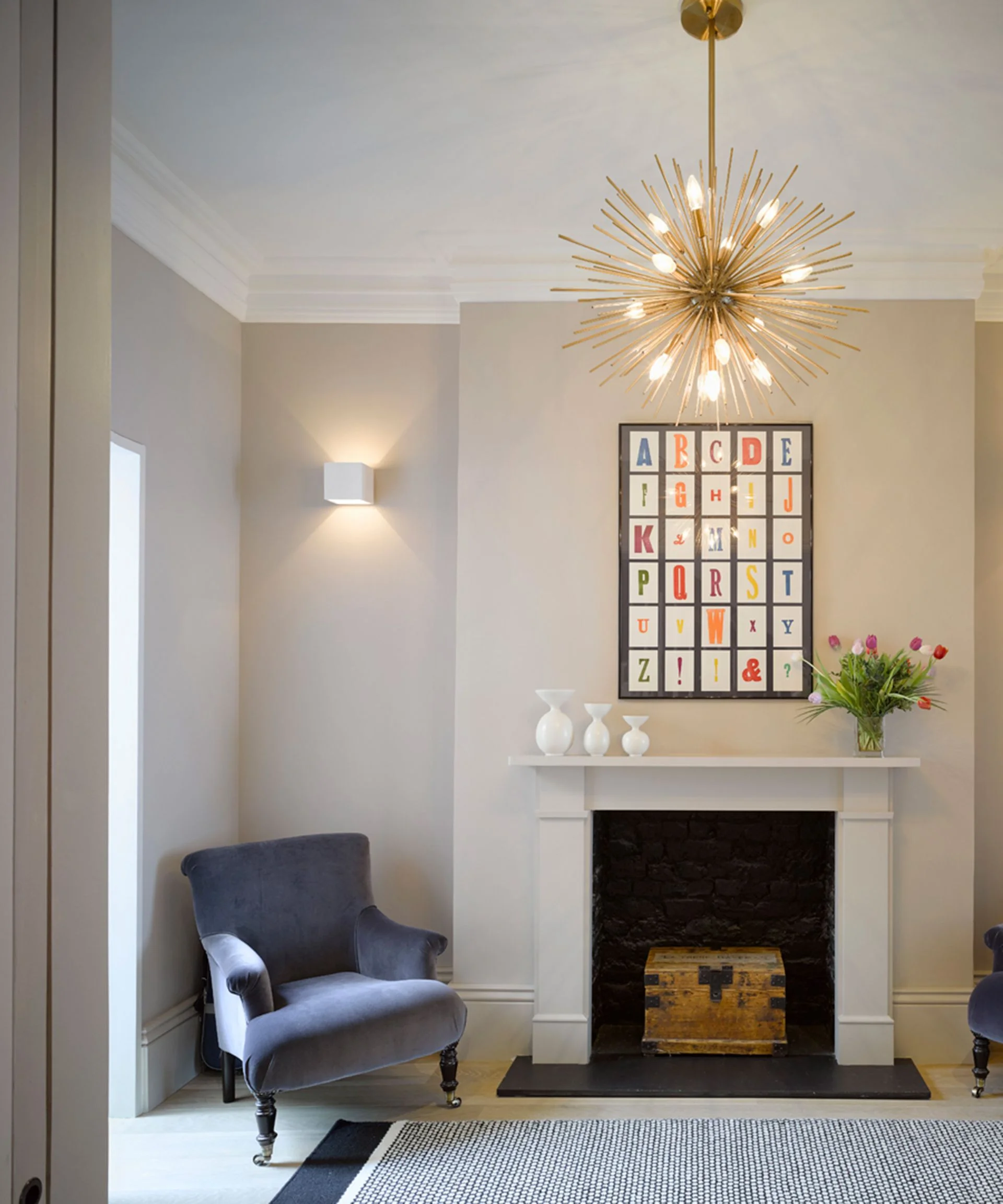
Why downlights shouldn't carry the room alone
A central pendant isn't your only ceiling option. Recessed downlights and spotlights are common, especially for lighting kitchen ceilings. They do a solid job of ambient light. But Whitfield's objection to the big fixture applies here too: they shouldn't be the only layer.
The traditional method is a grid. Lights are spaced evenly across the ceiling, typically laid out by an architect working from a scaled drawing to find where light is needed most. In a kitchen, that means fixtures over the working zones, such as the kitchen island and sink, so the places you use most are properly lit. The trouble is that a grid is built for function. If warmth and atmosphere are the goal, it's the wrong starting point.
Whitfield's problem with the even grid is that every light carries equal weight and marches at the same rhythm. You lose the contrast that gives a room depth. Without zones of light and shadow, the space can feel clinical. His fix is to layer in secondary sources, such as wall sconces and standalone lamps, placed around the key areas.
Wall lights worth shortlisting
If you're ready to move away from the big light, the current trends point somewhere specific. Mara Rypacek Miller sees a shift toward tactile, sculptural pieces that still look good when they're off. Ribbed glass, alabaster and cast metal stand out because they texture the wall through the light they throw and through the fitting itself.
She also sees a preference for finishes that show the material's own character, rather than a glossy, uniform surface. Sand-cast metal is a good example. The effect is that a wall light stops looking like a functional fitting and starts looking like a deliberate piece of the room. That's a real change in how people buy, and it's easy to overlook.
Whitfield makes the same point from another angle: look for lighting that doubles as art, much like the oversized lighting that's everywhere right now. He's most enthusiastic about alabaster. Lit from within, the stone glows with a soft, almost candlelit quality, and its natural veining shows through as the light passes. Marble does something different. It brings weight and a sense of permanence, and its veining scatters light across the surrounding space in its own way.
The experts agree on the bigger picture. A lighting scheme works when it's planned as a whole and designed to shift across the day, not built from one hero fixture. Here's the thing, though: the best wall light in the world won't fix a room that was planned around a single ceiling source. Get the layers right first, then choose the fittings. And check the lighting design mistakes before you commit.



Discussion
Sign in to join the discussion.