Discover evergreen trees for gardens of every size, from container-friendly bay to colourful conifers, with year-round foliage, flowers and fruit.
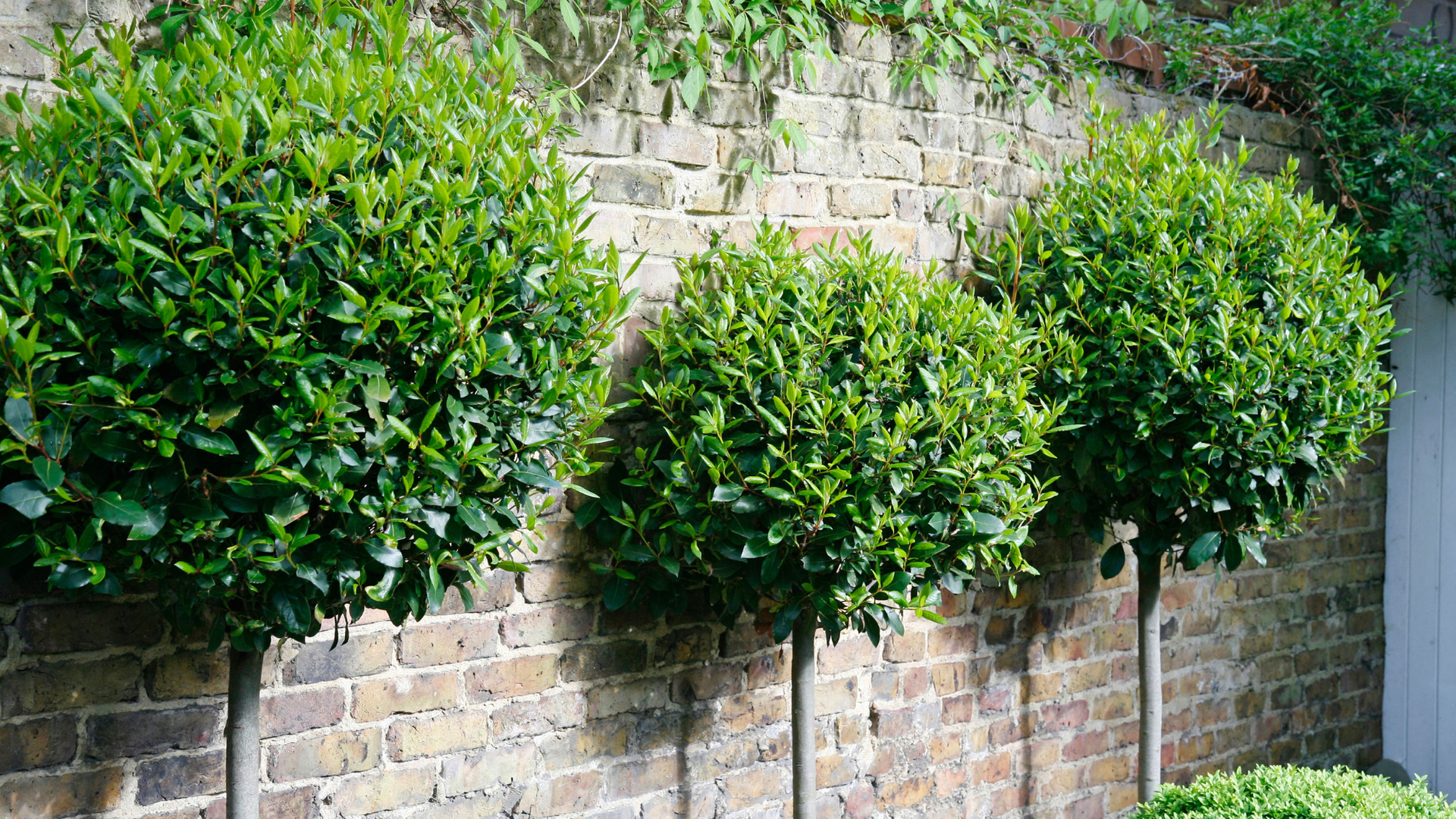
The case for an evergreen tree isn’t just that it keeps its leaves. The best choices add colour, texture and shape through the year, sometimes changing from blue or gold to red and grey as the seasons turn. And foliage is only part of the appeal: flowers, fruit, cones, seeds, nuts and distinctive bark can all add interest when other trees are bare.
That variety gives you options for almost any garden, from a single container by the front door to a larger tree in a long-term planting scheme. If you’re still shaping your garden design, think about the tree’s mature size and the kind of year-round effect you want. “Evergreen” describes what it keeps; it doesn’t tell you what it will look like.
1. Bay tree (Laurus nobilis)
- Best for: growing in a pot
- Height: 3m
- Spread: 1m
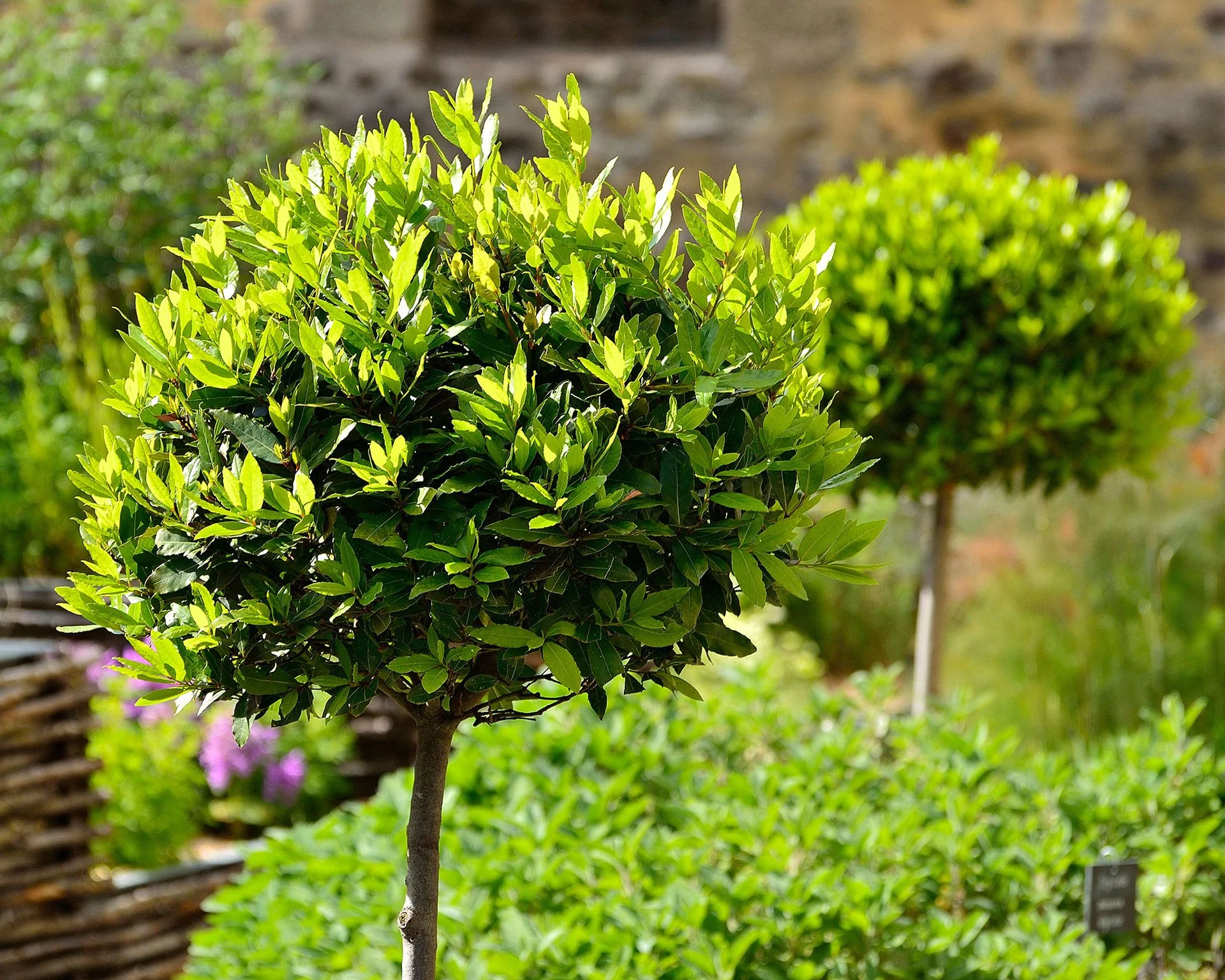
Bay is an easy starting point: it grows happily in a container filled with well-drained, soil-based compost or planted in the ground. Its glossy leaves are aromatic and edible, and the tree is considered low-maintenance.
Give it a sunny, sheltered position to reduce the risk of common bay tree problems. A potted bay needs feeding every two weeks from mid-spring to late summer, using liquid feed or controlled-release fertiliser pellets, and repotting every two to three years.
Want a more formal look? A lollipop-shaped bay supplies it, and summer pruning keeps the crown neat and under control.
2. Holm oak (Quercus ilex)
- Best for: classic English elegance
- Height: 10m
- Spread: 6m
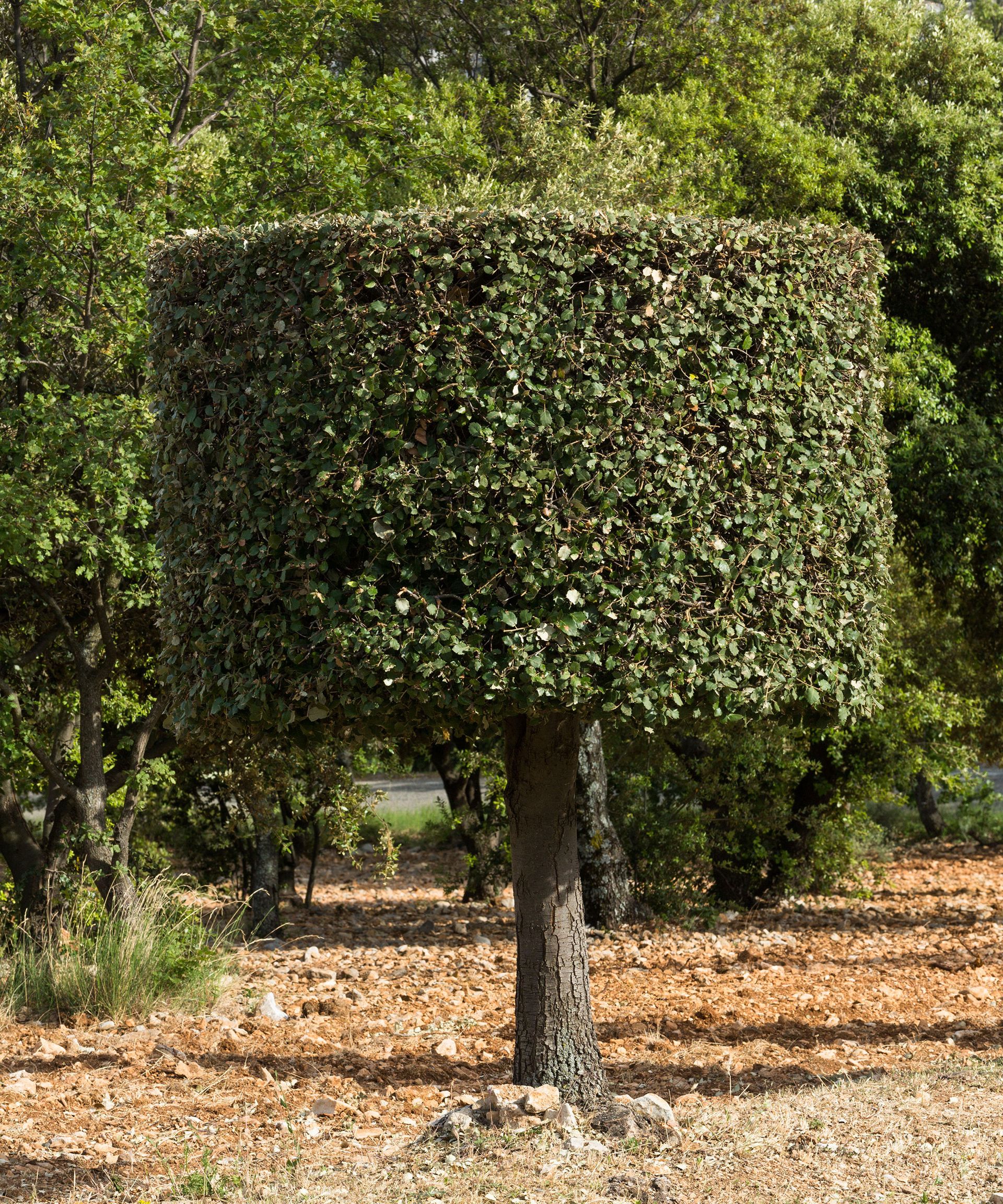
With its rounded crown and dark, glossy leaves edged in soft points, the holm oak has a composed, traditional look. Those leaf edges explain its other name, holly oak. Green acorns mature to dark red, adding another seasonal detail.
It can be clipped into compact, tidy shapes, which makes it a candidate for a small garden—provided you’re prepared to prune it regularly. It tolerates exposed positions and salt spray, so coastal gardeners have a useful option. Plant in full sun or dappled shade.
3. Lawson Cypress (Chamaecyparis lawsoniana)
- Best for: a striking accent tree for any size space
- Height and spread: varies according to the cultivar
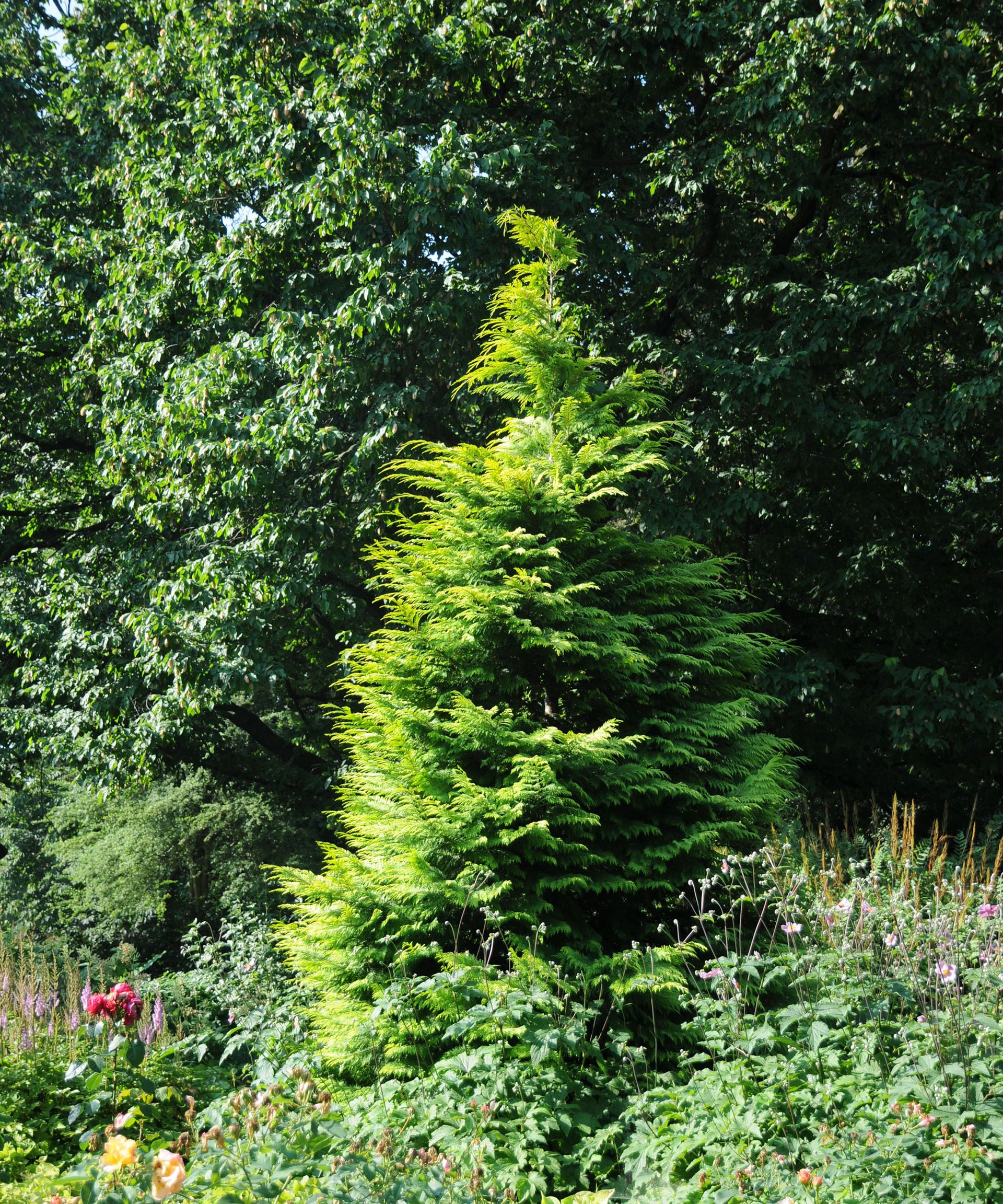
Lawson cypress offers plenty of choice in both colour and final size. Many cultivars suit different soil types, and can grow in exposed or sheltered positions. Choosing the right cultivar matters: a tree that fits today’s garden can become a source of neighbour tree disputes if you underestimate its eventual size.
‘Columnaris’ is a popular blue-grey form; ‘Golden Wonder’ brings rich yellow foliage, while ‘Green Pillar’ stays medium-sized. For a tight space, look at dwarf cultivars such as ‘Aurea Densa’.
Shop for manageable conifers
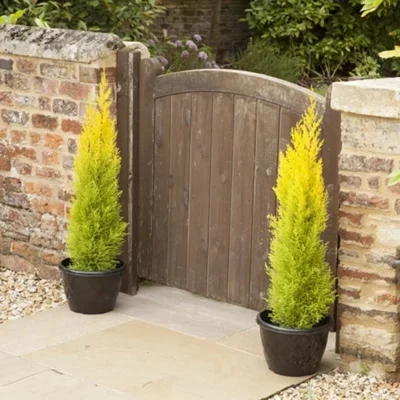 Good for pots
Supplied pre-potted, this conifer is ideal for placing in pairs in your garden.
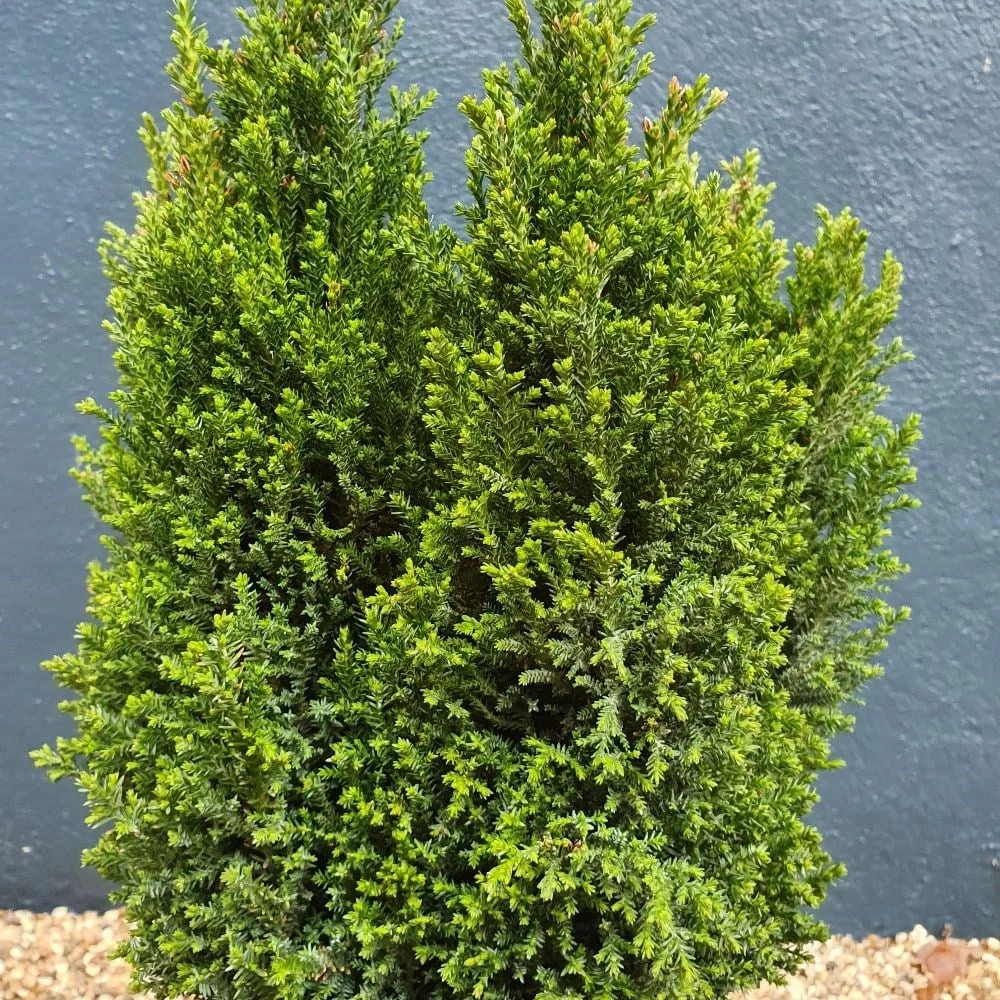 Low height
Good for smaller gardens and has a dense foliage that ranges from grey-green to blue-green in colour.
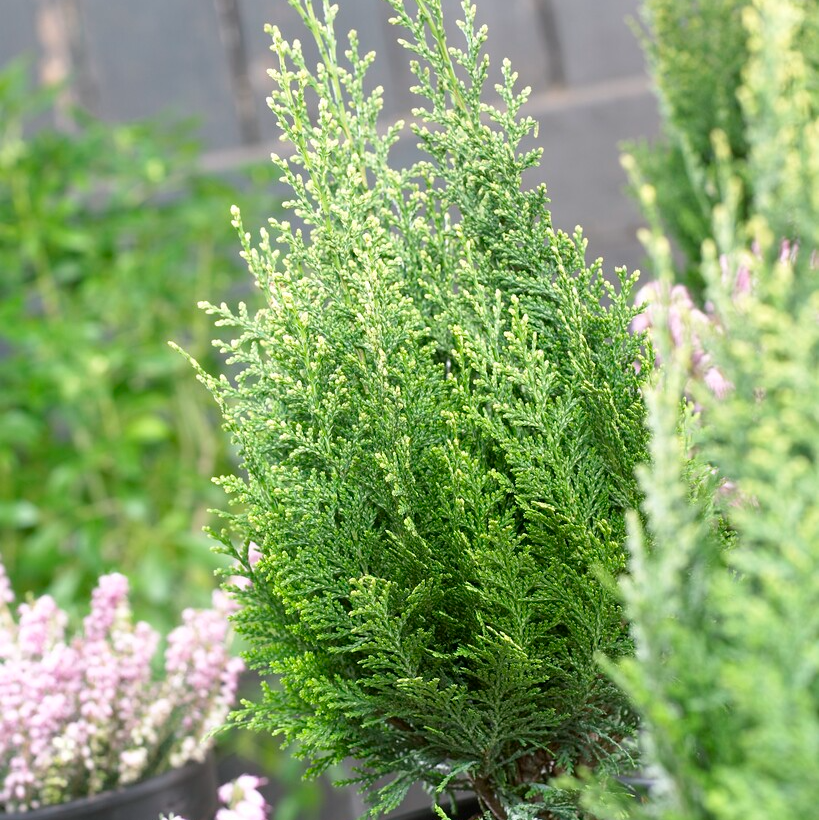 Feathery-like foliage
This slow-growing variety has delicate foliage with creamy-white tints and is great for patio pots.
4. Eucalyptus gunnii (Cider Gum)

- Best for: easy fence coverage
- Height: 25m
- Spread: 15m
The cider gum makes a strong screen, but its listed mature dimensions—25m tall and 15m wide—deserve attention before you plant. It’s a fast-growing, hardy eucalyptus from southern Australia that also grows well in the UK. Young foliage is blue-green, darkening as it matures; the bark is flaky and tactile.
Regular cutting keeps the tree in bounds and encourages fresh growth with smaller, button-shaped leaves. It may also produce white flowers in high summer. Choose full sun or partial shade. For a smaller garden, Eucalyptus gunnii Azura ('Cagire'), available from Crocus, is a compact, very hardy cultivar that can withstand temperatures down to -20˚C.
5. Olive
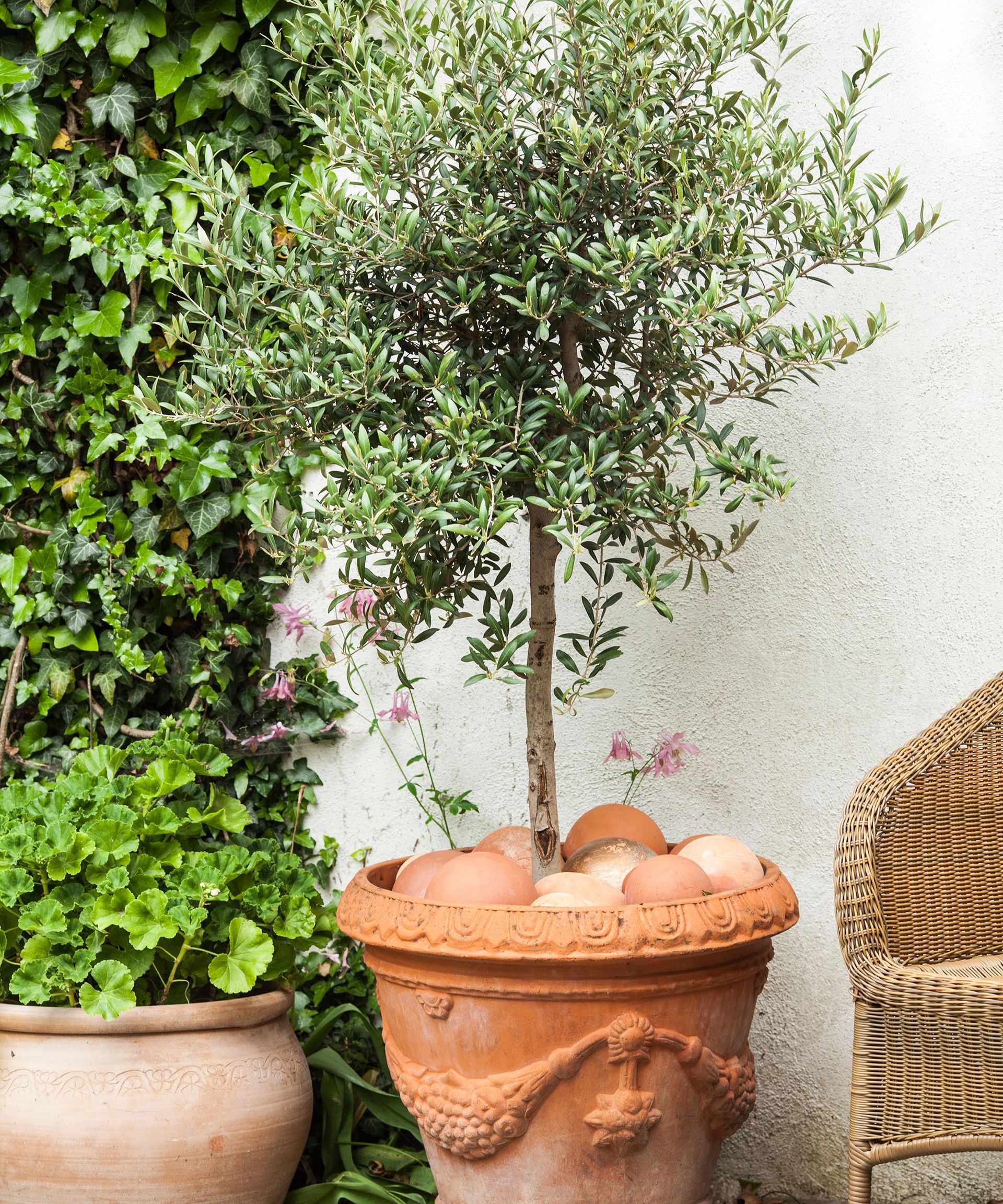
- Best for: timeless Mediterranean style
- Height: 7-9m; less if pot grown
- Spread: 7-9m; less if pot grown
Olives bring a restrained Mediterranean look, with silvery foliage that sits well behind purple and white flowers. They grow slowly, but their warmth requirements are real: these are Mediterranean trees, and cold conditions can dictate whether yours stays outside year-round.
They’re among the best trees to grow in pots. Water weekly during hot, dry spells and feed every two weeks in spring with granular fertiliser. Read up on how to prune olive trees if you want a good shape and healthy future growth.
Prolonged temperatures below -12˚C call for moving a container-grown olive indoors for winter; it can then make an attractive indoor feature. In a sheltered spot where temperatures may fall below -10˚C, temporary horticultural fleece should help prevent lasting damage.
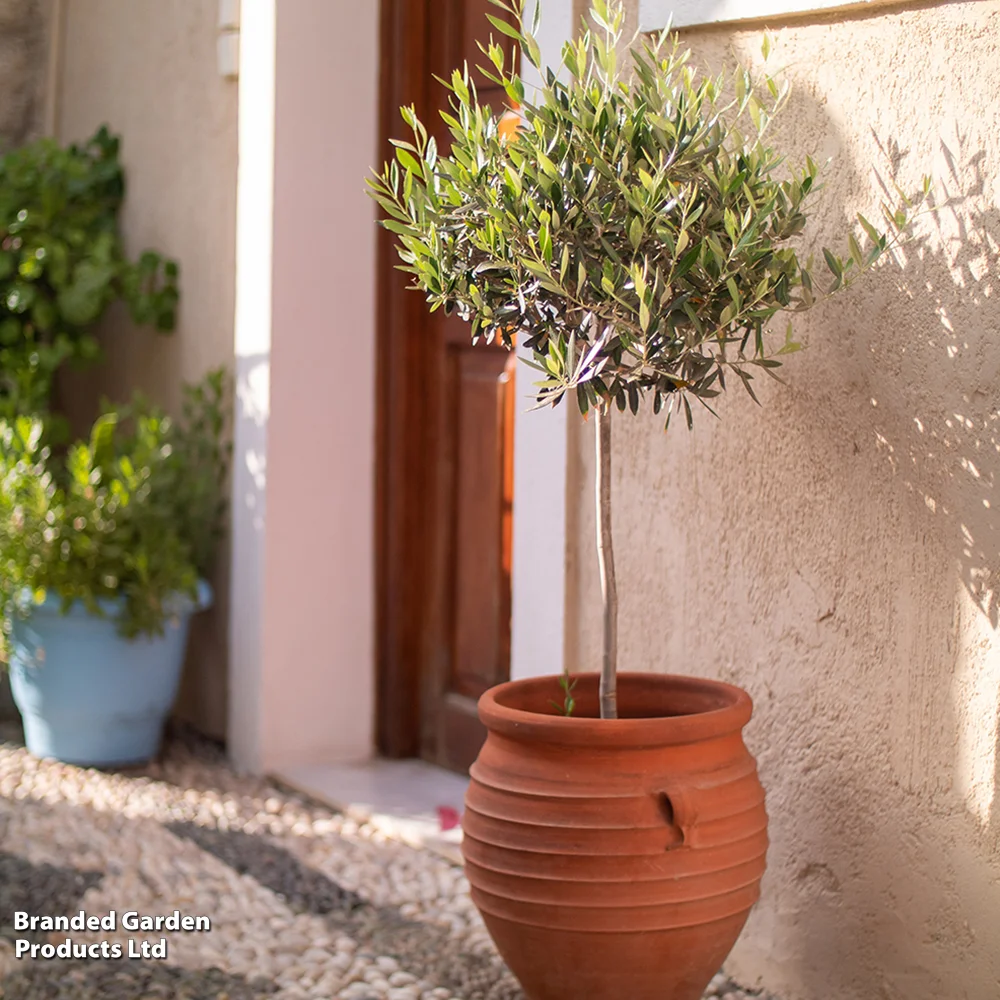
These olive trees are available in a variety of sizes and quantities to add some Mediterranean character to your garden.
6. Oleaster (Eleagnus angustifolia)
- Best for: a hardier olive tree lookalike
- Height: 7m
- Spread: 7m
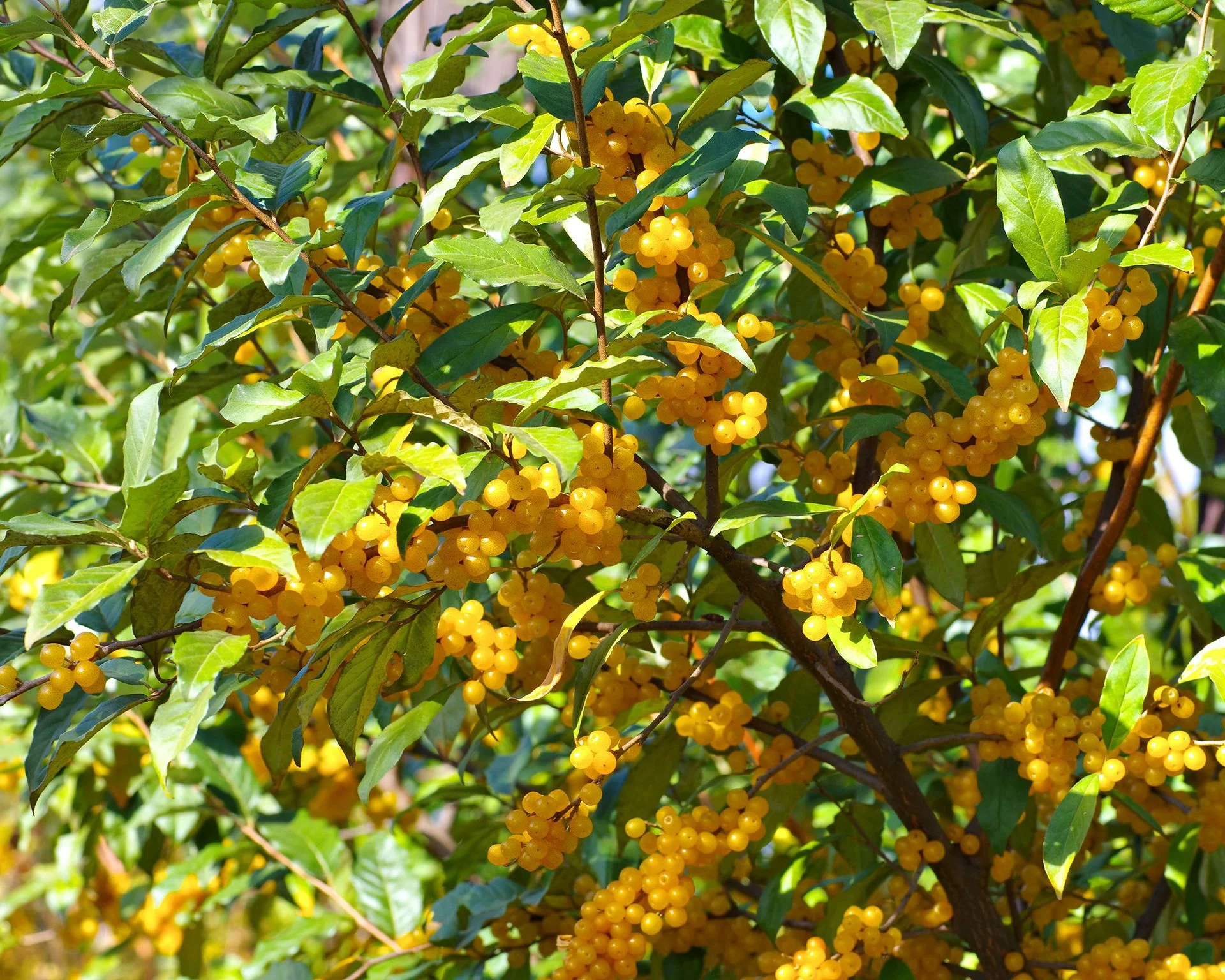
If olive-like foliage appeals but your garden is too cold or damp for an olive, oleaster is a hardier alternative. Also called Russian olive, it carries silvery leaves, flowers from September to October and produces small orange-speckled fruits in February.
It handles full sun or part shade, moist soil, wind and coastal exposure. Although the stated height and spread are 7m, it can be kept as a smaller garden tree and won’t grow taller than 4m, making it an option for a small garden.
7. Eucryphia nymansensis
- Best for: adding kerb appeal in a front garden
- Height: 6-15m
- Spread: 180cm-3.6m
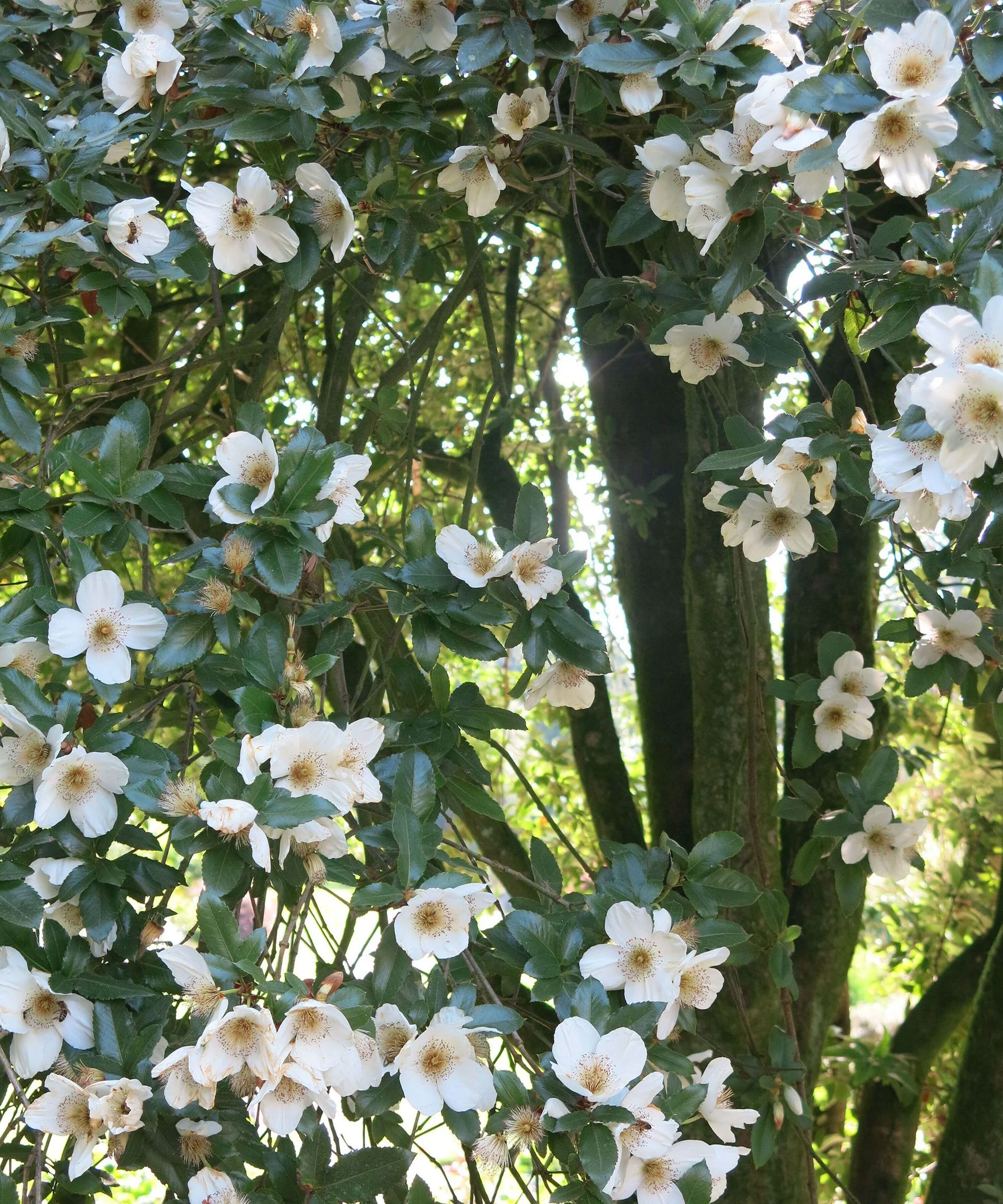
For flowers and fragrance, eucryphia makes a more distinctive choice than a foliage-only evergreen. Known as brush bush, it combines dark, glossy leaves with large, cup-shaped white flowers that smell of honey and open from late summer into autumn.
It suits full sun or partial shade in a sheltered position, perhaps in a woodland or cottage-style garden protected by other trees. Once established, it needs little attention beyond a light late-winter trim.
8. Strawberry Tree (Arbutus unedo)
- Best for: 12-month interest with flowers, fruit and foliage
- Height: 8m
- Spread: 8m
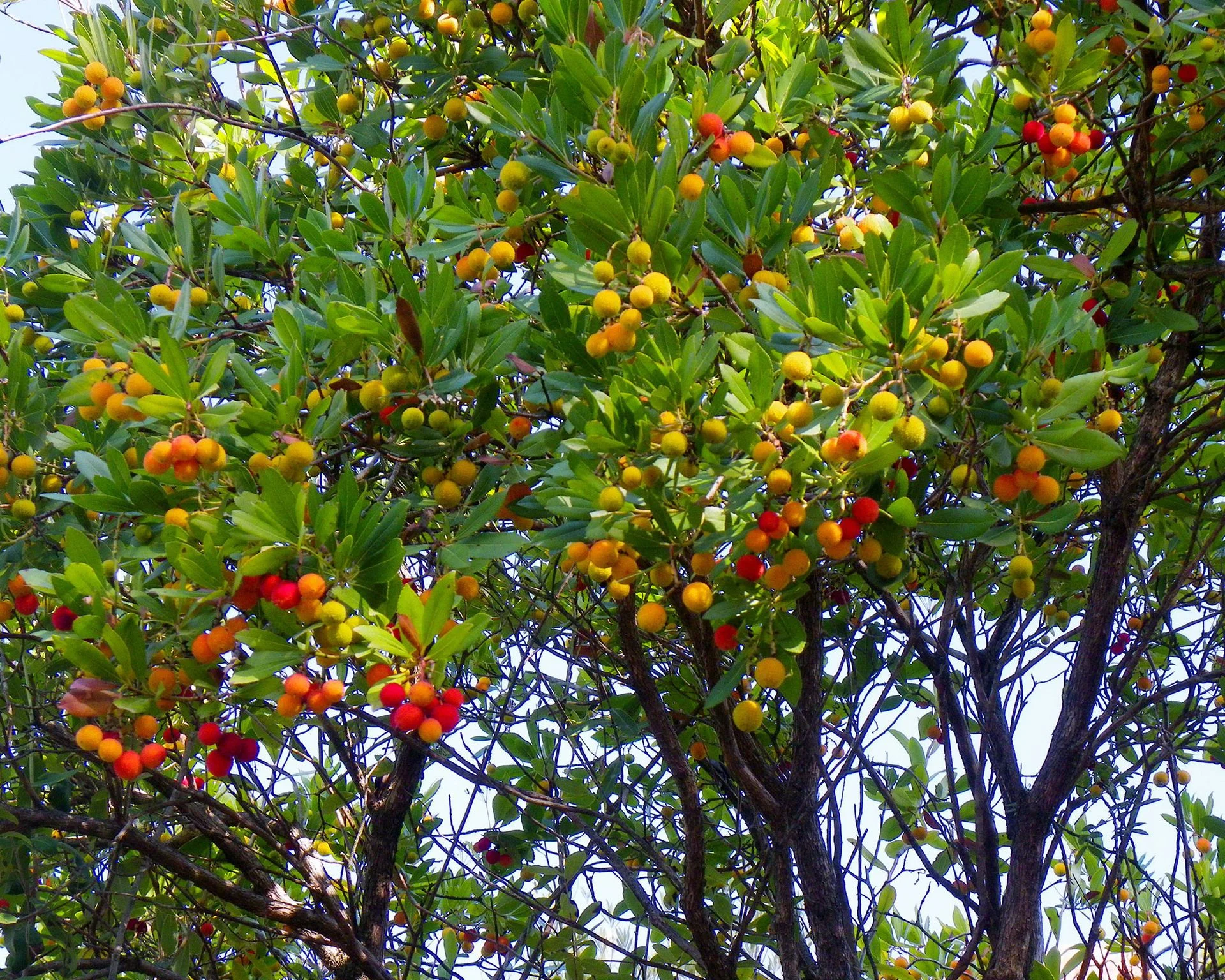
The strawberry tree earns its name from red, textured fruits that look almost cartoonish. Designers prize it for more than that seasonal display: large leathery leaves and clusters of white flowers in late summer and autumn keep the tree interesting across the year.
Color, scent and screening beyond plain green
The closing picks make a useful point: evergreen doesn’t have to mean one shade of green, and the right tree can do more than screen a view. Strawberry tree (Arbutus unedo) can screen an eyesore or stand as a feature, bringing seasonal interest. Give it well-drained soil; it suits coastal gardens or a sheltered, sunny spot inland and needs little pruning. Privacy trees are at their best when they solve a practical problem and earn their place visually.
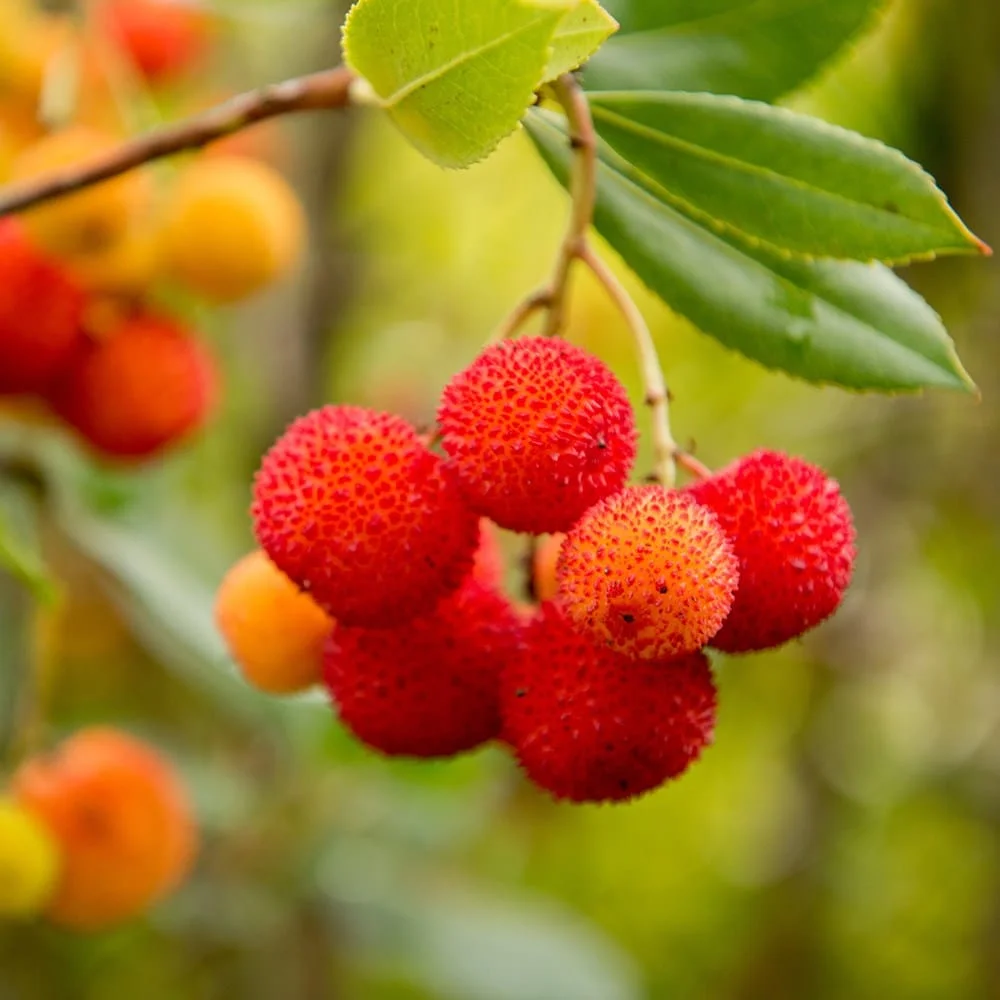
A good choice for coastal gardens or a sheltered spot inland, this tree needs well-draining soil and prefers a sunny spot. Minimal pruning is required.
9. Colorado Blue Spruce
- Best for: soft, subtle colours
- Height: Varies according to type
- Spread: Varies according to type
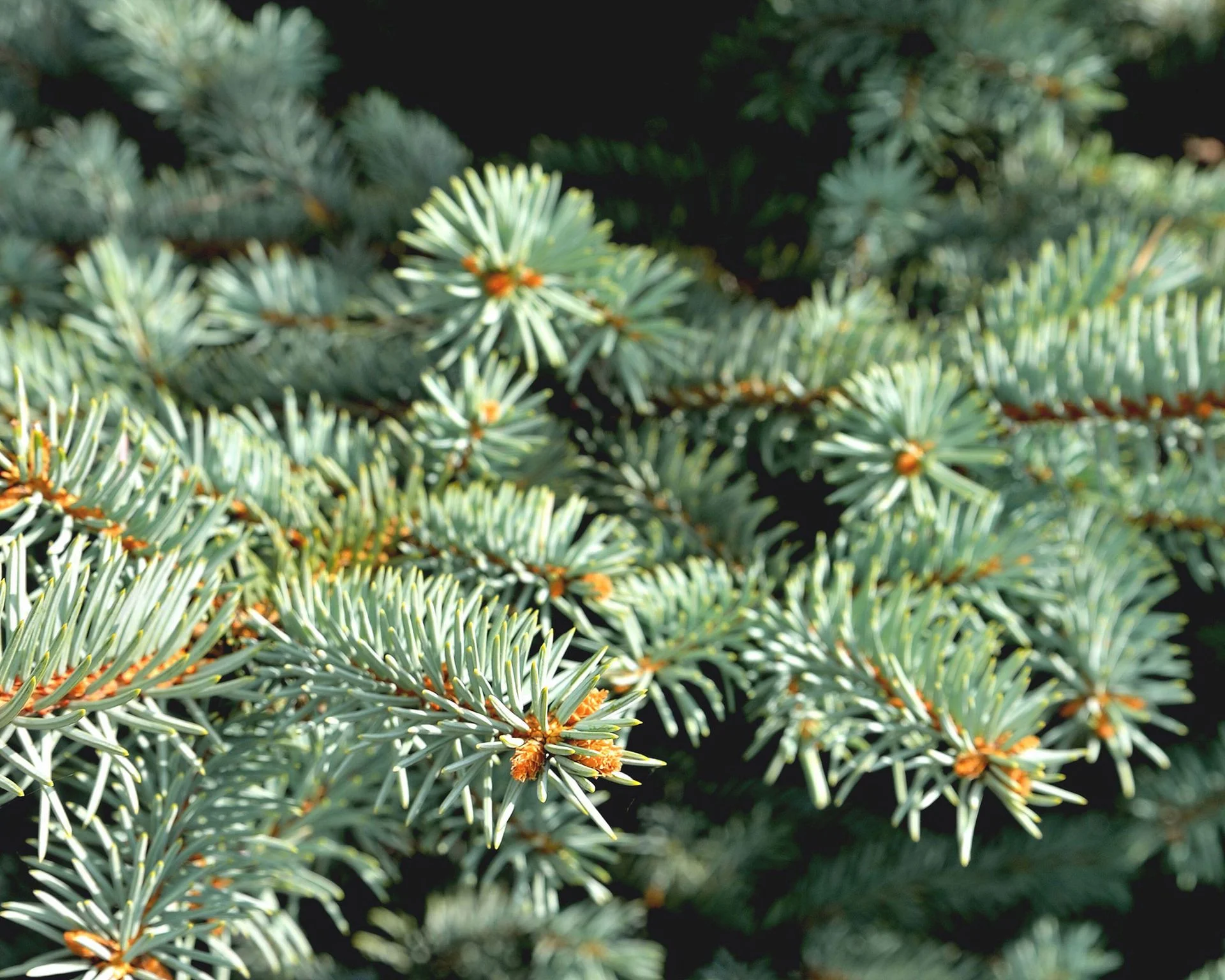
Colorado blue spruce (Picea pungens) is an evergreen with a less expected palette: silvery blue foliage, sharp needles and light brown winter buds. It’s also familiar as a Christmas tree in the UK. The catch is scale. Check the mature dimensions of the cultivar before planting, because sizes range widely.
For a large garden, ‘Fat Albert’ forms a symmetrical pyramid and can reach 3m; it’s sold by B&Q. ‘Koster’ is a medium-sized option, while dwarf ‘Montgomery’ tops out at 60–90cm. Full sun gives the best results.
10. Portugese Laurel
- Best for: areas of shade
- Height: 10m
- Spread: 10m
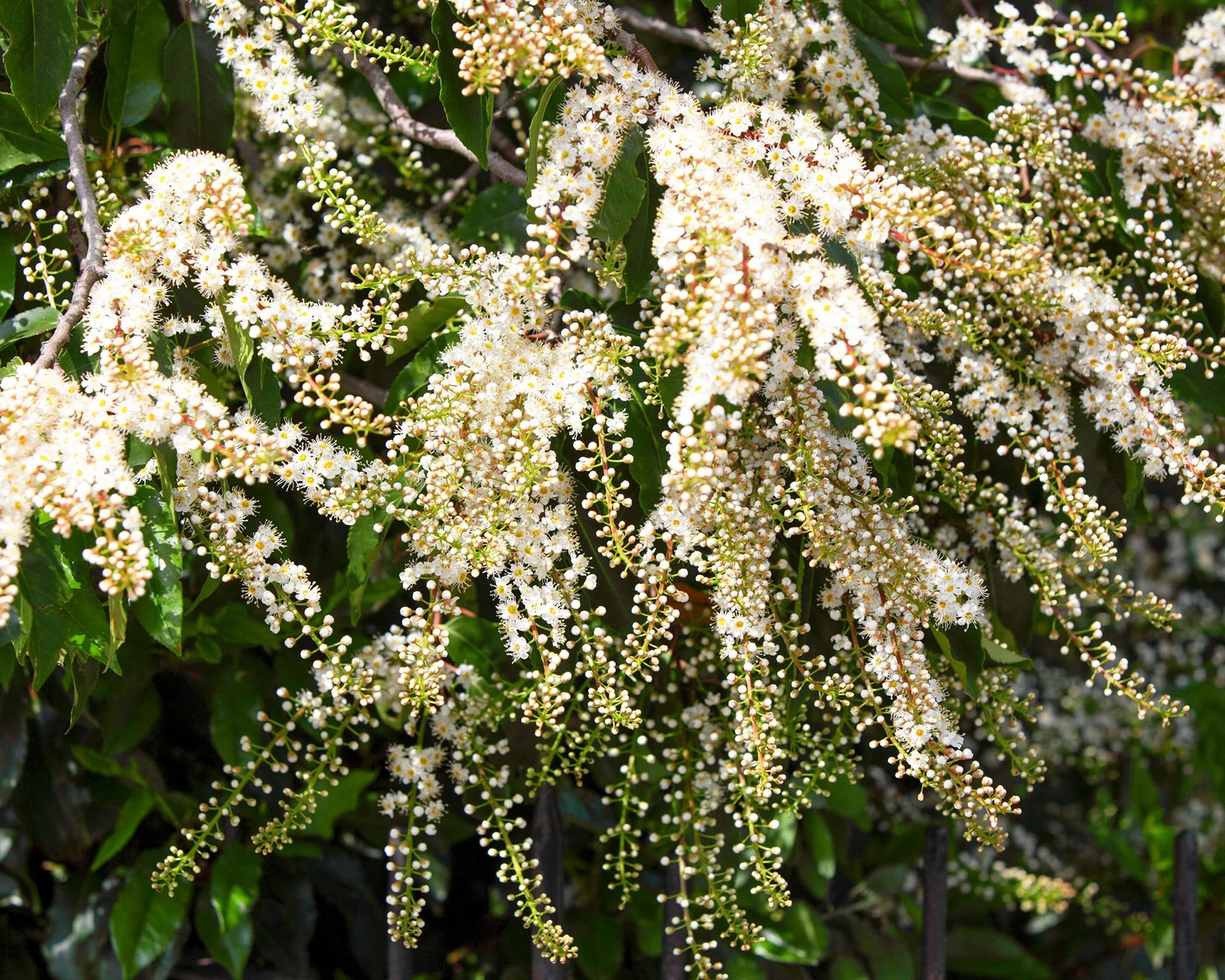
Flowering trees generally need several hours of sunlight, but Portugese Laurel (prunus lusitanica) is a useful exception for a shady corner. Its glossy, tidy foliage stays green through the year, and small creamy white flowers appear from April to May. It’s one of the plants suited to shade.
Care is simple: one light annual trim should keep it in shape. Crocus sells Portugese Laurel in a 2-litre pot.
11. Irish Yew (Taxus baccata fastigiata)
- Best for: a slimmer, space-saving tree
- Height: 10m
- Spread: 4m
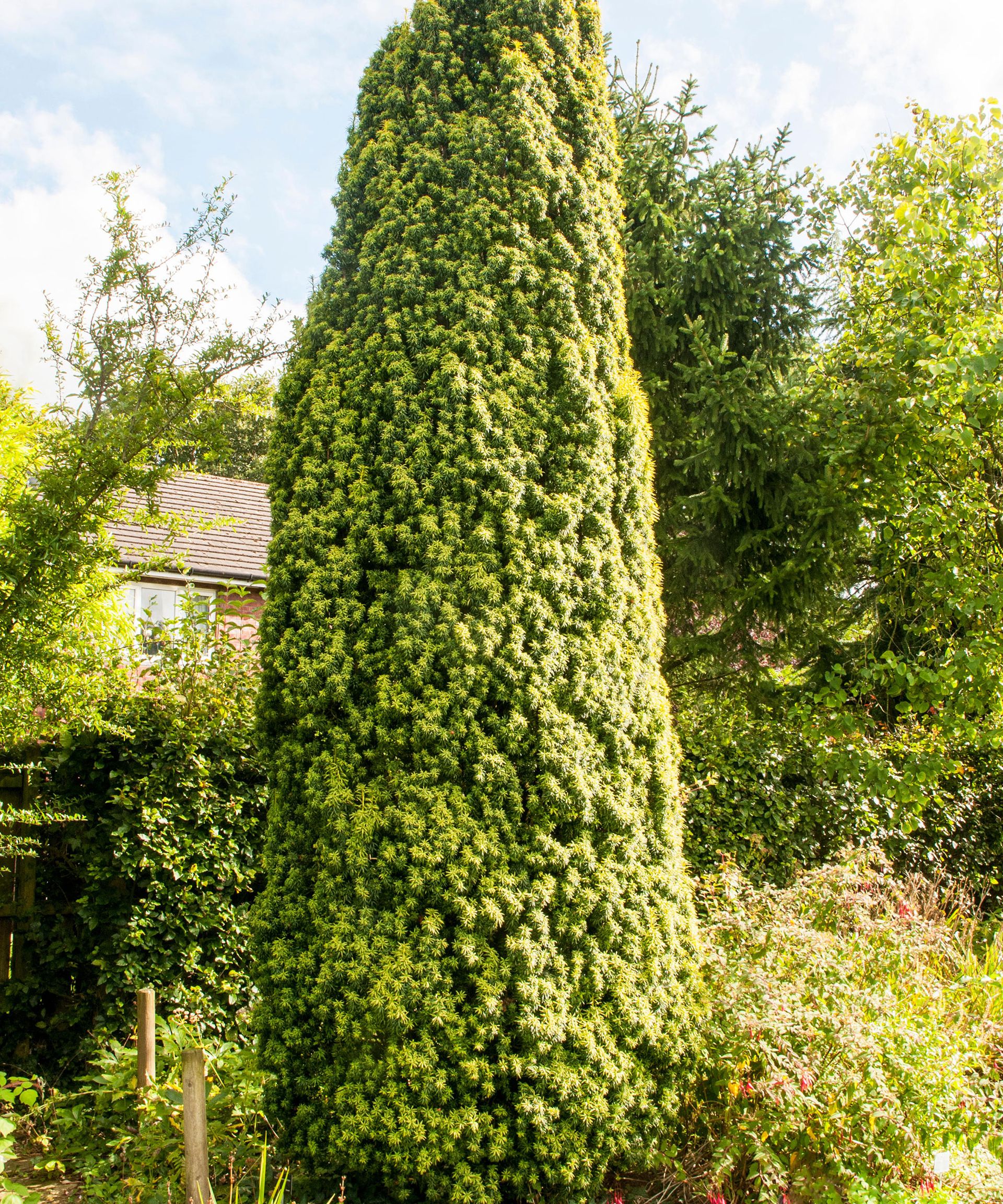
Irish yew makes a strong vertical accent: dense, dark needles rise in a narrow column, so it can work as a focal point in a shady border and fit a small or medium garden. Female plants produce red autumn berries. But there’s a serious caveat for households with children or pets: every part of the tree is toxic.
The golden form, Taxus baccata fastigiata ‘Aurea’, can lift a dim corner. Taxus baccata ‘Fastigiata Robusta’ is available from Thompson & Morgan; it grows slowly and needs little attention once established.
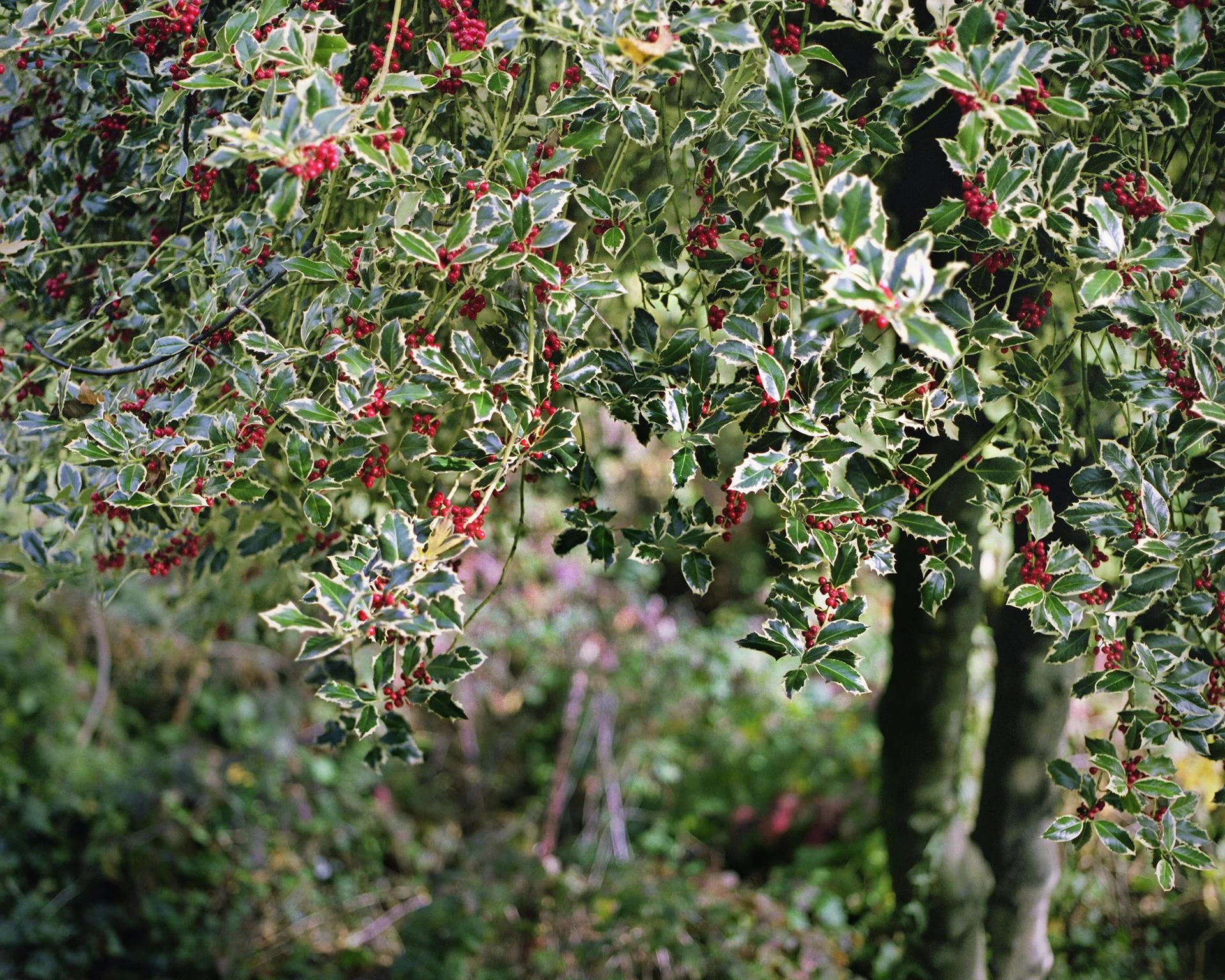
12. Variegated holly (ilex aquifolium)
- Best for: brightening up shady spots
- Height: 20m
- Spread: 6m
Variegated holly grows slowly, but its marbled leaves bring contrast to a shaded spot. For a reliable crop of decorative winter berries, plant both a male and female tree; some suppliers offer a pair in one pot.
There’s a choice of foliage: ‘Golden King’ from Thompson & Morgan has green, spineless leaves edged in gold, while ilex aquifolium ‘Argentea Marginata’ from Gardening Express has spiny leaves with silvery cream margins. Hollies prefer moist, well-drained soil and partial shade. They’ll tolerate deeper shade, though the leaf markings may become less distinct.
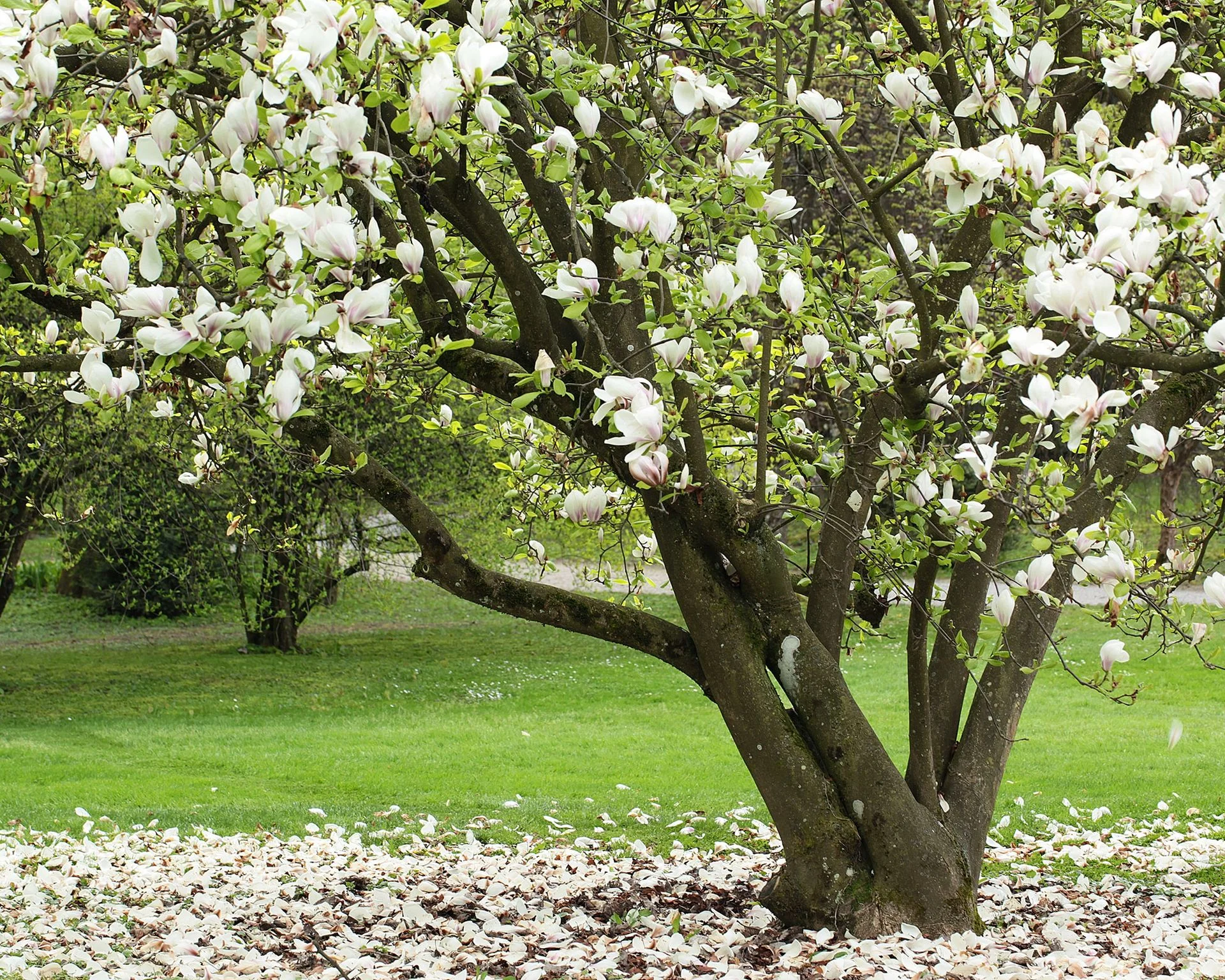
13. Magnolia Grandiflora (Bull Bay magnolia)
- Best for: fragrant flowers
- Height: 18m
- Spread: 15m
Bull Bay magnolia pairs glossy, dark foliage with large, creamy, cup-shaped flowers that smell sweet and arrive from late summer into early autumn. That combination explains its popularity with garden designers. It’s a striking tree, but its eventual size—up to 18m—makes it a poor fit for many gardens.
Choose a sunny position or light dappled shade, with well-drained soil. Growth is slow, and specialist nurseries sell smaller standard forms on long, slender trunks when space is limited.
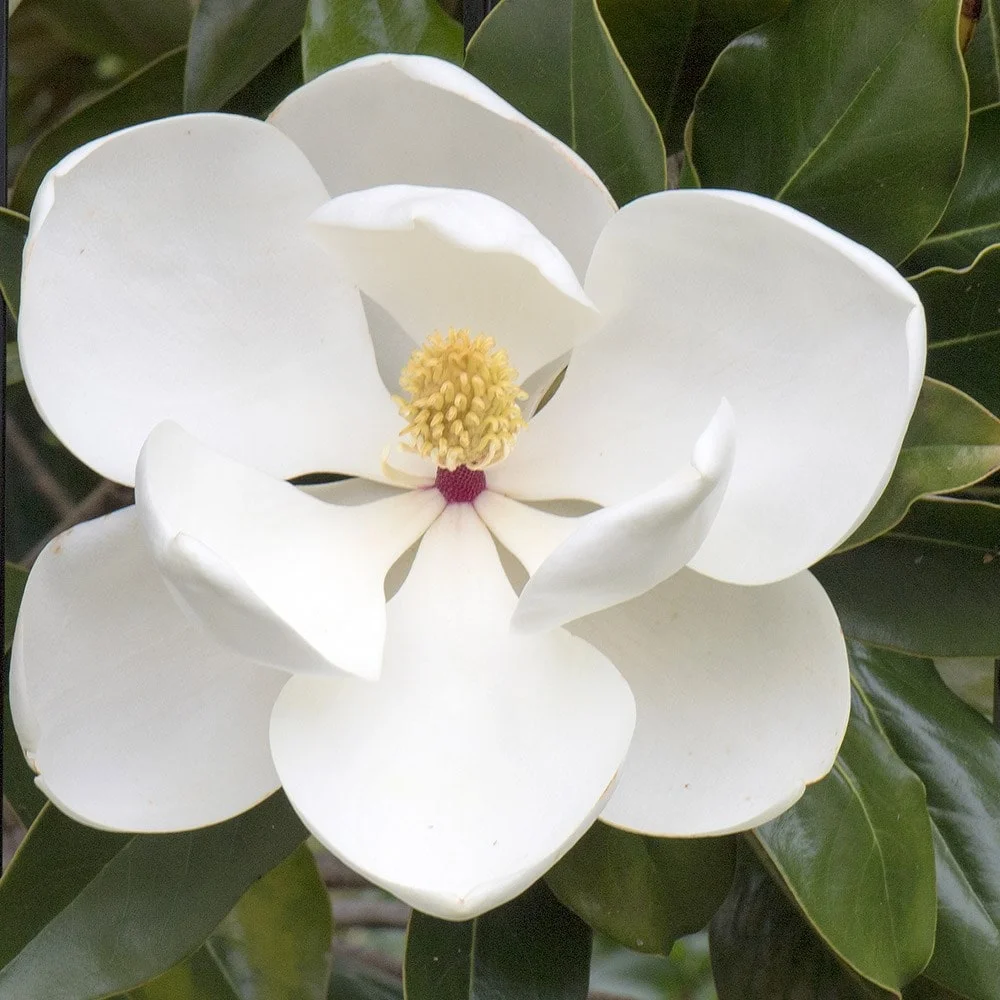
Plant in a sheltered position away from strong winds. Prefers neutral to acidic, free-draining soils. Will reach an eventual height of around 15m.
14. Italian Cypress (Cupressus sempervirens)

- Best for: chic, architectural style
- Height: 10m
- Spread: 1.5m
Italian cypress brings a strong, upright shape to Mediterranean-style gardens. Plant a pair beside a gate or use one to frame a view. You Garden sells Italian cypress trees for pots or open ground, but they need full sun and a warm climate.
Expect about two years before they’re established and drought tolerant. After that, light trims twice a year help preserve the narrow outline. Remove cones too: their weight can force branches apart and disrupt the shape.
15. Pinus pinea
- Best for: a feature tree
- Height: 20m
- Spread: 12m
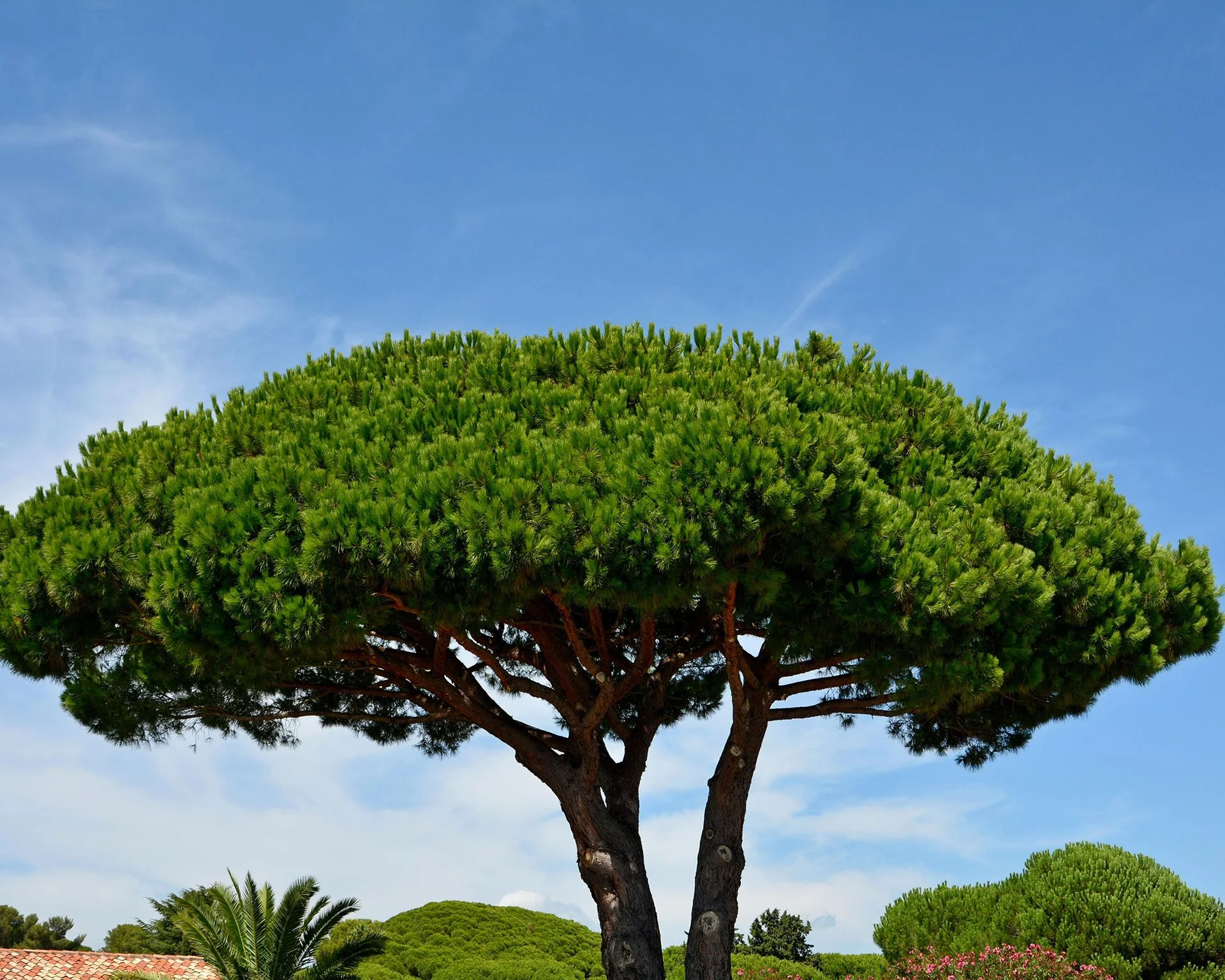
Stone pine, also called umbrella pine, earns its space through its shape: a broad, rounded crown with a flattened top, above a red-brown trunk with ridged bark. Mature needles are grey-green. It tolerates dry conditions and is generally undemanding, though a sunny site suits it best.
Light winter pruning can help keep the form in check. It can grow around a metre each year, so treat it as a tree for a medium or large garden. Its canopy can also provide a natural sunshade in the garden.
16. Pinus Contorta ‘Chief Joseph’
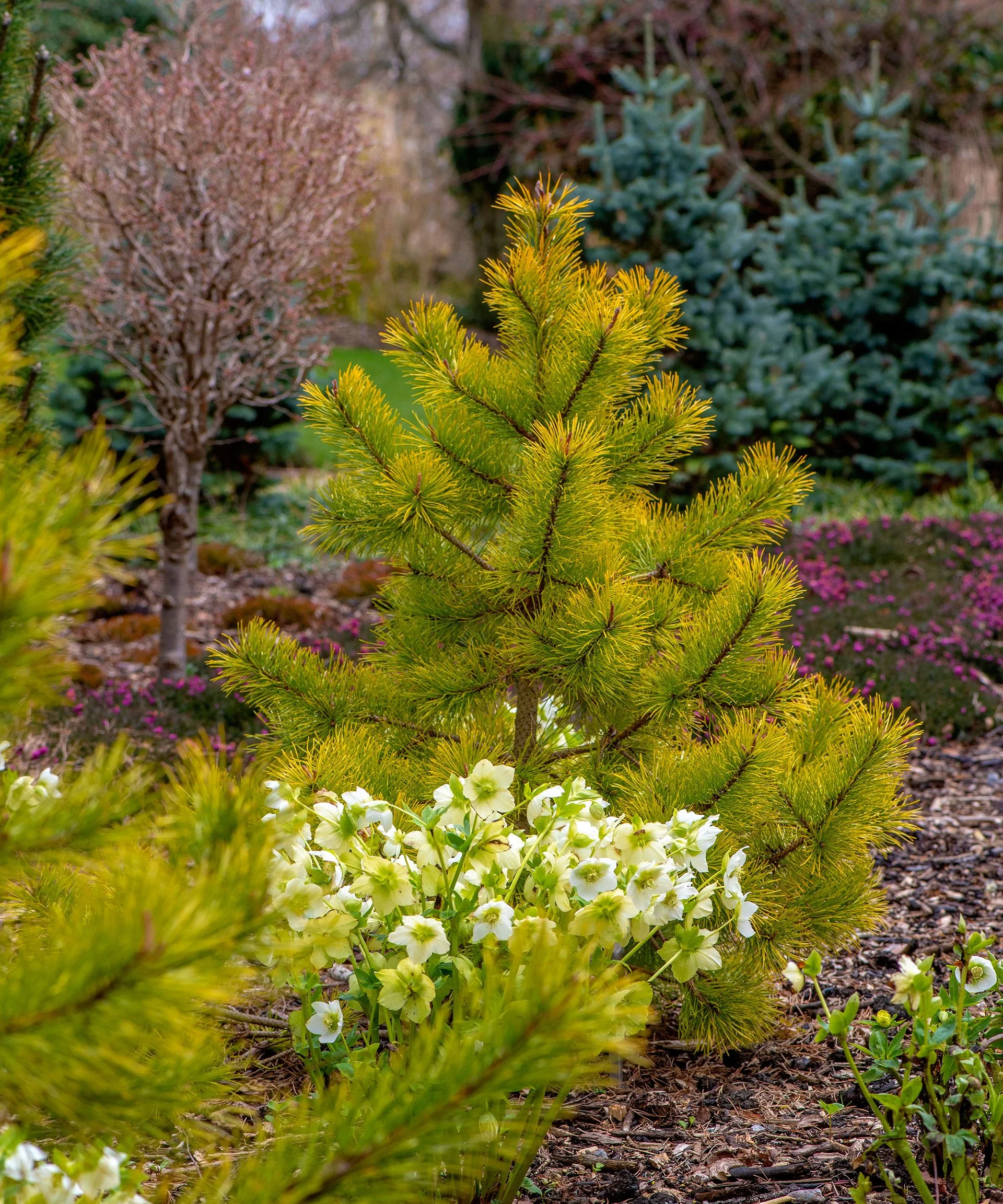
- Best for: warm winter colour
- Height: 6m
- Spread: 1.2-1.8m
‘Chief Joseph’ is a compact conifer with a seasonal shift that makes the evergreen label more interesting: as temperatures fall, its needles turn bright gold through autumn and winter. It can add colour to a courtyard garden or stand out in a larger planting.
Plant it in full sun and acidic or neutral, well-drained soil. It needs no pruning.
17. Chusan Palm (Trachycarpus fortunei)
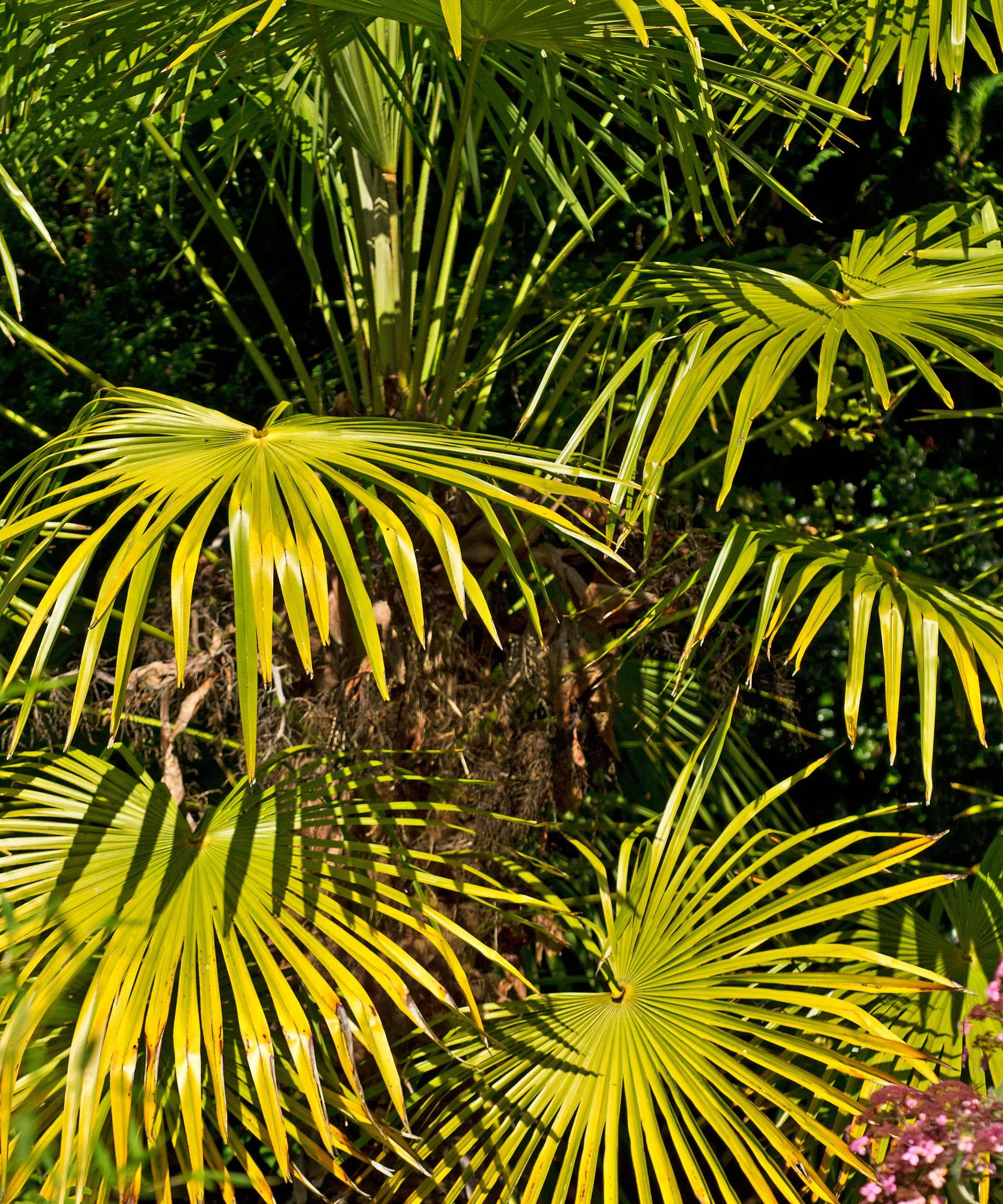
- Best for: exotic appeal
- Height: 2m
- Spread: 2.5m
A palm gives an evergreen planting a distinctly different silhouette. Chusan palm has broad, glossy, fan-shaped leaves held on flexible stems above a fibrous trunk, with sprays of creamy yellow flowers in early summer. It brings a tropical look, though it needs shelter from cold winds and hard frost.
Gardening Express sells Chusan palms, which can grow in pots for planters, a small patio or a roof terrace. They prefer full sun or light dappled shade.
FAQs
What is the difference between evergreen and deciduous?
Evergreen trees keep their foliage through the year; deciduous trees shed their leaves in autumn and winter. Conifers are often evergreen, but some lose their foliage seasonally, so check the variety before buying if winter cover is the goal.
What evergreen trees are best for small gardens?
In a small garden, look for a tree that offers more than year-round leaves: flowers, fruit, cones or an unusual trunk can all earn the space. Tree expert Michael Buck of Form Plants recommends Osmanthus x burkwoodii, which produces clusters of fragrant white flowers and tolerates shade.
For a very small front garden, a dwarf conifer in a container can provide shape and texture throughout the year.
Is it easy to maintain an evergreen tree?
Maintenance depends heavily on matching the tree to its site. Check the mature height and spread before buying; some evergreens, especially conifers, can outgrow their space, cast unwanted shade or encroach on neighbouring gardens. Root spread and pruning needs matter too.
The RHS advises: “to help new trees settle in, give them plenty of water and fertiliser for the first few years, as well as a sturdy stake for support.”
Evergreen trees can give a garden structure through the colder months, but they shouldn’t have to do all the work. Add low-level cover with the best evergreen shrubs, then bring winter colour and scent with the best winter-flowering shrubs. The practical test is simple: choose for the space you have, and for what you want to see there in every season.
The original version of this article previously appeared on Gardeningetc, a sister website to Homebuilding & Renovating.


Discussion
Sign in to join the discussion.