From randomized maze patterns to adjustable ring shades, five 3D-printed lamps show how material, form and movement can shape ambient light.
3D printing gives lighting designers direct control over how a lamp looks and how it casts light. These five designs put that control to work in distinct ways: randomized paths create shifting shadows, porous shells soften illumination, and movable rings change a beam from ambient to focused. The common thread is a shift from treating the shade as a passive cover to designing it as part of the lighting system.
That makes these objects interesting beyond their sculptural appearance. Their geometry determines the character of the light, while digital fabrication supports forms and surface details that conventional production would make difficult. Several also use recycled or plant-based materials, and some are made to order or customized by finish and color. The results suggest that 3D printing’s strongest contribution here is the ability to unite structure, illumination and individual expression in one designed object.
When the shade becomes the light effect
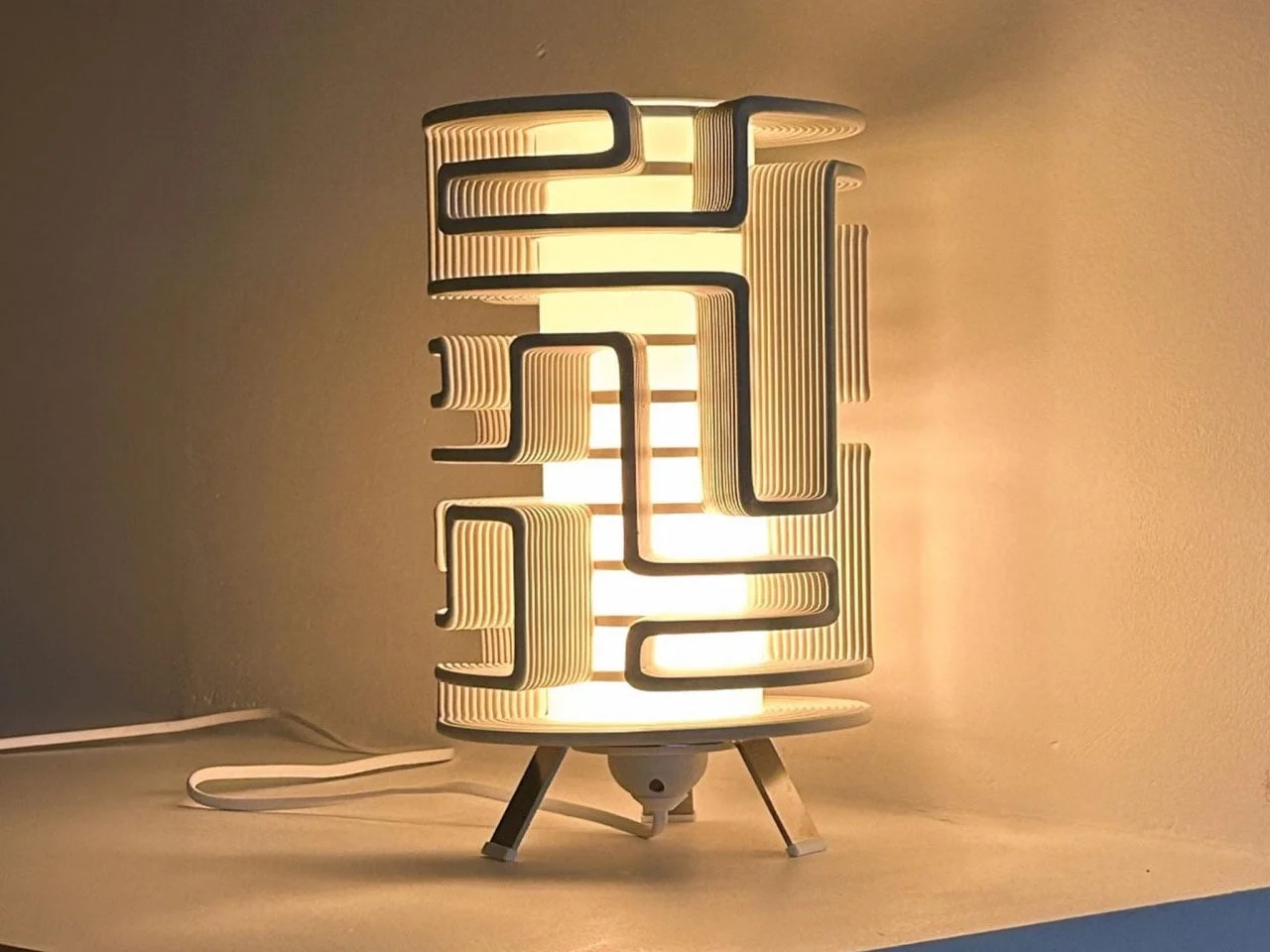
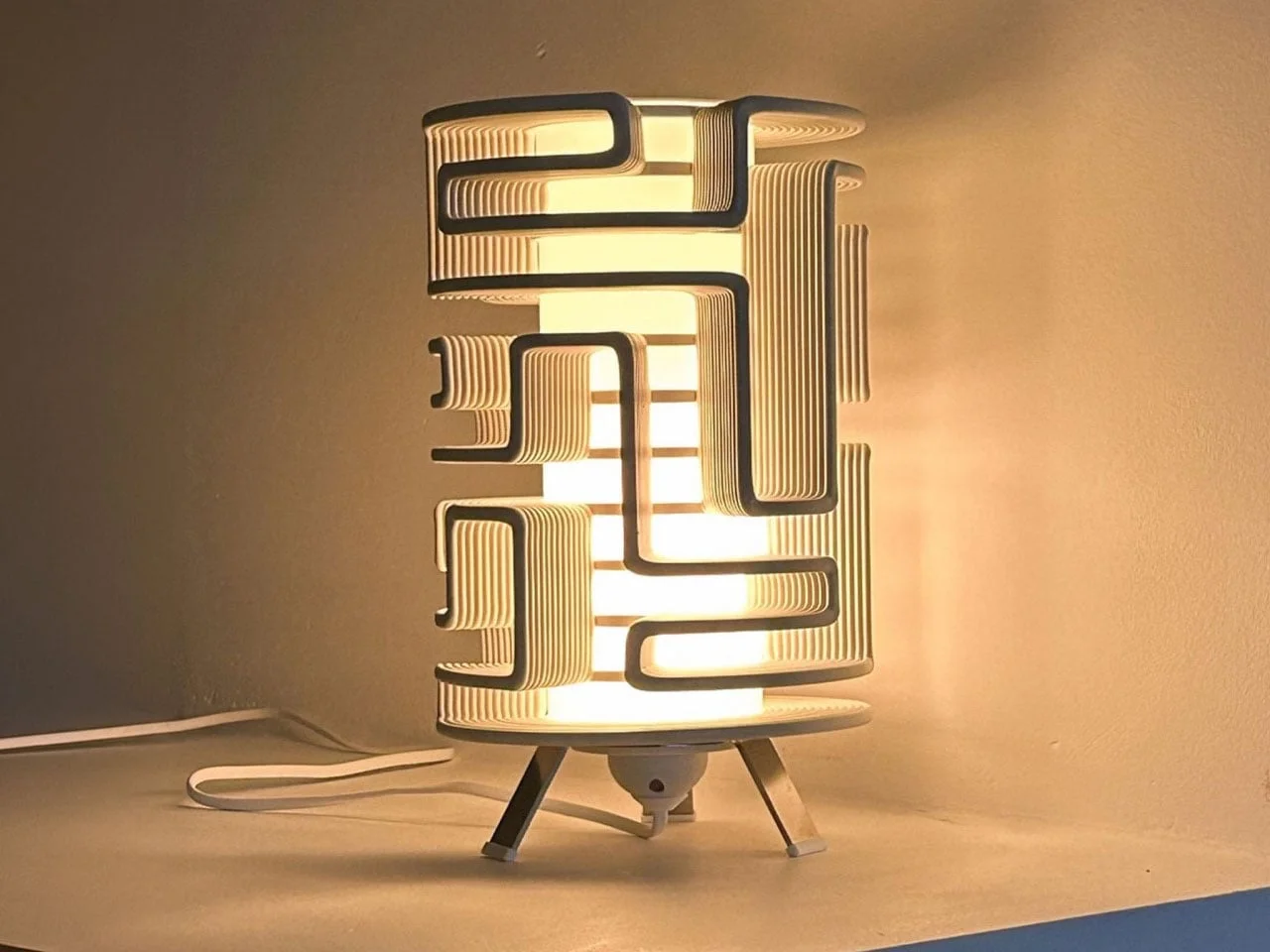
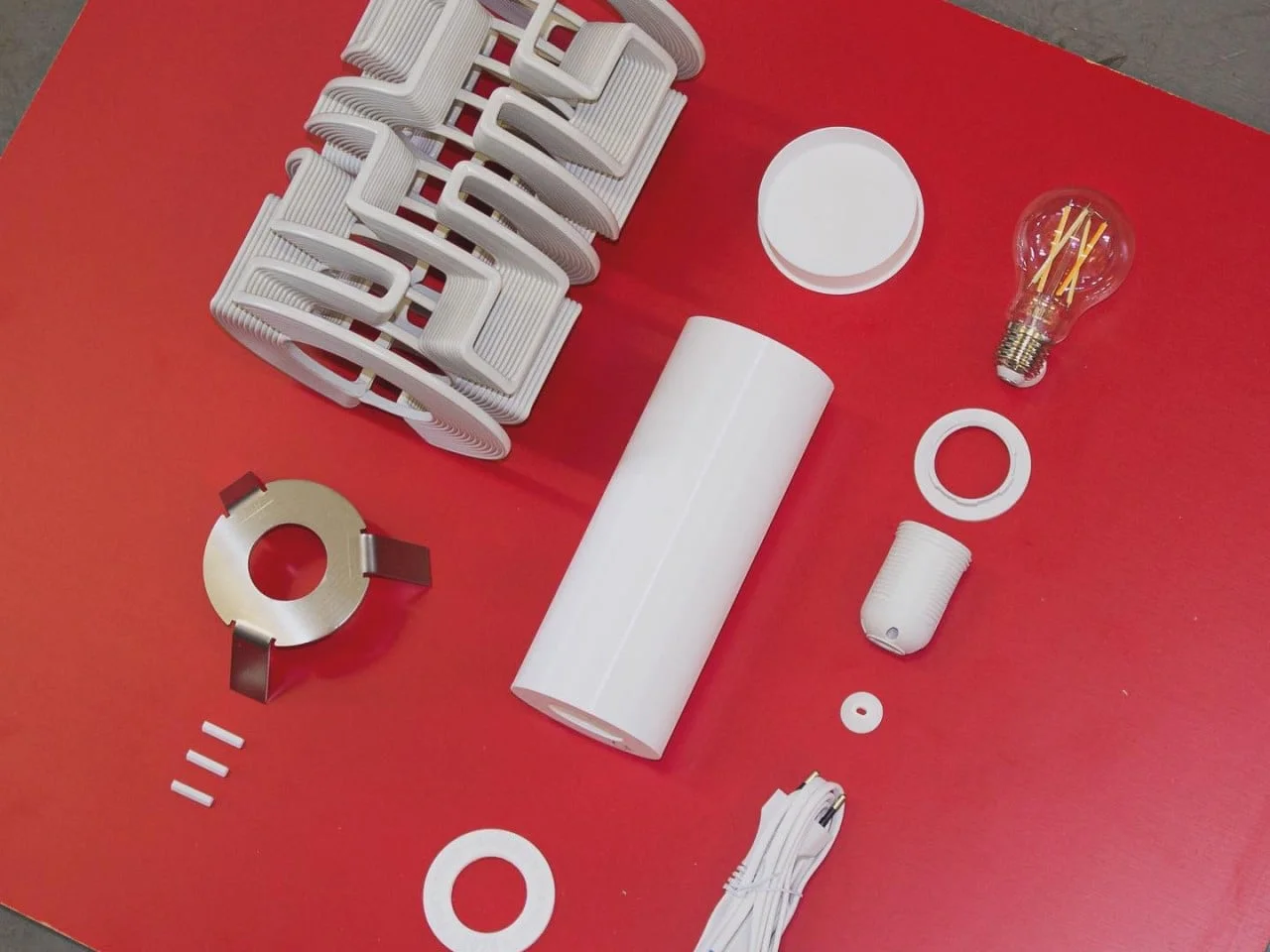
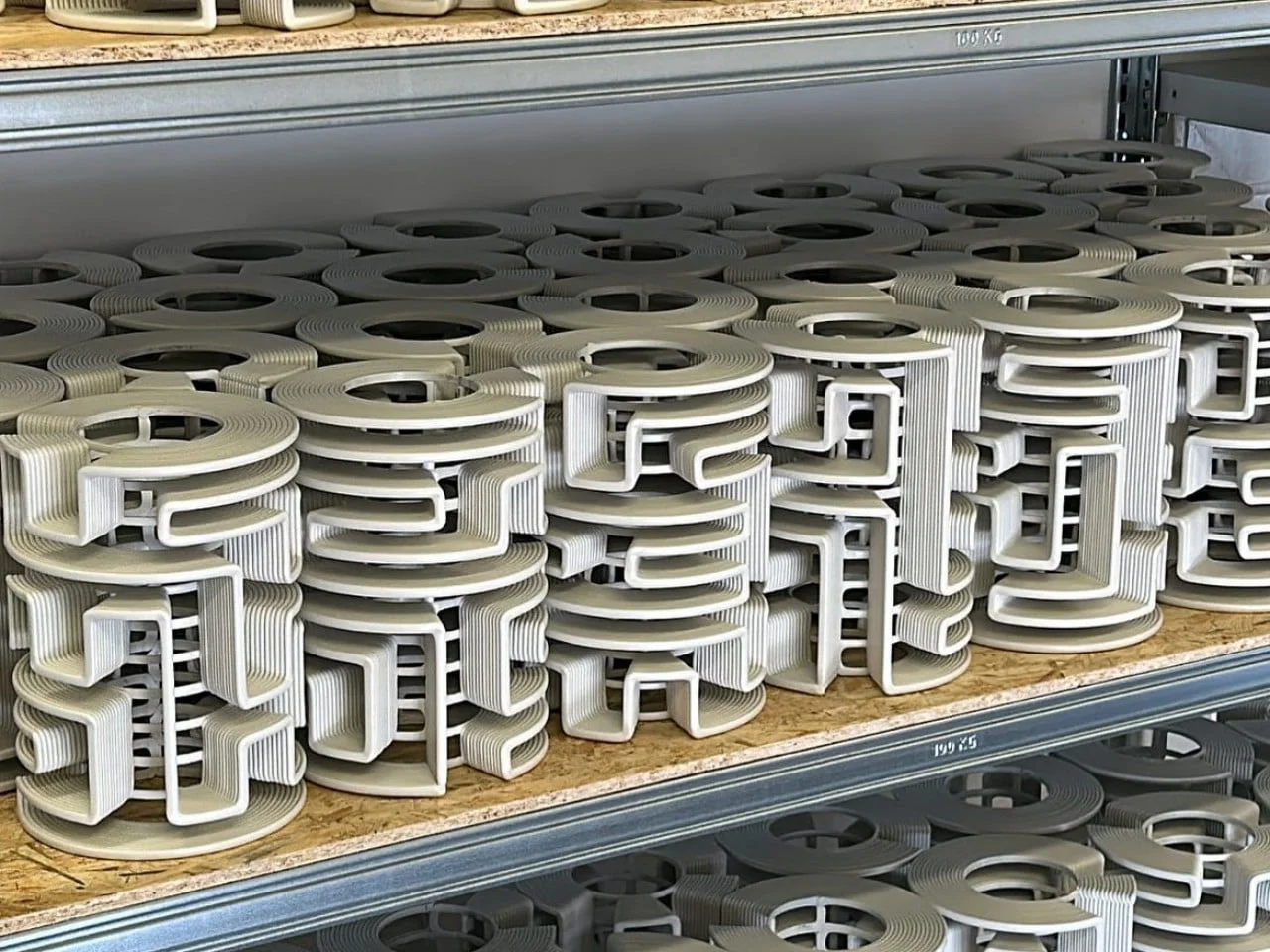
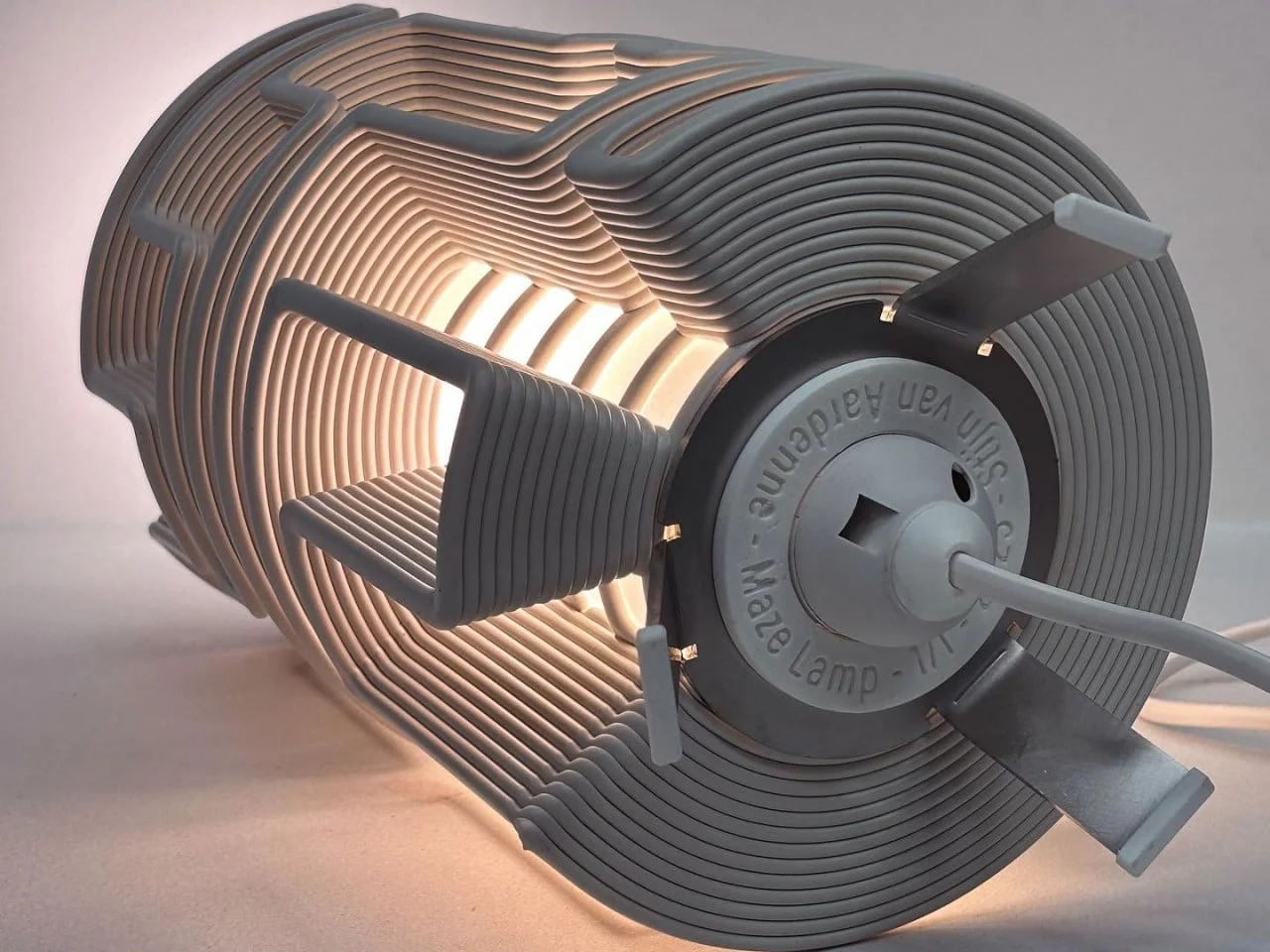
The Maze Lamp, designed by Stijn van Aardenne, uses an industrial printing process that moves around a rotating axis to build winding lines across a cylinder. The layered maze pattern filters the lamp’s output and throws intricate shadows into the room. Its surface remains visually active when the light is off, so the object works as a sculptural feature as well as a lamp.
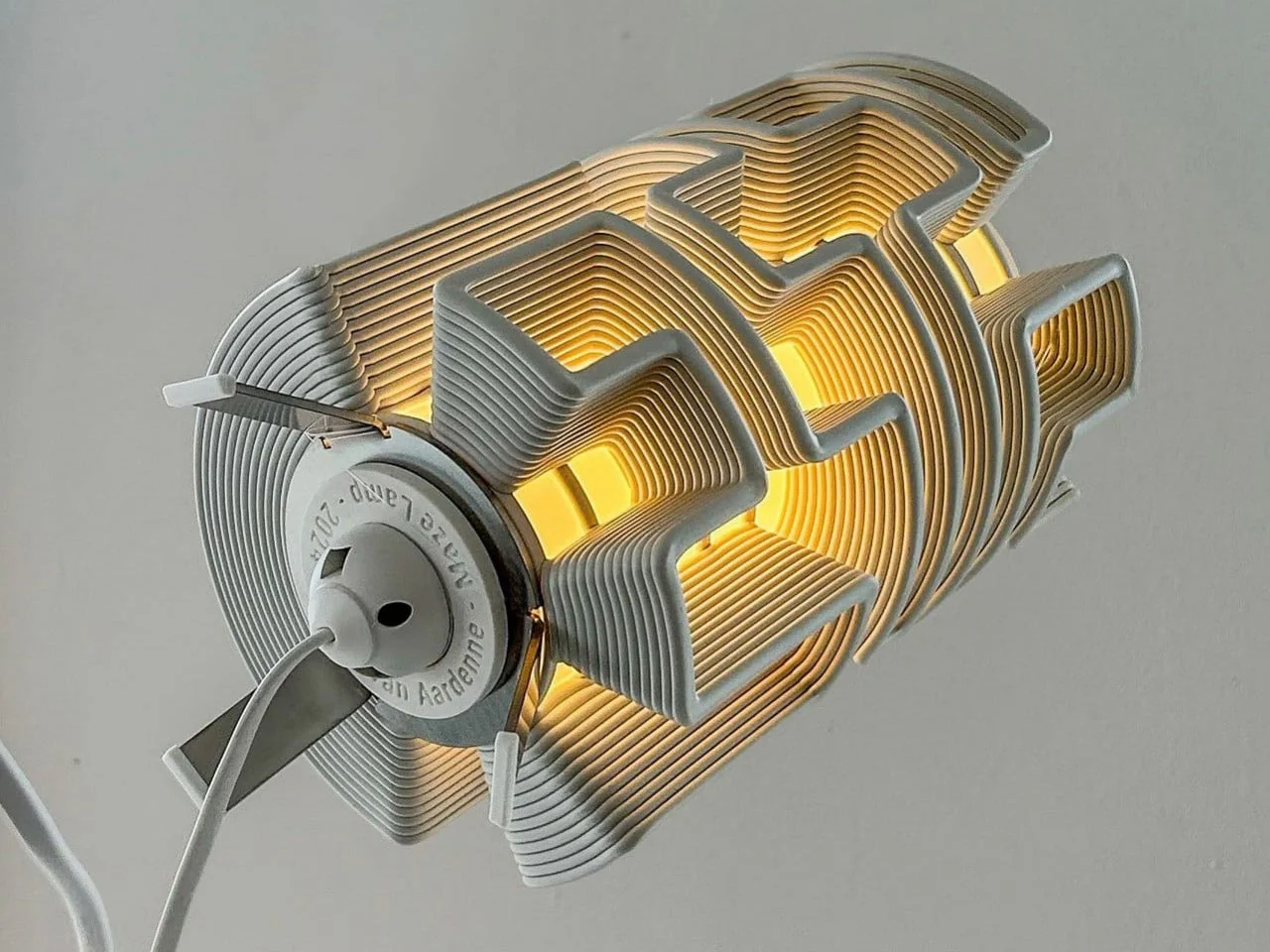
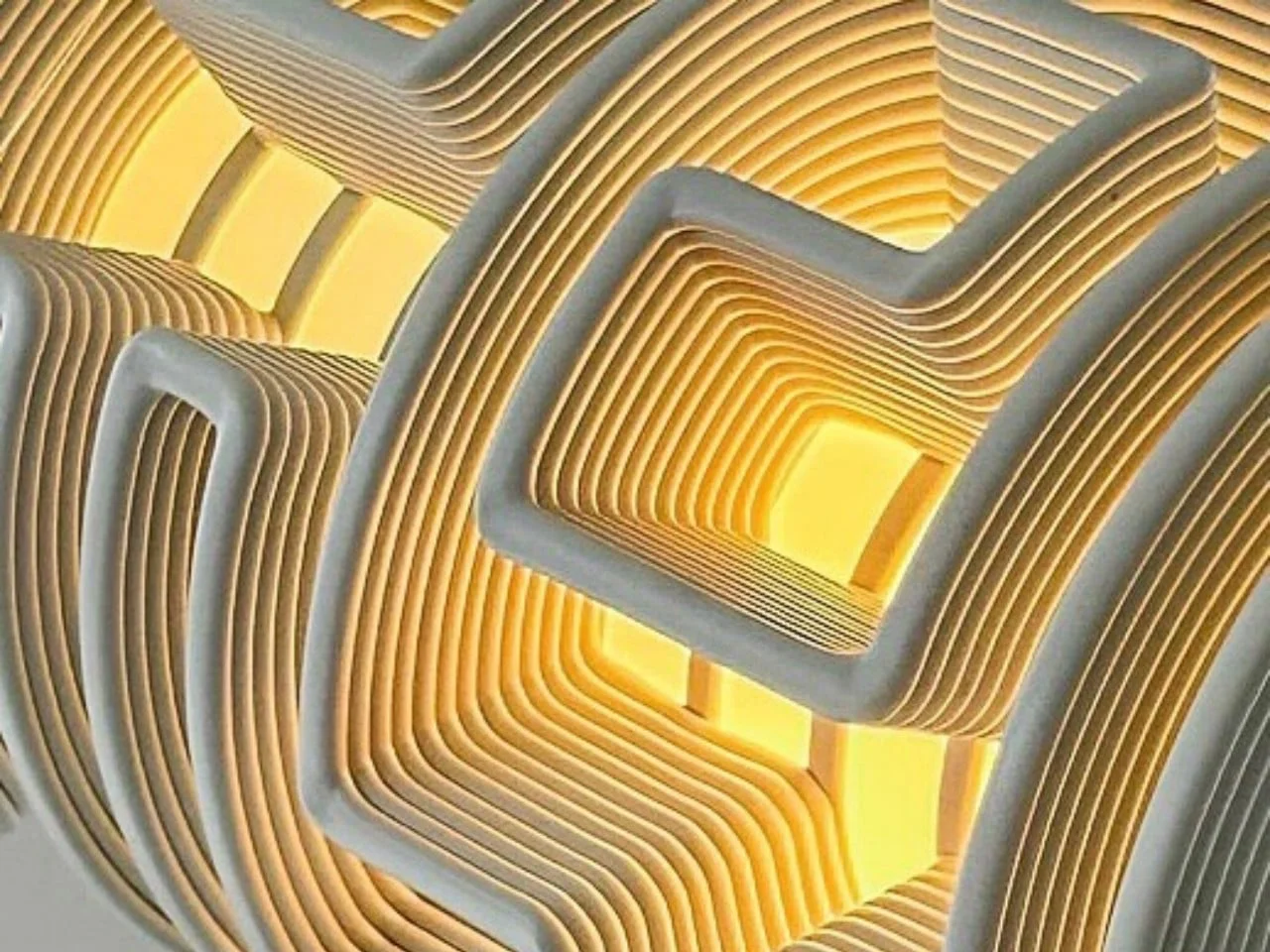
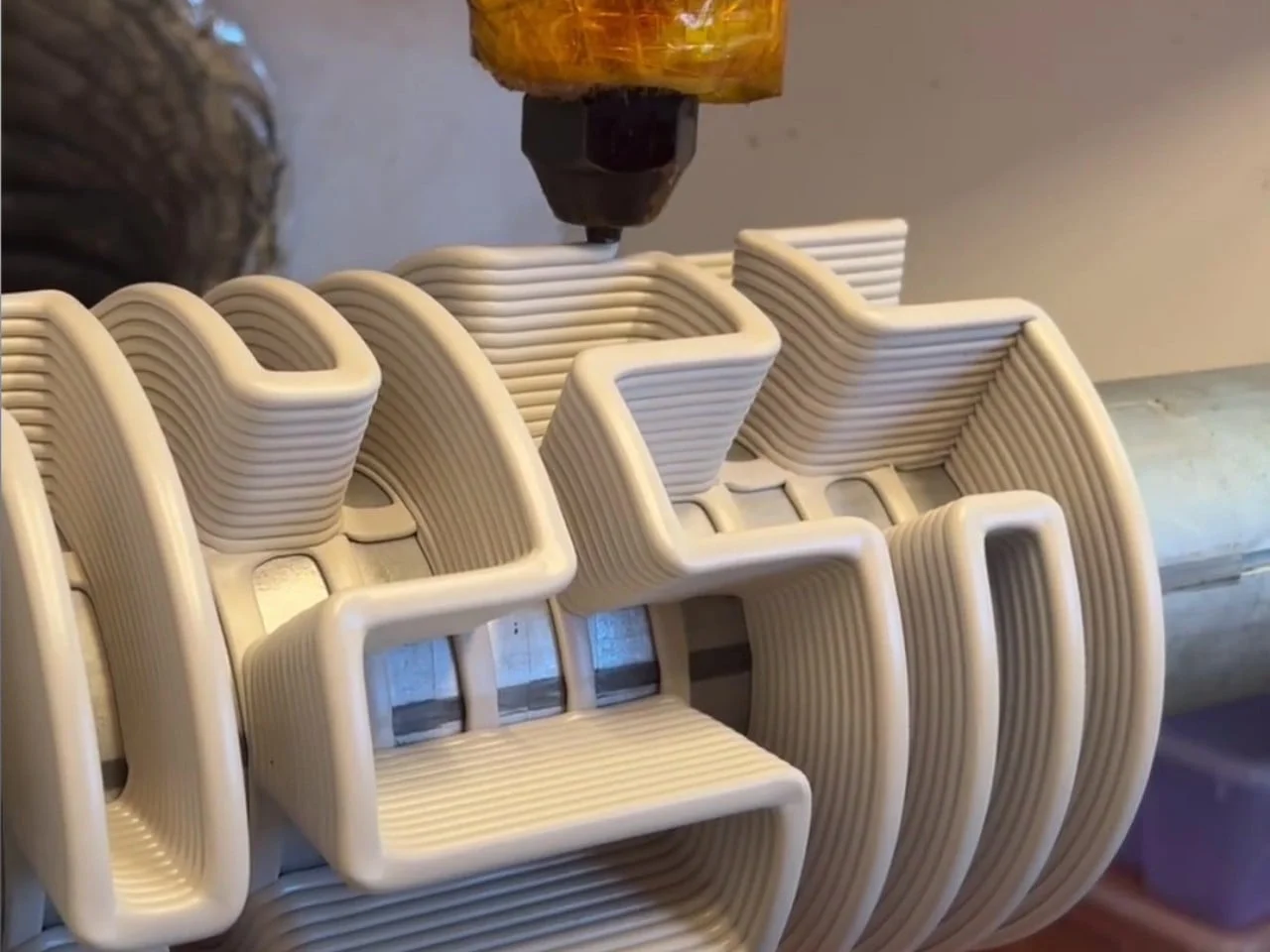
Its pattern is randomized during printing, making each piece distinct. Van Aardenne also uses recycled plastic sourced from discarded refrigerator doors, giving the lamp’s production story a material dimension beyond its visual effect. The design shows why a printed surface can do more than decorate a shade: every line becomes part of the way light moves through and around it.
Organic geometry, softened illumination
The Alherd Collection from YET FAB takes its cues from coral growth and eroded stone. Its porous, cellular forms come from computational design and custom 3D printing, producing surfaces that feel closer to natural formations than conventional lamp shades. The structures diffuse light across their texture, giving the collection a gentle ambient character.
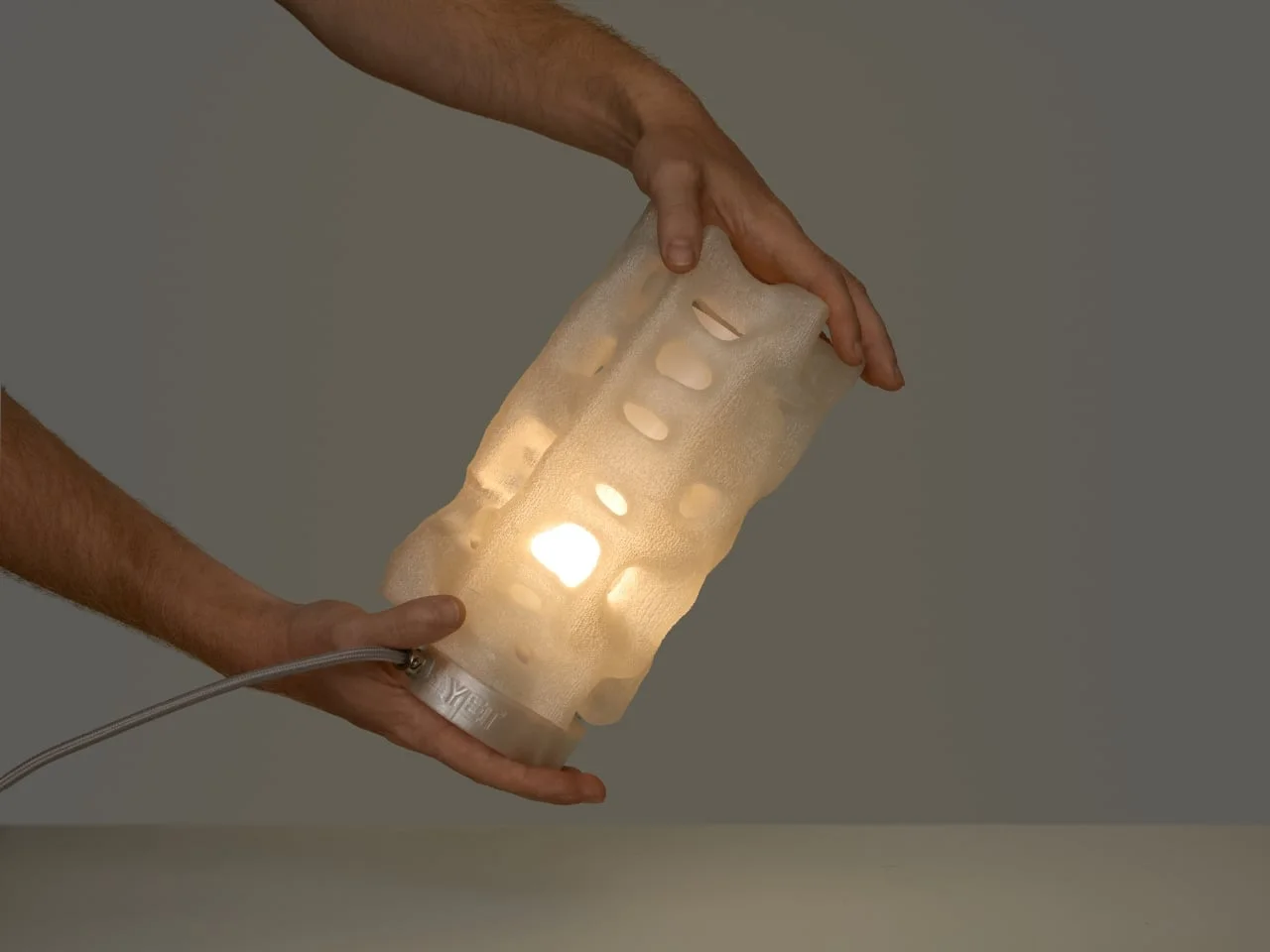
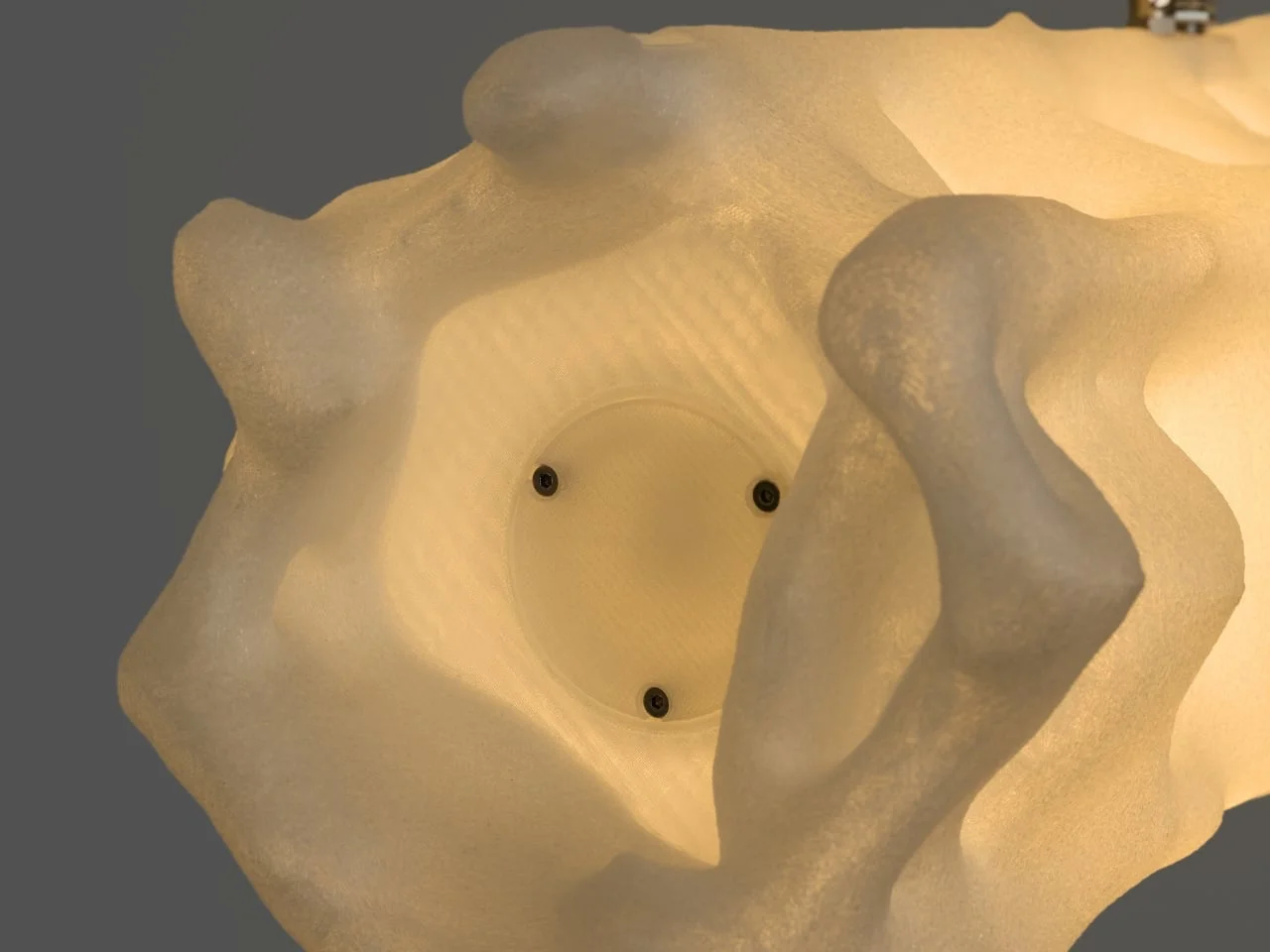
Founded by Ilya Kotler, Anastasiya Kotler and Rael Kaymer, YET FAB applies biomimicry through digital fabrication rather than literal imitation. Table, floor and pendant versions share a consistent visual language at different scales. Each is made to order from recyclable plastic and can be customized in finishes and colors; integrated LEDs bring out the textured surface with a warm glow.
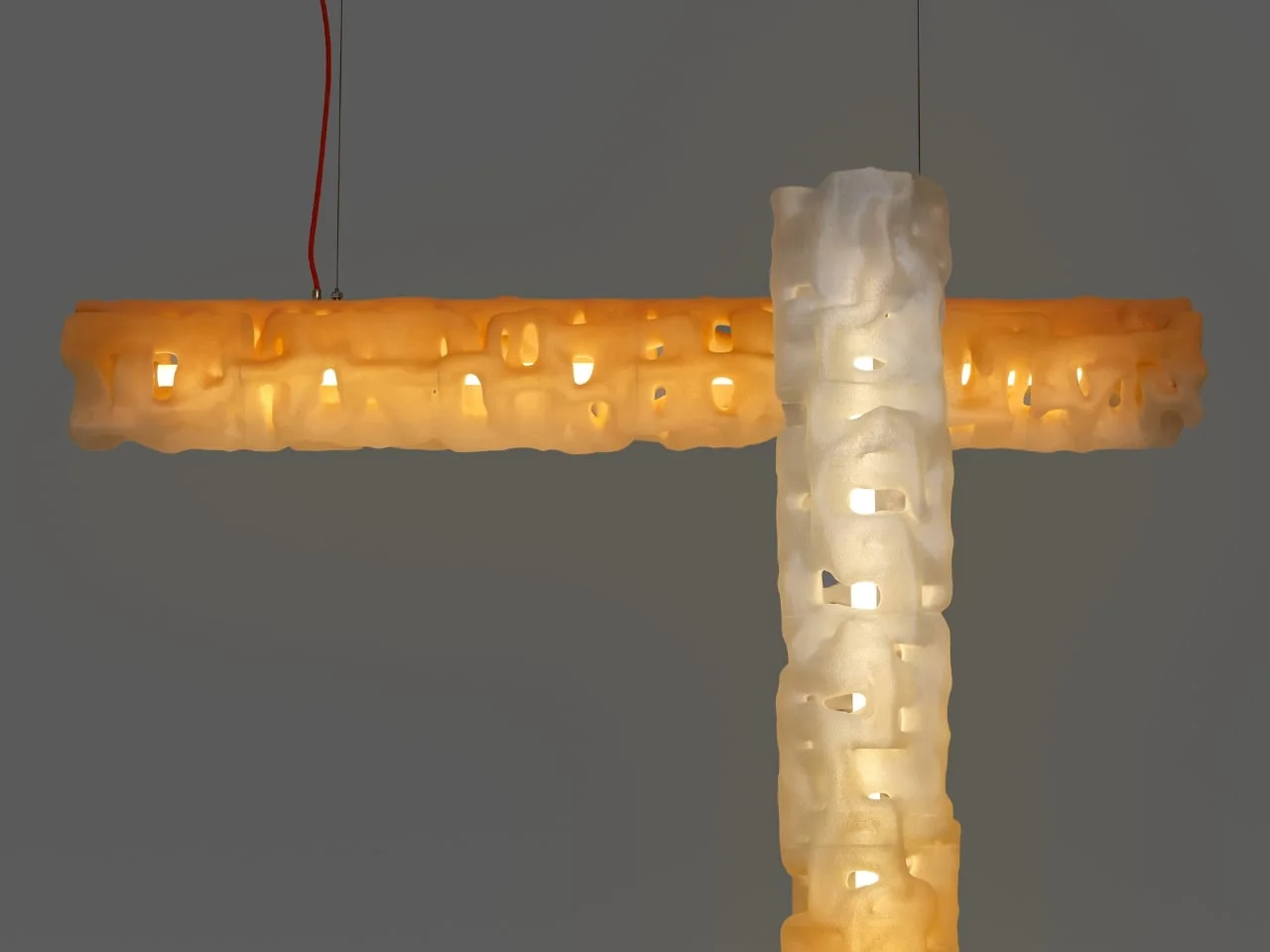
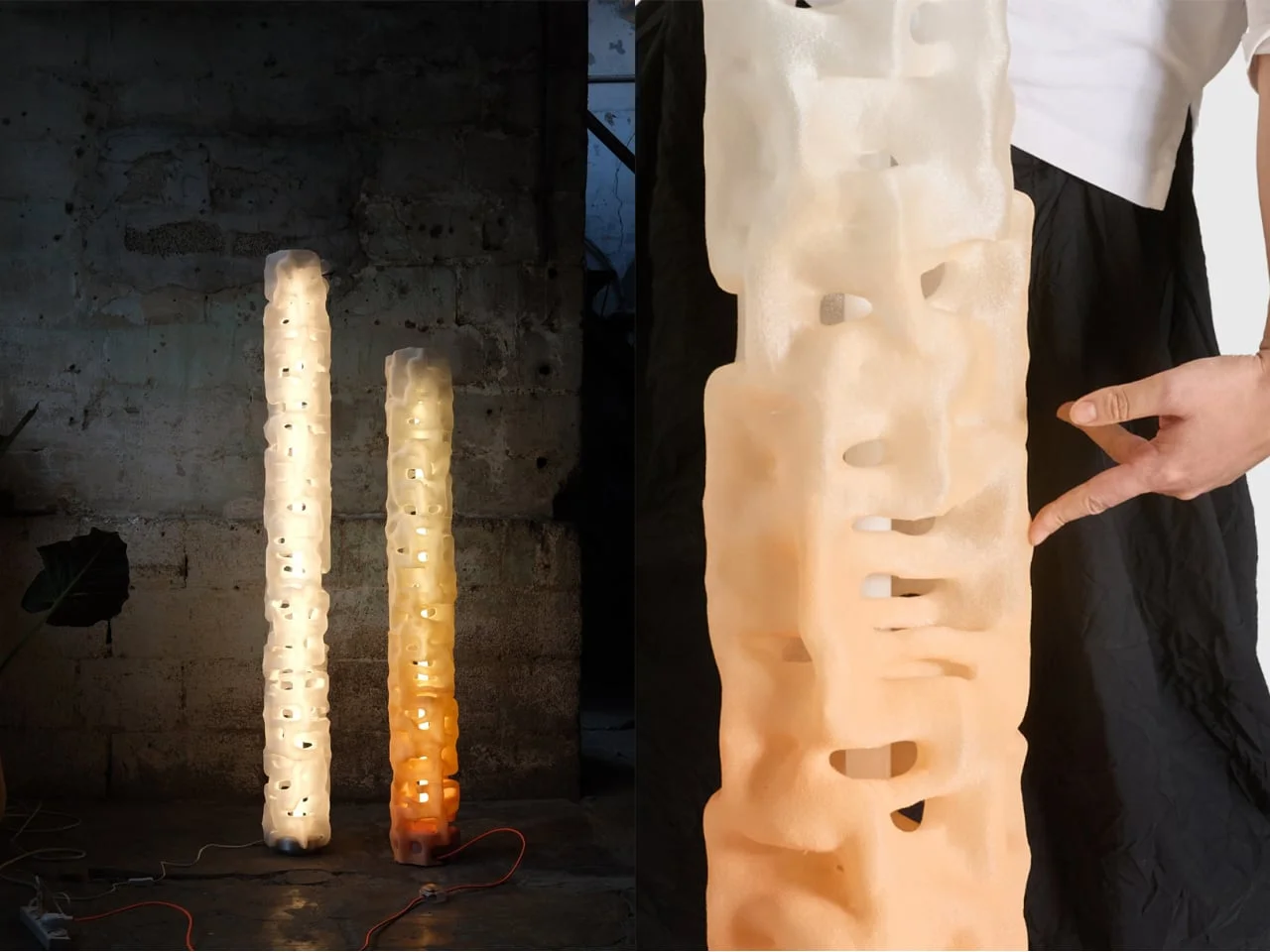
Here, the printed texture isn’t incidental. It shapes the way the lamp reads in a room and helps turn a functional light source into an atmospheric presence. Offering the same design across several lamp types also makes the collection relevant to interiors that need a family of fixtures rather than a single statement piece.
Everyday utility meets recycled material
Teixeira Design Studio’s Drop Light, developed with Oftwise Studio, approaches the desk lamp through organization as much as illumination. Its sculptural base incorporates a storage tray for small items such as charging cables and earphones. That feature makes the lamp’s footprint do double duty, folding everyday workspace clutter into the product itself.
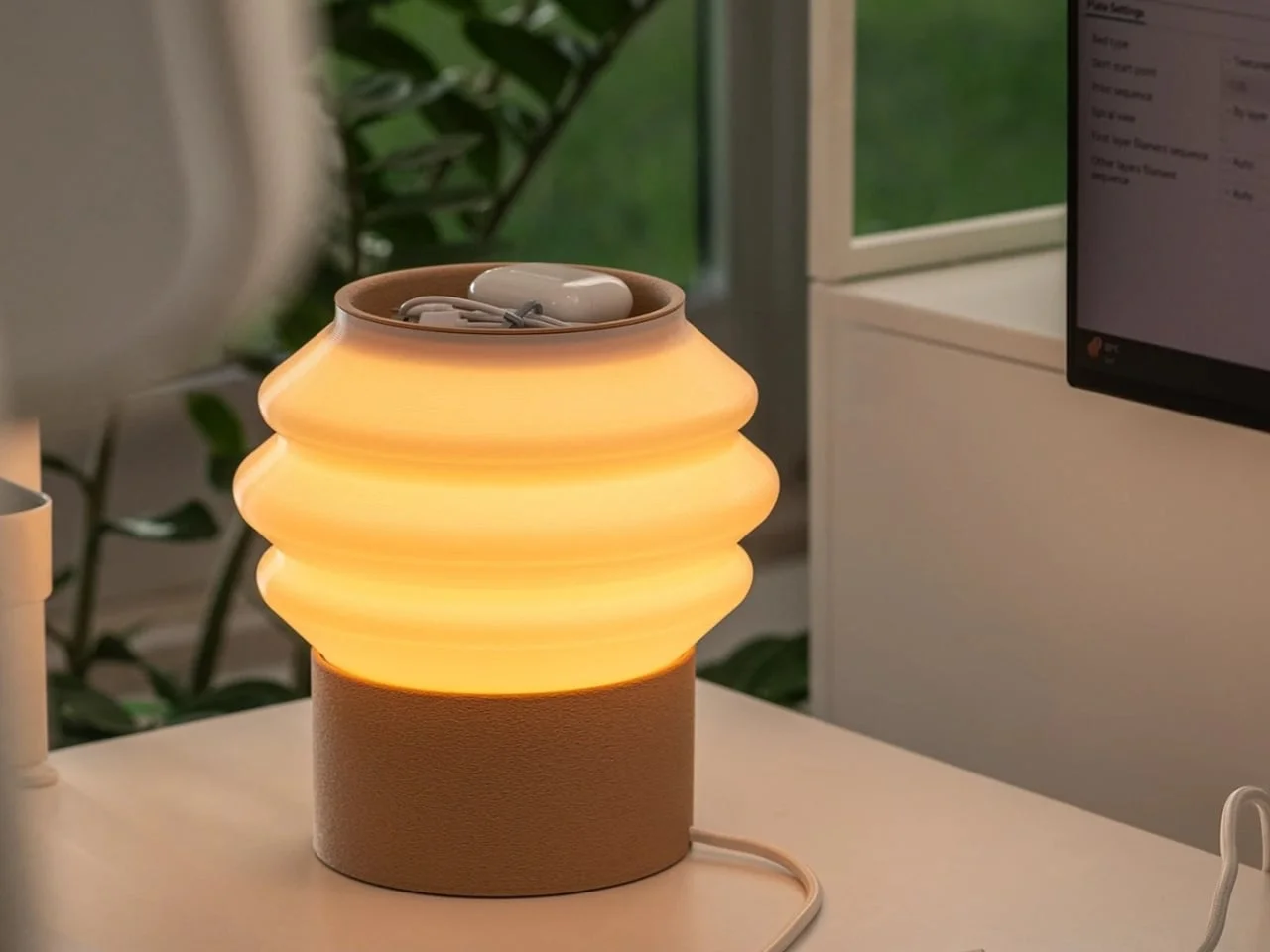
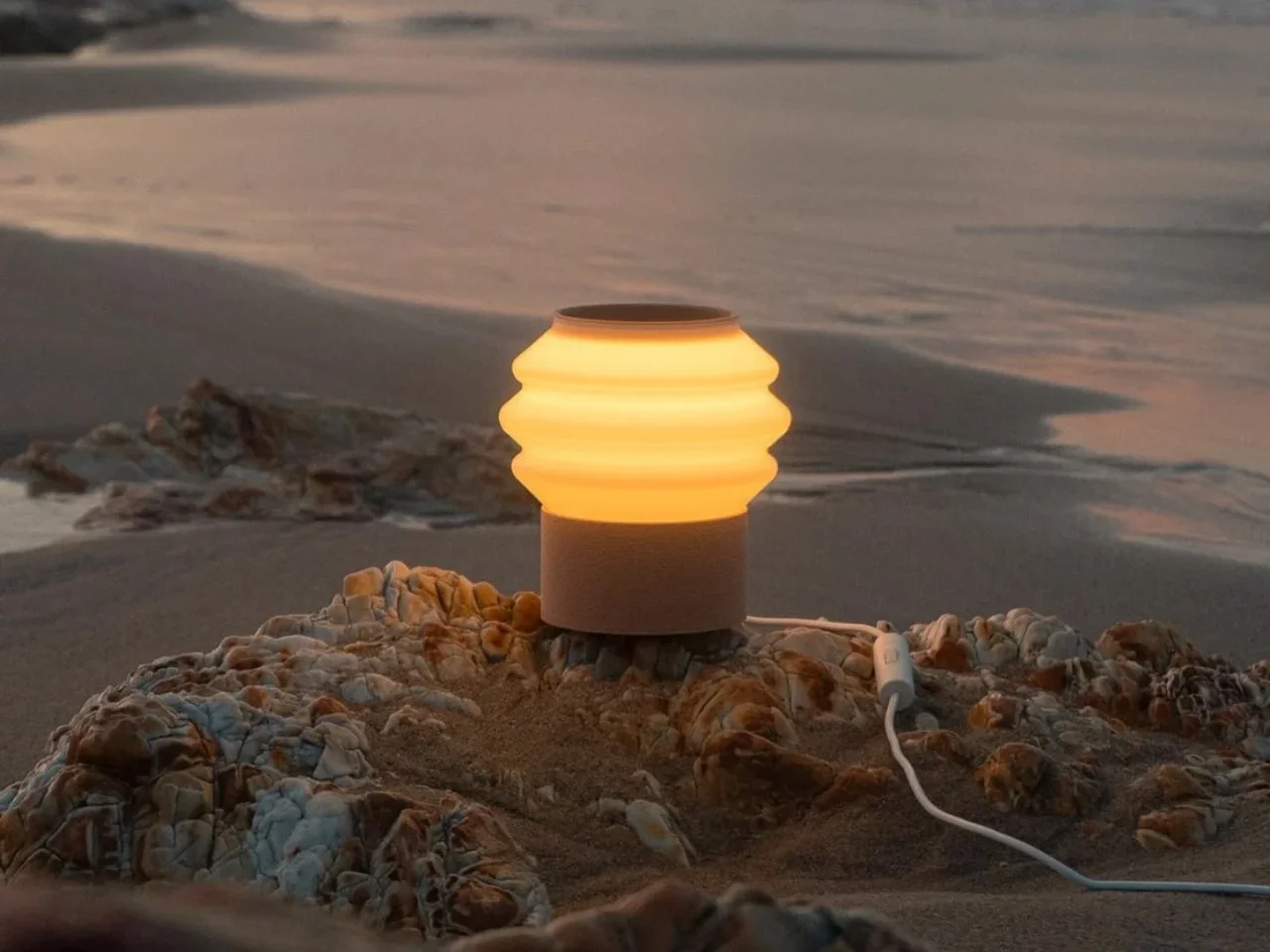
The lamp is printed entirely from recycled, plant-based PLA. Its matte base contrasts with a smooth, semi-translucent shade, which diffuses the light into a softer glow. The difference in finish helps distinguish the base’s tactile, practical role from the shade’s optical one, while visible print layers lend the object a crafted surface.
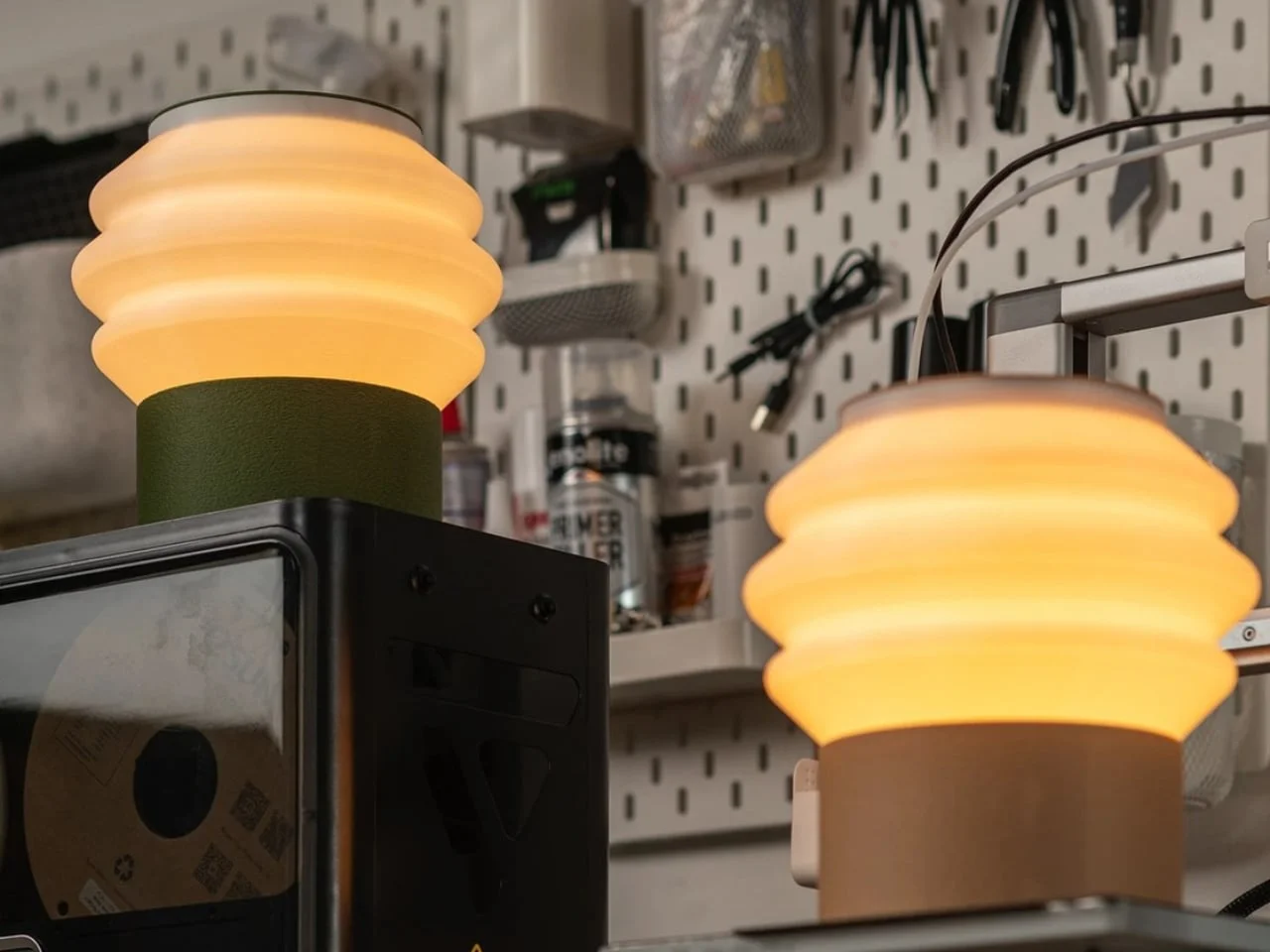
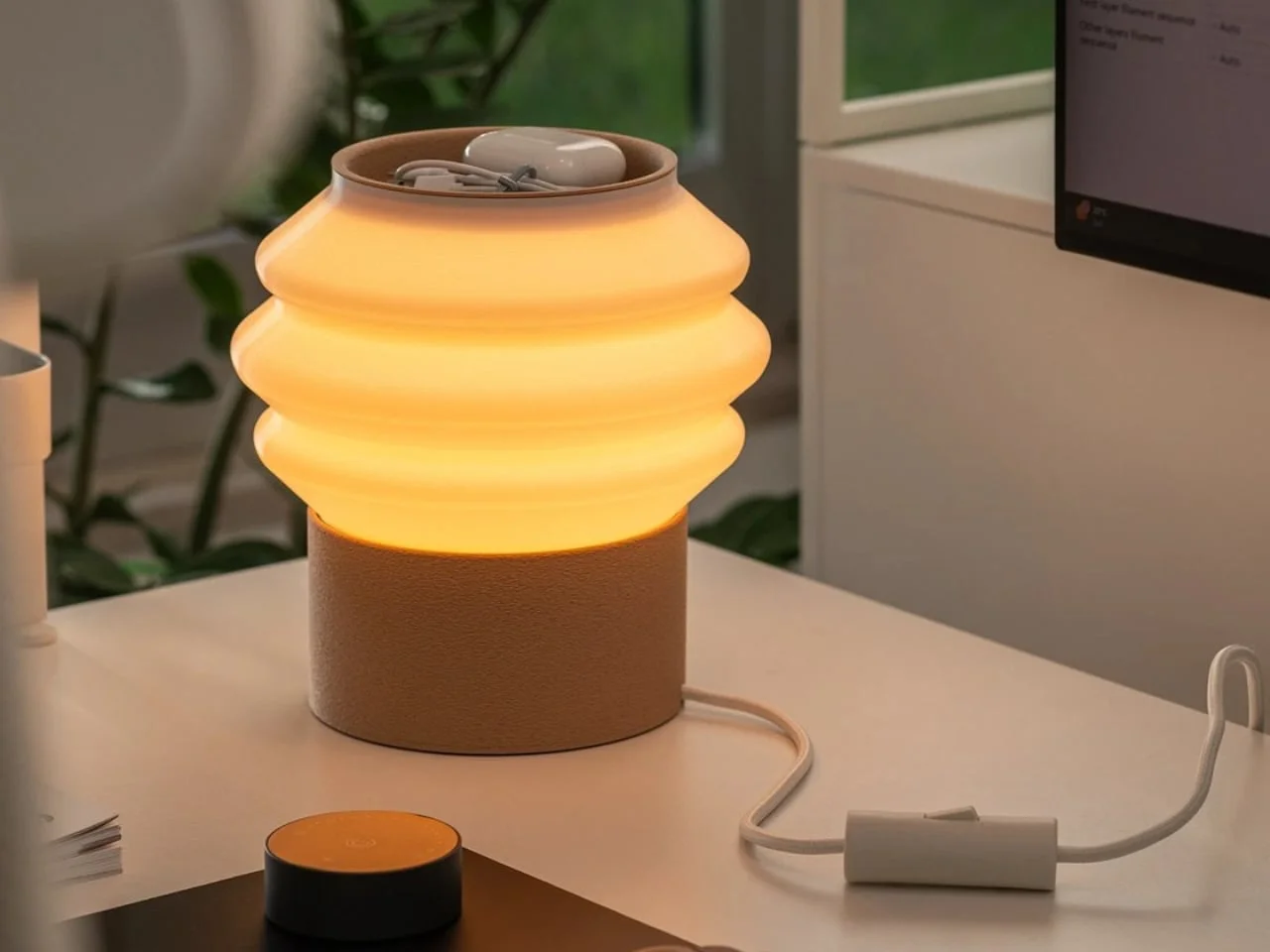
Its appeal lies in a straightforward design decision: storage and lighting share one object without the base becoming purely utilitarian. For compact workspaces, that combination makes the lamp’s form relevant to the routine around it, not just to the quality of its illumination.
Personalization through production
Gantri’s lighting collection uses plant-based PLA derived from sugar to produce lamps with precise forms and soft textures. The range includes table, desk and ambient lights, with features such as diffused illumination, compact bases and integrated utility functions. Warm LED lighting and considered light distribution suit both home and workspace settings.
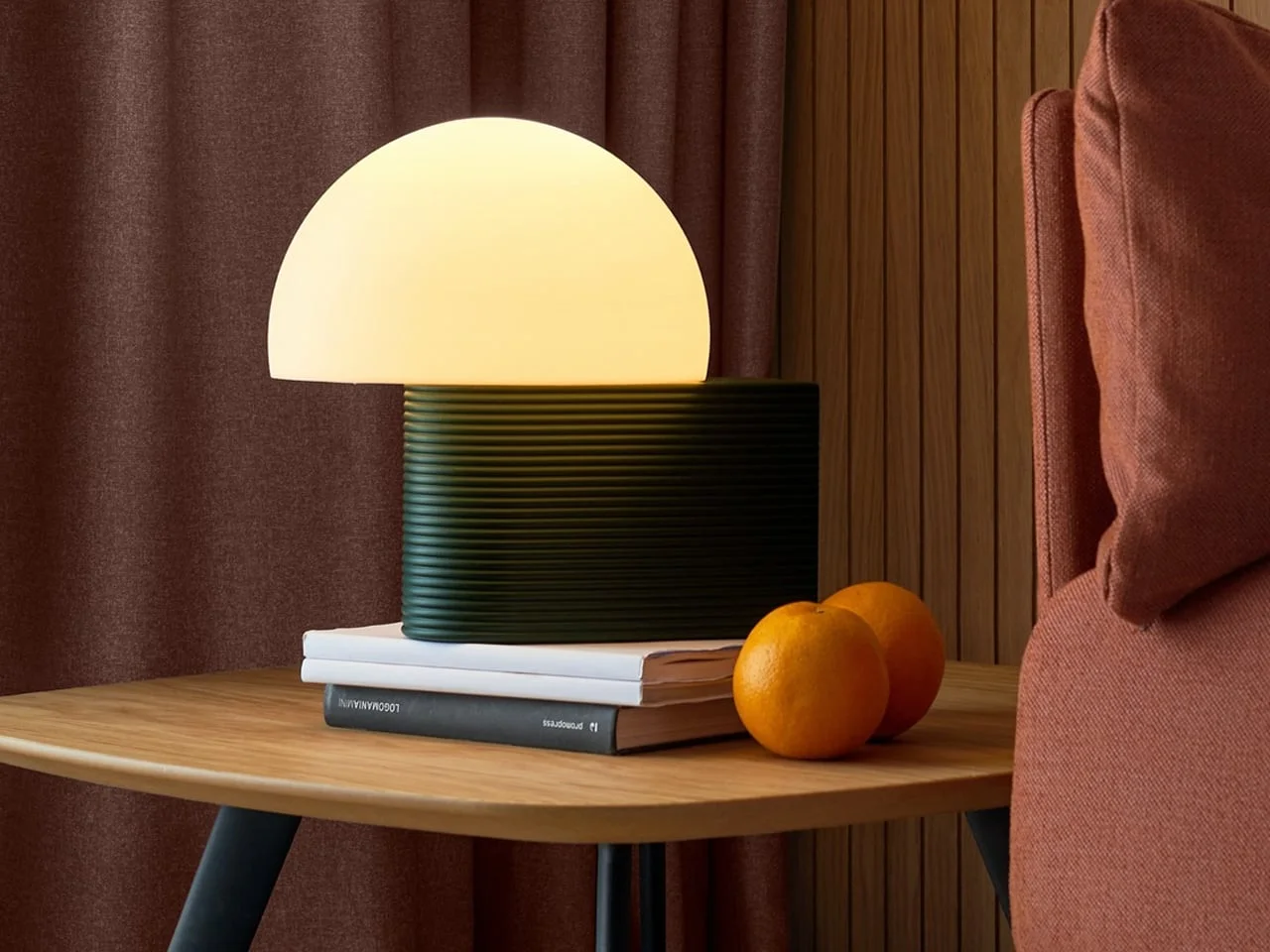
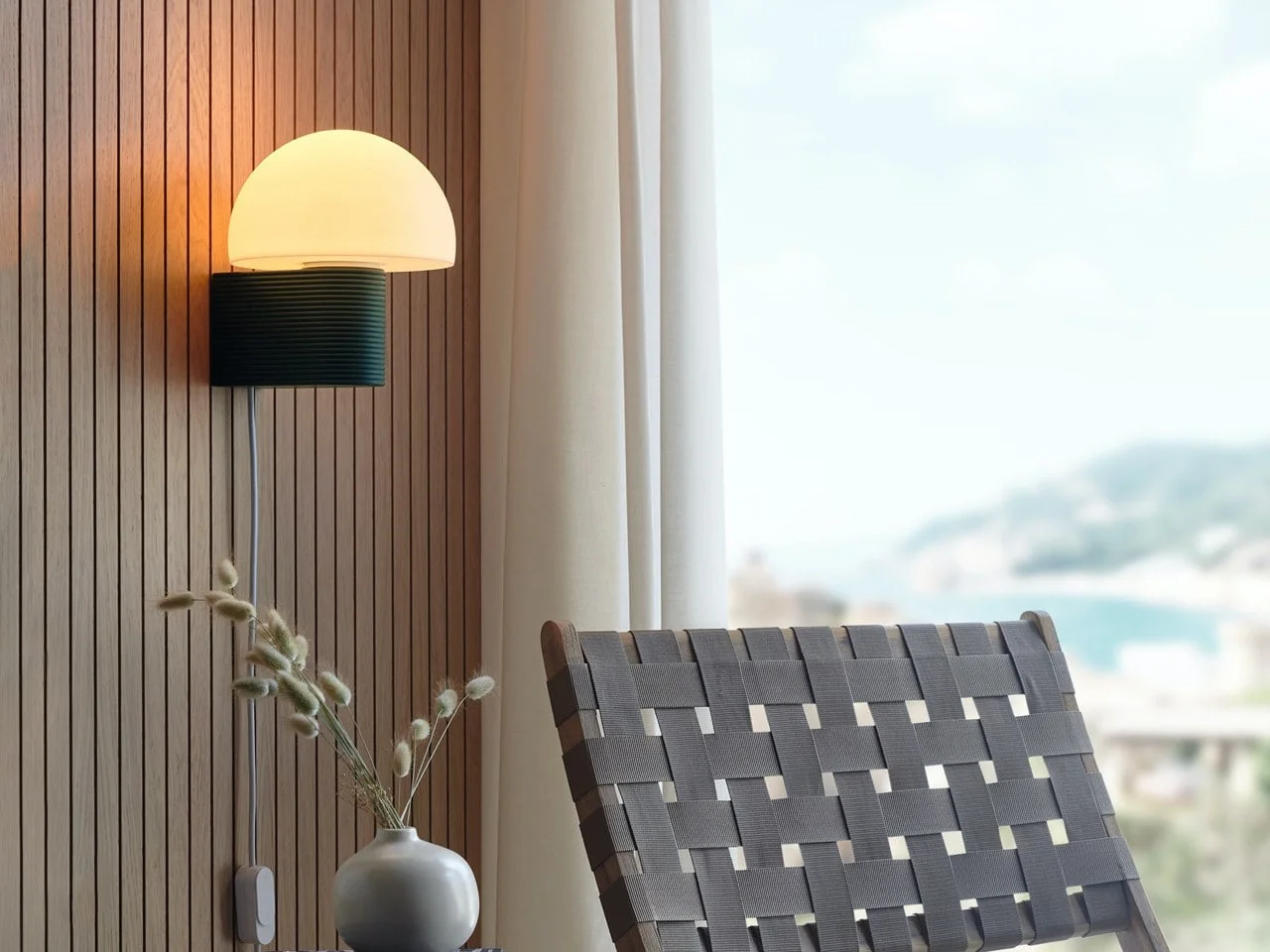
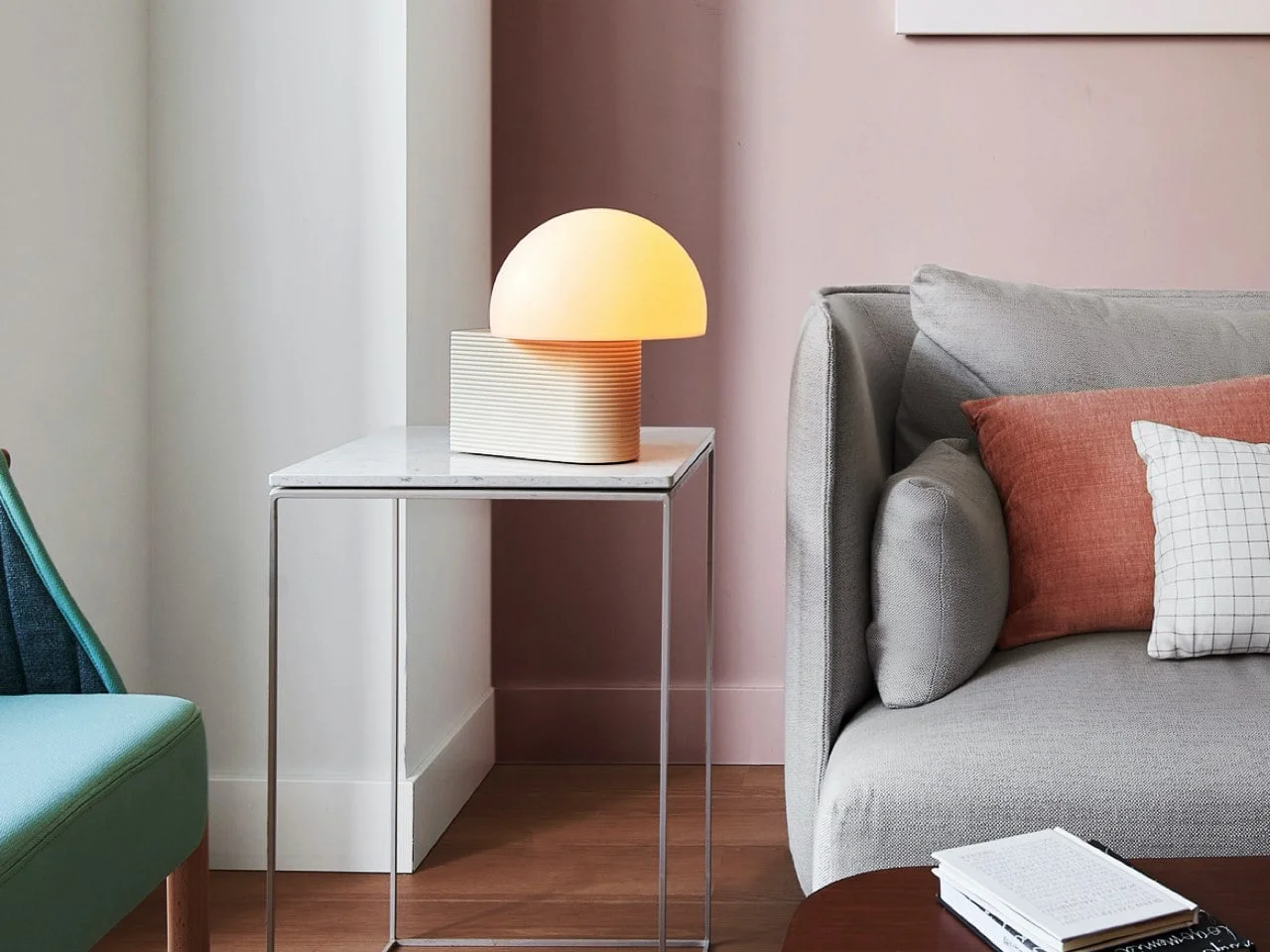
3D printing’s role in a collection like this extends beyond producing unusual shapes. It supports controlled textures and forms across different product types, giving designers room to tailor a lamp to its intended space. The collection’s designs pair contemporary silhouettes with day-to-day functions, showing how a shared fabrication method can still produce a varied set of lighting objects.
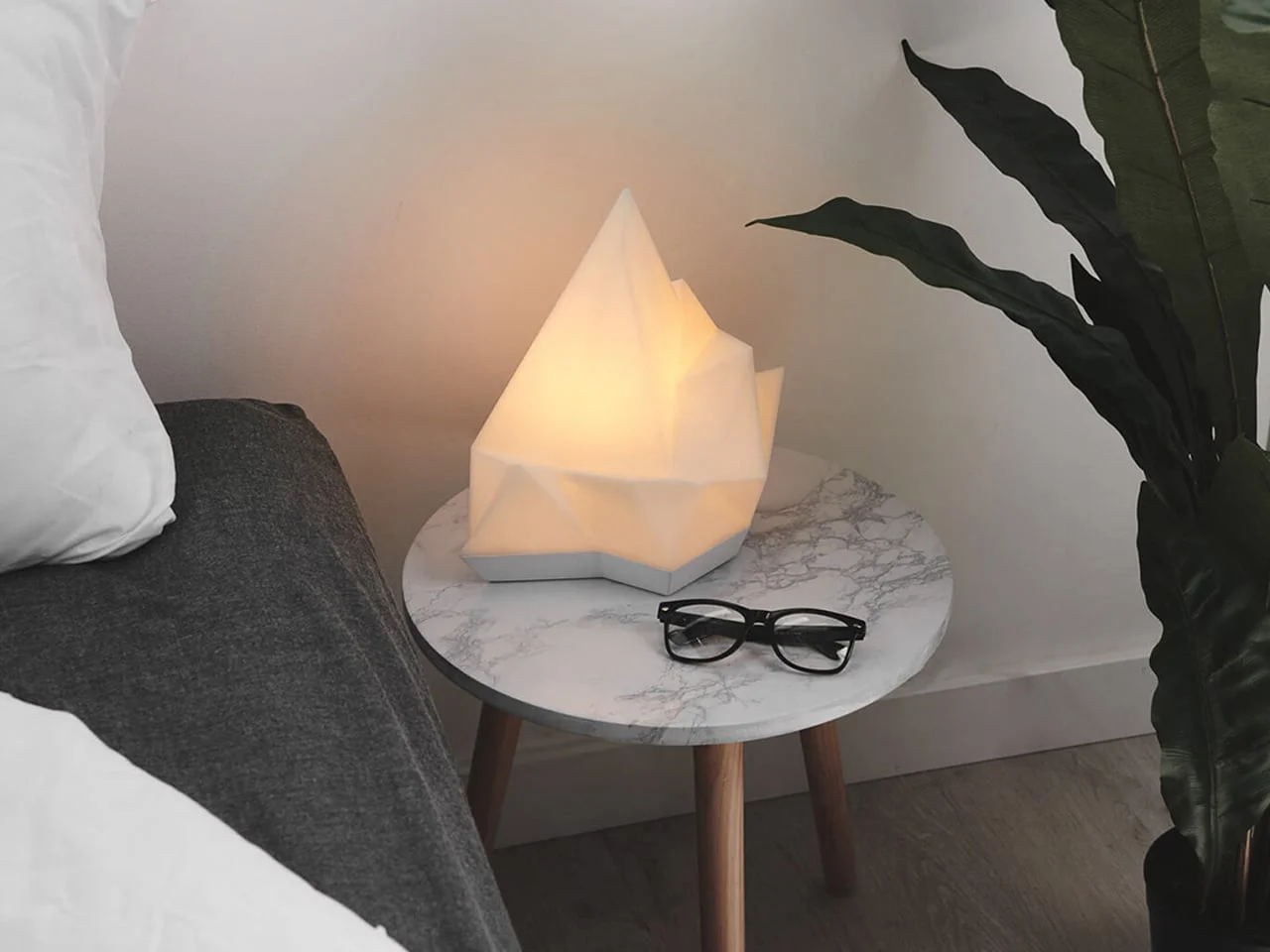
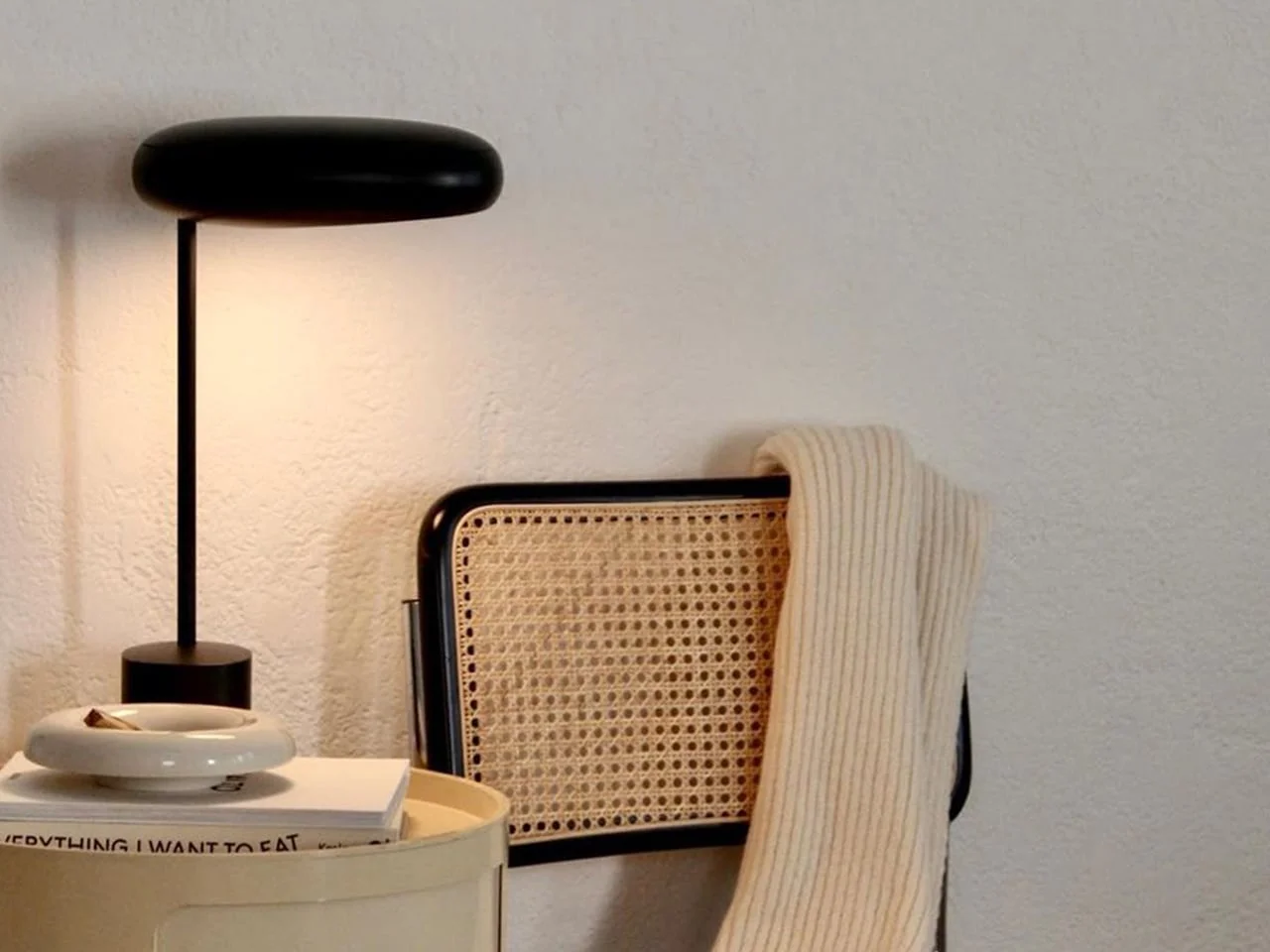
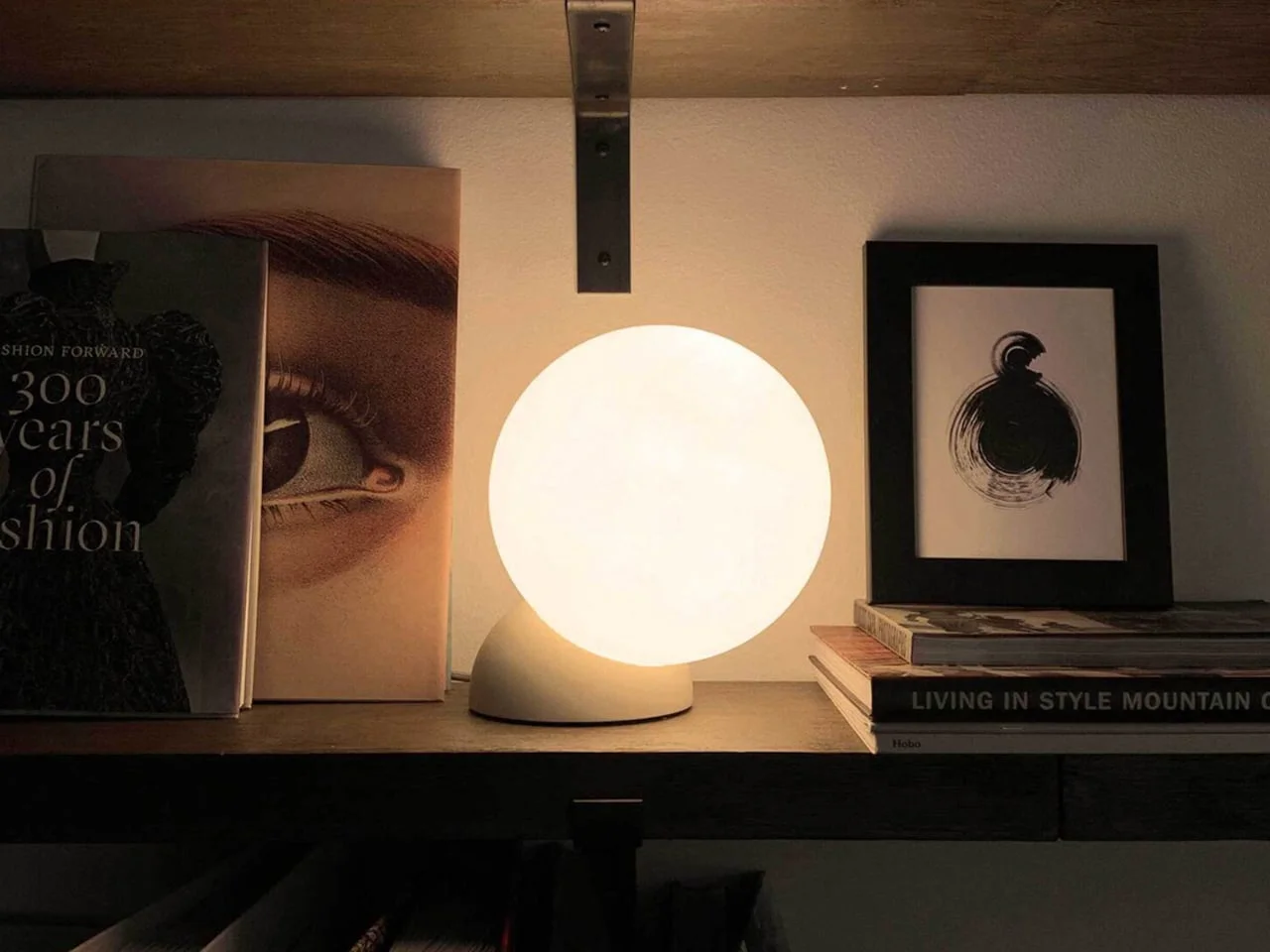
Digital production also makes customization in size, color and finish easier to incorporate into a design process. That flexibility can help lamps respond to particular interiors instead of relying on a single standardized shape. In practice, the value is clearest when personalization serves the room or the task, as the Drop Light’s integrated tray does.
Moving rings put control in the user’s hands
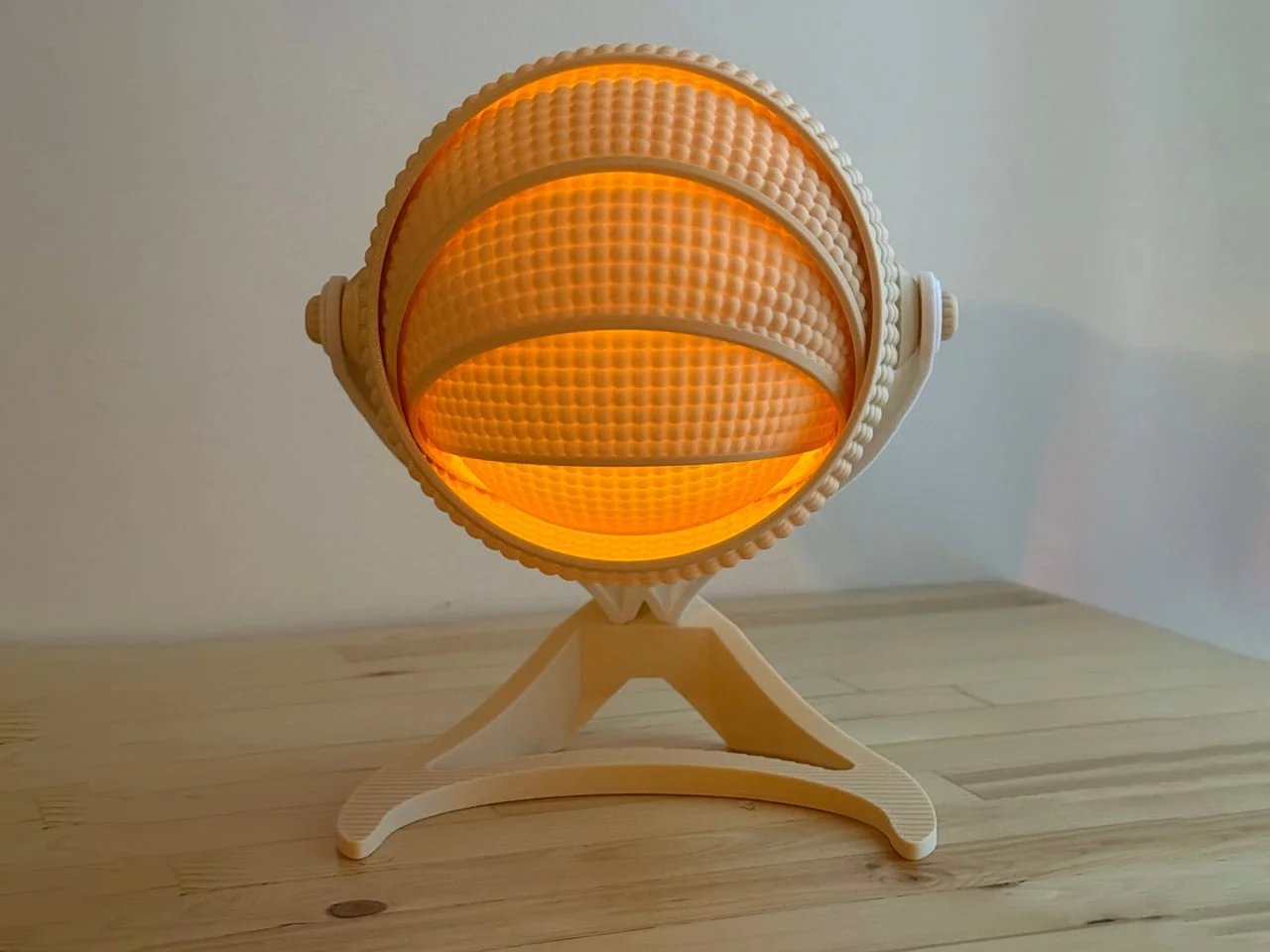
OHR Design’s Armadillo series gives the shade a moving structure. Inspired by the animal’s layered armor, the lamp uses concentric printed rings that open and close. The mechanism makes the shade an adjustable part of the lighting system: changing its position changes how the lamp directs and spreads light.
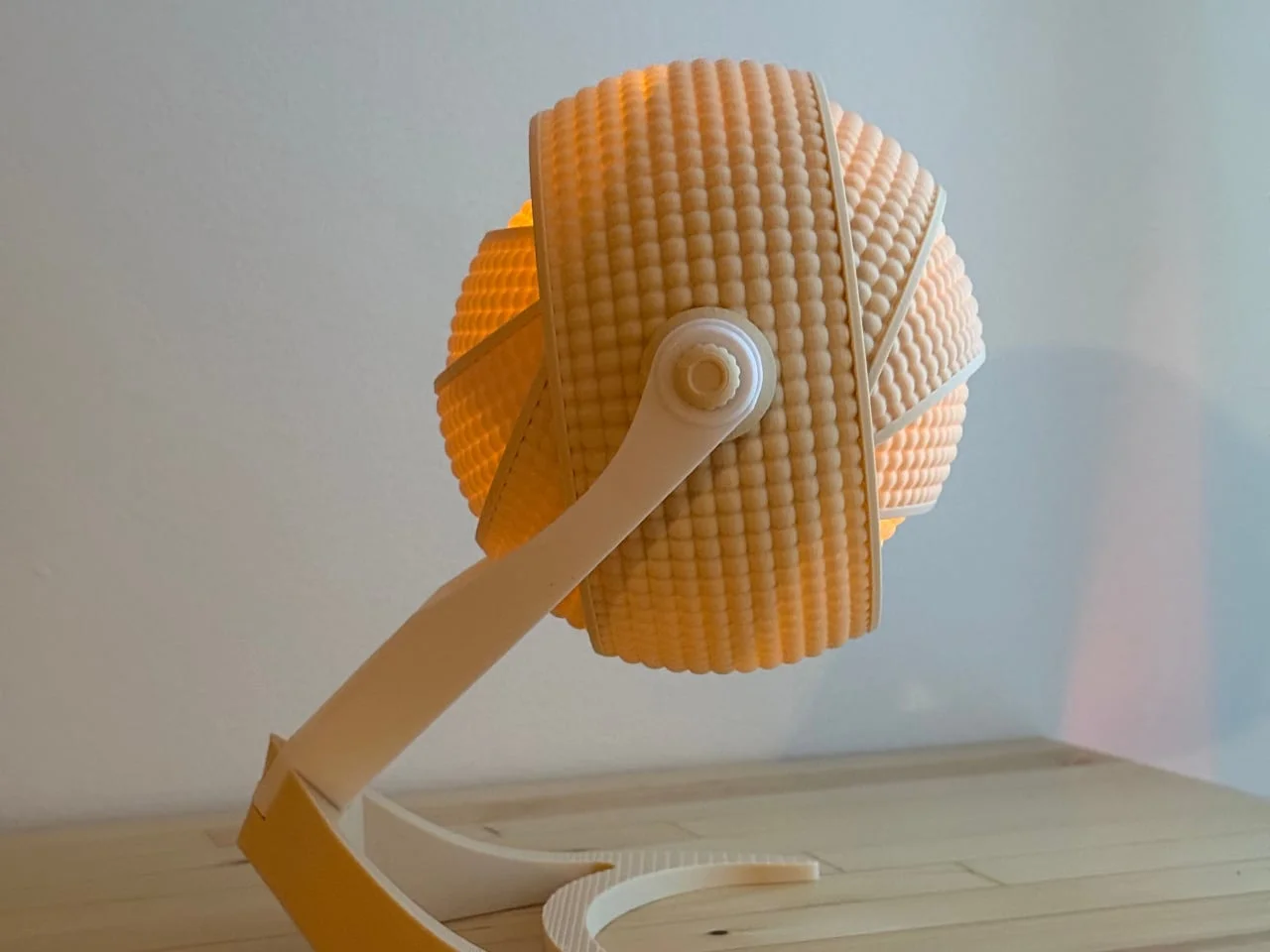
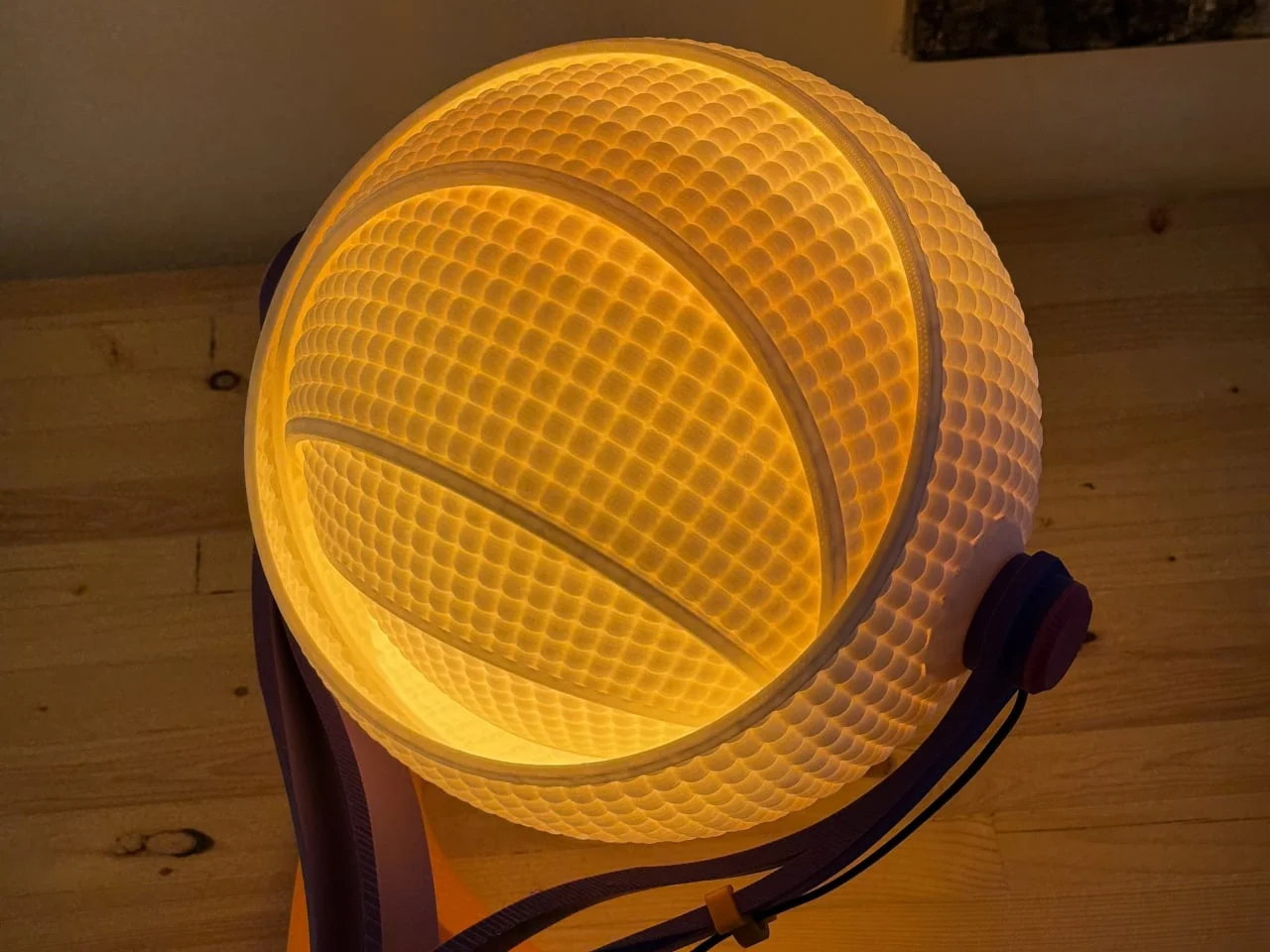
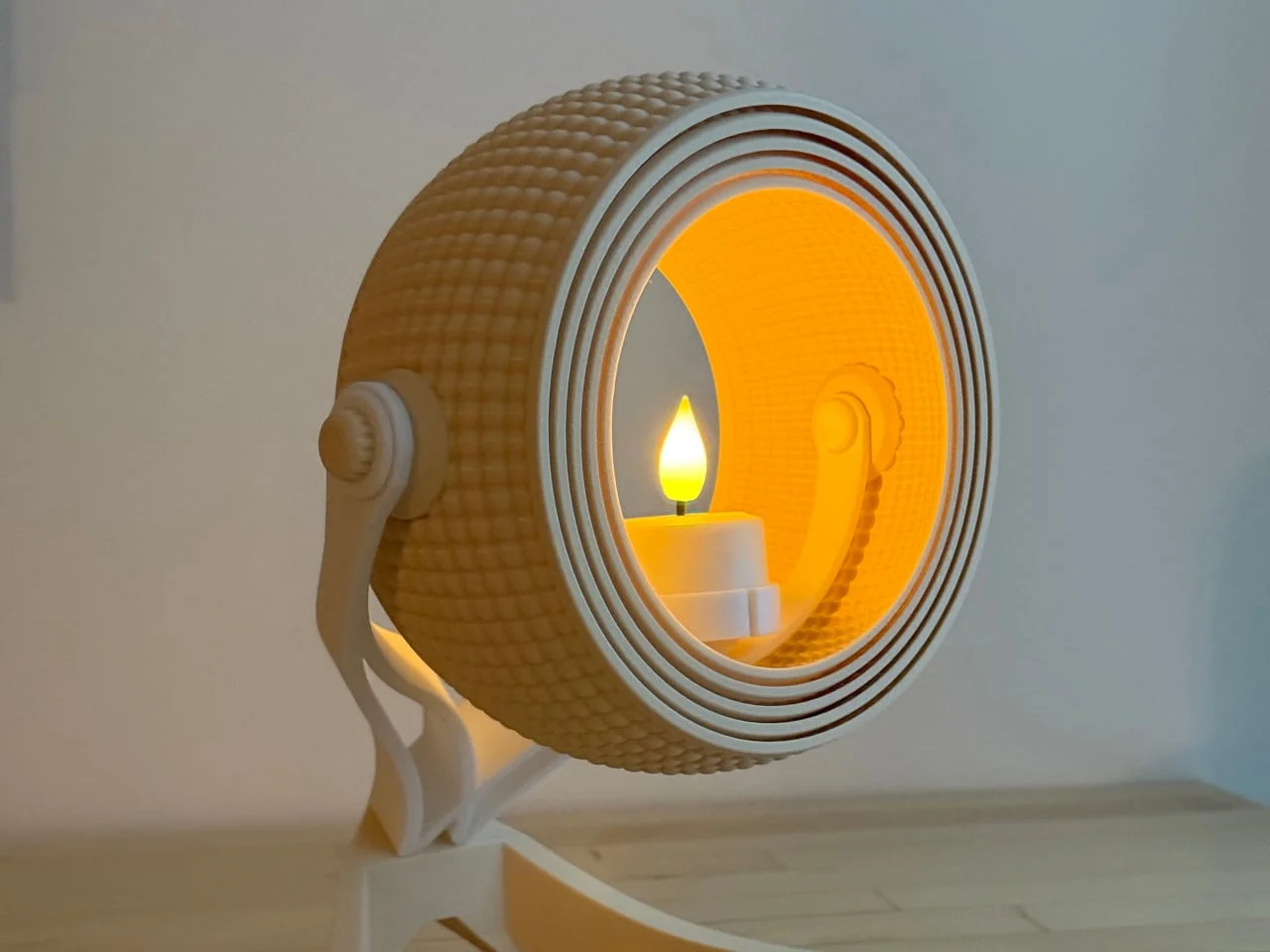
The series developed from OHRB, a tea light holder. The compact Armadillo stands 240 mm tall and is intended for bedside or accent lighting, retaining a sculptural profile when switched off. The larger Armadillo XL reaches 373.8 mm and works as a desk lamp with standard light bulbs.
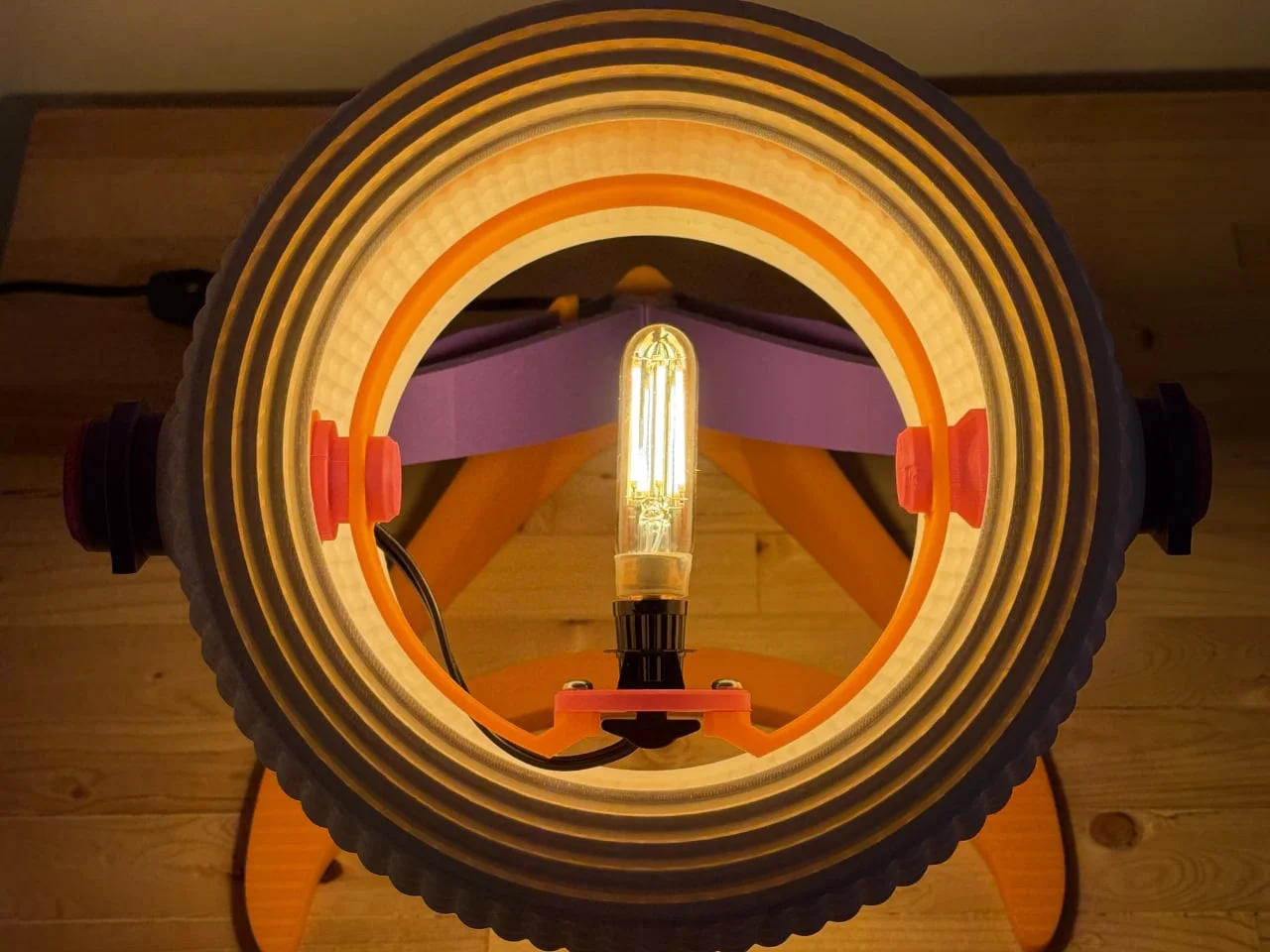
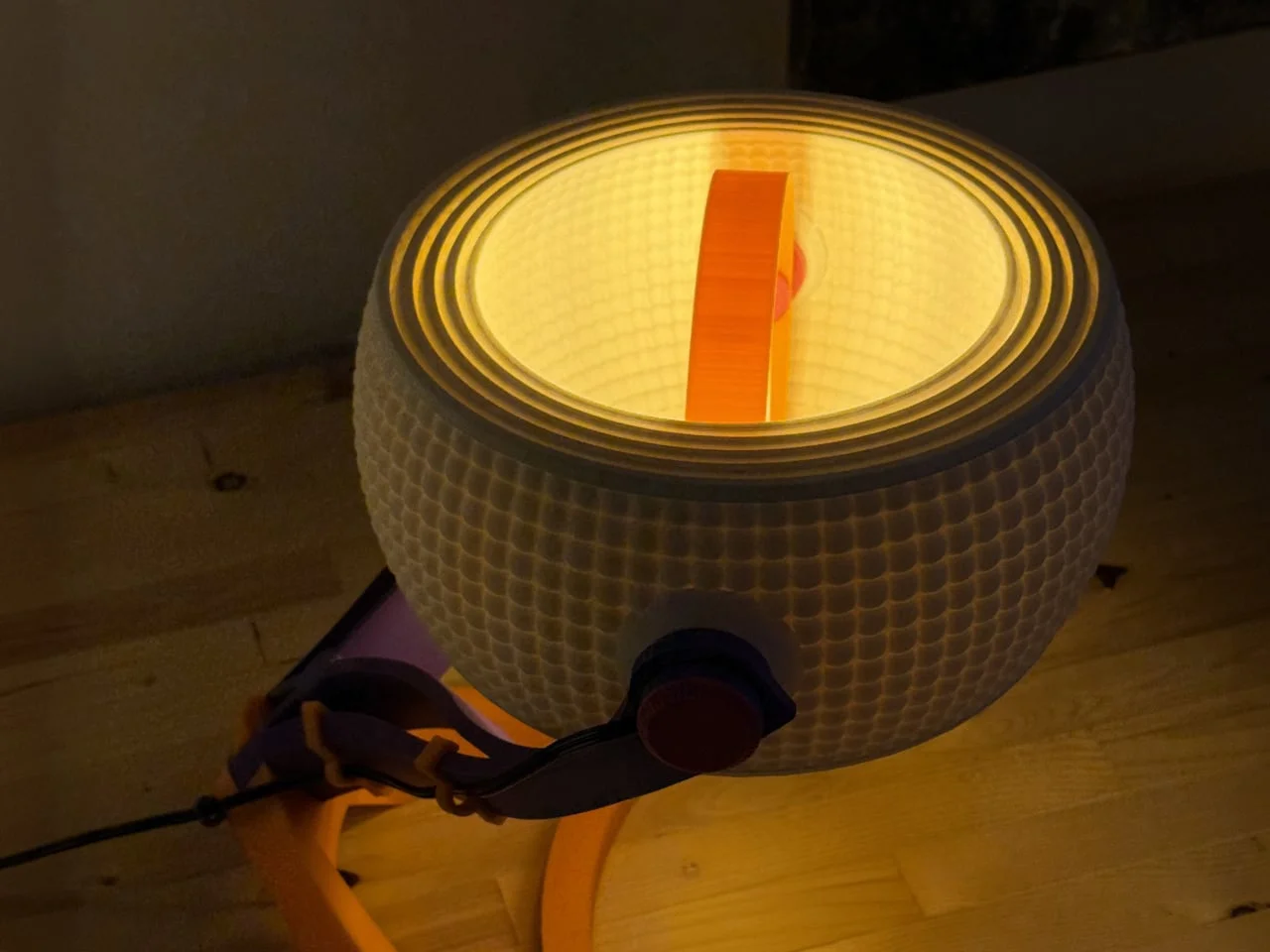
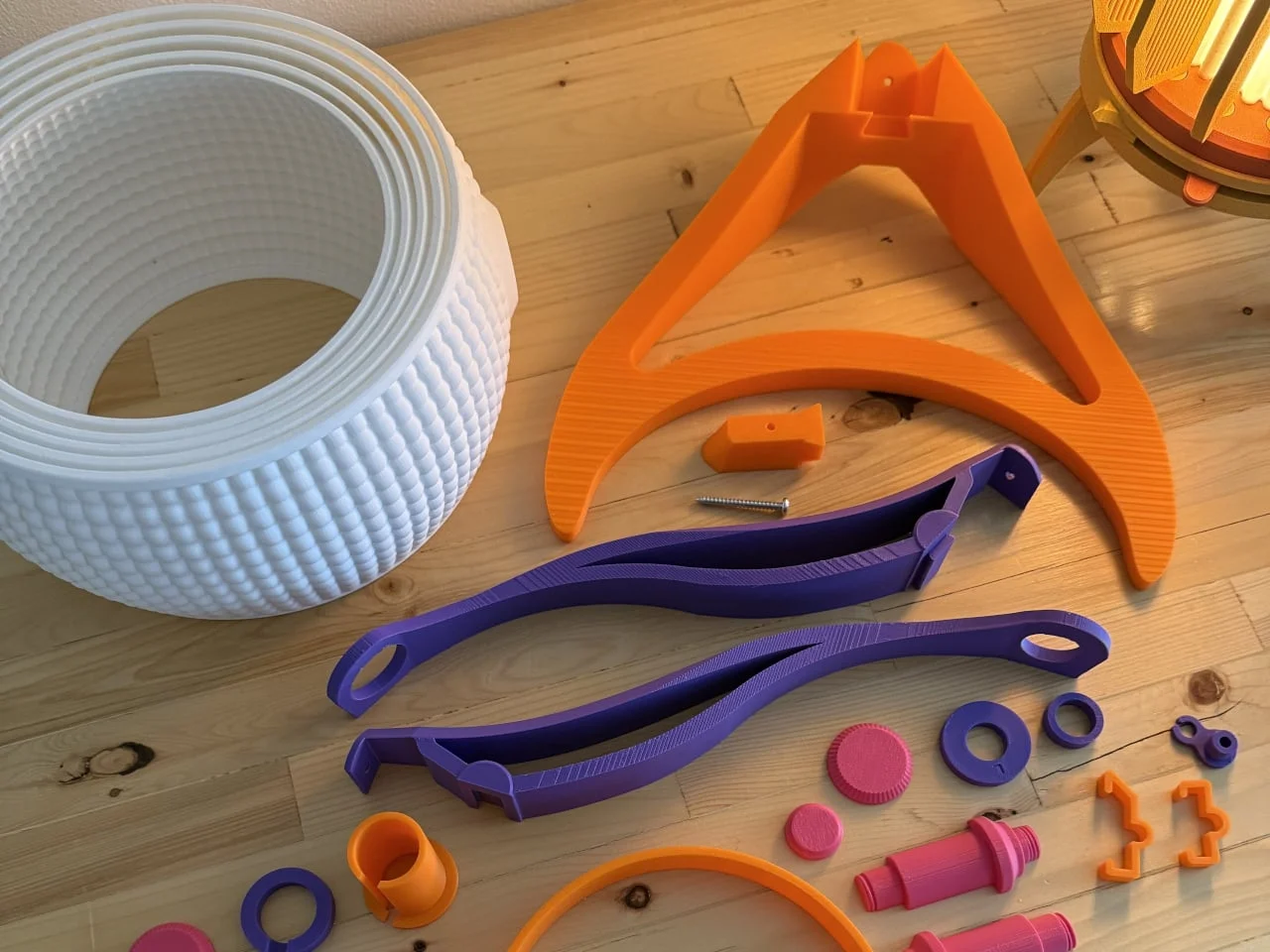
Opening or closing the XL’s rings lets the user move between a softer ambient glow and a more focused beam. That interaction gives the lamp a practical dimension: the owner can adjust the output directly instead of relying on a fixed shade or a separate control. It’s a clear example of form doing functional work.
Form becomes a lighting control
Across the five designs, 3D printing matters most where the material structure affects what the lamp does. Maze-like paths cast patterned shadows; porous cells diffuse light; contrasting surfaces distinguish practical components; and moving rings let users redirect illumination. Recycled and plant-based materials add another layer, though the strongest designs make their material choices part of a clear product idea.
For designers, the emerging opportunity is to treat shade geometry, surface texture and adjustability as lighting controls in their own right. These lamps point toward products that can be read as sculpture when unlit and tailored to a room or task once switched on.
The post These Five 3D-Printed Lamps Shape Light With Mazes and Moving Rings first appeared on Yanko Design.


Discussion
Sign in to join the discussion.