Bandit9’s hand-built (RED)800 combines sculpted aluminum, a 110 bhp Ducati engine and a nine-bike production run supporting RED’s health programs.
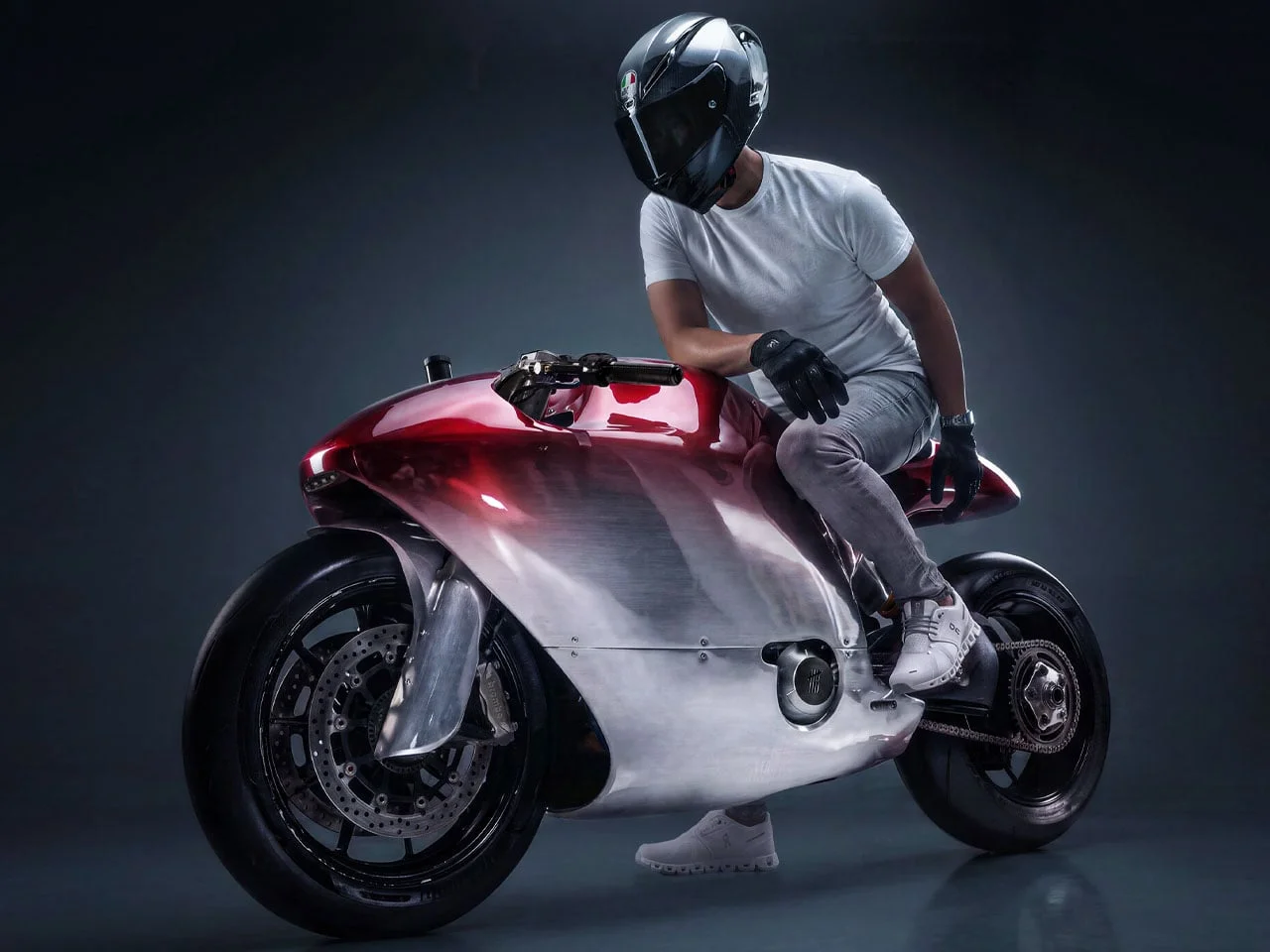
The (RED)800 makes its case through a sharp contrast: hand-finished metal set against a vivid red gradient. Built by Vietnam-based custom motorcycle studio Bandit9 in collaboration with RED, it’ll be produced in just nine examples. All sales proceeds will go to RED’s life-saving healthcare programs for communities in need. That charitable purpose gives the project a larger frame, though the bike still has to persuade on its own as a piece of design and engineering.
That’s the central tension here. A custom motorcycle can be treated as transportation, mechanical craft, or a collectible object; the (RED)800 leans heavily toward the latter two. Its small production run and labor-intensive finish make it a statement piece by design. The engine and performance figures, meanwhile, give the object a functional core rather than leaving it as sculpture on wheels.
One-piece bodywork, hand-painted finish
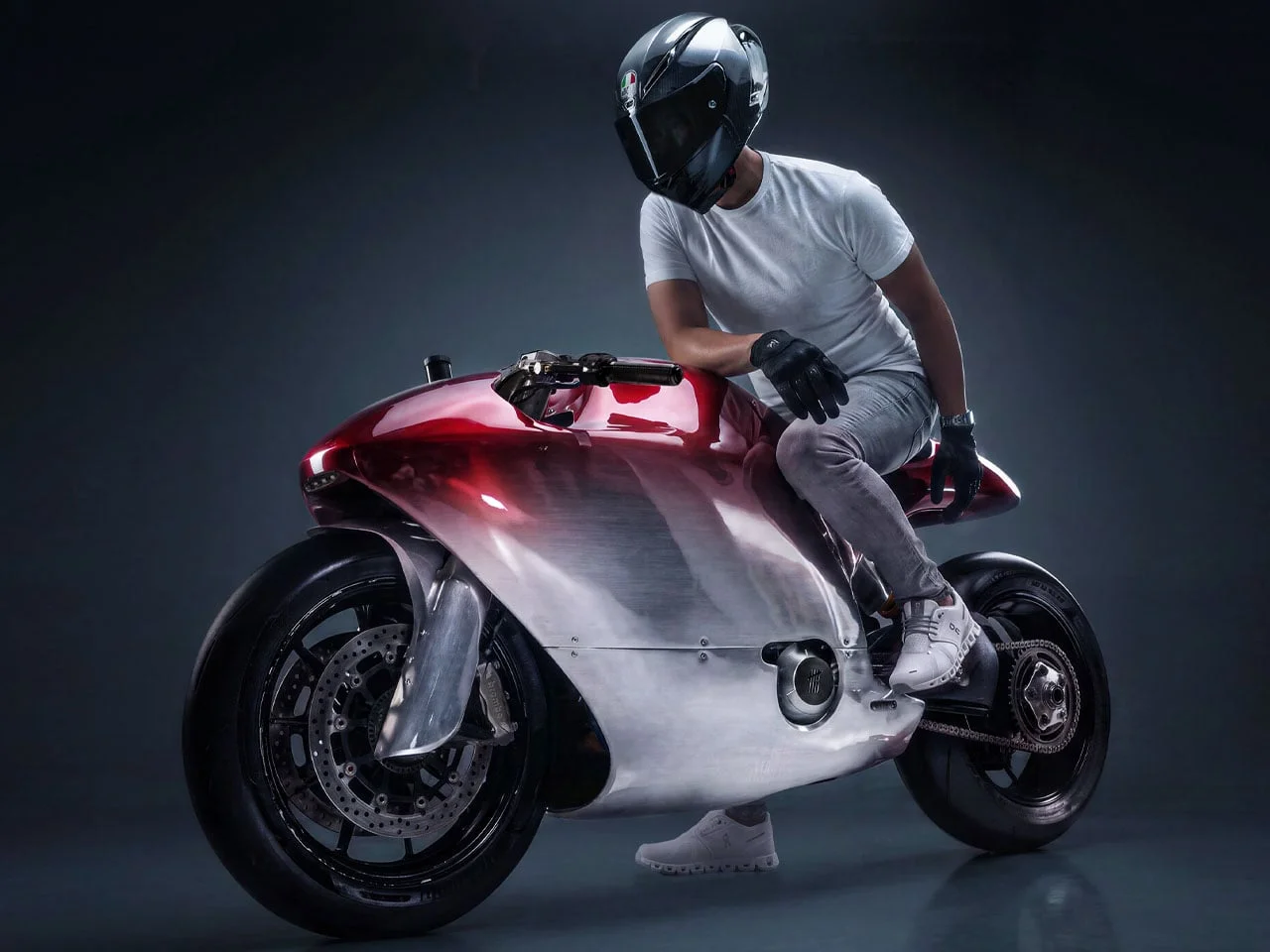
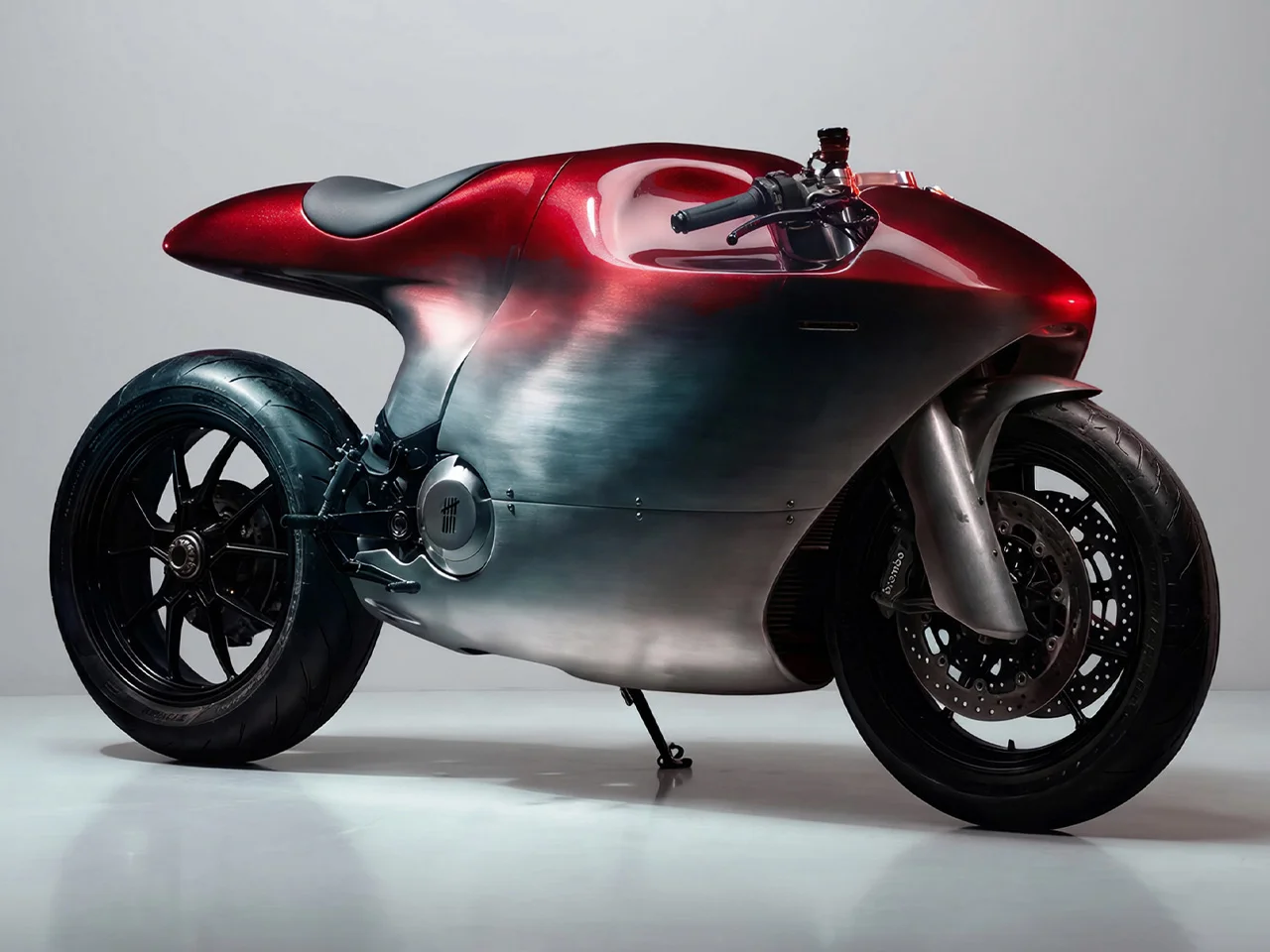
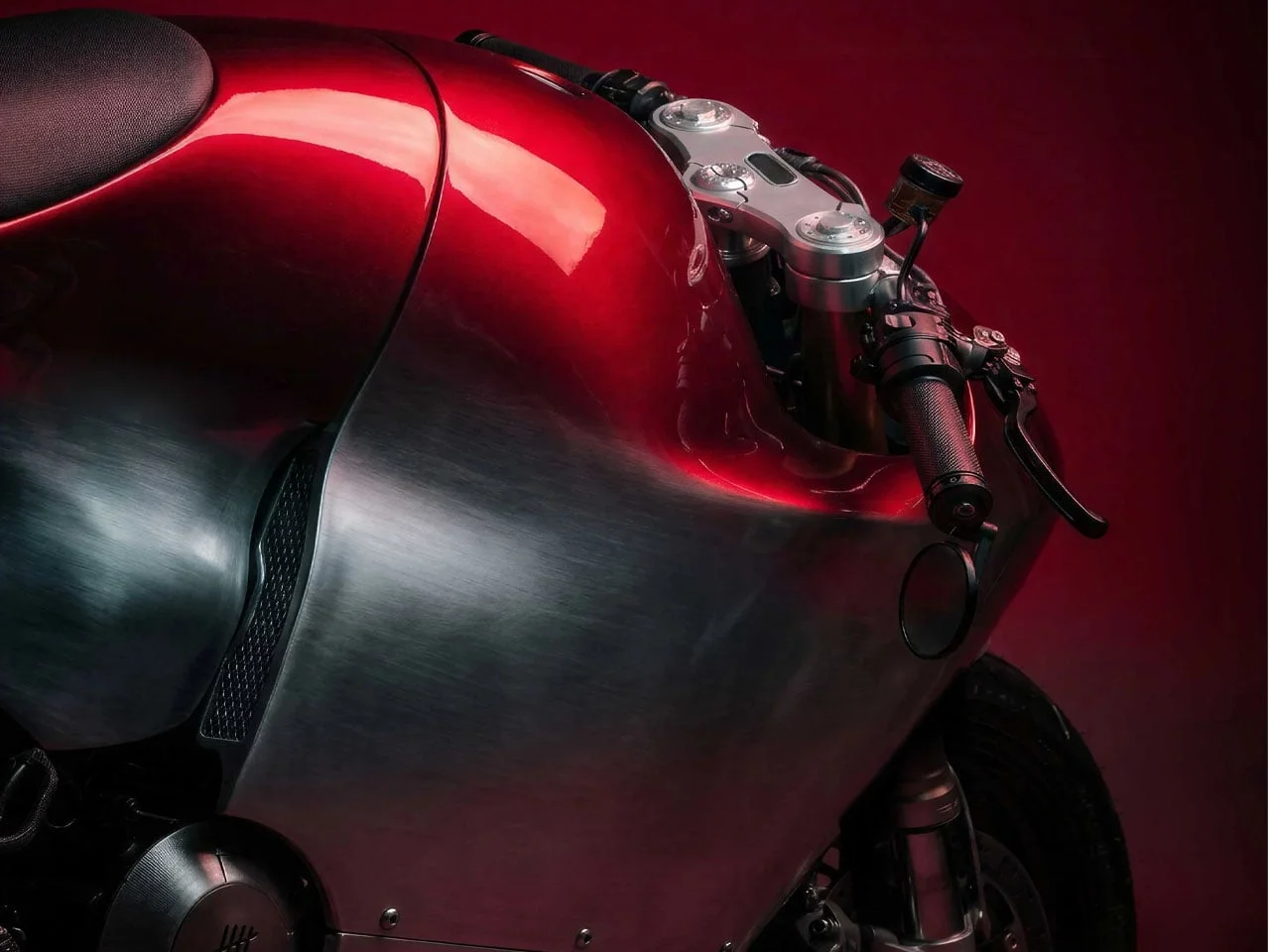
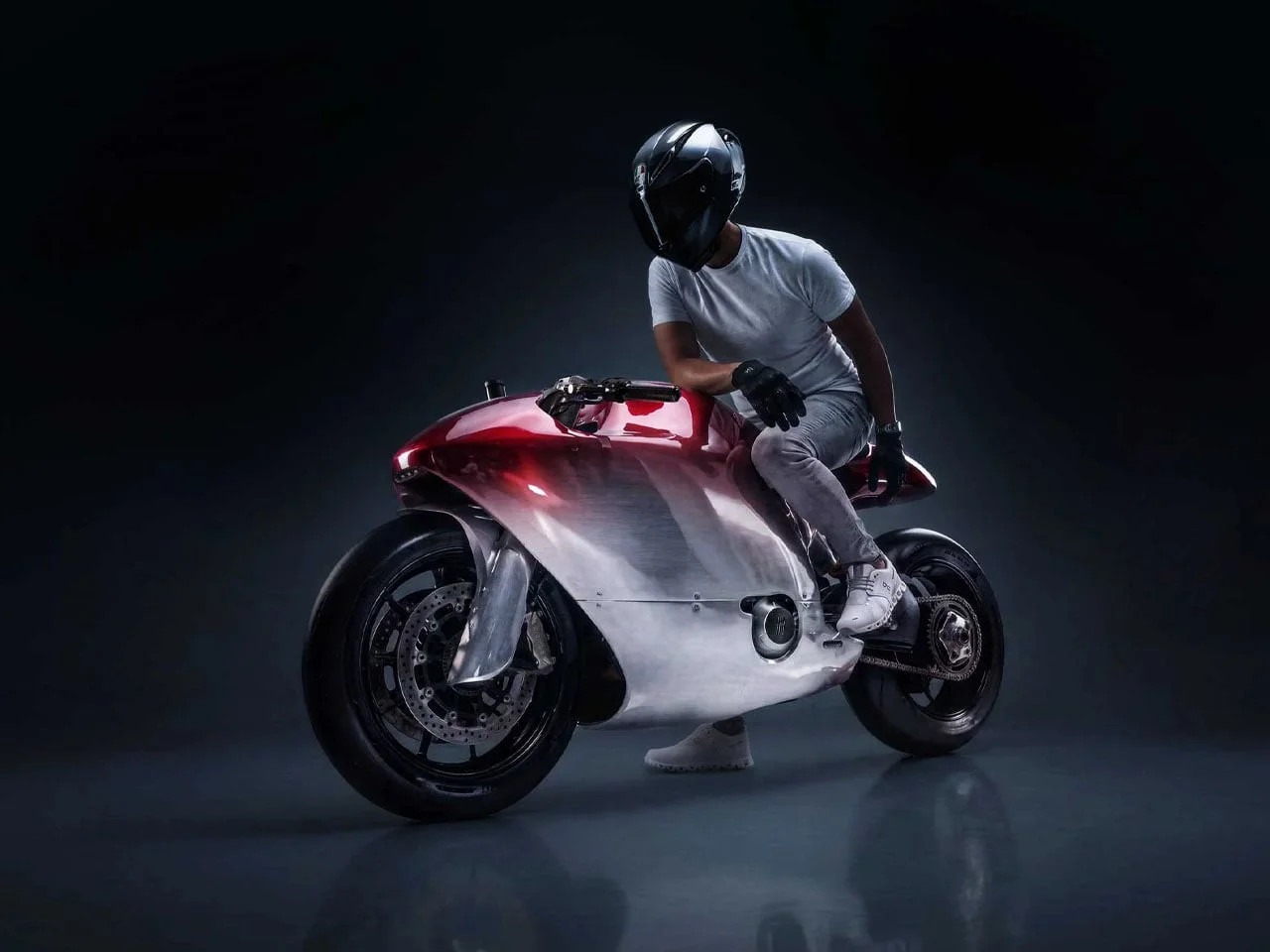
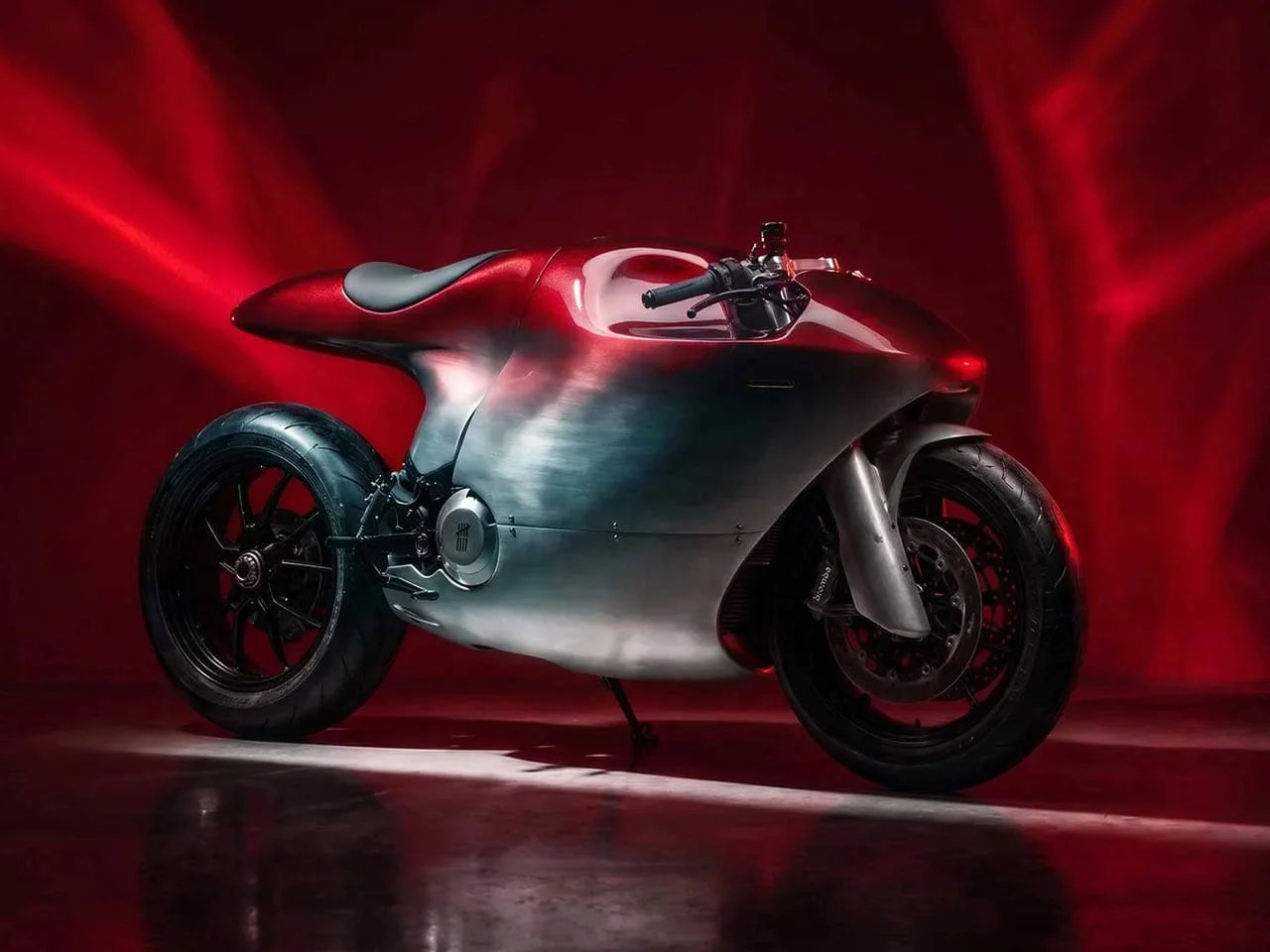
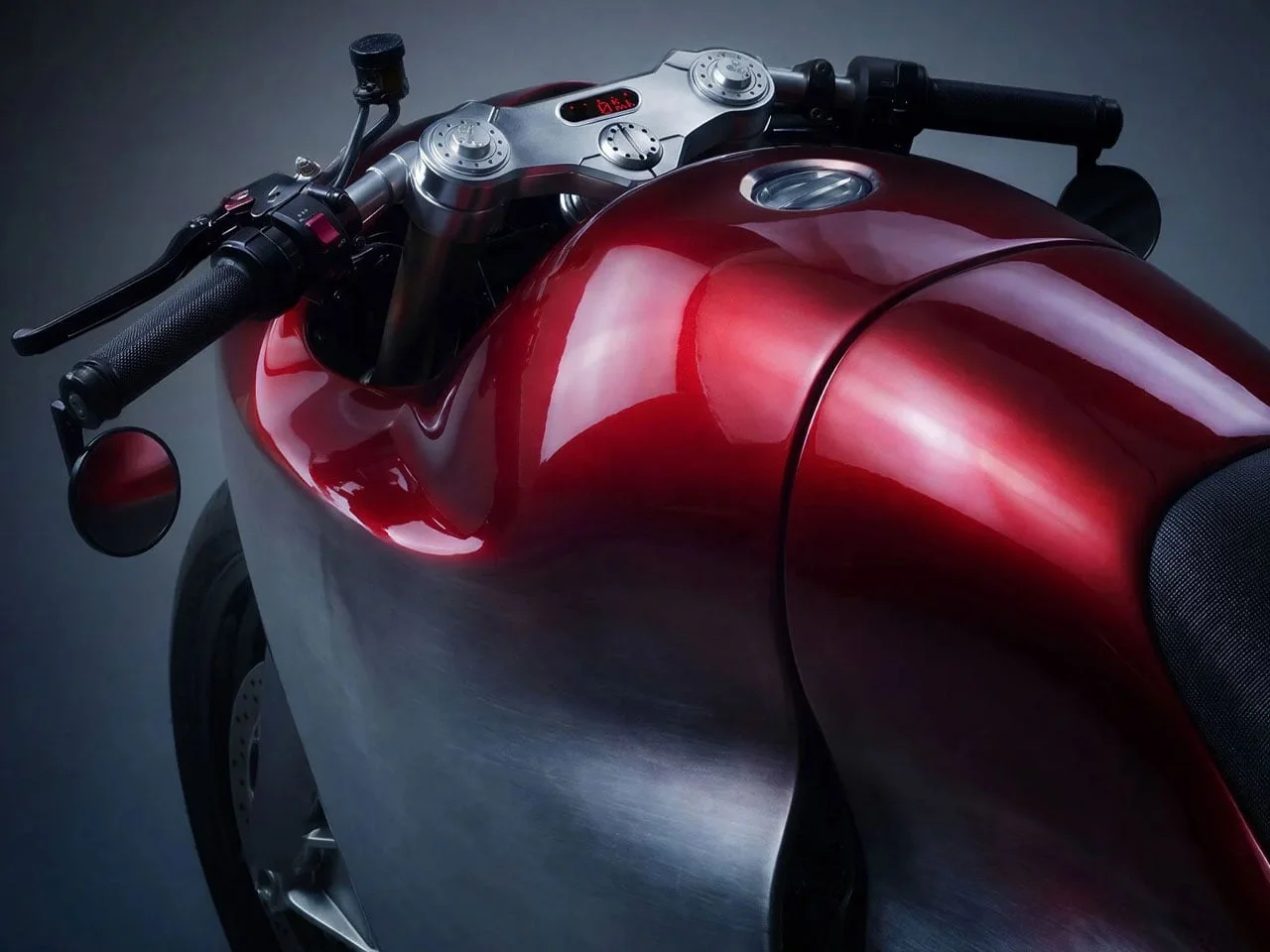
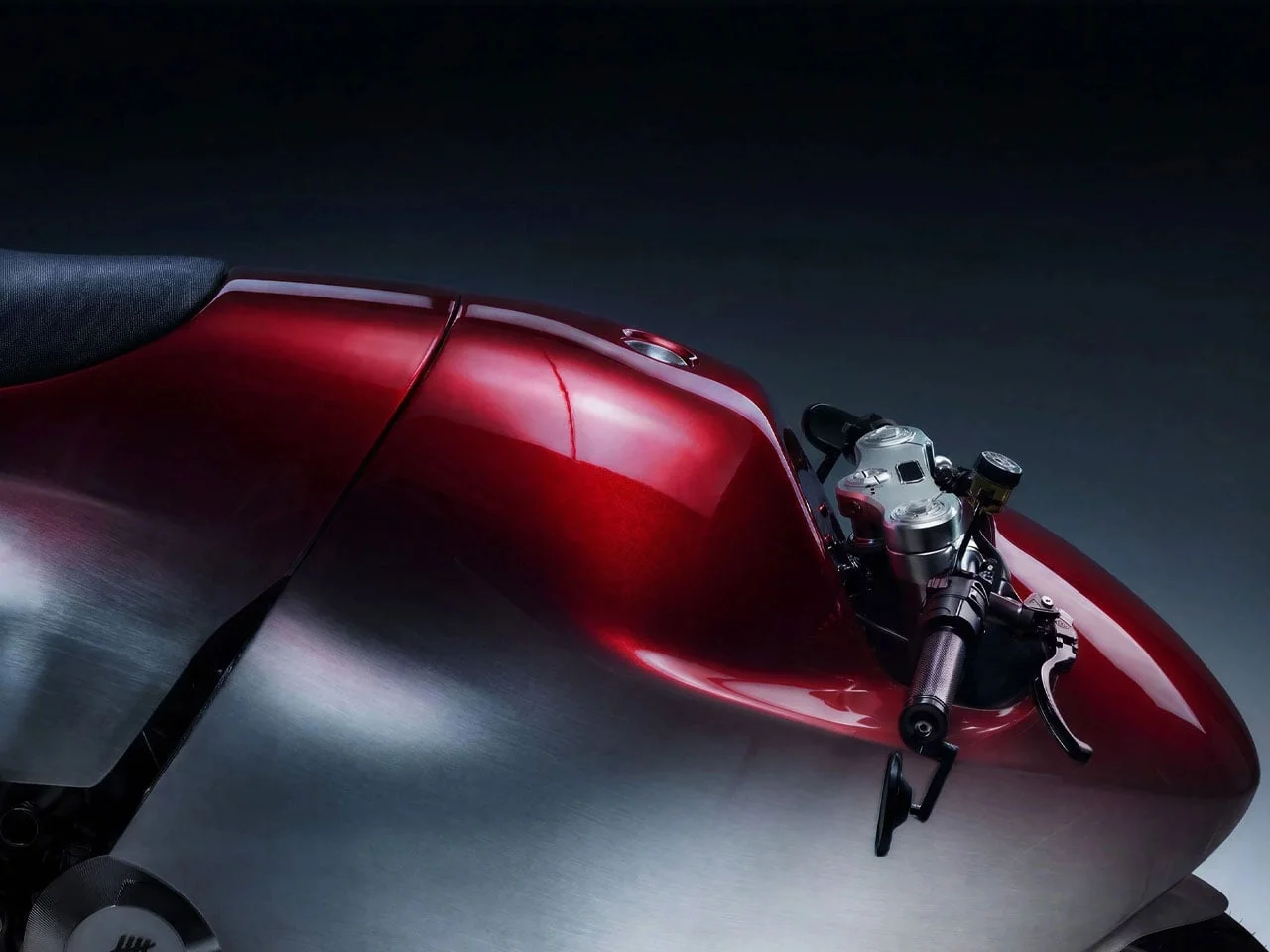
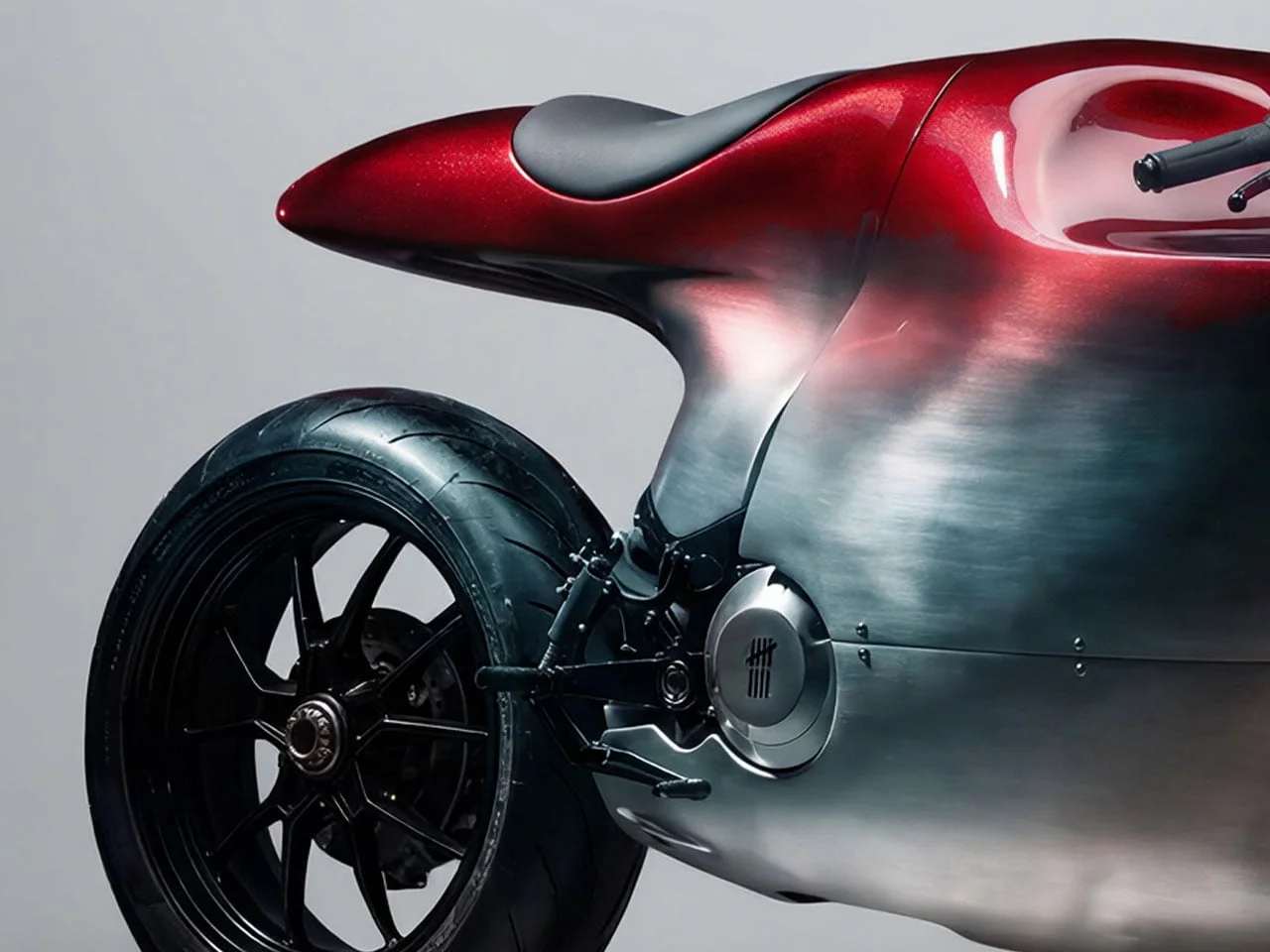
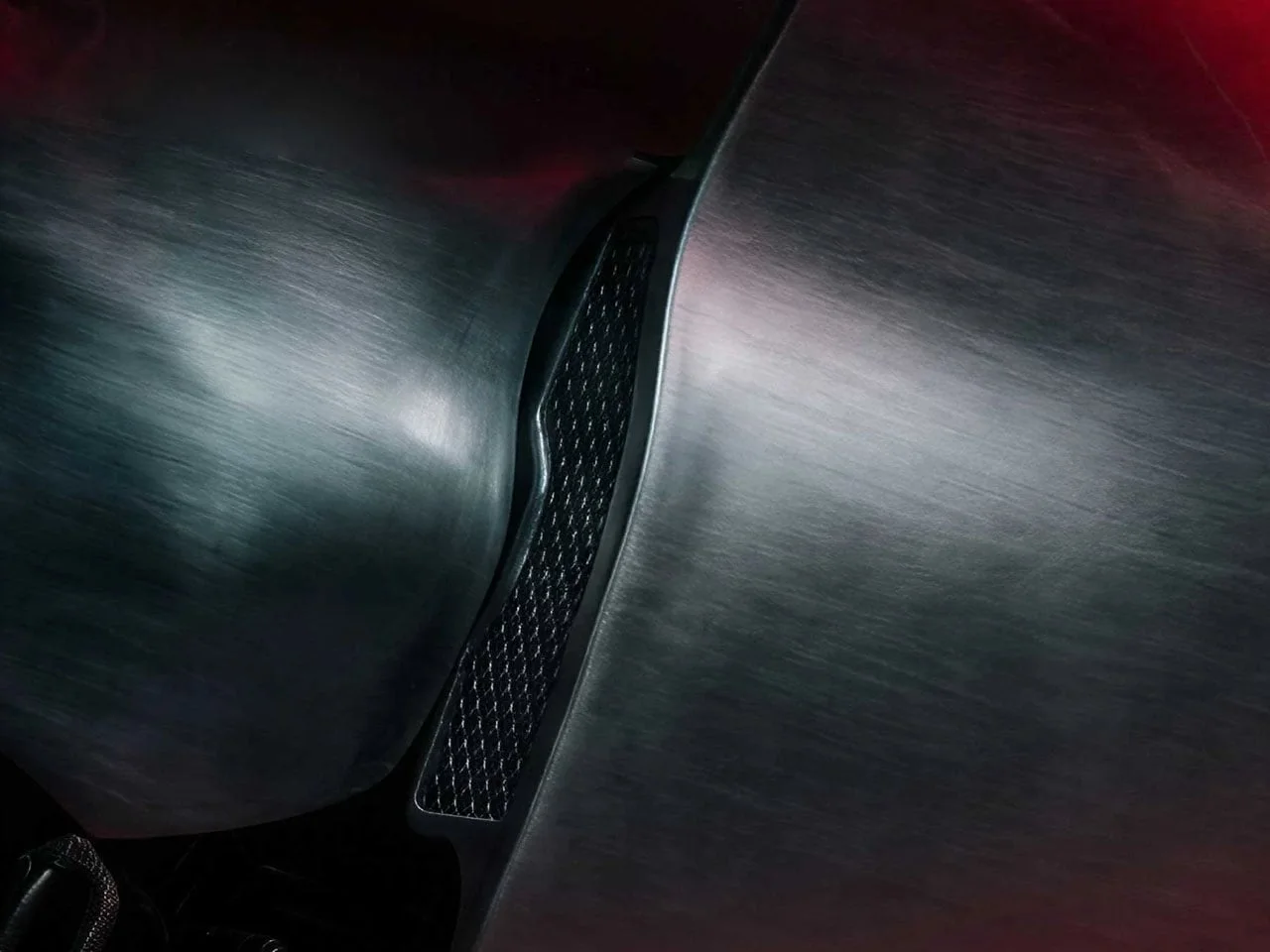
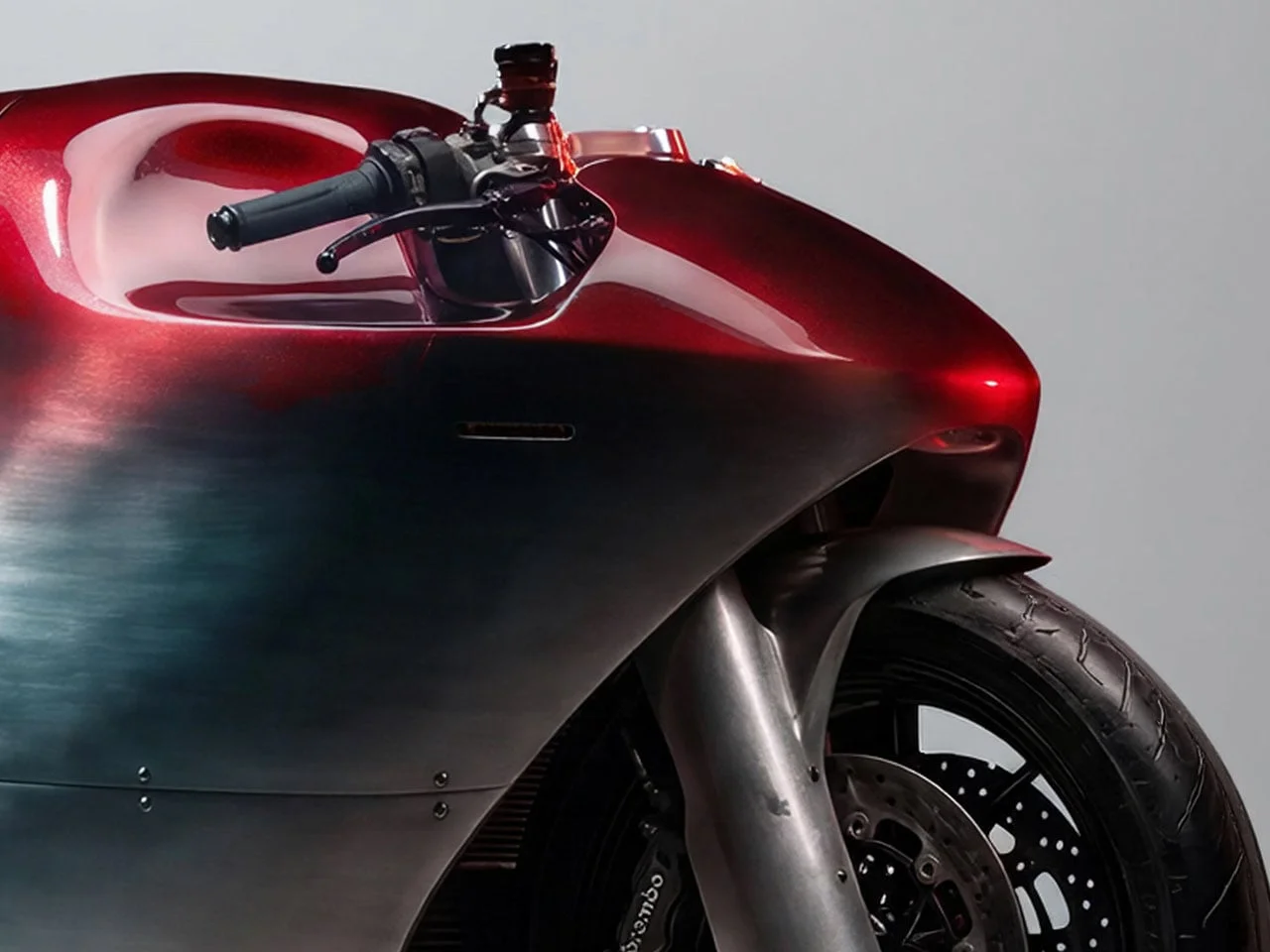
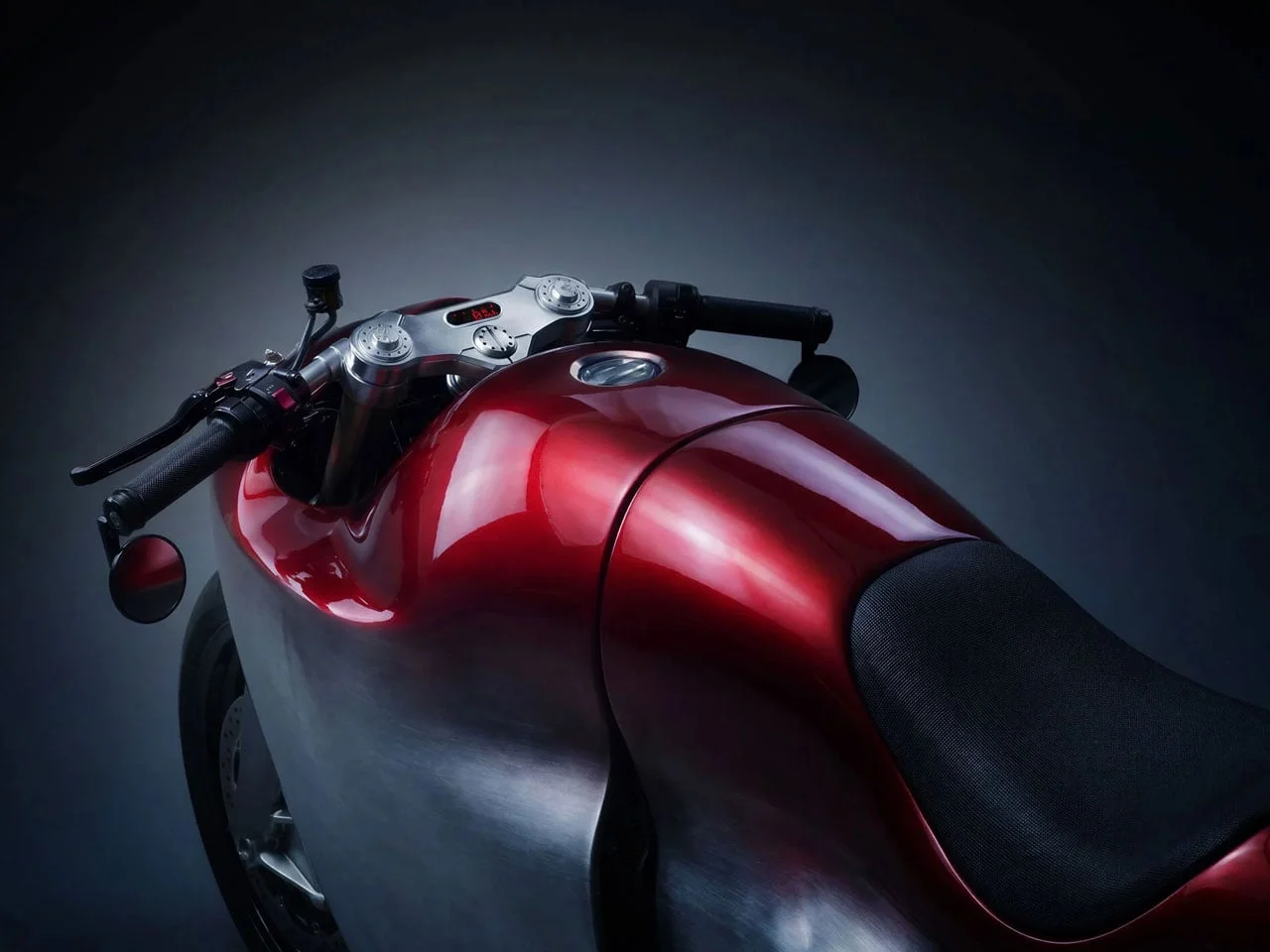
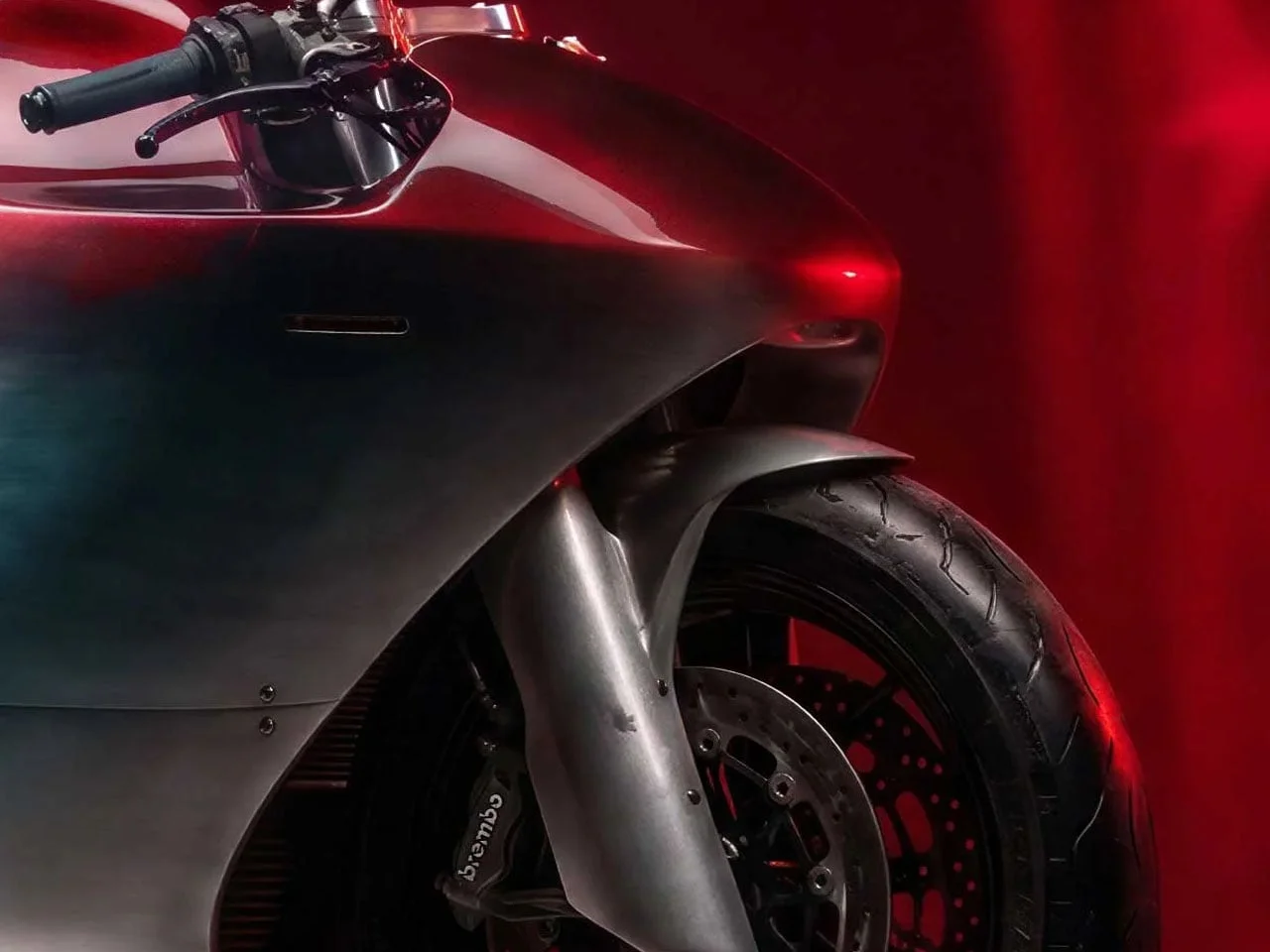
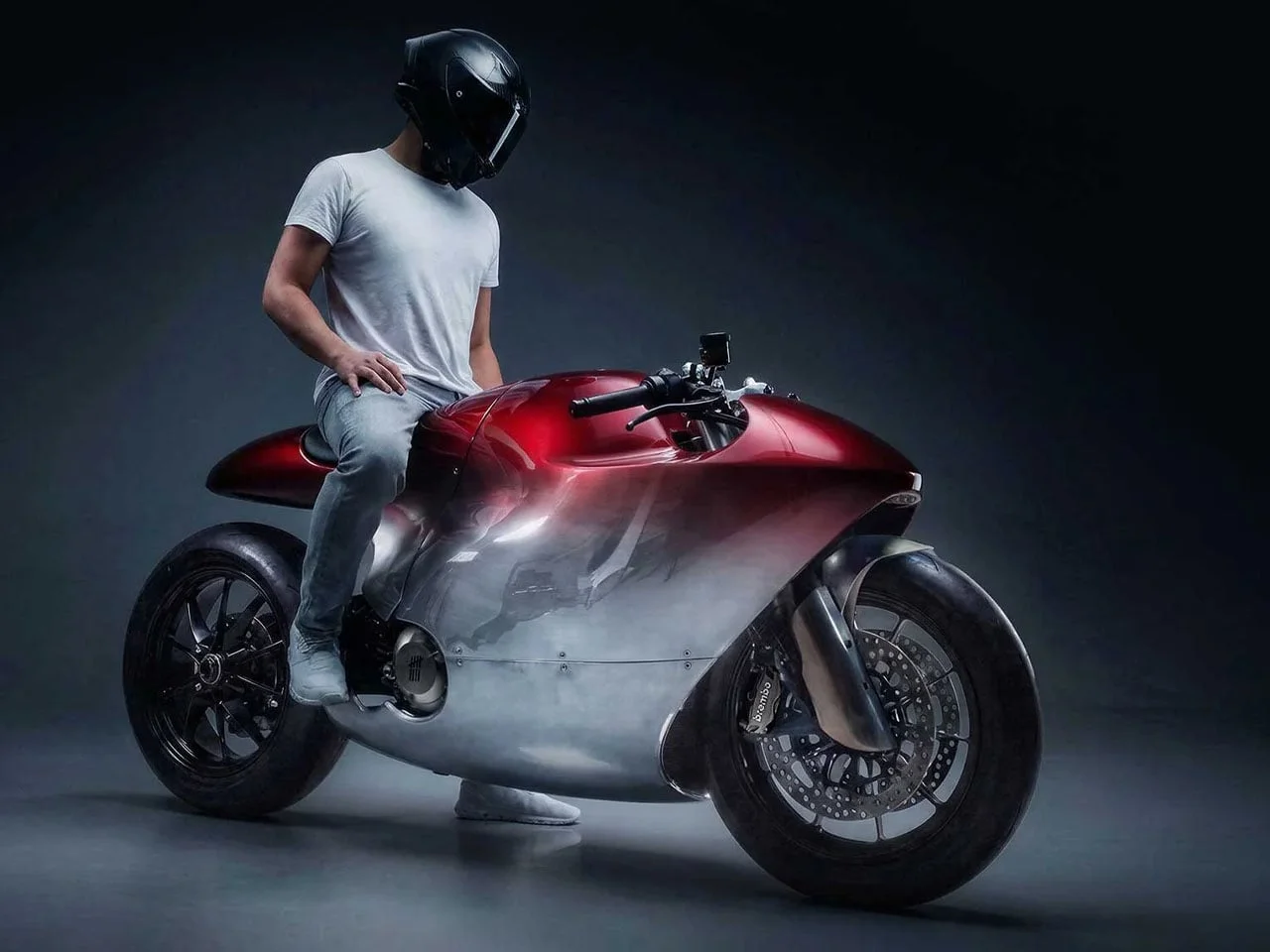
Bandit9 sculpted the bodywork from scratch as a continuous form, an approach that makes the silhouette feel closer to a single piece of shaped metal than a collection of panels. The finish shifts from Racing Red to hand-brushed aluminum, with no visible dividing line between the colors. That transition is doing substantial work: it gives the bike its most immediate visual identity, while the raw metal keeps the red from reading as a simple coat of paint.
Each bike will be painted by hand, so the finish will vary from example to example. That variation is part of the proposition for a run this small, but it also means buyers are ordering into a process rather than selecting a perfectly identical manufactured object. RED describes the result as “an unexpected meeting of color and raw metal, executed by hand.” The phrase is promotional, but it points to the design’s central idea: controlled contrast, with visible craft left in the final surface.
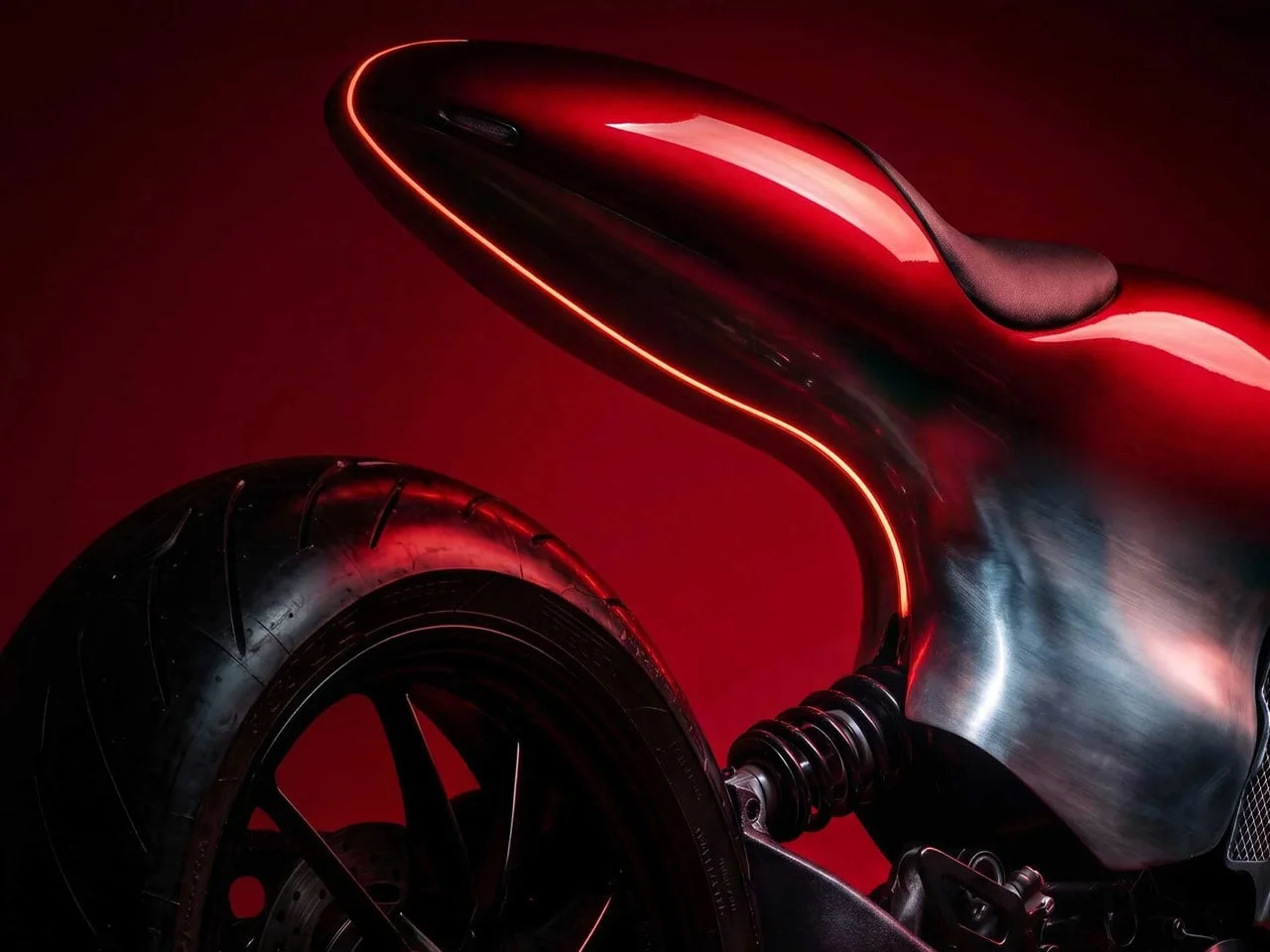
The metal shell leaves parts of the mechanics exposed, including the steel trellis frame beneath the rear of the monocoque. This matters because the bodywork could otherwise make the motorcycle look like a sealed, abstract form. Instead, the frame and other visible components keep the machine’s construction in view. A red light strip runs from the saddle toward the suspension joint, adding a futuristic accent without hiding the mechanical structure beneath it.
Spoked wheels, low-profile tires, rear-set foot controls, and low handlebars complete the design. Those choices give the bike a compact, forward-leaning stance. They also make the priorities legible: visual drama and a focused riding position take precedence over the upright comfort associated with more practical road bikes. If you're working in this space, that trade-off will be familiar: a custom design can make a strong first impression, but its details also shape how usable it feels beyond a photograph.
Ducati power, limited availability
Under the custom bodywork sits an 821cc Ducati Testastretta V-twin rated at 110 bhp. Bandit9 gives a 0–60 mph time of 3.3 seconds and a top speed of 201 km/h. Those are strong headline figures, and they prevent the bike’s presentation from resting entirely on its finish. The source doesn’t provide details such as weight, riding modes, or suspension setup, so the numbers offer only a narrow view of how the motorcycle might behave on the road.
That said, performance figures have a different role on a custom build than they do on a mass-market motorcycle. They establish that the design has serious power behind it, but they don’t tell a prospective rider how the engine delivers that power or how the chassis responds. The exposed frame and compact proportions invite questions about the ride, yet the available information leaves those questions open. A striking profile is easy to communicate; daily comfort and handling are harder to judge from a specification line.
The (RED)800 costs $49,000, plus shipping. Each motorcycle is made to order, with delivery estimated at eight months to a year. That extended wait is consistent with a one-off production process, though the article doesn’t describe how the build schedule is managed. Buyers are paying for a tailored finish, a Ducati engine, and the scarcity of a nine-bike run, as well as supporting the stated charitable purpose.
Scarcity can raise a project’s appeal, but it can also narrow the audience. At this price, the bike isn’t being presented as an accessible way into motorcycling; it’s aimed at people who value bespoke design and are prepared to wait for it. The numbers here are underwhelming if judged only as a performance bargain. As a commissioned object tied to a defined cause, the calculation is different.
What the collaboration signals
The collaboration gives the motorcycle two distinct sources of meaning: Bandit9’s custom design and RED’s healthcare mission. The donation commitment is the project’s clearest public benefit, while the nine-unit limit turns that benefit into part of a highly exclusive purchase. That combination can draw attention to the cause, but the article doesn’t specify how proceeds will be distributed or what amount the program will receive. The distinction matters when assessing charitable projects: the stated purpose is clear, while the mechanics behind the contribution aren’t detailed here.
And yet, the design’s strongest feature is also its most practical test. The hand-finished transition from red to metal gives each example a distinct surface, but the same individuality can make consistency difficult to judge before delivery. This is more significant than it looks: buyers are committing to a concept, a build process, and an estimated wait, rather than choosing a finished bike from stock. A compelling design can carry that promise, provided the finished object matches the precision suggested by the imagery.
Here’s the thing: the (RED)800 doesn’t need to be a rational choice for every rider to make sense as a project. Its price, short production run, and sculptural bodywork place it firmly in custom territory. For readers interested in the overlap between industrial design and motorcycles, the bike offers a clear case study in how material, color, and exposed mechanics can define a product’s identity. A rare machine with a stated charitable purpose. That’s the proposition.
The post Bandit9 (RED)800 Motorcycle Fades From Racing Red to Brushed Aluminum first appeared on Yanko Design.
Discussion
Sign in to join the discussion.