Bodans' Cubert turns the Volkswagen Caddy into a compact campervan with a pop-up roof, a working kitchen, and prices from £43,995.
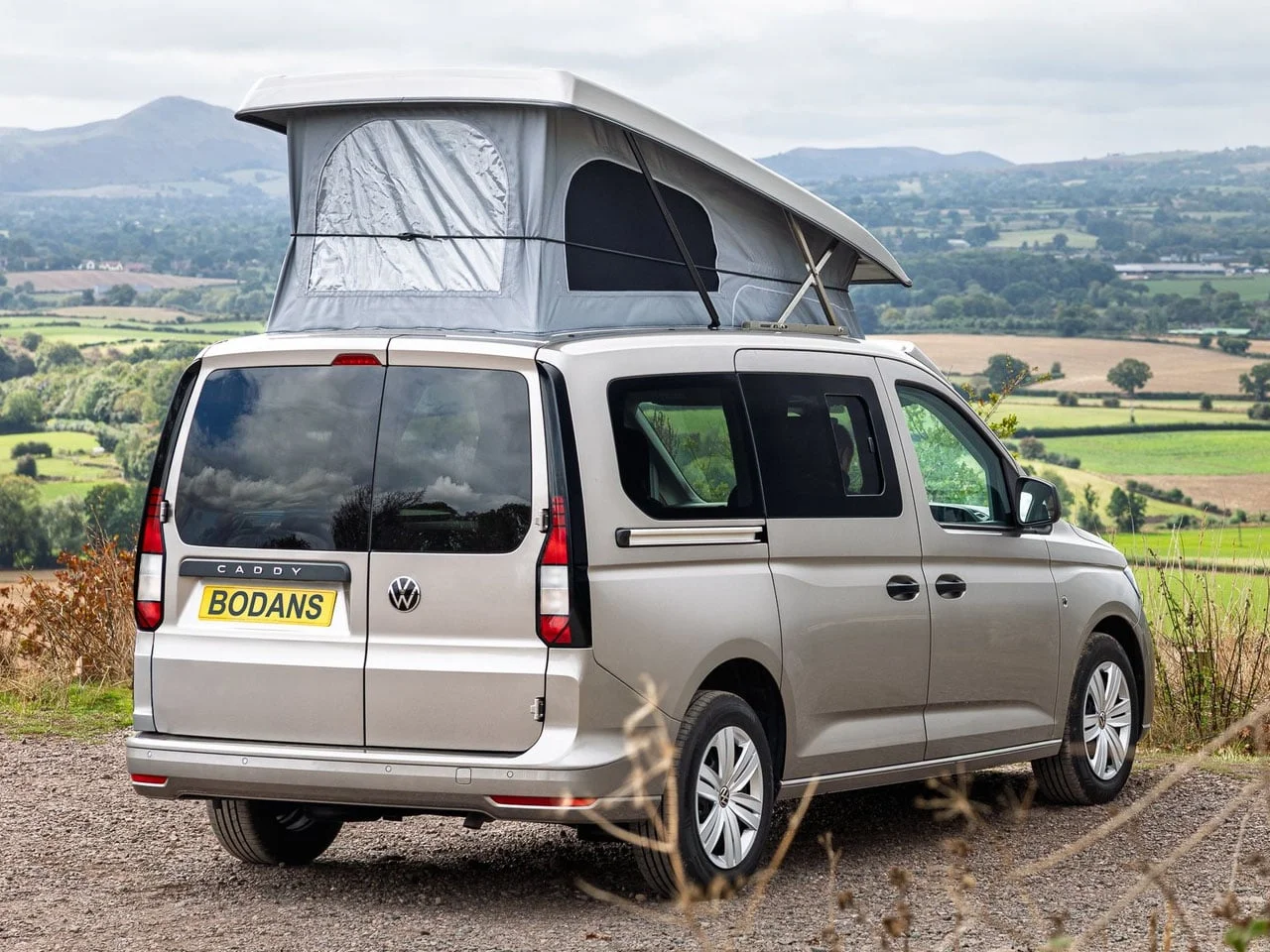
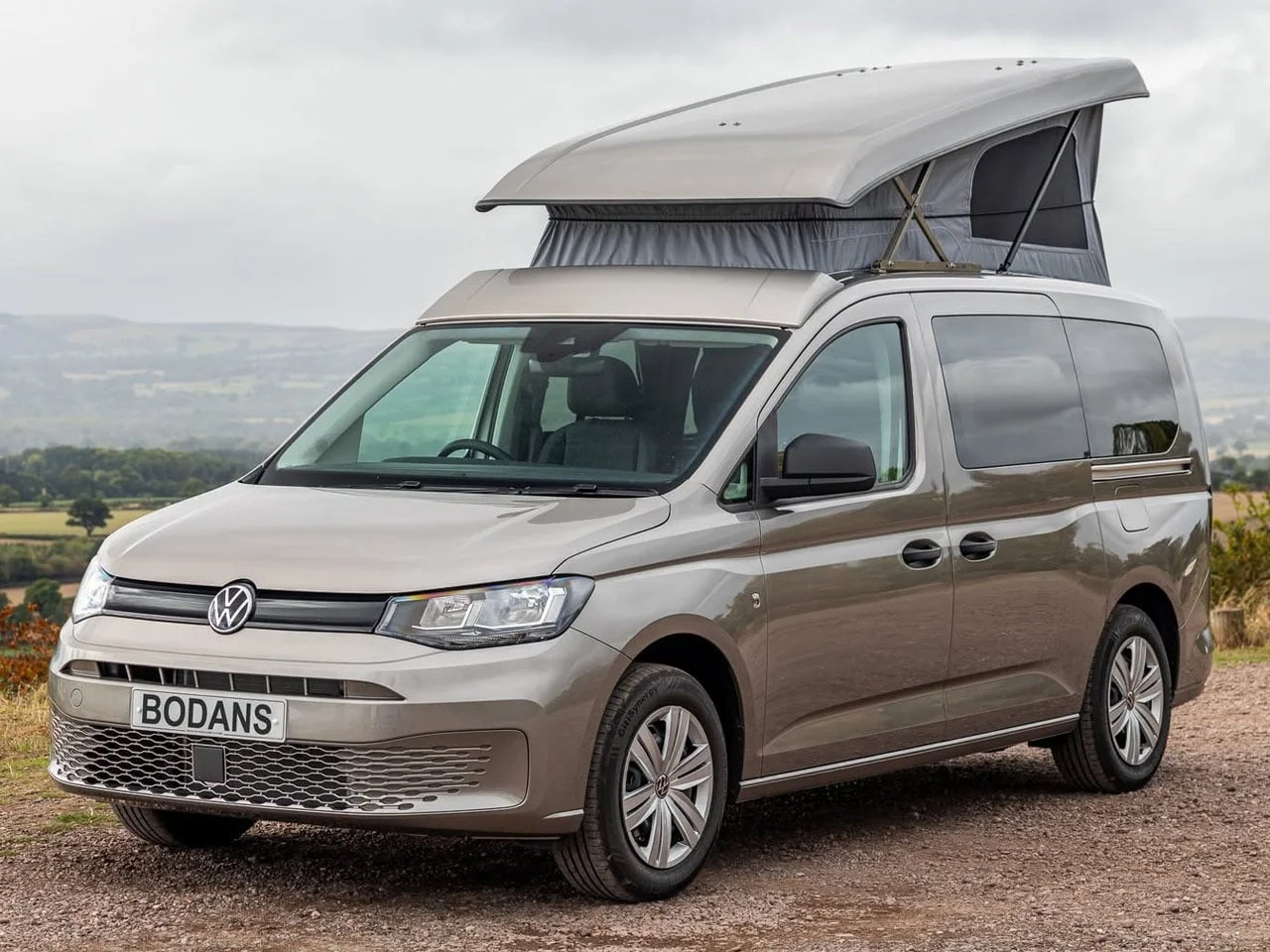
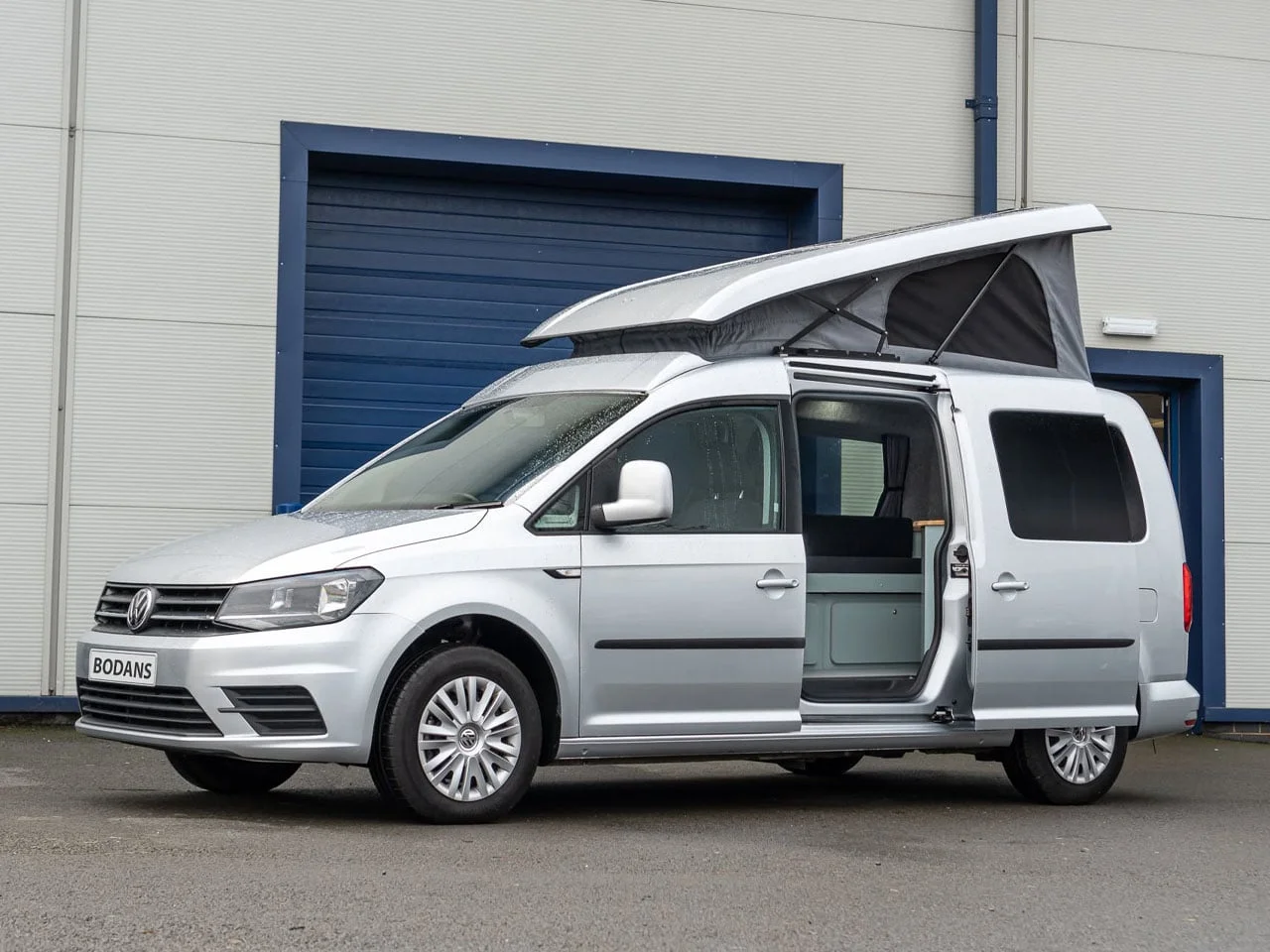
Dutch converter Tonke's Basecamp sits at the lavish end of the Volkswagen camper spectrum. Bodans takes a quieter approach with the Cubert, a campervan built on the Caddy, the smallest ICE van in Volkswagen's lineup. It trades bulk for practicality, and one feature makes it stand out. That's the pitch, anyway. Whether it holds up depends on what you actually need from a van this size.
Drivetrain and floor plan
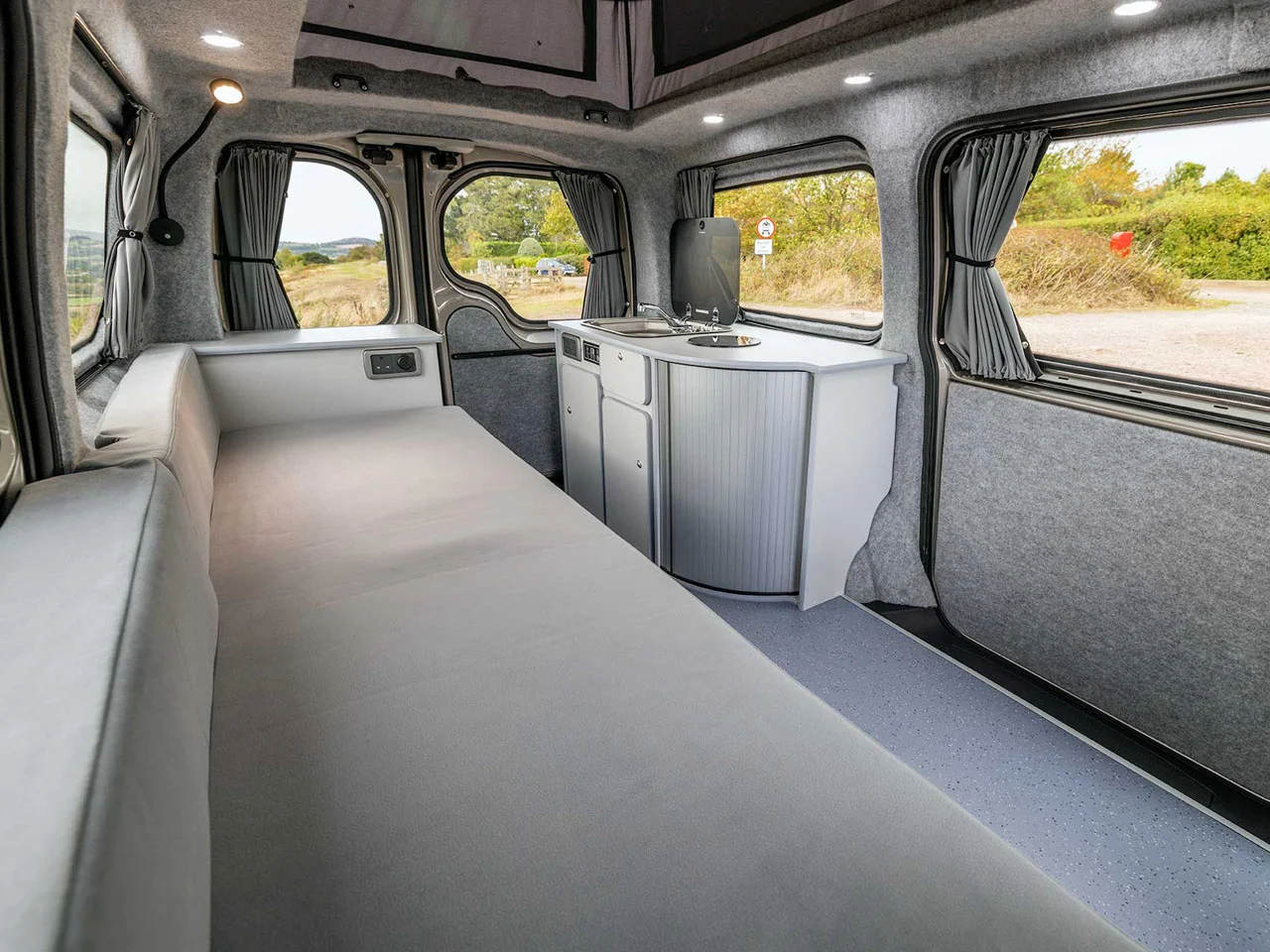
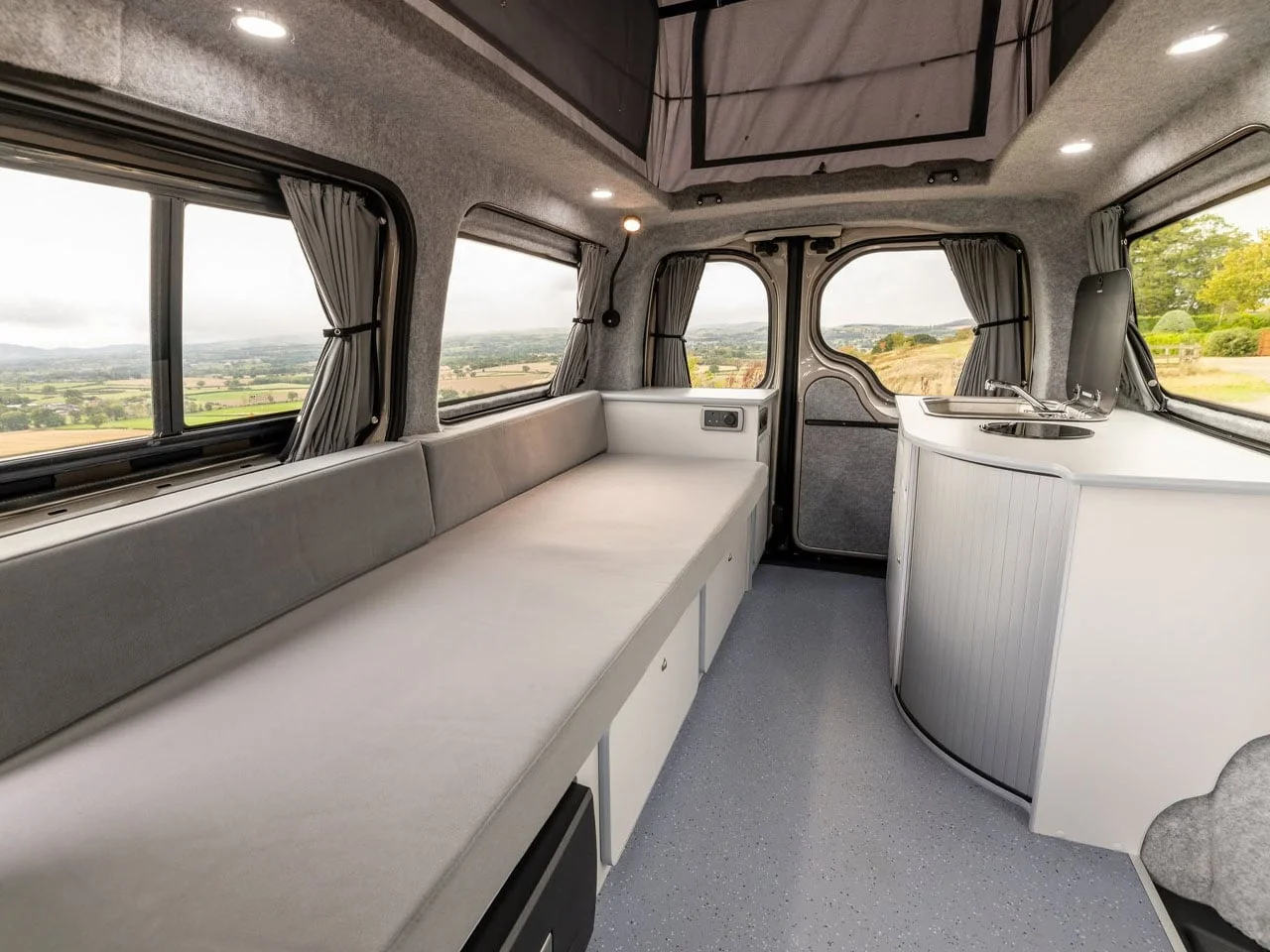
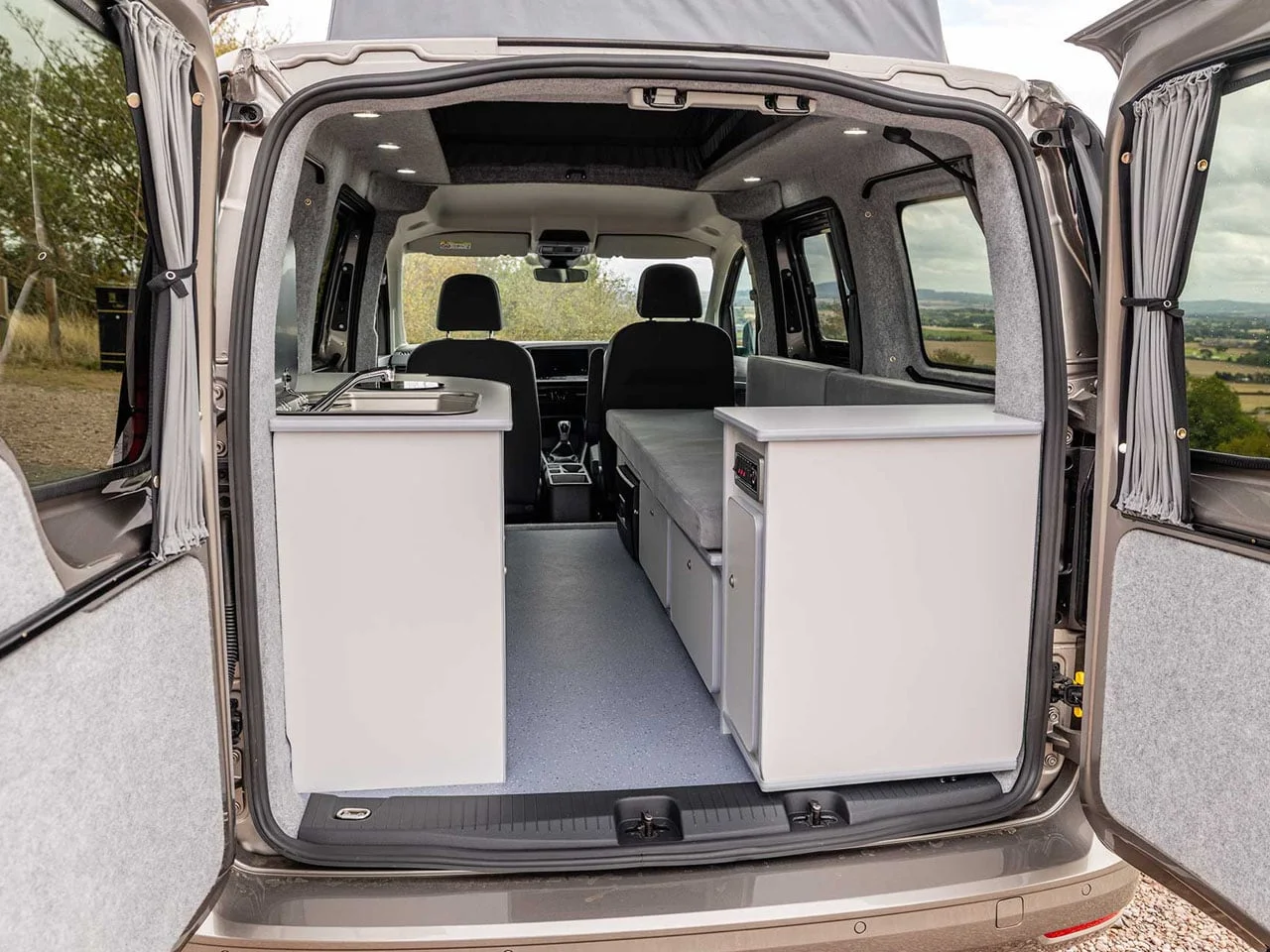
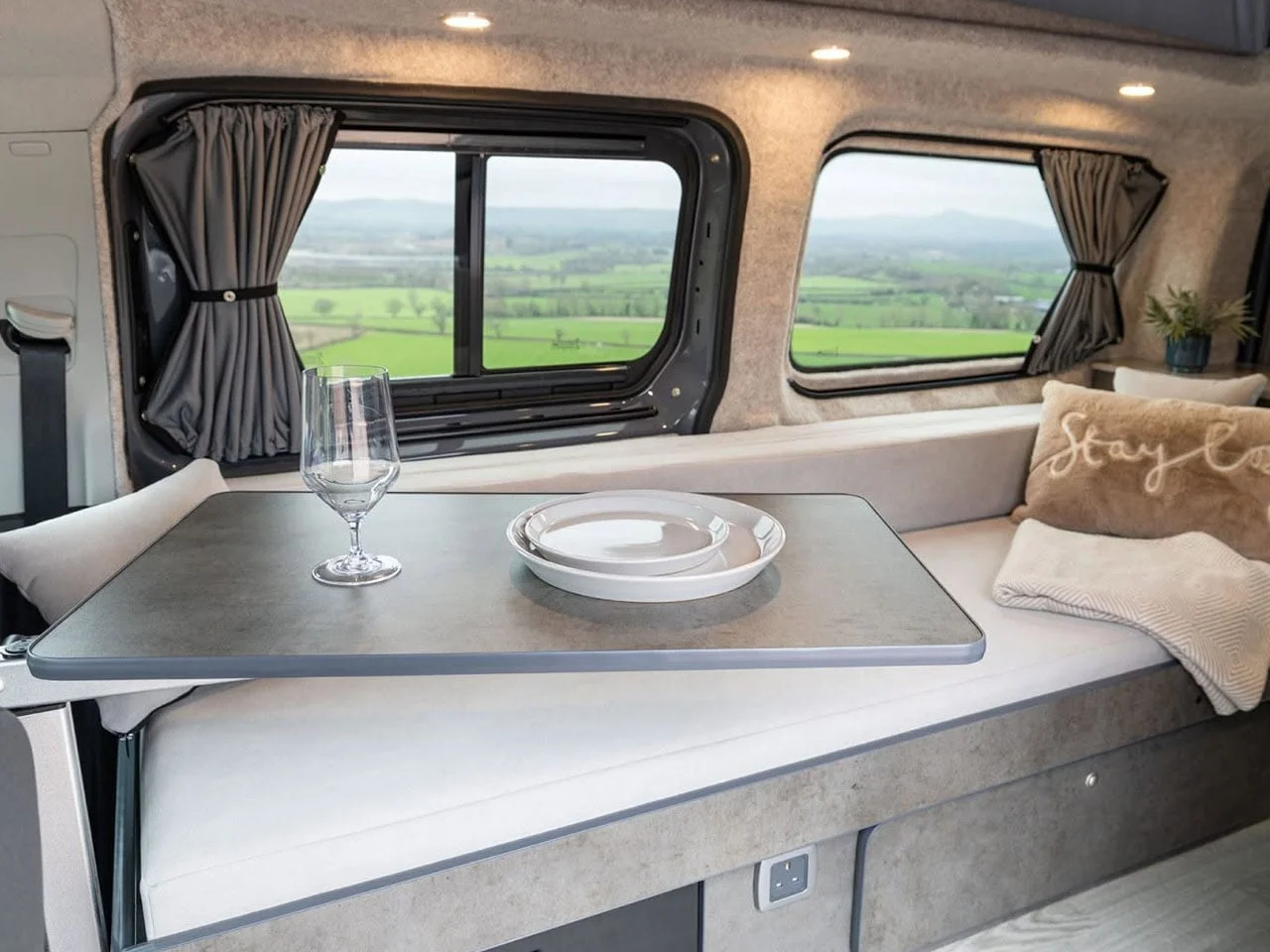
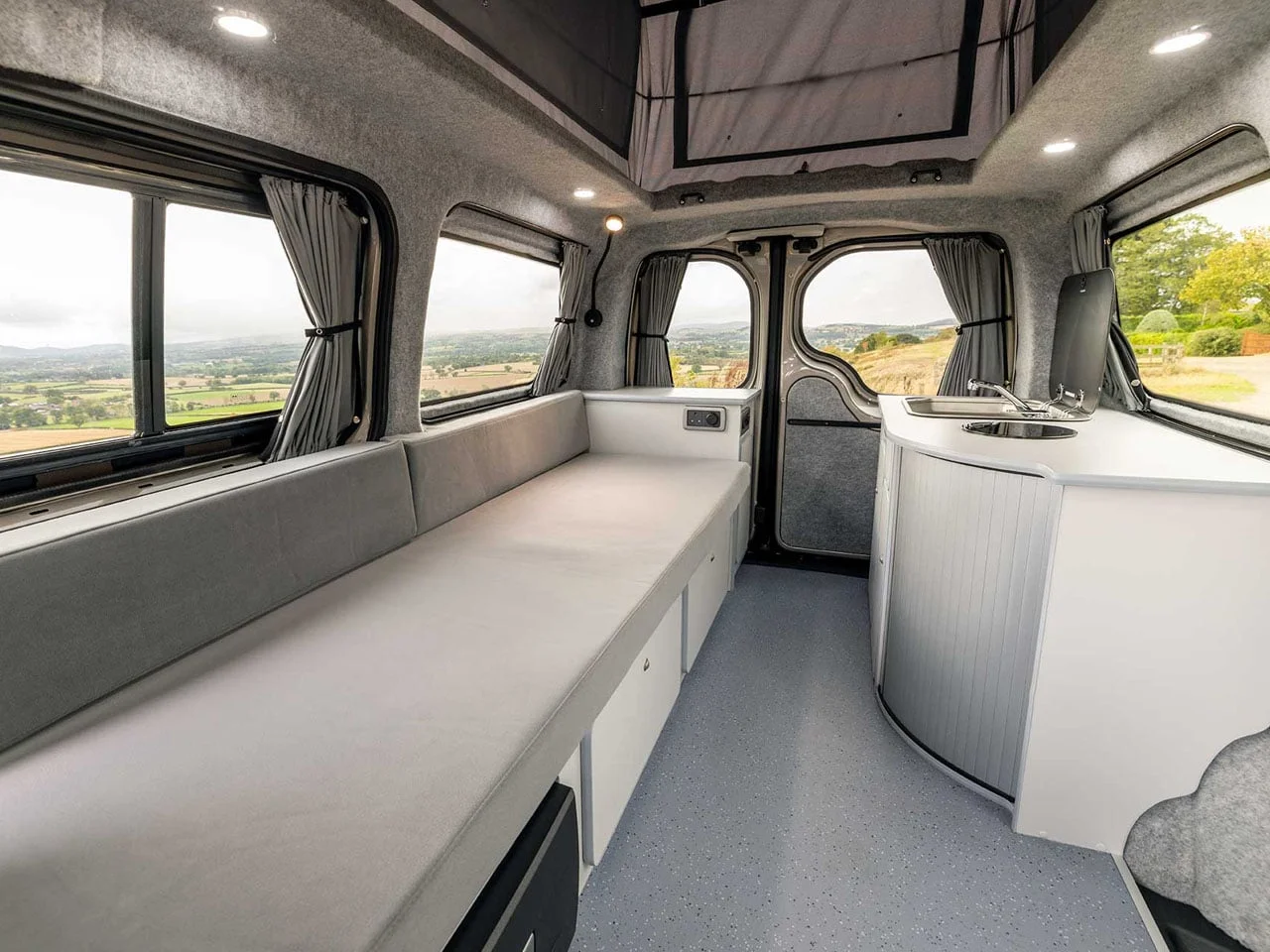
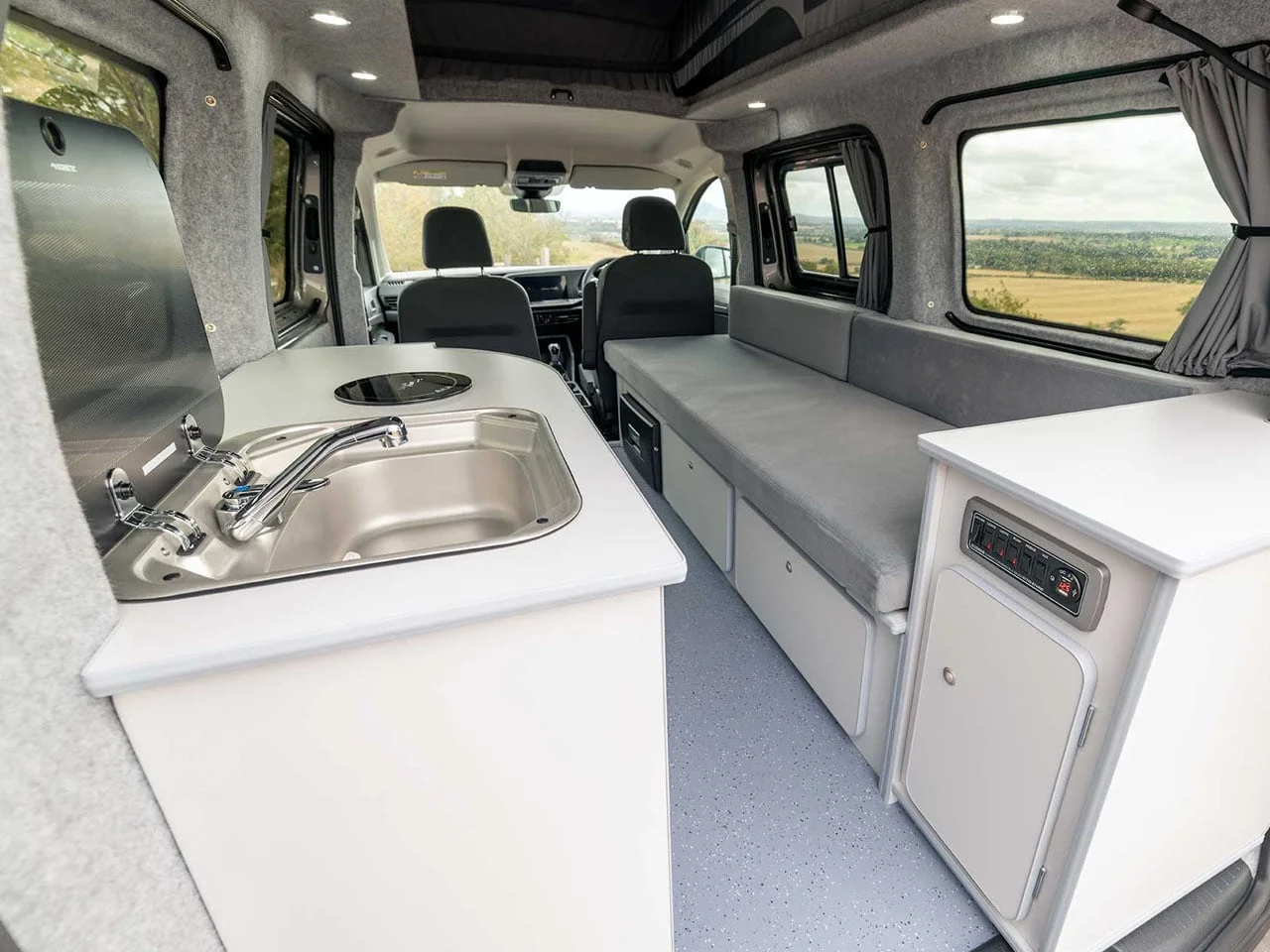
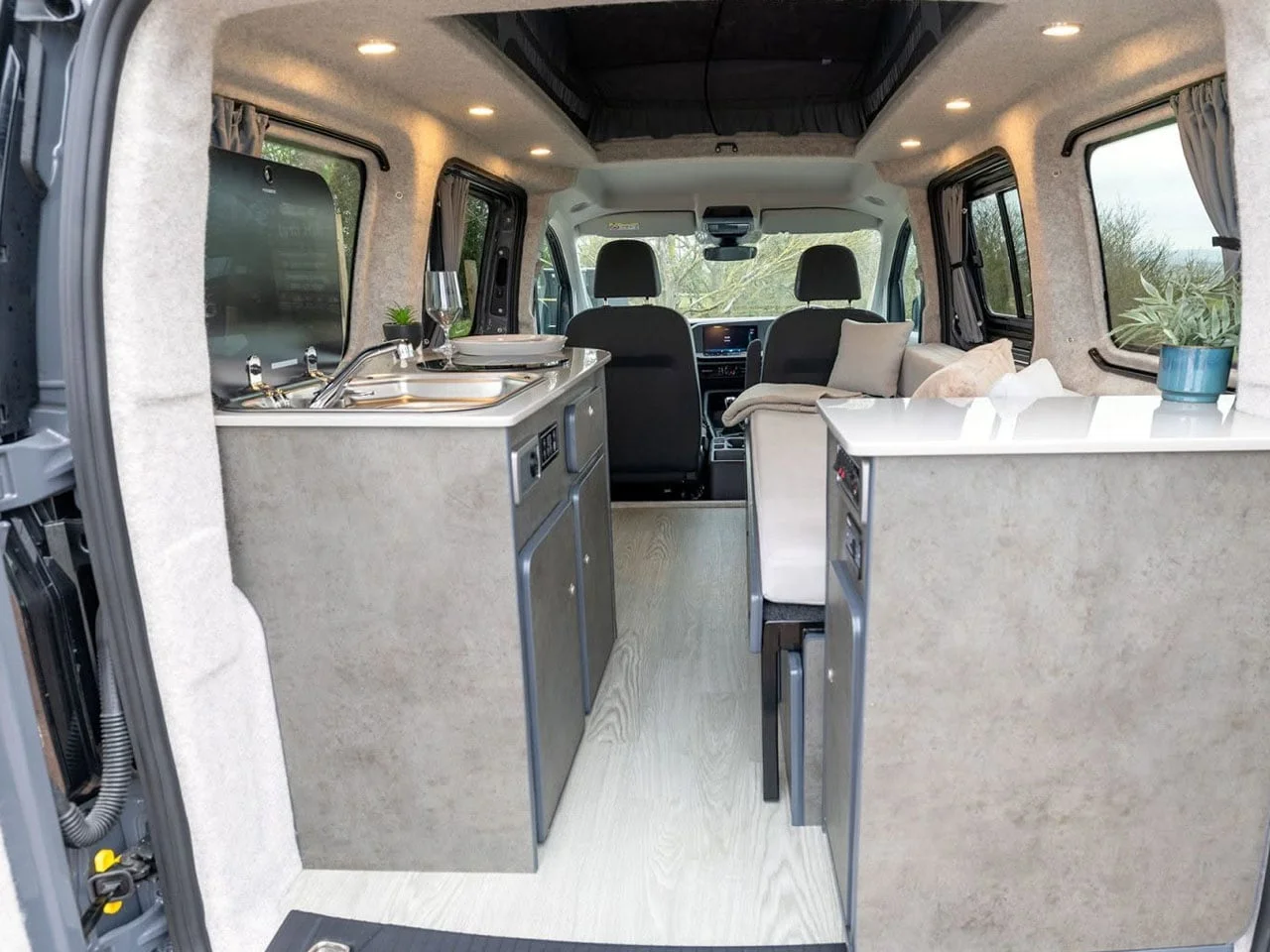
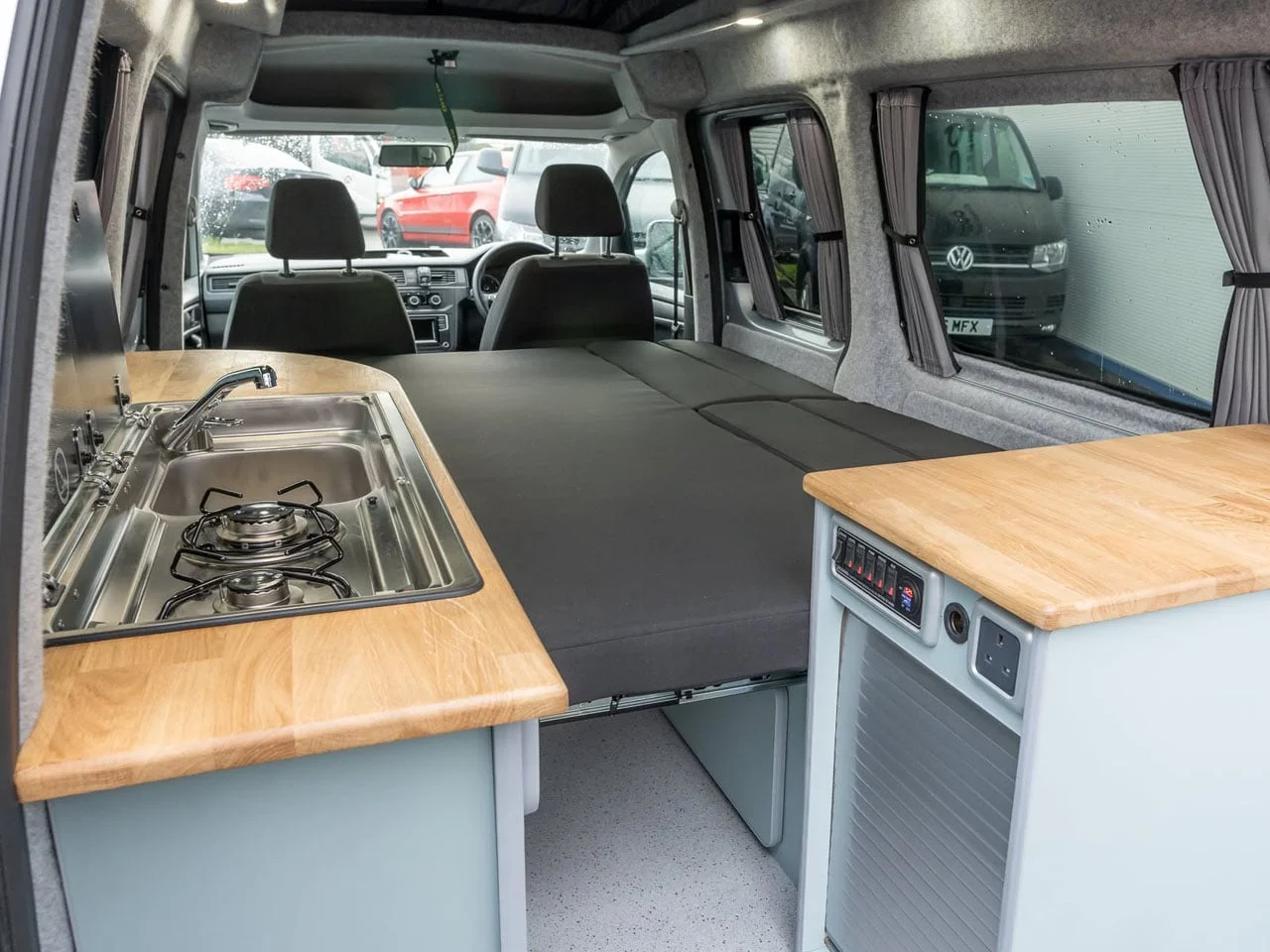
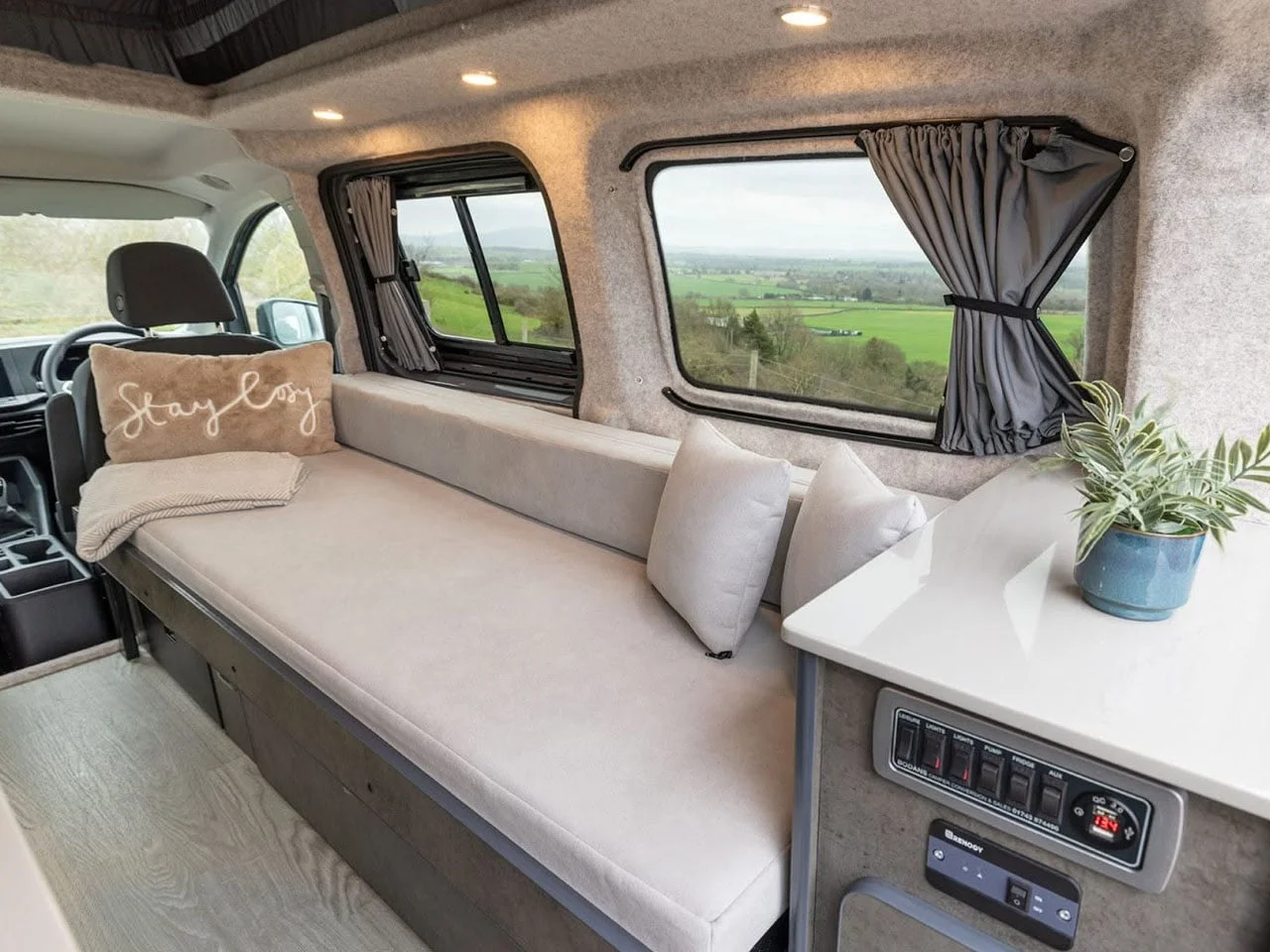
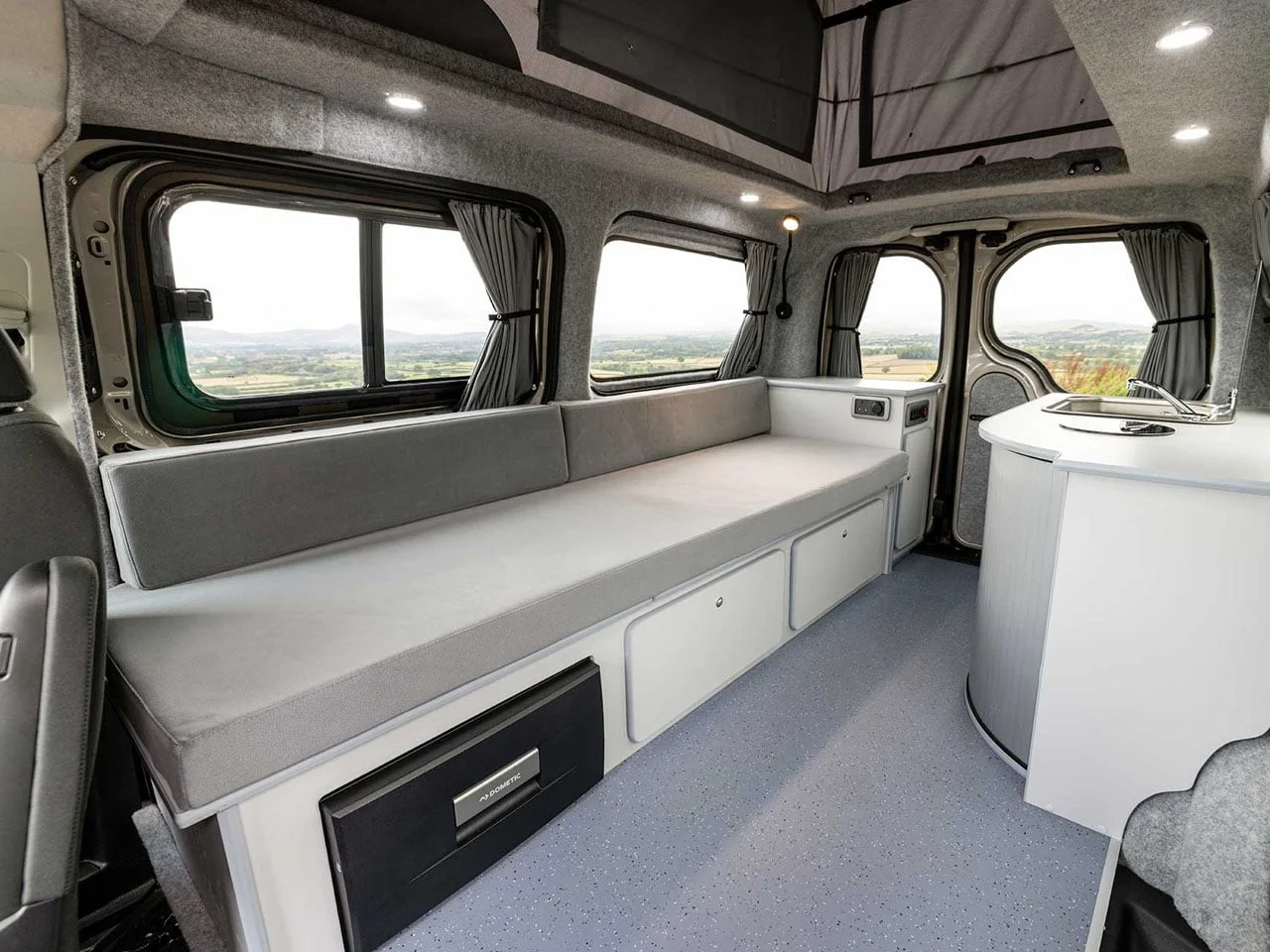
Under the skin sits Volkswagen's 114-hp plug-in hybrid drivetrain, which gives the Cubert up to 116 km of range. That's roughly 72 miles, and it's a useful number if your days are mostly short runs between campsites. Plug-in hybrids in this class tend to be judged on how often you can actually plug in, not on the headline figure. Two seats sit up front, with the living cabin behind them. A long convertible sofa runs along one side, and the kitchen takes up the opposite wall across the aisle.
Gray flooring, furniture, and upholstery keep the palette restrained, and integrated LED lights add warmth after dark. Here's the thing: a muted palette is easy to get wrong in a small space. Gray can feel cold in a van, so the warmth has to come from lighting and texture instead of color. The integrated LEDs do more of that work than a simple accent light would, and I'd call that a sensible choice. I'd still want to sit in it before deciding whether it feels cozy or just tidy.
A kitchen built for off-grid use
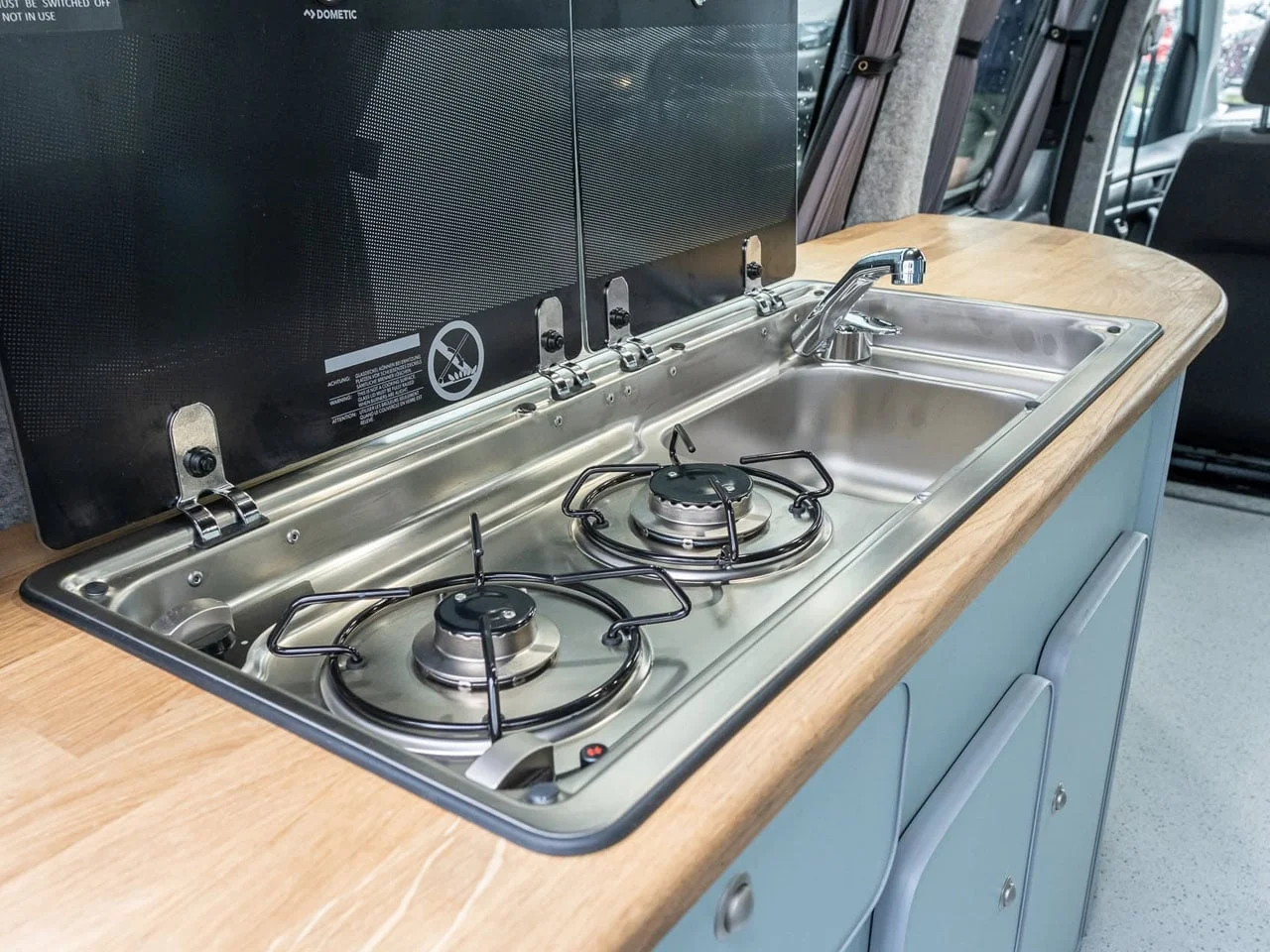
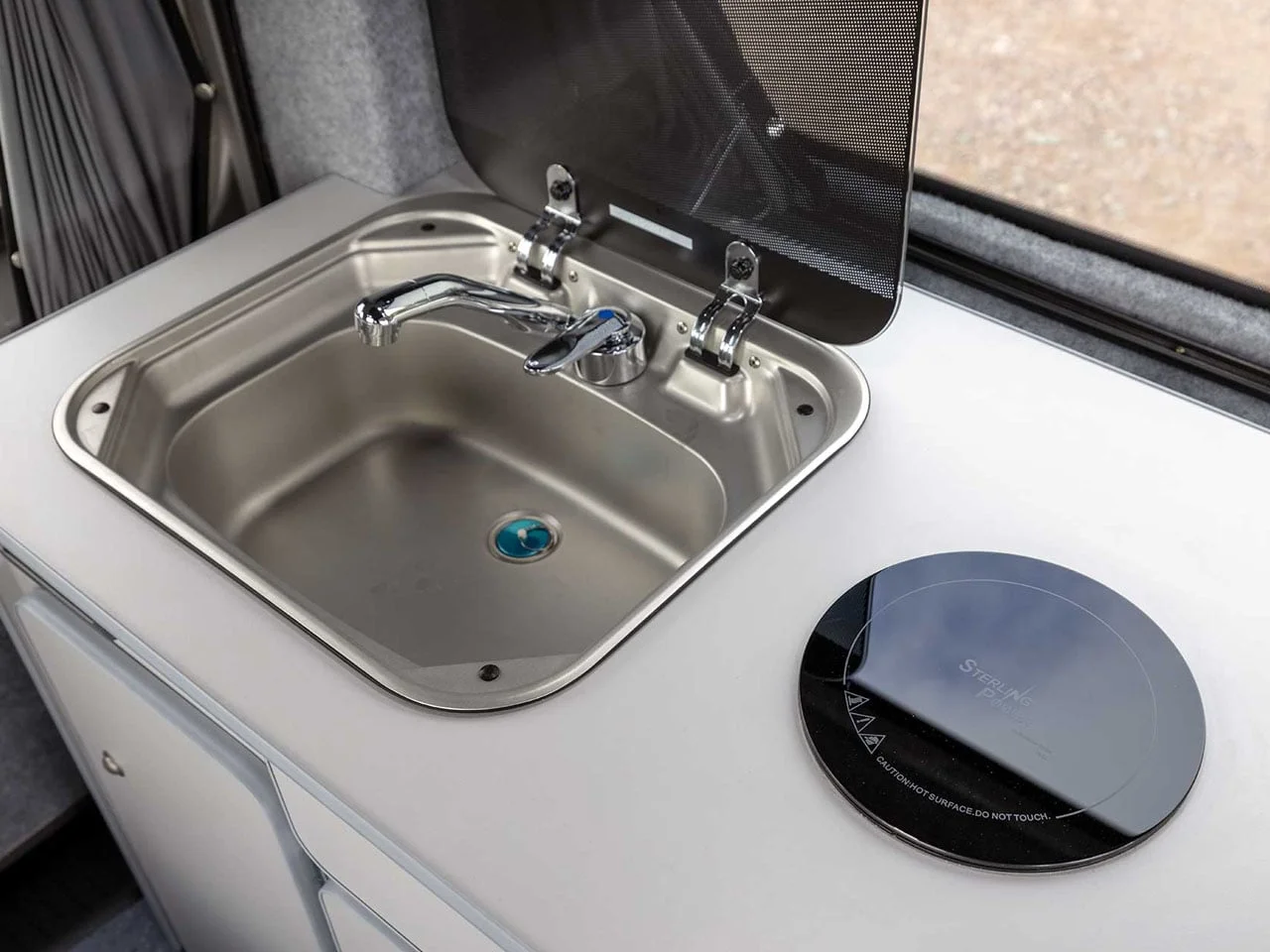
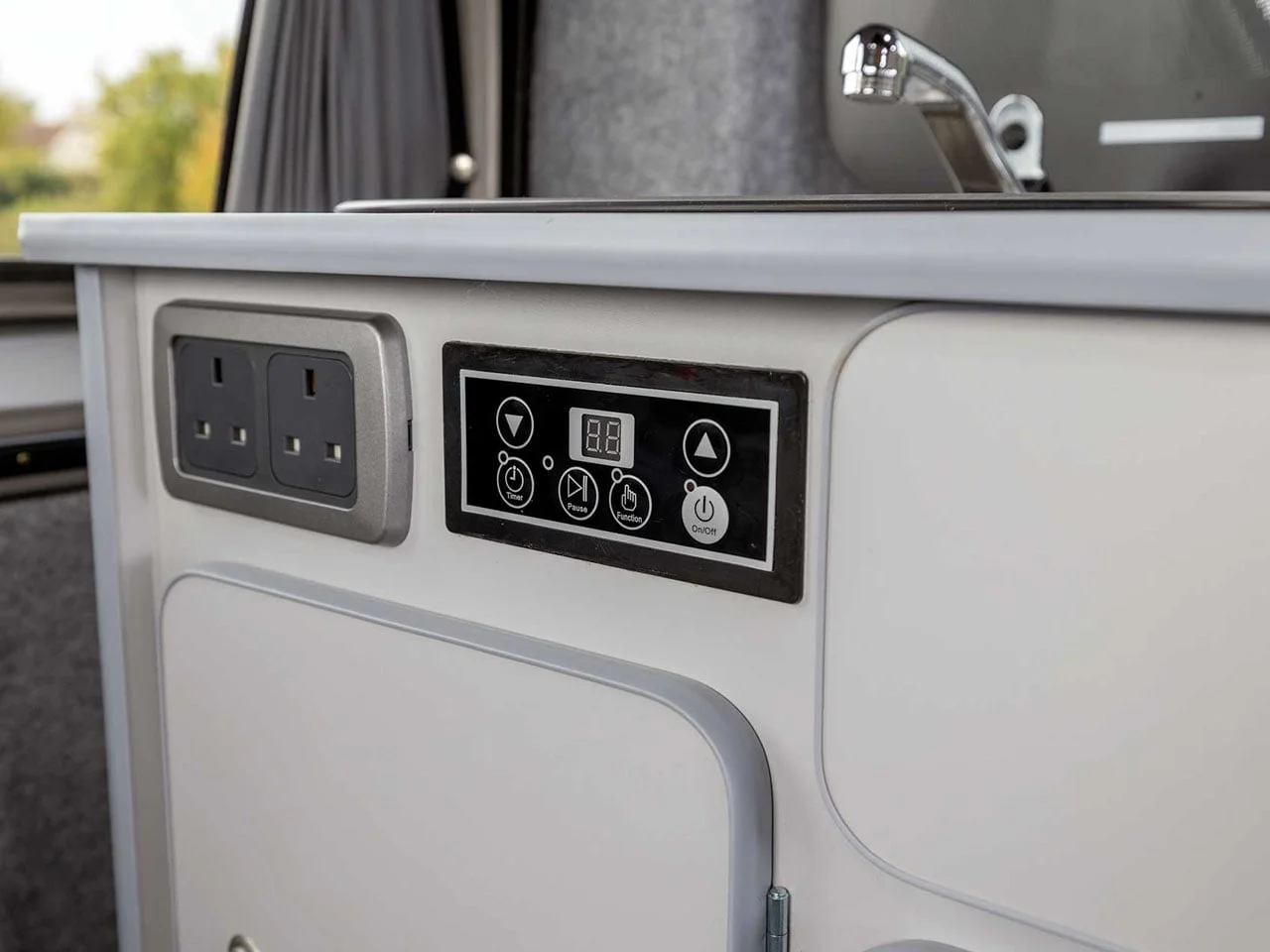
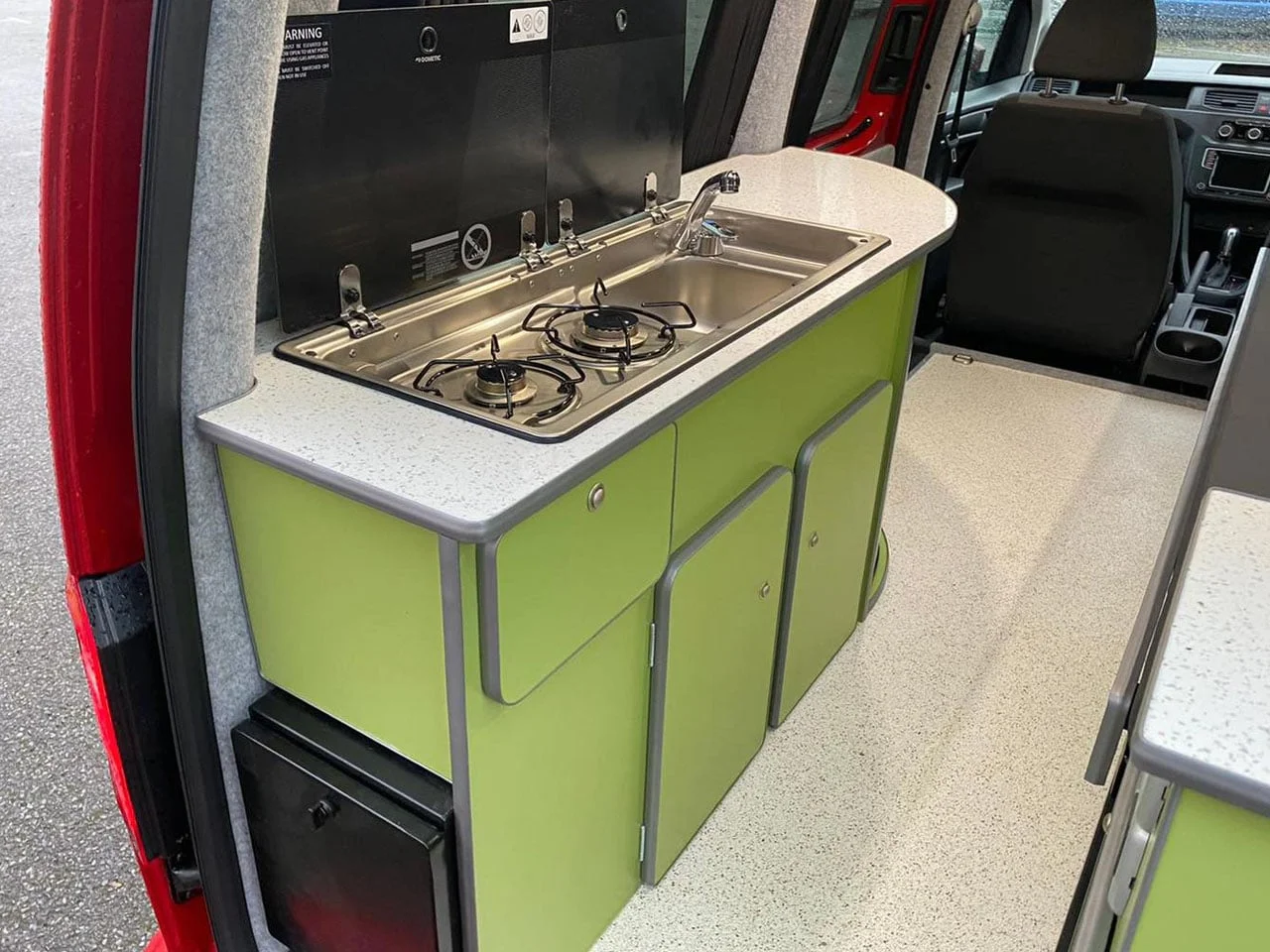
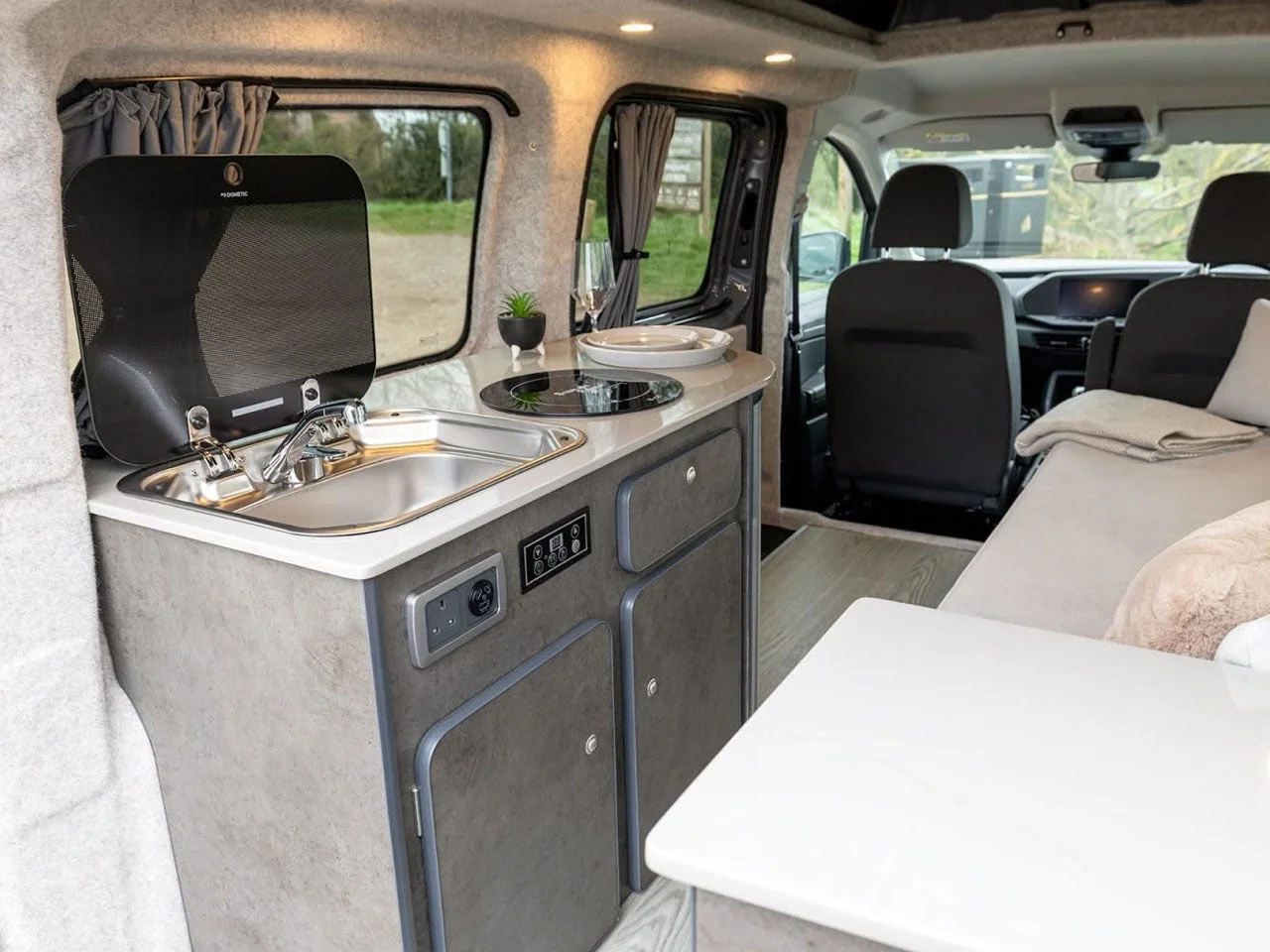
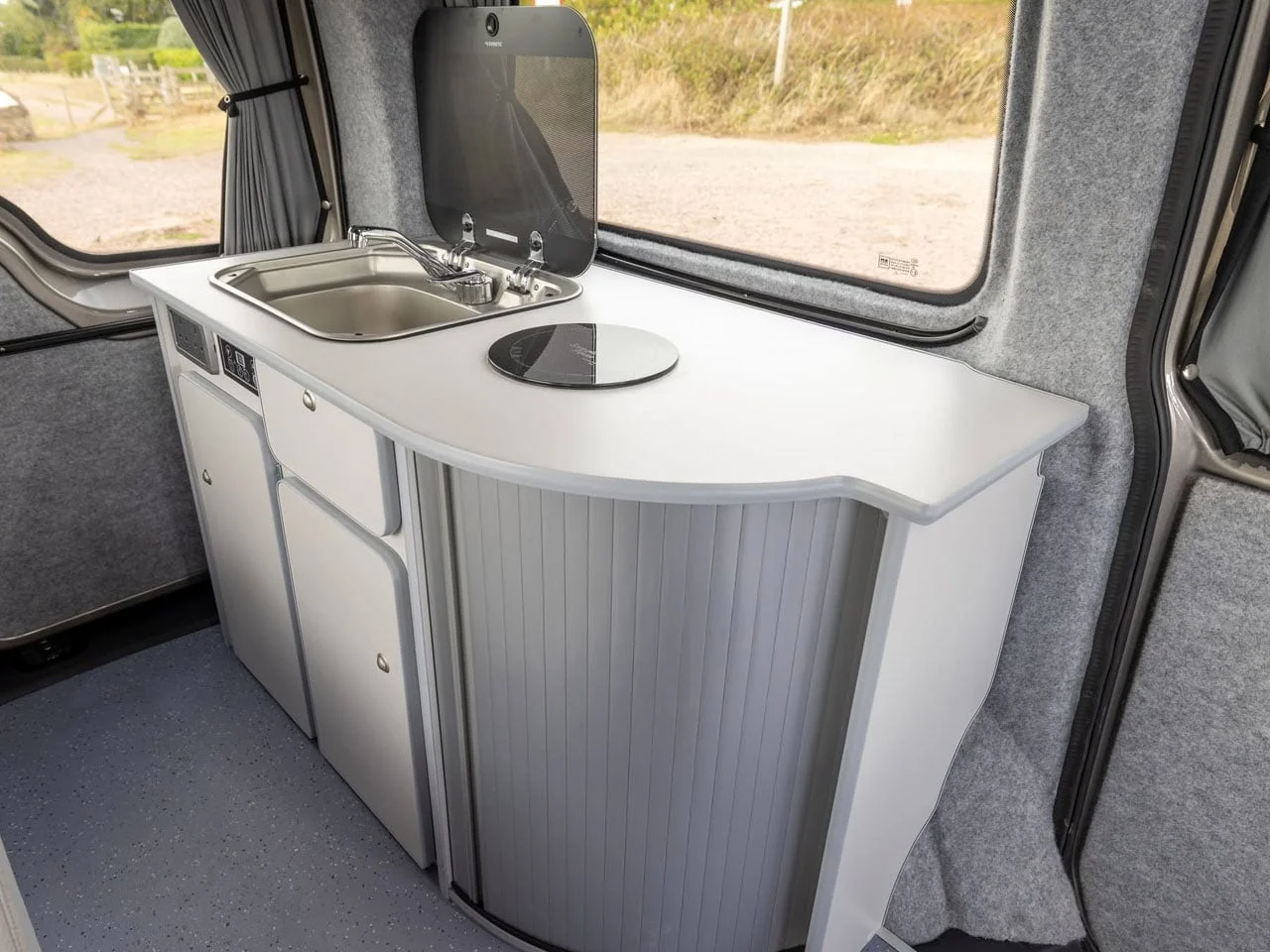
The kitchen is fully functional, which is more than you can say for many compact galleys that look good in photos and fall apart under real use. The standard setup uses an electric induction hob for off-grid cooking, and buyers can add a two-burner gas hob instead. That choice is the real trade-off here. Induction only makes sense if your battery and charging setup can keep up with it. Gas frees you from the grid but brings a gas installation with its own considerations.
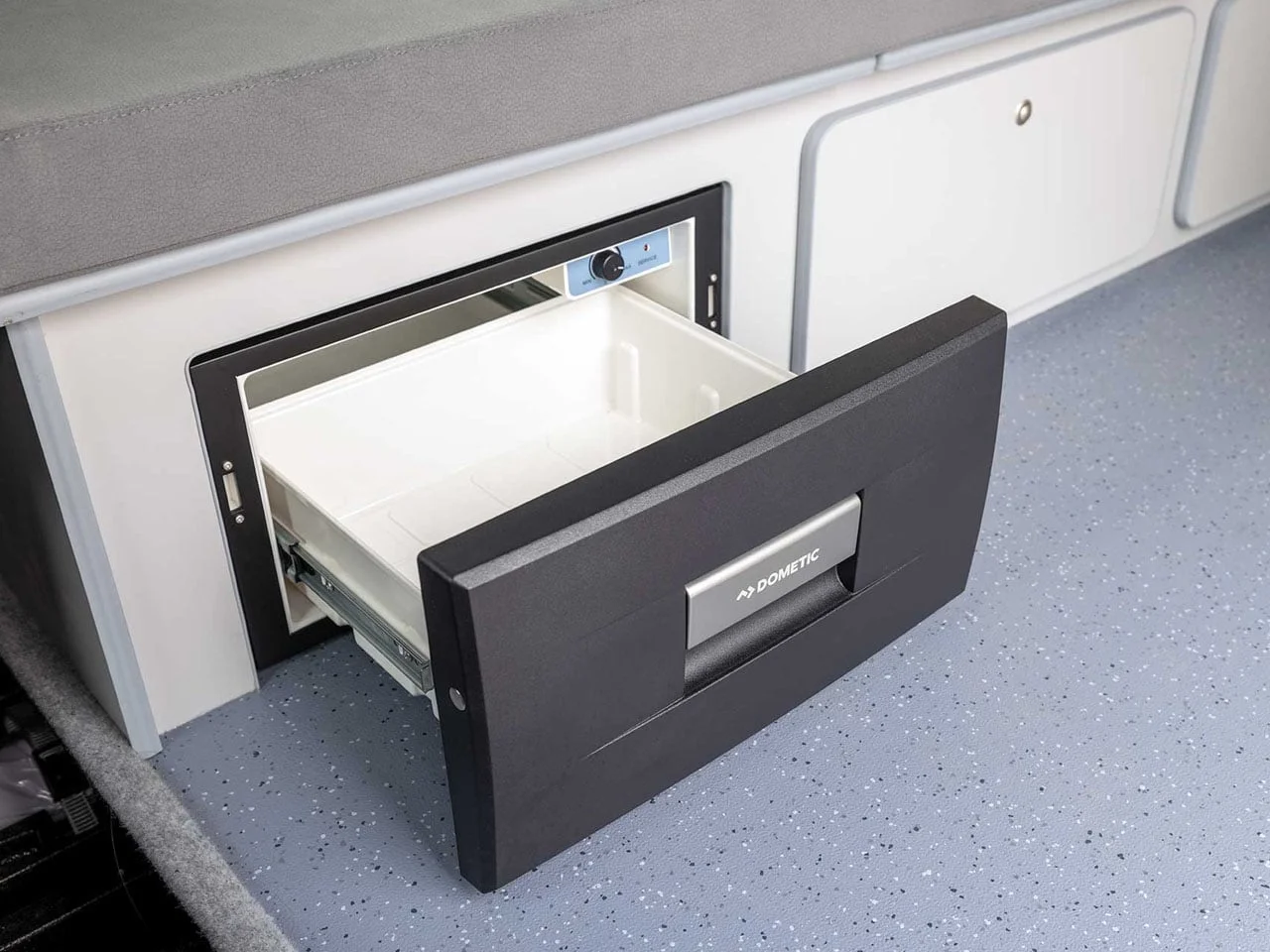
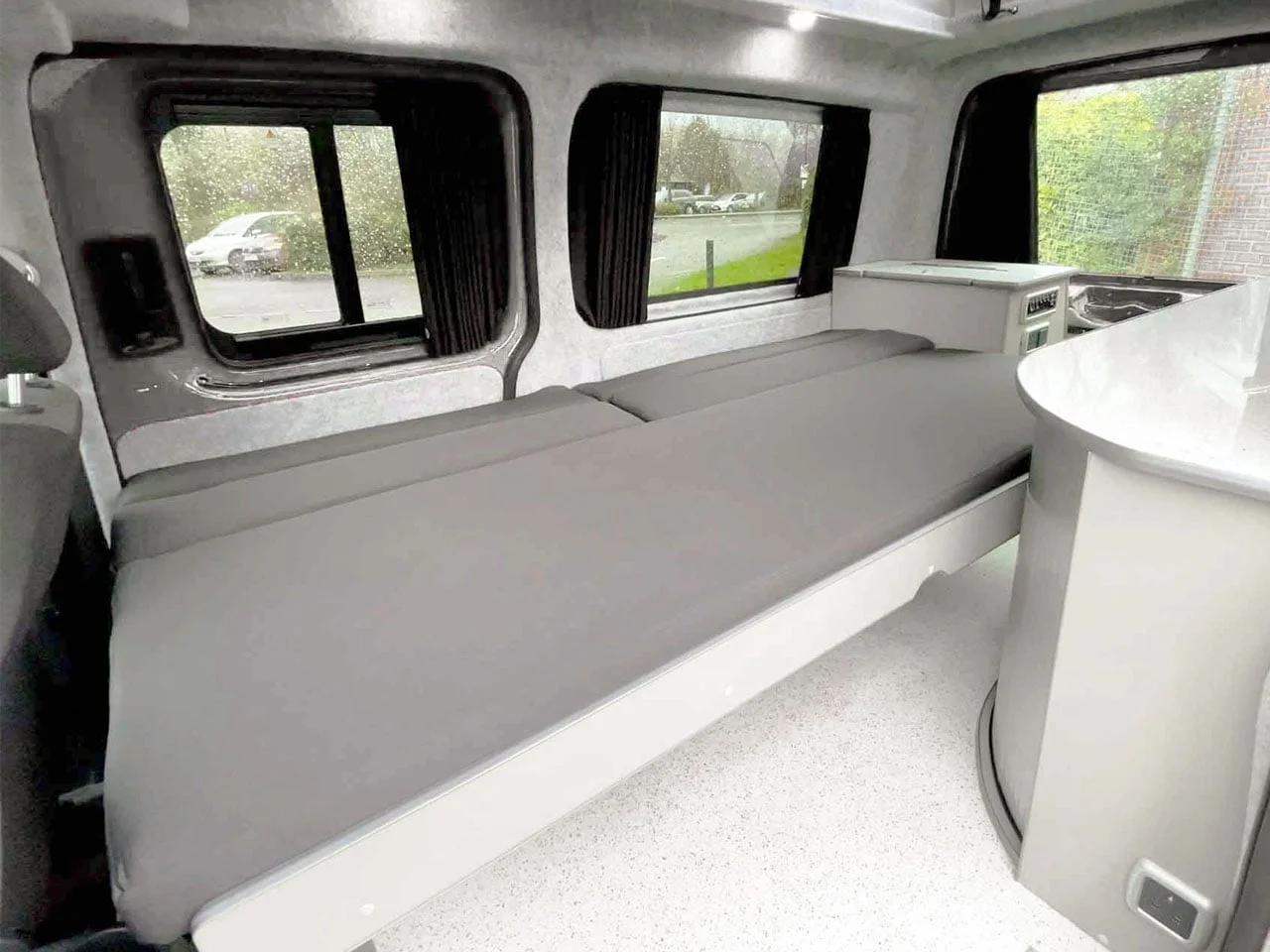
A large sink, a drawer fridge, and storage cabinets complete the galley. Drawer-style fridges are a common choice in van builds because they're easier to reach than a top-opening box, and they don't dump cold air every time you open them. (And this is the part most people overlook: a drawer fridge is only as good as the power budget behind it.) The sofa on the other side converts into a double bed with under-bed space for camping gear. That's a practical trade, and it's the kind of detail that decides whether a van gets used every weekend or only in summer.
The pop-up roof does the heavy lifting
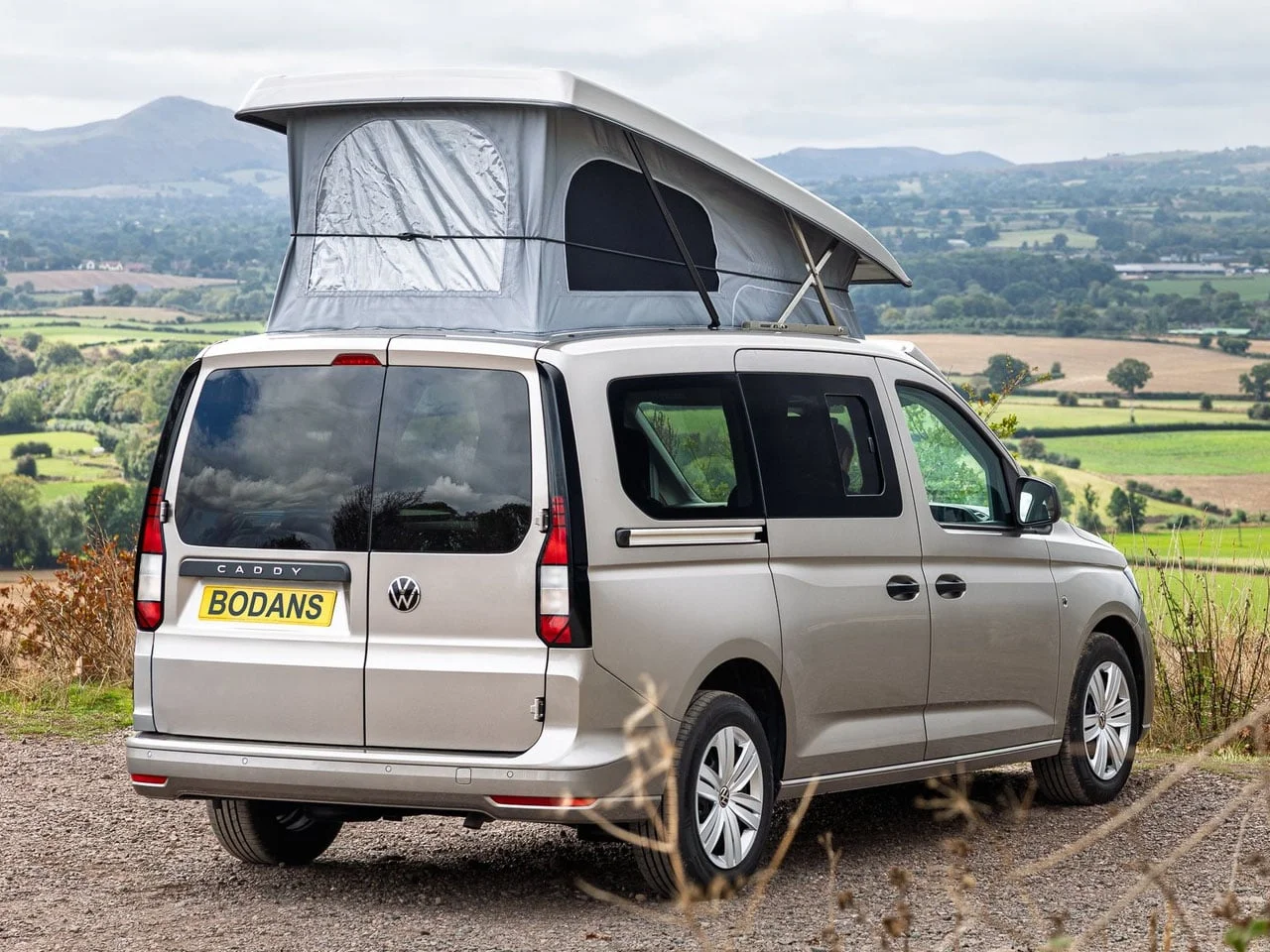
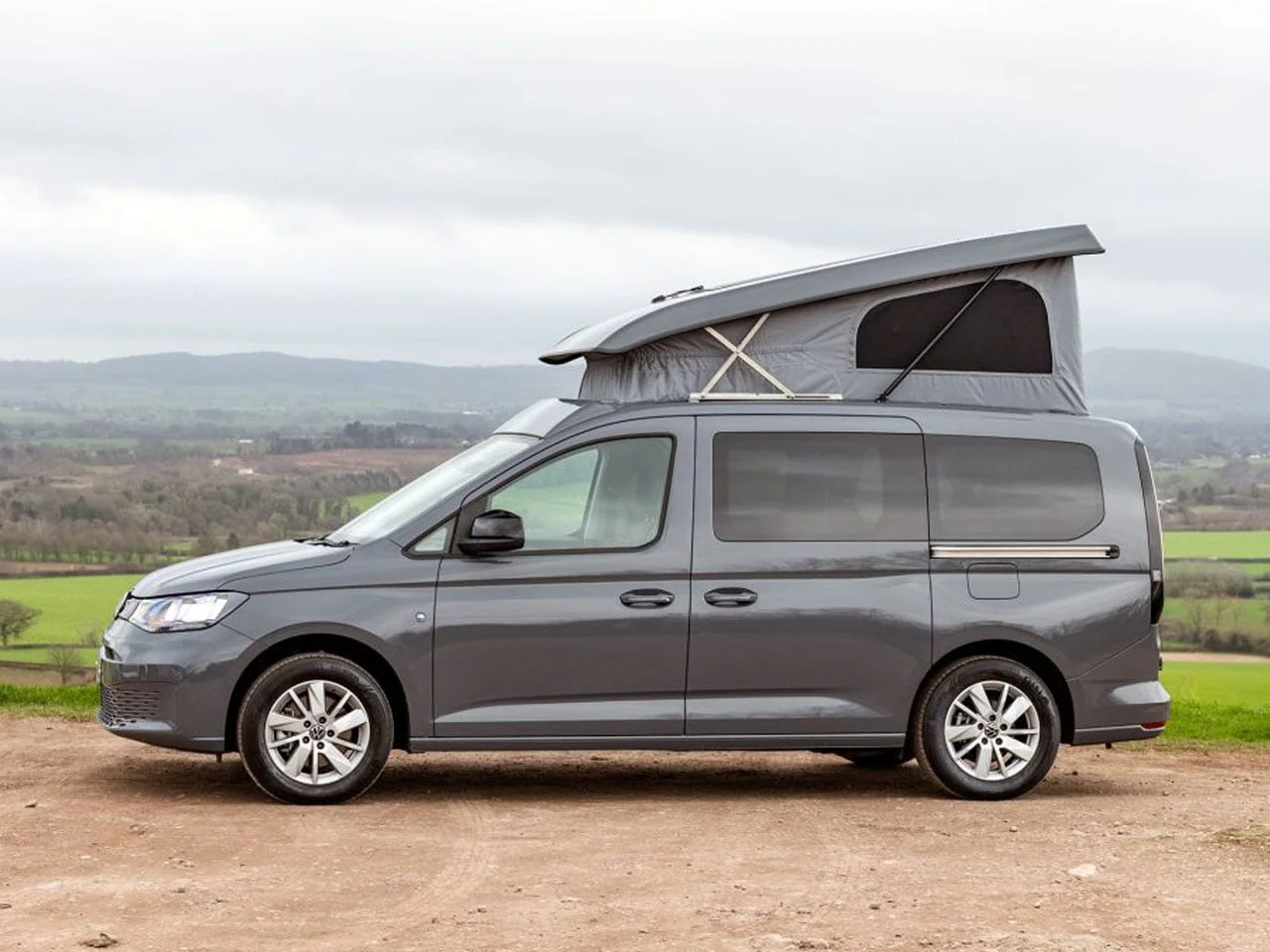
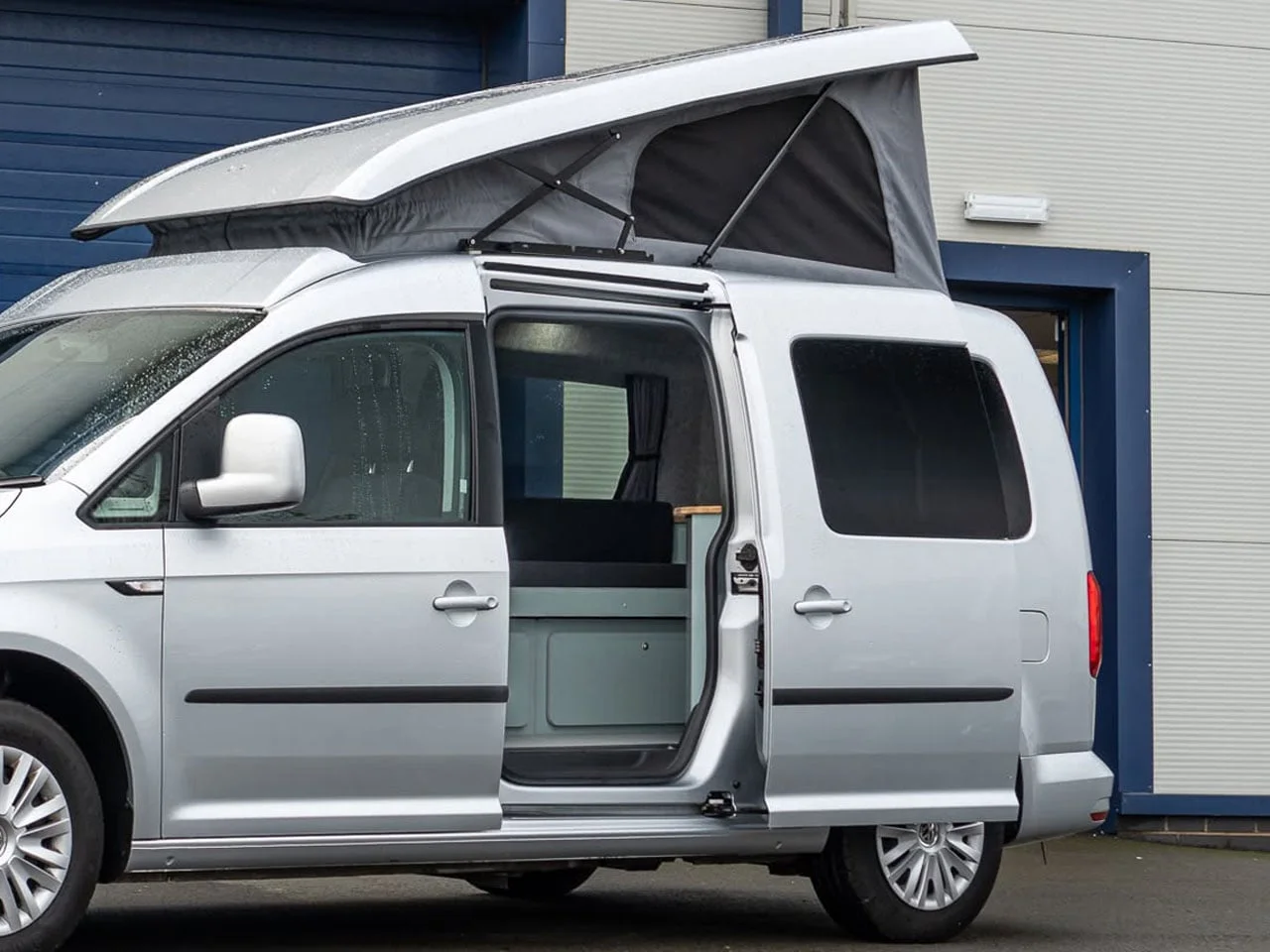
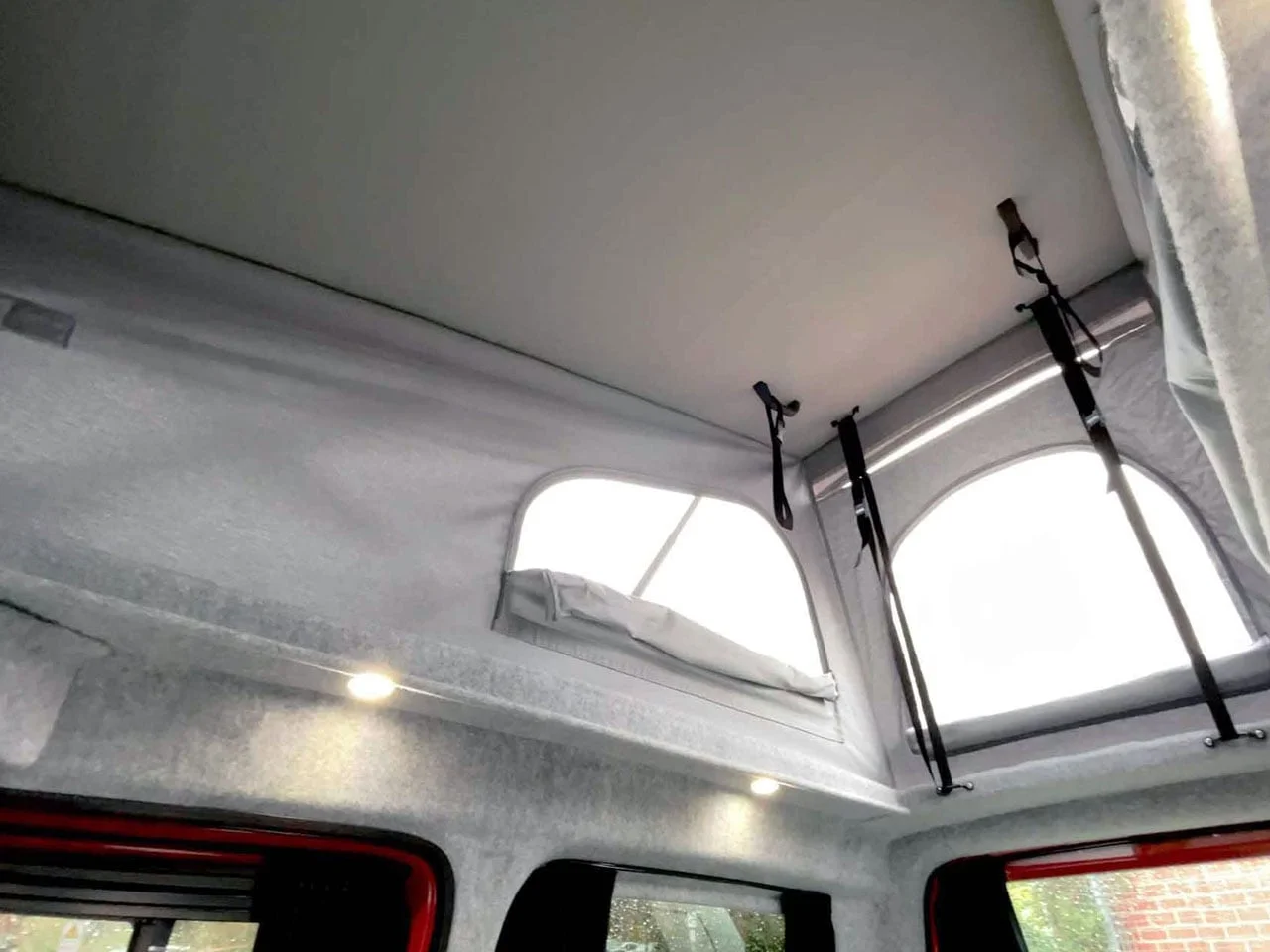
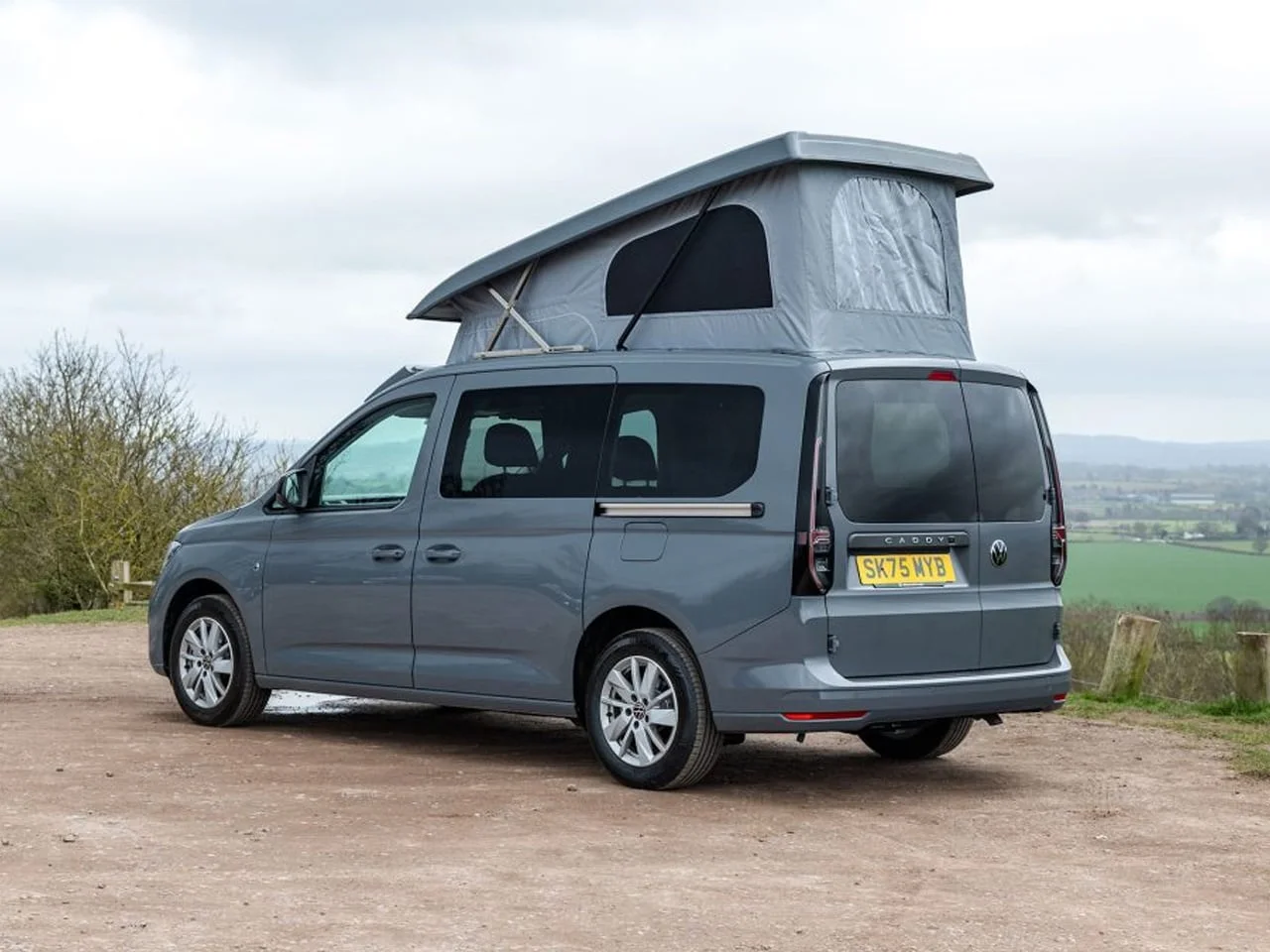
The raising roof is the most interesting part of the build, and it's the main reason to look at the Cubert at all. It adds headroom above the van's standard interior height and vents air through mesh windows. Ventilation matters more than people expect in a space this small. Condensation builds fast when two people are breathing in an enclosed van overnight, and mesh windows let air move without leaving the cabin fully open.
It doesn't come with an extra bed, but Bodans can fit a lift-away double to supplement the basic two-person sleeping setup. That makes the Caddy a natural fit for a couple. With the additional bed, two people get more room to spread out, but I'd be wary of stretching it to more than two. The floor space runs out fast. If you're thinking about bringing kids or a third adult, do the floor-plan math before you commit.
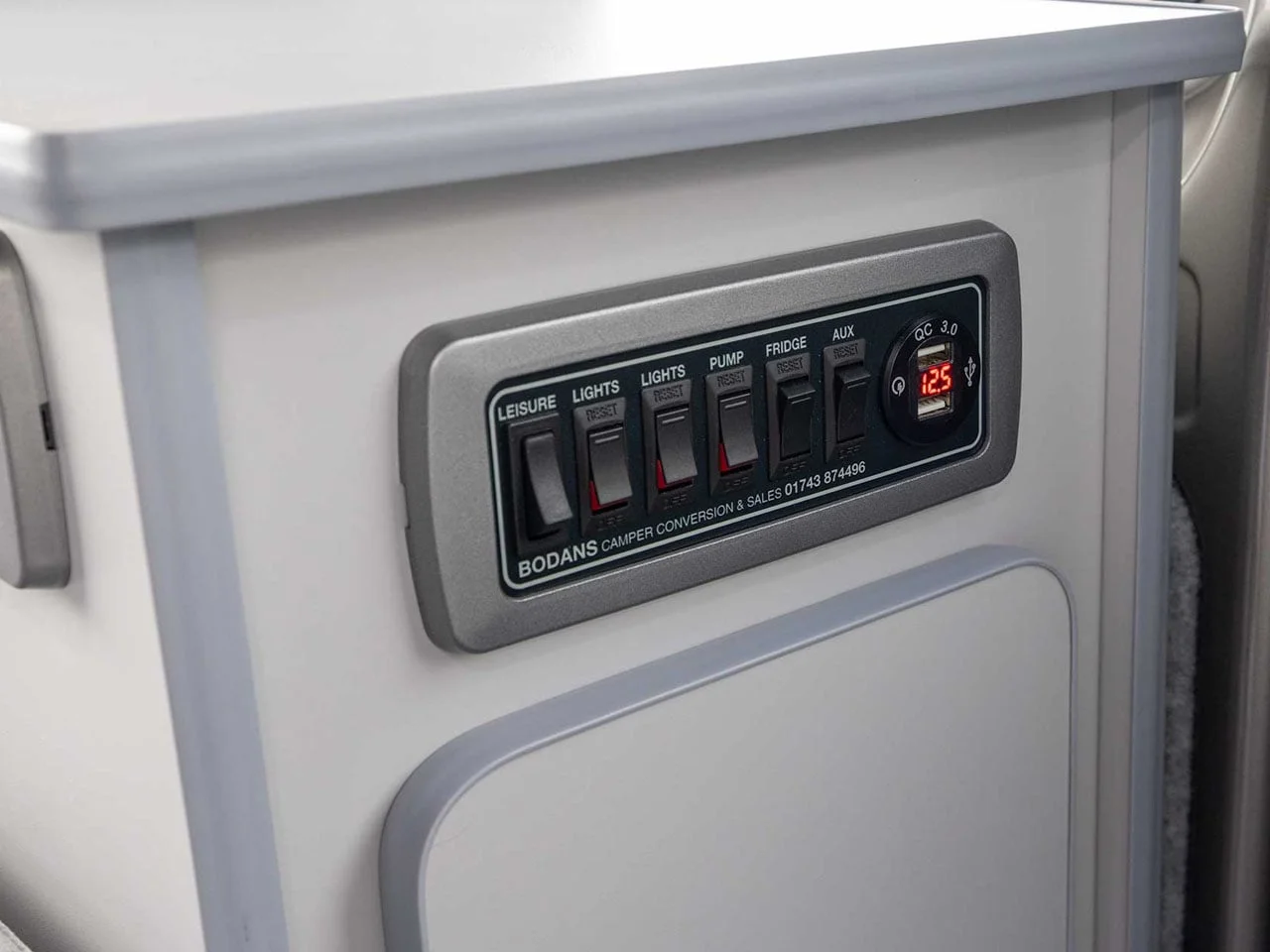
Adventurers can also spec a rooftop solar panel, a microwave, and a touchscreen for all onboard controls. Each of those options adds weight and power demand, so price them against how you'll really use the van, not against what looks good on the configurator. Solar only earns its keep if you park in sun for long stretches. That said, a touchscreen for controls is the kind of option that tends to matter more day to day than it sounds on paper.
Pricing and customization
Bodans can finish the van in a range of colors and interior materials, and it will tailor the build to individual requirements. That flexibility is typical of converters working on a donor vehicle, since every buyer's list of must-haves looks a little different. The base Cubert costs £49,995 (approx. $66,000) on a new Caddy. Supply a used one and the price drops to £43,995 (approx. $58,000).
That £6,000 gap matters, but it's a small slice of a near-£50,000 build. Roughly 12% off the headline figure is real money, yet it doesn't change the basic question of whether you're paying for a van or for the conversion. My take: the conversion is the product, so the age of the donor vehicle is a secondary concern. Still, if you go the used route, get the base van inspected before the conversion hides its condition.
What this means for buyers
The Cubert is a niche product, and it's meant to be one. It serves buyers who want a Volkswagen badge, a small footprint, and a proper kitchen without stepping up to a larger converted van. This is more significant than it looks. It points to where small conversions may be heading: plug-in hybrid drivetrains, a choice between induction and gas, and pop-up roofs that add height without adding bulk outside.
Looking ahead, the open questions are about durability and resale rather than specs. Converted vans get judged over years of use, and how a raising roof holds up after seasons of folding and sealing will separate good builds from average ones. I'd want owner feedback before drawing firm conclusions. The price is high for a vehicle this size, and the used-donor option narrows the gap without closing it.
If you're working in this space, whether as a buyer or a converter, the lesson is that practicality sells better than bulk. The Cubert won't suit everyone, and it isn't trying to.
That's a narrower pitch than most, and a more honest one.
For a couple who want a Volkswagen camper without the bulk, the Cubert's pop-up roof makes a strong case.

Discussion
Sign in to join the discussion.