Designed by Ponti Design Studio, CASETiFY’s polycarbonate Bounce Suitcase pairs protective corner bumpers with customizable panels and three sizes.
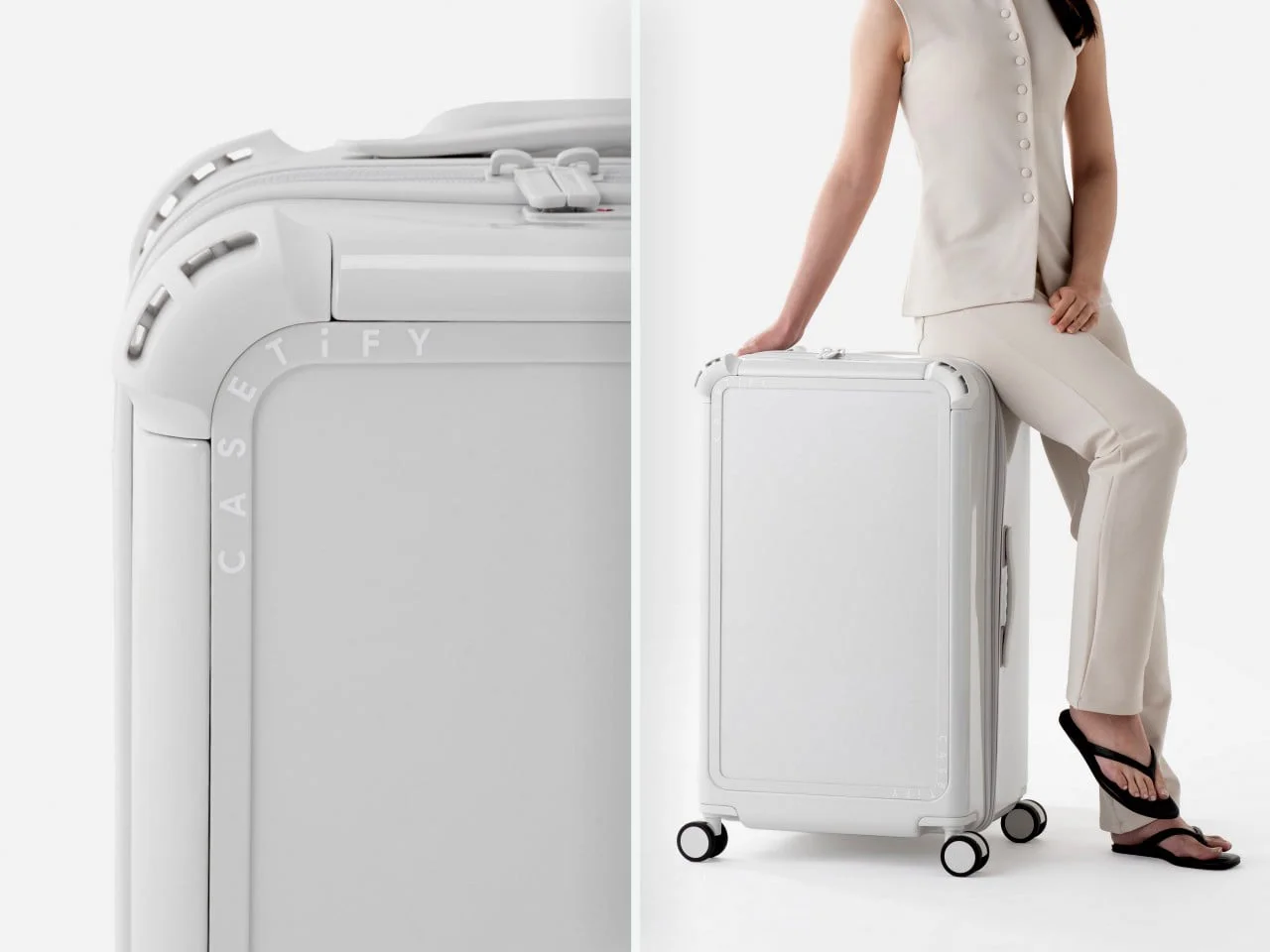
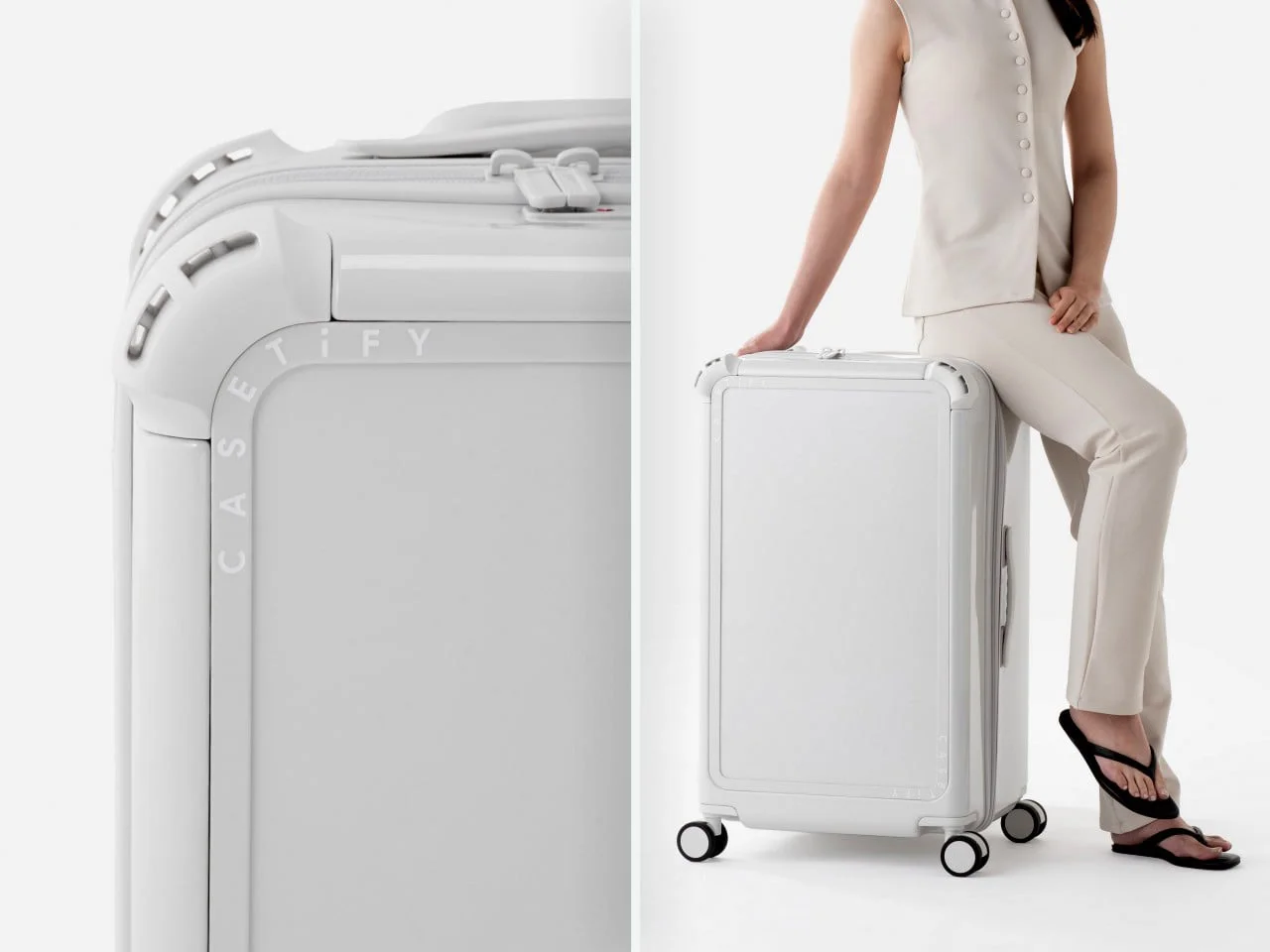
CASETiFY’s Bounce Suitcase takes a familiar phone accessory idea and gives it a full-size job: protecting luggage at its most exposed points. Designed by Hong Kong’s Ponti Design Studio, the polycarbonate case uses projecting, ribbed corners as impact buffers and as its defining visual feature. It’s an approach that makes the suitcase recognizable from across a row of hard-shell bags, while raising a practical question: how much protection can a visible corner bumper offer through the varied knocks of travel?
The design draws on CASETiFY’s phone-case identity, where protective edges are part of the product’s look rather than hidden engineering. Scaling that idea up changes the stakes. A suitcase gets dragged, stacked, rolled and handled in ways a phone doesn’t, so the bumpers have to work as both a design feature and a component exposed to repeated contact. The result looks less like generic luggage and more like a product built around a specific design signature.
Protection becomes the visual identity
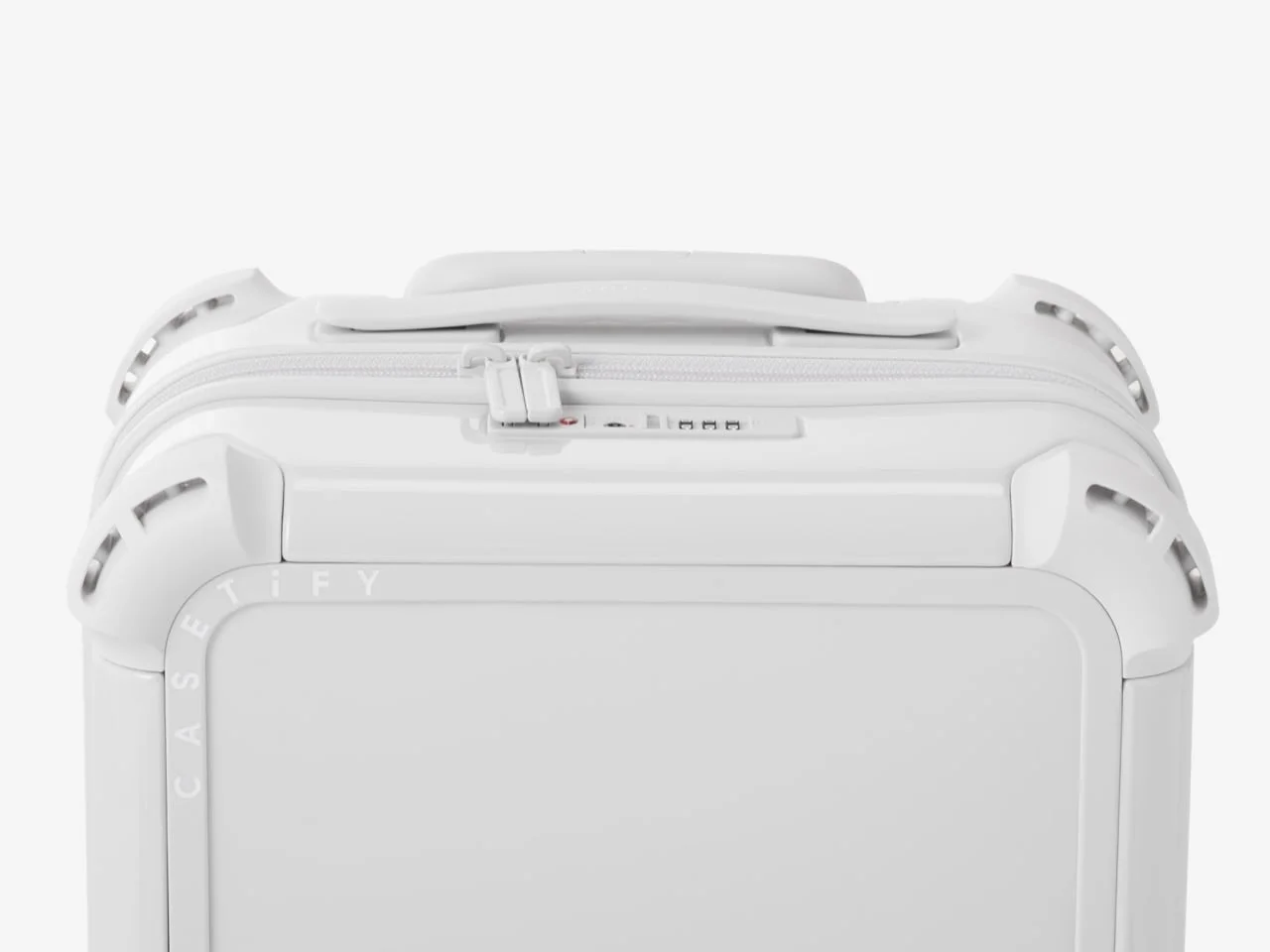
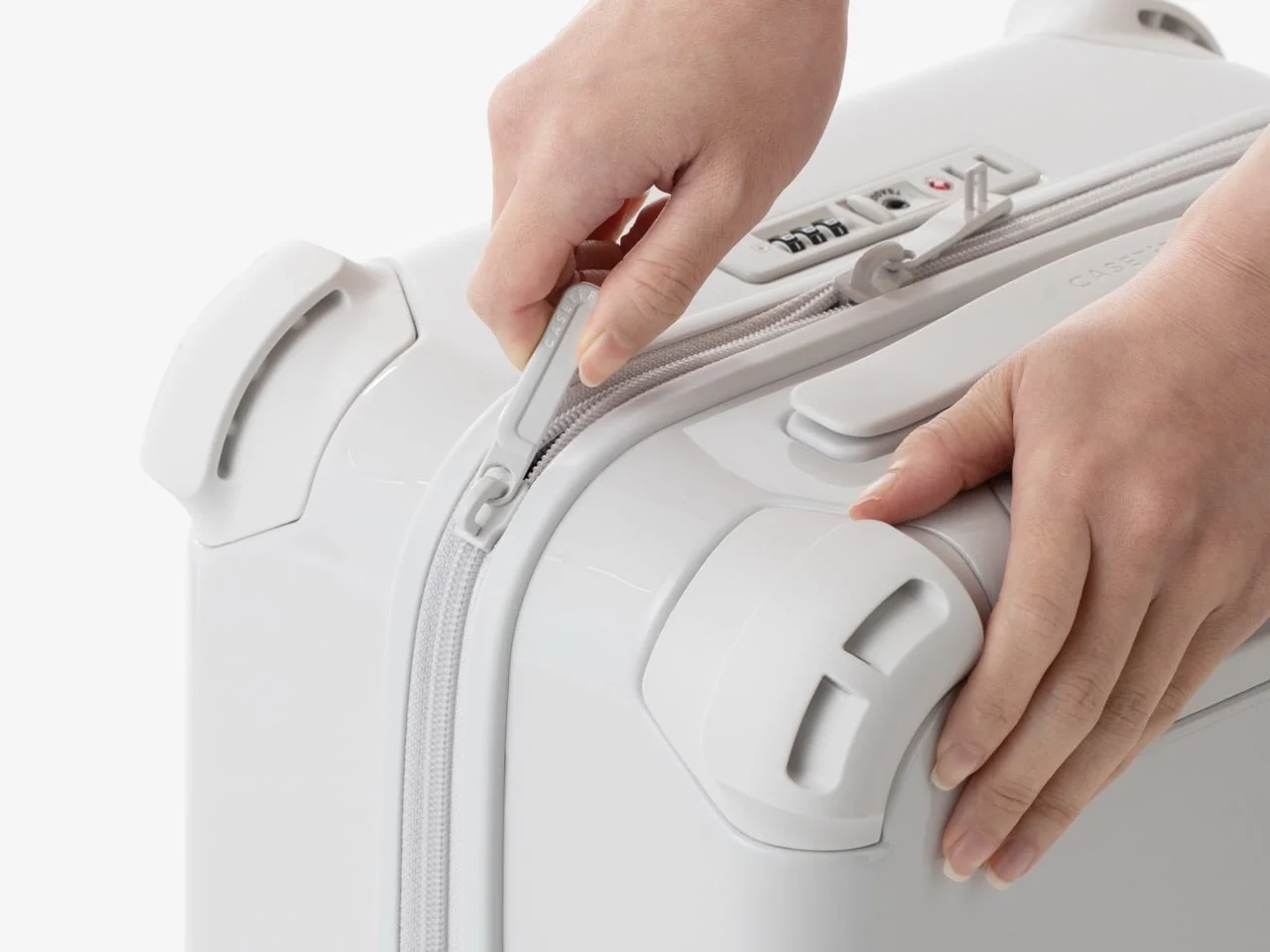
Designer Andrea Ponti has worked with CASETiFY for nearly 15 years, including on the original Bounce phone case. That product’s protective concept now appears at luggage scale: oversized top corners extend over the front and upper faces of the shell, with slotted cavities intended to absorb impacts. The openings also serve as attachment points for tags and charms, giving a functional feature another role in the product’s presentation.
CASETiFY says its phone case design responds to the fact that 70% of phones land on a corner, concentrating impact there. The company developed compression ribs and air cavities for that bumper, describing the approach as inspired by suspension bridges. On the suitcase, the same corner-first thinking gives the bag an outline that should be easier to pick out among rows of hard-shell cases. The bumpers also inform the brand’s Skyline personalization font, extending one physical detail into the visual language used to customize the case.
There’s a long history of reinforcing luggage corners: trunk makers including Louis Vuitton, Goyard and Moynat once used solid brass caps for the job. CASETiFY’s version trades brass for polymer, while making the protective element a prominent part of the design. That shift says something about contemporary luggage: protection can be an engineering choice and a branding device at the same time. Whether the polymer corners prove as durable as their confident appearance suggests will depend on use; the source material doesn’t specify long-term wear results.
Personal details on a dedicated panel
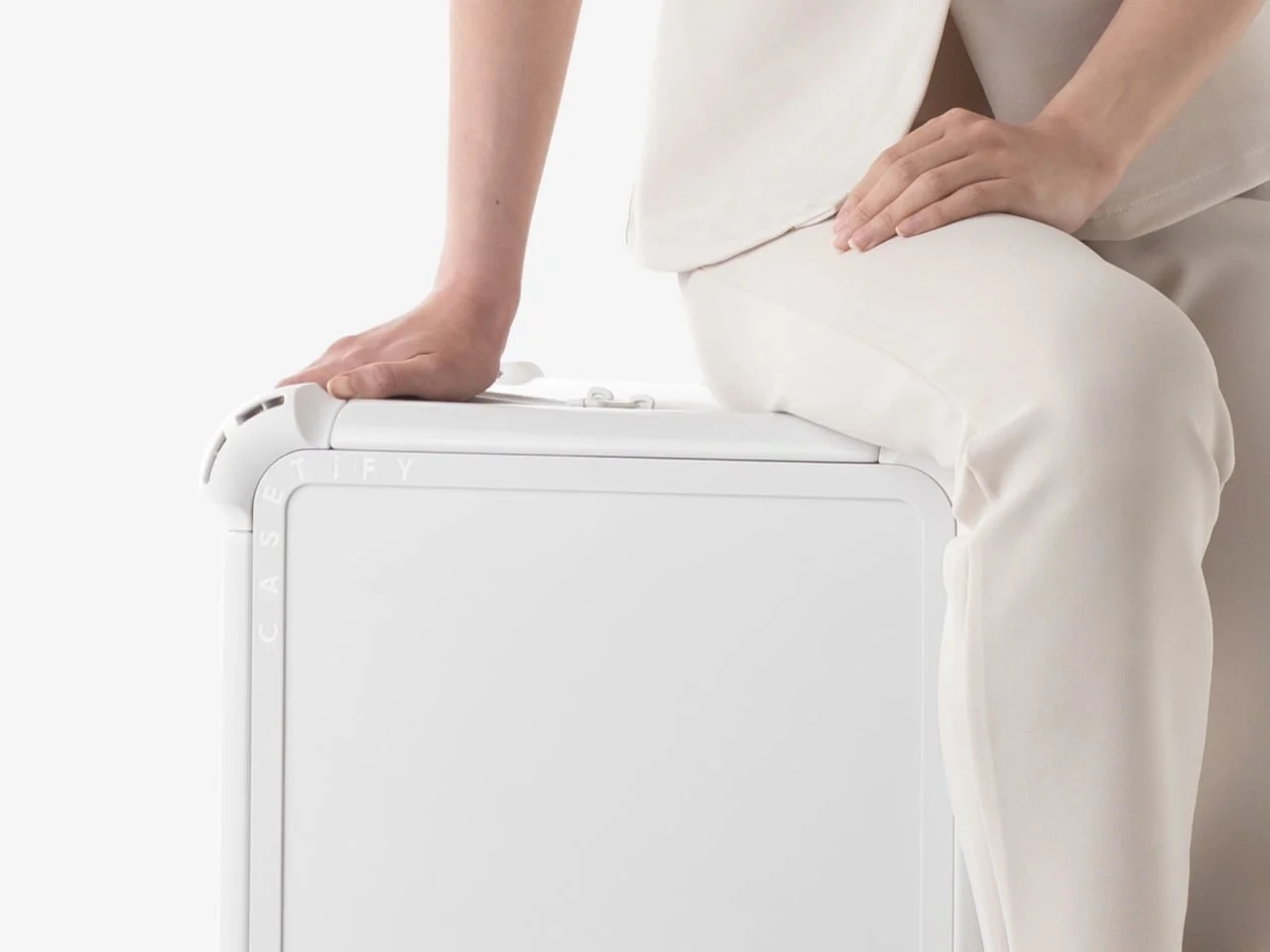
A framed plate on the front takes the customization, with options for solid colors, prints and monograms in Dot, Skyline and Milano fonts. Ponti says keeping personalization on this panel helps preserve the shell’s volume, durability and structural integrity. The arrangement gives buyers room to make the case their own without turning the entire shell into a canvas, and it keeps the branding and personal detail in a defined area.
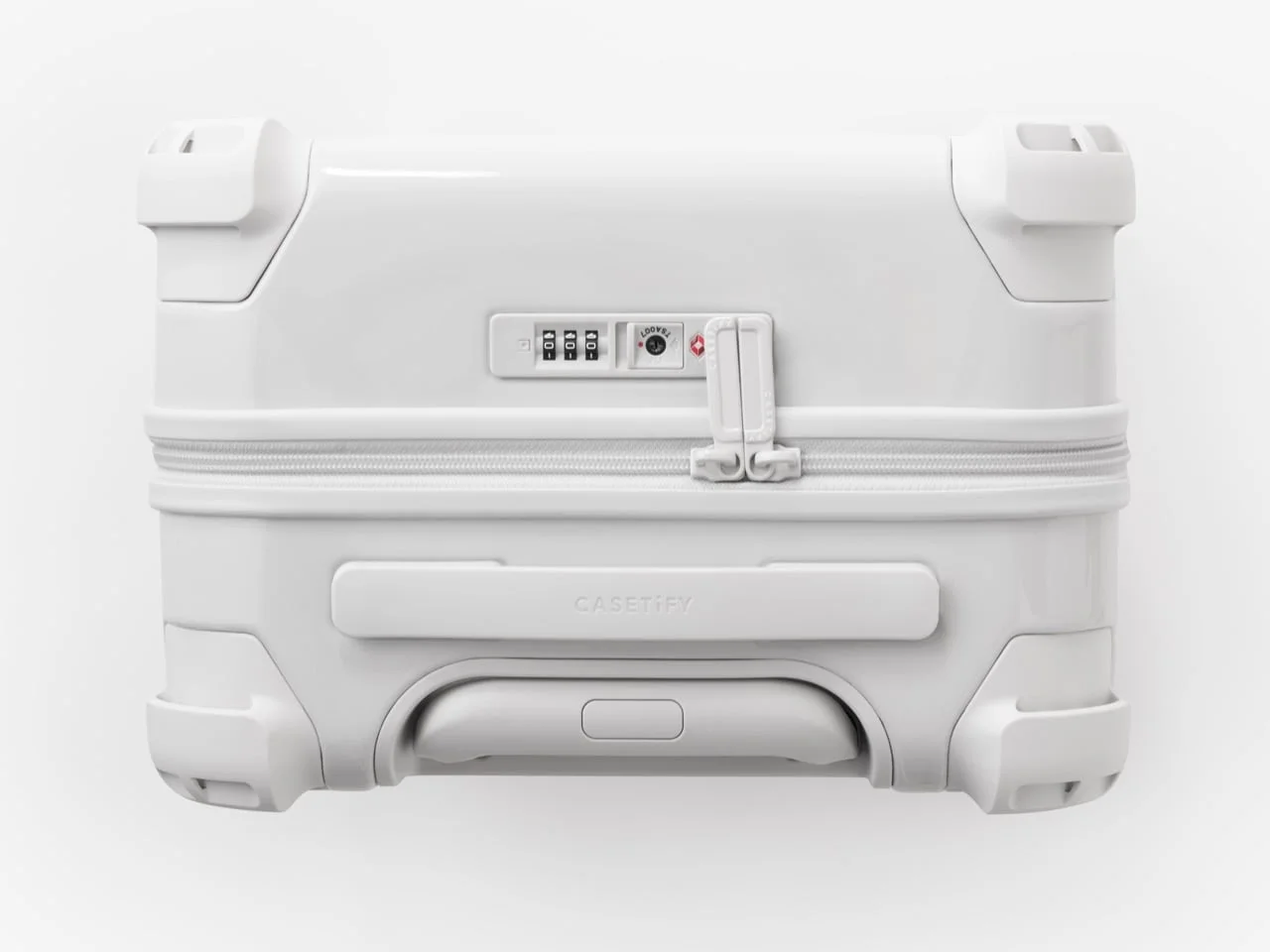
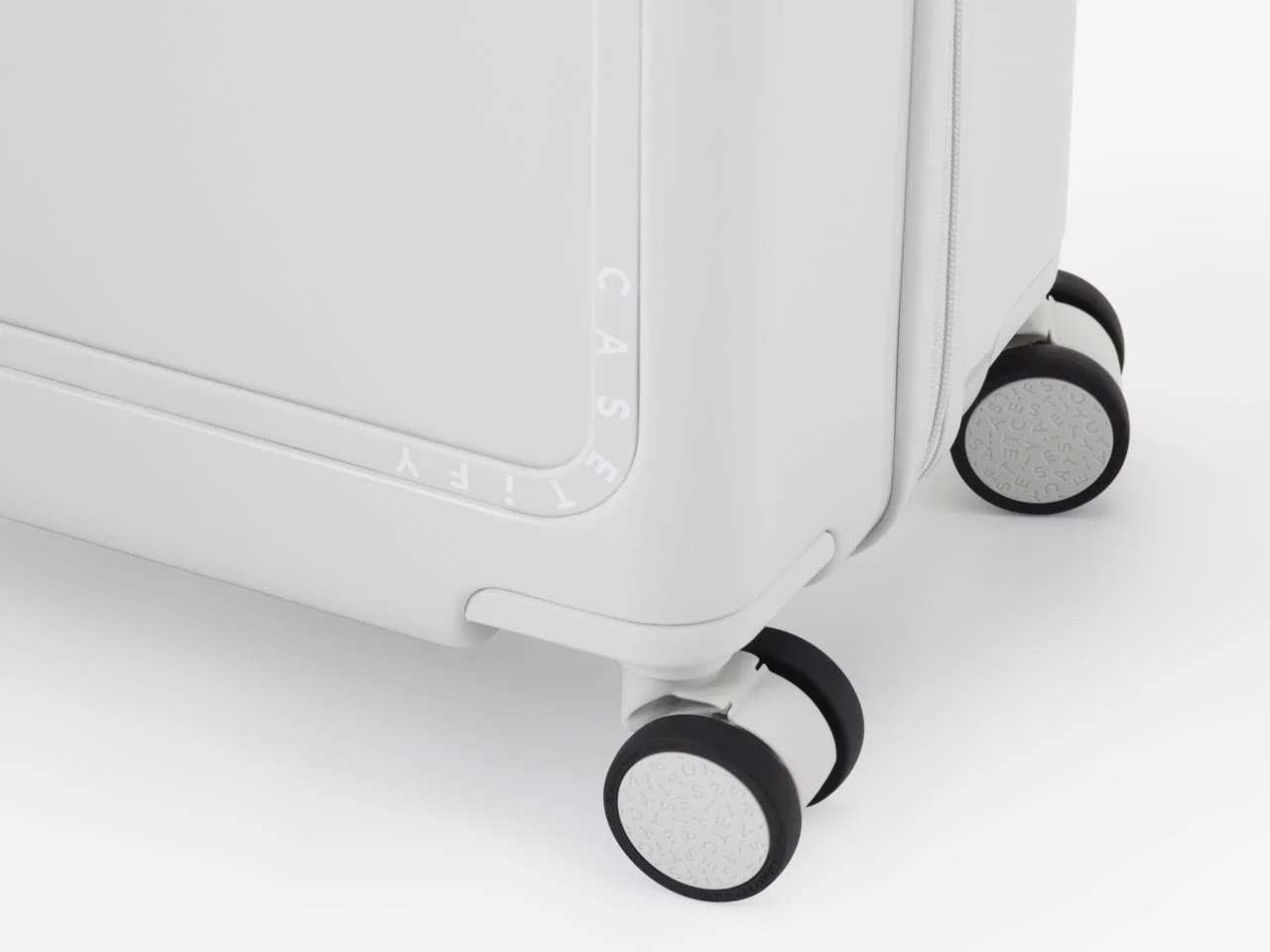
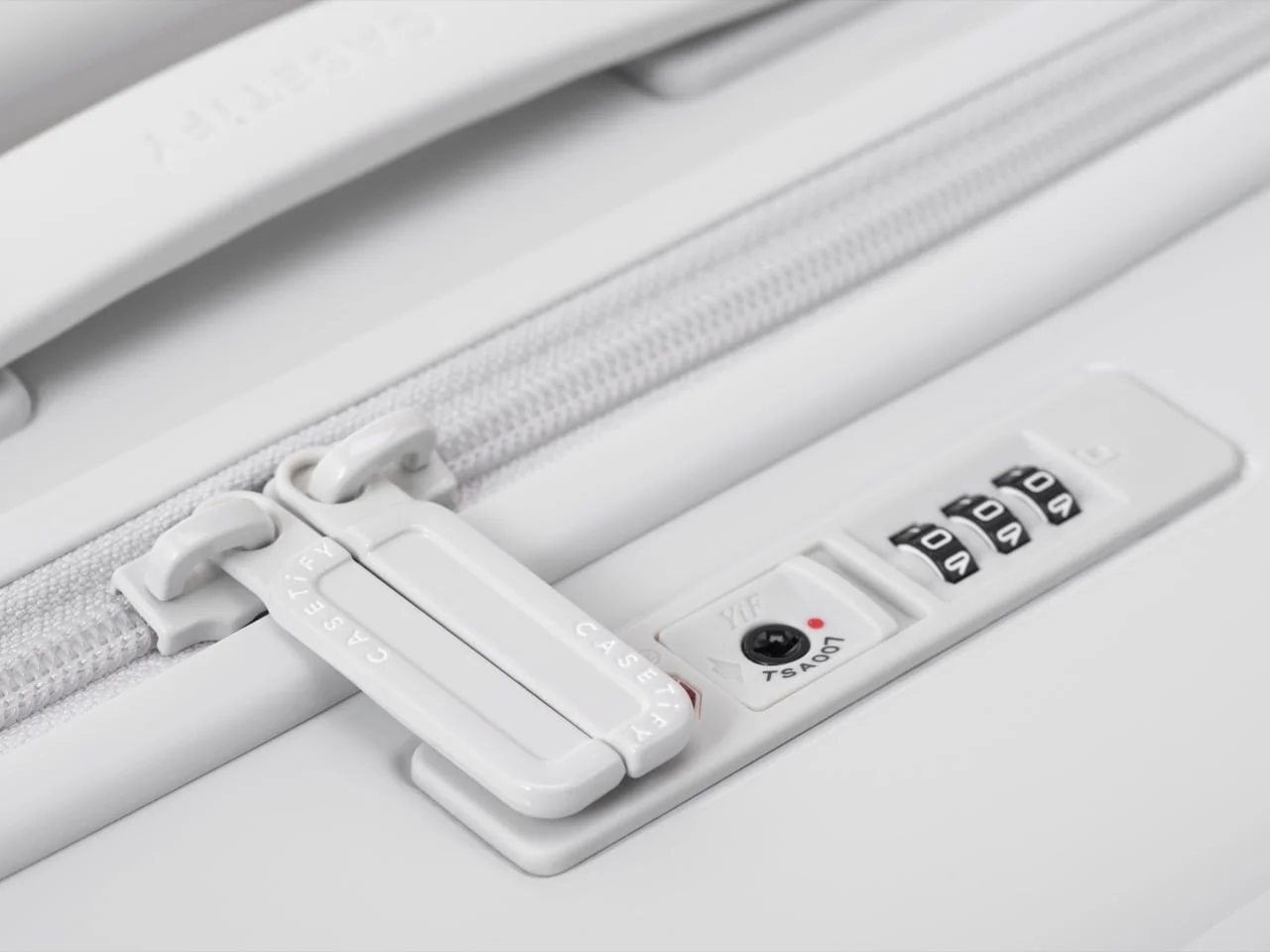
The TSA lock sits near the top, alongside a custom zipper pull whose rounded edge carries the CASETiFY wordmark. Wheel housings, caps, feet and handles follow the same design language. These details matter because a suitcase is seen from several angles and handled at its edges; a consistent treatment can make the whole object feel considered, though it also makes every component part of the brand’s visual argument.
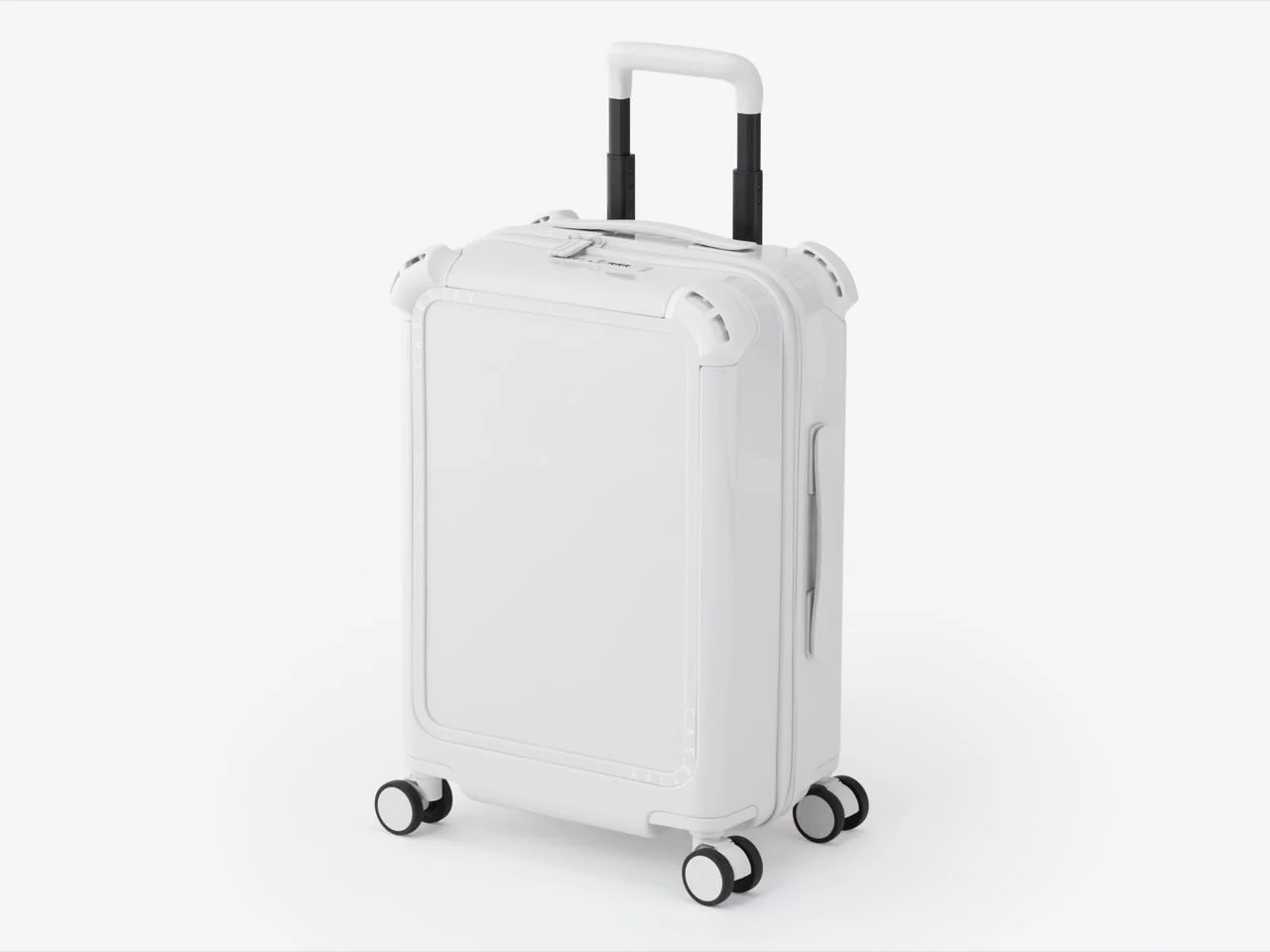
Underneath the styling, the suitcase uses Hinomoto Miraclent ball-bearing wheels, an aircraft-grade aluminum telescoping handle, a puncture-resistant YKK zipper and a pocket for an AirTag. Its shell is made from Makrolon polycarbonate, a material family Bayer pioneered in the 1950s. That list points to familiar priorities in premium luggage: rolling hardware, a dependable handle, resistance to zipper damage and a way to locate the case. Component names provide useful context, but they don’t by themselves establish how the bag performs after years of travel.
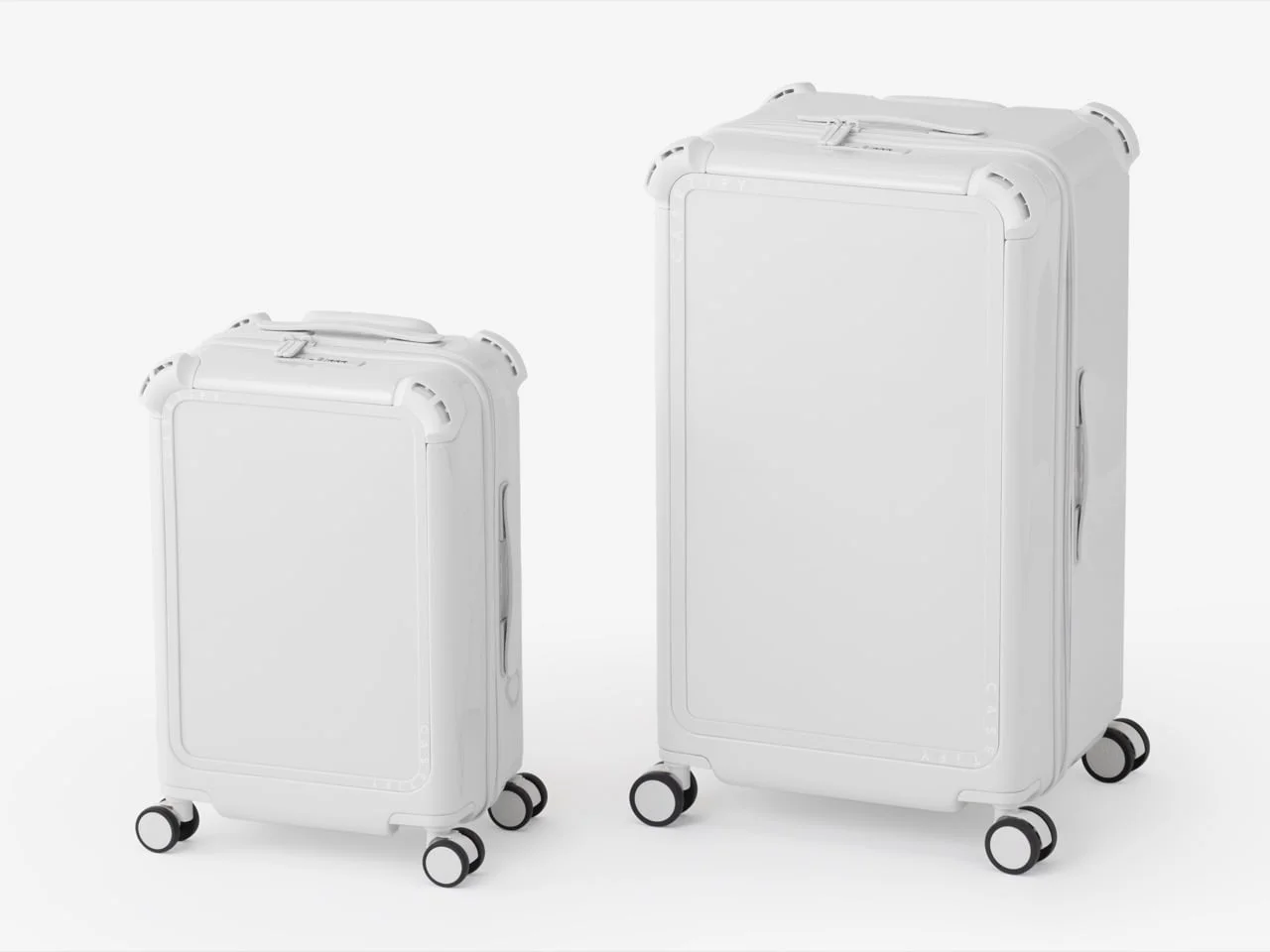
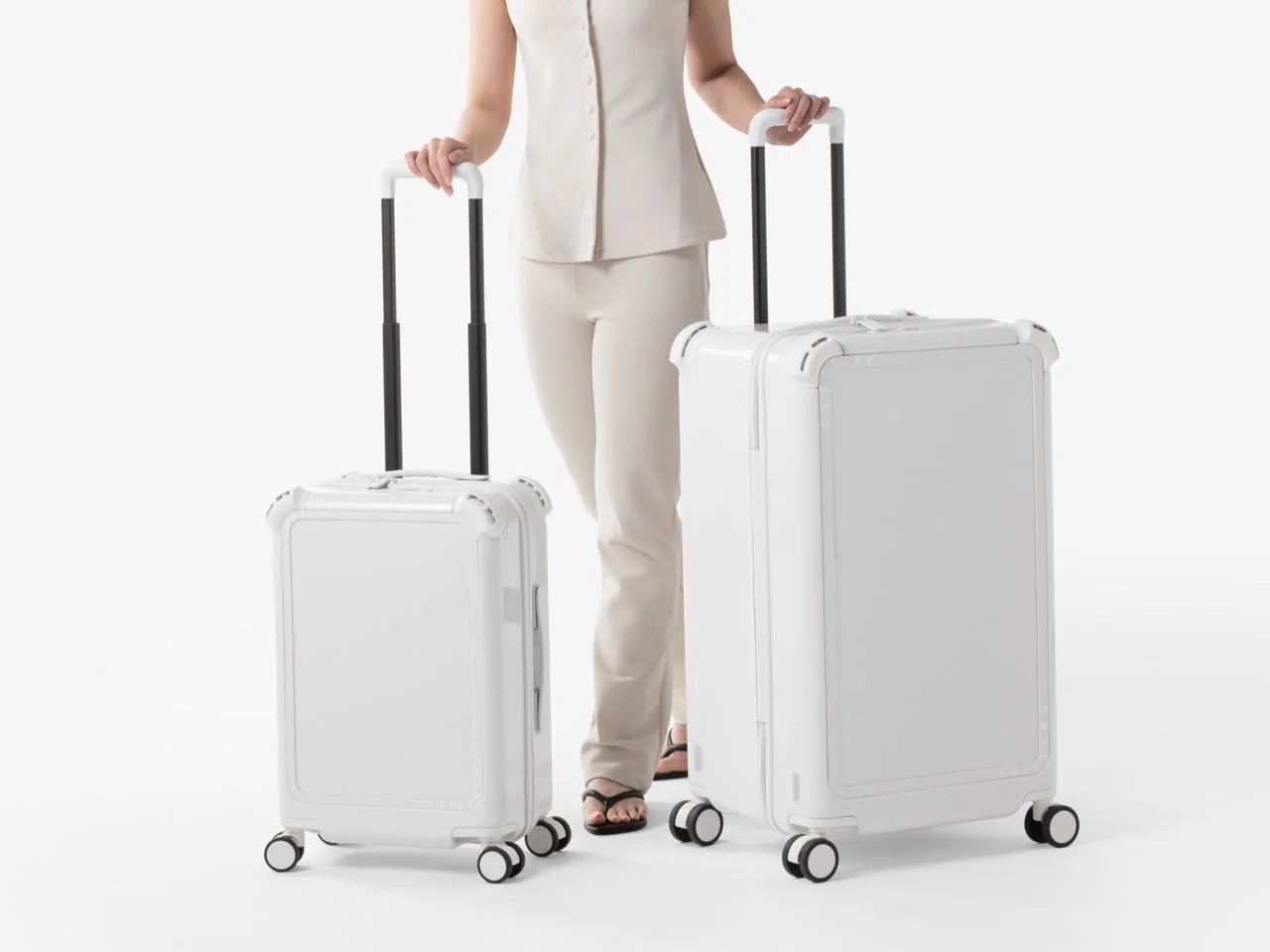
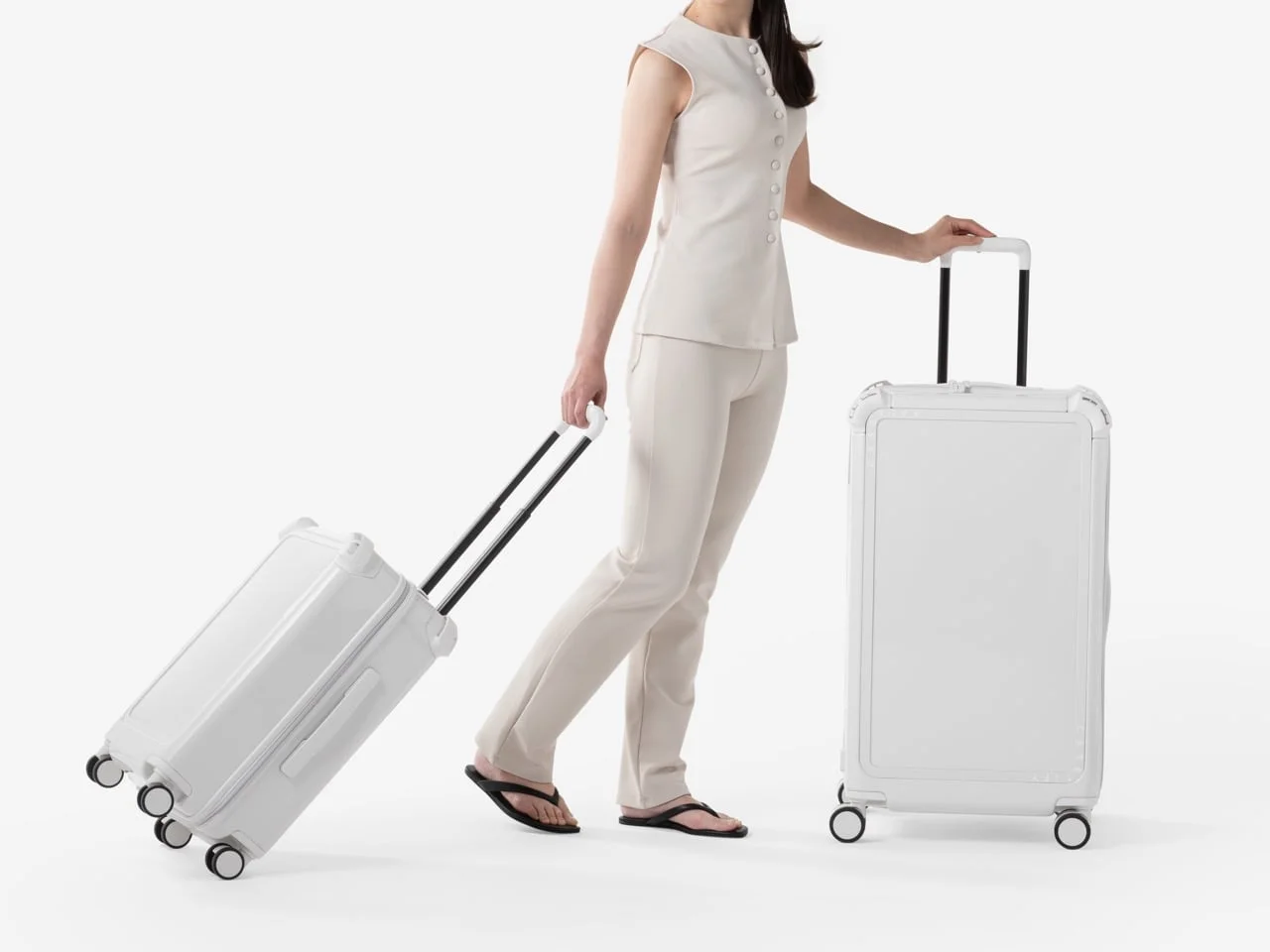
The range includes a 21-inch carry-on, a 26-inch expandable check-in and a 29-inch trunk. The carry-on weighs 8.23 pounds (3.7 kg) and measures 14.3 x 21.6 x 9.5 inches (36 x 55 x 24 cm). For a carry-on, weight and exterior dimensions shape what a traveler can pack and whether the bag fits a particular airline’s limits; those rules vary, so the listed measurements are a starting point rather than a universal guarantee.
The 29-inch model measures 17.5 x 29.7 x 14.8 inches (44 x 75 x 38 cm) and weighs 14.3 pounds (6.5 kg); its slimmer lid leaves more depth in the main compartment. The 26-inch case expands by 1.8 inches (4.5 cm), which adds flexibility when a trip ends with more belongings than it began with. Expansion can be useful, but it also changes the packed bag’s footprint, so the feature is best understood as extra capacity rather than a free increase in convenience.
Glossy Cloud White arrived this summer for the carry-on and trunk. It makes the corner bumpers stand out, though keeping a bright white shell clean through airport handling may take some care. A lighter finish emphasizes the silhouette and personalization panel, but it also puts scuffs and marks in plain view. A design that invites attention asks its owner to accept that visibility.
Ponti’s luggage experience informs the design
The Bounce Suitcase builds on Ponti Design Studio’s earlier luggage work, including Samsonite’s minimalist Evoa line and the Jollying Dots collection, which received an iF Design Award and a Red Dot in 2024. That background gives the project some grounding in luggage design, where choices have to account for handling, balance and repeated contact as well as appearance. Ponti studied at the Politecnico di Milano, then spent seven years in Japan working with Chiaki Murata and Junzo Yamashita. He founded his Hong Kong studio with Shiori Kuroiwa in 2012. The studio’s clients also include Nothing, KEF, Fender and Philips.
The Bounce Carry-On costs $399 in the US. The 26-inch expandable and 29-inch trunk start at $599, with sales through casetify.com and select CASETiFY stores. The carry-on is priced below half the $900 cost of Rimowa’s polycarbonate Essential Cabin. That comparison places the Bounce in a recognizable premium-luggage conversation, but price alone can’t settle the question of value: materials, hardware, repair options and everyday durability all shape what a buyer gets over time.
CASETiFY includes a limited lifetime warranty and Intertek Tick-Mark certification based on independent testing. Those are useful signals for a product expected to take routine knocks, though the warranty’s limits and the scope of the testing matter to buyers assessing long-term ownership. The numbers here are underwhelming as a measure of performance on their own; the article gives no test results or breakdown of what the certification covers. The case’s appearance makes a strong claim. The evidence available here is more restrained.
What the design signals for luggage
This is more significant than it looks: CASETiFY is carrying a phone-case visual language into a category where utility has traditionally dominated the purchase conversation. The Bounce treats a bumper as a recognizable signature and a potential protective component, then repeats its geometry in customization and hardware details. That’s a coherent product idea, but coherence isn’t proof of better protection.
If you’re working in this space, the more interesting question is how brands can make protective features legible without asking buyers to take performance on faith. Here’s the thing: corner reinforcement is easy to understand visually, while the consequences of impact resistance, component wear and repair are harder to judge before purchase. CASETiFY’s named materials and components offer clues, but they don’t answer every question a frequent traveler might ask.
And yet, there’s a clear audience for luggage that’s easy to identify and customizable. The dedicated panel keeps that personalization controlled, and the color choices give the case a distinct presence. For travelers who prize a recognizable look, that’s part of the utility. For those who treat luggage as a tool first, the weight, dimensions, maintenance and long-term condition may matter more. A more expressive suitcase. The next test is how its signature corners fare outside the showroom.
Discussion
Sign in to join the discussion.