Purism’s planned $1,599 Linux phone keeps its removable battery and privacy switches, while shifting to RISC-V ahead of targeted spring 2028 deliveries.
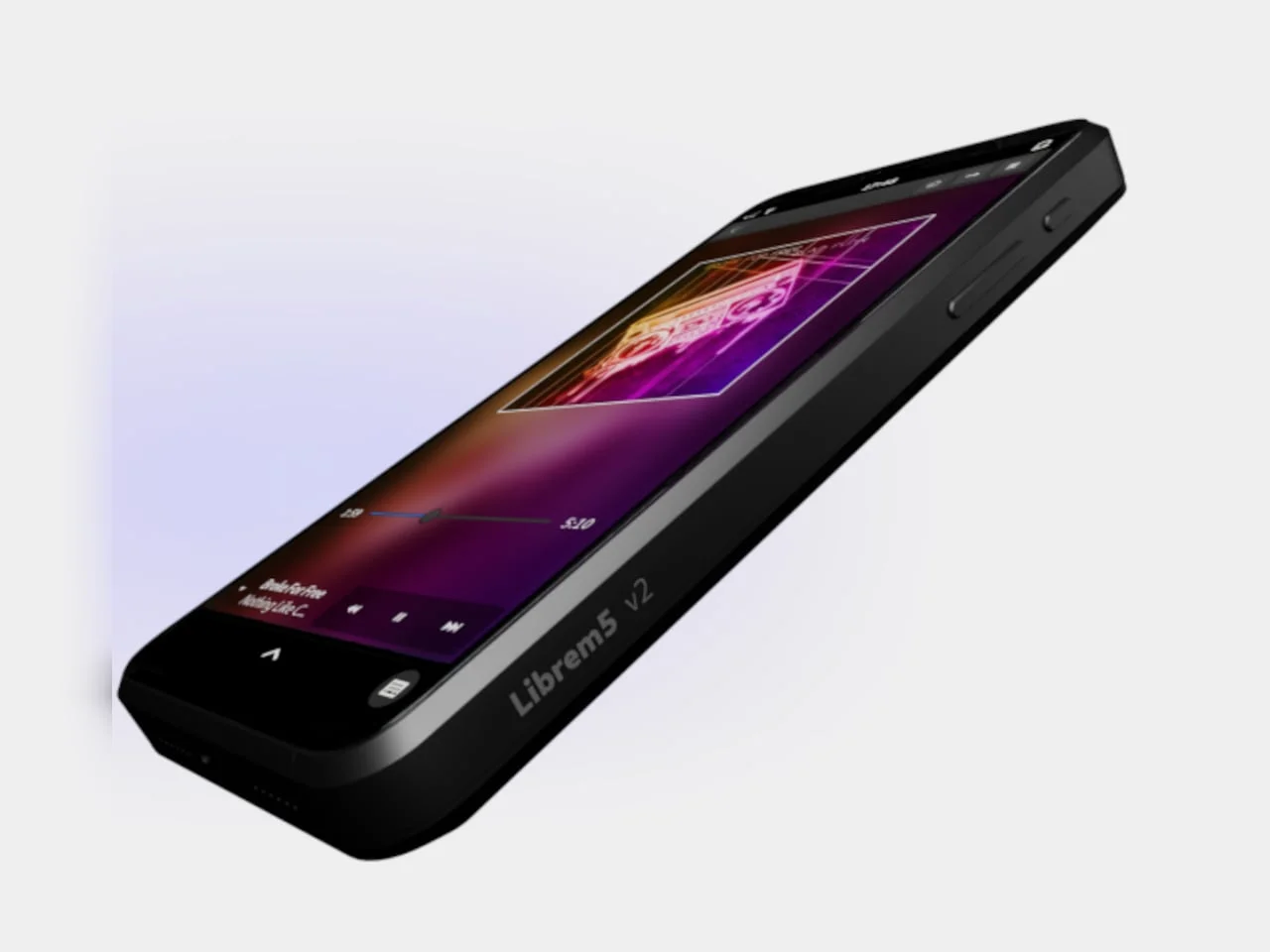
Purism’s Librem 5 v2 makes its strongest case through hardware owners can reach: physical privacy switches, a removable battery and replaceable connectivity cards. That emphasis gives the phone a clear identity in a market where many devices are difficult to open or service. It also raises a practical question: how much do repairable parts matter if the software can’t support the tasks people expect from a daily phone?
Its planned move from Arm to RISC-V is the bigger engineering change, but a new processor architecture won’t settle that question on its own. The phone’s day-to-day usefulness will depend just as much on software maturity, app support and power management. Those pieces are still in development, so the Librem 5 v2 is best understood as a work in progress rather than a finished alternative to mainstream smartphones.
A familiar shell with serviceable parts
The second generation keeps the original phone’s thick, angular enclosure. It houses a 5.7-inch display with a planned 720×1440 resolution and a front camera above the screen. The dimensions and resolution point to a device built around function and repair access, rather than a particularly slim body or a high pixel count. The chunky sides may look rugged, but Purism hasn’t claimed certified ruggedness.
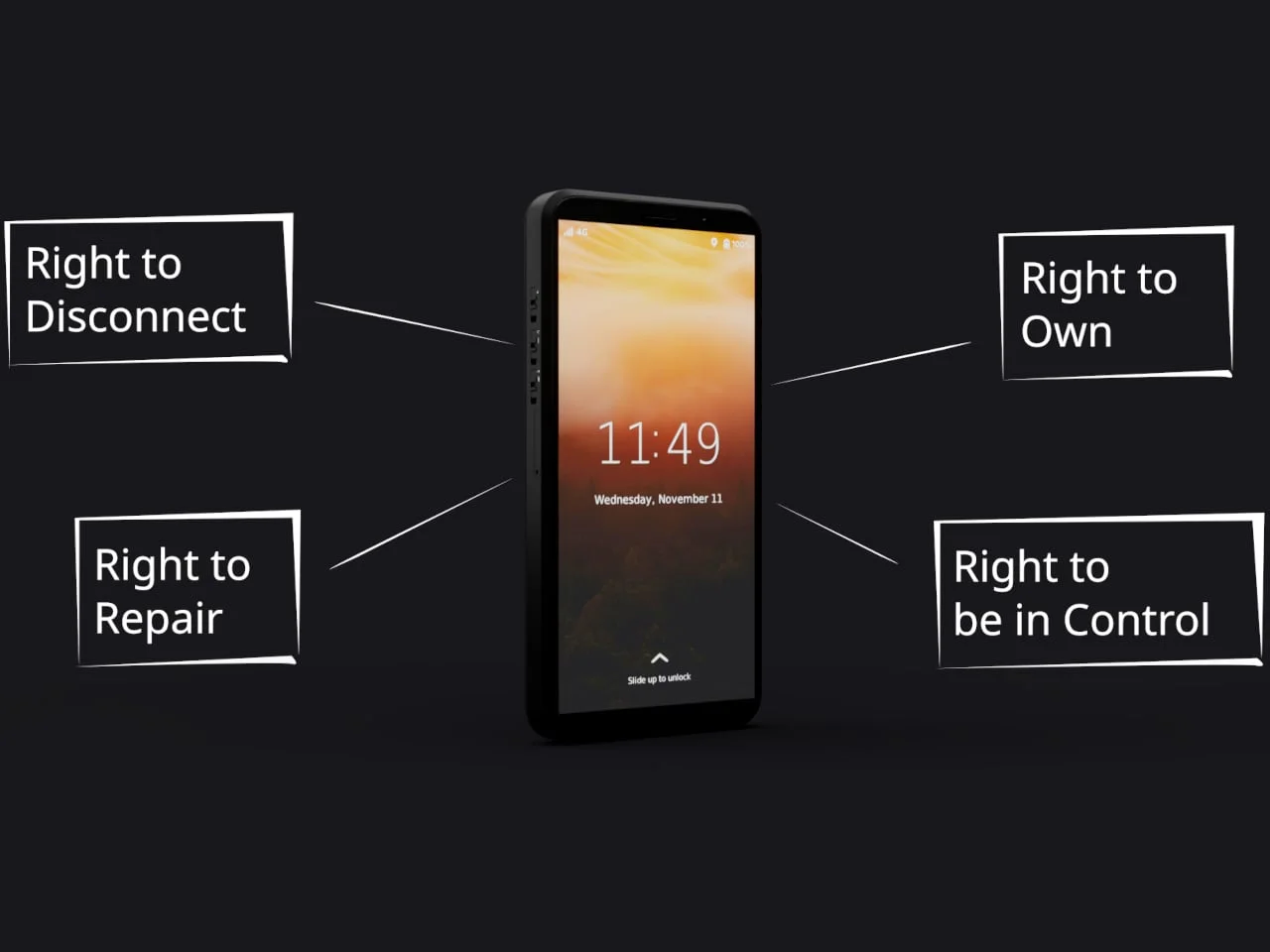
Purism says retaining the chassis supports repairs and potential hardware upgrades. That choice could make familiar components easier to replace over the phone’s life, provided parts and instructions remain available. The company expects to make replacement electronics available after production, depending on supply; existing owners shouldn’t treat those future parts as a guaranteed upgrade path. A repair friendly design is a useful starting point, but its value depends on whether the promised parts actually reach owners.
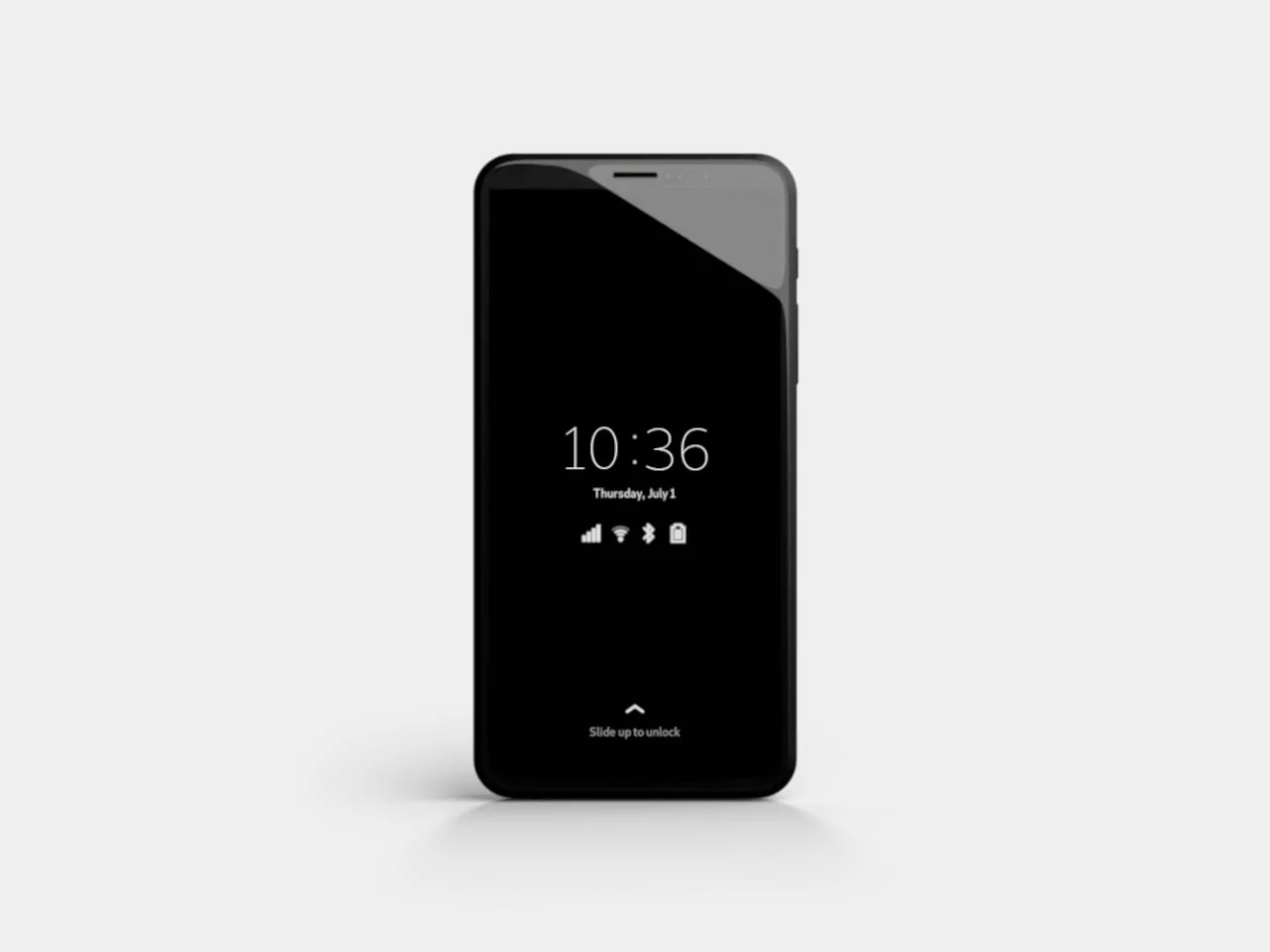
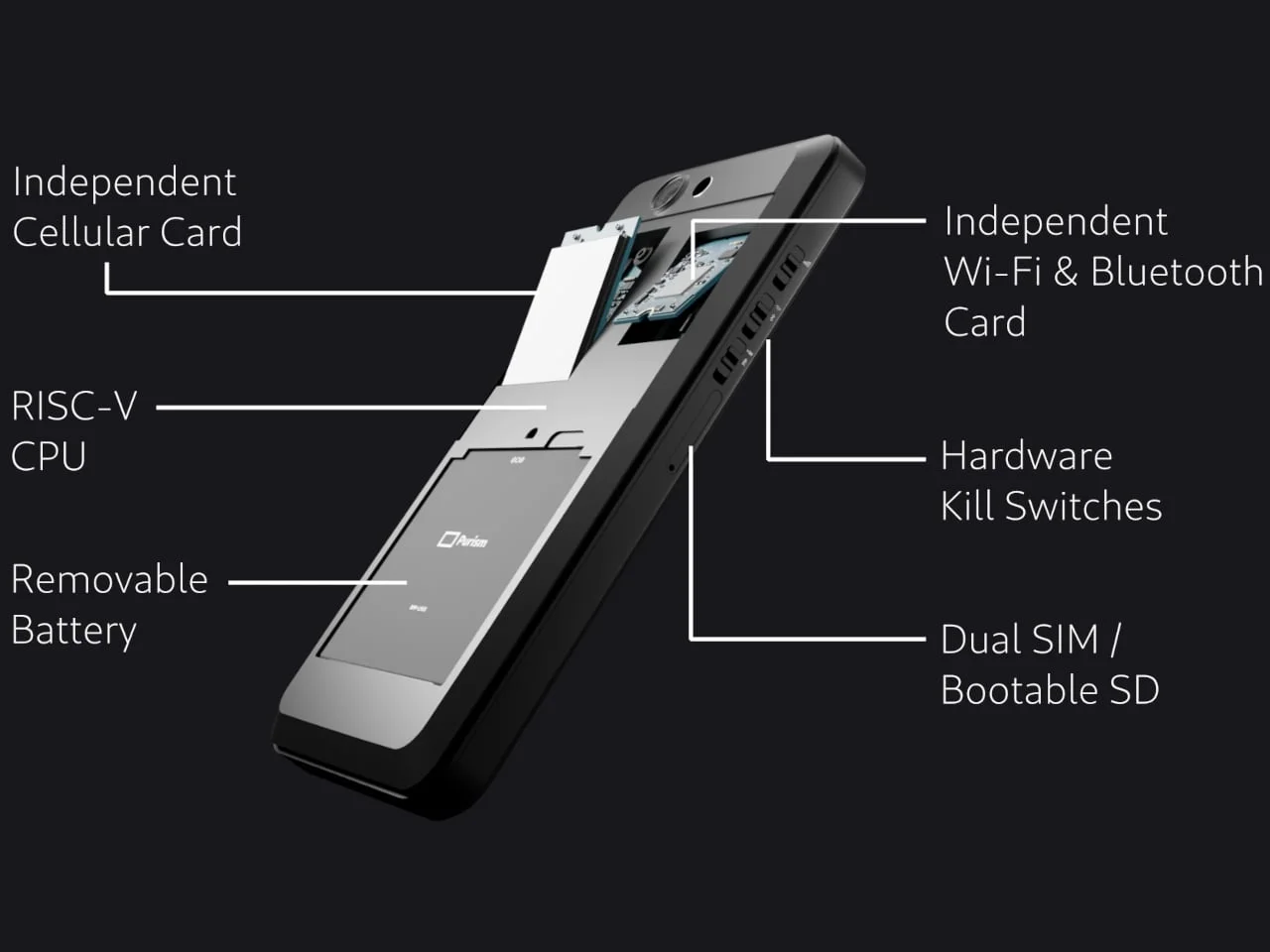
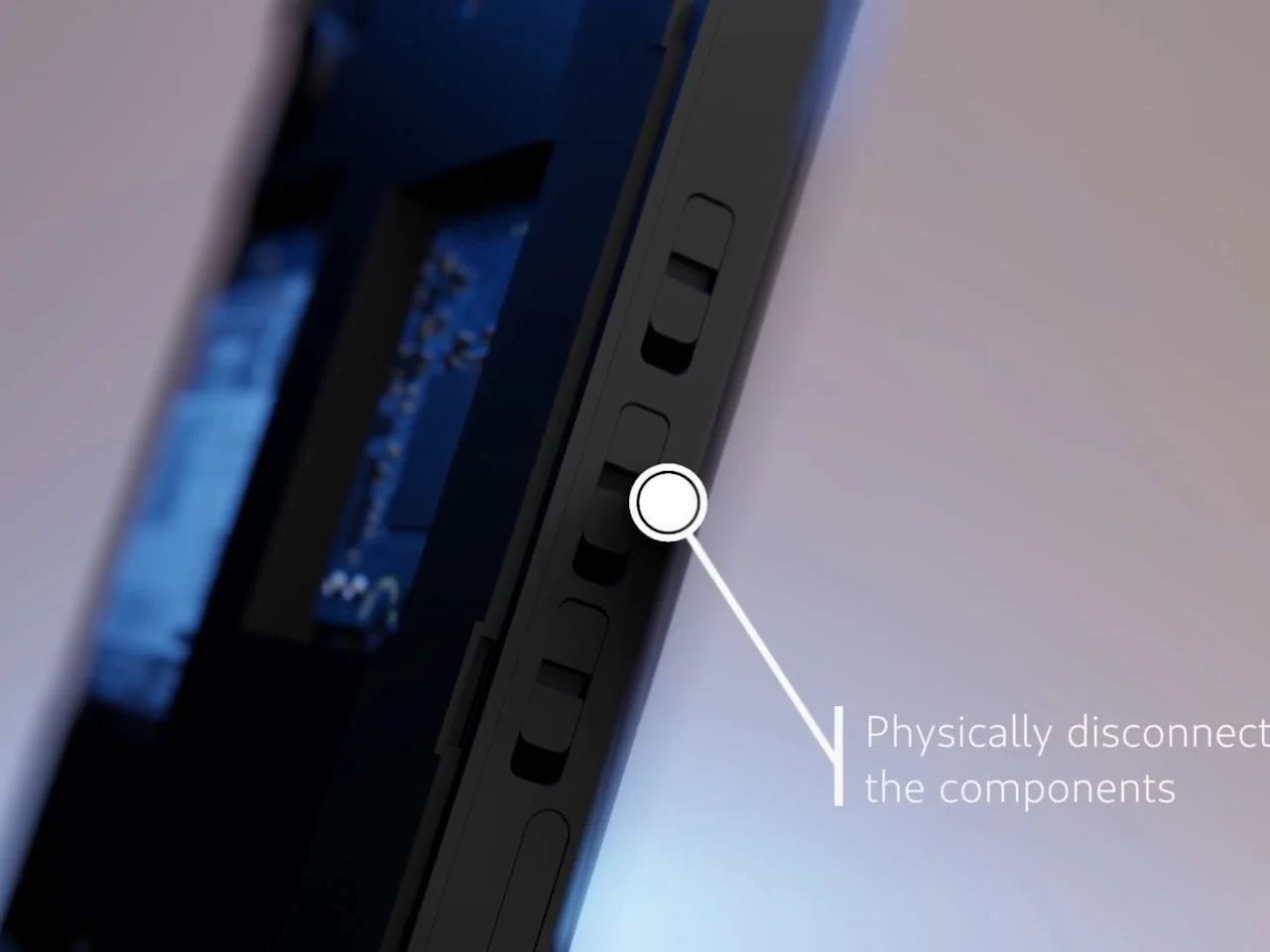
Three switches on the phone’s edge disable the cellular modem, Wi-Fi and Bluetooth, or the cameras and microphones. That makes privacy controls a direct hardware action rather than a setting buried in software, where an operating system or app could complicate what a user believes is disabled. Physical controls are easier to understand. They also make the privacy approach visible and testable by the owner.
A removable 4,500mAh battery and separate cellular and Wi-Fi/Bluetooth cards extend the same repair minded approach. Replaceable cards can make one category of hardware failure less likely to end the life of the whole device, although they don’t guarantee that replacements will be stocked. The headphone jack also remains, so wired headphones need no adapter. These choices will appeal most to buyers who value access and control over thinness and convenience.
RISC-V promises, Linux trade-offs
The proposed configuration includes an eight-core SpacemiT K1 processor, at least 8GB of RAM and 128GB of eMMC storage. RISC-V gives Purism an open instruction set to build on; it doesn’t make every component or firmware layer open source. That distinction matters: an open CPU architecture can give developers room to inspect and adapt parts of the system, but the complete device still depends on the software and supporting hardware around it.
Purism expects cooler operation and longer battery life, though those claims still need independent testing. A new processor alone doesn’t establish how a phone will perform under everyday workloads. Power use depends on the chip, the operating system, drivers and how well the parts work together. For prospective buyers, the promise is a hypothesis; hands on testing will show whether the design delivers it.
The phone is designed to run PureOS, Purism’s Debian based Linux system, with native Linux apps and the option to connect an external display over USB-C. That points to a phone intended to behave more like a small Linux computer than a conventional handset. The trade off is that desktop software and familiar mobile apps don’t automatically translate into a polished phone experience, especially on a smaller screen and a different processor.
Android app compatibility remains a work in progress, as do graphics and power management. That leaves uncertainty around familiar tasks such as banking and messaging, which may not carry over smoothly. App compatibility is more than whether an app launches: users also need it to work reliably, receive updates and handle phone specific features. If you're working in this space, that's the central product challenge: an open system has to provide enough practical support to earn a place in daily routines.
What the launch will need to prove
Purism lists the phone at $1,599 and targets production deliveries for spring 2028. The price and delivery target set a high bar for a device whose software capabilities are still being worked out. The phone’s strongest arguments are tangible: switches, a removable battery, repair access and a Linux system that can run native apps. The open questions are just as tangible, particularly whether the software can handle routine mobile use.
Here's the thing: repairability only pays off over time. Owners need replacement parts to be available, and the software needs to remain useful as apps and services change. Purism says parts may be available after production, depending on supply, so the long term support story remains conditional. A phone built for maintenance but difficult to use would be a narrow proposition.
This is more significant than it looks for buyers who want control over both hardware and software. The physical switches make privacy less abstract, while RISC-V gives Purism a different foundation for the processor. And yet. Neither feature answers whether the phone can replace a mainstream handset for everyday communication, work and media.
The practical test will be whether replaceable parts are available and the software can handle everyday needs. A few working apps won’t settle the question; the system needs to be dependable across the routine tasks buyers bring to a phone. What this means for you is simple: the device’s appeal will depend on how much you value repair and control, and how much friction you’re willing to accept while its software matures.

Discussion
Sign in to join the discussion.