CAUNY’s €198 watch pairs a sculptural, watercolor-textured face with Fibonacci numerals, quartz movement and a choice of black or silver finishes.
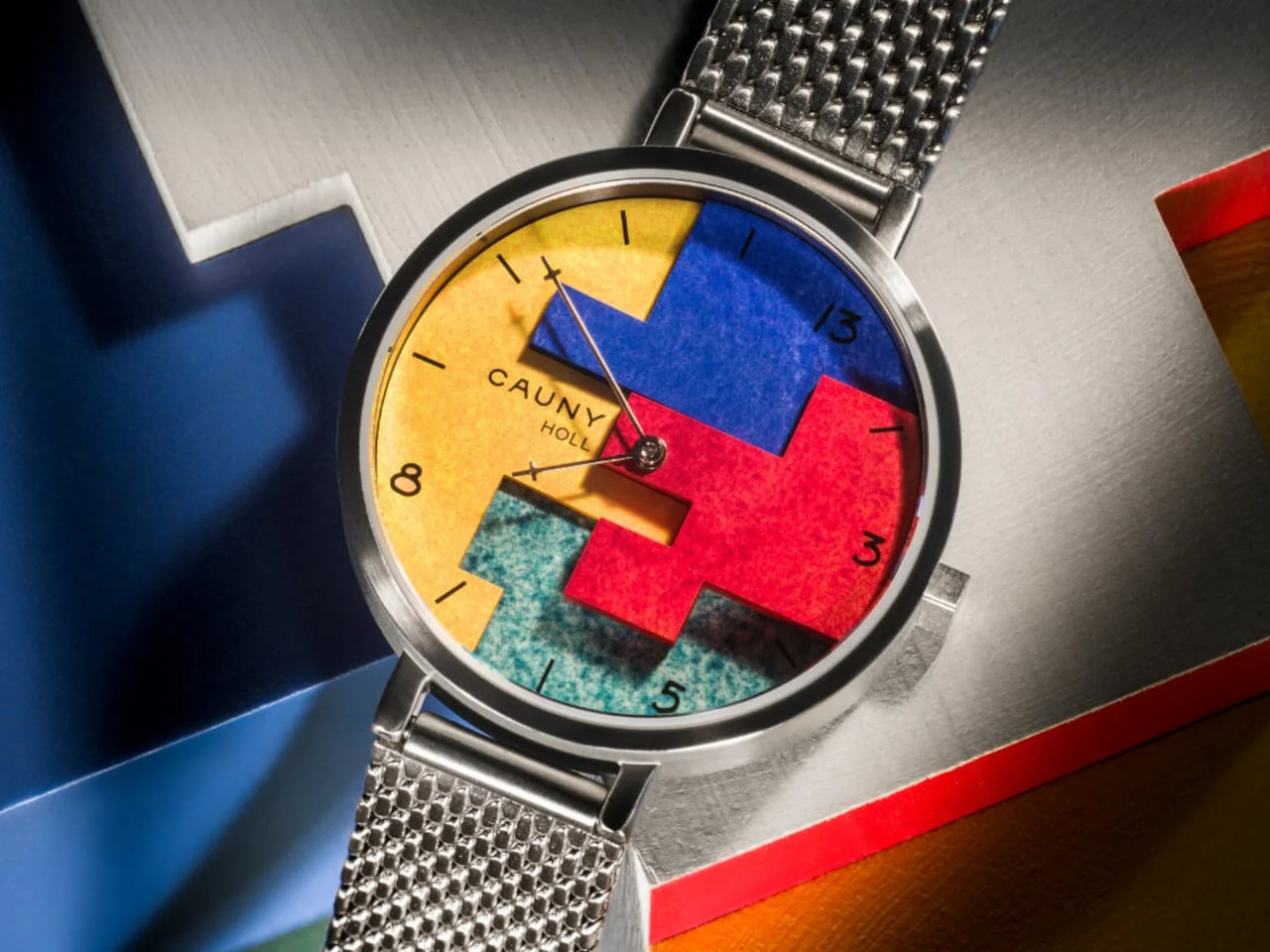
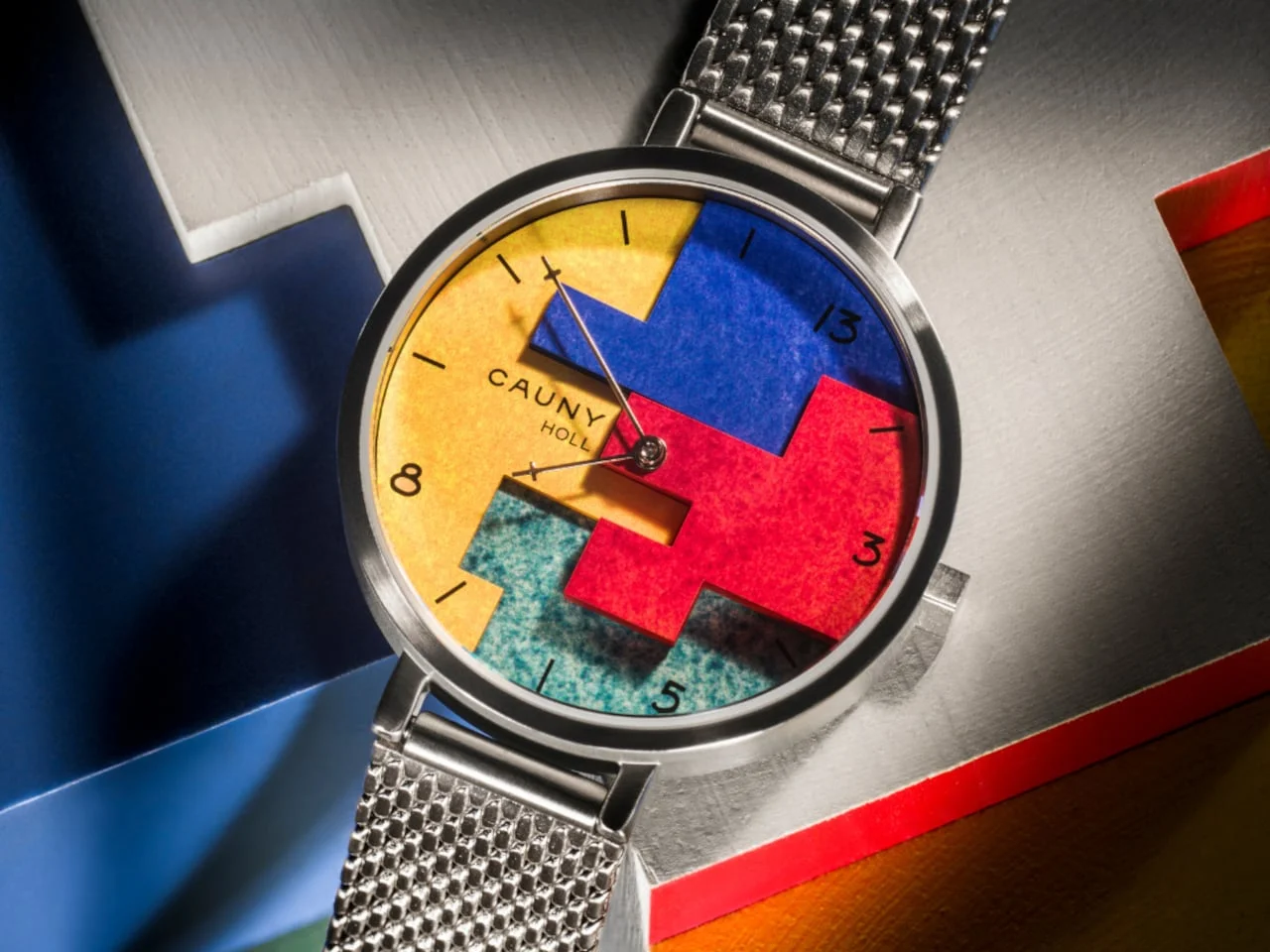
CAUNY’s Sculpture Watch treats its dial as a small piece of architecture. Designed with architect Steven Holl, it layers red, blue, yellow and green shapes into a vivid composition, with raised edges that make the geometry tangible. At the top, an unexpected 13 takes the place of 12, turning a familiar watch face into something that asks for a second look. The design’s main bet is clear: the dial should hold attention as an object, not simply report the time.
A dial with depth and texture
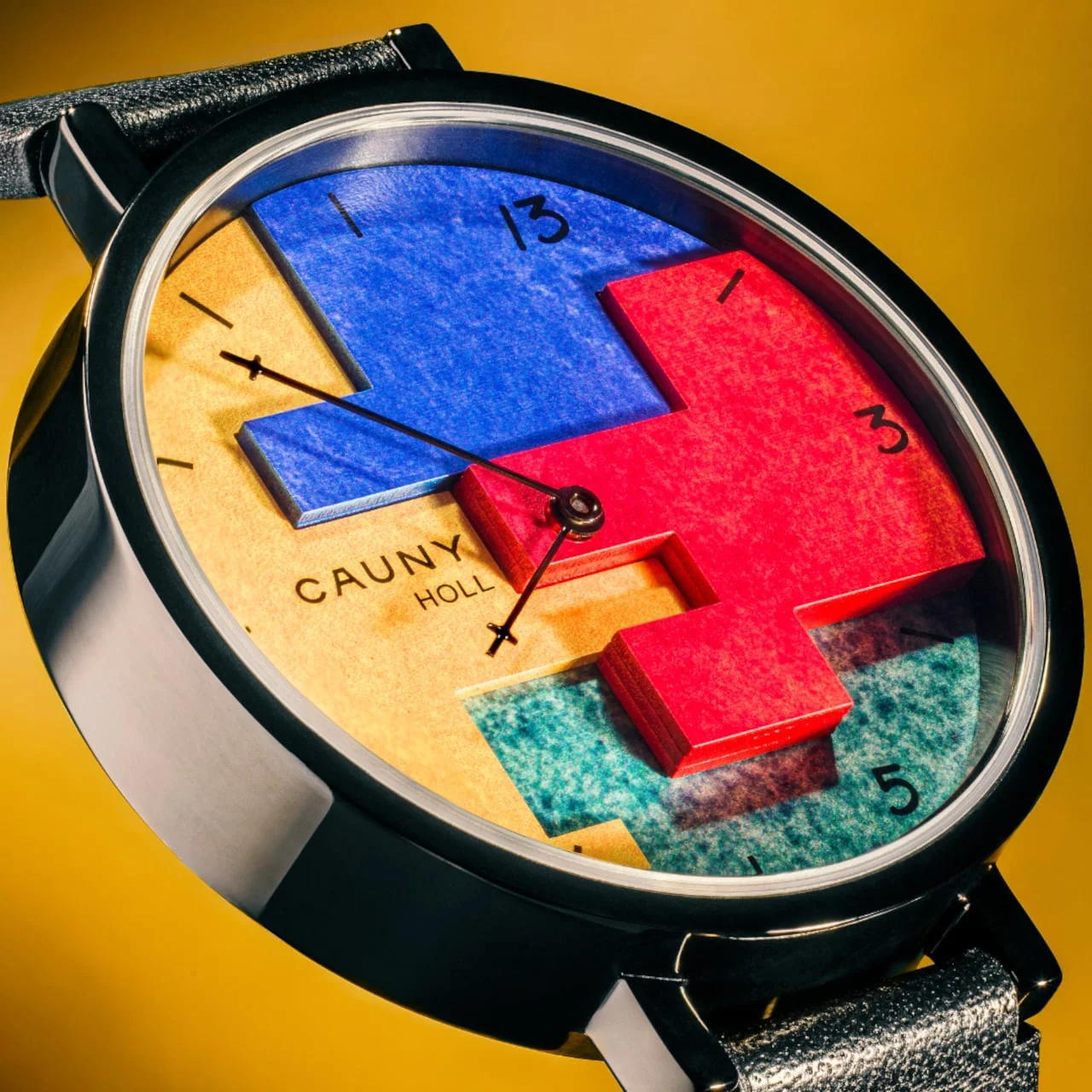
Rather than dividing the face with printed lines, stepped forms push into one another like pieces of a geometric puzzle. The blue and red sections rise above the dial, and their edges cast shifting shadows as the light changes. That relief gives the colors a physical presence that a flat printed graphic couldn’t provide, though it also makes the face busier than a conventional dial. The effect depends on viewing conditions; the shadows and surface variations will read differently as the watch moves from bright light to a dim room.
A mottled, watercolor-like finish softens the precision of the shapes, giving the face an irregular surface reminiscent of pigment on textured paper. That contrast is doing useful work. Without it, the hard edges might make the dial feel like a technical diagram; without the raised forms, the watercolor treatment might seem merely decorative. Together, they place the watch between graphic art and functional object.
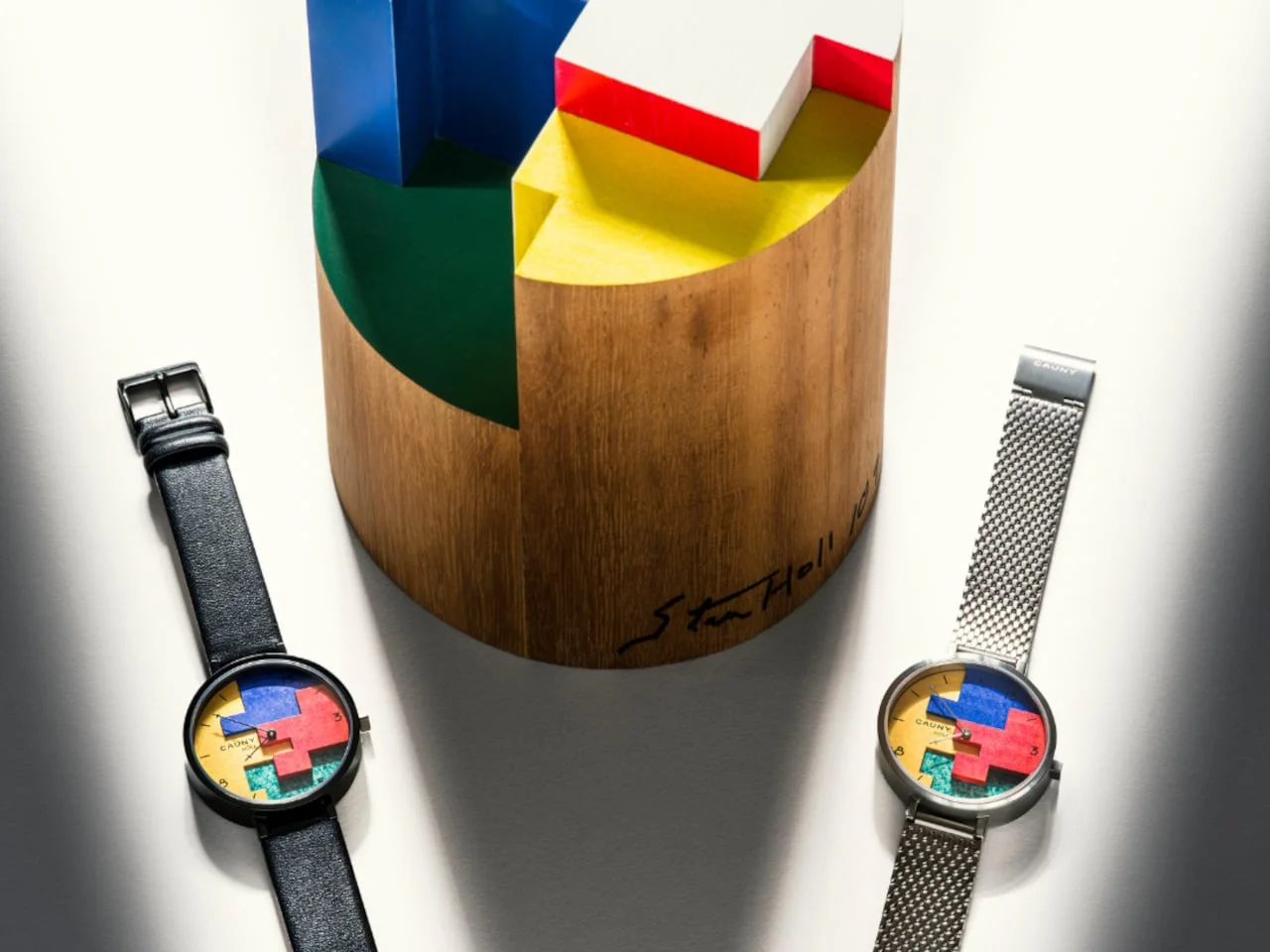
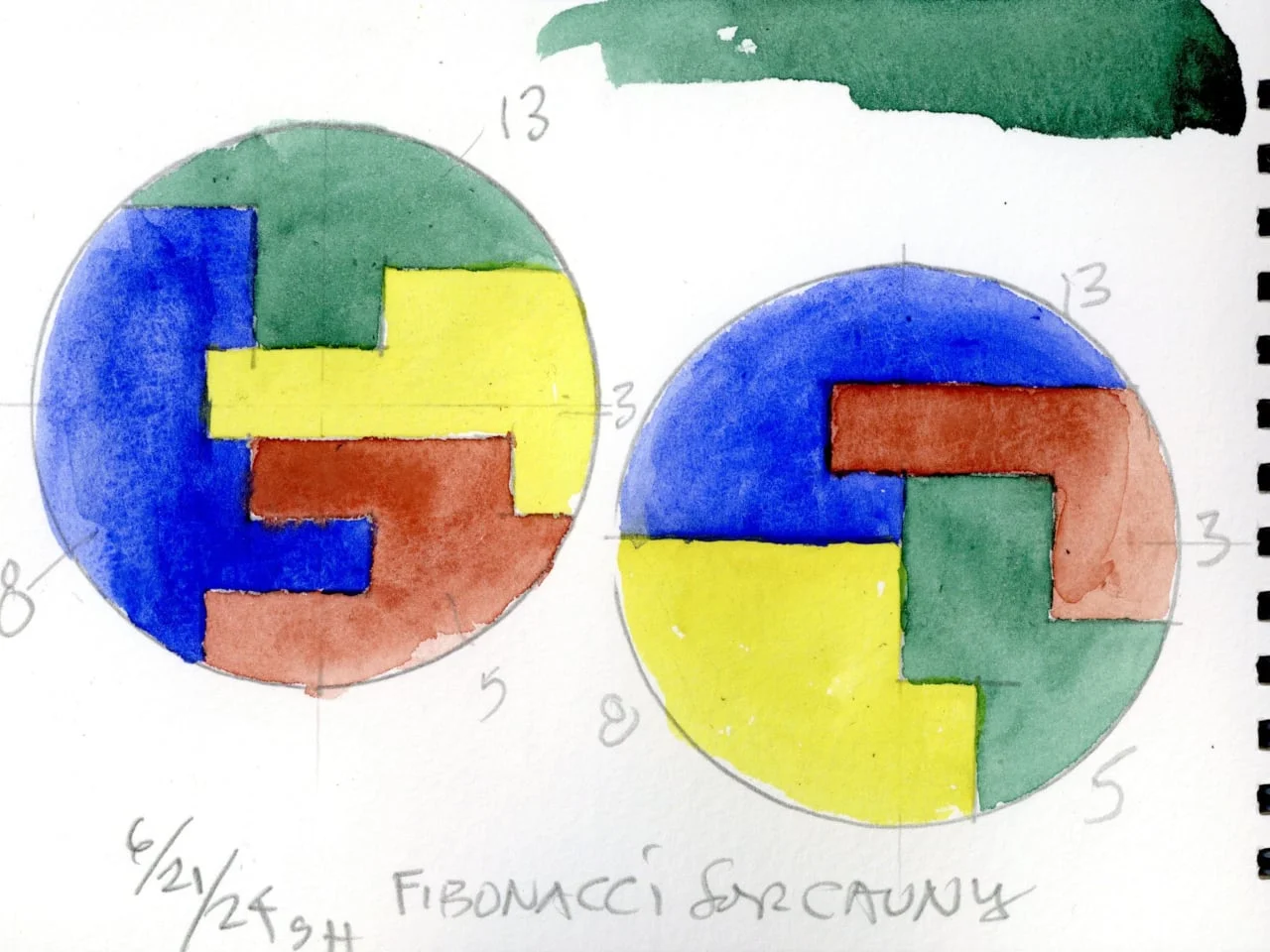
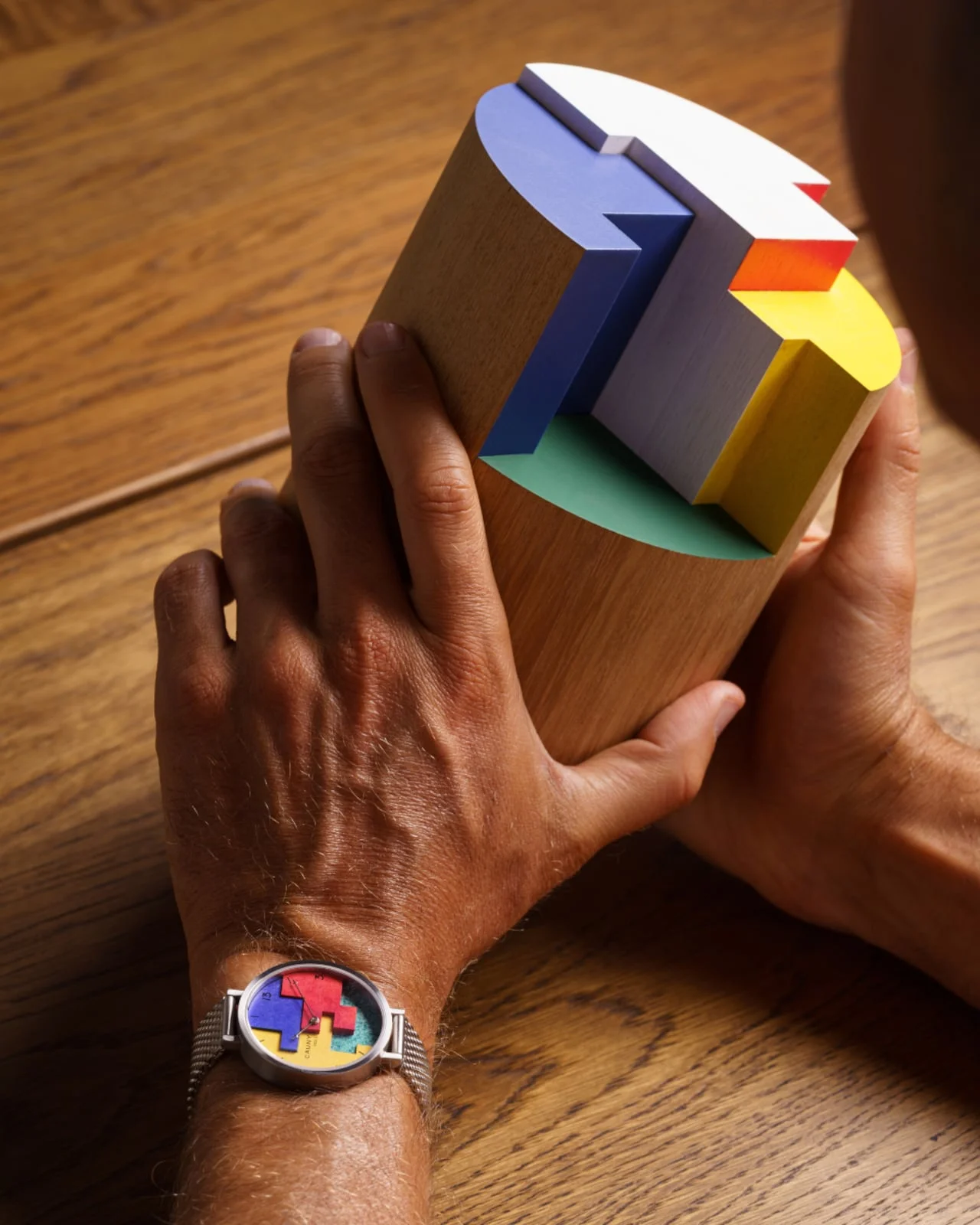
The watch belongs to CAUNY’s Architects of Time series. Its concept grew from an exploration of color and a tribute to architect Álvaro Siza, drawing on watercolor studies and a small wooden sculpture. That origin comes through in the contrast between the dial’s painterly finish and its clearly defined, dimensional forms. A simple circular case leaves the artwork in focus, acting as a restrained border around a face that could easily have become crowded by more elaborate casing.
Fibonacci numerals, two finishes
The numbers 3, 5, 8 and 13 mark the Fibonacci sequence. With 13 occupying the usual 12 position and short indices marking the other hours, the layout makes its mathematical reference visible without changing how the watch keeps time. It may still prompt a double take: the number is easy to read as a mistake before its deliberate placement registers. This is more significant than it looks, because the sequence gives the watch a design idea that’s legible at a glance rather than hidden in the materials or construction.
That choice also sets up a small tension between expression and convenience. The sparse hour markers leave room for the sculptural color fields, but they offer less immediate guidance than a full set of numerals. For someone accustomed to reading a watch by its standard markers, the 13 may be charming or mildly distracting. There’s no change to the basic task of telling time, but the face asks its wearer to accept a bit of visual reinterpretation.
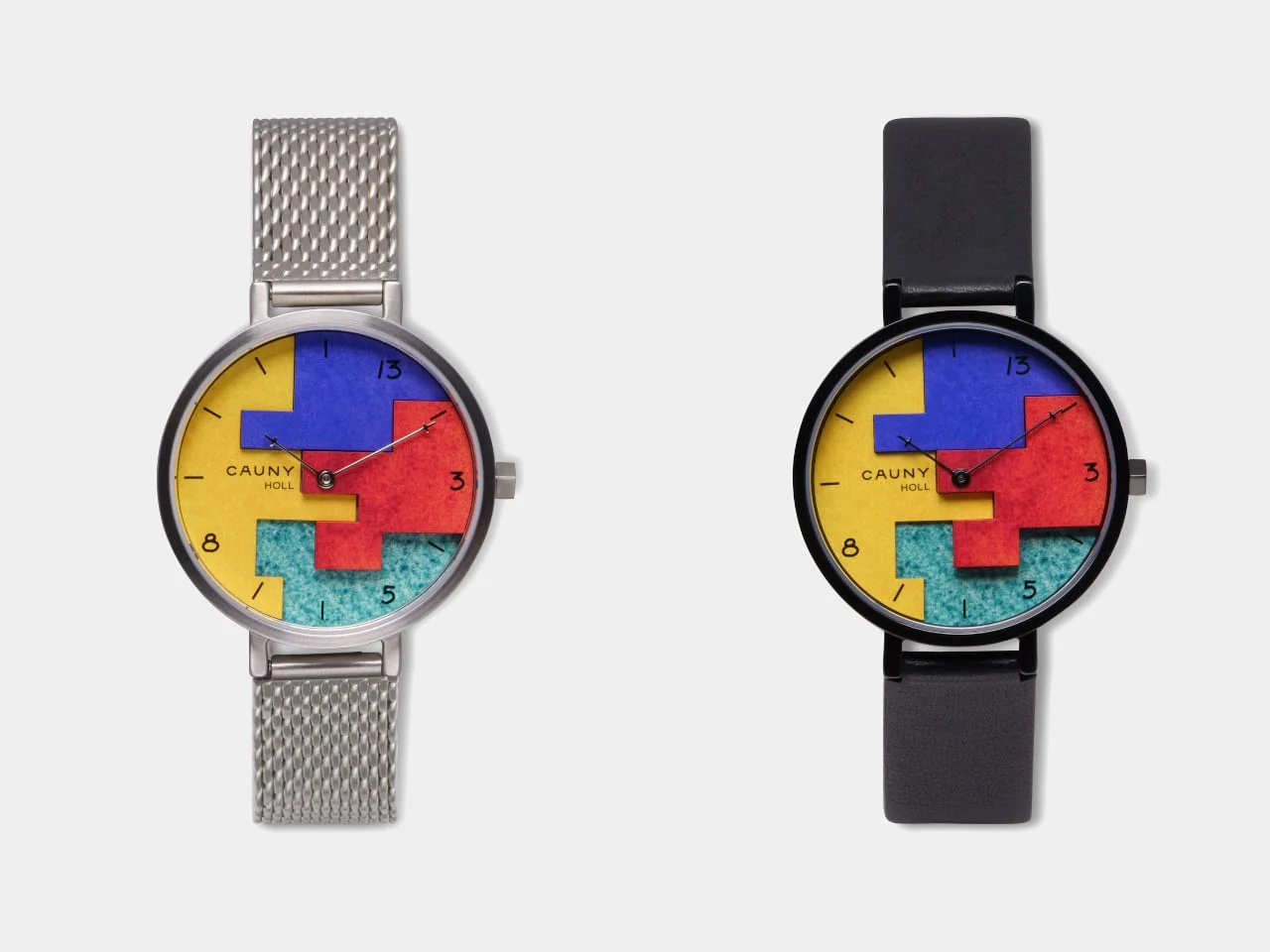

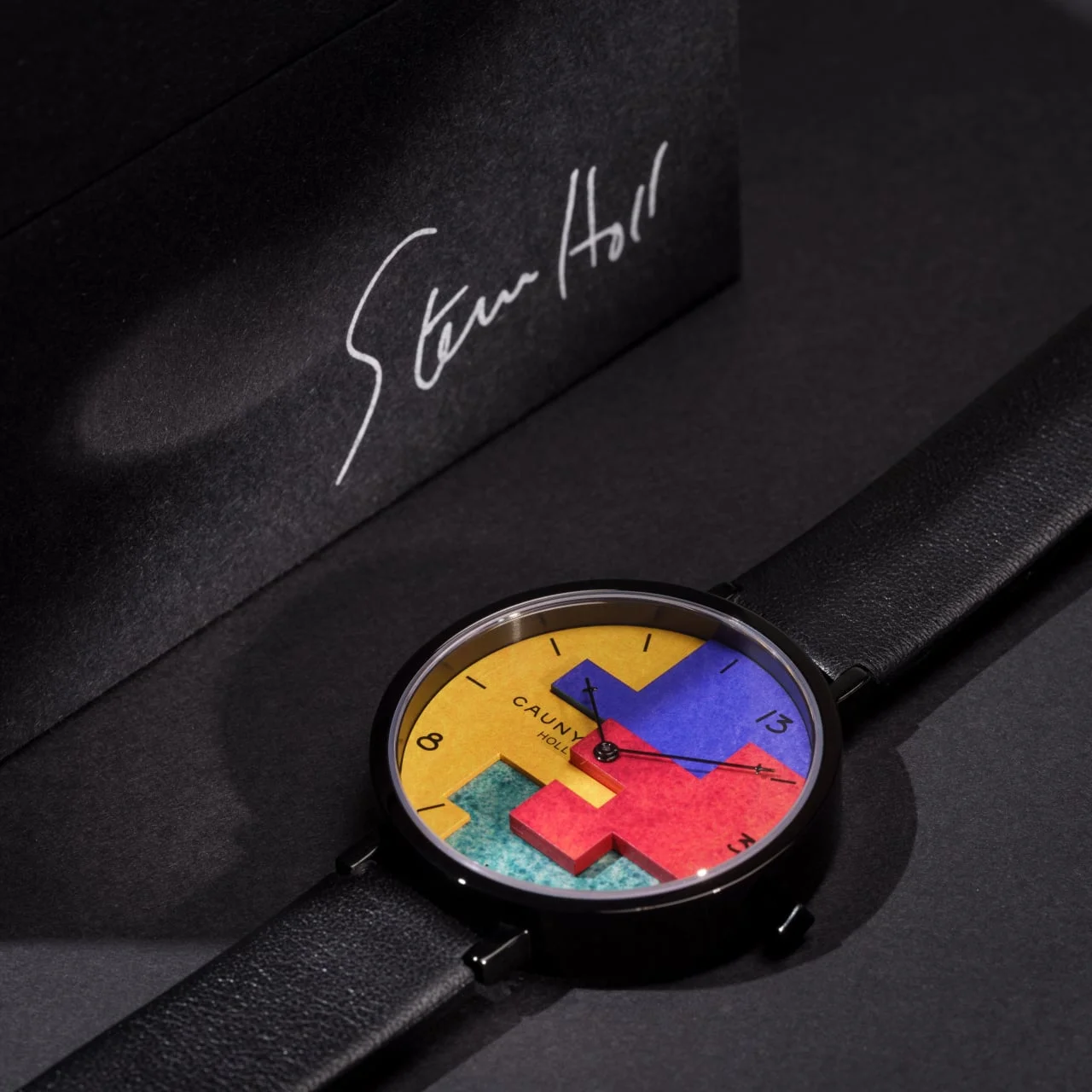
CAUNY offers two versions, both priced at €198 on its Portuguese storefront. Holl Black combines a dark case with a matching Horween leather strap; Holl Silver pairs a silver-toned case with a steel mesh bracelet. The dial stays the same, while each finish gives its bright colors a different frame. Black makes the contrast feel more graphic, while silver gives the watch a lighter, more jewelry-like presence. And this is the part most people overlook: the strap and case don’t alter the watch’s central proposition, but they can change how readily its vivid face fits into a daily wardrobe.

Everyday watch, sculptural focus
The case measures about 1.42 inches across and sits under a sapphire crystal. A quartz movement powers two slender hands, with no seconds hand to add motion across the dial. That pared-back display supports the artwork’s calm, composed look, though it also means the watch makes no effort to present more information than the hour and minute. If you’re working in this space, that’s a familiar design trade-off: visual clarity can come from removing detail, even when the object’s expressive face is already doing plenty.
CAUNY rates water resistance at 3 ATM, a specification suited to everyday splashes rather than swimming. The stated rating gives the watch a practical boundary, but the available details don’t describe other performance claims or construction features. Its appeal rests first on the visible combination of material, color and form; the specifications point to a straightforward quartz watch built around that display.
What the design asks of its wearer
The appeal rests on a clear design choice: let color, texture and relief carry the watch, then use the Fibonacci sequence to make the face a conversation piece. Both finishes cost the same, leaving the choice between a darker outline and a more jewelry-like silver frame. Here's the thing: the watch’s strongest feature is also its main limitation. A dial this vivid won’t disappear under a cuff or blend into every setting; it’s meant to be noticed.
That doesn’t make the Sculpture Watch impractical. Its quartz movement, two-hand layout and familiar circular case keep the underlying object simple, while the sculptural dial supplies the personality. For buyers who want a watch to function as a small wearable artwork, that balance may be the point. For those who prize instant legibility or a low-key appearance, the unusual numeral and layered colors may take more adjustment. A deliberate interruption.
At €198, the two versions present the same design at the same price, with the case and bracelet choices doing most of the differentiating. The watch’s success will depend less on novelty alone than on whether its textures and proportions remain engaging after the initial surprise of the 13 has passed. That’s a fair test for a design-led watch: can it keep earning attention once its visual trick is familiar?



Discussion
Sign in to join the discussion.