Nike and NOCTA's pink Air Modmax puts six pressurized Air pods on display, turning the heel's cushioning into the shoe's main visual argument.
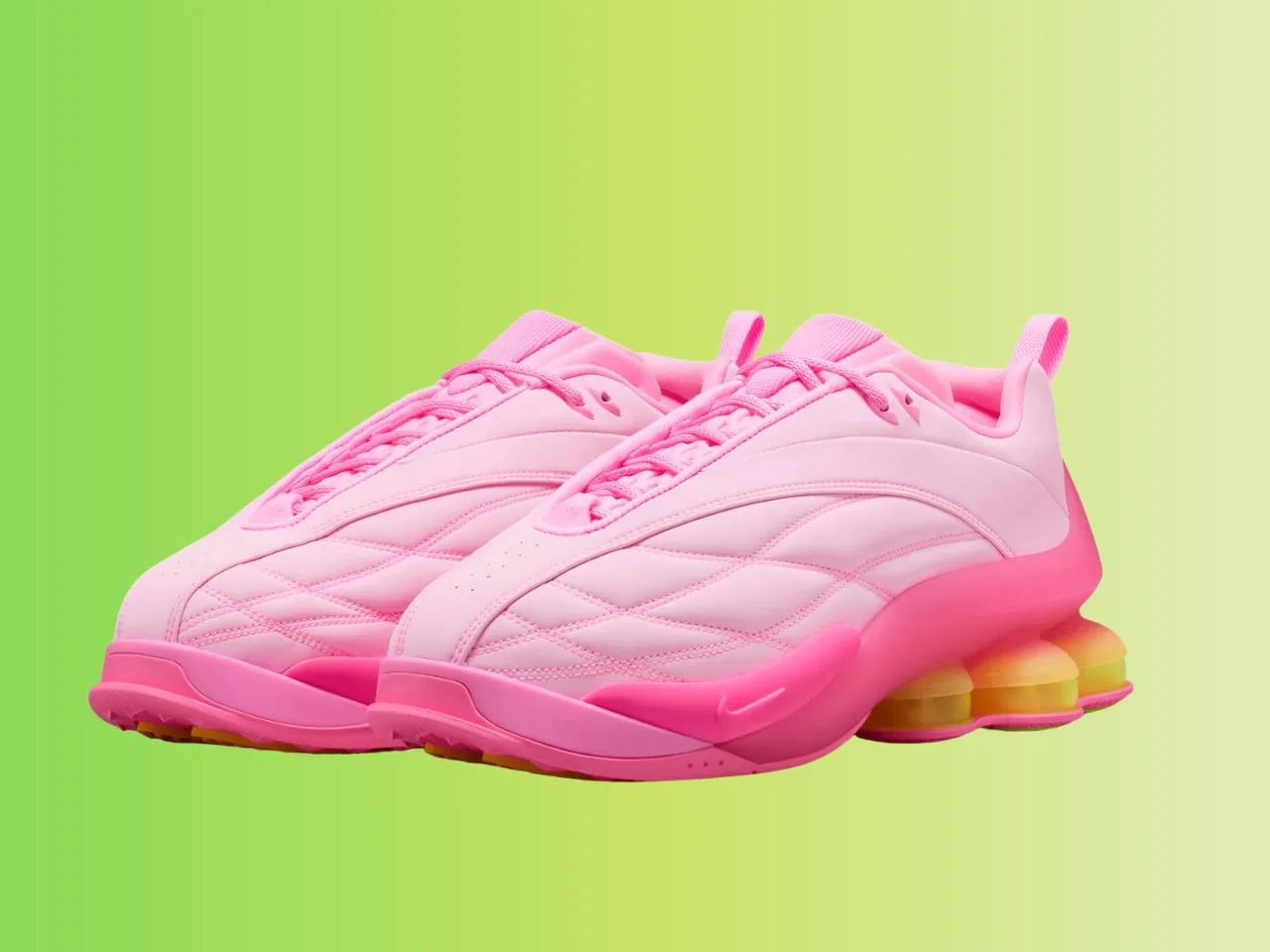
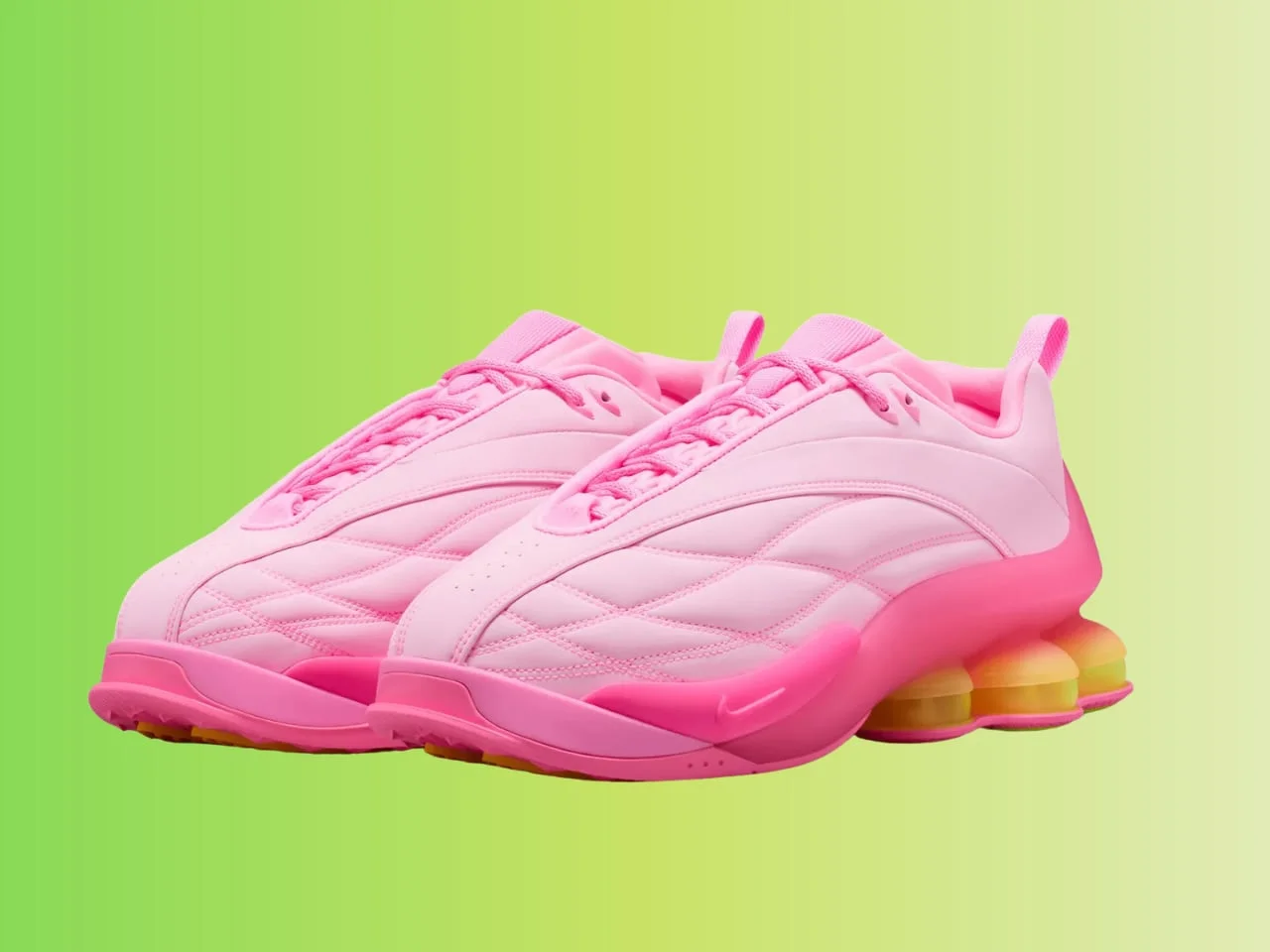
You can't judge cushioning from a photograph. Color and an oversized logo make their case instantly, but comfort only reveals itself once your feet are inside. The NOCTA Air Modmax, a Nike collaboration from Drake's NOCTA label, takes the opposite approach. It puts the engineering on the outside and dares you to look. That's a bold move for a category that has mostly treated its hardware like backstage crew, necessary but never the star. Here's the thing: the Modmax doesn't just expose its parts, it turns them into the design language, and that's a more interesting bet than another tonal colorway.
Designed by NOCTA for Nike, the shoe carries that credit line as its own identity marker. It's a small detail, but it tells you the project is positioned as a design statement first and a performance product second. Collaborations like this usually lead with the partnership, and the credit line makes that intent clear. Read it as a signal about priorities rather than a promise about how the shoe will perform.
Six pods, two pressures
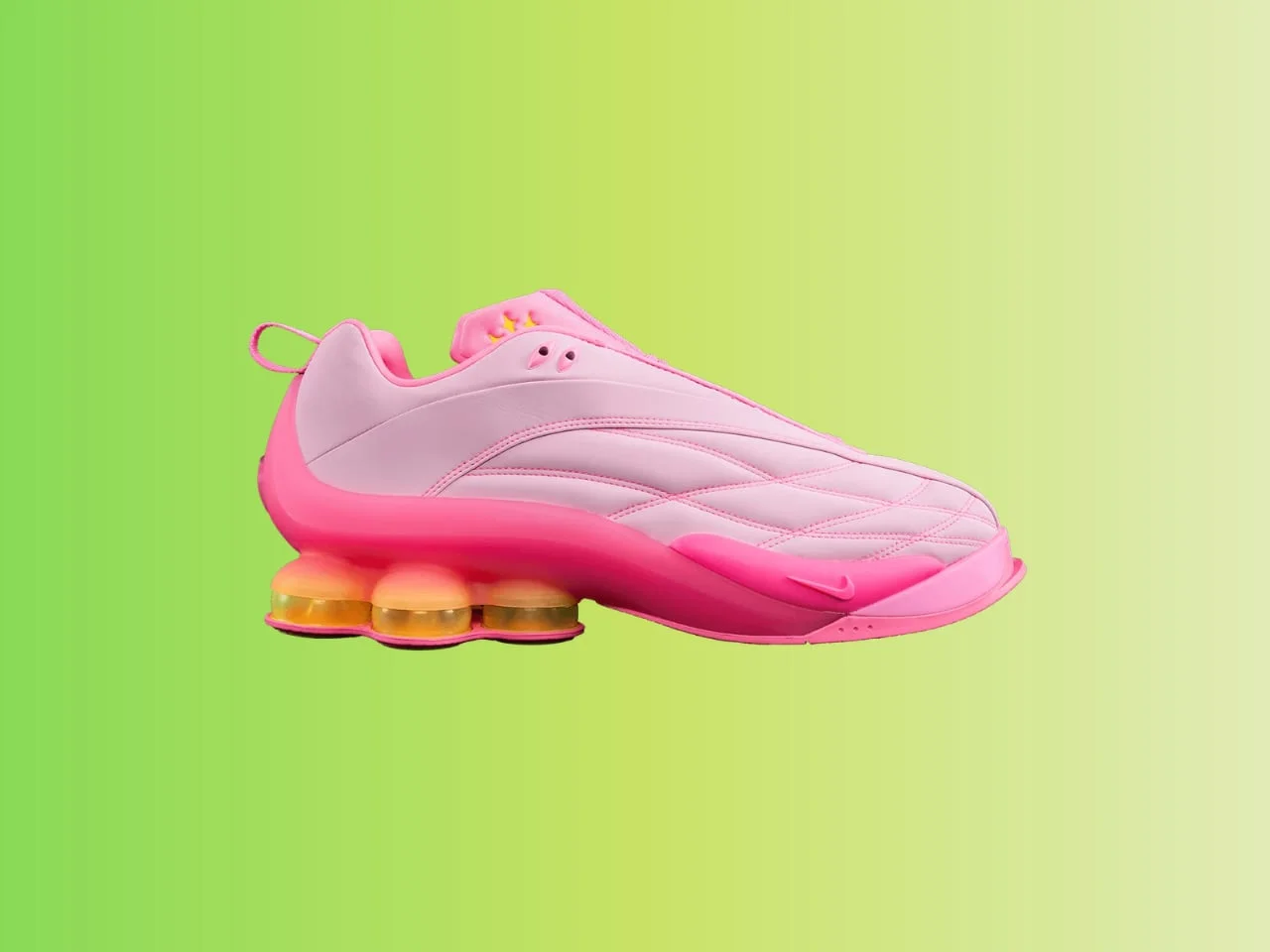
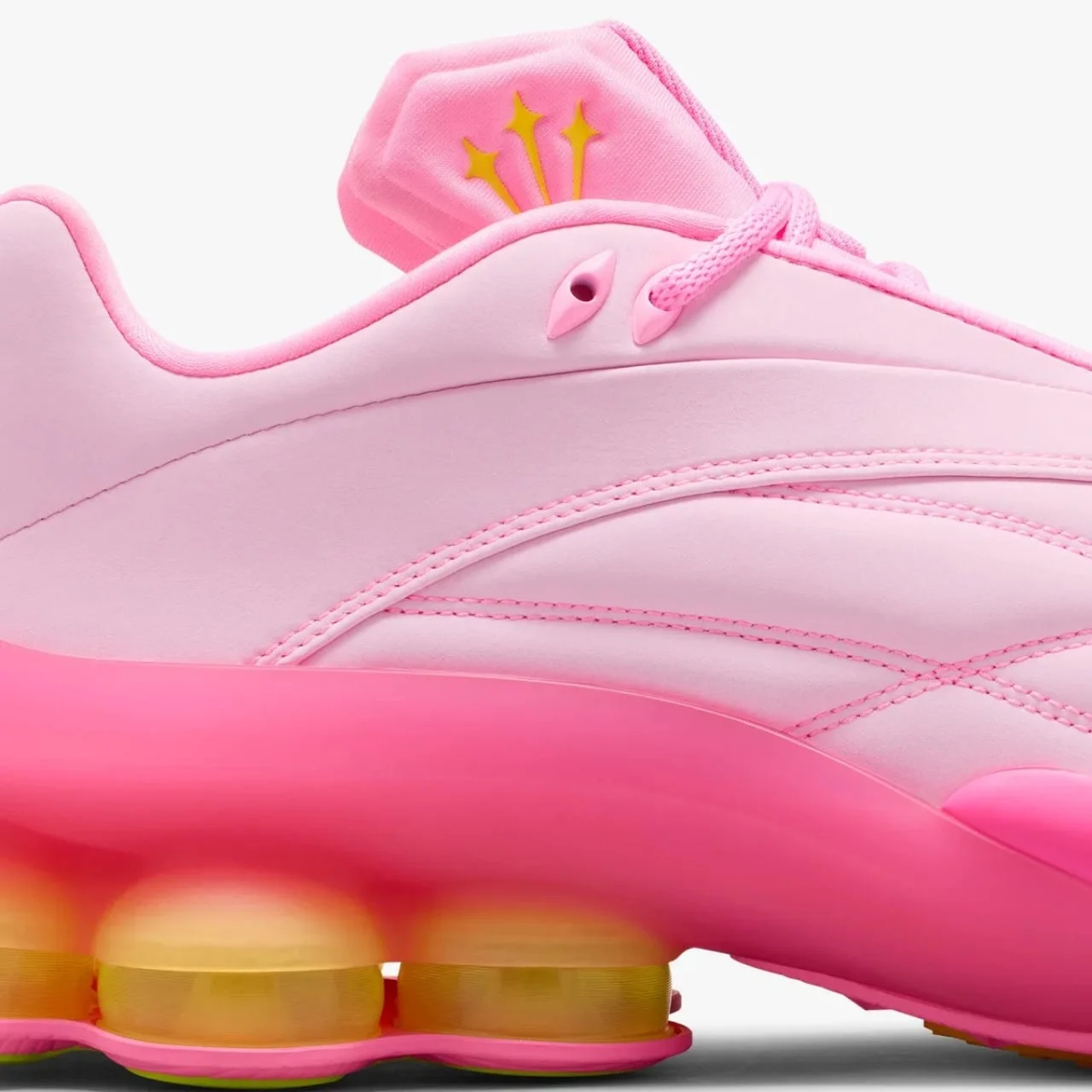
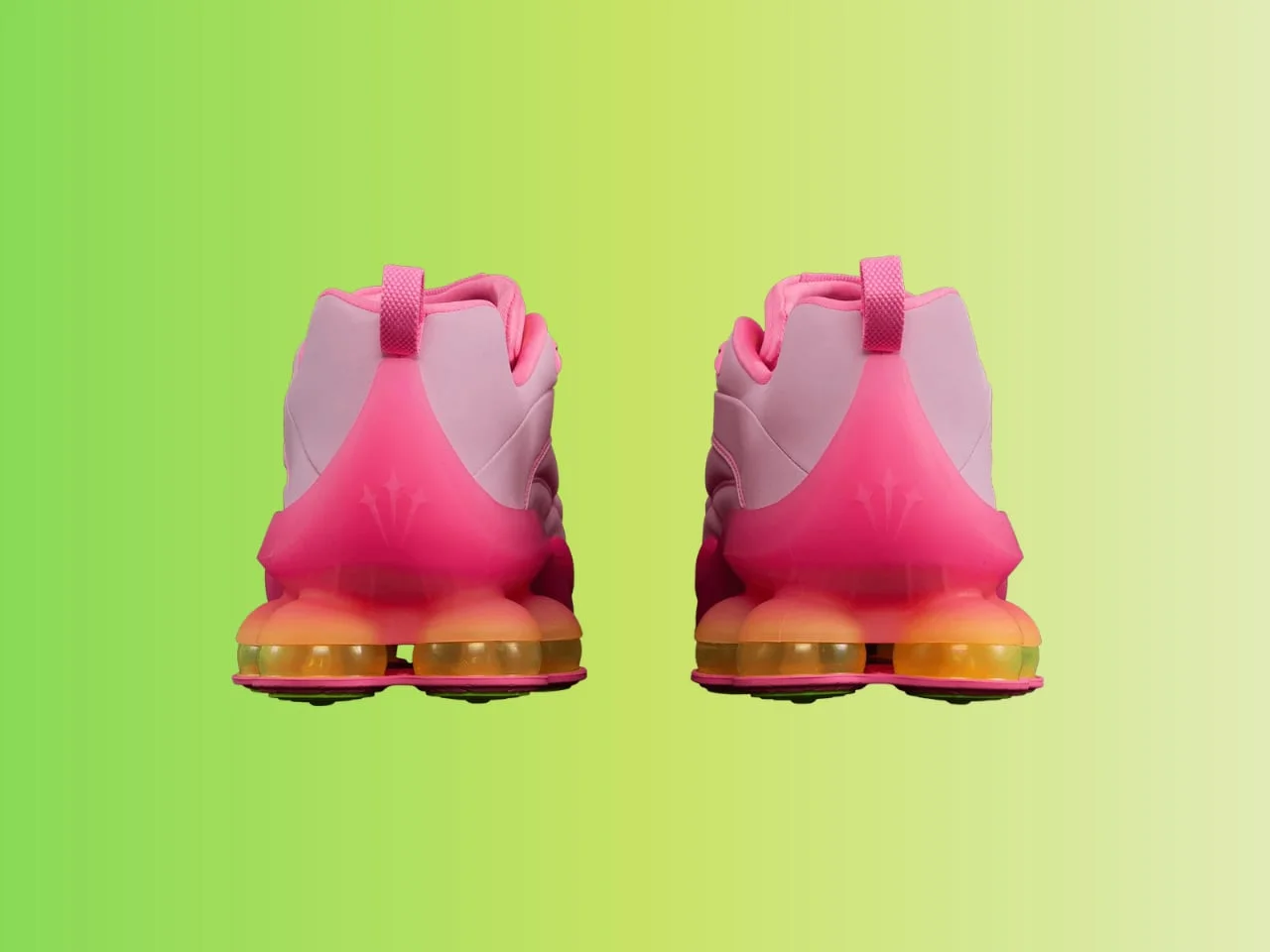
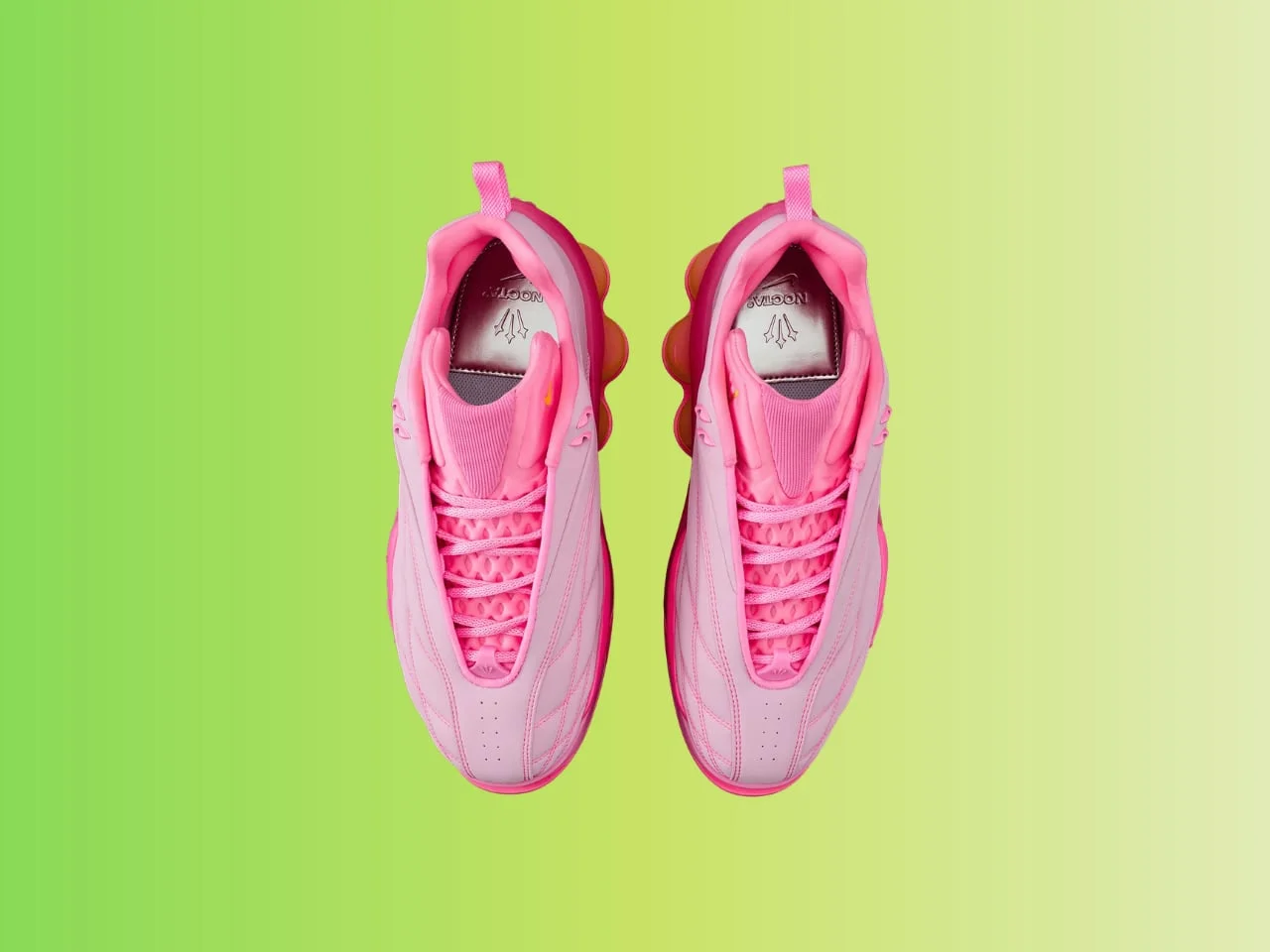
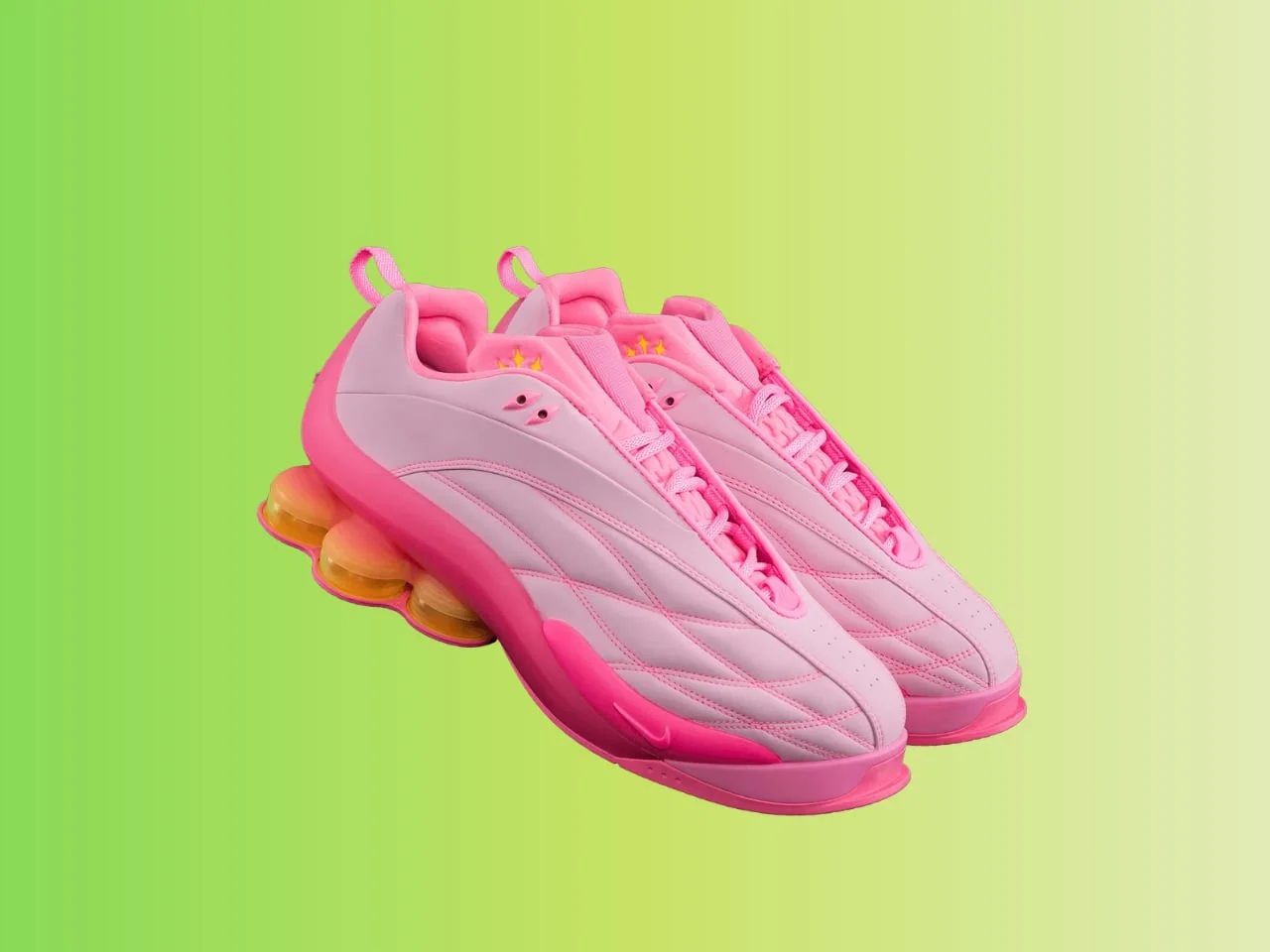
Six exposed Air units sit beneath a pink upper, their translucent yellow-orange pods giving the heel an almost toy-like look. According to NOCTA, the pressures are split for a reason. Four rear units run at 17 psi to absorb heel strikes, while two at 7 psi guide the transition toward the forefoot. That means roughly two-thirds of the pods sit at the back, where impact is heaviest, and the softer pair up front handles the roll. (and this is the part most people overlook) the forefoot units aren't just padding. They're meant to shape how the foot moves from landing to push-off.
I think this split-pressure approach is the most interesting idea in the whole shoe, and it's easy to miss when the pods are glowing at you. Most cushioning systems hide their tuning inside a single block of foam. Separating the zones makes the design logic visible, which is a rare kind of honesty in footwear marketing.
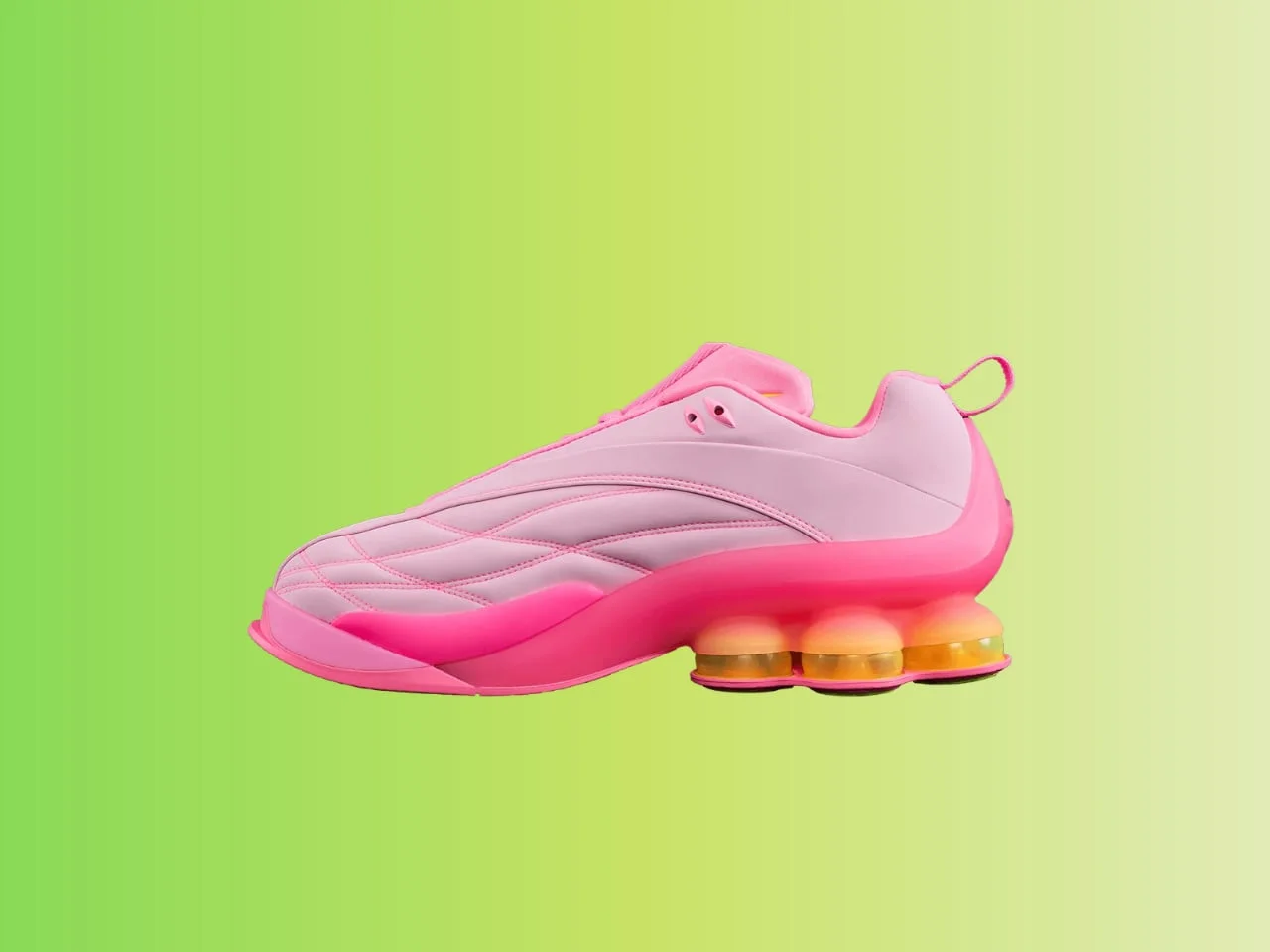
Those figures explain the division of labor, but they don't tell you how the shoe feels after an afternoon of walking. Pressure is a measurement of the air inside each unit, not a comfort score. A number on a spec sheet can't account for your body weight, your stride, or how a pod settles after hours of repeated compression. That gap matters more here than usual, since the engineering is also the main visual hook. If you're buying a shoe to look at, the specs are charming. If you're buying one to walk in, you'll want to try it on before you trust them.
The support underneath
NOCTA pairs the cushioning with a Cushlon foam midsole and a TPU carrier. That carrier includes a heel cage and midfoot shank for stability, and separate TPU bumpers wrap the inner and outer forefoot and toe. The open spaces around those heel pods could make the whole arrangement look precarious. The structure is what keeps it grounded.
A carrier is the frame that holds the cushioning in place, and it's the least glamorous part of any shoe. Think of it as the chassis. The pods handle impact, the midsole handles everyday compression, and the bumpers take the abuse at the edges of the forefoot. When the cushioning is exposed, the frame has to be more convincing, because nothing else is hiding its weak points. I'd be skeptical of any exposed-unit design that doesn't make its support this easy to read.
If you're evaluating a shoe like this, start with the heel. Press on the heel counter and check whether the cage feels firm or flexible under your hand. Then look at the midfoot shank, since that's the piece responsible for keeping the arch from collapsing. These are the parts that decide whether a shoe feels secure, and they're easy to overlook when the pods are doing all the talking.
Synthetic leather, quilted for effect
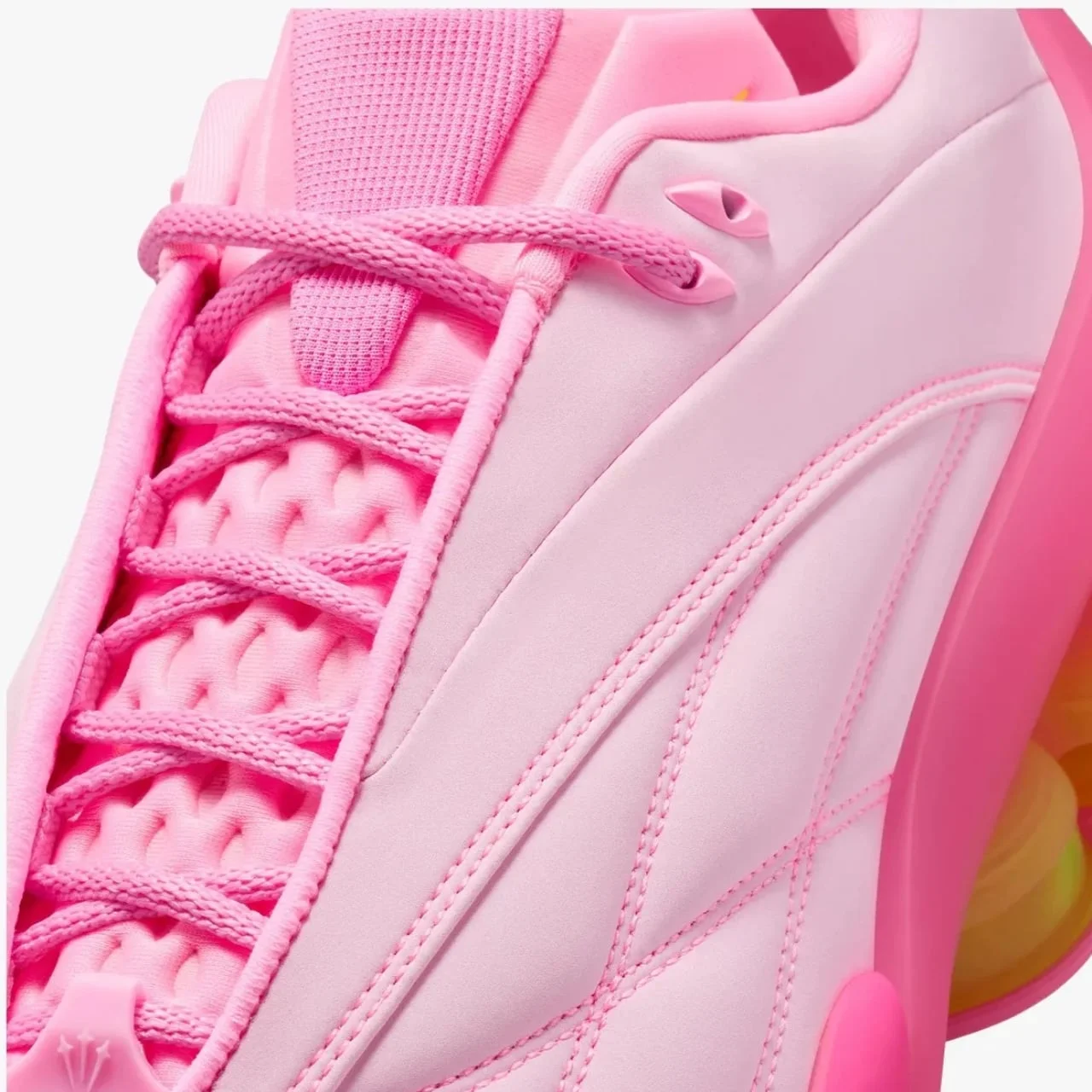
Above the mechanical base, the upper goes soft. Nike identifies the material as synthetic leather, and curved stitching forms quilted panels that resemble an inflated soccer cleat. Pale pink covers most of the upper, while a brighter pink traces the sole and shows up on the laces and collar. Those layered shades stop it from reading as one flat block of bubblegum. I'd argue the stitching does more for the shoe's character than a bigger logo ever could.
Quilting is a familiar trick in sneakers, but it usually shows up as texture rather than structure. Here the stitched panels echo the inflated look of the pods below, so the upper and the cushioning seem to belong to the same idea. That's a smart piece of visual coherence. It also means the upper is doing more than covering the foot, which makes its finish matter more than usual.
The palette also makes the construction legible. You can separate the upper, the support structure, and the translucent cushioning at a glance. From the rear, the pink heel structure spreads over the yellow-orange units like a small canopy. It's playful, bordering on cartoonish, but clear. That clarity interests me more than whether the colorway counts as easy to wear. It probably won't become anyone's everyday shoe, and that's fine. Not every collaboration needs to be.
Grip and the case for wearing them
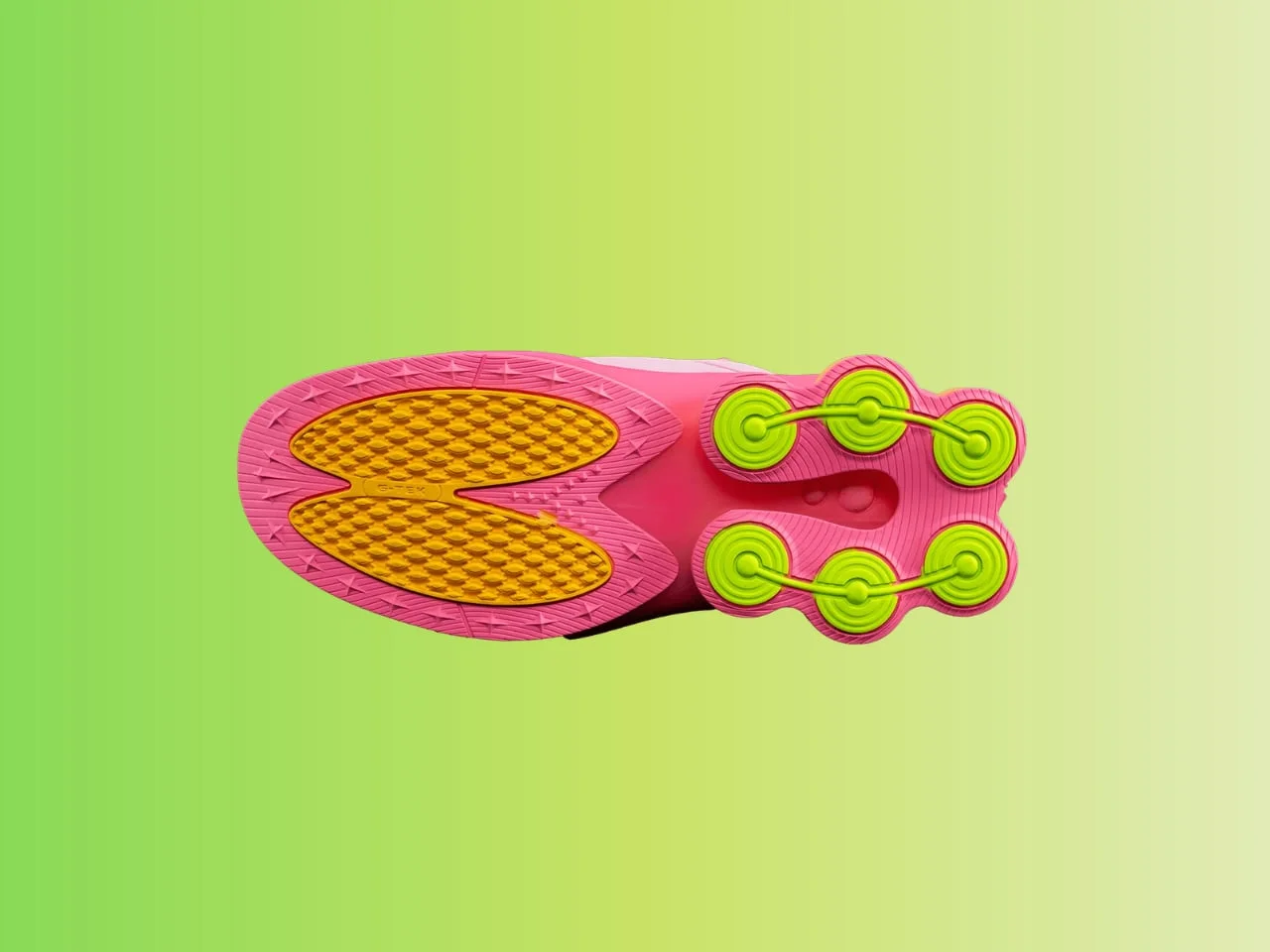
On the bottom, NOCTA uses G-Tek rubber with a tread arrangement it calls the Dynamic Alien Pod lug pattern, meant to deliver traction. The name is wonderfully excessive. Still, a grip-focused outsole matters beneath a cushioning system this elaborate. A memorable heel can get a sneaker into your cart, but it can't tell you how confidently you'll move in it.
Outsoles on cushioned lifestyle shoes often trade some traction for comfort, and the rubber compound is usually where that trade-off becomes visible. Softer compounds grip well on smooth surfaces but wear faster on rough pavement. Lug patterns can help with wet ground, though they also collect debris. Without independent testing in front of me, I'd want to see how this tread handles a wet curb before I credit it with any particular performance.
I'd pair these with a quiet outfit and let the pink carry the look. The shoe already starts plenty of conversation without needing the rest of your wardrobe to join in. What it does best is make its premise obvious: cushioning as part of the silhouette, not hidden inside it. Whether that idea survives daily wear is the question worth testing next.
What this means beyond the shoe
Exposed cushioning isn't new, but it's rarely pushed this far into the visual identity of a shoe. The usual approach treats the internal technology as a selling point you read about in the product copy. The Modmax flips that, and it raises a fair question about whether shoppers want to see the machinery or just want it to work quietly. Both answers are reasonable, and the market will probably settle the matter faster than any reviewer can.
If you're working in footwear design or product development, this is worth watching closely. A shoe that tells its engineering story visually can make technical features feel accessible, even to people who don't care about psi ratings. That's a real advantage. The downside is that the design has to carry its own weight. When the internals are the aesthetic, any flaw in fit or durability becomes impossible to hide.
So what happens next? My guess is that exposed cushioning stays a niche idea, showing up in collaborations and limited releases before anyone tries it on a mass-market model. Whether it becomes a repeatable design language or stays a one-off experiment depends on wear testing, not renders. And that's the part that won't show up in a photograph.
Discussion
Sign in to join the discussion.