Transforming Your Hallway: Tips for a Welcoming and Functional Entrance
Published Oct 10, 2026Reads 698Desk Natasha Brinsmead
Discover key design strategies to optimize your hallway for practicality and aesthetics, ensuring a warm welcome for you and your guests.
Elevating Your Hallway Design: A Critical Space
The hallway often functions as the unsung hero of home design, but don't underestimate its importance. Unlike other spaces, it has to juggle practicality and aesthetics while accommodating a high volume of foot traffic. Whether you're navigating a flurry of guests or simply entering after a long day, the entrance sets the initial tone for your home. Creating a functional, inviting hallway is vital—but it's easier said than done.
Simon Tchiernak, a senior designer at [Neville Johnson](https://www.nevillejohnson.co.uk/), emphasizes the emotional impact of this often-overlooked area. "The hallway sets the architectural and emotional tone for the entire home. It's the transition point where you leave behind the chaos of the outside world and welcome guests." He argues that a well-designed hallway can evoke a sense of calm, while a poorly planned one can lead to frustration and visual clutter.
If your hallway doesn't feel right, or if you're considering a redesign, let’s look closer at common pitfalls that experts identify. By avoiding these mistakes, you can ensure your hallway functions efficiently while greeting you and your guests with warmth and charm.
Avoiding Storage Mistakes
Let’s be honest: hallways often become a catch-all for items that don’t seem to have a designated home. However, Gail Bignell, head of design at [Sharps](https://www.sharps.co.uk/), reveals that storage mishaps are among the most frequent mistakes in hallway design. "The biggest mistake is thinking about how much storage you can squeeze into the space instead of reflecting on how that space needs to function," she explains.
It’s those hectic moments right after you step inside that matter most. You might have shopping bags in one hand and a dog lead in the other, with someone trying to funnel through behind you. If your hallway isn’t accommodating to these real-life situations, even an abundance of storage can feel chaotic. "Protecting the 'arrival space'—the clear bit of floor just inside the door—is immensely beneficial. It’s where you can set down your belongings without feeling cramped," Bignell advises.
She categorizes hallway clutter into three main areas: everyday essentials like keys and bags, items that should be stored away but remain accessible, and miscellaneous things that need a proper home. Treating all three types of items identically almost never works. Also, if you're dealing with a narrow hallway, consider varying storage depths. Not everything needs to occupy the same vertical or horizontal space, and often, shallower storage can make the area feel less cramped.
Balancing Furniture Selection
The temptation to overload your hallway with furniture often leads to aesthetic and functional issues. Holly Scott, an interior designer from [Holly Scott Interior Design](https://hollyscottinteriordesign.co.uk/), highlights that furniture should enhance, not hinder movement. "Hallways are generally narrow, so every piece needs to earn its spot," she stresses, advising against bulky console tables that block traffic flow.
Rather than cramming multiple small storage pieces into the space, think strategically. Kate Palmer from [The Painted Furniture Company](https://www.paintedfurnitureco.co.uk/) recommends selecting one carefully crafted piece that serves multiple purposes. A bench with storage, for example, can alleviate clutter while offering seating for those busy mornings or when welcoming guests.
Sophie Chapman from [The Vawdrey House](https://www.thevawdreyhouse.com/) reinforces the need to retain some open space. "Hallways should feel like a journey, not an obstacle course," she warns. This sentiment is crucial; leaving breathing room allows the space to flow and promotes a welcoming atmosphere.
Adding Personality to the Decor
Too often, hallways are treated as mere transition zones that don’t warrant much attention. But let’s challenge that notion. According to Holly Scott, hallways are perfect for bold decor choices. "This space gives you the chance to be creative with colors and patterns. After all, it’s the first impression guests get of your home," she states.
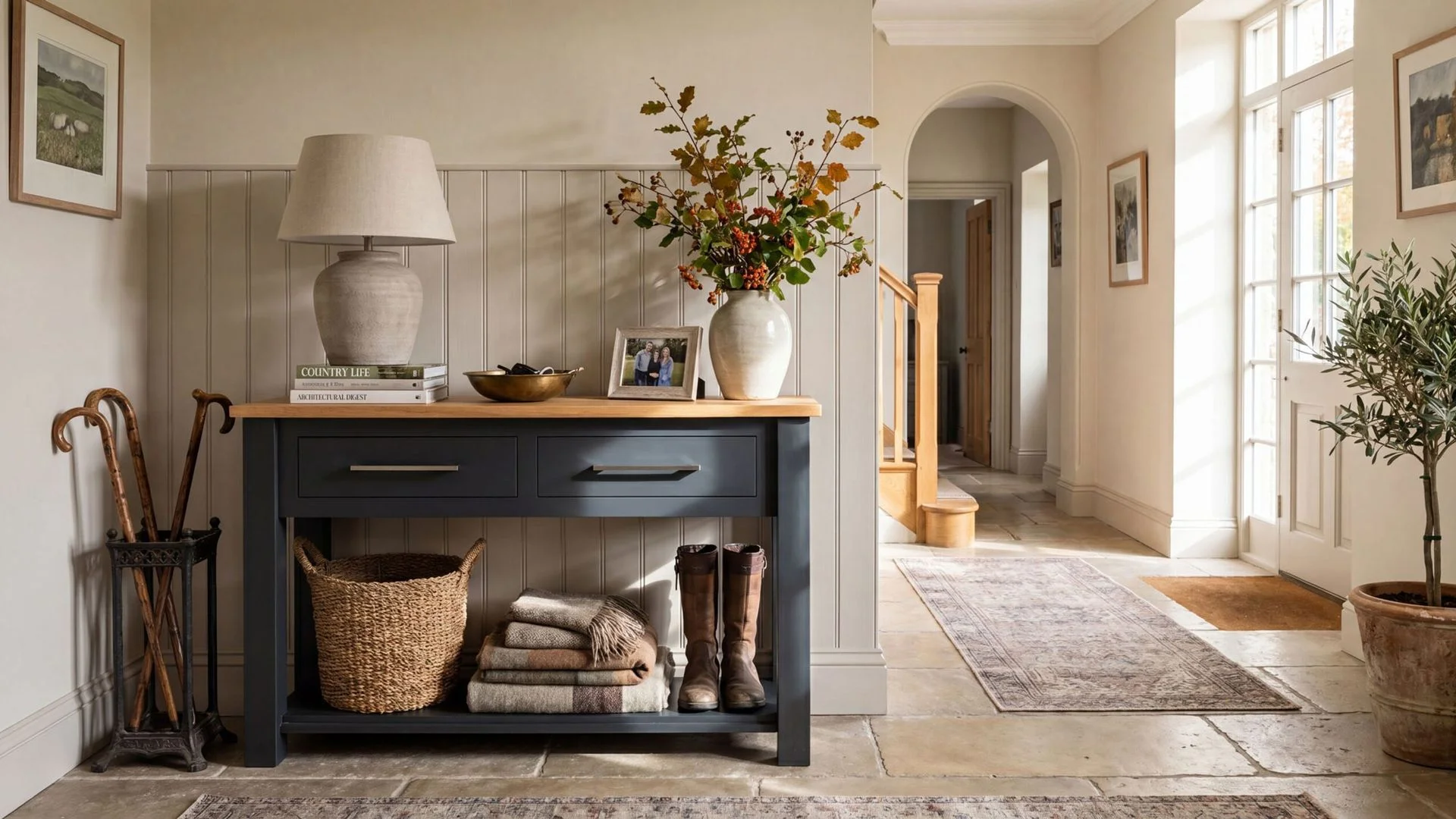
You might be tempted to stick with the tried-and-true console, mirror, and lamp arrangement, but adding personal touches—like unique artwork or a distinct wallpaper—can make the space feel more inviting. Debbie Leigh, design manager at [ILIV](https://www.iliv.co.uk/), adds that even in smaller hallways, going beyond the beige can elevate your home. "Opt for patterned fabrics in soft tones to add warmth and personality."
This is an area where a little risk can lead to big rewards. It's not about compromising on space but enhancing it with intentional detail that offers a glimpse into your style and life.
By giving your hallway the attention it deserves, you'll improve functionality and establish a genuine connection to the rest of your home, ensuring you and your guests feel a sense of welcome right from the threshold.
Conclusion: Designing for Function and Aesthetic
When it comes to hallway design, the last impressions often linger far longer than you might expect. It's easy to overlook the entrance space, relegating it to mere functionality. Yet, as experts suggest, a thoughtfully designed hallway can transcend its role as simply an entry point; it serves as a vital connective thread throughout the home.
Simon Tcherniak's recommendation to incorporate stylish storage solutions is spot-on: a dedicated console can keep clutter at bay while still complementing your hallway's aesthetic. Concealed drawers for everyday items like mail or keys can make a significant difference in maintaining visual harmony. If you have the floor space, customized cabinetry with charging points can be a boon for busy mornings—ensuring the area remains organized.
However, lighting also plays a pivotal role. Relying on a single overhead fixture is not only outdated; it can cast a cold glow that leaves your hallway feeling unwelcoming. Layering different light sources creates a warm atmosphere, making entry into your home a pleasant experience. The pointers from designers like Holly Scott resonate here: wall sconces and strategically placed mirrors can bounce light deeper into the corridor, enhancing its appeal.
That said, leaving the hallway disconnected from the home's overall design can leave it feeling disjointed. A cohesive palette and line of sight to other rooms can unify spaces, creating a warmer invitation to guests. As Eloise Pfeiffer suggests, your hallway should not just be a passage but an extension of your home’s personality.
Ultimately, a hallway's design shouldn't be an afterthought. It’s a space that actively shapes the first (and often last) impressions of your home. By approaching the hallway with careful consideration for aesthetics, functionality, and flow, you can create an inviting entrance that resonates throughout the entire living space. So if you're in this field, keep in mind that a well-executed hallway can reflect the essence of your home rather than merely serve as a functional transition.



Discussion
Sign in to join the discussion.