Damaged leads, excessive loads and unsuitable appliances can raise fire risks. Experts explain what to check before using an extension lead.
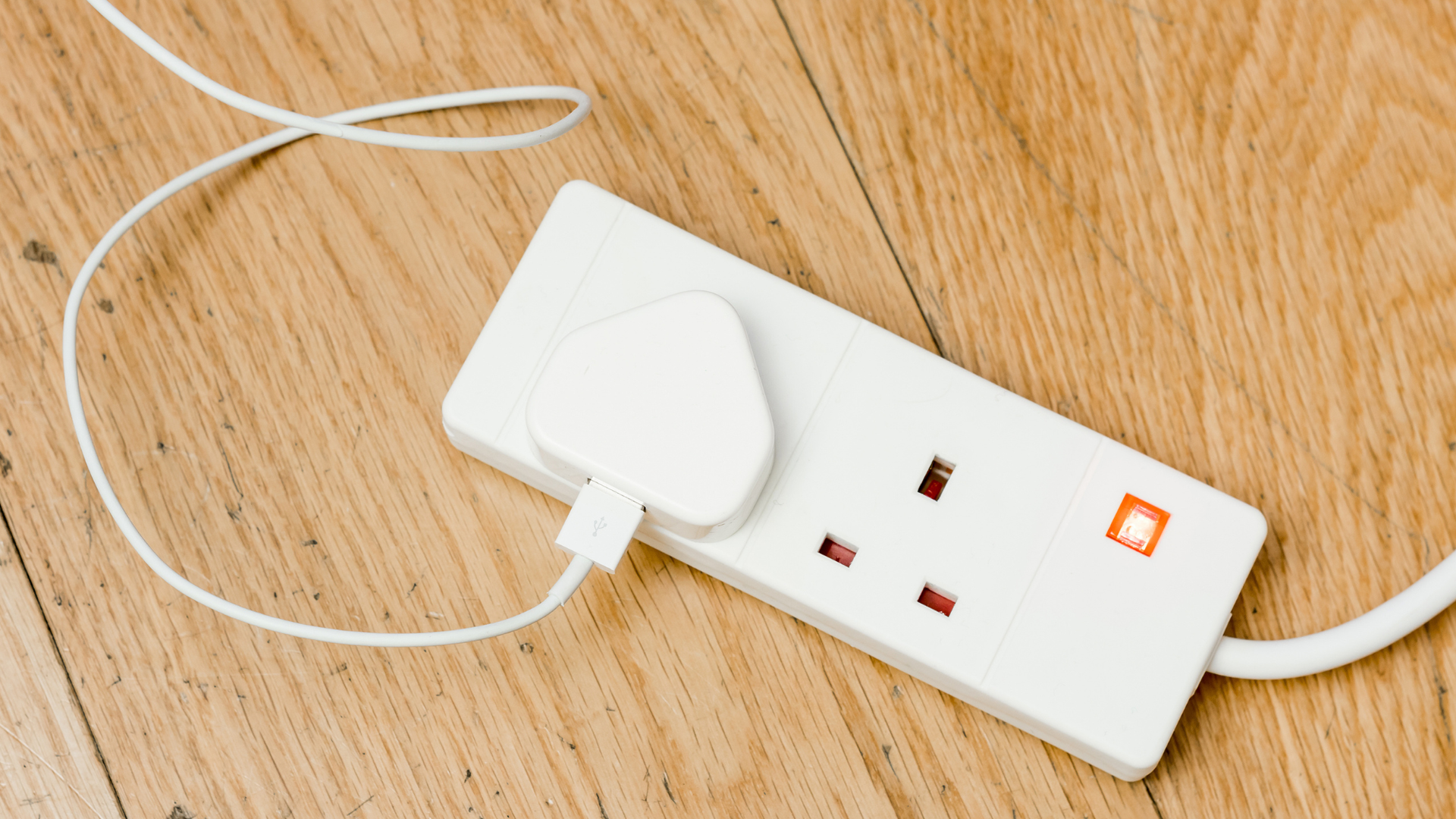
Extension leads can solve a socket shortage, but their safety depends on how they’re chosen and used. They add places to plug things in; they don’t increase the amount of power a household socket can supply. The risks range from damaged wiring to overheating when connected appliances draw more power than the lead can handle. More Tips estimates that overloaded sockets and faulty electrical appliances cause 7,000 house fires in the UK each year. That figure covers both overloaded sockets and faulty appliances, so it shouldn’t be read as a count of fires caused by extension leads alone.
Paul Collins, Technical Integrity and Standards Director at NICEIC, and Giuseppe Capanna, Product Safety Engineer at Electrical Safety First, identify five common mistakes to avoid. Their advice points to a simple principle: a lead is part of the electrical setup, not just a convenient way to reach a distant socket. Its condition, rating and connected appliances all matter.
Check the lead before plugging it in
An extension lead that’s spent years in a cupboard may no longer be safe to use. Before plugging it in, inspect the full length of the cable and the casing for fraying, cracks, scorch marks or discolouration. Damage can leave electrical parts exposed or indicate that the lead has been under stress. A quick check can catch visible problems before the lead is carrying power.
Collins says a burning smell, unusual heat, buzzing or sparks are also warning signs. Stop using the lead and disconnect it if you can do so safely; damaged electrical equipment shouldn’t stay in use. Don’t treat an intermittent noise or a warm casing as a minor inconvenience that can wait until later. If there’s visible damage or a warning sign, the sensible response is to stop relying on that lead.
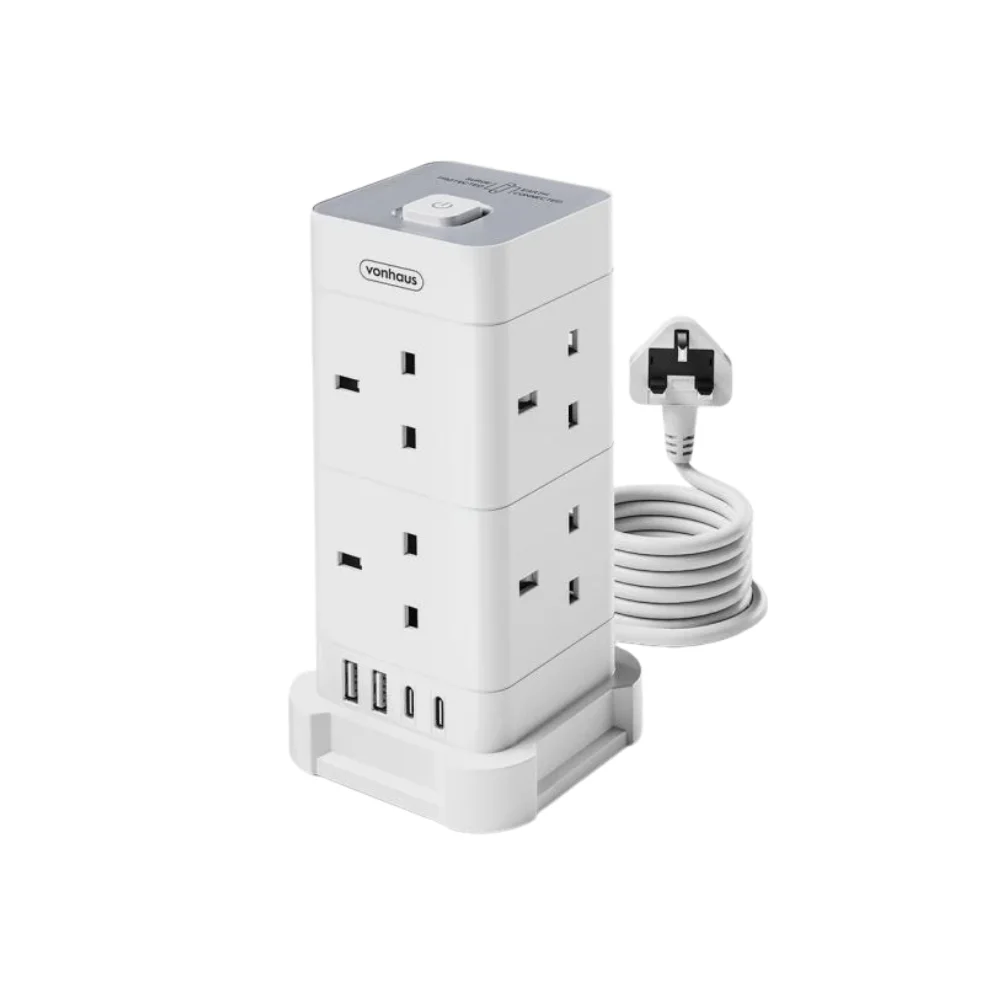
Featuring USB and USB-C ports and power surge protection, we recommend this tower extension lead, which is available in black and white.
Know the total load
There’s no universal safe number of appliances to plug into a lead. The limit depends on its maximum rating and the power each appliance draws, so counting plugs alone won’t tell you whether a setup is within capacity. A typical extension lead is rated for 13 amps, or about 3,000 watts, Capanna says. Several high-powered devices can push the total beyond that limit, causing the lead to overheat and potentially start a fire.
Check appliance ratings and manufacturer guidance before running devices together. When several devices will be in use at once, consider their combined demand rather than assessing each one in isolation. A lead’s available sockets don’t indicate how much power it can safely supply. More places to plug in can make it easier to exceed the rating without realizing it.
Avoid chaining leads together
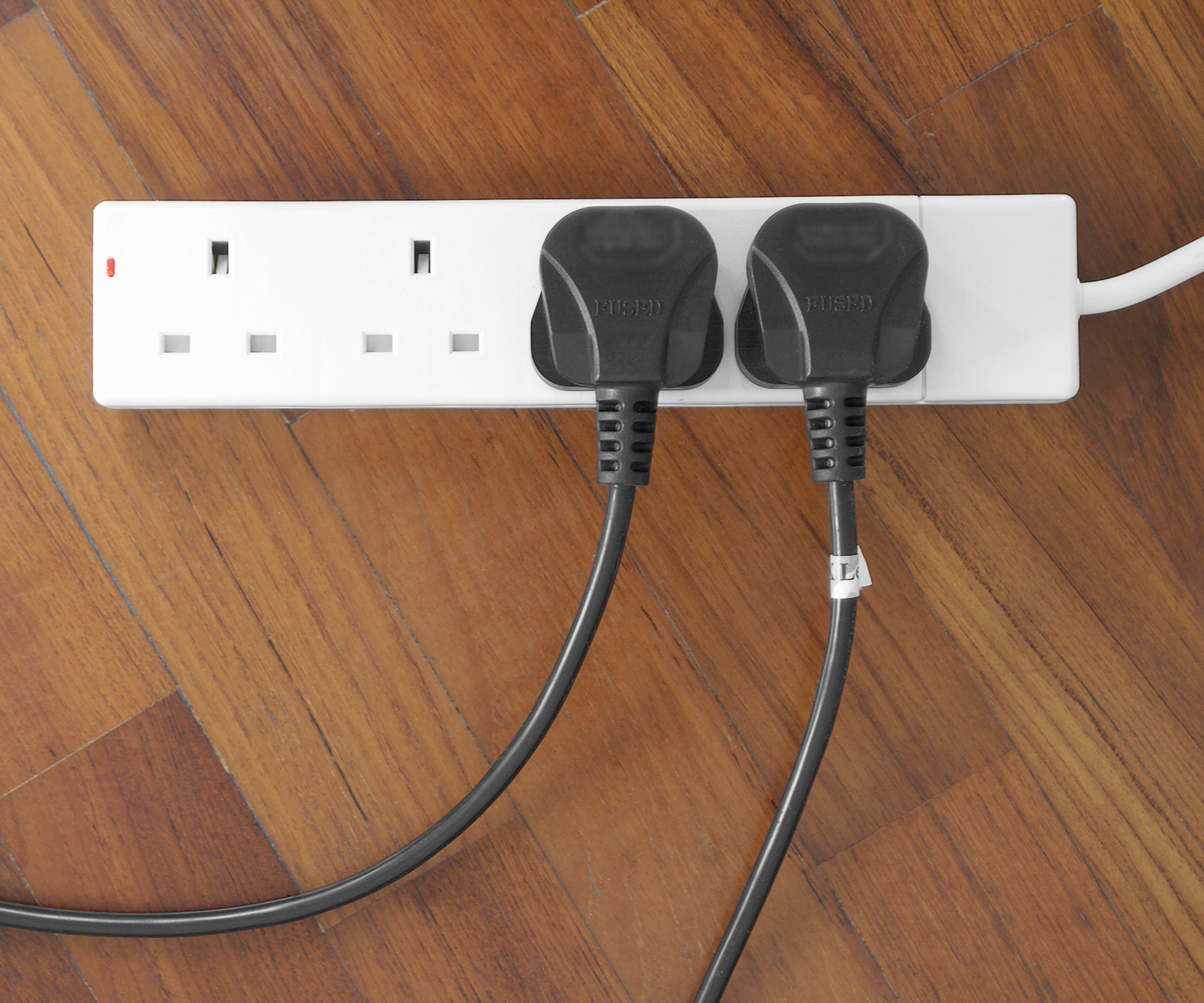
Connecting one extension lead to another may seem like a quick fix when a socket or cable falls short. Collins warns that daisy-chaining increases the risk of overheating and fire. Each extra connection adds another point in the setup that needs to be in good condition, while the appliances still draw power from the same supply. A longer route to the wall socket doesn’t make more capacity available.
If you regularly need several leads in the same area, Collins recommends asking an NICEIC-registered electrician to assess the installation and advise on adding suitable socket-outlets. That’s a more useful response to a persistent shortage than treating a chain of leads as a permanent arrangement. If you're working out how to power a room, the question is how the room is supplied, as well as where its appliances sit.
Keep high-power appliances off extension leads
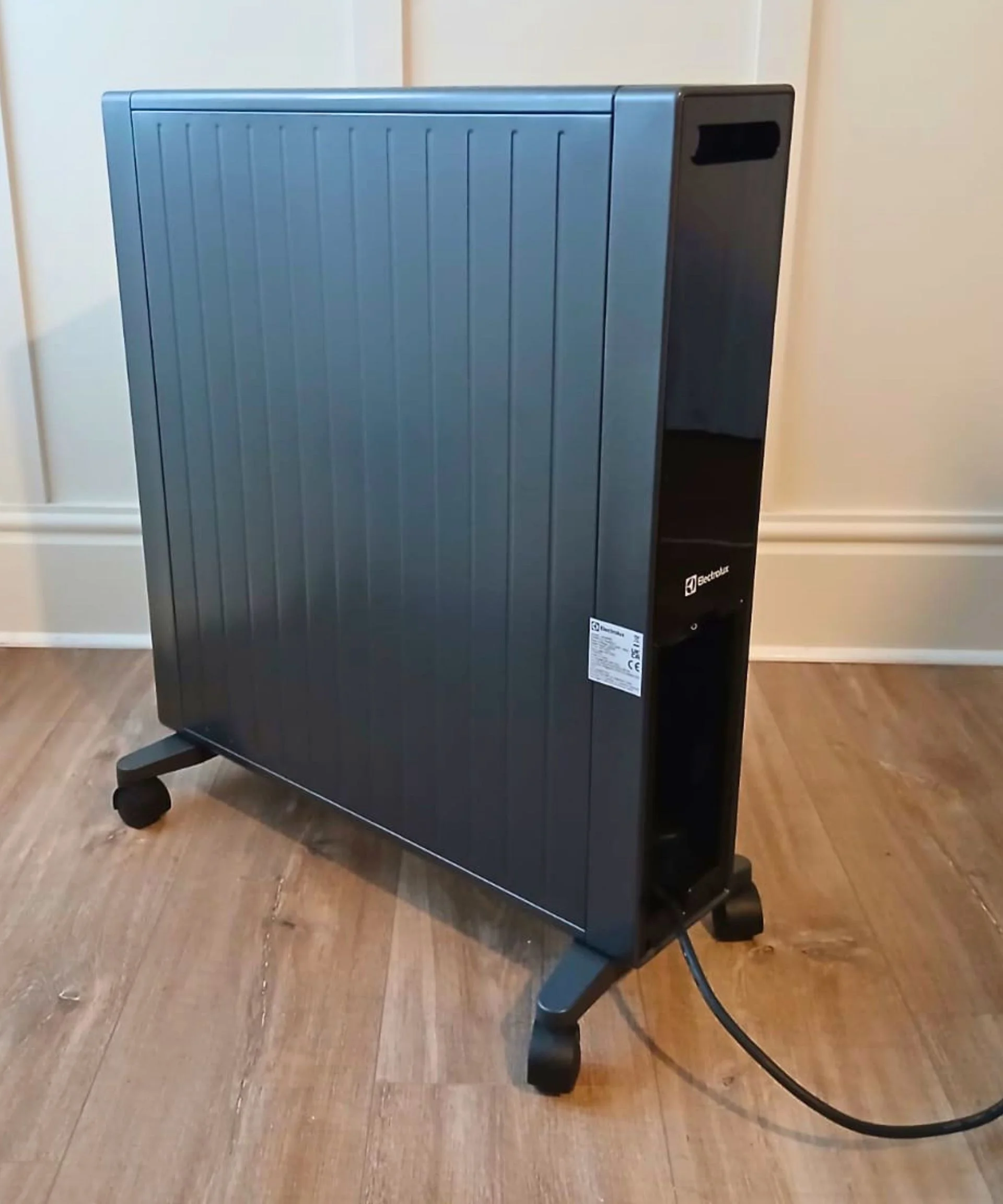
Phone chargers and table lamps are among the lighter uses for an extension lead. Kettles, microwaves, dishwashers, washing machines and portable heaters draw much more power and should be plugged directly into a suitable wall socket, Capanna says. The distinction matters because a lead can appear to work normally even when the connected load is too high. Avoid assuming that an appliance is suitable simply because its plug fits.
When in doubt, check the appliance and lead manufacturers’ instructions. Here's the thing: the product’s intended use and stated rating are more useful guides than the number of sockets on its casing. A portable heater may be convenient wherever there’s floor space, but the advice here is clear: plug it directly into a suitable wall socket.
Check who made the product
Capanna advises buying from reputable retailers. Before purchase, check that the lead has a UKCA or CE marking, a stated voltage or power rating, and the manufacturer’s name and address. Those details give you basic information to identify the product and check its stated electrical limits. A low price or extra sockets shouldn’t be the only points guiding a purchase.
Look for a 13A rating, a thermal cut-out, and a standard UK three-pin plug with a fuse. You can register your product to receive information about future recalls. That step doesn’t replace checking the lead before use, but it can help you receive product information after purchase. Read the markings and instructions before putting a new lead to work.
Common questions about extension leads
Is surge protection necessary?
No. Surge protection can help protect devices from voltage spikes, but it doesn’t prevent a lead from being overloaded. These are separate concerns: a protective feature against spikes doesn’t raise the lead’s rated capacity. You’ll still need to account for the power drawn by the connected appliances.
Is it safe to leave a lead plugged in overnight?
Being plugged in overnight doesn’t automatically make an extension lead unsafe, Collins says. Consider what’s connected, whether it needs to stay powered and whether the equipment is in good condition. A lead’s safety depends on the whole setup, including its load and the state of its cable and casing. That said, if you see damage or notice unusual heat, smell, buzzing or sparks, stop using it and disconnect it if safe.
Why the setup matters
Safe use comes down to the lead’s condition, its rated capacity and the demands of the connected appliances. The numbers here are underwhelming in a useful way: a 13A rating and a row of sockets don’t answer every question about a particular setup. You still need to check what’s plugged in, what those appliances draw and whether the lead is in sound condition. A small amount of attention at the point of use can prevent convenience from turning into an electrical hazard. Basic checks. Not guesswork.
If a household routinely runs short of sockets, an electrician can assess whether additional outlets are needed. What this means for you is that recurring demand deserves a closer look at the installation, especially if several leads are being used in the same area. This is more significant than it looks: an extension lead can help with access, but it can’t resolve a shortage of suitable outlets or excuse exceeding its rating. For more guidance, see our guides to living room electrics, electrical sockets and the types of plug sockets.


Discussion
Sign in to join the discussion.