Clandestine Design Group’s C-01 concept scales from a 353-pound commuter to a 485-pound track bike with up to 24 kWh of removable battery capacity.
A battery design built into the bike’s identity
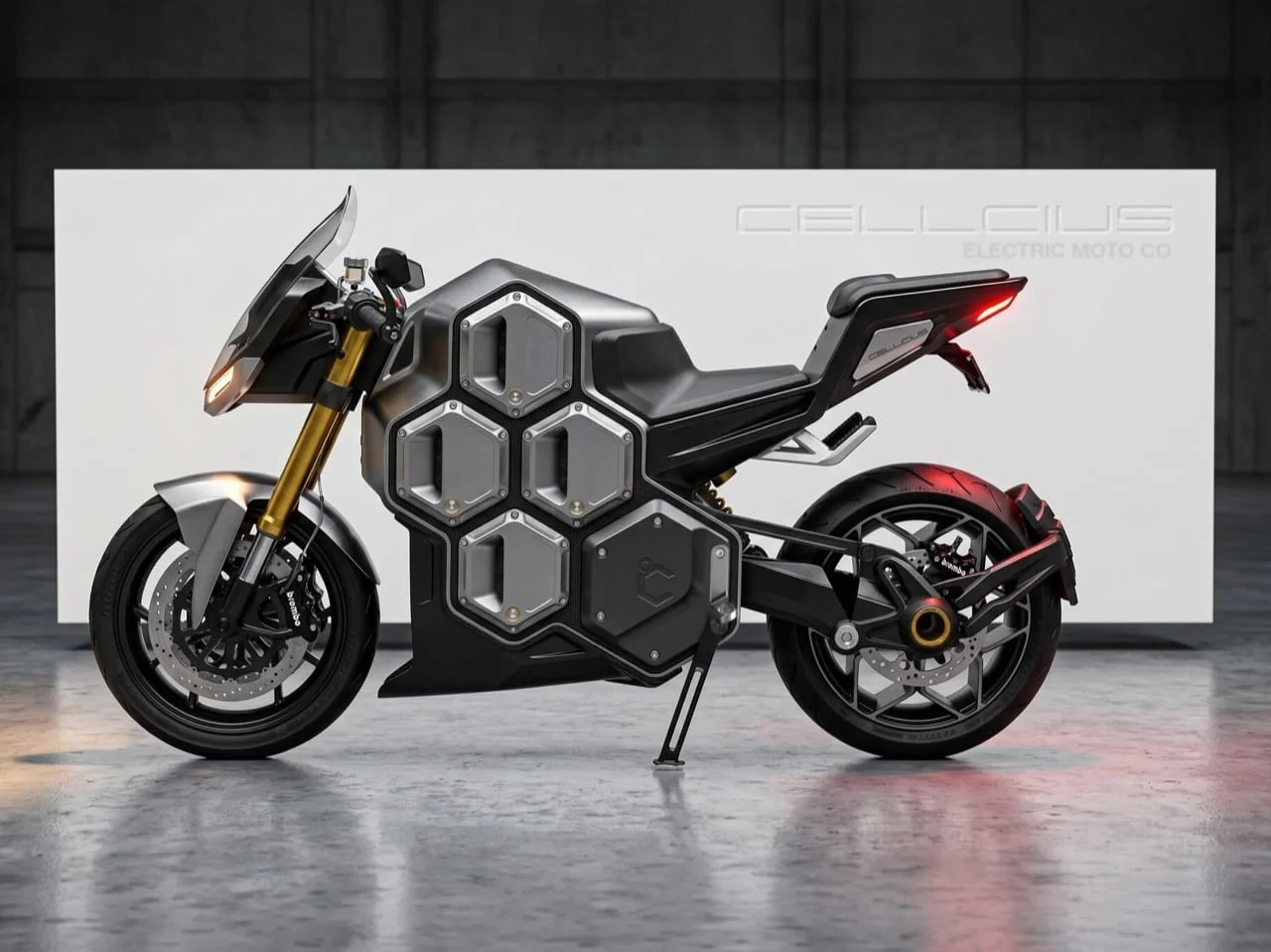
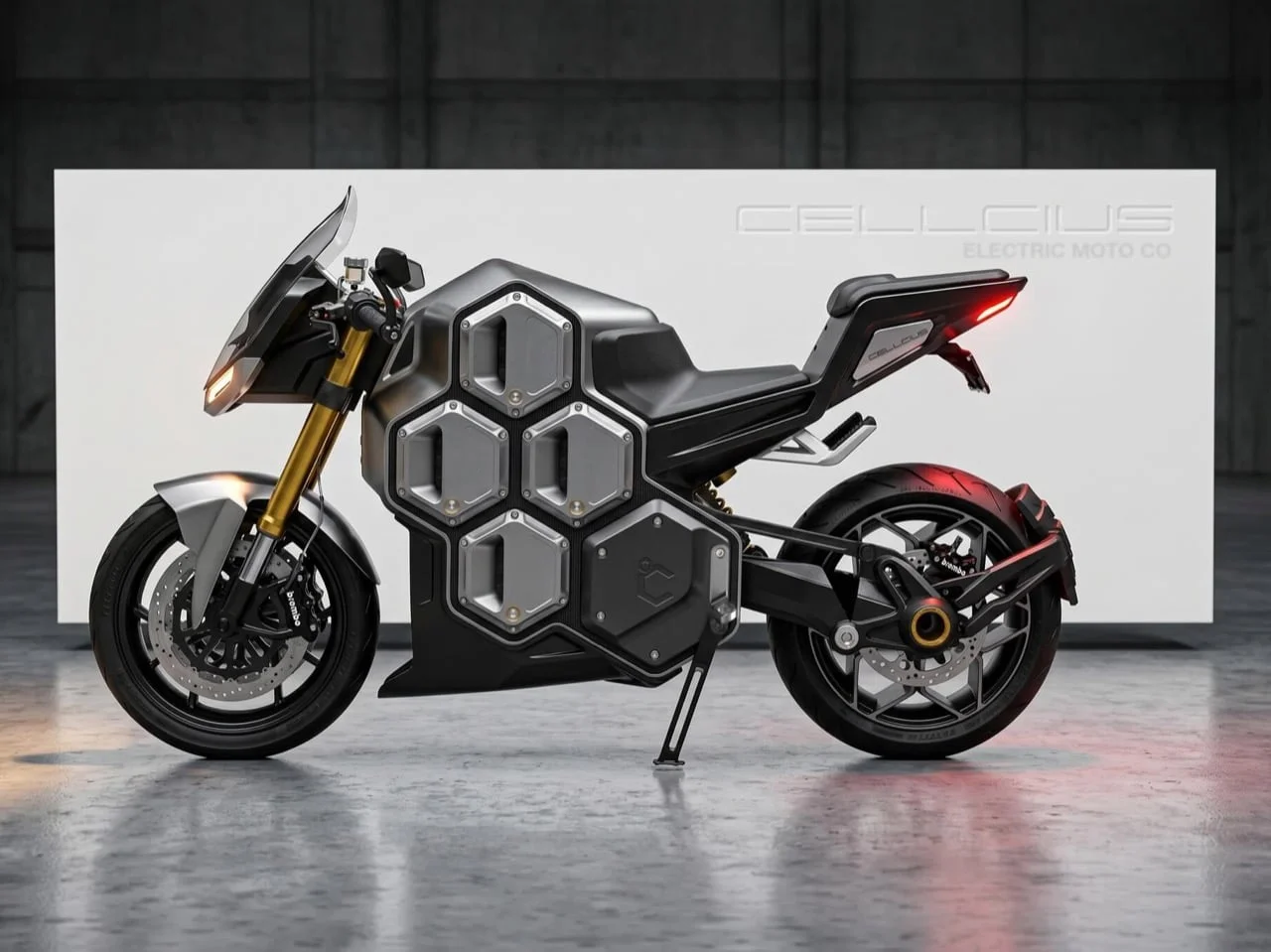
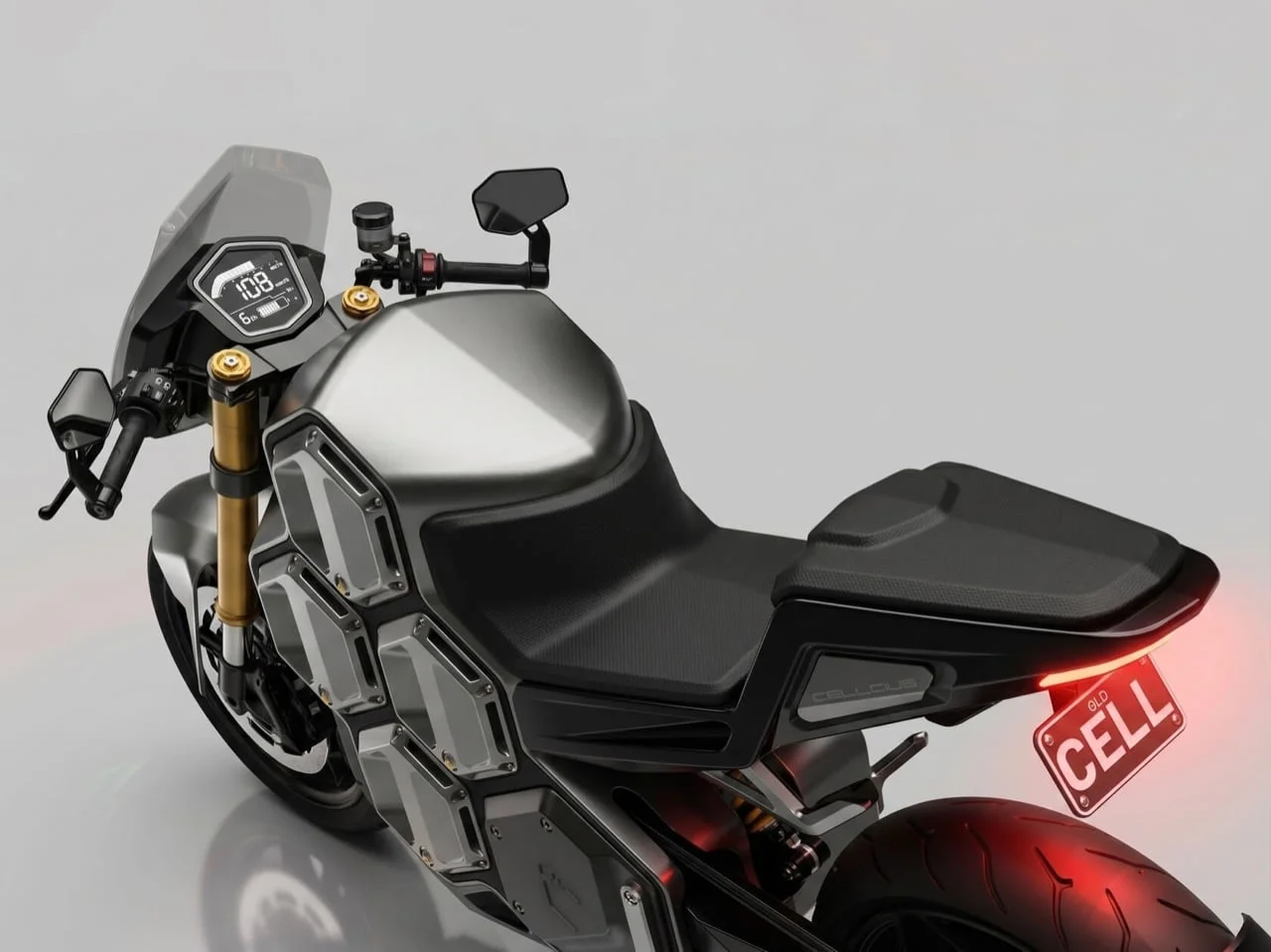
The Cellcius C-01 makes its battery the centerpiece of the motorcycle. Brisbane-based Clandestine Design Group has arranged eight removable, hexagonal battery cells along the bike’s flanks, turning a familiar storage shape into both a visual signature and a way to vary the machine’s weight and capacity. The cells are exposed as part of the design language, so the bike’s energy supply is also a visible clue to how it’s configured.
That choice gives the concept a clearer identity than a conventional electric motorcycle with its battery hidden inside the frame. It also puts a practical question on display: whether riders will value changing capacity enough to accept a motorcycle whose appearance and mass shift with each configuration. The design makes that trade-off legible before the rider even turns the key.
That flexibility is the concept’s central argument: one chassis could serve an urban commute with two cells, then carry all eight for track use. The C-01 won a 2026 Australian Good Design Award in the Concept Design category, but remains an early-stage design without a price or showroom date. An award can recognize the quality of an idea; it can’t establish that the engineering, cost, and day-to-day handling will work as pictured.
Designer: Clandestine Design Group
A bike that changes with its battery load
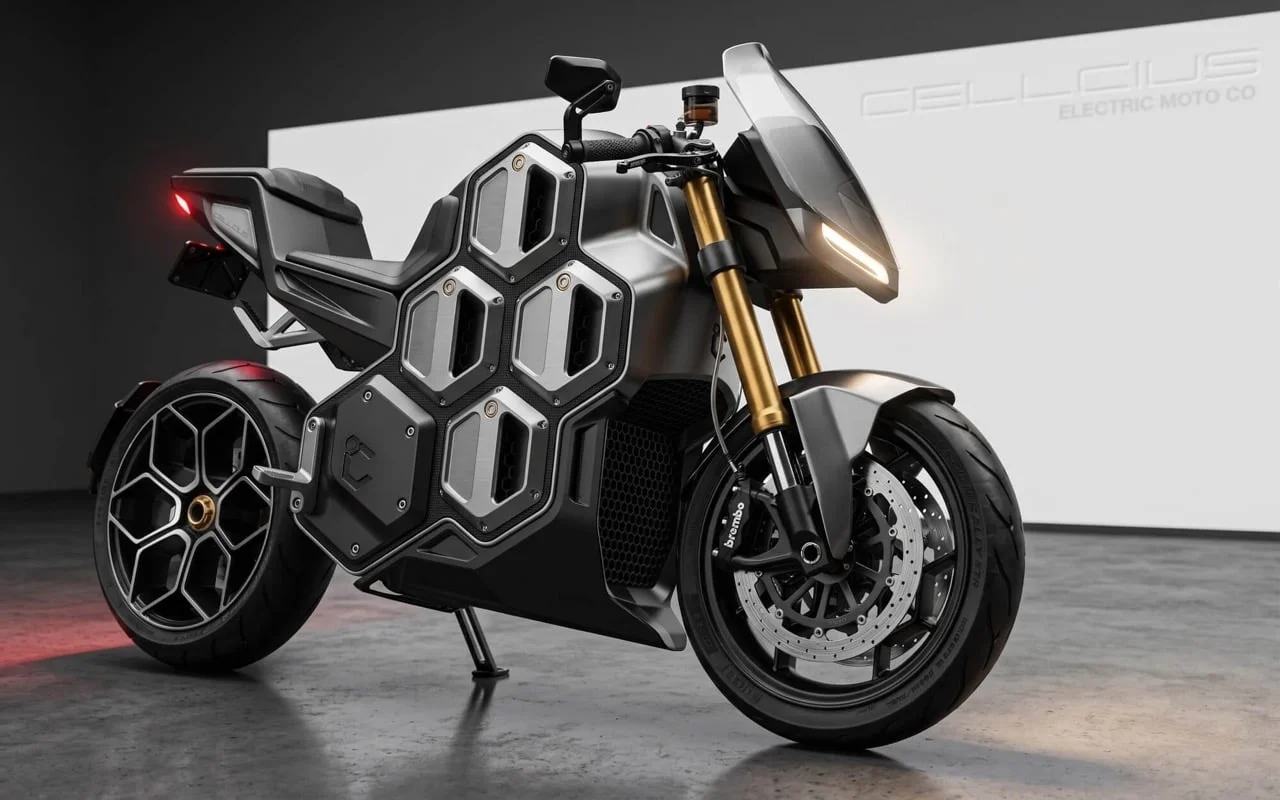
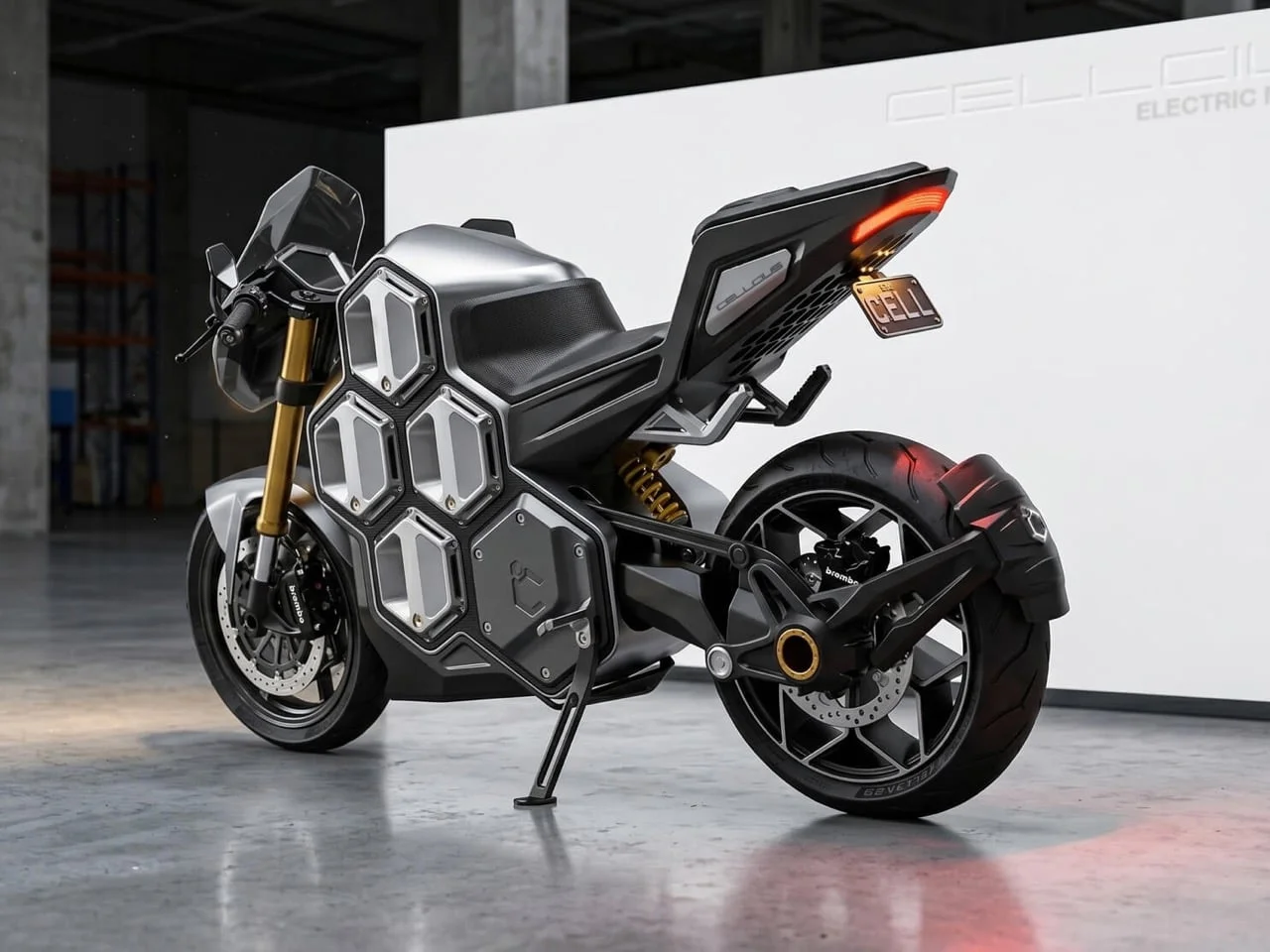
Each Hex-Core cell stores 3 kWh. Depending on the number installed, the C-01’s capacity ranges from 6 to 24 kWh, while its weight shifts from a claimed 353 pounds (160 kg) to 485 pounds (220 kg). That puts each cell at about 22 pounds (10 kg), light enough to carry indoors. The gap between the lightest and heaviest setup is substantial: riders would be choosing not only how much energy to carry, but also how much mass the bike has to move and stop.
Clandestine says the two-cell configuration also meets Australia’s Learner Approved Motorcycle Scheme requirements. That claim suggests the company sees the C-01 serving newer riders as well as experienced ones, though the published concept details don’t explain how each configuration affects power delivery or handling. Those questions matter on a motorcycle, where battery placement and weight can shape a ride as much as headline capacity does.
The setup targets a gap between lightweight commuter bikes and heavier electric machines built for performance. Kawasaki’s Ninja e-1, for instance, launched in the United States at $7,599 with two removable 1.5 kWh batteries, a 309-pound (140 kg) weight and a claimed 41-mile range in Road mode. At the other end, Zero’s 2026 SR/F carries 17.3 kWh and weighs about 500 pounds (227 kg). The comparison gives the C-01 a useful reference point, but capacity alone doesn’t establish range or performance; motor output, efficiency, and riding conditions also shape what a rider gets.
Clandestine claims the fully equipped C-01 combines more capacity with less weight than the SR/F, though those figures describe a concept rather than a production motorcycle. This is more significant than it looks if the company can substantiate it: high capacity and lower mass are competing goals in a vehicle, and a modular pack adds its own structural and packaging demands. For now, the figures are a proposition to be tested, not a demonstrated advantage.
Battery swaps for riders without a garage
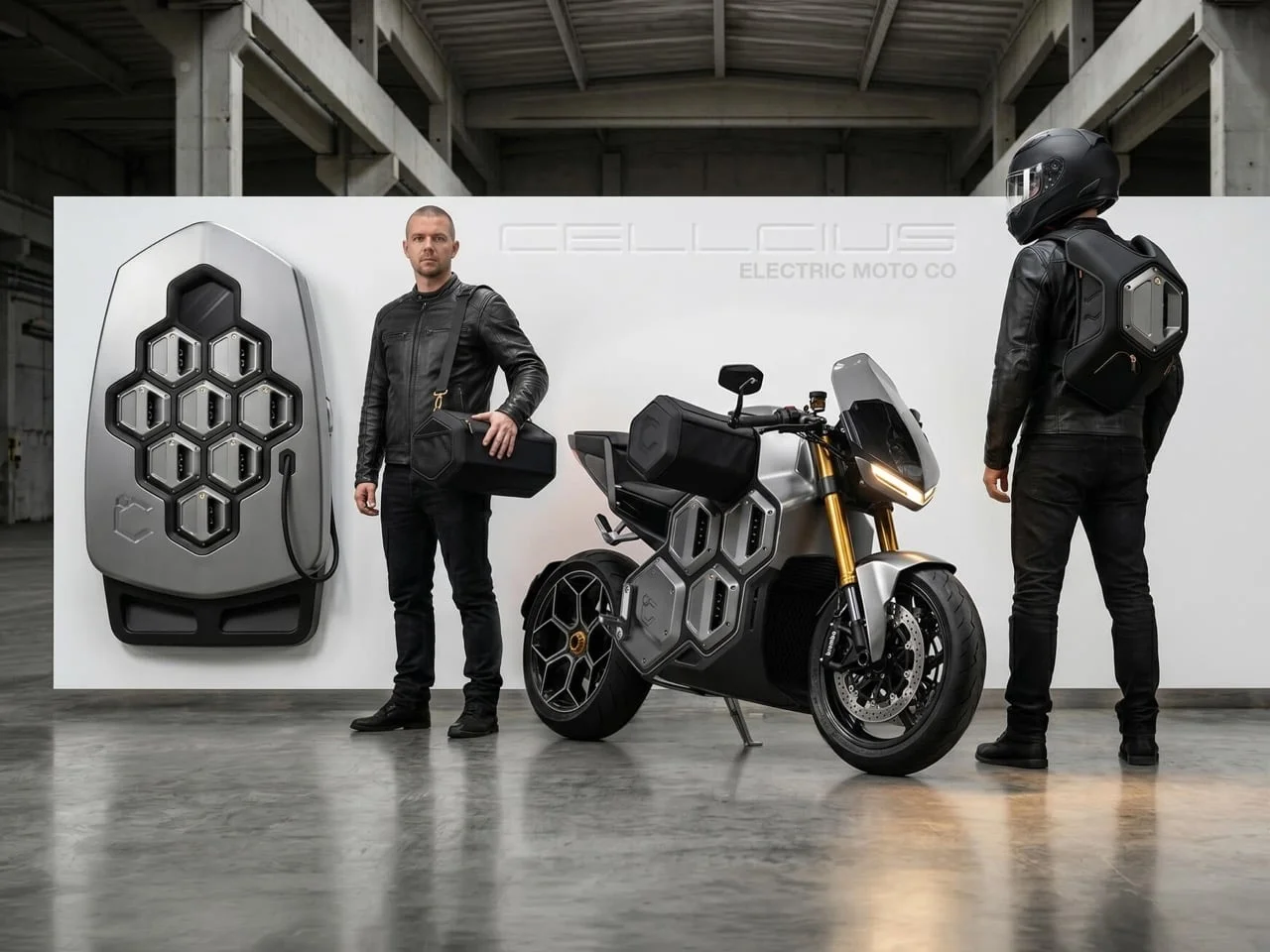
Charging is designed around swapping as well as plugging in. A wall-mounted smart dock can charge multiple cells, allowing riders to exchange depleted packs for charged ones. The idea addresses a familiar constraint for electric vehicle owners: access to convenient charging can depend on where a vehicle is parked, especially for people who can’t bring it close to a household outlet.
An ergonomic backpack is intended to make carrying cells into an apartment easier. Each pack weighs about 22 pounds, according to the stated figures, so the carry option is central to the practical case for removable batteries rather than a decorative accessory. Still, carrying several packs, storing them, and keeping them charged would add steps to ownership. If you're working in this space, that everyday routine is where modularity will either earn its keep or become an inconvenience.
A flush CCS port on the tank supports charging at standard public fast chargers, giving the concept another route when swapping isn’t practical. That dual approach is sensible on paper: a rider could use a dock at home and public charging while away. Here's the thing: the concept doesn’t specify charging times, so the convenience of either option can’t yet be judged against a real schedule.
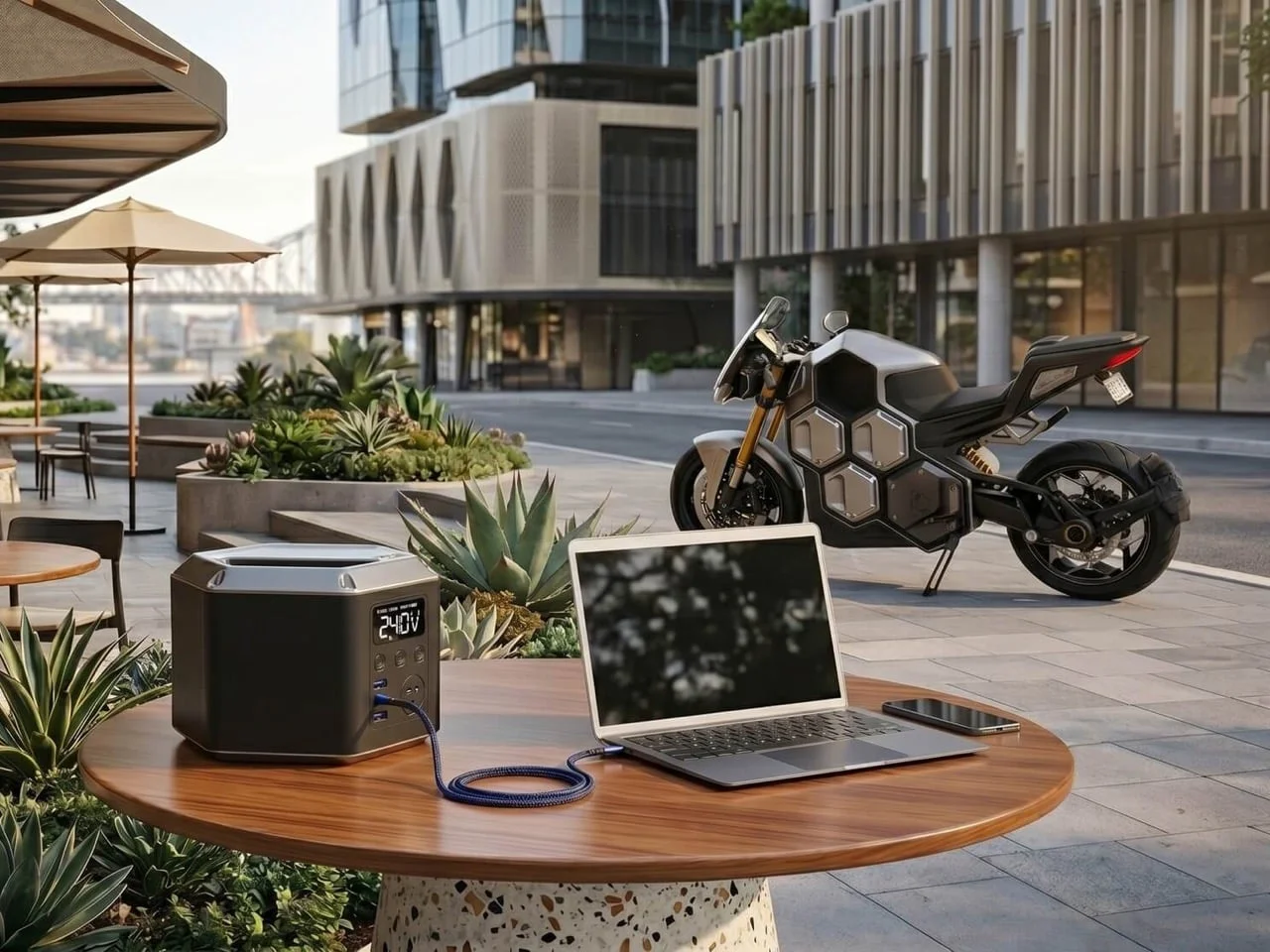
Empty battery bays can hold matching hexagonal duffel bags, keeping luggage within the bike’s outline. The concept also treats each cell as a portable power source, with AC and USB outlets for use away from the motorcycle. It’s a familiar idea from cordless tool batteries, extended to a vehicle platform that could support accessories such as luggage and standalone power stations. (And this is the part most people overlook: every extra use also raises expectations for how reliably the cells must work across different settings.)
A 5G-connected app is specified for RFID or PIN-based keyless access, over-the-air updates and firmware adjustments based on payload. Those features point to a broader system around the battery format, with software expected to account for the bike’s changing load. Yet the concept has yet to show how those pieces would work in a production model, or how much of the promised functionality depends on an active connection.
Cooling and drivetrain details
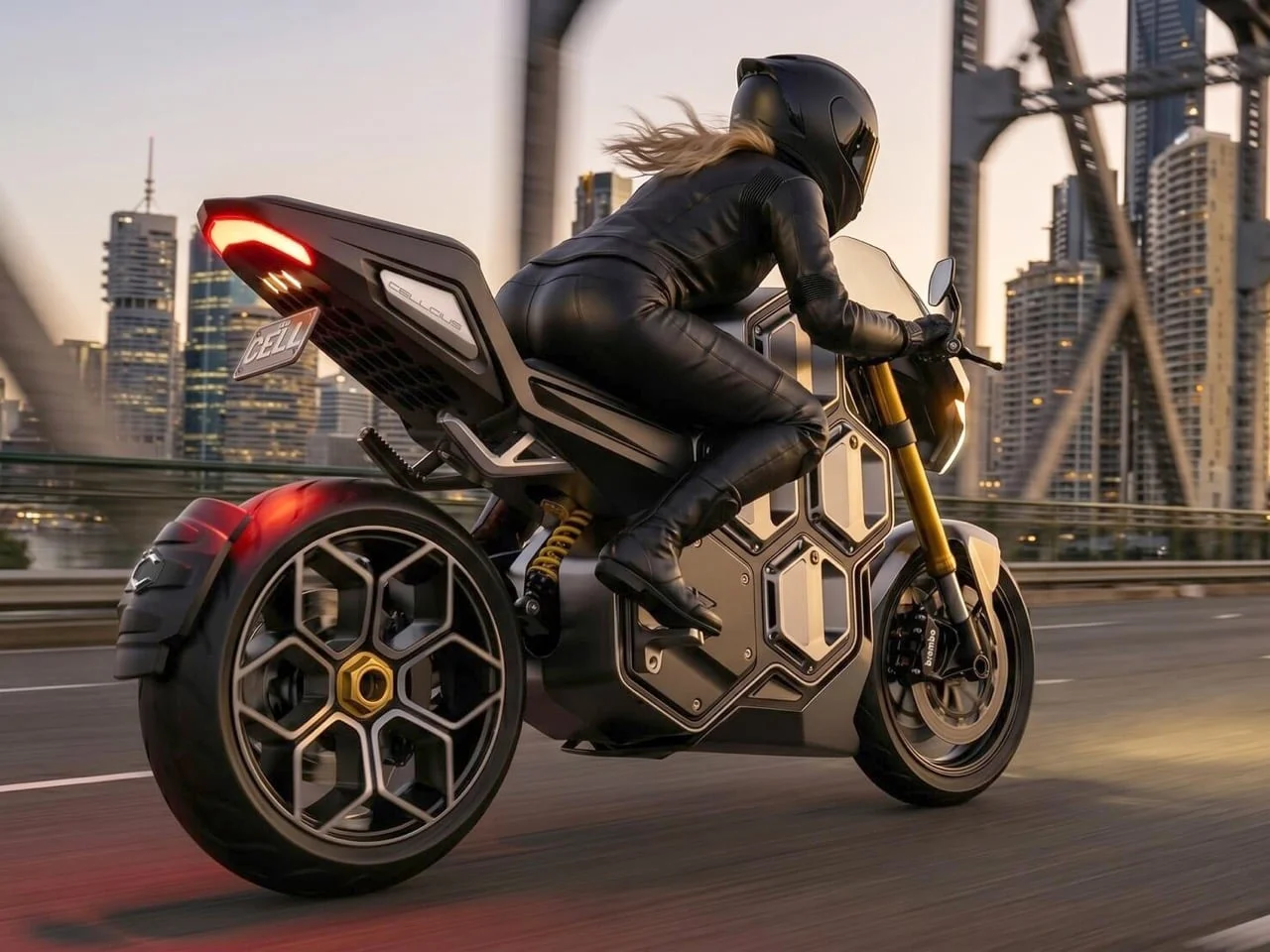
Clandestine says the C-01 uses front ram intakes and a low-pressure tail exhaust to draw heat away from the motor through a Venturi effect, reducing the need for heavy fans. The claim ties the bodywork to a functional job: airflow would help manage heat as the motor works. But a design description isn’t evidence of cooling performance under sustained use, and the concept hasn’t provided test results to settle that question.
A fully enclosed carbon shaft drive sends power to the rear wheel. Shaft drive has a long motorcycle history: BMW used it on the R32 in 1923. On the C-01, the enclosed layout also fits the clean, sculptural look of the design, while carbon points to an effort to keep the drivetrain light. The proposed hardware includes Brembo brakes and fully adjustable Öhlins suspension, recognizable components that signal performance intent, though the concept doesn’t establish how the complete package would behave on the road or track.
What the concept still has to prove
The concept received its award in a category introduced in 2025, which assesses early designs on form, function, feasibility and safety. That recognition places the C-01 among ideas judged for their promise at an early stage. It doesn’t answer the questions a buyer would ask about price, service, battery life, charging time, or how quickly cells can be removed and secured.
Its most persuasive idea is the way battery capacity becomes a rider-controlled choice, visible in the bike’s shape. A modular layout could make one motorcycle more adaptable to different trips and living situations, while portable cells could extend their usefulness beyond the ride. And yet, each benefit depends on a system that has to work together: the cells, dock, carrying gear, software, cooling, and chassis all need to support the same everyday use.
The C-01 remains an early-stage design without a price or showroom date. Its next test is showing that a modular battery system can deliver the convenience and performance its design promises. The concept is striking; the harder work is proving that its flexibility survives contact with ordinary ownership.
The post This Electric Superbike Wears Its Battery Like a Honeycomb first appeared on Yanko Design.

Discussion
Sign in to join the discussion.