Jinwook Lee’s 2021 Emotion Hanger shifts from a question mark to an exclamation point as you turn it, pairing a playful idea with unanswered practical questions.
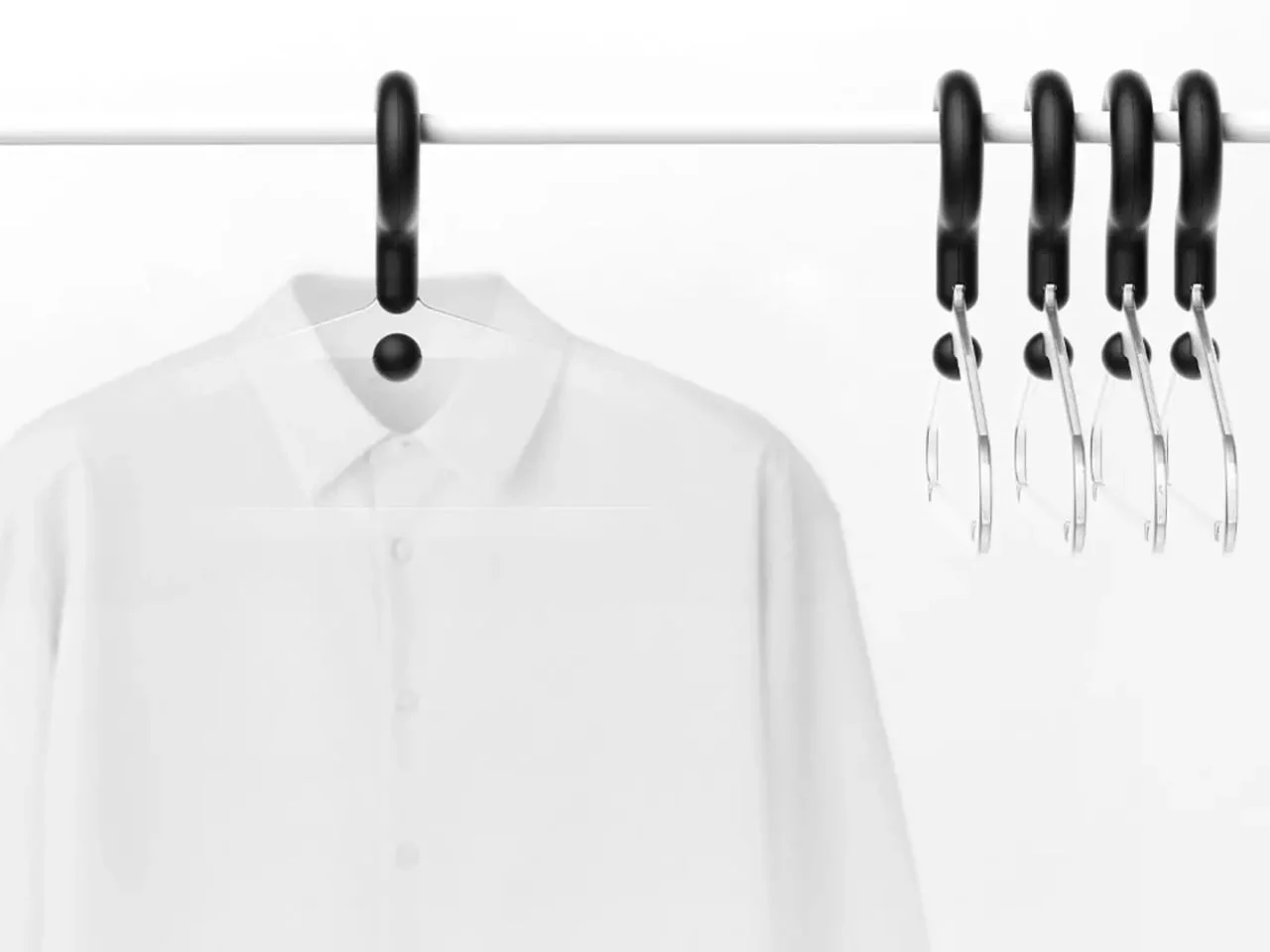
A familiar pause gets a visual punchline
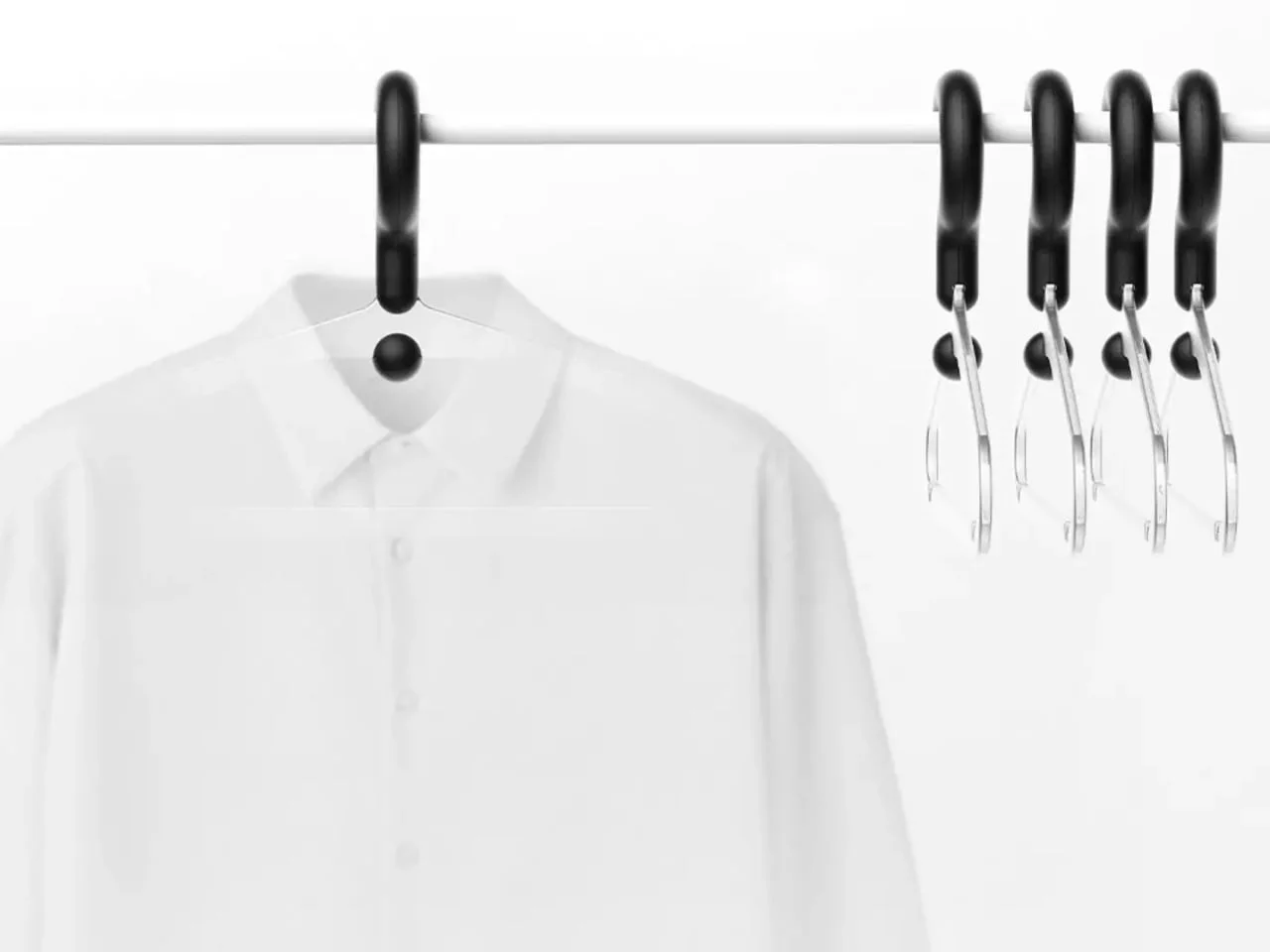
Jinwook Lee’s Emotion Hanger turns a small, familiar moment into a piece of visual theatre: the pause in front of a closet when you’re not sure what to wear. Its hook appears to shift from a question mark to an exclamation point as you turn the hanger to bring a garment forward. It won’t help you choose between two shirts, but it gives the indecision a small, wry payoff. That modest aim is the point.
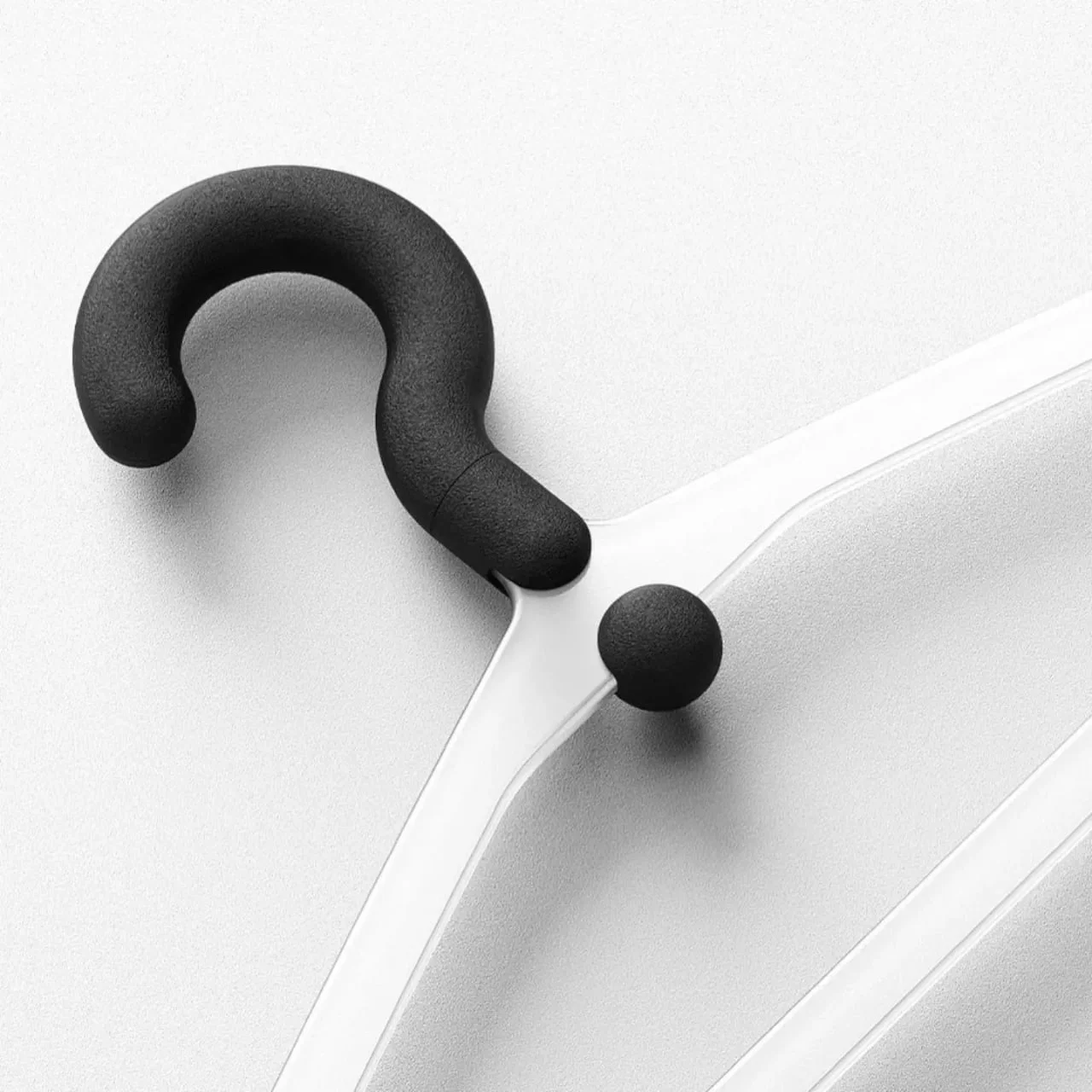
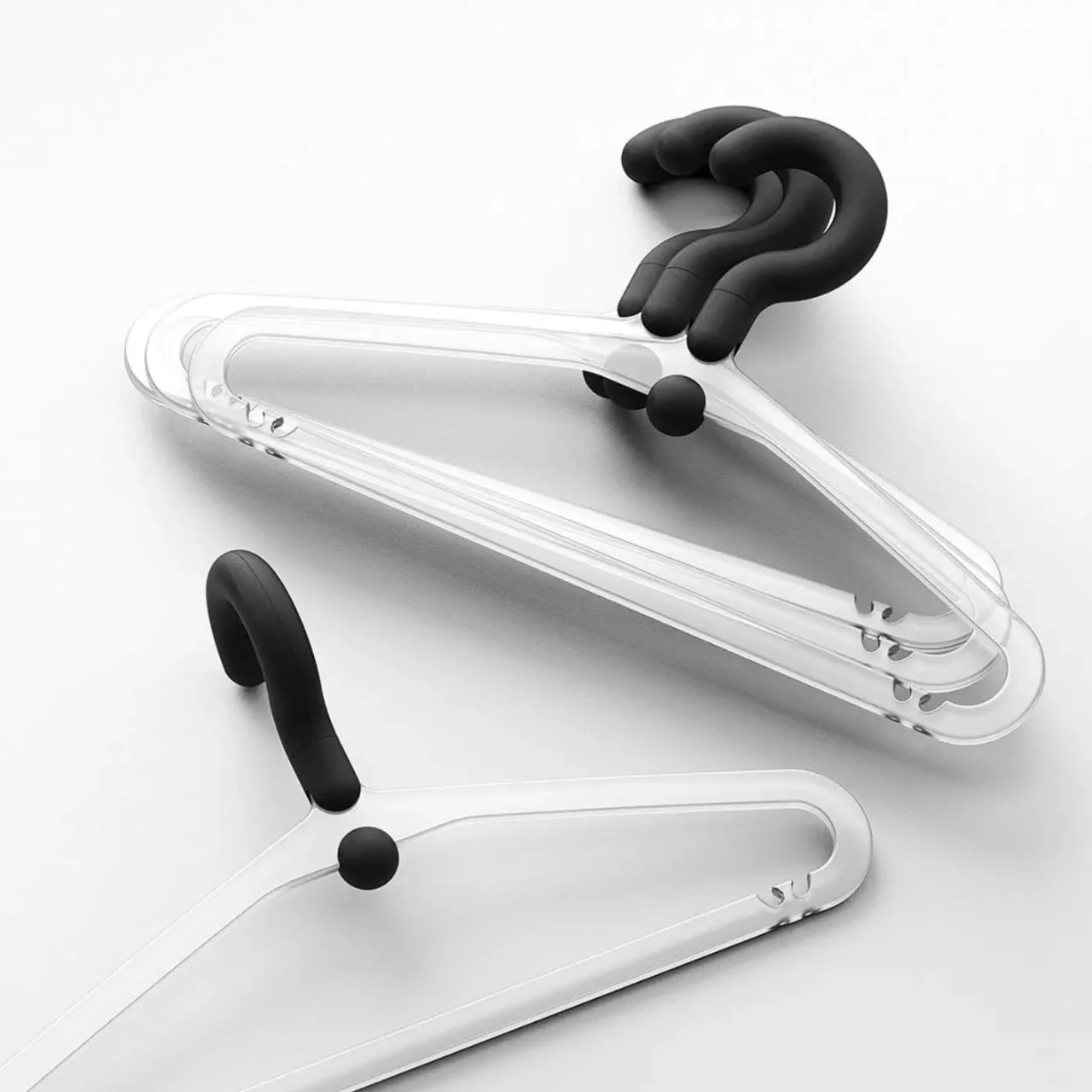
Presented in 2021, the houseware concept builds its identity around a thick, curved hook and a separate black dot. Seen one way, the two elements read as a question mark; change the hanger’s angle, and they suggest an exclamation point. Lee’s design takes an everyday object and gives it an emotional role, without adding a screen, instructions, or another task to the routine.
Designer: Jinwook Lee
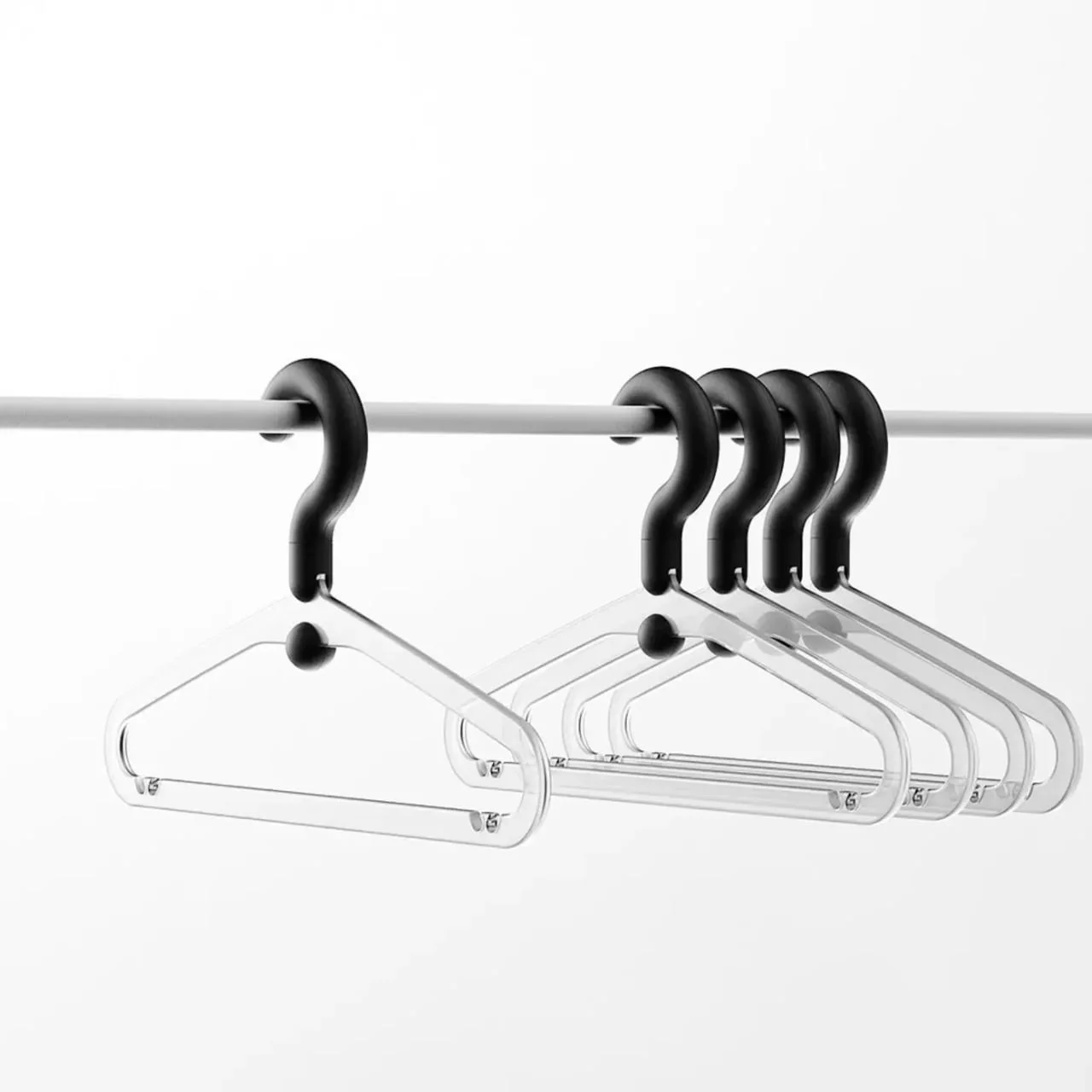
A change of view, not a moving hook
The effect comes from rotating the triangular hanger body. As the garment turns toward you, the hook’s orientation changes relative to the body, narrowing into a shape that reads as an exclamation point above the dot. The hook itself stays curved; the change is an illusion of perspective. That distinction matters because the concept’s mechanism is the same ordinary gesture you’d make to look through clothes on a rail.
A printed question mark could deliver a one-time visual gag, then sit quietly in the closet. Emotion instead ties its little reveal to the act of moving a garment forward. You don’t need to learn a new step or handle a special feature; the visual joke appears as part of choosing. Here’s the thing: that simplicity is also a useful test of the design. If the hanger needs careful positioning to make the punctuation legible, the interaction may be less natural in a crowded closet than it looks in a presentation.
The visual hierarchy is spare. A transparent body fades into the background, while the chunky black hook and round dot draw the eye. Small notches at the ends of the lower bar keep the outline recognizable as a conventional hanger, anchoring the visual trick in a familiar shape. The restrained palette helps the punctuation stay in focus, though it also means the concept depends heavily on the viewer reading the hook and dot as marks rather than as purely functional parts.
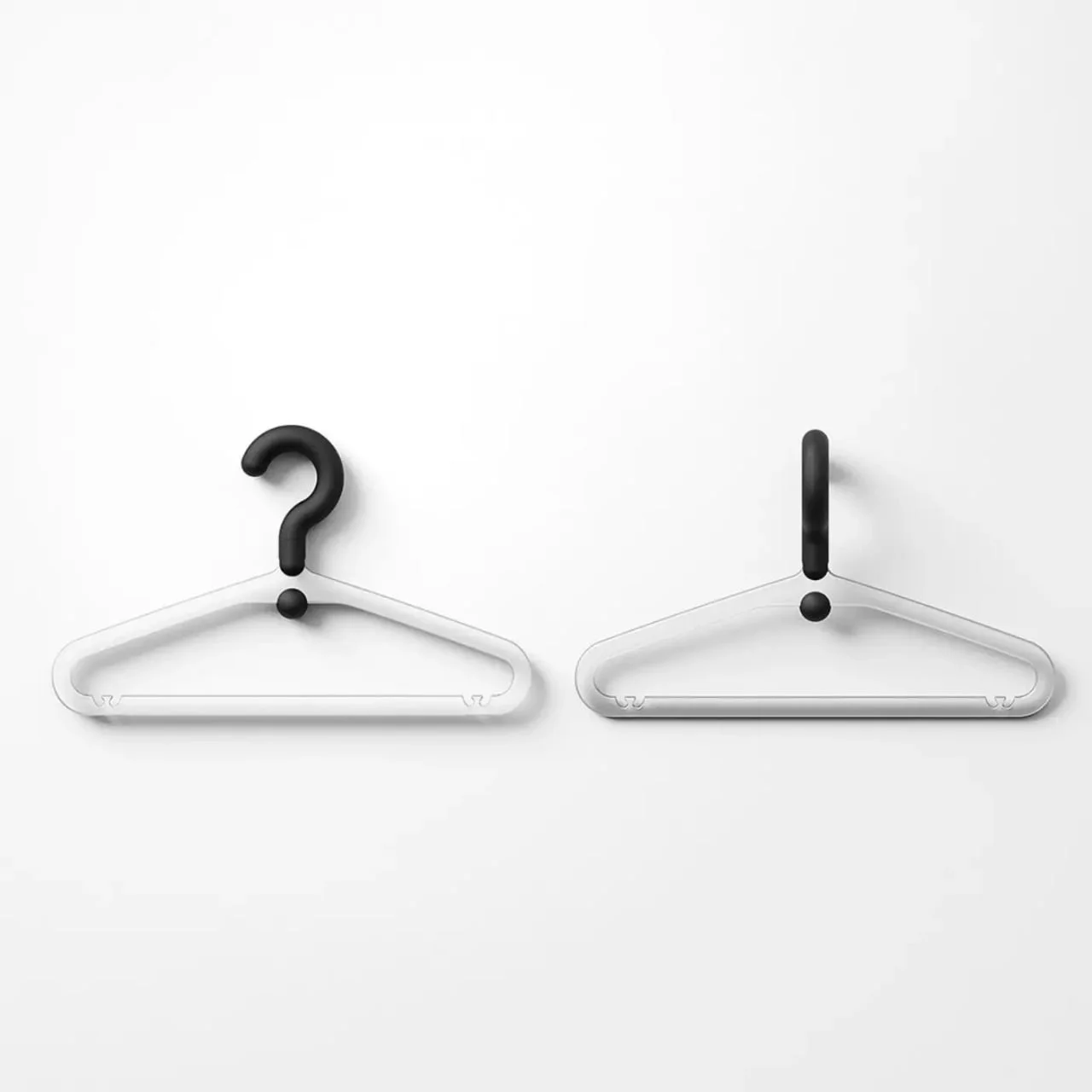
The idea is clearer than the product case
Emotion responds to the mood around a choice, not the choice itself. It can’t make a shirt more comfortable or tell you whether an outfit suits dinner. That modest ambition suits the design: the hanger acknowledges indecision without treating it as a problem that needs fixing. This is more significant than it looks. Many household objects are designed to disappear into routine; Emotion briefly makes that routine visible, then lets the user carry on.
Its humor is gentle, too. The question mark doesn’t make a joke of someone taking time to choose, and the exclamation point doesn’t insist the result must be exceptional. Even an everyday white shirt gets a moment in the spotlight. A small emotional response may be enough for a concept piece, especially when its premise is a change in how you see an object rather than a claim that the object will improve your wardrobe.
That said, whether the joke holds up through daily use is harder to tell. The concept presentation doesn’t establish how smoothly the body rotates with clothing on it, whether the movement feels controlled, or how its shoulders treat delicate fabrics. A hanger has a basic job: hold garments and let people take them down without fuss. If retrieving a jacket becomes awkward, the visual trick won’t carry much weight. And this is the part most people overlook: a small interaction gets repeated, so even a minor inconvenience can become more noticeable than a clever reveal.
What the presentation leaves unanswered
Lee’s project page presents a design concept, with no listed price, material details, or load rating. Those omissions leave practical questions about durability and performance unanswered, and make it difficult to judge Emotion as a closet purchase. The polished presentation makes it easy to imagine as a retail product, but appearance alone can’t show how it behaves with different garments or after repeated handling. For now, the object’s appeal is easier to assess as an idea than as a piece of equipment.
If you’re working in this space, the distinction is familiar: a strong interaction can make an ordinary object memorable, but its usefulness still depends on the object doing its basic job well. Emotion’s visual premise is clear enough to understand at a glance. The missing information sits elsewhere—in how the hanger is made, how much it can support, and whether turning it feels natural with clothes already on it. Those are ordinary questions, but they’re the ones that decide whether a design concept can earn a place in a real closet.

A small idea with a practical test ahead
Emotion’s clearest contribution is the shift in mood: a routine pause becomes a quick visual exchange with the object. That’s a narrow contribution, by design. The concept doesn’t promise better taste or faster decisions; it gives a commonplace choice a little character. Whether that character is enough to justify the hanger’s form will depend on details the presentation leaves open.
For now, the strongest case for Emotion is also its simplest. It recognizes that choosing clothes can be mundane, uncertain, and occasionally funny, then gives that moment a shape. A concept can make that point without resolving every product question. Still, the next step would have to prove that the hanger works as well as it reads. The punchline is there. The everyday test remains.
The post A Hanger’s Hidden Trick Turns a Question Into an Exclamation first appeared on Yanko Design.
Discussion
Sign in to join the discussion.