COVANI's leather-wrapped fan hides its grille behind a magnetic cover and wears like a shoulder bag. Looks are clear; airflow specs aren't.
A fan that wants to be a bag
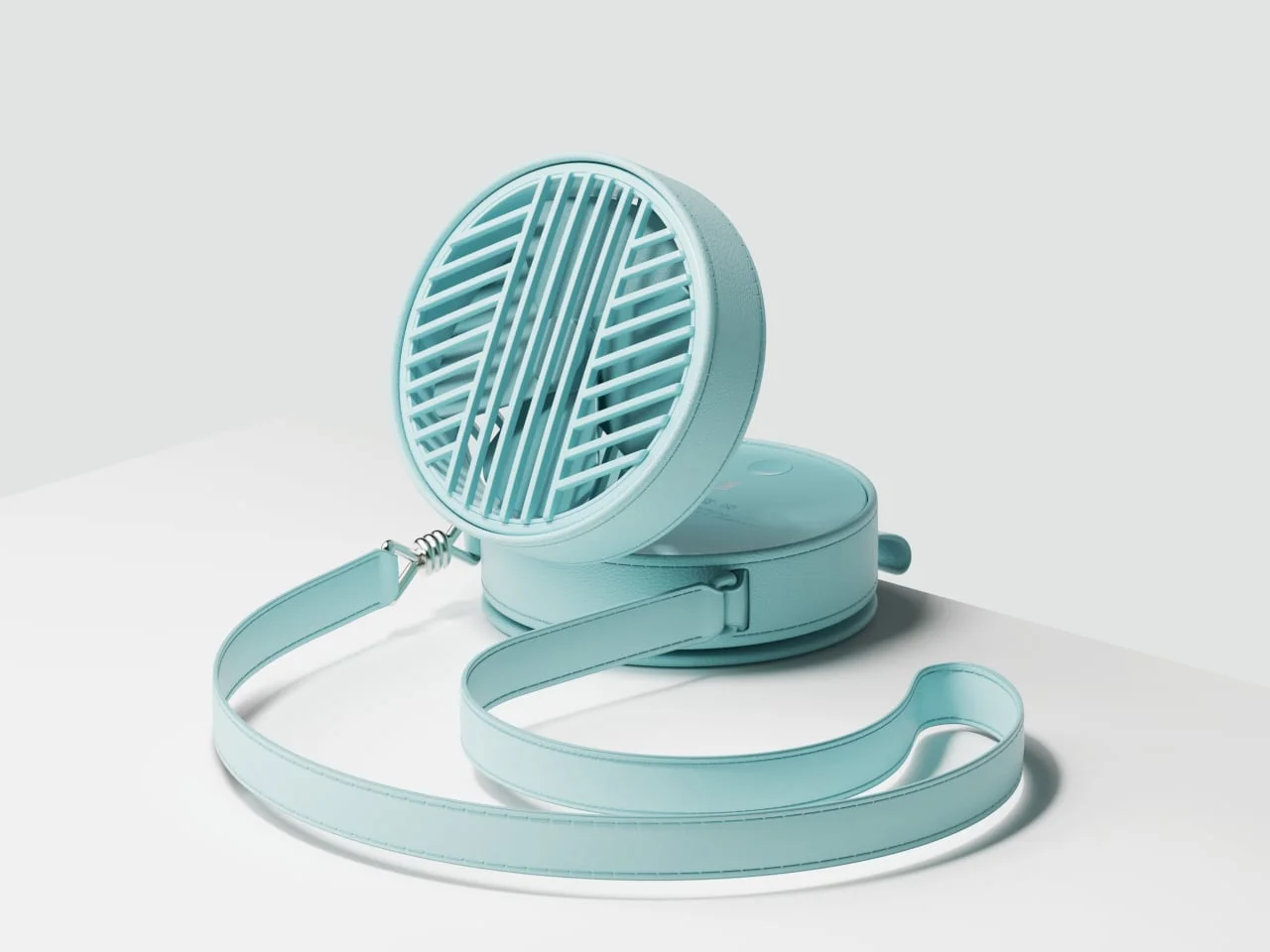
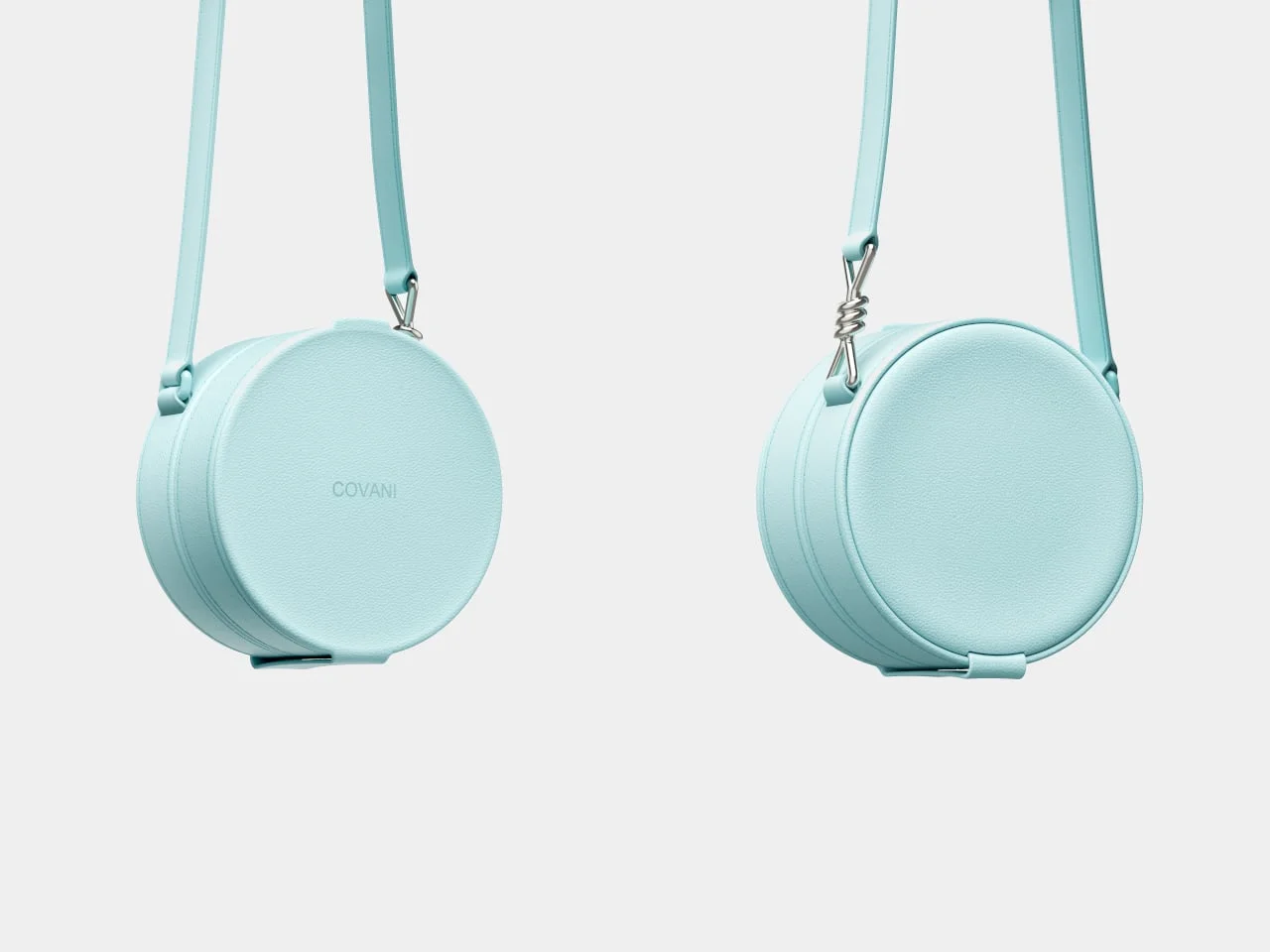
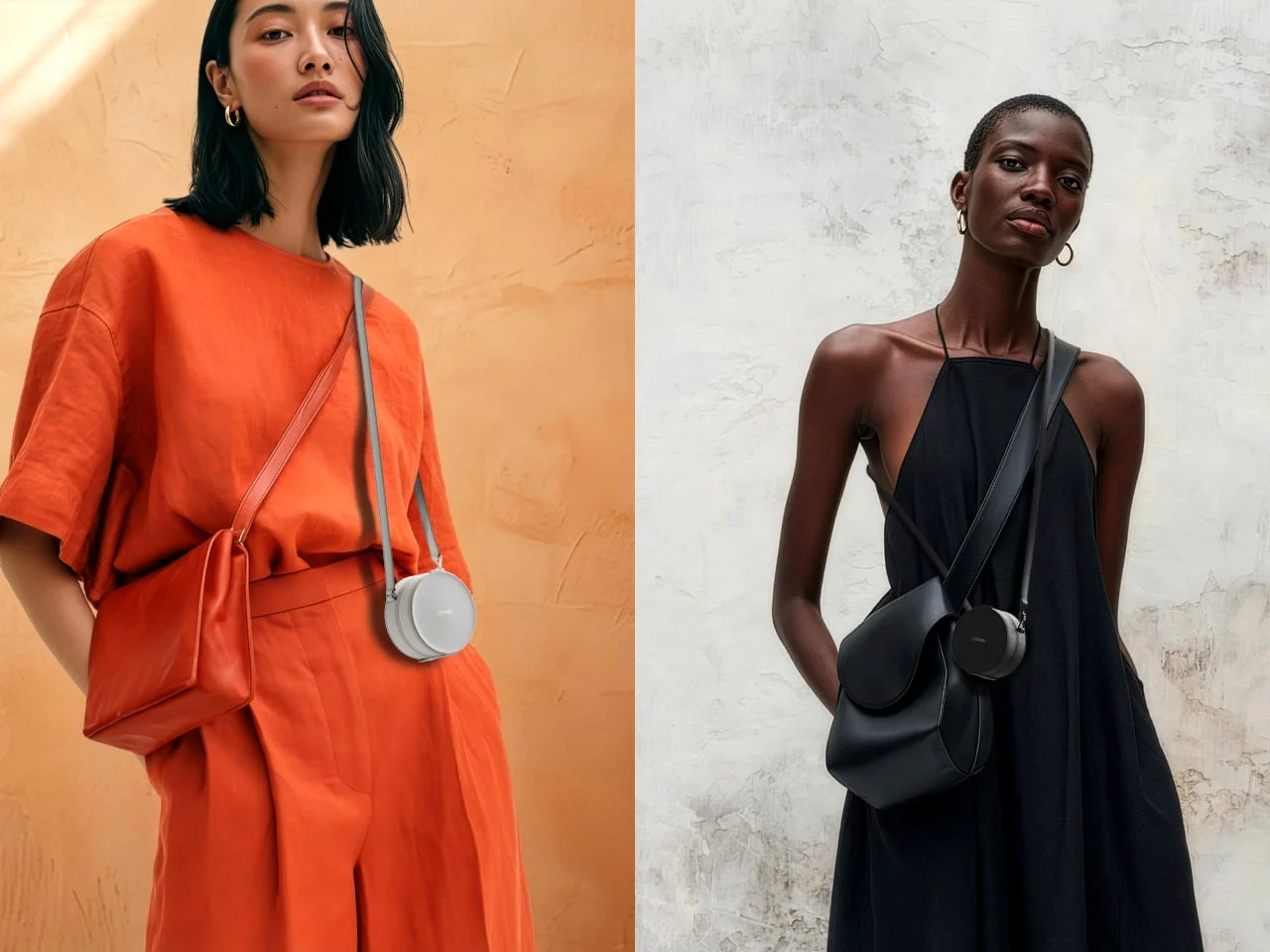
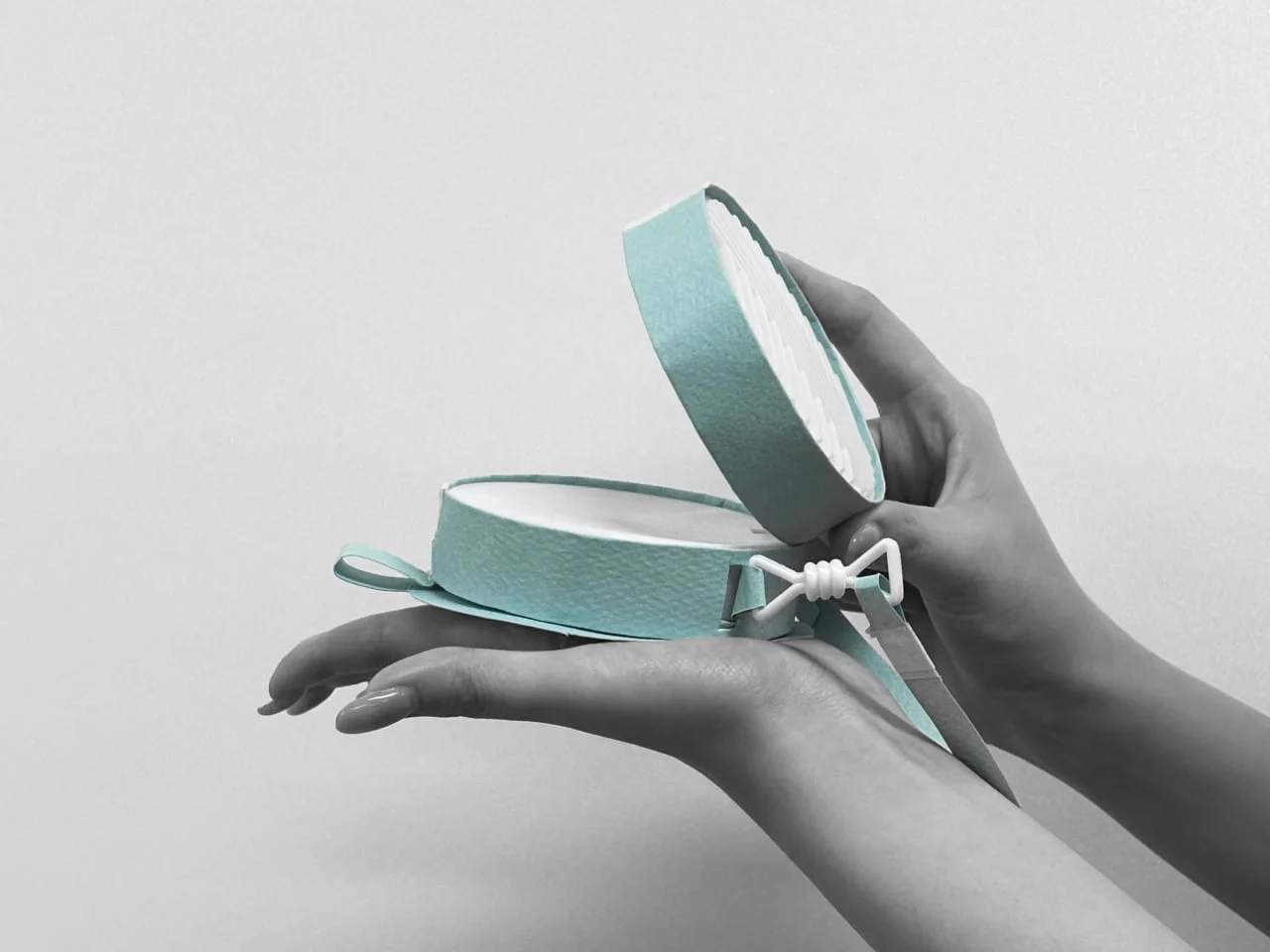
The handheld fan has always been the accessory people tolerate rather than love. COVANI's concept bets that a fan can pass for a deliberate fashion piece. Its round, leather-wrapped body hides the grille behind a magnetic cover, so what you carry looks like a shoulder bag instead of another gadget.
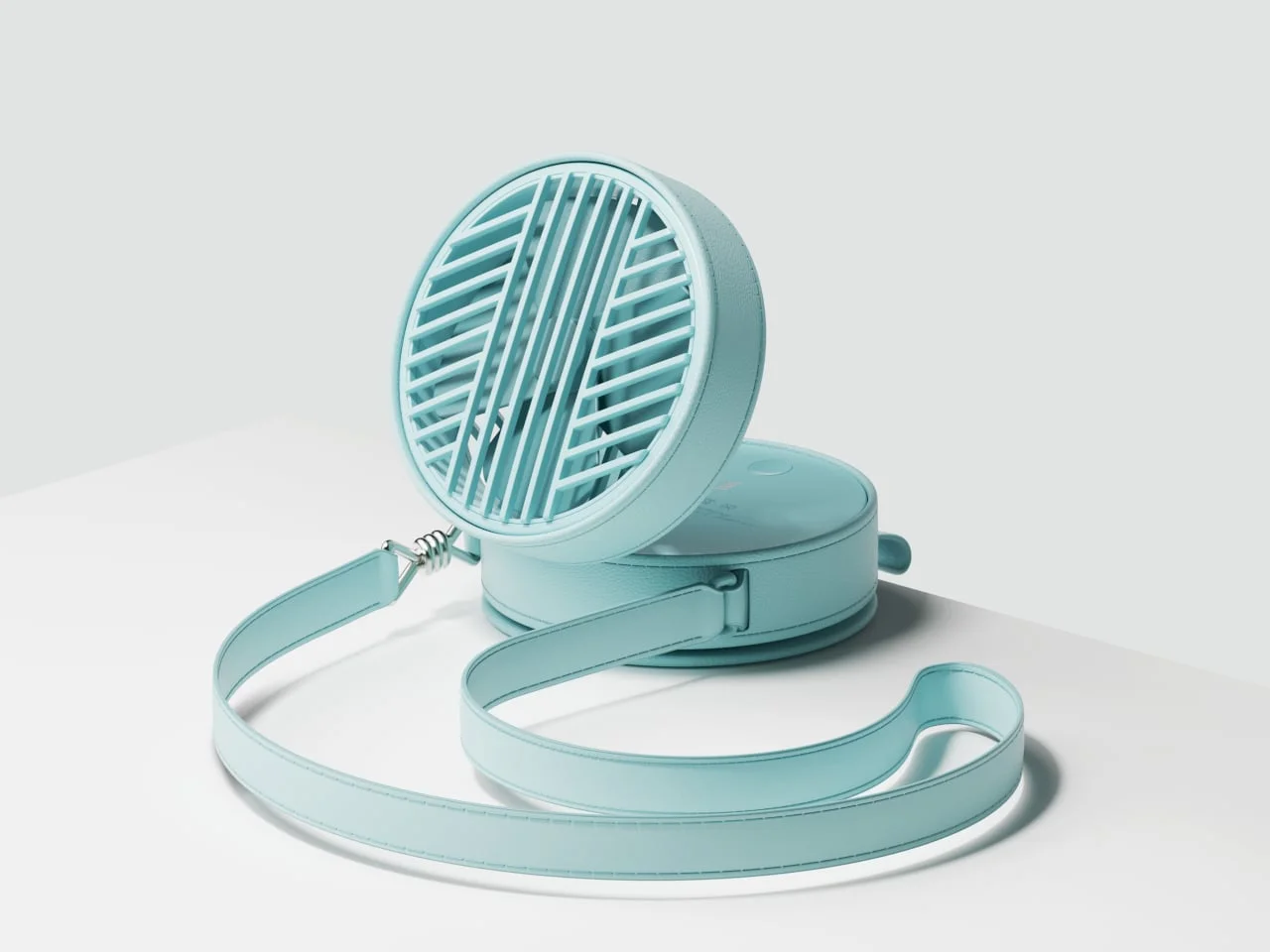
That's a smart bet, and a narrow one. Most handheld fans announce themselves with exposed blades and plastic housings, which turns them into something you buy for one hot weekend and then stash in a drawer. Here's the thing: people rarely object to the cooling itself. They object to looking like they're carrying a tool around just to get it.
Disguising a utility object as a fashion item is a familiar move in small consumer design. It tends to work best when the concealment costs nothing in function, and that's the question this concept has to answer.
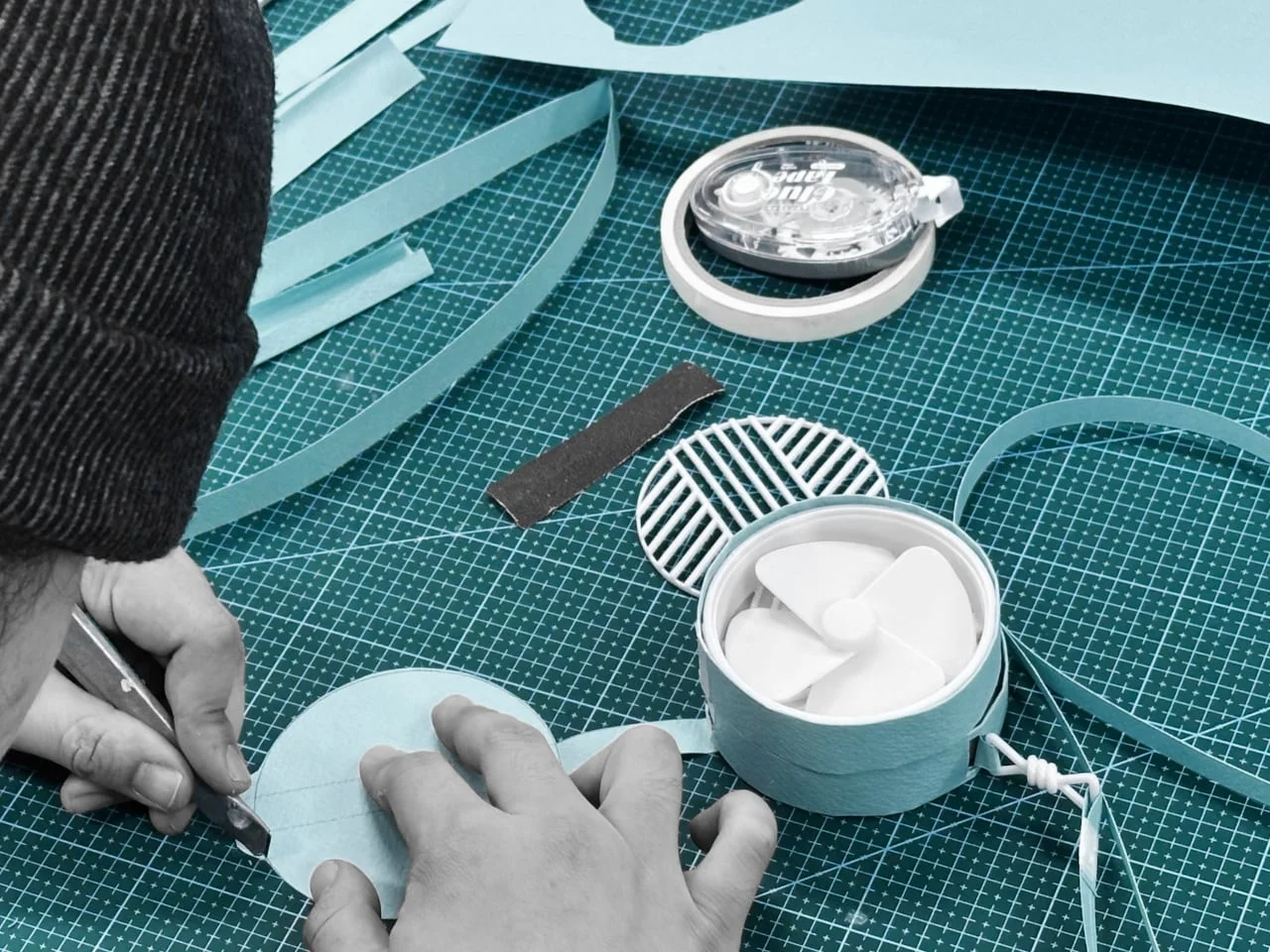
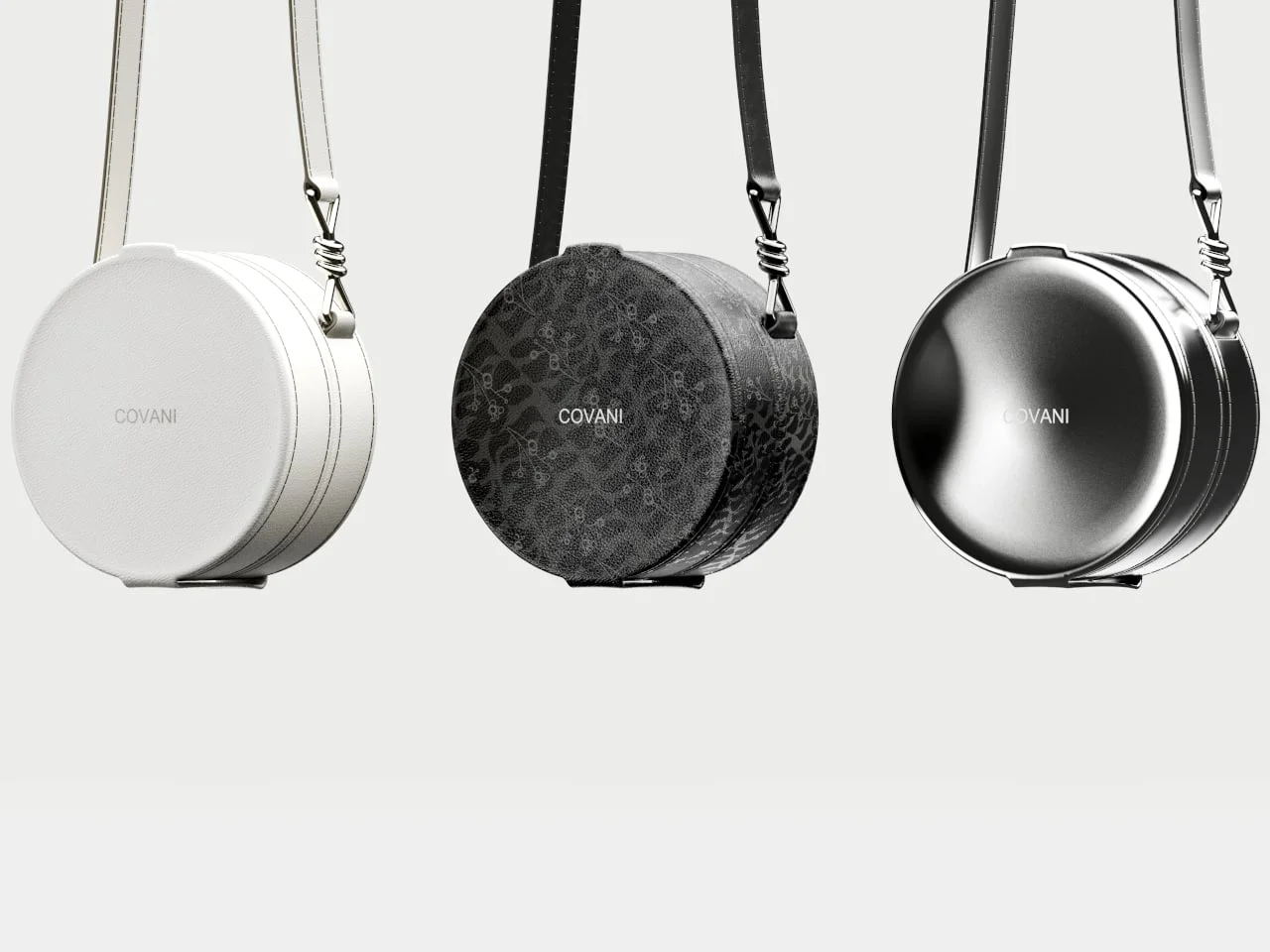
The disguise is more than leather wrapped over a conventional fan. The closed body presents a broad, uninterrupted front, with stitching following the rounded edges and a matching strap finishing the silhouette. The mechanics stay inside, so nothing competes with your clothes while you're moving between shops or stepping into an air-conditioned restaurant. That last point is easy to skim past. A fan that looks like a bag doesn't announce itself in a restaurant or on a train platform, and those are the places where people tend to feel self-conscious about carrying gadgets. I'd argue the design is aimed less at the person holding the fan than at the people sitting nearby.
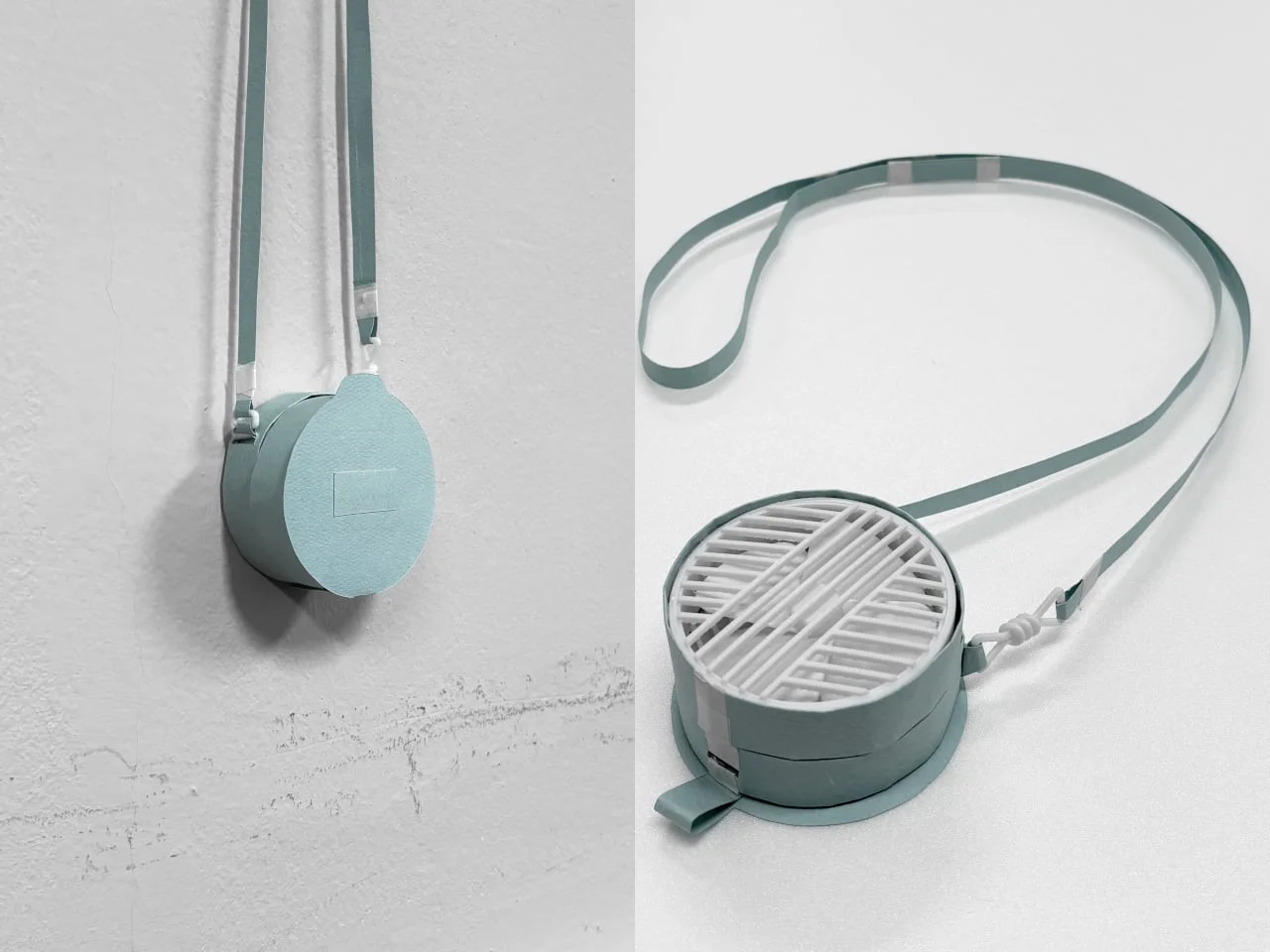
Designer: Taemin Lee. Lee's portfolio is the place to see how this concept fits into a broader body of work. The images show a concept, and nothing in the presentation points to a shipping product, so treat this as a design study rather than something you can buy.
The strap and the hands-free question
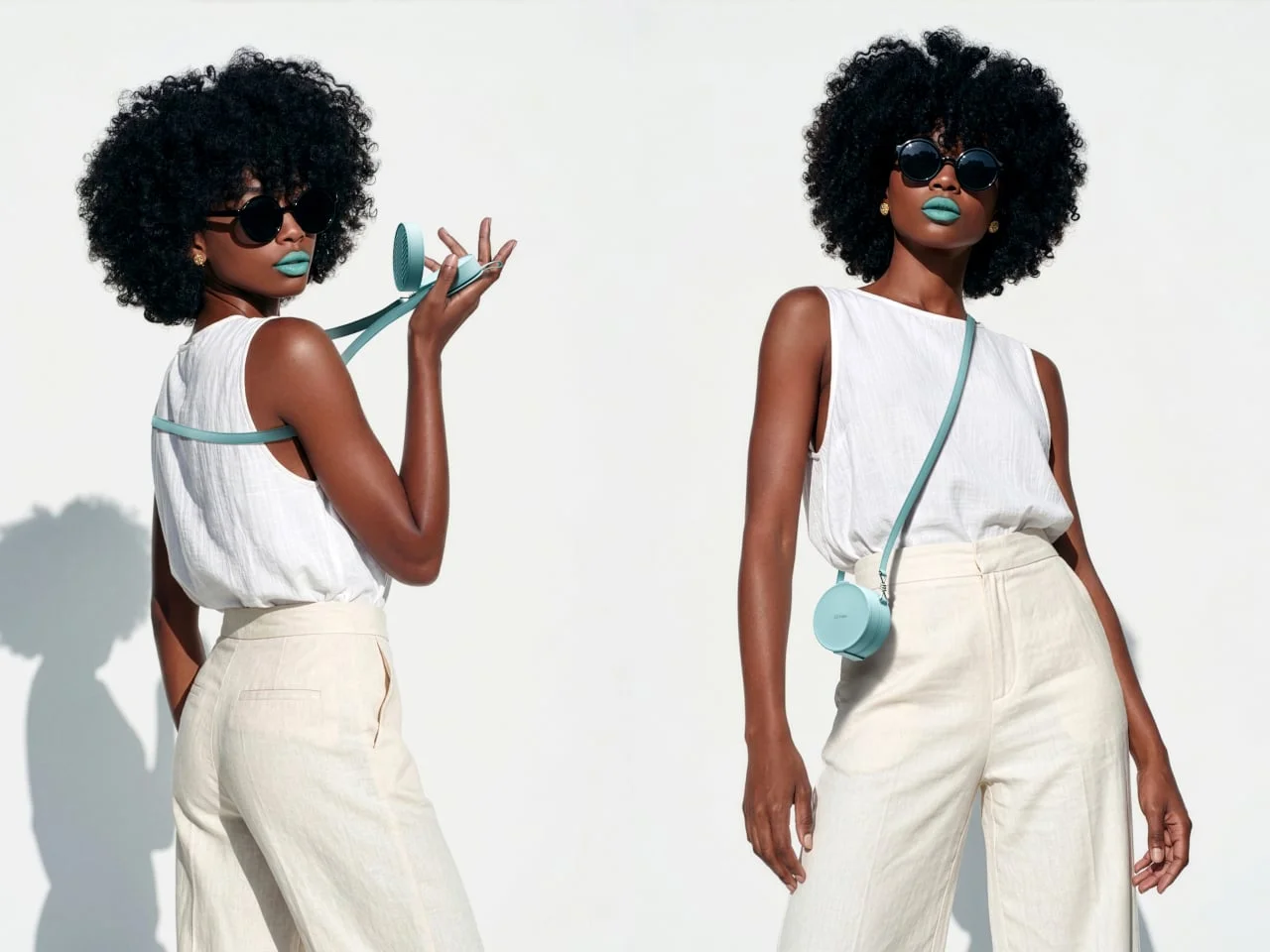
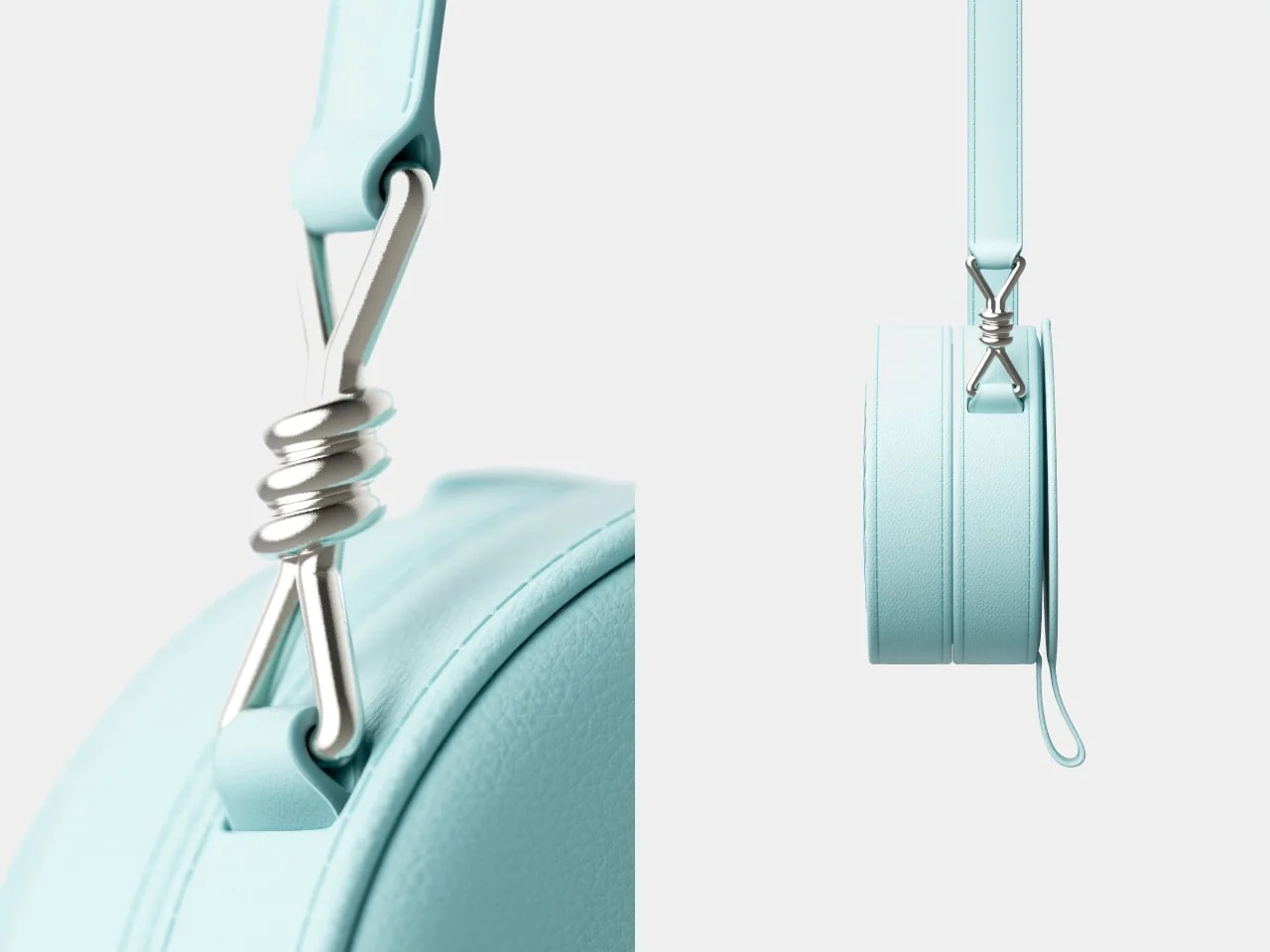
The strap hardware gets its own attention. A polished metal connector shaped like a knotted cord adds a jewelry-like touch to the restrained body. Worn across the torso, the fan could leave both hands free between cooling breaks. But the bag resemblance is about looks. It doesn't promise storage for your phone, keys, and wallet.
That gap matters more than it sounds. If you're used to carrying a bag, you'll still carry a bag, which means the fan becomes a second item in the same outfit rather than a replacement for the first. Wearing it across the torso also keeps it within reach, and that's an advantage I'd take over a fan buried in a purse.
When the heat hits, the routine is short. Open the magnetic front cover and secure it against the back, then tilt the fan unit away from the body on its hinge. That gap is what lets air move through. The leather doesn't do the breathing for the blades, and that distinction matters more than the disguise itself.
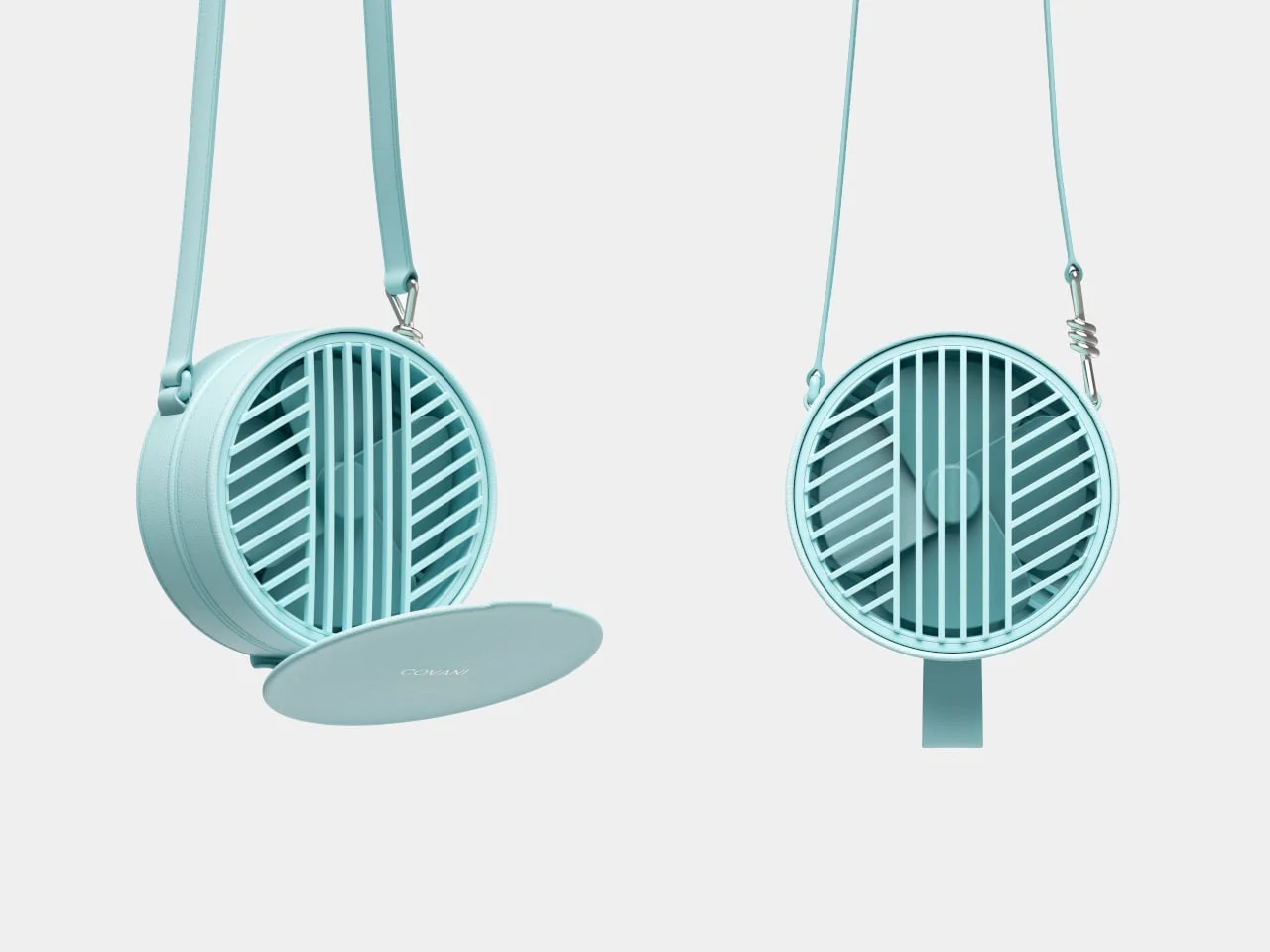
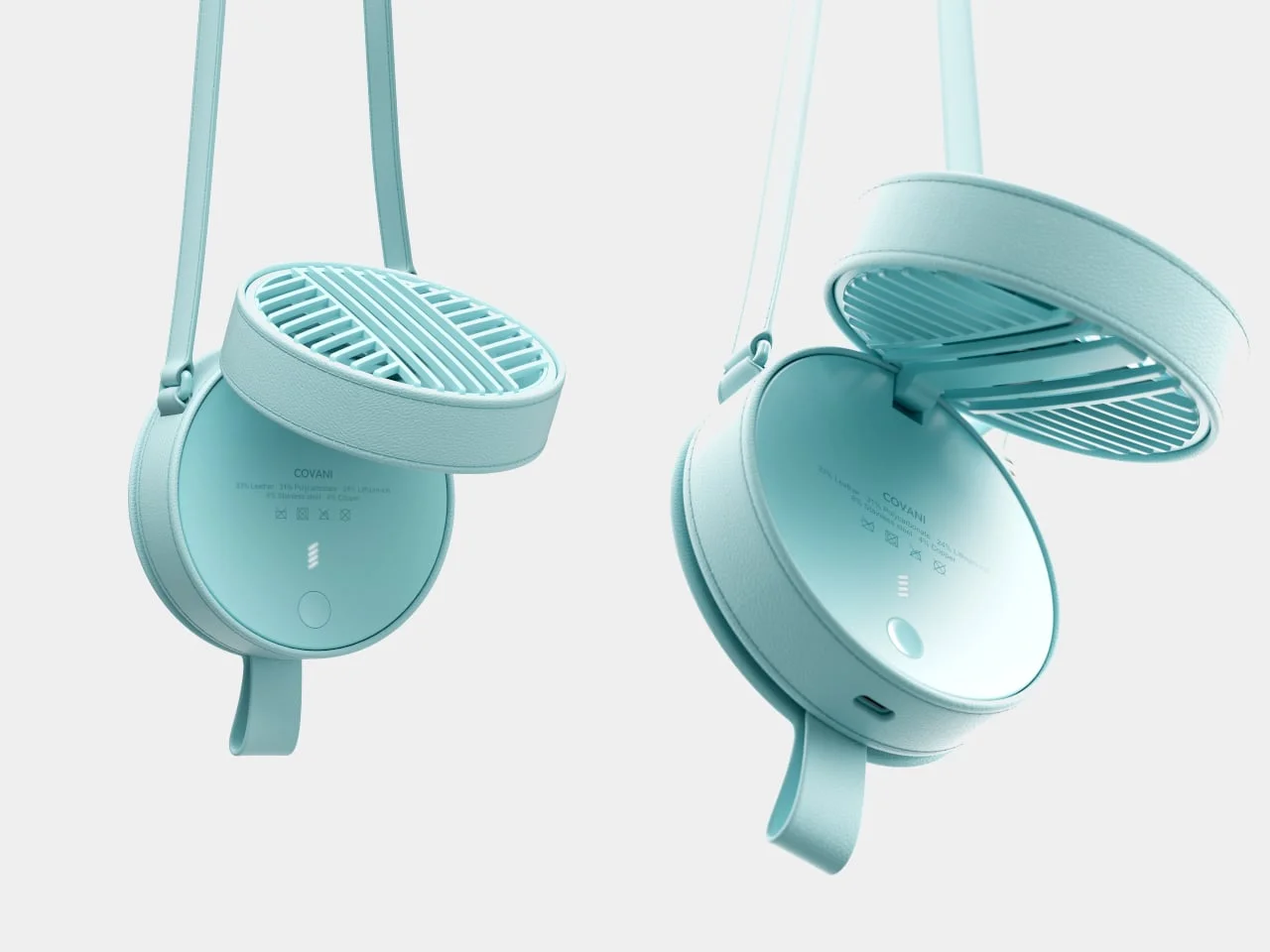
Think about this for a second. Any cover that hides a grille is also a cover that can block one, so the hinge and the magnetic latch are doing real work. That's the design tension at the core of the concept. The closed look wants to be solid, while the fan needs open space to function, and the only thing reconciling the two is how far the front cover swings.
Using it in the open
Once open, the fan works in your hand or on a table. Lift it toward your face while you wait outside, or rest the lower body on a café table and angle the fan upward. That frees your hands for a drink or a book, with no separate stand needed.
The table trick is more useful than it sounds. Most personal fans assume you're holding them the whole time, so a fan that can sit on a surface and keep working is a small but real shift in how the object gets used. If you tend to eat or work outdoors, that's the scenario to test first.
Opening the body reveals a circular button and a small stack of illuminated bars, so the controls stay hidden while you wear it. A small port sits along the lower edge. These details pull the concept back toward gadget territory, though the presentation gives no runtime, charging speed, or airflow figures. The fashion treatment tells you how you'd carry it, not how hard it would blow.
That's the gap I'd press on. A hidden control is elegant until you need to change speed in a hurry, and a row of bars is only useful if it tells you something meaningful. Elegant on paper. Hard to judge without numbers, and the concept doesn't supply any.
Finishes and folding back up
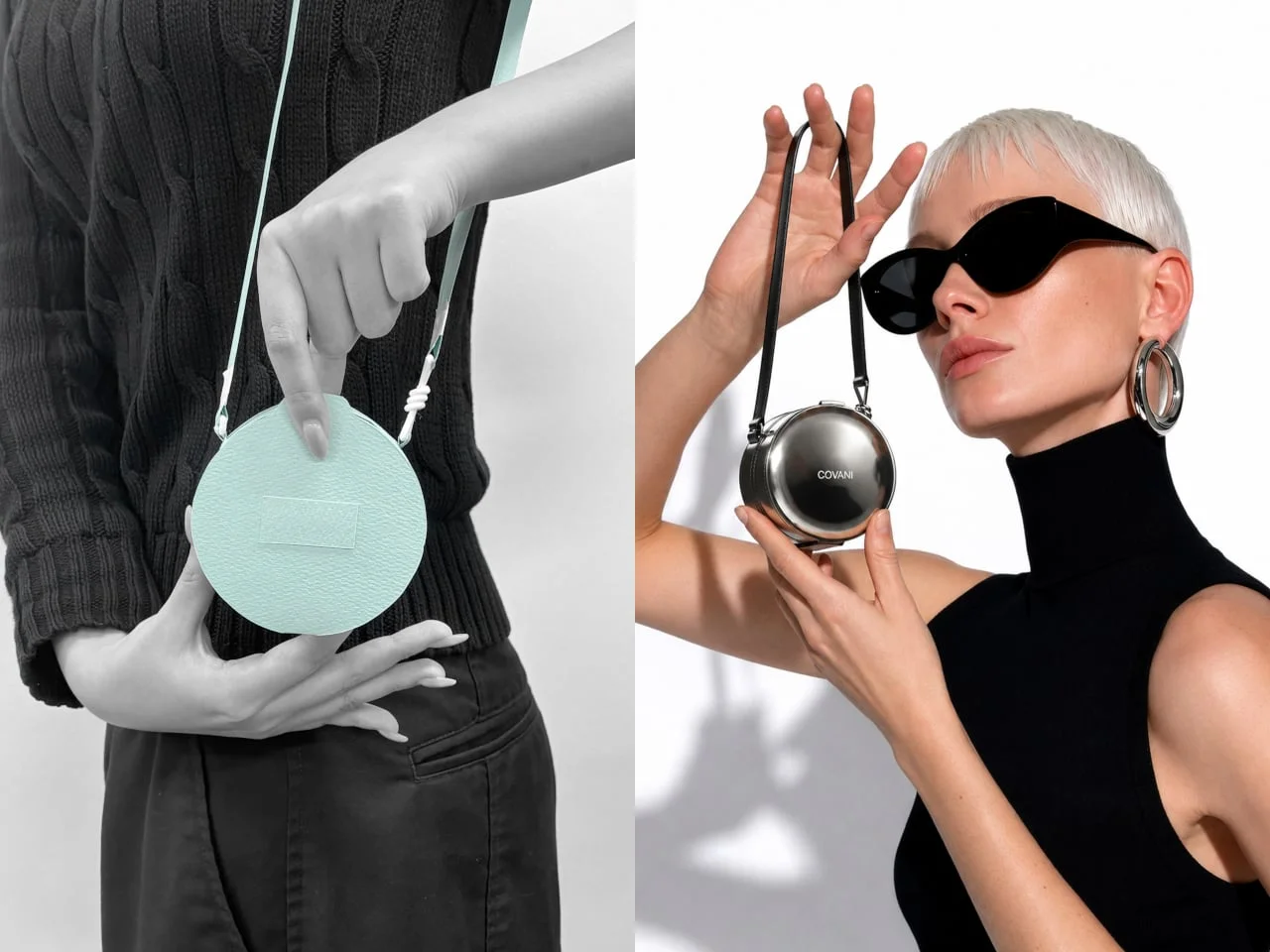
The round form accommodates different moods. Alongside mint-colored leather, the concept includes a pale version, a dark patterned finish, and a reflective metallic treatment. The silhouette stays the same across all of them. The shiny option leans toward statement jewelry, while the quieter finishes would sit more easily beside everyday clothes and a separate bag.
Finish choice is where a concept like this either becomes a product or stays a sketch. Leather is forgiving on the surface but shows handling over time, a patterned finish tends to hide wear better, and metallic coatings are often the hardest to keep clean. None of that appears in the presentation, so read the finishes as styling choices rather than durability claims.
Putting it away means folding the fan down and returning the cover to the front, rather than hunting for a pocket. That's more steps than grabbing a bare handheld fan, no argument there. Still, once the breeze isn't needed, it can hang with your other accessories instead of riding around as an awkward piece of summer equipment. My read is that the disguise works best for people who already carry a bag and want the fan to look like part of the outfit.
Here's where I'd push back a little. Looking like a bag is only useful if the disguise doesn't make the fan worse at its job, and the concept hasn't shown that yet. If the cover and hinge limit airflow, the fashion case falls apart quickly.
What this says about wearable cooling
The more interesting question is whether concepts like this change how people think about personal cooling. For years the default has been function first, with the look left to whatever the manufacturer had time to add. COVANI is betting the opposite, that the carrying experience matters as much as the blades, and that's a reasonable instinct for anything people take into public spaces.
If you're working in product design or accessories, this is a useful test case. The question isn't whether a fan can look like a handbag. It's whether the disguise survives contact with real use: heat, sweat, pockets, and the habit of tossing things onto a table. Those are the conditions where a beautiful object usually reveals its compromises.
And yet the core idea has legs. People already accept that a watch, a pair of sunglasses, or a bag can carry a functional purpose without looking like a tool. A fan that gets the same treatment would sit comfortably in that category, provided it can keep its promises once the leather is on. That's the part still missing, and it's the part worth watching.
Discussion
Sign in to join the discussion.