A concept wearable from Korean designers combines heat and micro-vibration in a skin-toned patch aimed at period cramps and athletes' muscle fatigue.
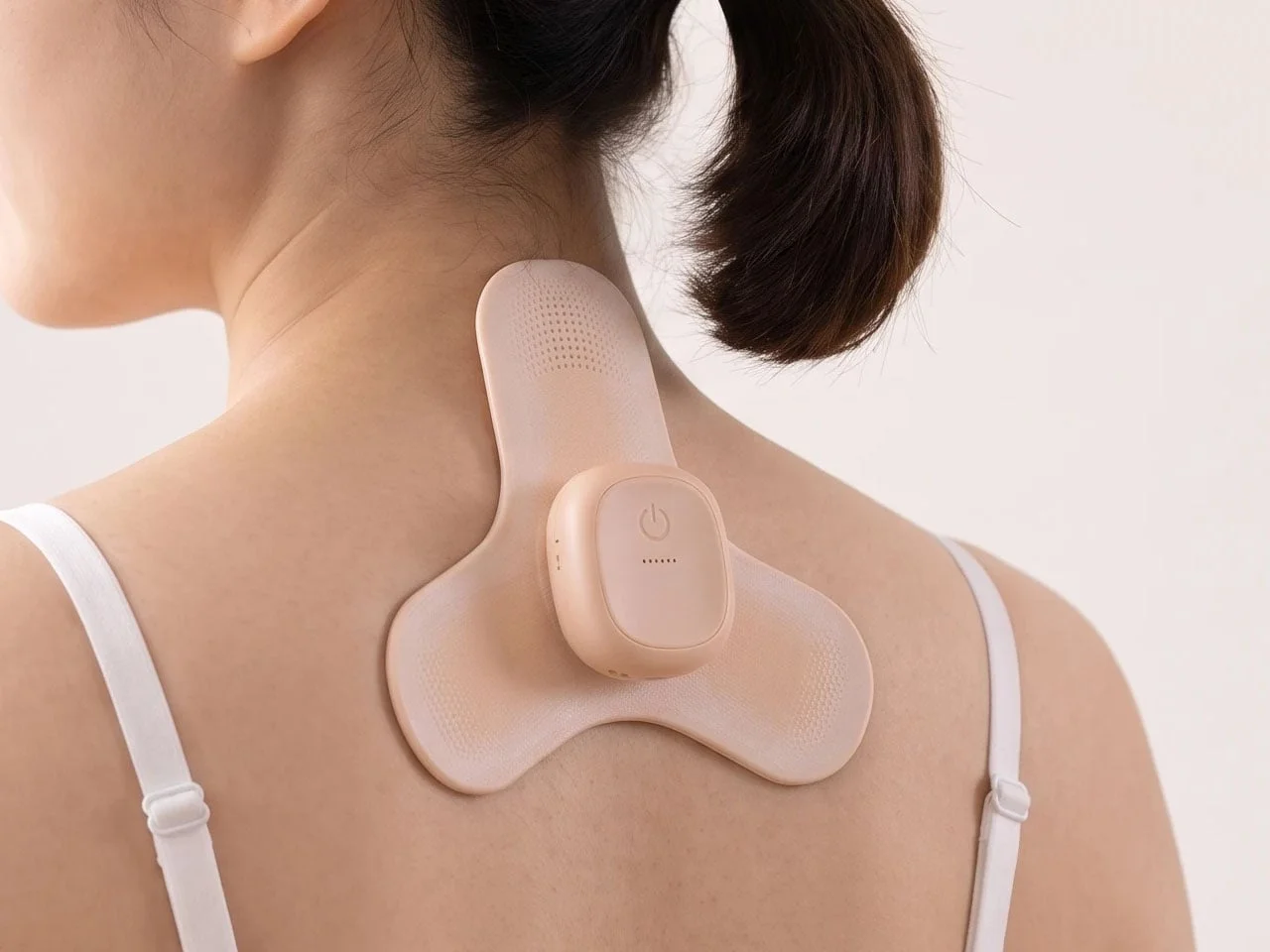
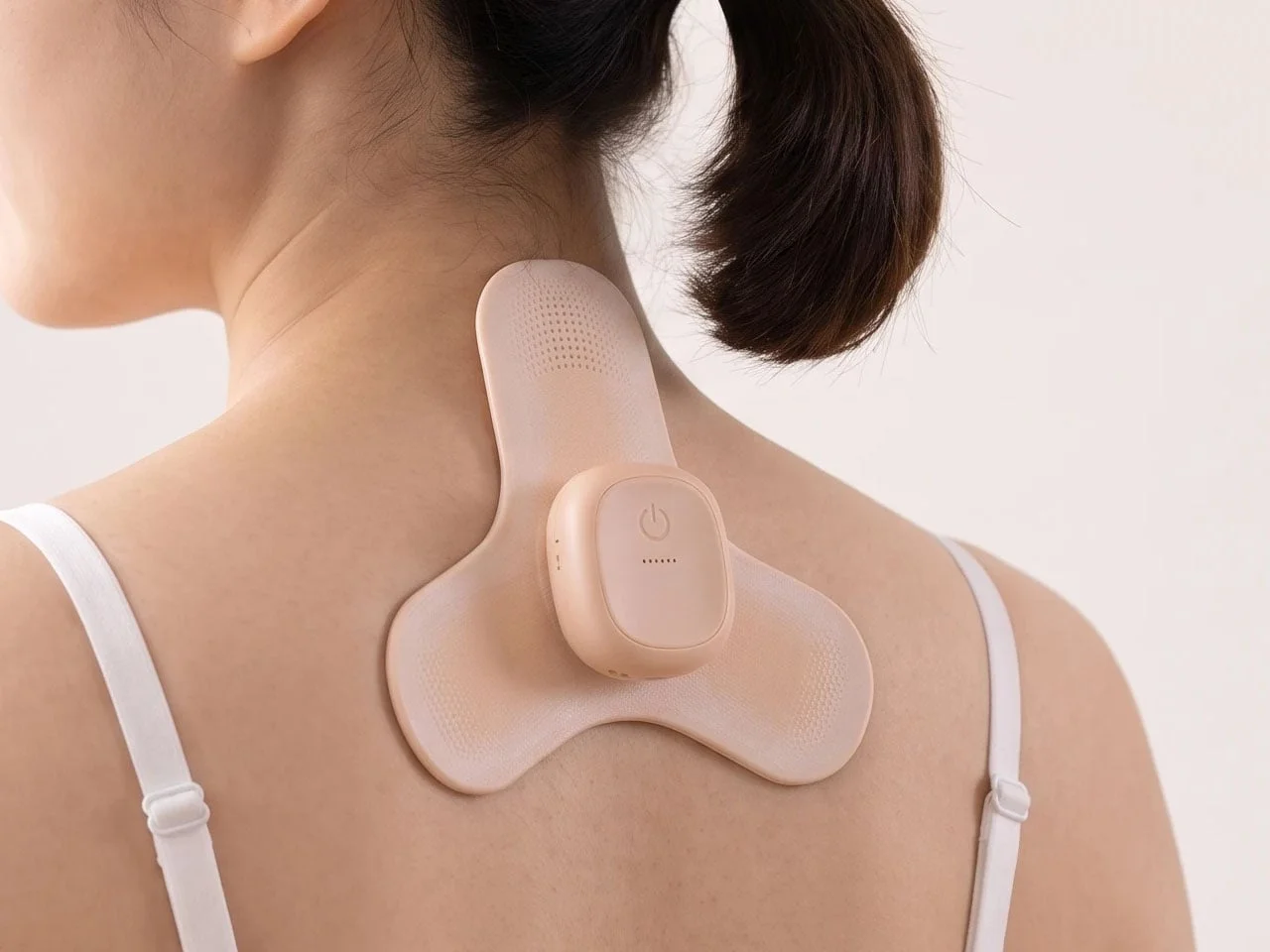
Most heat aids treat menstrual cramps as a warmth problem. That's the default logic: cramps hurt, heat feels good, so a heating pad becomes the answer. BODYLUV, a concept from Korean designers Keetae Kim, Wonjae Lee, and superkomma, treats cramps as a muscle problem too, and that shift in framing is what makes it worth a closer look. If you've spent a bad day curled around a heating pad, you already know how far warmth alone gets you.
Heat and vibration on one patch
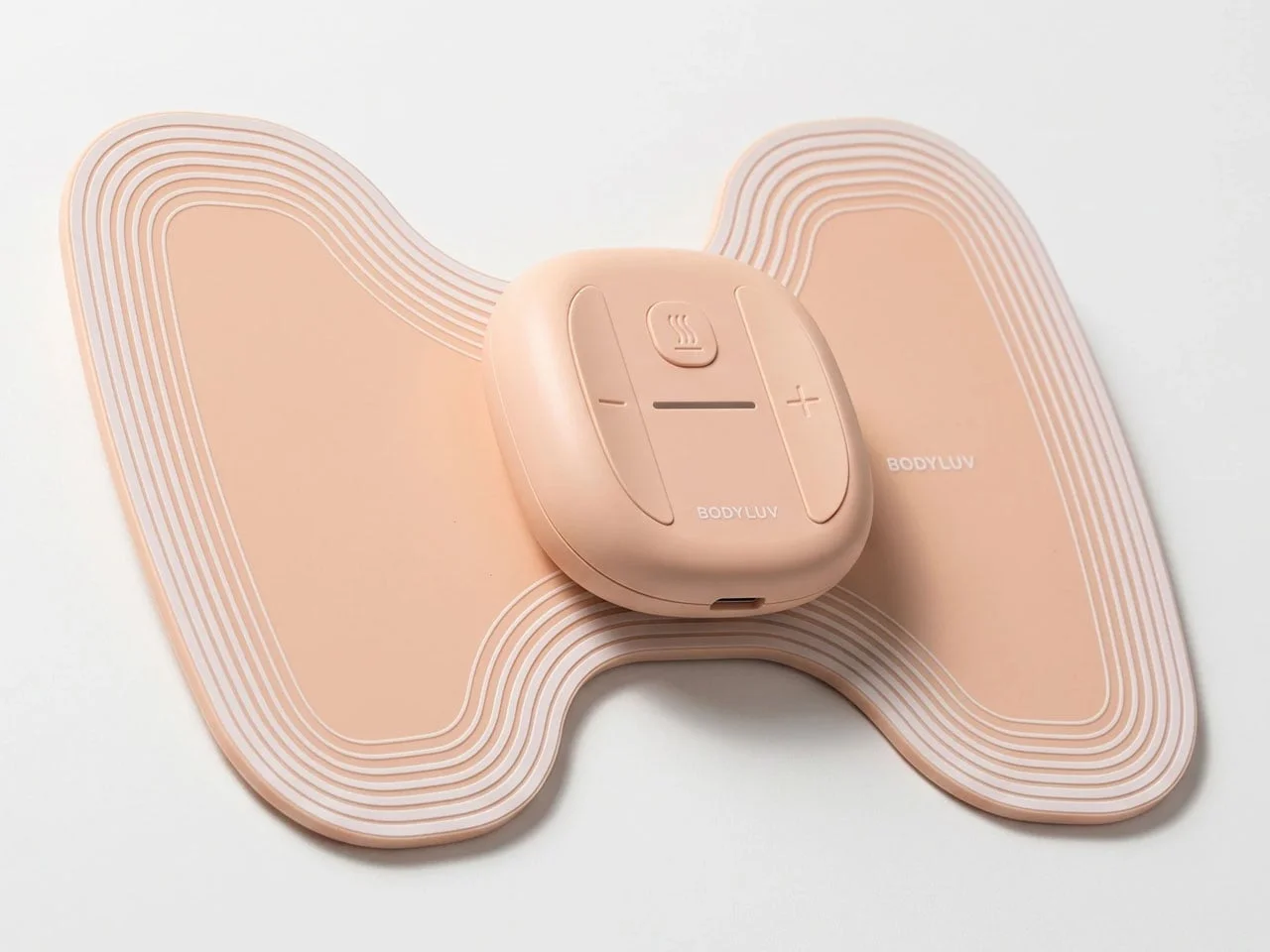
The wearable is meant to sit directly on the area that hurts or feels strained. Its main unit delivers heat and subtle vibration at the same time, aiming to ease pain and discomfort in one step. The designers say the combination helps relax muscles and improve blood circulation. A concept render can't prove that, but it's a sensible target for a device like this. Heat and vibration both show up separately in plenty of massage tools, so the interesting question is whether putting them on a thin patch you can wear while moving makes the idea more practical than the sum of its parts.
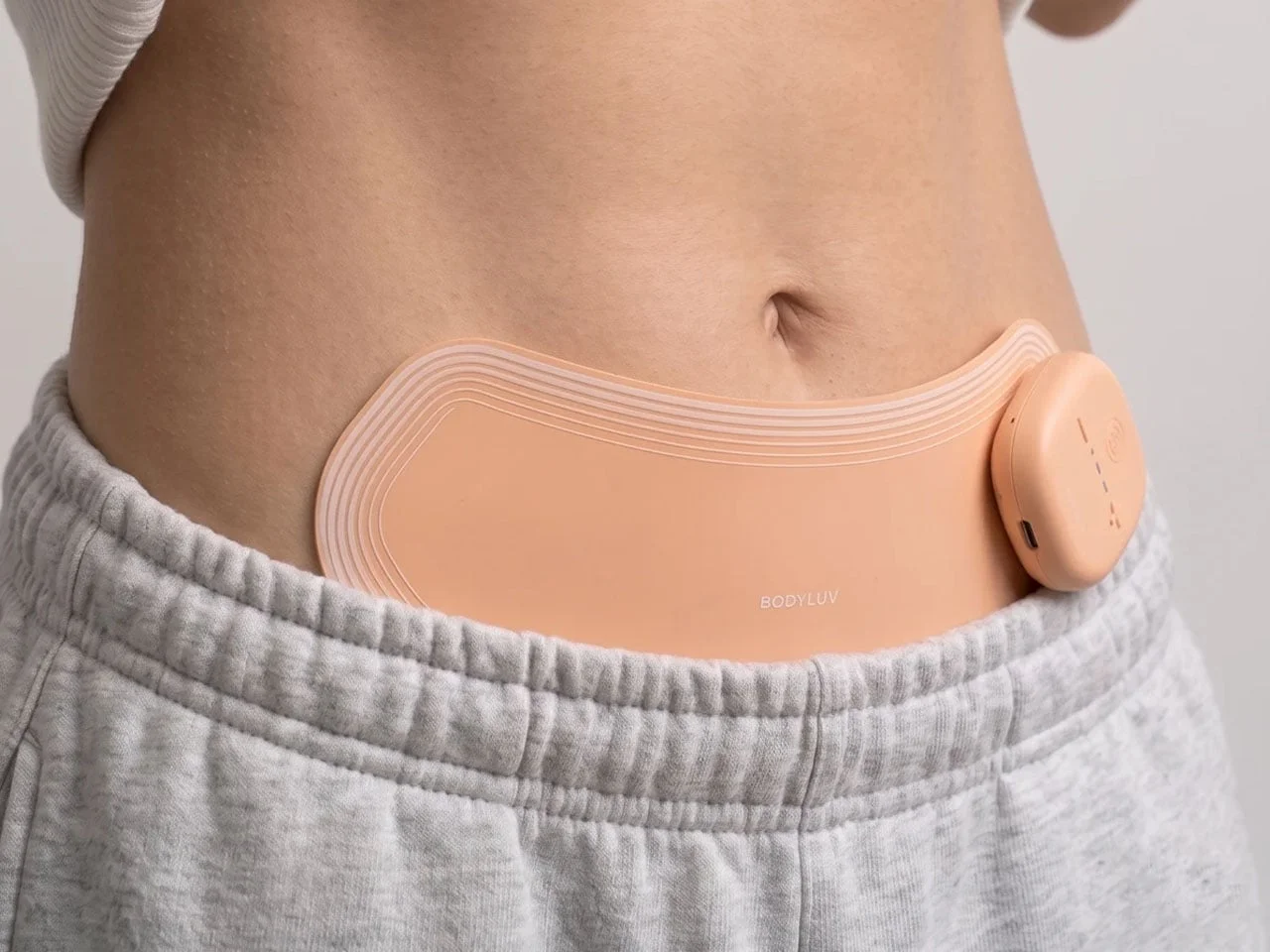
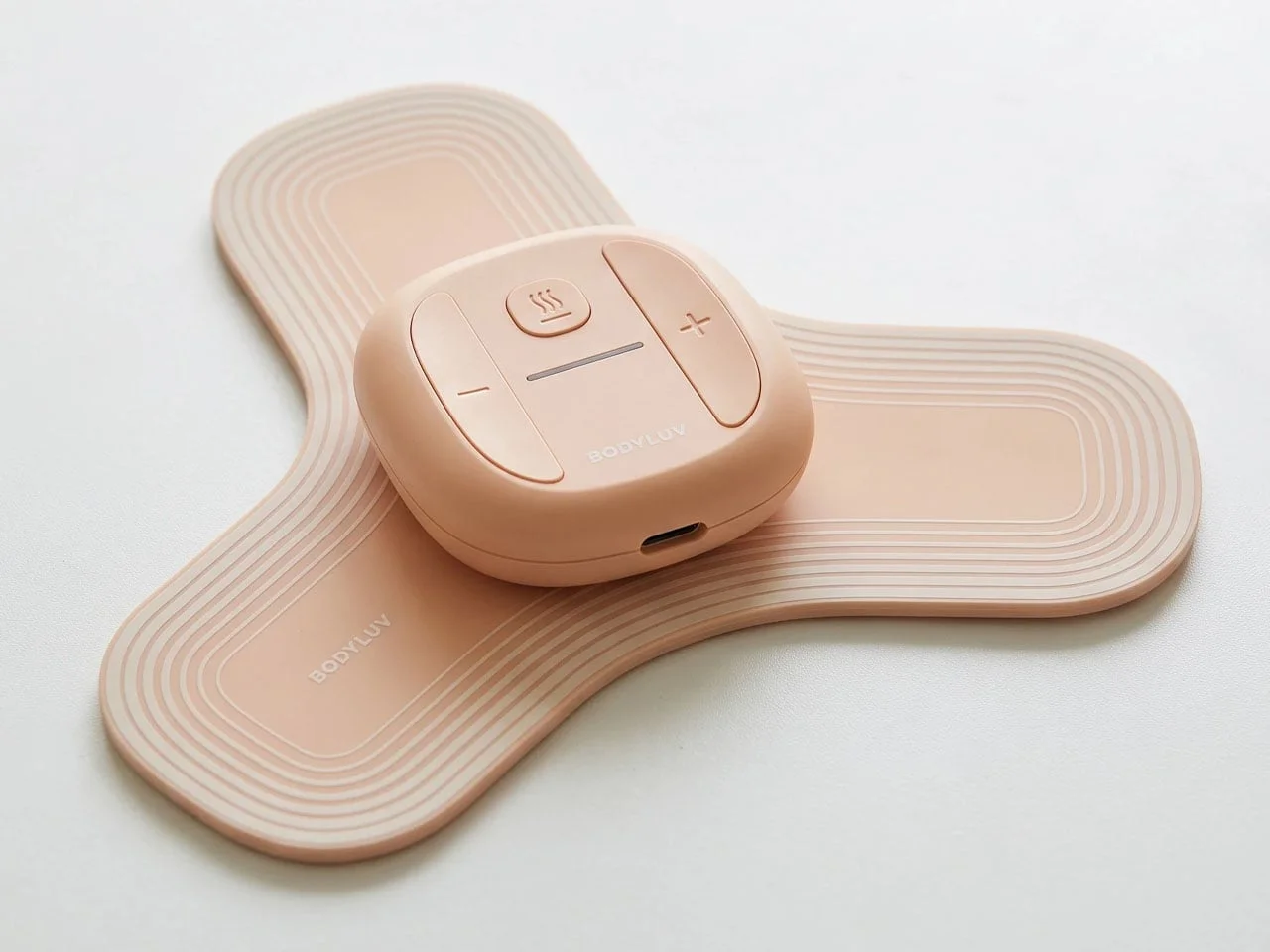
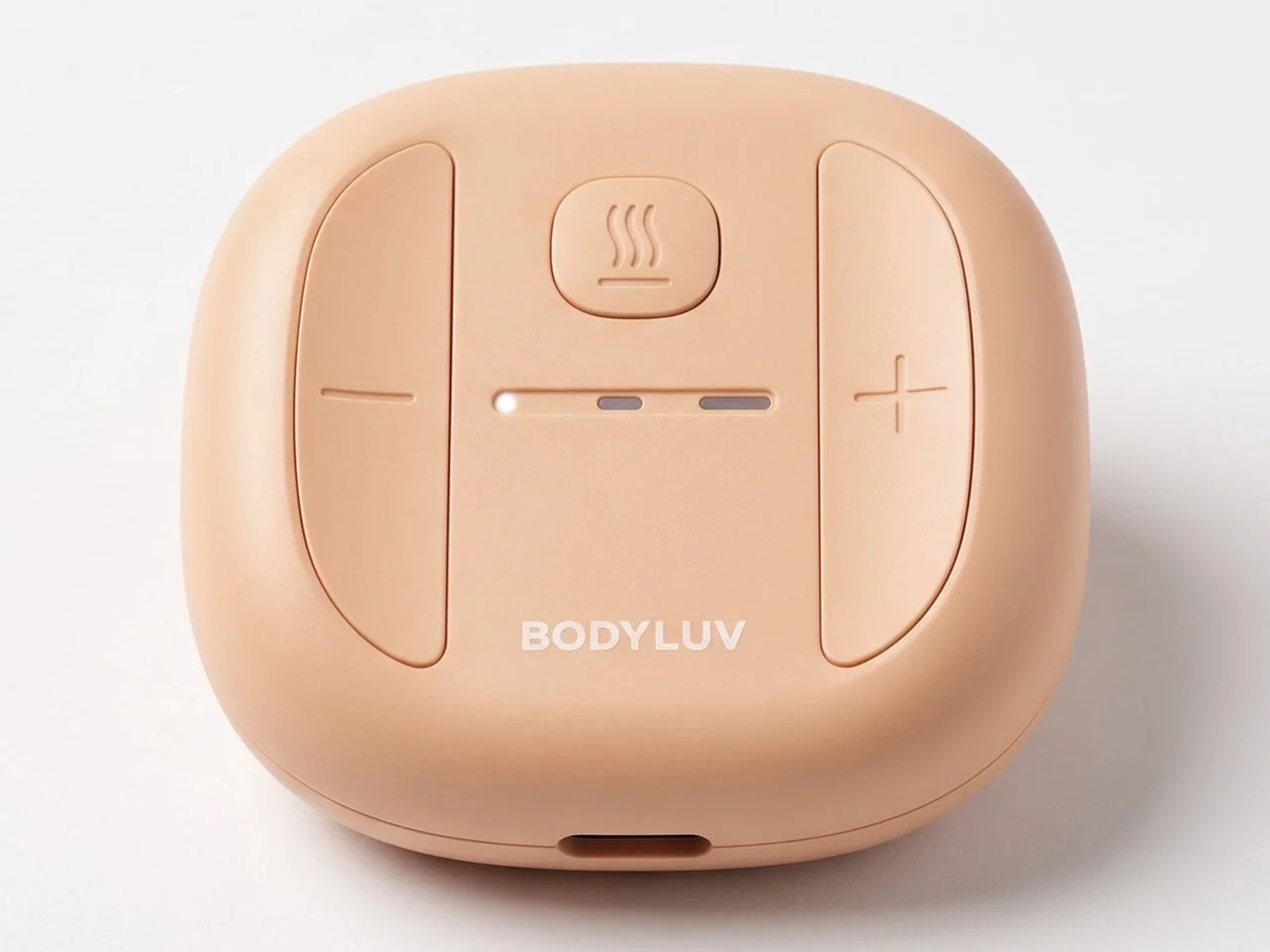
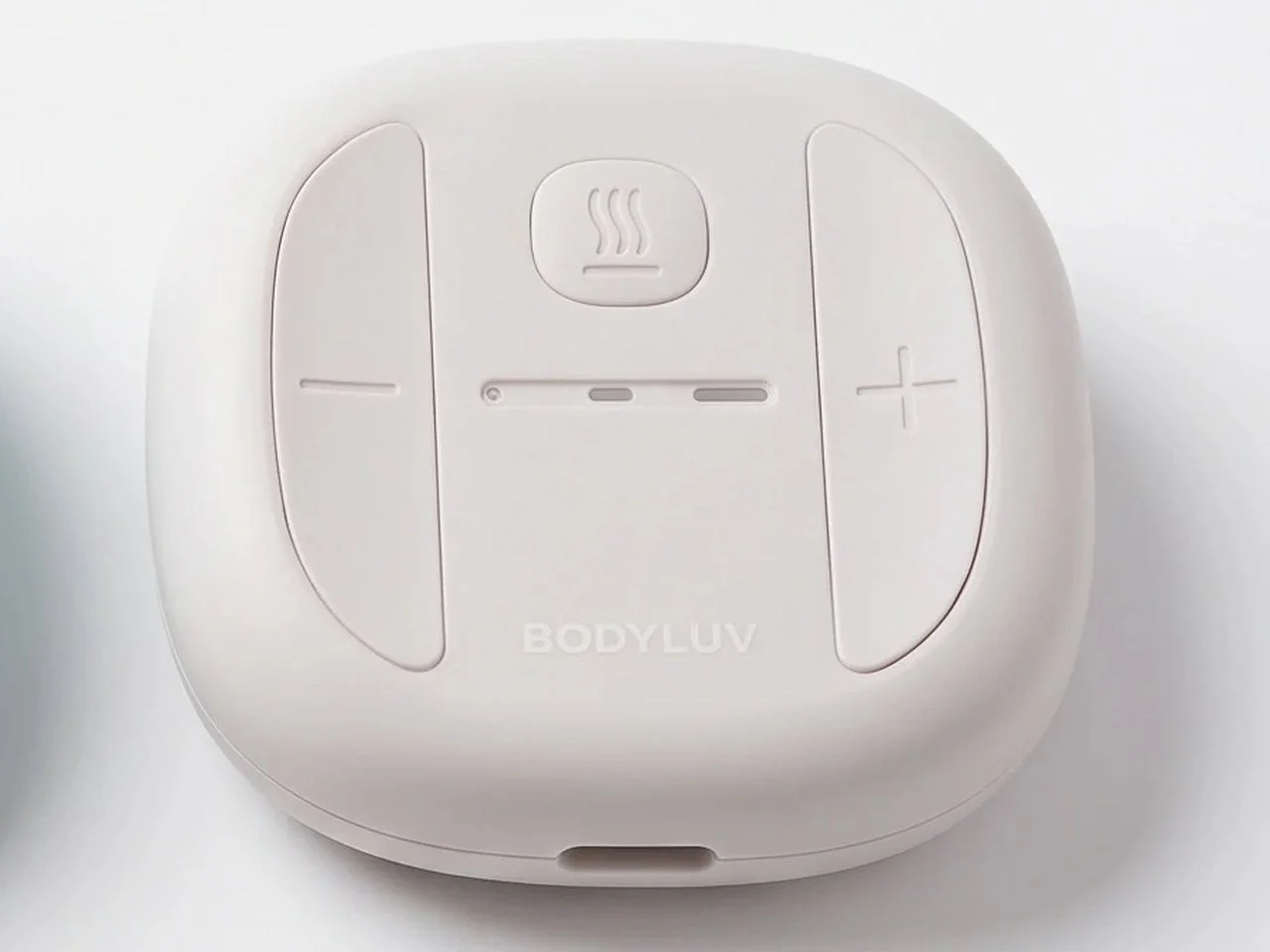
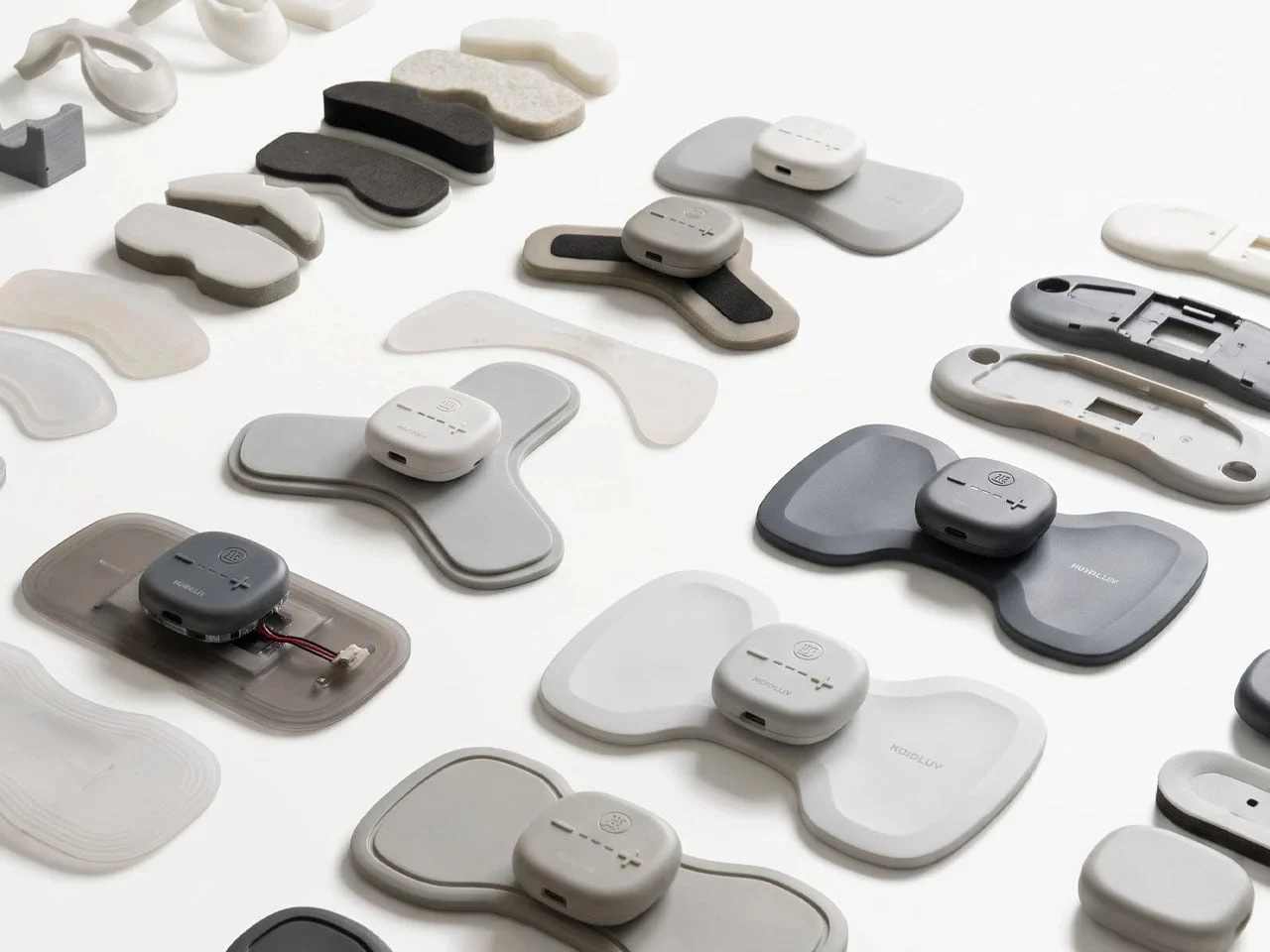
The system comes with three interchangeable pads. The main unit clips onto them magnetically, and the pads are ergonomically shaped to follow body contours. The designers have tailored the setup for the neck, shoulder, lower back, and abdomen. That's a sensible range, and it signals that the team thought about body shape rather than assuming one flat surface fits everyone. Heat intensity and vibration are adjusted with onboard buttons on the main unit, so the user doesn't need a phone to change settings. That matters more than it sounds. Every extra app dependency is one more reason a wearable ends up in a drawer.
Where it goes, and who else might wear it
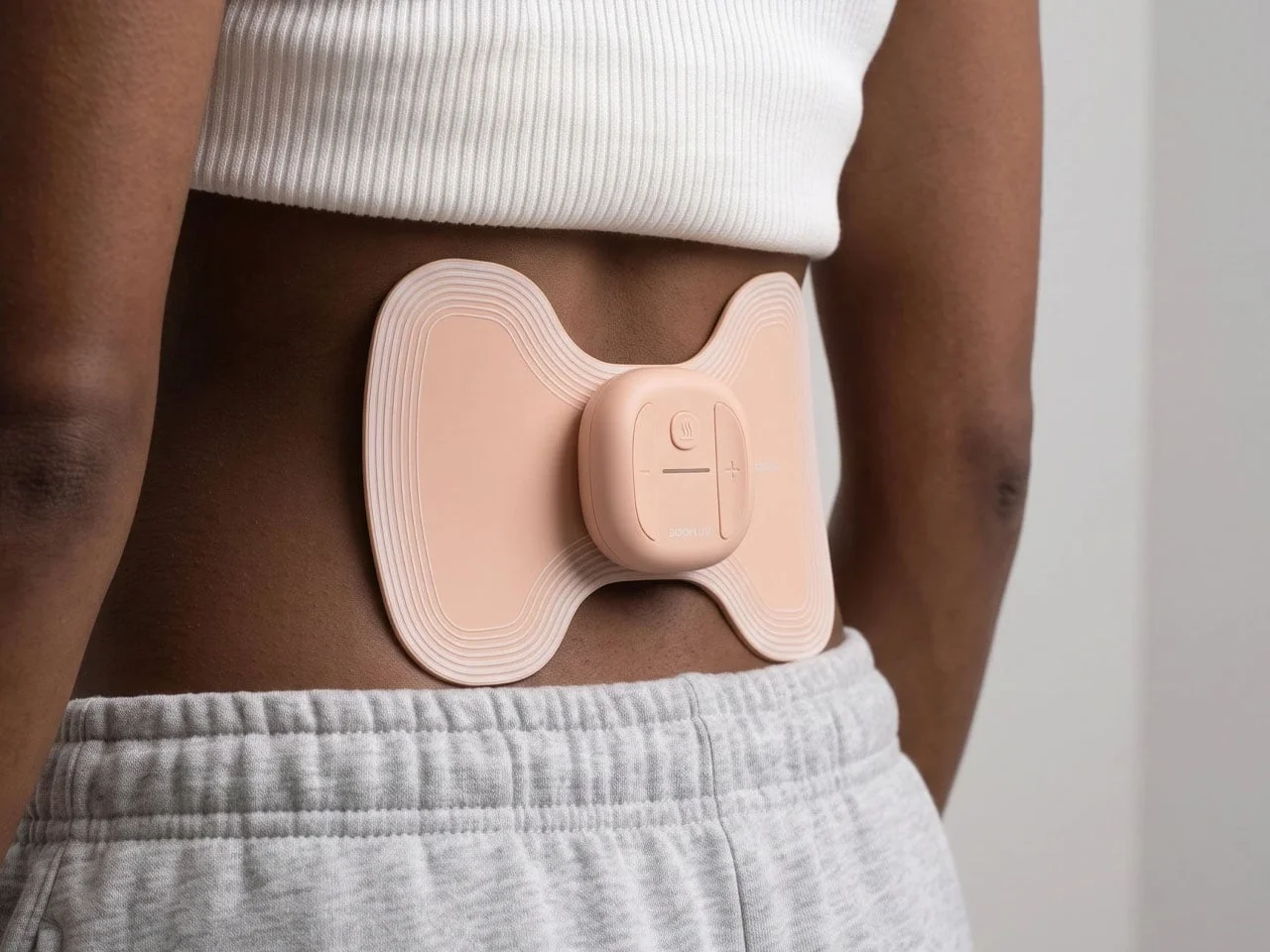
For period pain, the designers point to the lower abdomen or lower back as the main placements. Those are the areas where people commonly describe cramp-related tension, which is why most heat products end up aimed there too. That's the use case that will draw most of the attention, and the one the concept is built around.
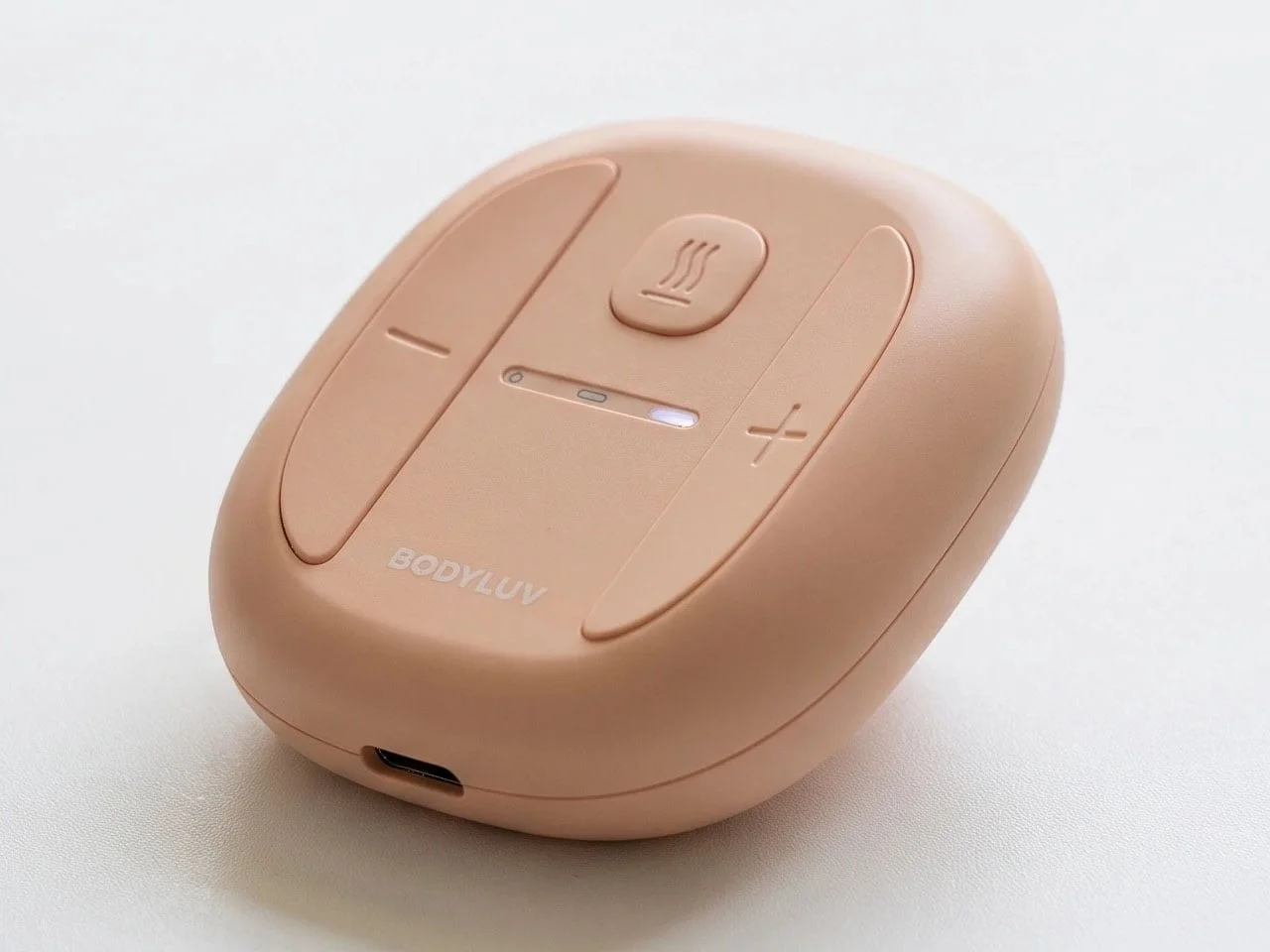
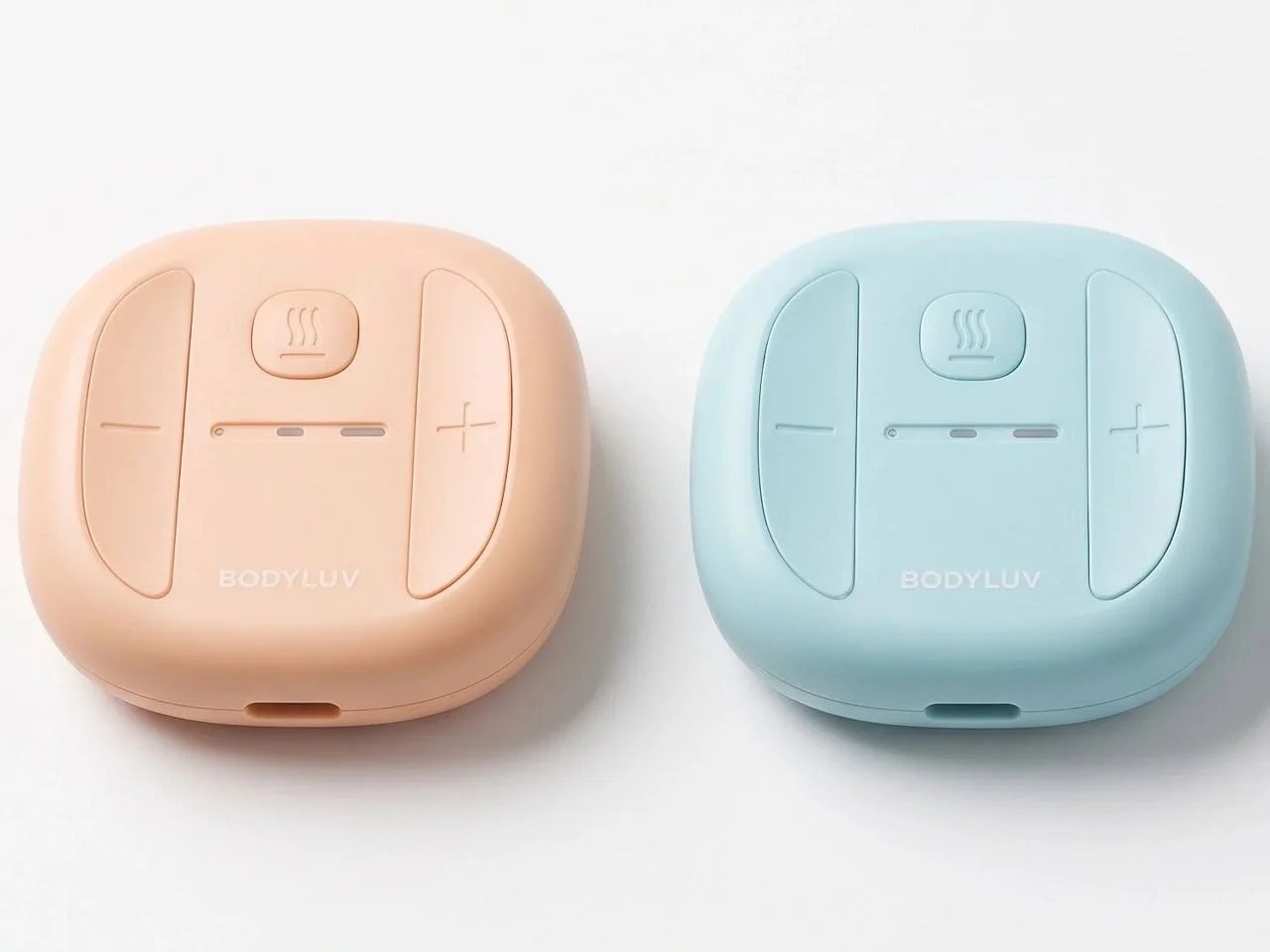
Here's the thing: the athlete angle may matter more commercially. Players could apply the patch to fatigued muscles, using the same mix of heat and micro-vibrations for recovery. Sports recovery is a crowded category, full of rollers, sleeves, and heated wraps, so a patch that could plausibly serve both period pain and training soreness has a better shot at a wider audience. The pitch is targeted relief rather than a general massage, and that gives the product a second audience beyond people managing cramps. Whether the designers pursue that market is an open question, since the source material focuses on the period-pain use case.
Designed to disappear under clothing
Many wearable pain aids announce themselves. They're bulky, they're visible, and they tend to require you to rearrange your clothes around them. BODYLUV takes the opposite approach. The soft, skin-toned surface blends into the body, and the device doesn't create a bulge under clothing. The designers' main selling point is simple: you can keep your normal routine while wearing it, whether that's chores at home or a day at the office. (And this is the part most people overlook: a device that's easy to forget you're wearing is far more likely to be worn at all.)

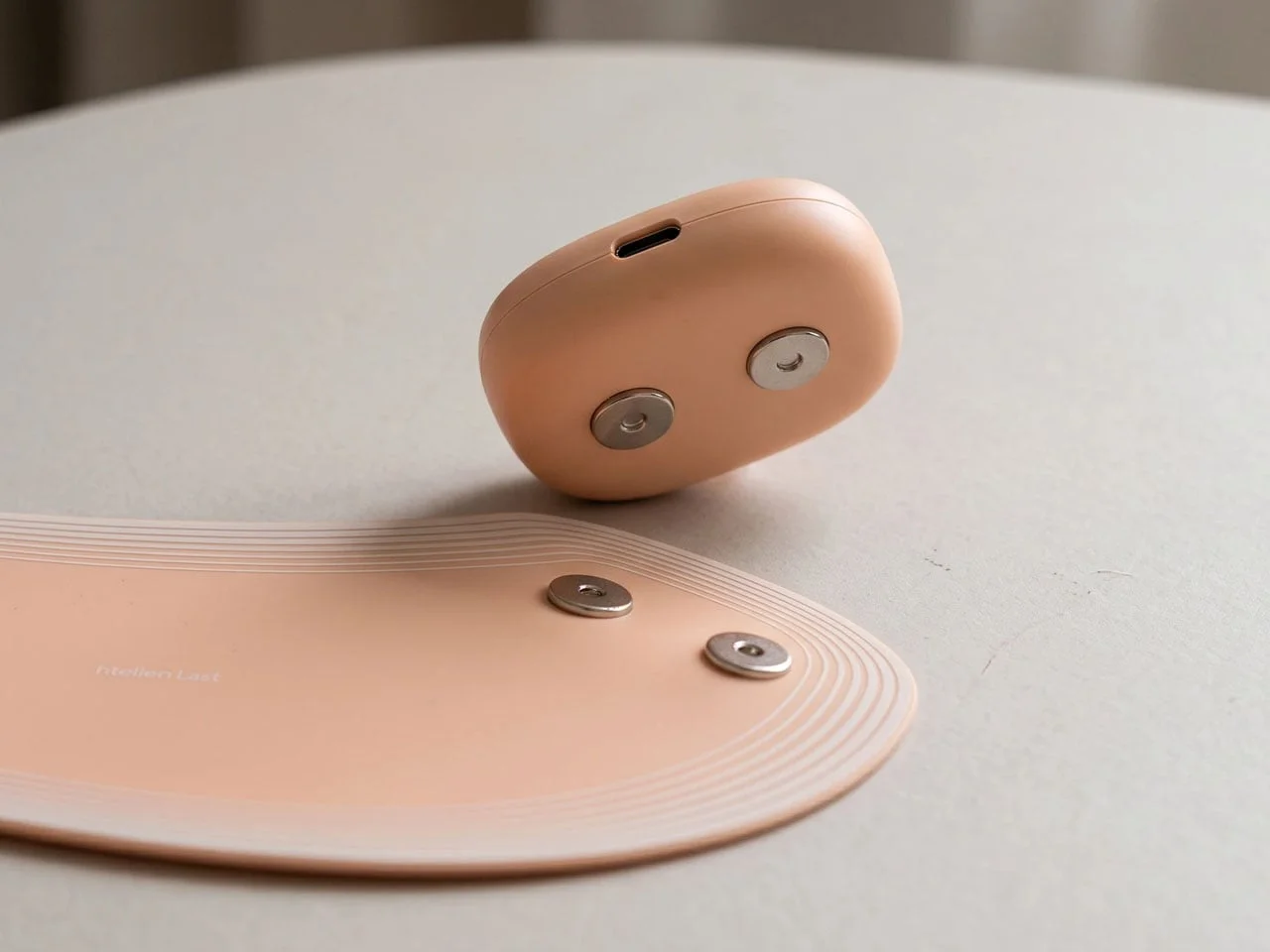
The wireless build is thin and light, which is what makes wearing it under clothes practical. It's also where the concept is least complete. There's no word on battery capacity or runtime on a single charge. Until that's known, it's hard to judge whether this works as an all-day wearable or as a short-session device. Not a small detail. Those specs will decide whether the concept survives contact with production, because a patch that dies after an hour is a very different product from one that lasts a full workday.

What comes next, and what to watch
Concept projects like this one usually live or die on details that renders can't show. Heat output, vibration feel, adhesion over hours of movement, and how the magnetic connection holds up under real wear are all unanswered here. That's not a knock on the designers. It's the normal gap between a well-argued idea and a shipping product. Still, the core framing is the strongest part of the project. Treating cramps as partly a muscle issue opens a design space that heating pads never explored, and that's worth more than a pretty render.
If you're working in wearables, or simply tracking how menstrual health products are being redesigned, BODYLUV is a useful case study. It shows where the field's assumptions are shifting, from hiding a product to designing it so you forget it's there. Here's what I'd watch for: whether the team publishes real battery and performance numbers, whether testing extends beyond the period-pain use case, and whether the athlete audience gets a dedicated version. Any of those would tell you more than another round of concept images.
Credit for the project goes to the designers' Behance gallery. For now, BODYLUV is a well-argued concept with strong industrial design and a clear use case. The open question is execution, and that's where most ideas like this stall. Check back when the specs show up.
Discussion
Sign in to join the discussion.