The Kärcher AF 30 pairs automatic air-quality sensing with quiet sleep mode, but its £279.99 price and annual filter costs add up.
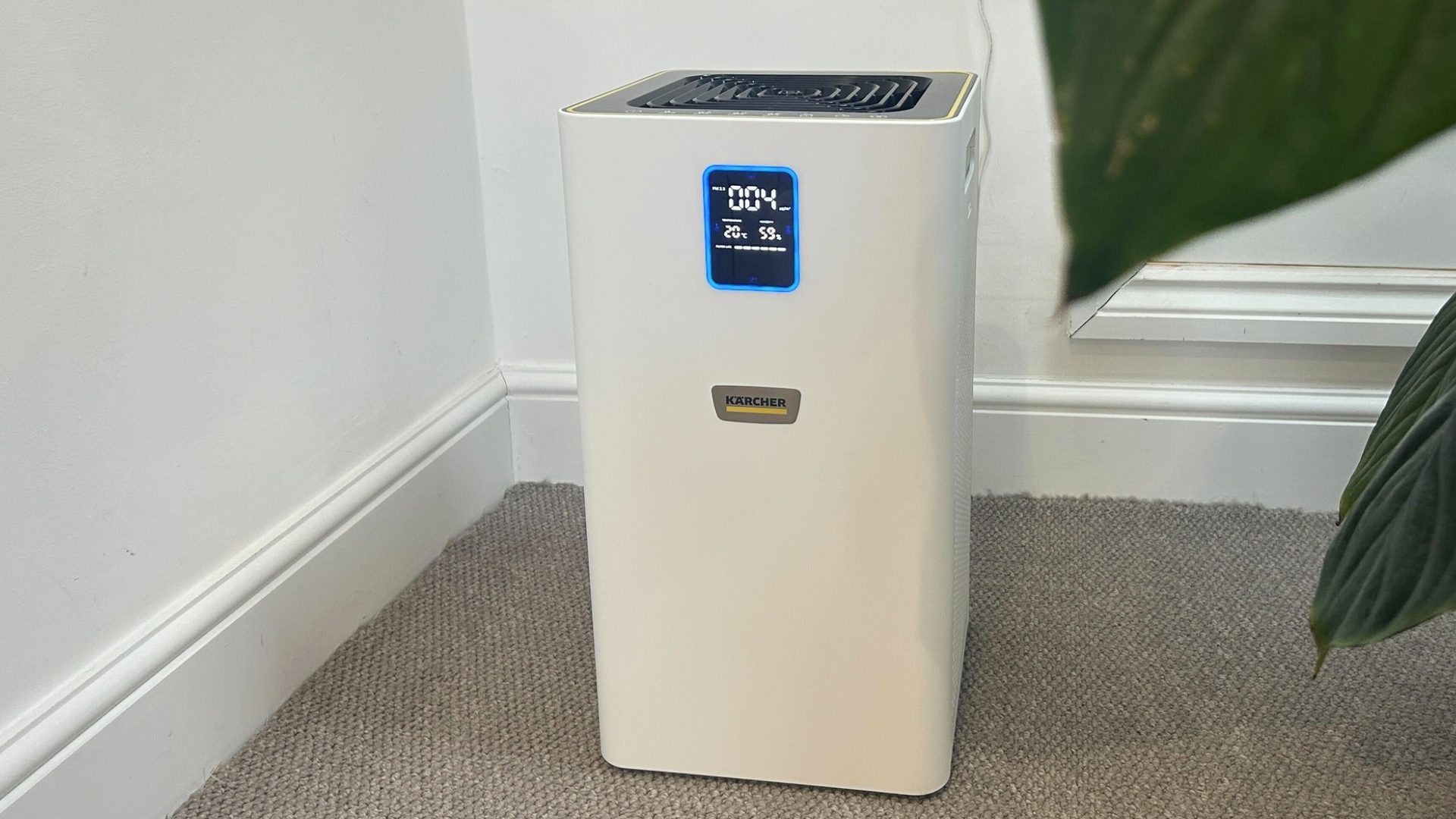
The Kärcher Air Purifier AF 30 makes its strongest case through low-effort operation. It monitors air quality, adjusts its fan in Auto mode and runs quietly enough for a bedroom at night, which means you don’t have to keep checking it or changing settings throughout the day. At £279.99, though, that convenience comes with a premium price, and replacement filters cost just under £99 a year. That recurring expense changes how the purchase looks: the upfront price is only part of what you’ll pay to keep the purifier running.
Useful readings, straightforward setup
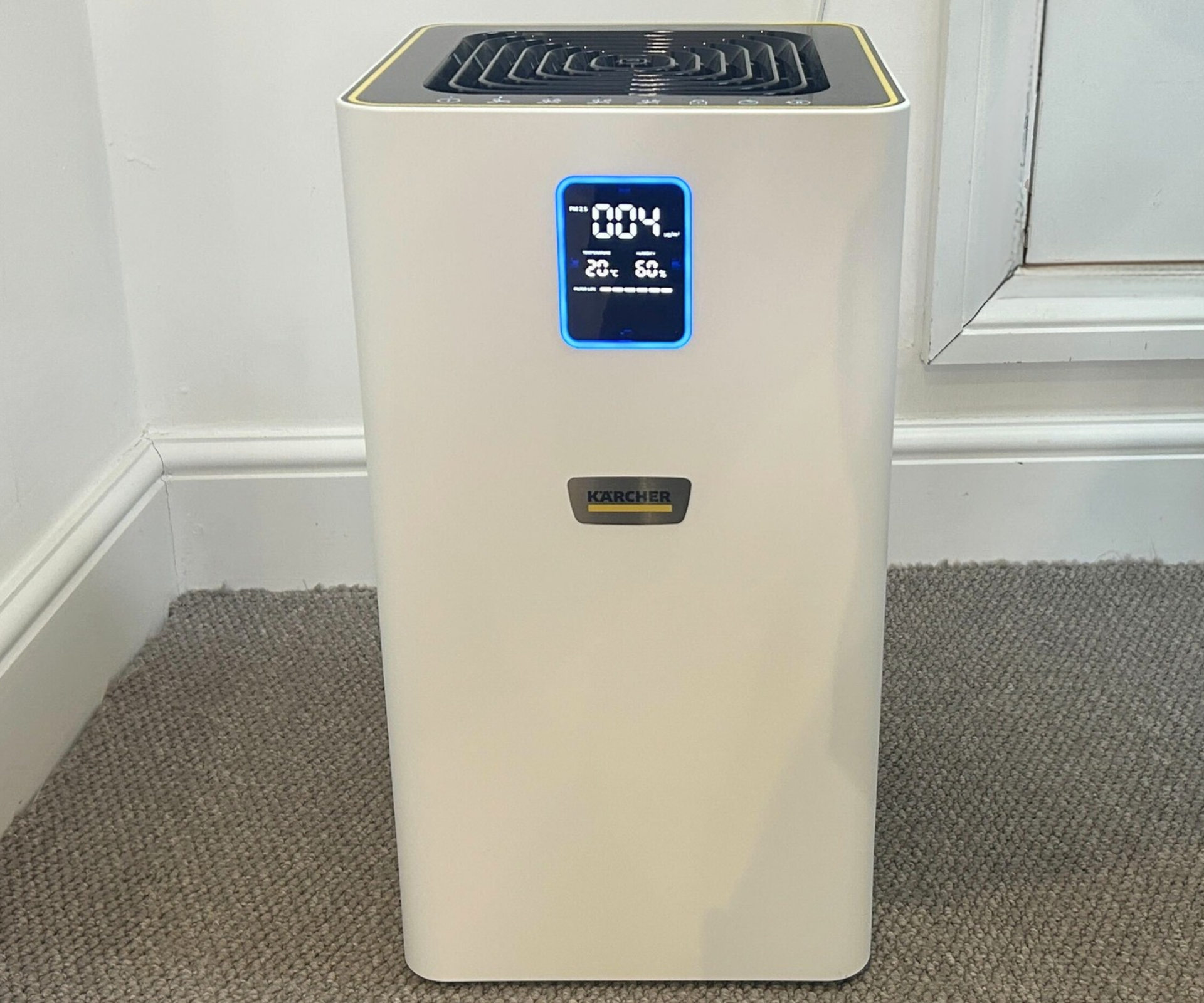
The AF 30 measures 486 × 260 × 260mm and weighs 5.8kg, so it needs a considered spot with 30cm of clearance on every side. That space requirement matters in a bedroom, where furniture and walking routes can limit placement; you’ll want to settle on a location before plugging it in. Its black and white casing blended into the room, though the yellow trim on top stood out against the decor. A purifier can be easy to live with and still draw the eye.
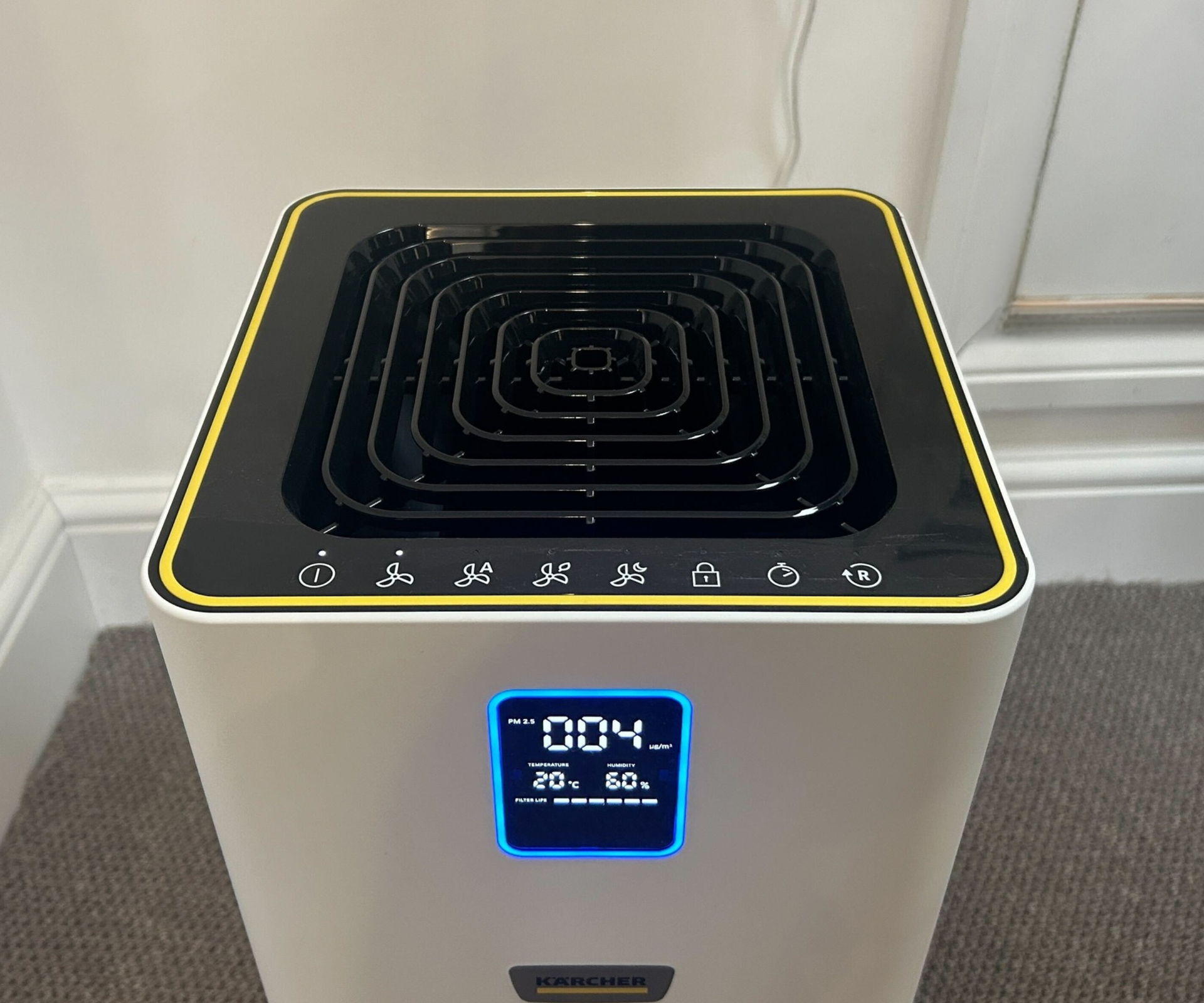
A built-in display shows temperature, humidity, particle levels and remaining filter life. That gives the unit a practical advantage over models that send readings only to a phone, since you can check the basic information at a glance without opening an app. The display also makes the purifier’s status easier to read for anyone sharing the room. Setup was simple: remove the filters, take off their protective films, put them back and plug in the purifier. No complicated setup process gets between unboxing and use.
Automatic control earns its place
The purifier is rated for rooms up to 60m², with an airflow rate of 320m³/h and a stated filter efficiency of at least 99.95% for particles measuring 0.3 microns. Those specifications describe its claimed capacity and filtration performance, but the number that will matter most in daily use is whether it can run comfortably in the room where you place it. It draws 36W and offers five power settings, giving you some control when automatic adjustment isn’t the right fit.
Three modes cover the main use cases. Auto changes fan speed in response to detected air quality; ECO lowers energy use; and Sleep reduces fan noise and switches off the display lighting. Manual fan control and a timer are also available, so you can choose a set speed or limit how long the unit runs. The range is useful, though the appeal of the AF 30 rests most heavily on its ability to handle routine adjustments by itself.
Auto mode is the most useful setting day to day, particularly when the room is empty or your attention is elsewhere. The readings can shift even when there’s no obvious change in the room, a reminder that air quality isn’t always apparent to the people breathing it. On Guy Fawkes’ Night, the measured pollutant level reached three times its usual level, then gradually fell overnight. That’s a concrete example of the display and sensor catching a change that might otherwise go unnoticed. It’s also one observation, rather than proof of how the purifier will perform in every home.
Sleep mode isn’t silent, but its sound didn’t disrupt sleep, and dimming the screen helped keep the display from becoming a distraction. A rattle appeared occasionally during daytime use, though it was neither frequent nor especially loud. Here’s the thing: a quiet mode earns its place through the hours when you’re trying to ignore the machine, not through a spec sheet alone. The main omission is app access. A history graph would make it easier to follow changes over time, especially when the on-device readings show only what’s happening in the moment.
A premium choice with ongoing costs
The AF 30 feels sturdy and makes air-quality readings easy to check, while automatic adjustment removes much of the day-to-day effort. That combination has real appeal if you want a purifier to operate in the background and give you a visible account of conditions in the room. The trade-off is a high upfront cost and a filter that needs replacing roughly once a year. Kärcher’s replacement indicator signals when it’s due, but it doesn’t reduce the cost of keeping the unit in service.
For a smaller room or a tighter budget, a lower-cost option may make more sense. The Levoit HEPA Air Purifier, for example, is listed for rooms up to 23m² and uses a three-stage filter to capture 99.97% of airborne allergens and dust particles. It has three speed settings. Its stated room coverage is smaller than the AF 30’s, so the comparison depends on the space you need to serve as well as the price you’re prepared to pay. A cheaper model can be the more sensible choice when the AF 30’s extra capacity and automatic control aren’t priorities.
The AF 30 is best suited to buyers who value automatic sensing, clear on-device readings and quiet overnight use enough to pay for them. Its sensor and Auto mode make bedroom air changes easier to manage, while the filter cost and lack of app-based tracking are the details to weigh before choosing it. The numbers here are underwhelming for anyone focused on value: the purifier’s convenience has to justify both the purchase price and the ongoing replacement cost. If you’re working out whether it fits your home, consider the room size, available floor space and how much you’ll use Auto and Sleep modes. The practical benefit is clear; whether it’s worth the premium depends on those everyday priorities.
What the AF 30’s approach means for buyers
The AF 30 puts more emphasis on automatic operation and immediate feedback than on connected features. That’s a coherent choice: a display you can read in the room and a sensor that adjusts the fan may be enough for someone who wants less interaction with the device. And yet, without app-based history, the readings are harder to compare across days or to review after a change has passed. This is more significant than it looks for buyers who want to understand patterns, rather than simply leave the purifier to respond.
For most people, the decision comes down to a familiar product trade-off: pay more for convenience and room coverage, or accept a simpler option that may better match a smaller space and budget. The AF 30’s strongest case is its low-effort routine, backed by readings on the unit itself. Its weaker case is long-term value, given the annual filter cost and the missing history view. A capable bedroom purifier. Whether that’s enough depends on how much you value automatic control over the years you’ll own it.

Discussion
Sign in to join the discussion.