Nothing’s Ear (note) pairs earbuds with a standalone meeting recorder, putting its design and AI approach up against Plaud One.
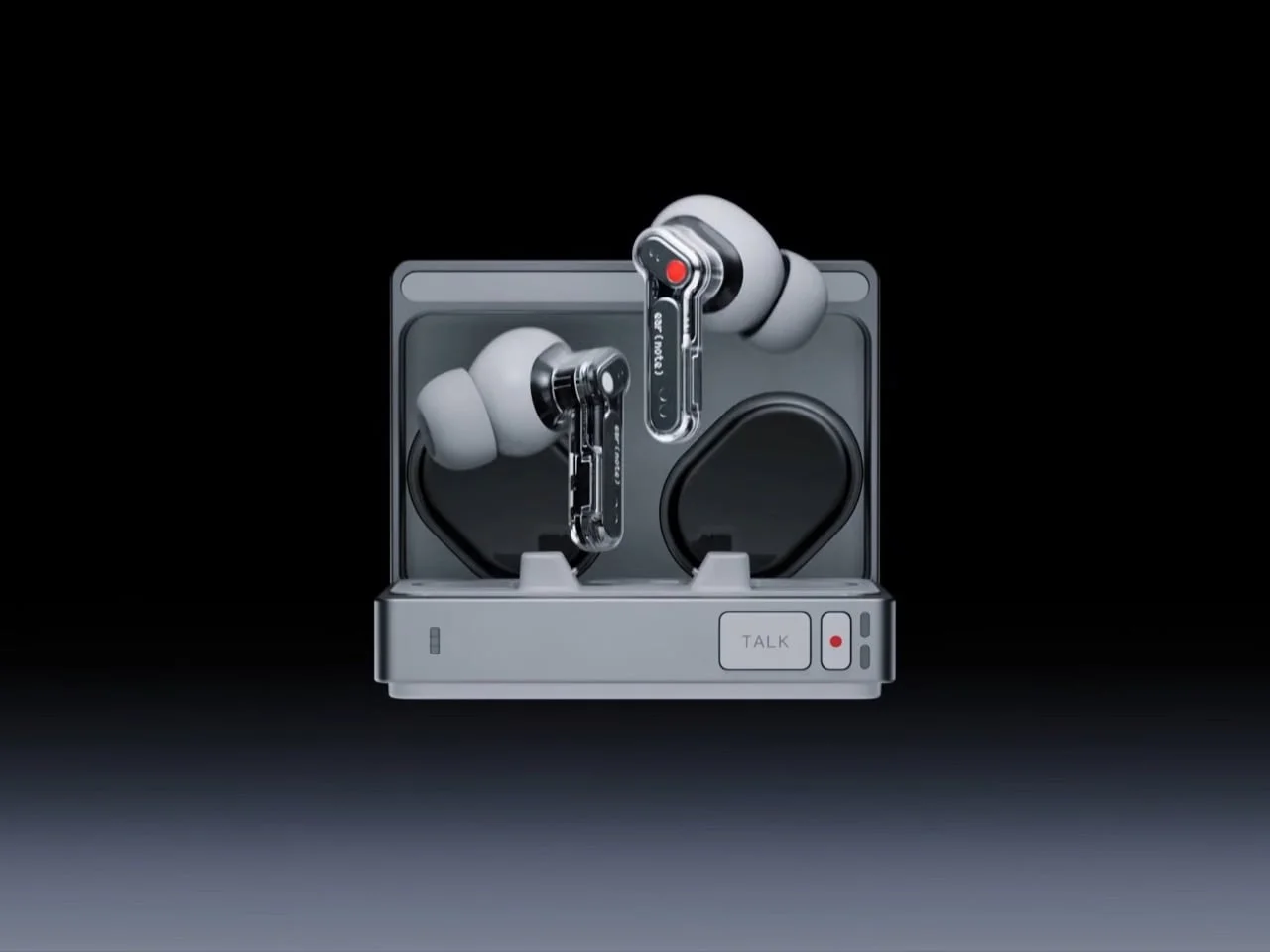
Nothing is turning the earbud case into a meeting tool. Its Ear (note) combines earbuds with a case that can record conversations on its own, then uses an app to transcribe and summarize them. The product is due December 8, though Nothing hasn’t announced its price or full specifications.
The idea surfaced with a design-world teaser: Swedish House Mafia DJ Sebastian Ingrosso posted a photo of a slim black box tagged @nothing. Its red-dot button and pair of colored lights hinted at a recorder. The connection has a personal touch: Swedish House Mafia is among Nothing’s investors.
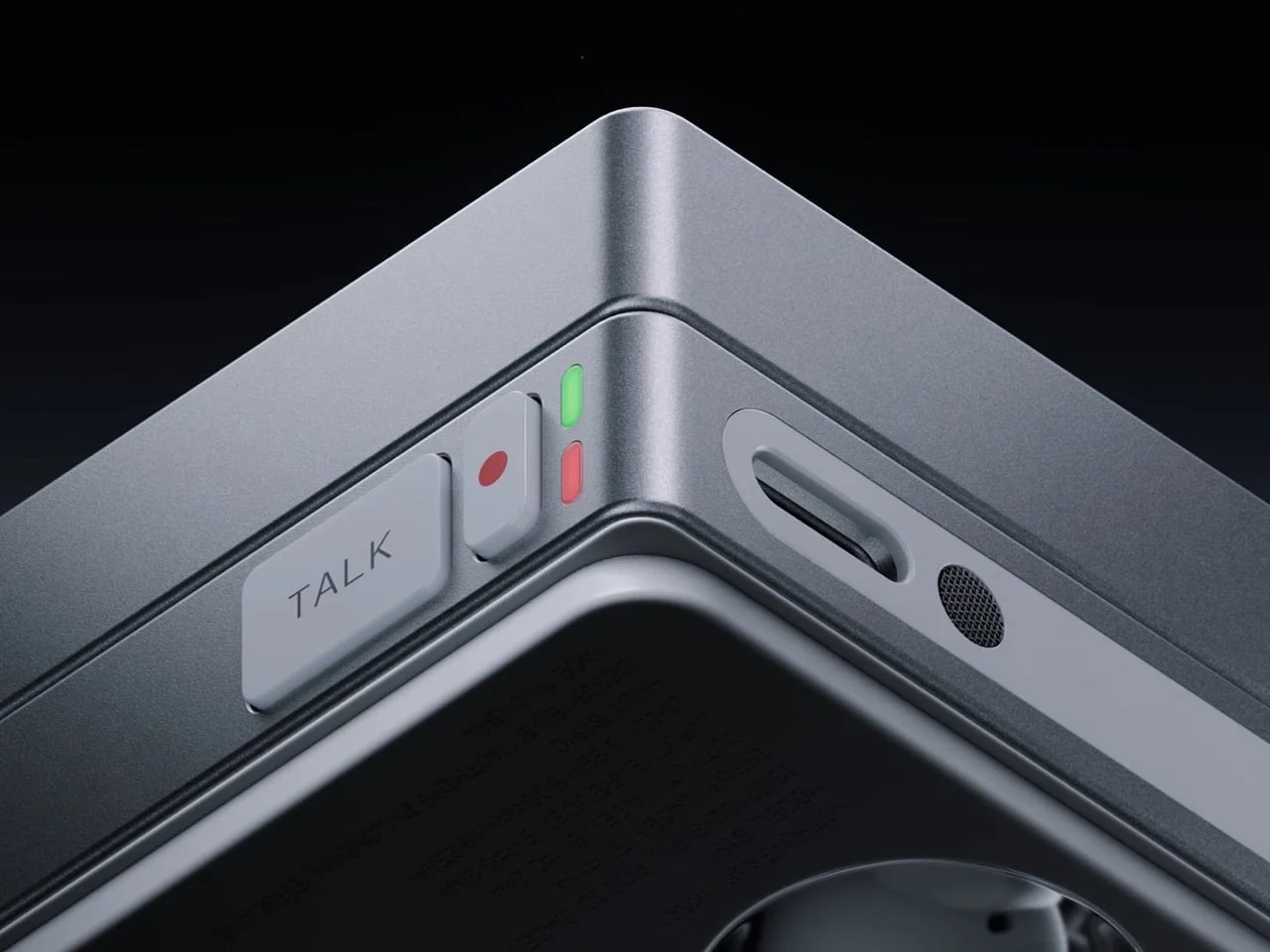
Nothing calls Ear (note) its first “AI-native” device. The pitch rests on two recording modes: microphones in the case capture in-room conversations, while the earbuds handle calls and online meetings. A physical TALK key and RECORD button put the main controls on the case itself.
A recorder designed to sit on the table
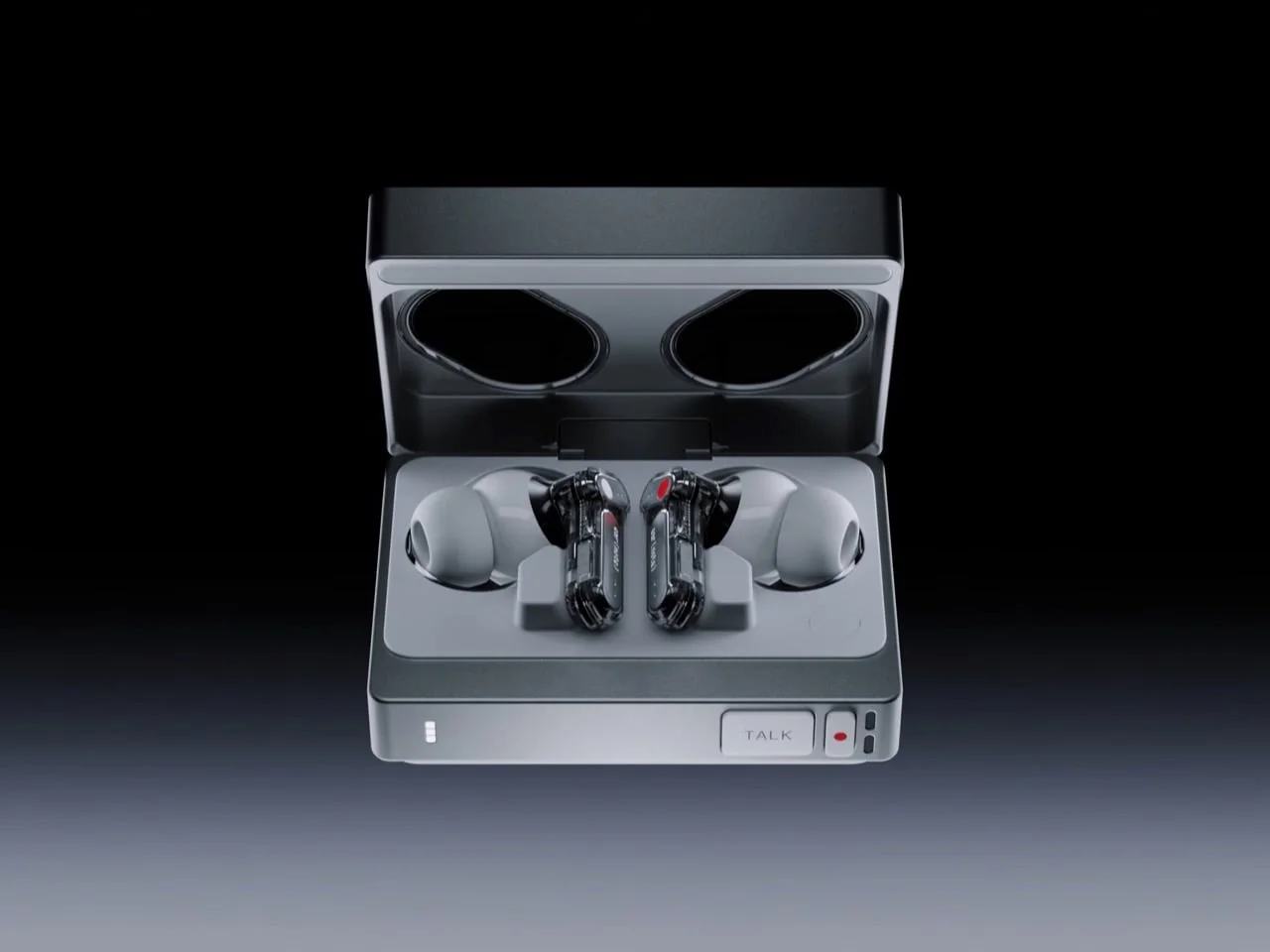
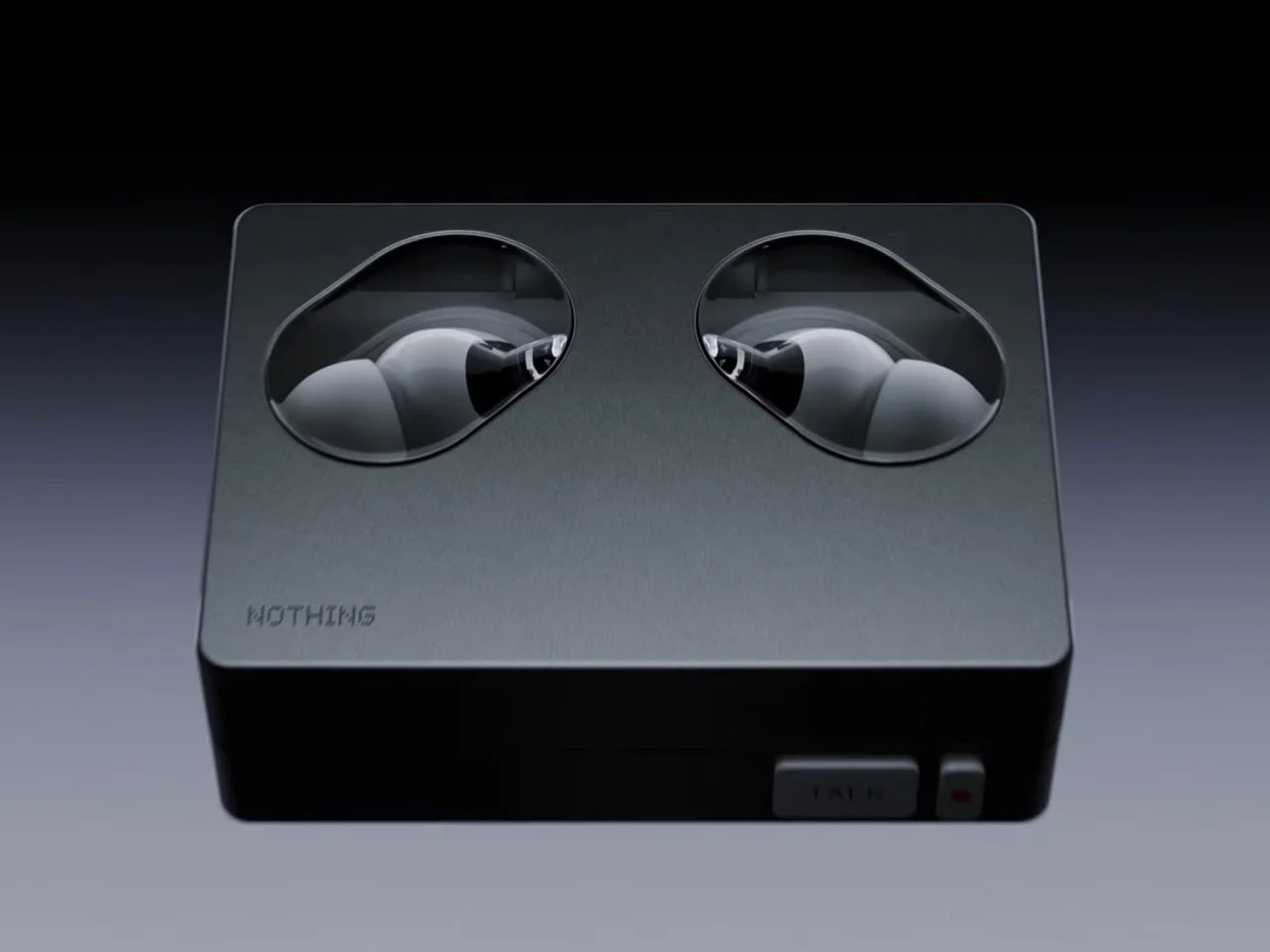
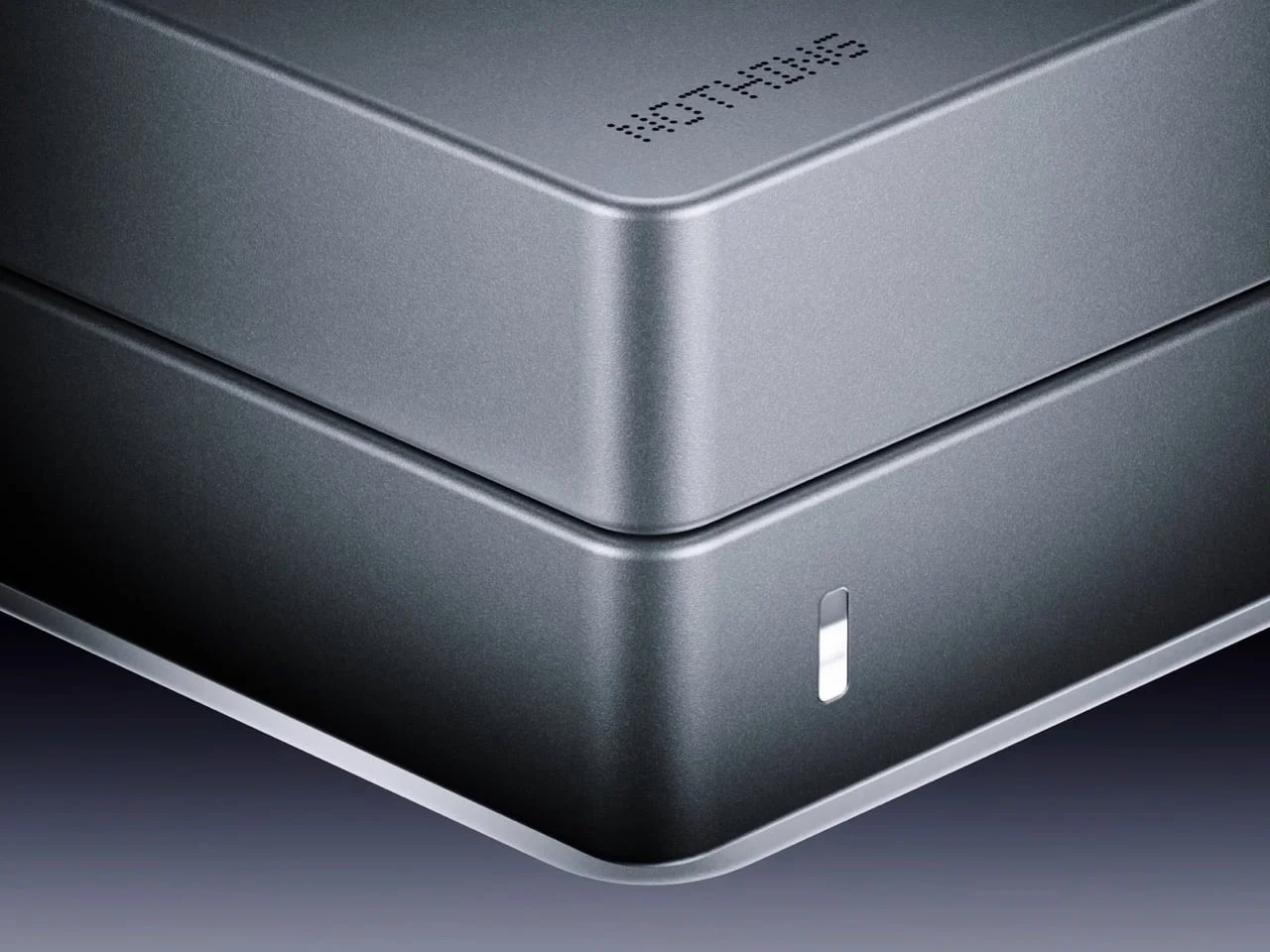
The squared aluminum case marks a shift toward what Nothing describes as “machined metal and brutalist forms.” Its sharp edges and stepped lid give it the air of a small, polished cassette recorder. A transparent top remains part of the design language, but it’s now reduced to two pill-shaped windows over the earbuds, with layered details that Nothing says draw on topographic contours.
The placement of the buttons is more than a visual flourish. A recorder will often sit flat on a conference table, and the front-facing TALK and RECORD keys are easy to reach without lifting it. Their Walkman-inspired styling also gives the case a tactile quality that’s missing from phone-based recording tools. Red and green LEDs sit alongside the controls; Nothing hasn’t explained their purpose, though a clear recording indicator would be useful in a meeting.
The earbuds retain Nothing’s transparent stems, now marked with “ear (note)” in the company’s dot-matrix lettering. That treatment connects the product to the transparent Ear (1) from 2021 and the metal accents introduced with the Ear (3) last year. The lighter and darker versions both look built to be left out on a desk.
Two recording sources, one app workflow
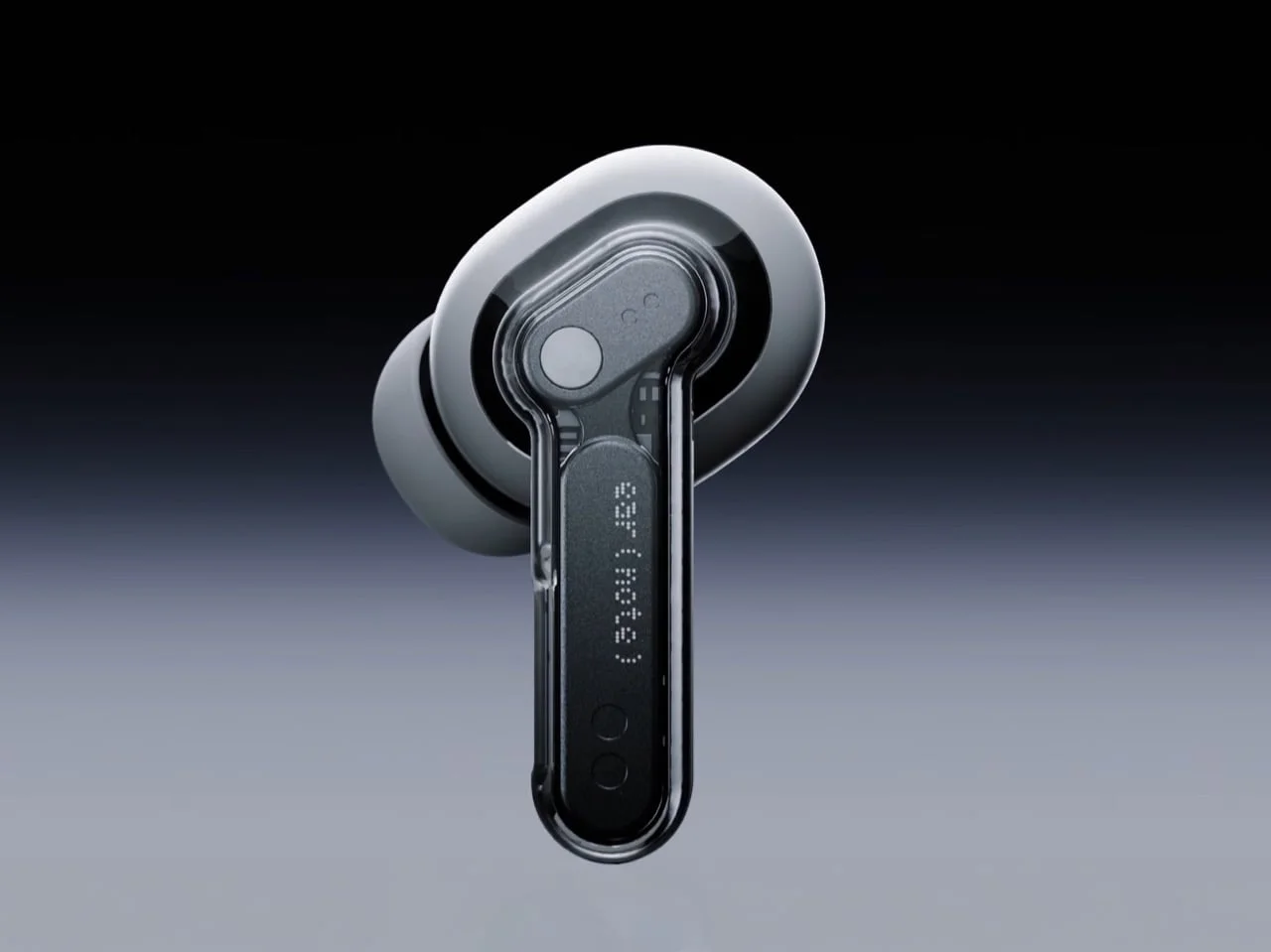
The case can capture an in-person conversation from a table, even when the earbuds aren’t in use. For phone calls and online meetings, the earbuds record the audio instead. Nothing introduced call recording on the Ear (3a) earlier this year; Ear (note) extends that capability into a product built around capturing and processing conversations.
Recordings are stored in the app, where they can be transcribed and summarized. Nothing says the earbuds will work with various third-party AI agents, while its own voice system will support simpler back-and-forth prompts. The company also promises Hi-Res Audio and sound on par with its top in-ear models.
Nothing CEO Carl Pei frames the product as the beginning of a “hardware context layer for AI”: devices that gather information about a user’s activities so AI tools can work with more context. The TALK key carries over from the Ear (3), whose case added a microphone and a button for voice notes. Pei says the key could be reprogrammed in the future.
Recording conversations also makes privacy part of the product’s design brief. Nothing says it consulted law firms to test its protections. The company hasn’t yet shared battery life, storage capacity, supported transcription languages or whether the service will require a subscription. Those details will determine how well the recorder fits into everyday meeting workflows.
Plaud One sets an early benchmark
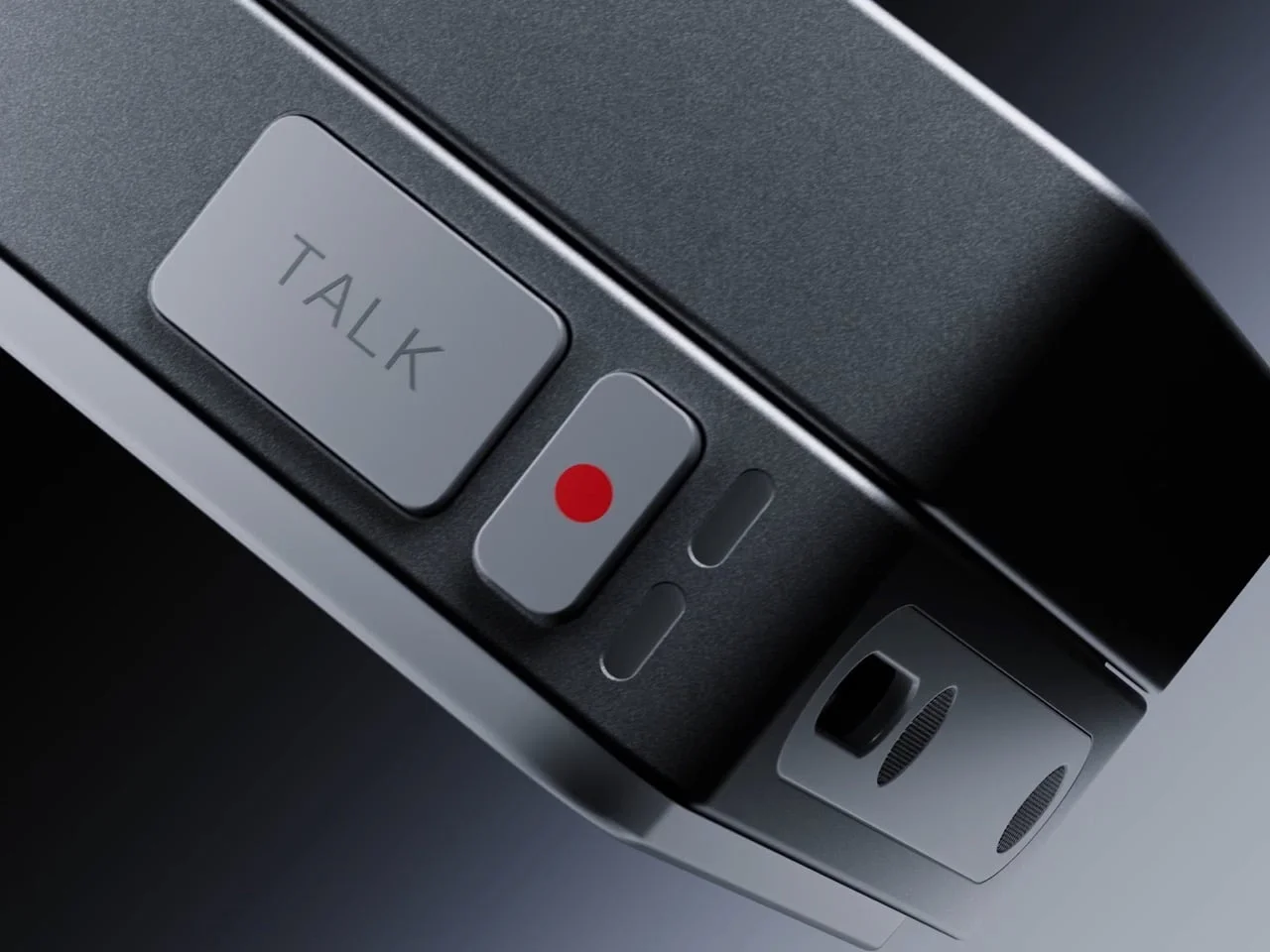
Plaud One, introduced at IFA in September, also pairs AI earbuds with an aluminum case that records a room independently. Its case has four beamforming microphones, a speaker, a recording button and a separate key for talking to Plaud’s AI. An eSIM with 4G LTE lets it upload recordings and run tasks without a phone nearby.
Plaud’s Agent can draft follow-up emails and create slide decks, with integrations for services including Gmail, Slack and Notion. The Plaud One is priced at $249.99. The first 2,000 Explorer Edition units are slated to ship this quarter.
The products share a clear physical format: metal cases made to sit on a desk, with a record button and another control. Their styling and software strategy diverge. Plaud uses vertical fluting and builds around its own connectivity and AI agent; Nothing favors framed windows and its dot-matrix type, while positioning its hardware to work with AI agents users already have.
Plaud has disclosed more of its capabilities and price, giving it an early lead on specifics. Nothing’s case makes a strong design impression, but its value will depend on the details still to come: recording quality, battery life, transcription support and how its app connects to other AI services. Those answers will show whether Ear (note) can make a recorder feel like a natural part of an earbud setup.


Discussion
Sign in to join the discussion.