Andrea Tomaciello’s Atypica concept pairs a direct lever with visible shot data, giving espresso drinkers room to experiment with pressure, time and yield.
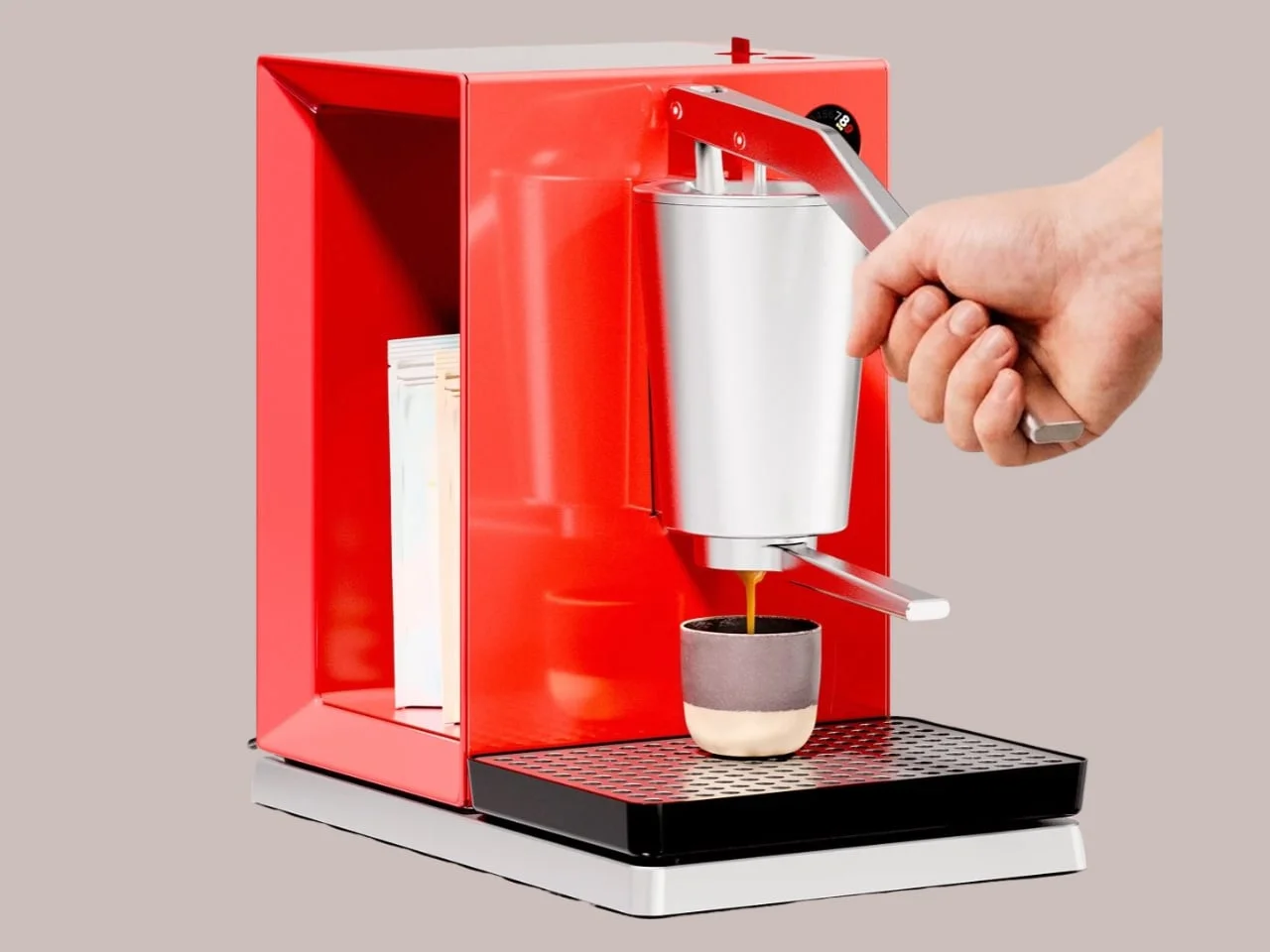
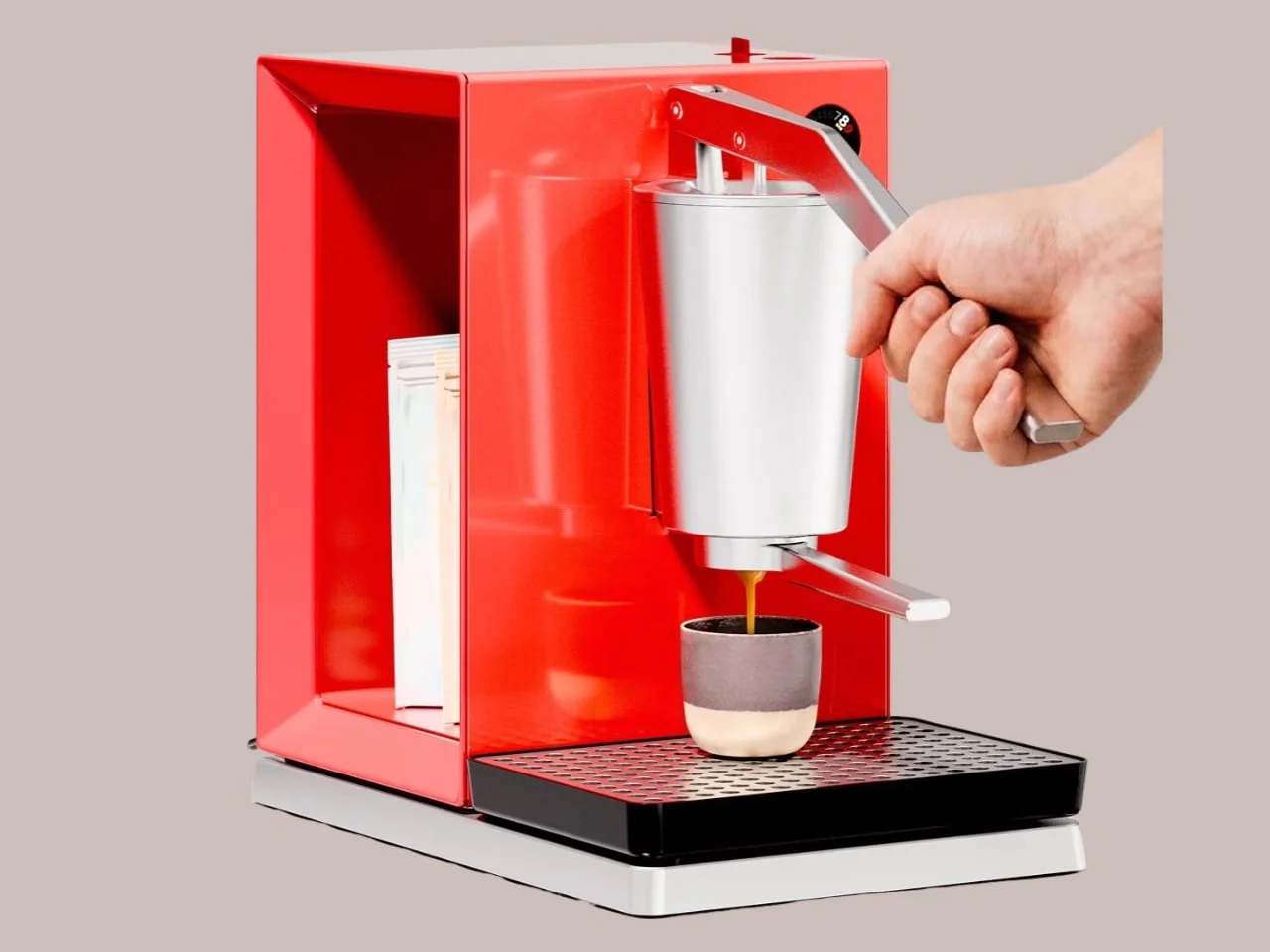
Atypica’s most compelling idea is that espresso data should be easy to see while you’re pulling a shot. Designer Andrea Tomaciello’s concept pairs a manual lever with a compact display showing pressure, temperature, elapsed time and cup weight. The measurements sit alongside the physical work of brewing, giving the user information without taking the decisions away from them.
That balance points to a specific audience: people who want to understand how small changes affect a shot. Automatic settings can produce coffee with little effort, but they leave less room to respond when an extraction runs quickly or to test a different pressure profile. A direct lever makes those choices part of the routine, and the display can help connect each adjustment to what’s happening in the cup.
There’s a tradeoff here. A manual machine makes the user responsible for more of the process, and visible readings are useful only if they’re easy to interpret while attention is split between the lever, the cup and the scale. Atypica’s premise is persuasive because it treats measurement as part of the brewing experience, rather than a separate task.
Designer: Andrea Tomaciello
An open frame with a front loaded brew system
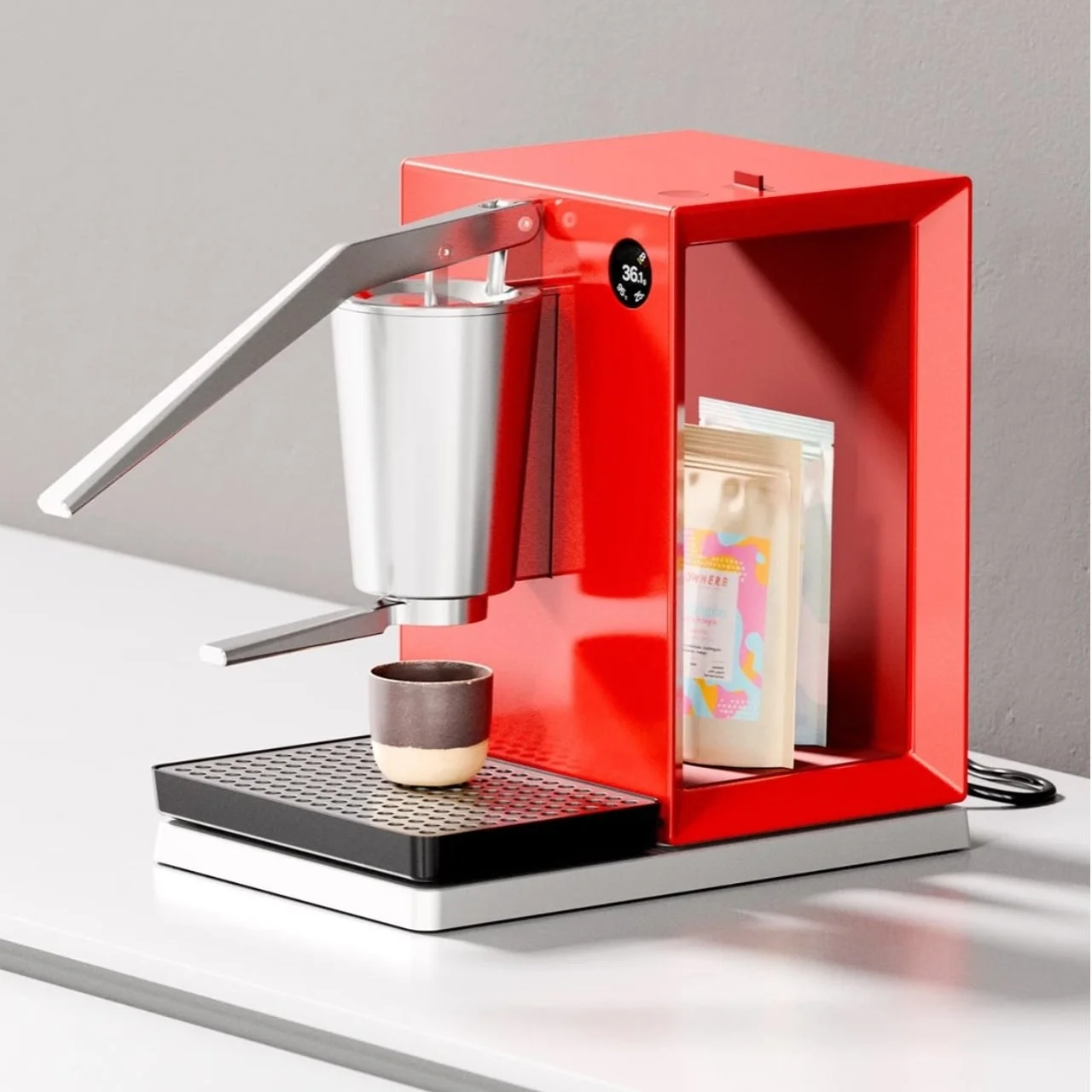
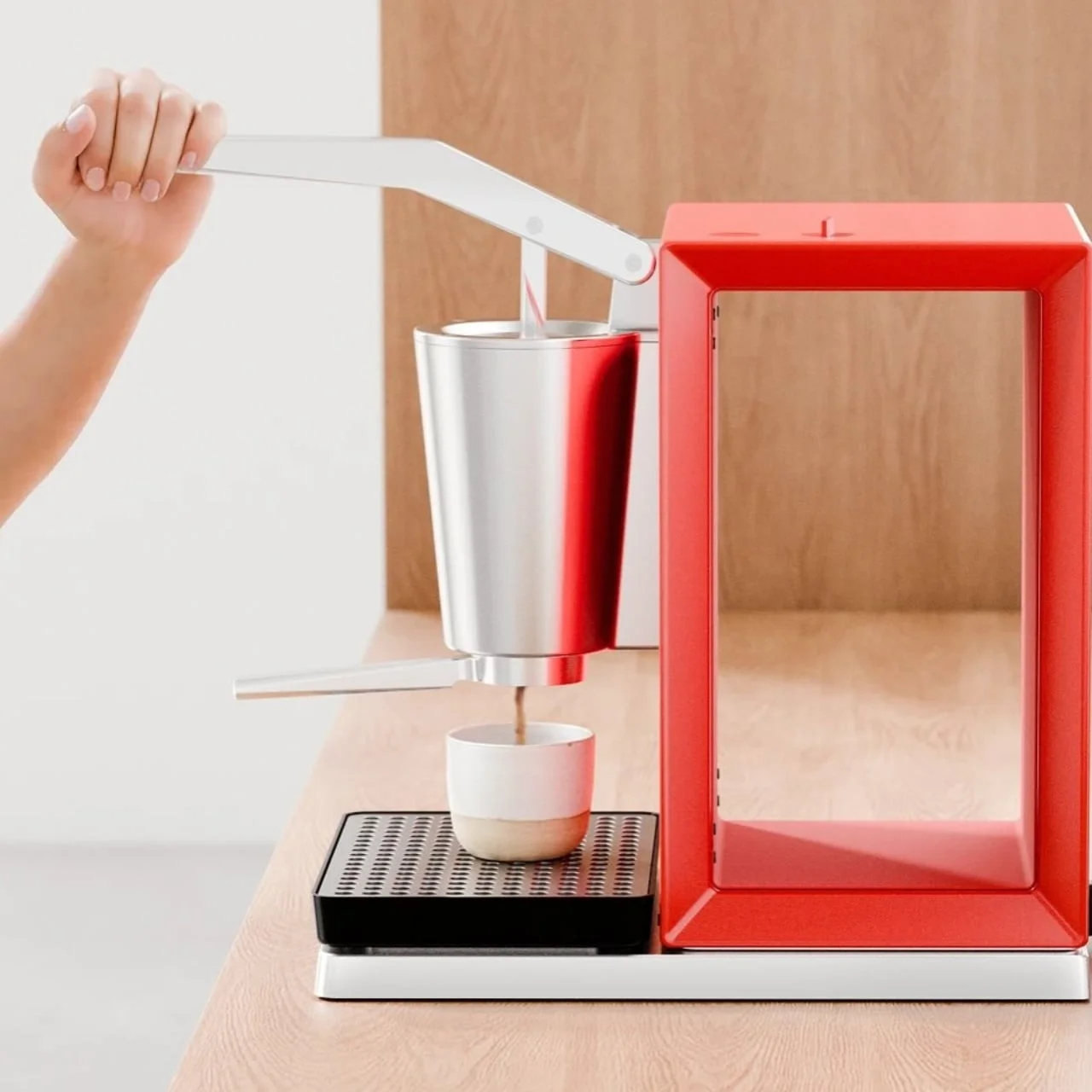
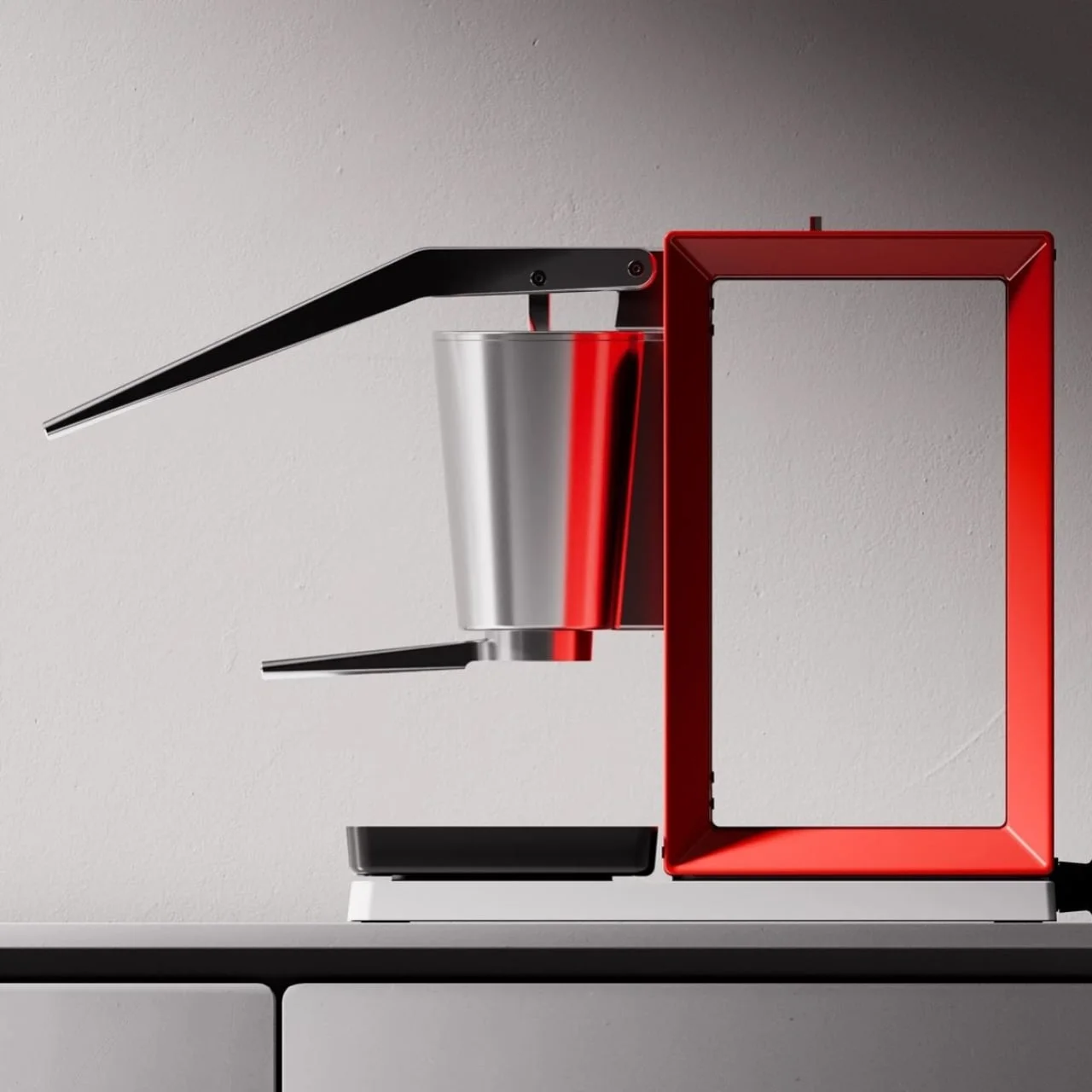
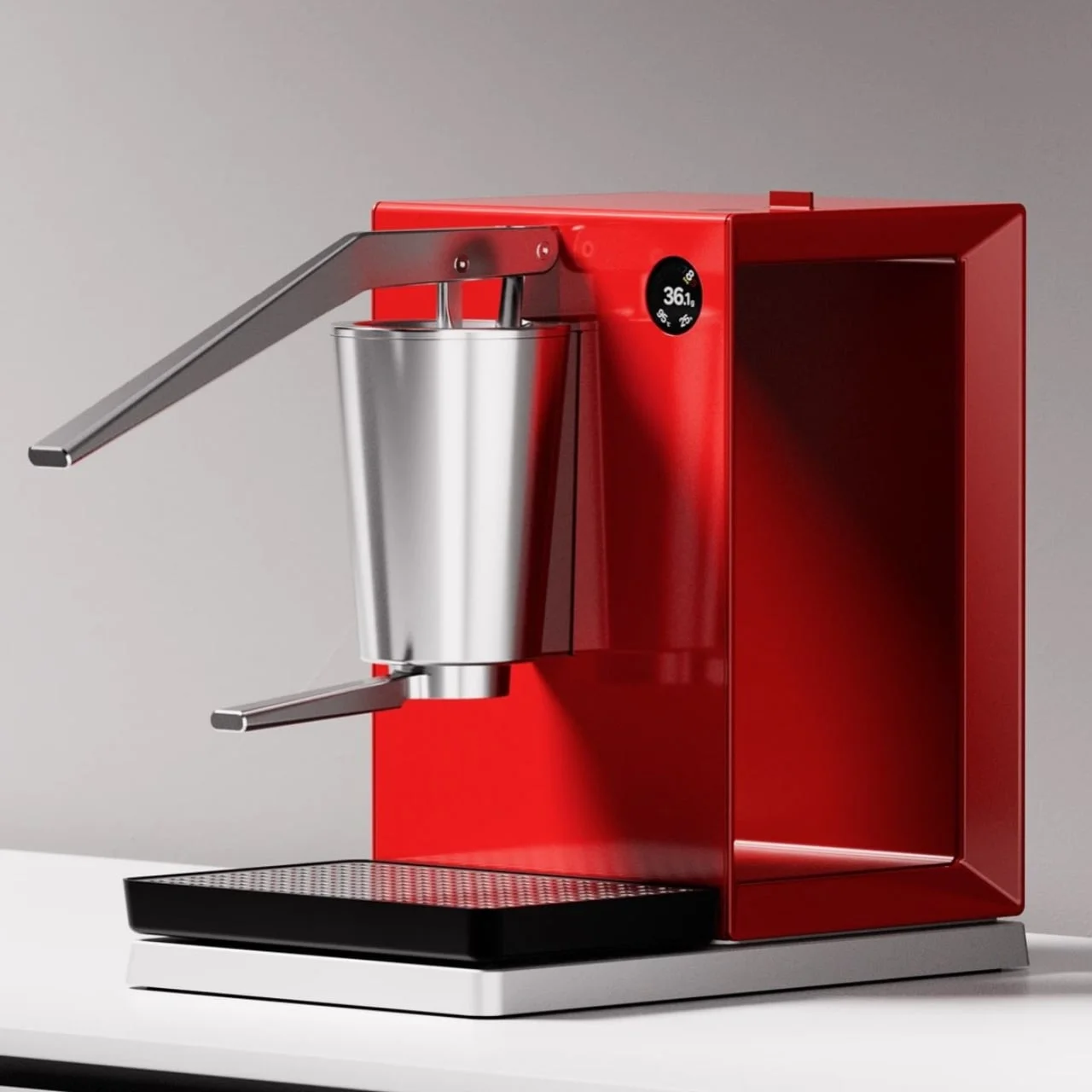
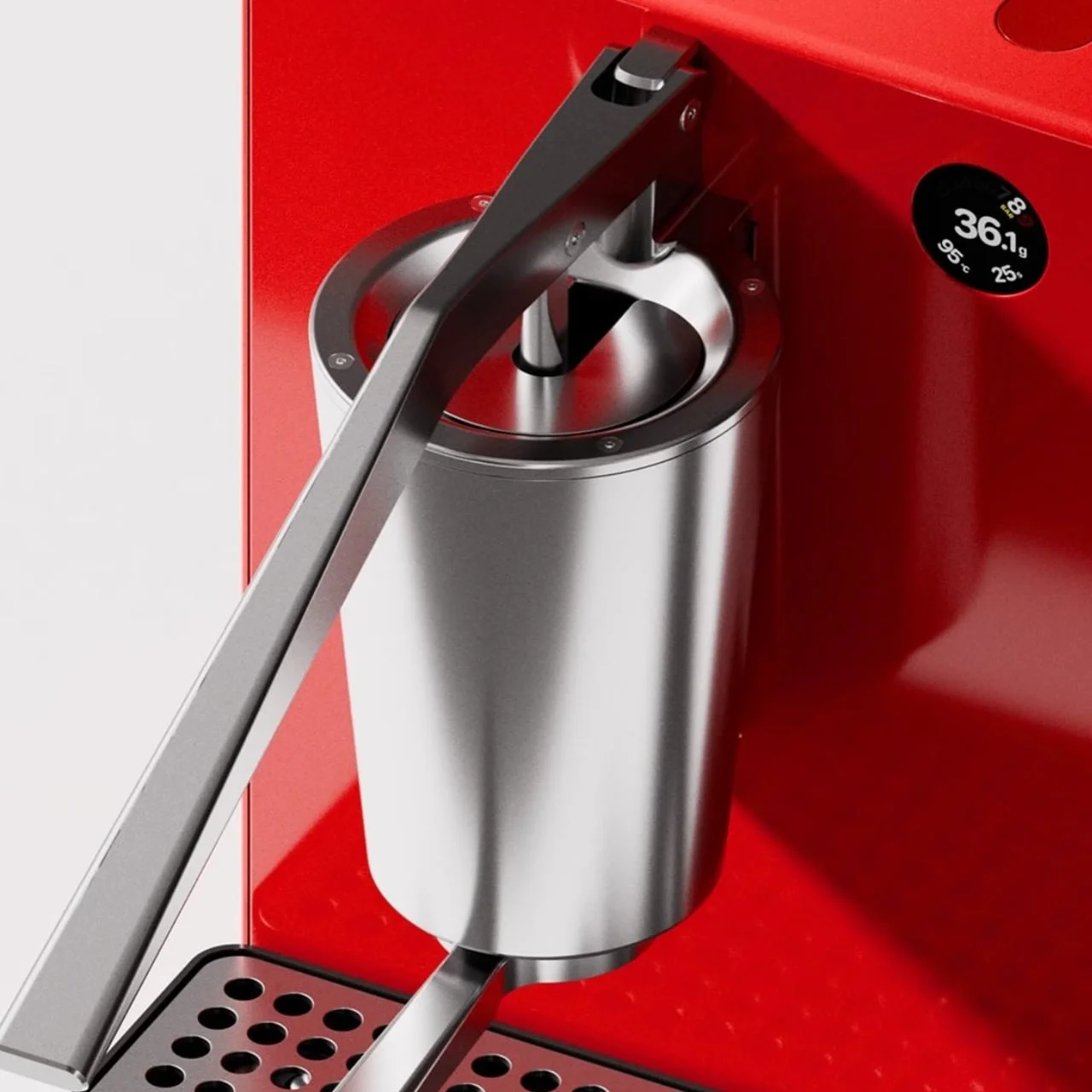
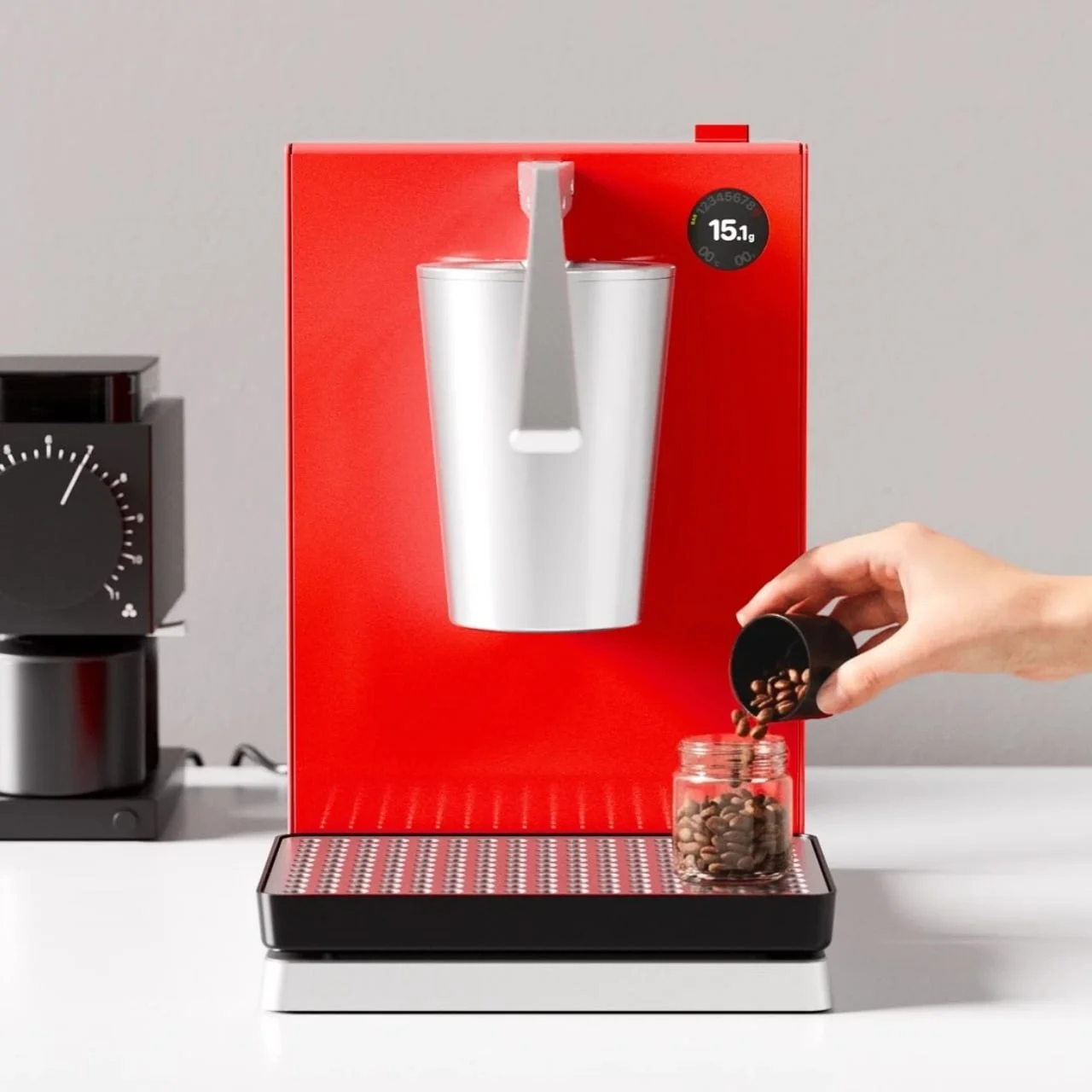
The machine’s red rectangular frame is open at the sides, while the lever and tapered brew head project from the front. Tomaciello’s thesis describes a silver cylinder that brings together the water reservoir, heater and extraction chamber. That arrangement gives the design an airy profile and keeps the working parts visually prominent instead of concealing them behind a conventional outer casing.
The layout also makes the brewing assembly the visual center of the object. That can help the concept communicate how the machine works, but it puts pressure on the proportions: the frame, cylinder and lever have to read as one deliberate composition while leaving enough space to operate the machine. The images suggest a design that wants to be observed as well as used.
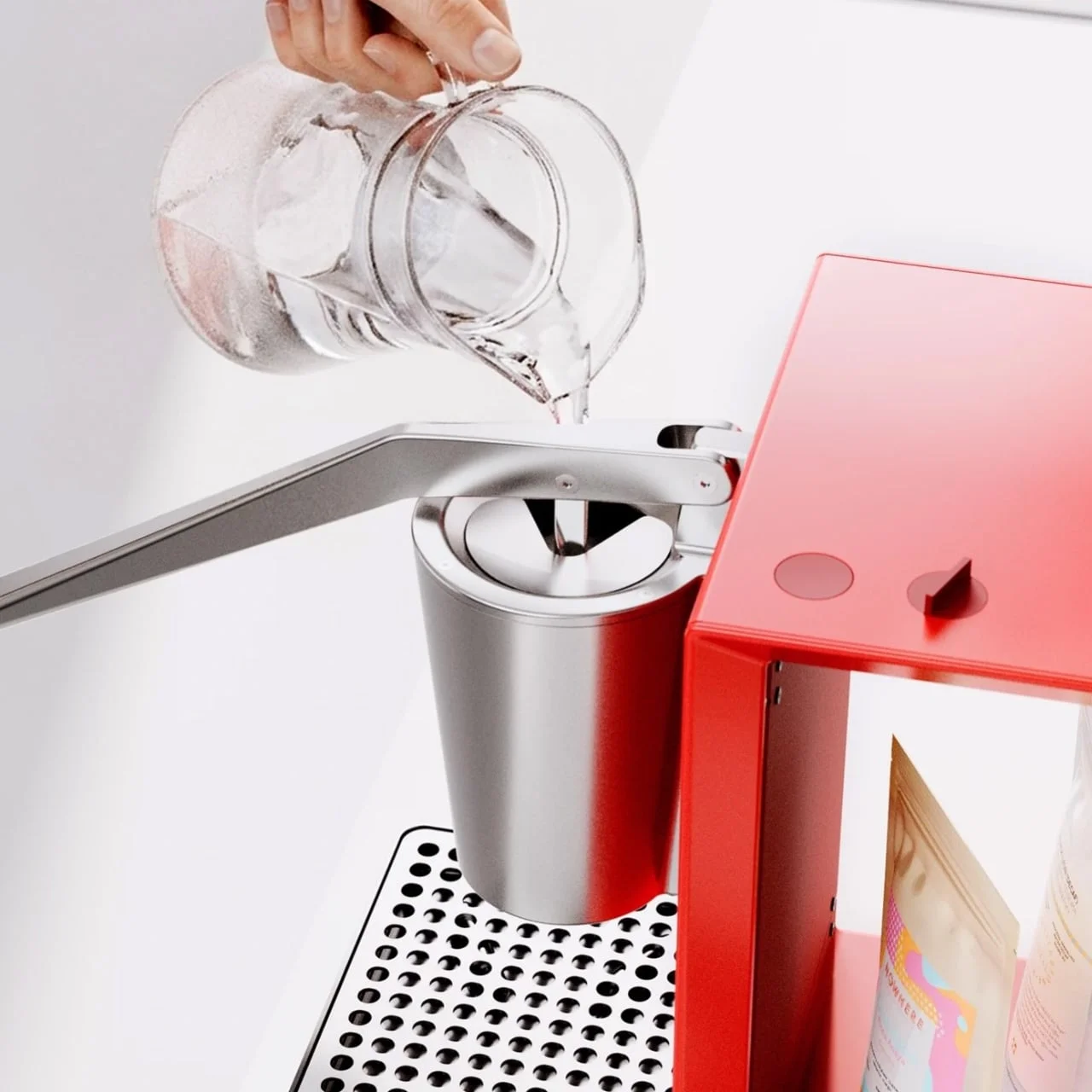
The brief draws on espresso machines from the 1970s, though Atypica’s beveled frame has an architectural quality. It reads as a carefully shaped structure around the brewing assembly, rather than a familiar appliance shell. One image places coffee bags inside the frame; leaving that opening clear might better preserve the form’s visual lightness. The empty space is doing design work, and filling it changes the impression.
Measurements that support experimentation
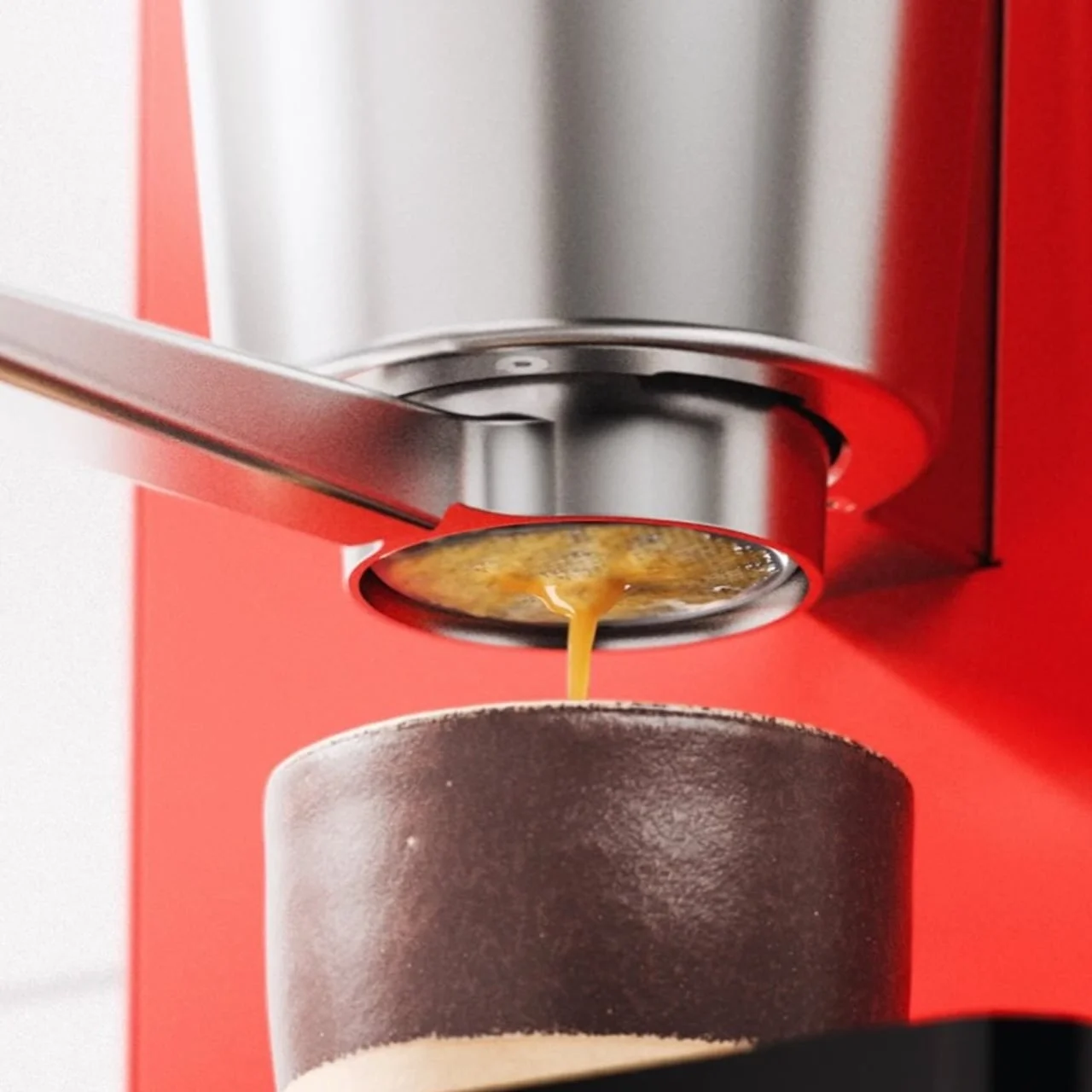
On a direct lever machine, the user’s force moves a piston that drives water through the coffee. Starting gently can wet the grounds before pressure builds, giving the person pulling the shot a way to shape the extraction. It also demands attention: resistance changes with grind size and how much coffee is packed into the basket. The lever offers control over those conditions, but it doesn’t remove the need to account for them.
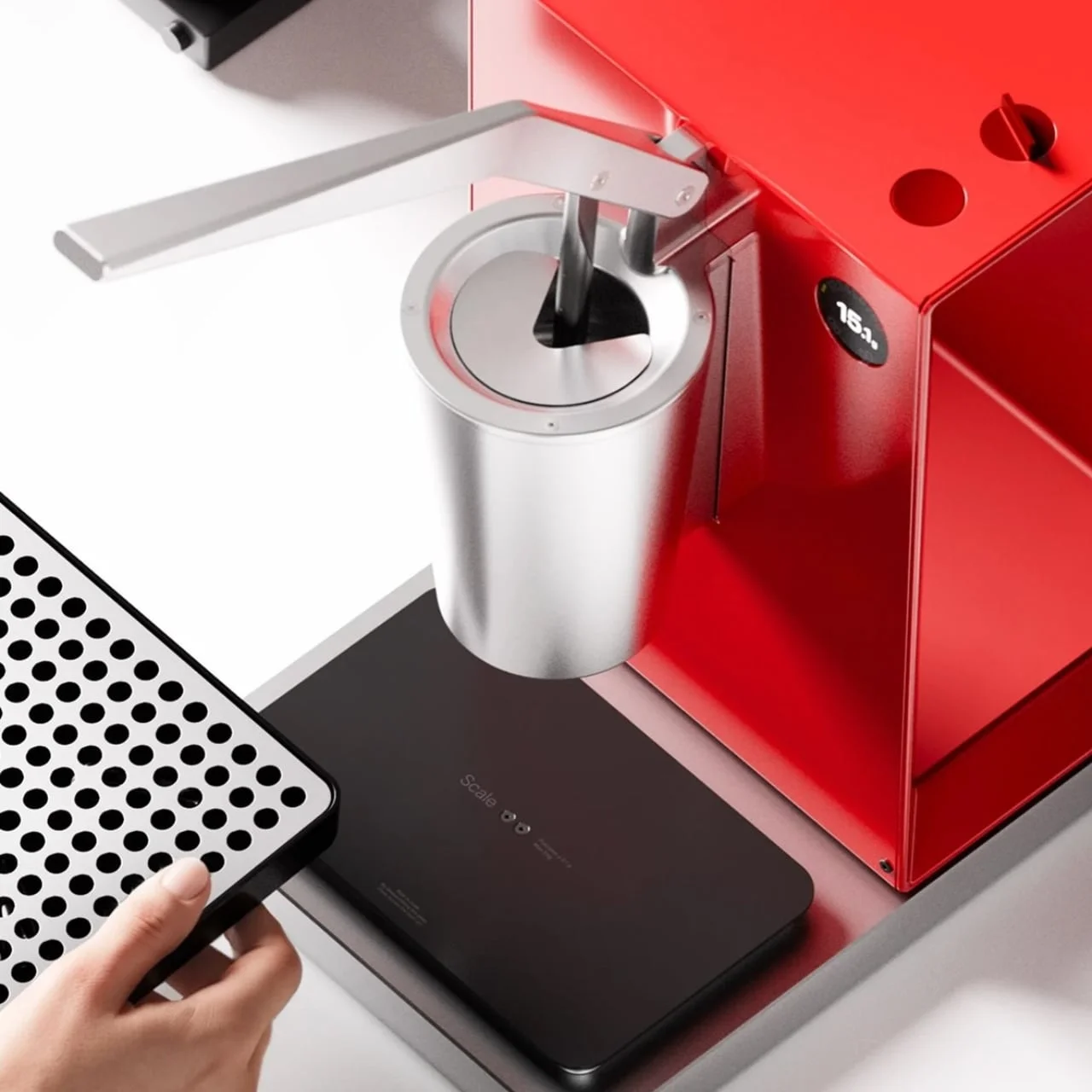
Atypica’s small black display makes that hands-on process easier to read. Pressure appears across the top, with temperature and elapsed time beneath it; cup weight gets the largest figures. The scale is integrated into the base below a lift-off drip tray, so the user can monitor yield without checking a separate scale. The hierarchy seems sensible: weight is prominent at the point where the coffee collects, while the other readings add context about the shot.
That information could be useful when a result disappoints, but it won’t explain every cause by itself. A change in grind, dose or technique can affect what the display records, and the user still has to decide which variable to adjust. If you’re working in this space, the appeal is less about making espresso automatic than about giving repeated attempts a clearer record.
Emphasizing weight gives each trial a concrete endpoint. Someone could keep the dose constant and compare a 40 gram yield with a 36 gram one, then taste the difference and decide which result works better. The display would make it easier to repeat a preferred outcome or adjust from there. A vague impression of a shot running long becomes a measurable change. That’s a useful distinction.
Practical questions remain
The open structure makes Atypica look less bulky, but its proportions need to work in an actual kitchen. The raised lever, in particular, would need clearance beneath cabinets. A design that looks balanced in a product image still has to leave room for a user to raise and lower the handle, position a cup and clean around the brewing area.
The brief also names repairability as a goal; assessing that would require knowing how easily a user could reach a worn seal and obtain a replacement. The silver cylinder groups several essential functions, which gives the object a clean visual center, but the concept description doesn’t establish how those parts would be serviced. That distinction matters: repairability is a practical property, not simply an aesthetic intention.
Those details matter because the concept asks its owner to take an active role. That won’t suit every appliance or every coffee routine, especially for someone who values convenience over adjusting a shot by hand. For espresso drinkers who enjoy changing pressure and comparing yields, though, Atypica’s combination of a manual lever and readable shot data makes the extra involvement feel purposeful. Its next test is whether that clarity and control can hold up in a working machine.
What the concept needs to prove
This is more significant than it looks: Atypica frames the espresso machine as an instrument for learning, not just a device for producing a drink. Its display could make experimentation more repeatable, while the lever keeps the user connected to the extraction itself. That’s a coherent product idea, but the interface has to remain legible and useful during the brief, physical sequence of pulling a shot.
And this is the part most people overlook: integrating readings into the machine doesn’t automatically make those readings actionable. The concept will have to show that its display, scale and controls work together without distracting from the brew, and that the open frame can accommodate everyday use and maintenance. Here’s the thing: good industrial design can make those questions visible, but only a working machine can answer them. For now, Atypica offers a clear direction, with the hard engineering and day-to-day details still to prove.
Worth watching.
Discussion
Sign in to join the discussion.