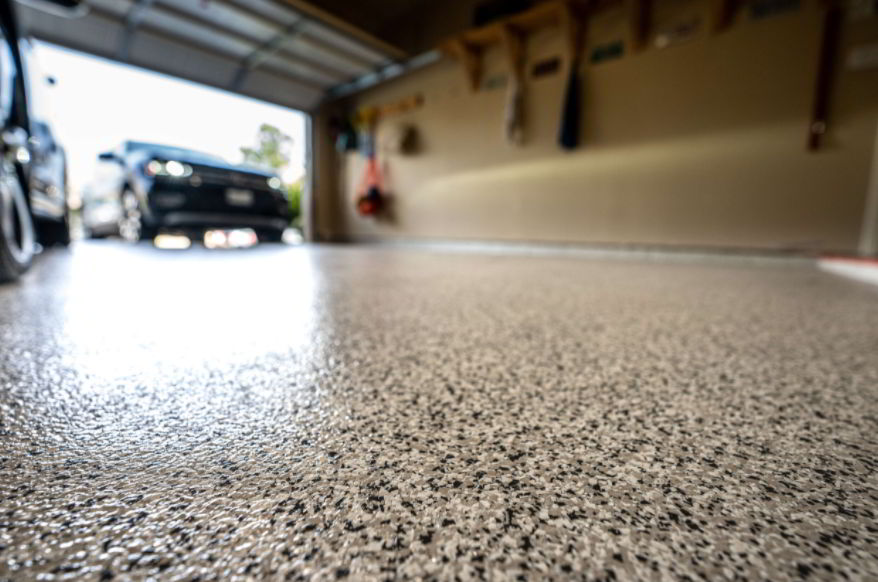
How to Clean Epoxy Floor – There is no denying how attractive epoxy floors are. After all, epoxy floors are known for its toughness, durability, looks, and minimal maintenance.
Minimal maintenance doesn’t mean zero maintenance is needed, of course. As such, knowing how to clean epoxy floor is very important.
Don’t worry. Taking care of epoxy floors is easy. Our brief guide below tells you how to clean this type of flooring so you can keep your floors look new for many years to come. Ready? Let’s start.
If you want your epoxy floors to look good and last for many years to come, you need to clean them regularly. You can also check out these experts in epoxy Flooring Minnesota.
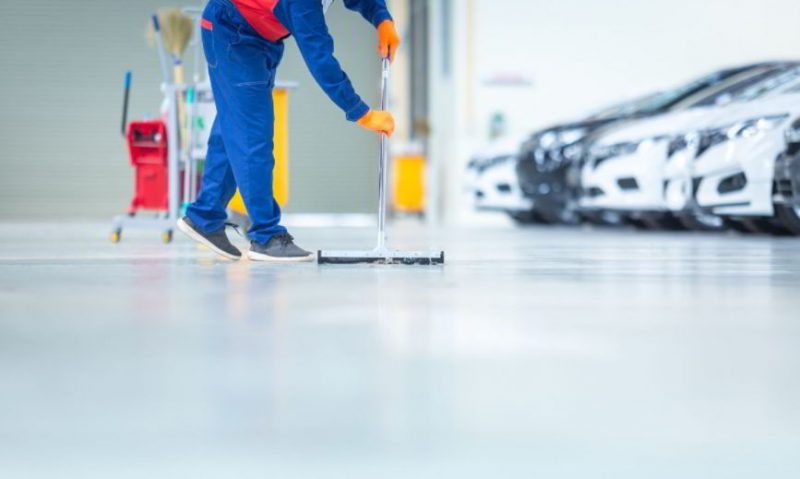
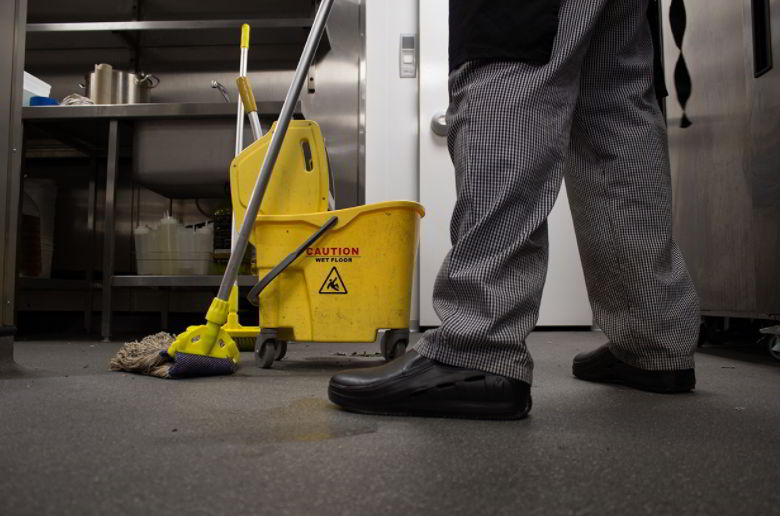
To do so, use diluted ammonia (2 to 3 ounces per 1 gallon of hot water) and apply it with a microfiber mop. Do this twice a month.
Regular sweeping removes any grit and dirt, which if left uncleaned, can become embedded and/or scratch the floor over time.
Although epoxy floors resist abrasion and can take a lot of scratching before it shows damage, removing any grit and dirt can keep it look good and extend their lifespan.
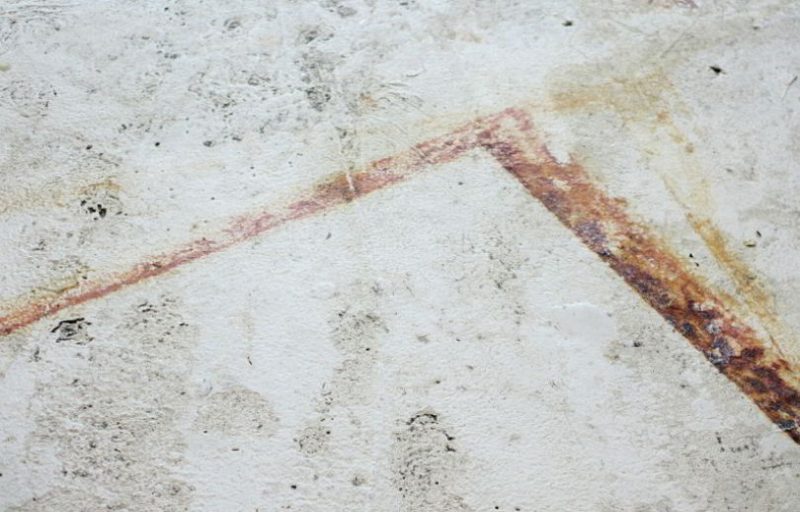
Some stains, like rust, for example, should be brushed or scrubbed lightly to remove them. You can use warm water and a soft deck brush or a kitchen scrubbing sponge for this.
While epoxy floors are resistant to damage caused by chemicals, some chemicals can alter their appearance and performance if they are not cleanup right away.
To prevent this, always prepare a neutralizing agent just in case. Remember, before you clean chemical spills, you must neutralize them first.
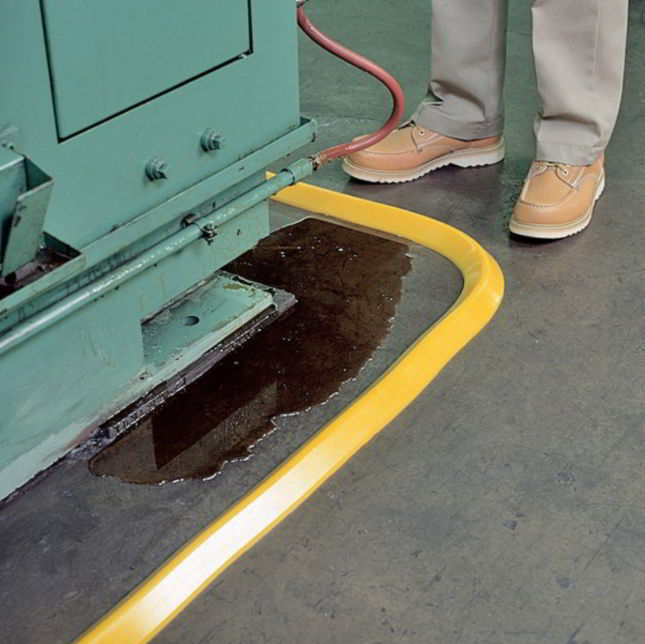
Gasoline, oil, antifreeze, as well as other automotive chemicals, can be cleaned up easily with paper towels or shop towels.
You should clean chemical spills ASAP. Epoxy floors not only resist stains and damage from chemical spills but also isolate the liquid. They, however, cannot do so indefinitely.
Due to its toughness and durability, epoxy flooring is often used in a warehouse or factory. After all, the flooring can withstand a lot of things before it shows damage.
If you want to keep it clean and extend its lifespan, you need to add an extra layer of protection.