A wall mural can transform a room when its image, scale and setting work together. Learn where murals fit, how they compare with wallpaper and what to consider before installation.
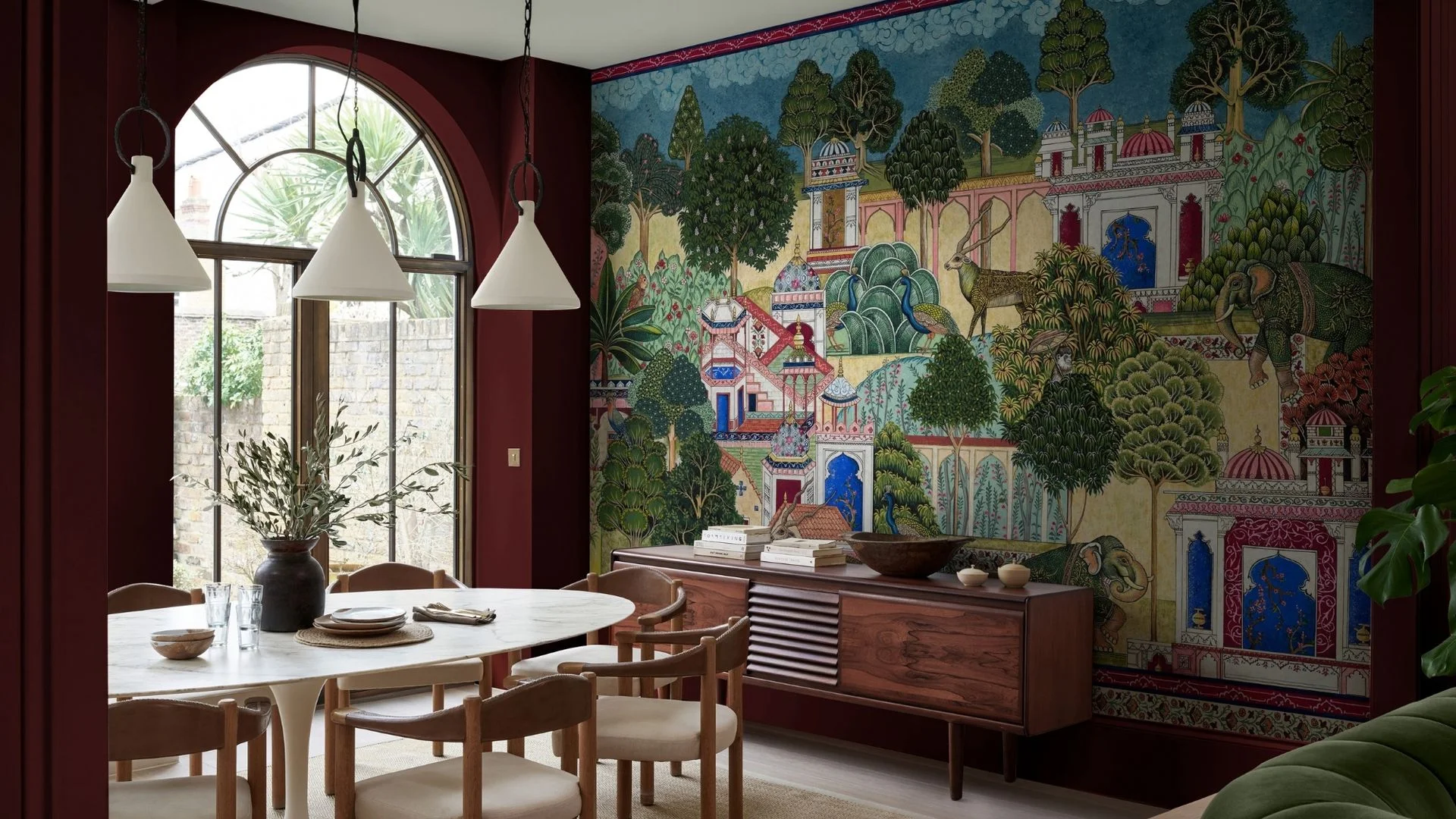
The real question with a wall mural isn’t whether it’s bold. It is. The question is whether that scale can make a room feel more considered, rather than crowded. Digital printing has made large images far more accessible than hand-painted work: a plain wall can become a landscape, a botanical scene or an abstract composition in an afternoon, often for a fraction of the cost of commissioning an artist. Still, choosing one design for a whole wall takes commitment.
So when does a mural earn its place, and when does it take over? We asked interior designers, wallpaper brands and tile specialists about where murals work, what they cost, how to install them and which mistakes are easiest to avoid. Their advice points to a simple distinction: a mural is the room’s focal point, so its setting matters as much as its image. If you’re weighing one against a more familiar feature wall, that’s the place to start.
What counts as a wall mural?
A mural is a single image scaled to cover a wall. Unlike conventional wallpaper, its design doesn’t repeat. Printed versions usually arrive as numbered panels that join to form one continuous picture, and many can be made to measure for the wall they’re intended to cover.
“A mural allows you to treat a wall almost like a piece of art,” says John Law, creative director of interiors at Woodhouse & Law. He says a mural can create a focal point, change how a room’s proportions are perceived or draw attention to an architectural detail.
Wallpaper is only one way to get that effect. Hand-painted artwork, decorative tiles, fabric, printed waterproof panels and vinyl decals can all turn a wall into a large-scale image. The right choice depends on the room, the finish you want and your budget.
Why choose a mural over wallpaper?
Patterned wallpaper is usually designed to sit in the background. Because its motif repeats, it can cope with interruptions from internal doors, windows and awkward corners. A mural has a different job: it asks to be looked at.
“I’d recommend choosing a mural when you want to make a statement, create a focal point, or change the atmosphere of a room,” says Sandra Willund, creative director at Rebel Walls.
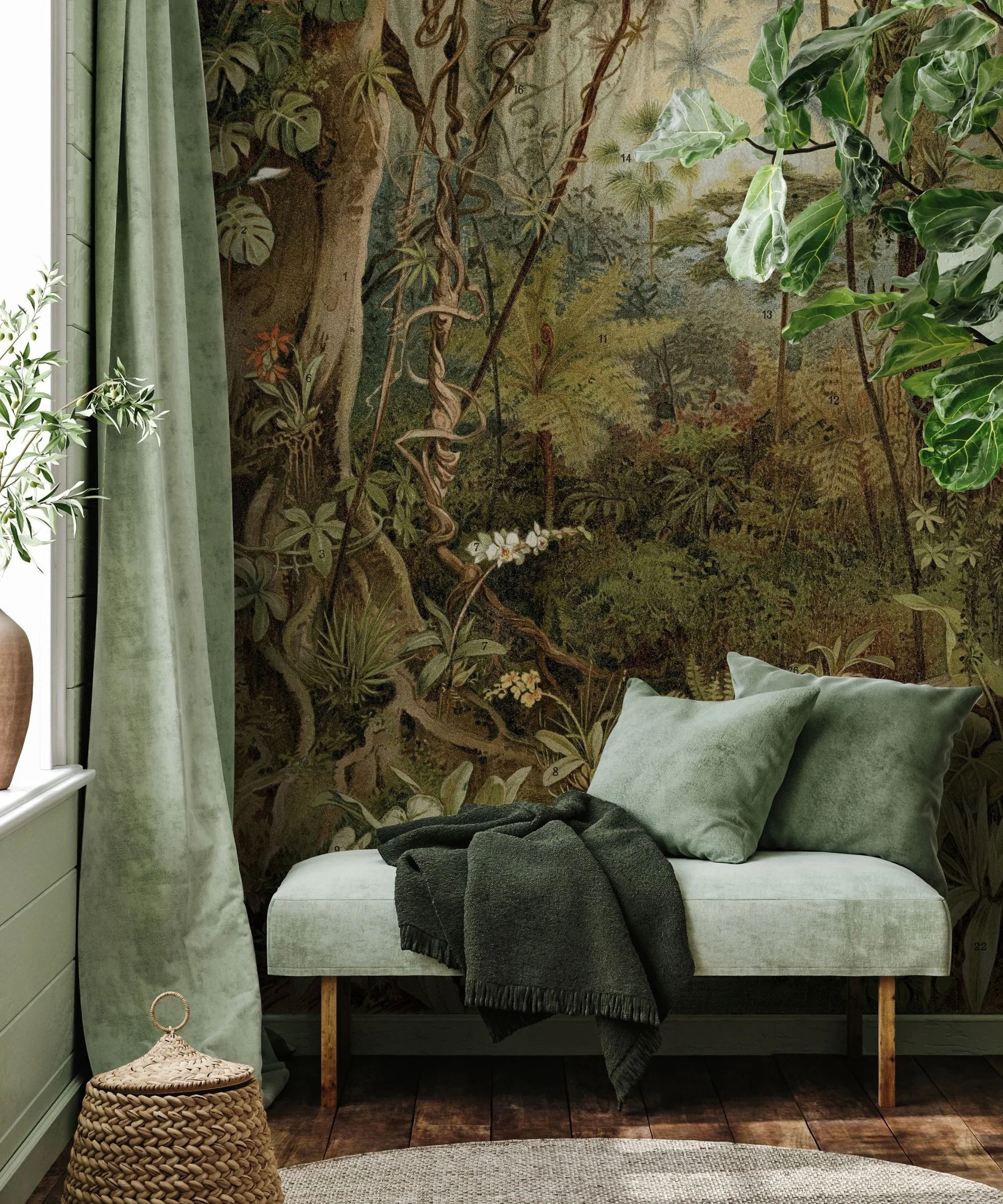
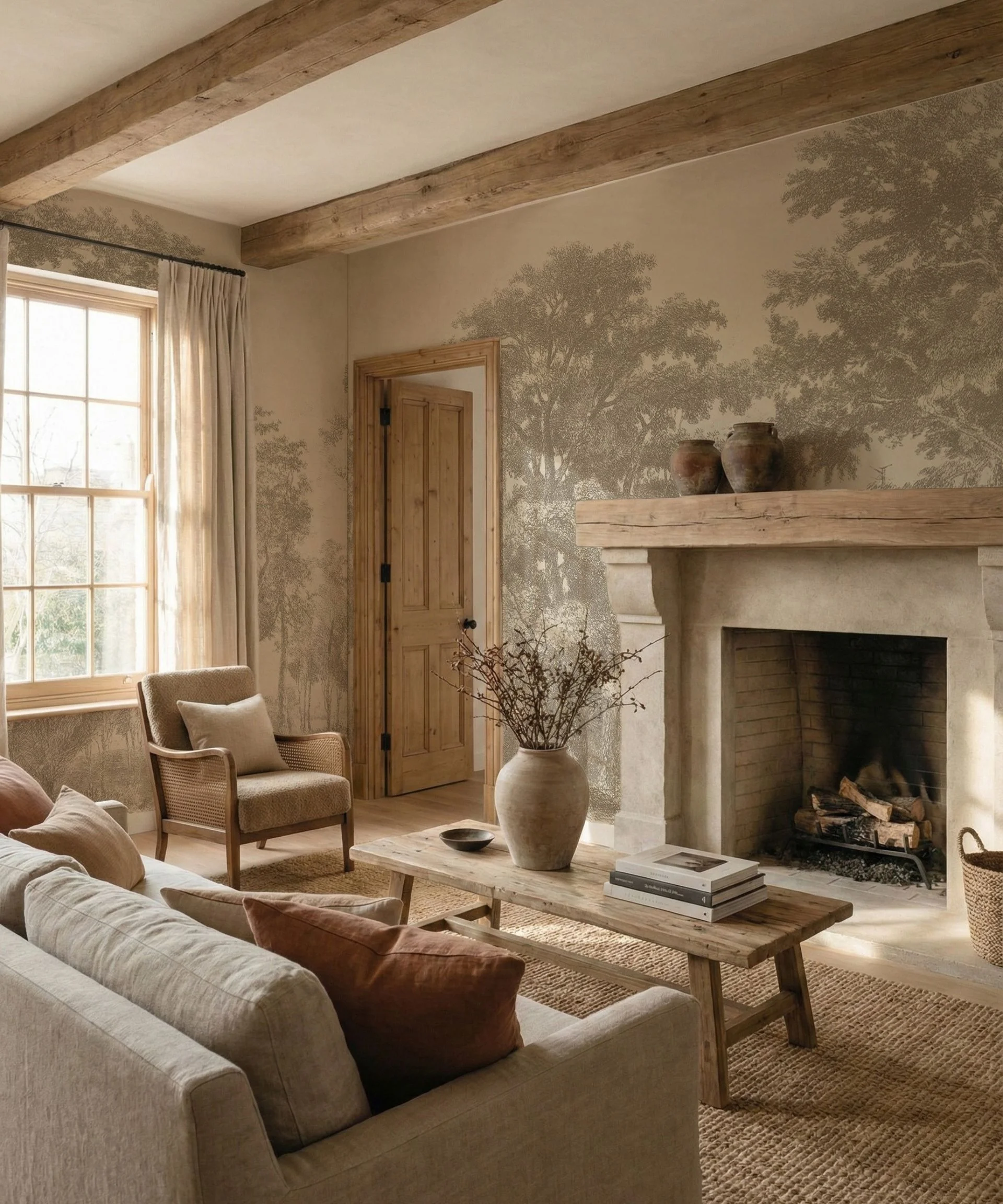
That change in mood is the stronger case for a mural. “For me, the beauty of a mural is that it can completely change the feeling of a room,” says Tom Kennedy, co-founder and creative director at Divine Savages. Instead of adding pattern alone, he says, it can suggest a garden, woodland or imagined landscape.
Large designs can look like a risk, but scale is also what gives a mural its depth. Kennedy says the key is choosing a wall and room that suit the image. That’s more useful advice than simply opting for a smaller print: a large mural can bring a room into focus, provided its composition has space to read.
Where do wall murals work best?
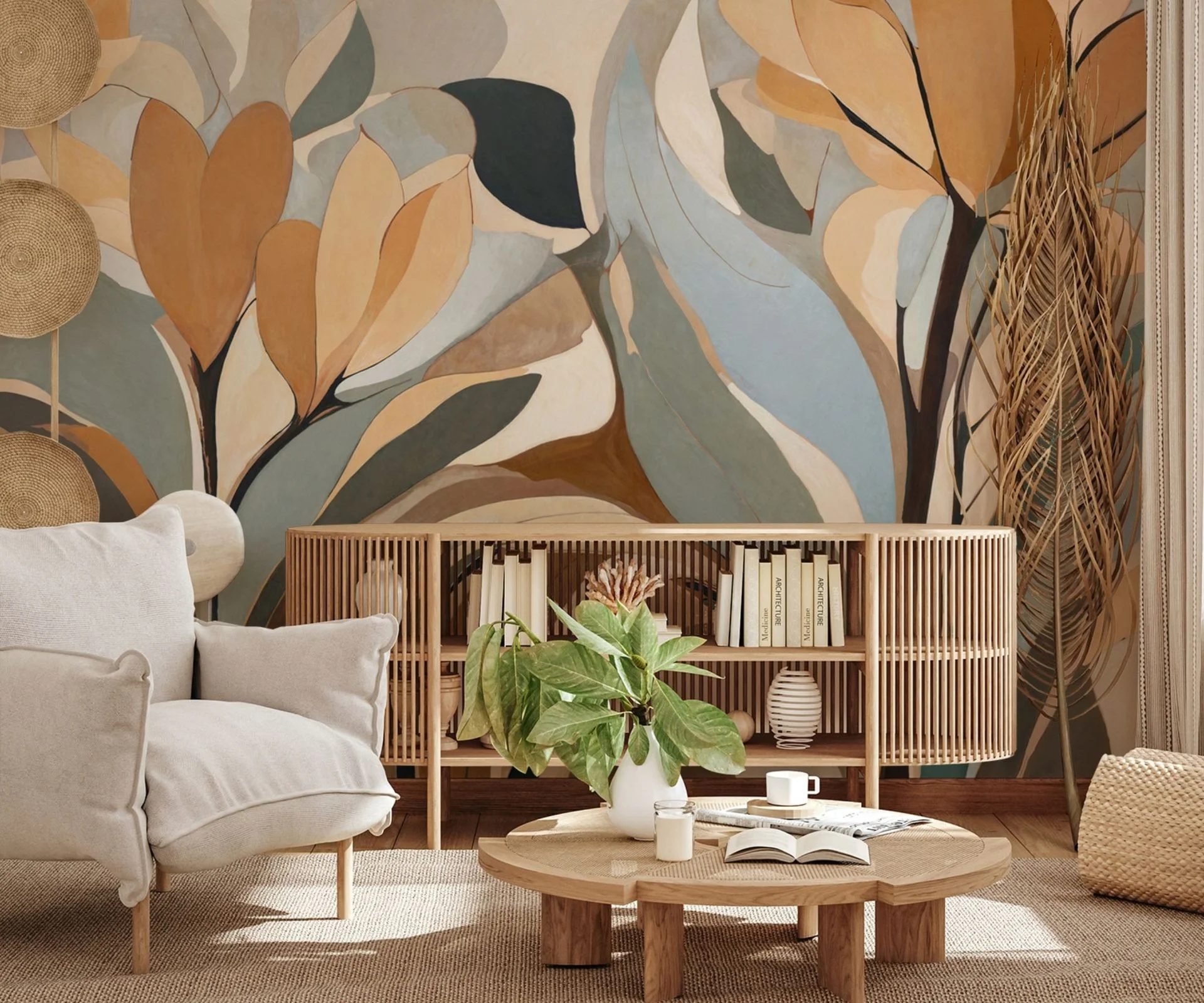
Living rooms, dining rooms and bedrooms can accommodate a strong visual feature. Caroline Woolmer, head of product design at Lucie Annabel, recommends using a mural as a feature wall in these spaces, where the image has room to tell its story.
In a bedroom, the wall behind the bed offers a natural backdrop. Woolmer says a mural there can add impact while preserving the room’s “sense of calm.” Children’s rooms invite a more playful approach: she says character-led or narrative designs can “invite play and spark imagination.” Options include Dunelm’s Woodland Forest Wall Mural for children who love nature, or its Cloud Gazing Wall Mural, designed to inspire sleep.
If a full-sized scene feels like a lot to take on, try a smaller room. Woolmer suggests wrapping a powder room, hallway or boot room in a botanical or landscape design. You spend less time in these spaces, which can make an immersive image easier to live with.
A mural can also extend beyond a single wall. In a discussion of whether feature walls are out of fashion, designers described a shift in how they’re used. Law says continuing a design around a corner or across the ceiling can create a more immersive result; Kennedy says clients are moving beyond the traditional accent wall and wrapping murals around whole rooms.
Shop wall mural designs
 Paste the wall
This vibrant wall mural is designed to hang straight from the roll using simple paste the wall application.
 Vintage Effect
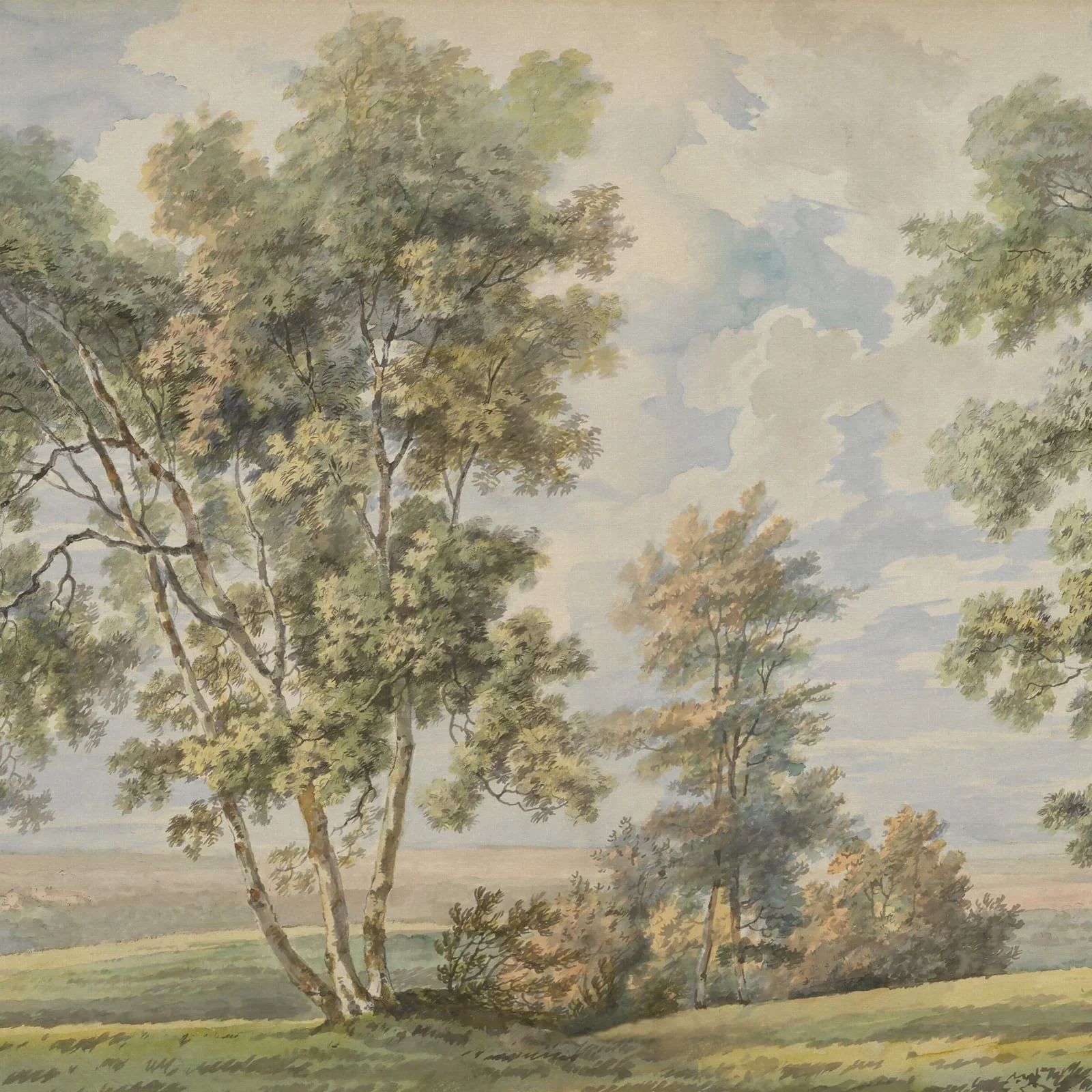
This vintage design is perfect for bringing a touch of nostalgia to a room, as its muted greens and browns create a timeless landscape.
 Artwork Inspired
For something totally unique, this dusty pink crane mural would be perfect for transforming plain walls into beautiful artwork.
Where should you avoid a wall mural?
Restraint matters in a large, busy room. Woolmer advises against covering every wall where detailed imagery could become too much, and says functional kitchens can already have enough visual activity from appliances, cabinets, splashbacks and shelving.
Standard wallpaper murals also aren’t suited to showers or walls that get splashed regularly. For a kitchen or bathroom mural, consider tiles or waterproof panels instead. Law’s rule is to choose the technique for the room’s architecture and use, rather than picking the most decorative option first.
Are wall murals easy to hang?
Putting up a mural is physically much like hanging wallpaper, but the planning is less forgiving. A repeat pattern gives you a fresh chance to match the design with each drop. A mural is one picture, so every panel has a fixed place in it.
“A mural is designed as one continuous piece of artwork, so the placement of each panel matters,” Kennedy says. He recommends planning where the image begins and ends, then checking the panels are in the right order.
Law says positioning is everything. Consider how the image will sit beside doors, windows and fireplaces, as well as other architectural features. The wall itself needs attention too: Kennedy says it should be clean, smooth and properly prepared, since bumps and marks can stand out across a large image. Our guide to hanging lining paper explains how to create a smooth base.
Other ways to create a mural effect
Printed wallpaper is the familiar option, but it doesn’t suit every surface or every level of permanence. Tiles, waterproof panels, paint and decals can all carry a large-scale design, with different trade-offs in practicality, time and cost.
1. Tiles for kitchens and bathrooms
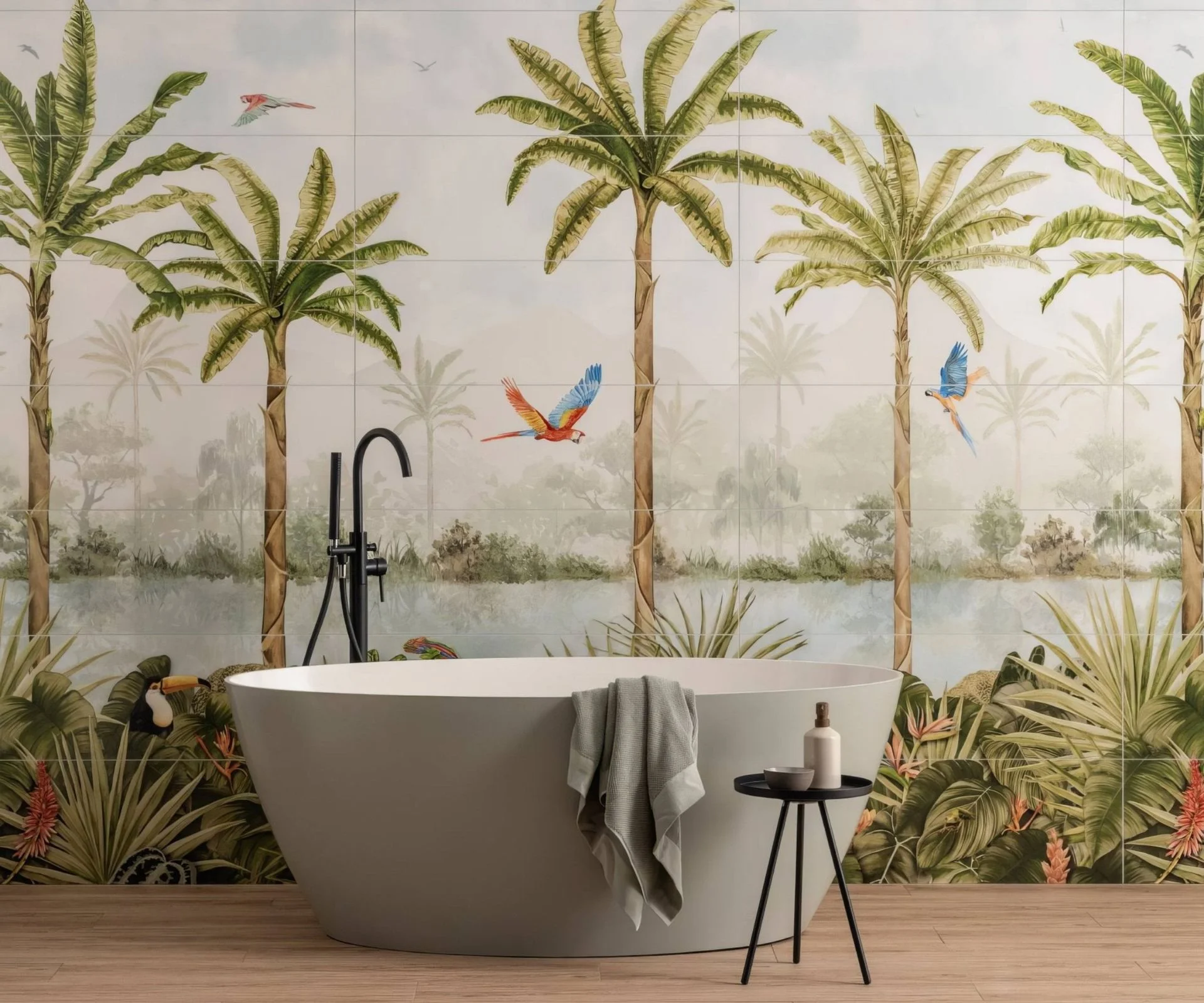
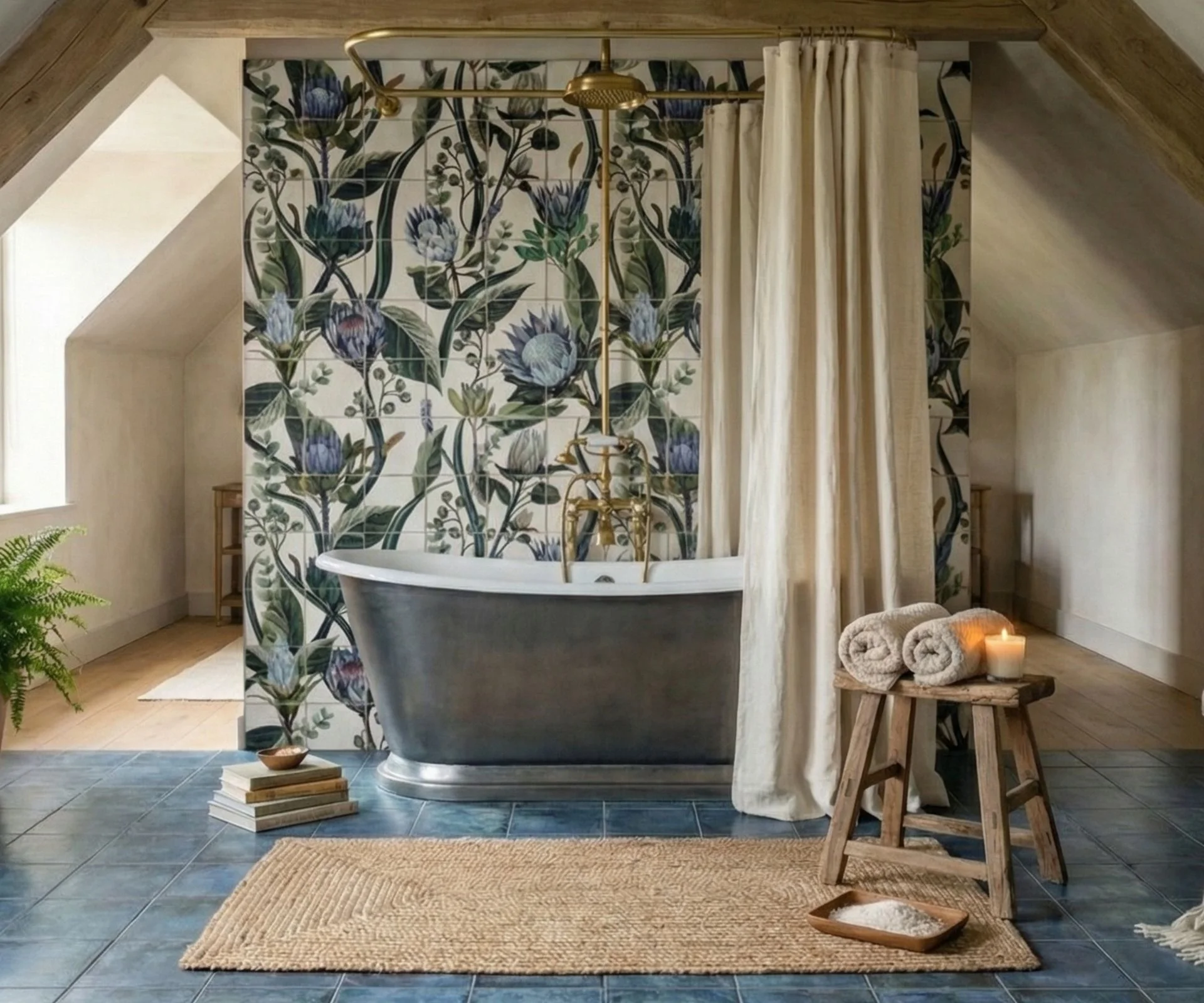
Tiles bring mural designs into rooms where wallpaper may not hold up. “In kitchens and bathrooms they can often be a more practical way of achieving it because you are combining decoration with a surface that is designed to cope with water, steam, splashes and everyday wear,” says Lesley Taylor, interior designer and founder of Baked Tiles.
Taylor suggests using a tiled scene where it has room to be seen: behind a freestanding bath, for example, or across a shower wall. In a kitchen, the stretch of wall between the worktop and cabinets can do more than protect against splashes.
Some products are sold as tile sets that form a single image, such as Hyperion Tiles’ Tropical Oasis mural (£286.17 per m²). Another option is to pair illustrated tiles with coordinating wallpaper. Kennedy says the two together can create “a continuous, almost mural-like story across the wall.”
2. Printed wall panels
Printed waterproof panels create a broad image with fewer joins and no grout lines. Richard Skeoch, director at Hyperion Tiles, says the company’s Splashbax panels are made for wet areas, including bathrooms, showers and wet rooms, when installed and sealed correctly. Its 3mm and 5mm panels can also go over existing tiles if the surface is sound and prepared properly.
Hyperion Tiles’ Tropical Rainforest Shower Panel and Copper Concrete Shower Panel could also suit home gyms or indoor swimming pools in home gyms or basement conversions.
3. Hand-painted murals and decals
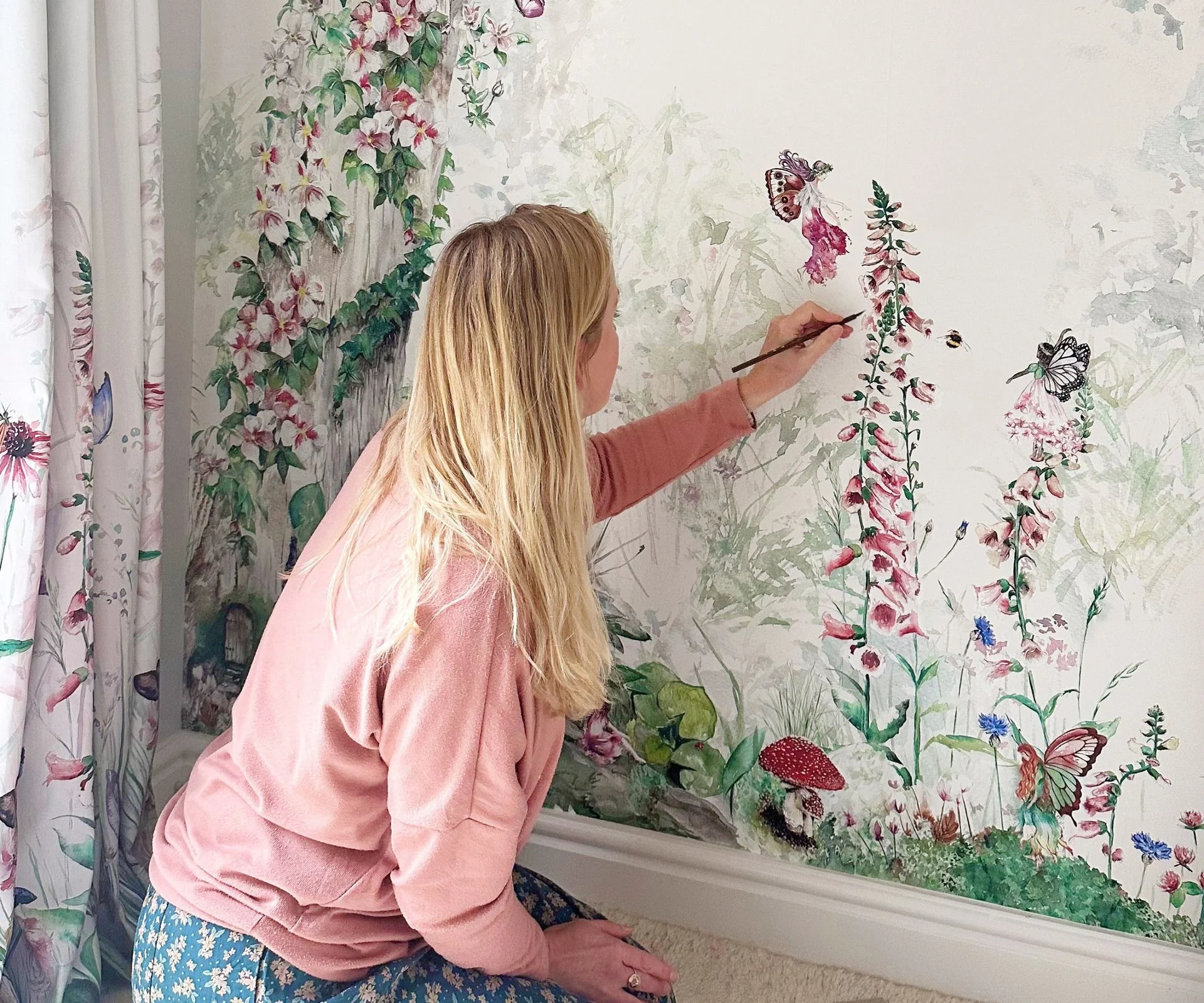
For a design fitted to a room’s exact proportions, hand painting remains a distinctive option. Law calls paint the most versatile alternative: an artist can follow architectural details or paint an illusion, such as a landscape beyond the wall. He recommends this approach for bedrooms, studies and dining rooms, where a more decorative treatment can work well.
The catch is the work involved. Commissioned murals take days rather than hours and generally cost more than printed designs. A confident DIY painter could try simpler shapes or a soft colour-blocked landscape; if the design stops working, repainting restores a blank wall.
Vinyl decals offer a lighter commitment, particularly in children’s rooms and playrooms. Law says they add a large image without locking a room into a fixed scheme, and can be peeled away when a child grows out of a favourite theme. Removable wallpaper is another temporary option, with a more complete finish.
How do you clean and repair a wall mural?
Care depends on the mural’s material, so check the manufacturer’s instructions before cleaning. Some finishes can be washed; others need only a gentle wipe. Grasscloth and other textured surfaces generally require more care than vinyl or printed panels.
Wall murals reward careful planning more than complicated upkeep. Printed panels usually need only a soft cloth and a bathroom cleaner, says Richard Skeoch; abrasive pads and harsh chemicals such as bleach can wear down the finish. A damaged panel is harder to disguise than a patch of repeat-pattern wallpaper, so keep the design and order details in case you need a replacement. Hand-painted murals are easier to touch up: an artist can often repair the affected area.
Where mural projects go wrong
The costly mistakes tend to happen before installation. A mural turns measuring and layout decisions into part of the design itself, so a few centimetres can change what remains visible and how the whole room feels.
Ignoring where the artwork will land
Map the mural against doors, windows, fireplaces and fittings before ordering or cutting. Lesley Taylor says shifting the starting point by just a few centimetres can make the composition feel much better balanced. Plan first; once a key part of the image has been cut away, there may be no easy fix.
Leaving no room for error
Build in the supplier’s recommended safety margin, Sandra Willund advises. If the design spans multiple walls, add their widths together and order one continuous mural so the image lines up across the corners.
Keeping the design too small
A small patterned panel can look tentative, Lesley says. Covering the full wall may feel calmer and more intentional than confining the image to a narrow patch.
Rushing wall preparation
A large image makes bumps, cracks and uneven plaster hard to miss. Smooth the surface before hanging; the advice in this guide to preparing walls for painting applies to wall coverings as well. Then get the first panel straight, Sandra says, because every panel that follows depends on it.
Choosing from a screen alone
A design has to work with the room around it. John Law recommends considering natural light, flooring, furniture and the view from the doorway. A mural that feels lively in a bright, south-facing room could weigh down a darker space; consider how the room looks and is used at different times of day.
Skipping a sample
Screen colours can mislead, and a matte, textured or glossy surface will affect how the mural looks once it’s on the wall. Richard Skeoch recommends ordering a sample to check its colour, finish and scale in the room. Samples are often inexpensive: Divine Savages’ start from £3. Pin one up and view it in daylight and under artificial light before placing an order.
What a wall mural costs
Price depends on wall area, material and whether the mural is made to measure. Most suppliers charge by area rather than by the roll, so get accurate measurements before comparing quotes.
Printed made-to-measure designs are generally the lower-cost option. Rebel Walls starts at £43 per square metre. You enter your wall dimensions and the mural is produced to fit, Sandra Willund explains. Designer options and textured finishes cost more.
At the other end, tiled and panel murals often run to around £200-300 per square metre. Richard Skeoch advises calculating the price across the full area for made-to-measure printed panels, then adding installation costs if you plan to hire a decorator.
Professional labour is another line in the budget: decorators typically charge about £150–£250 a day, according to this guide to the cost of wallpapering a room. For a large or custom design, that may be money well spent. John Law’s point is practical: installation is a relatively small expense beside the wallcovering, and a poor hang can waste the larger investment.
Wall mural FAQs
How can you keep a mural from overwhelming a room?
A single feature wall is the simplest way to introduce a mural, says Caroline Woolmer. For a large scenic design, a dado rail or wall panelling can break up the wall and give the room a more traditional structure.
Let the mural guide the rest of the palette. Caroline suggests repeating a few of its colours in accents and pairing it with small-scale patterns such as fine stripes, ditsy florals or subtle geometrics. Large prints and strong colour contrasts are more likely to compete for attention.
Tom Kennedy suggests two approaches: keep the rest of the room quiet when the mural is detailed or colourful, or carry one or two of its colours into curtains, upholstery or furniture for a more enveloping, colour-drenched scheme.
Is hanging a wall mural a DIY job?
It can be. Many murals use paste-the-wall paper, which is easier to position than traditional paste-the-paper designs, and Sandra Willund says the job is more approachable than people expect.
But a mural leaves less room for error than a repeating pattern. Tom Kennedy wouldn’t recommend it as a first wallpapering project, especially if the design is expensive or bespoke; he’d hire a professional. John Law agrees that a confident DIY decorator can manage, but says professional installation is sensible for large or custom murals given the cost of the wallcovering.
Can you paint over a mural if you change your mind?
You can, though stripping the mural first usually gives a better surface. This guide to painting over wallpaper explains why: bold, high-contrast images may take specialist primer and several coats to hide, while vinyl or textured paper can keep paint from adhering properly.
Sandra Willund also recommends removing the wallpaper and preparing the wall before repainting. If you expect to change the room often, she suggests peel-and-stick murals, which are designed to come down more easily.
For help with tricky edges and pattern alignment, see these guides to wallpapering around a window and hanging patterned wallpaper.
Discussion
Sign in to join the discussion.