8BitDo’s anniversary gamepads pair Tomb Raider designs with magnetic controls, platform-specific features and prices starting at $79.99.
Two anniversary controllers, two different priorities
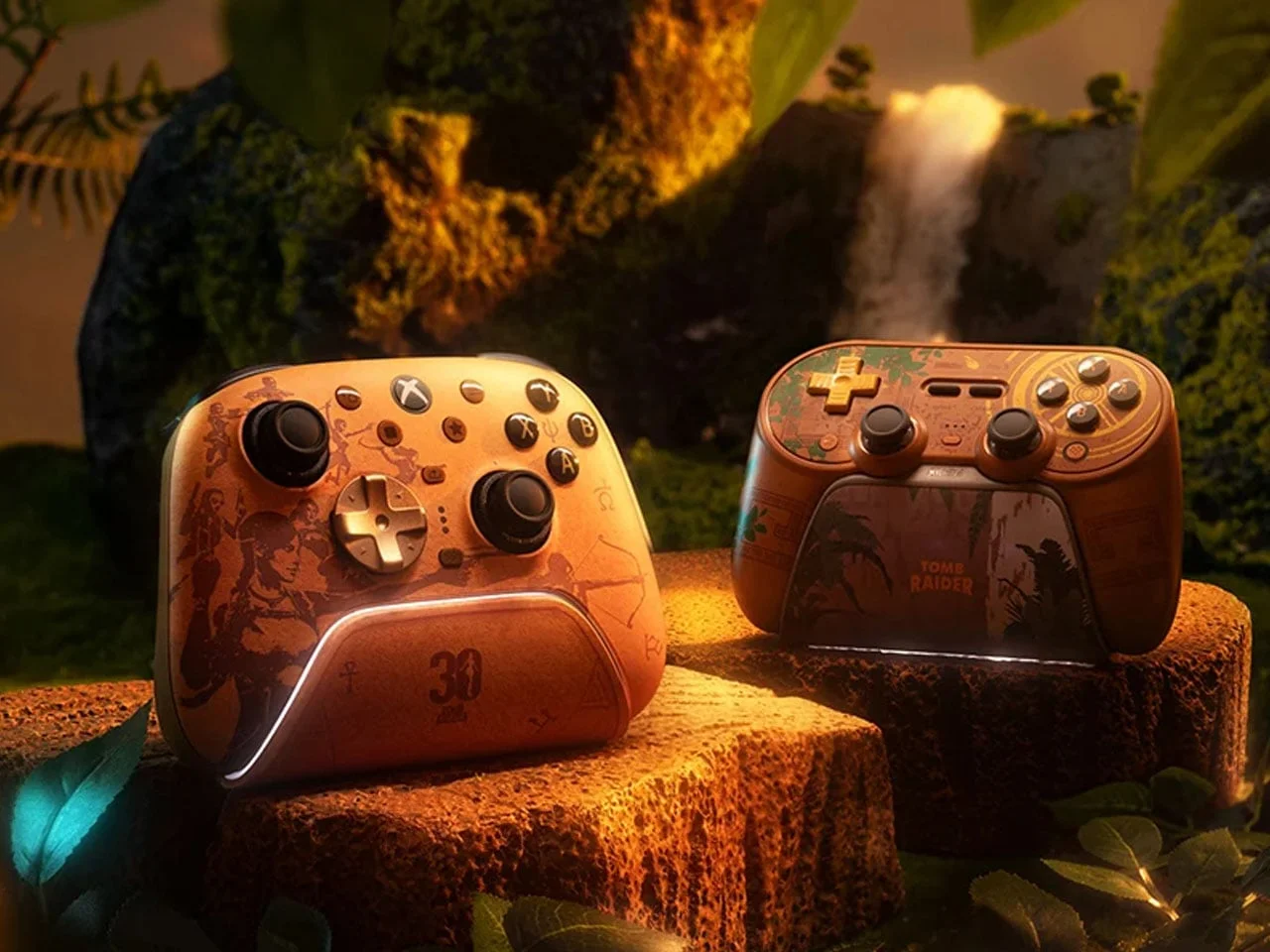
8BitDo’s Tomb Raider 30th Anniversary controllers make their case through two distinct designs and a set of current-generation controls. The Ultimate 3 targets Xbox and PC players with adjustable sticks and extra inputs; the Pro 3 takes a broader platform approach, including Switch and Steam support. Both use magnetic joystick sensing and Hall-effect triggers, giving the anniversary editions more to offer than a themed shell.
The split matters because these are not simply matching controllers in different colours. 8BitDo has tied each model to a different use case: one puts more adjustment and controls in an Xbox-oriented package, while the other trades some of that specialization for wider compatibility and a lower price. If you’re choosing between them, platform support and the inputs you’ll actually use should carry at least as much weight as the anniversary artwork.
Designer: 8BitDo
Two designs, two parts of Lara Croft’s history
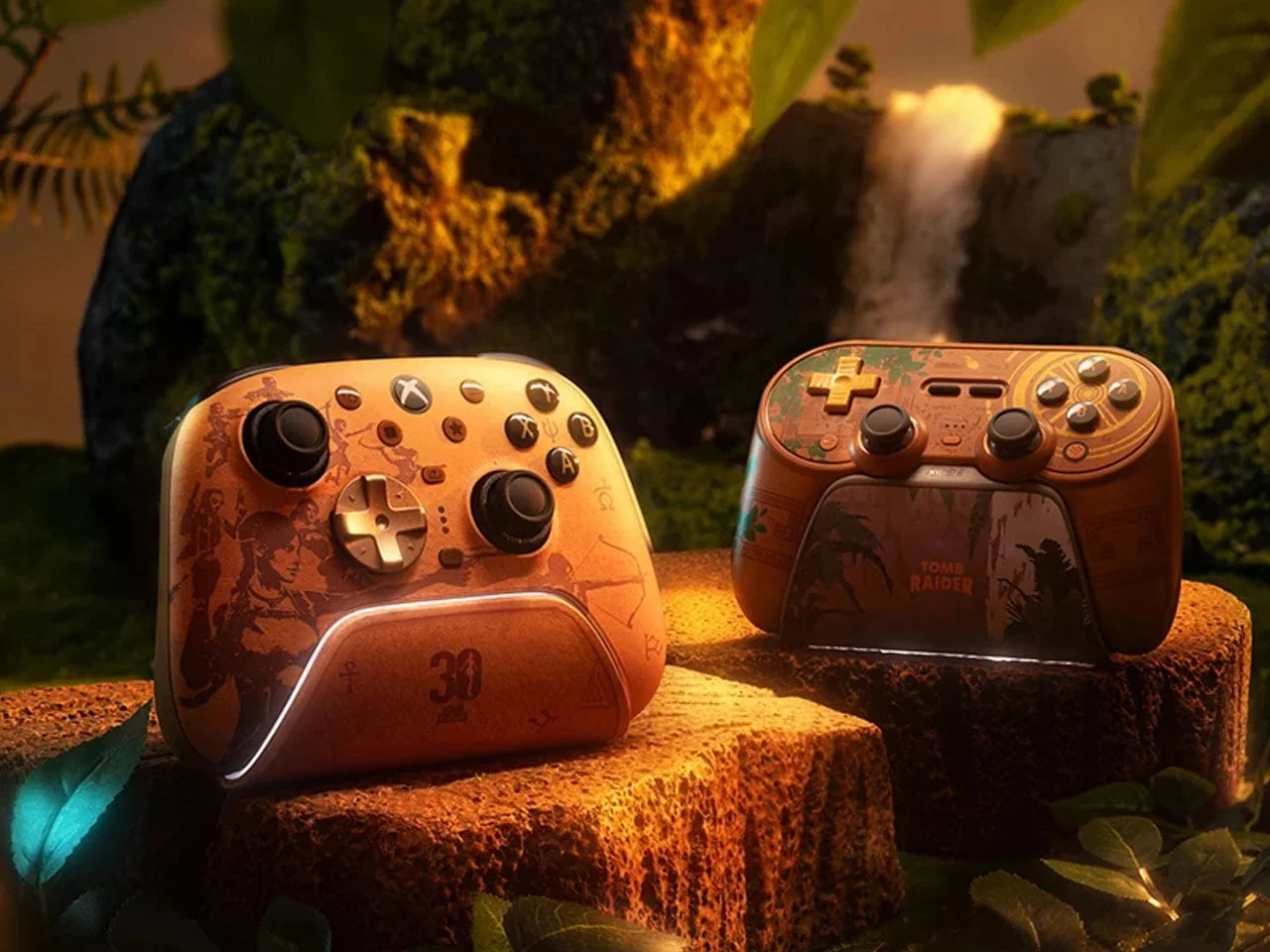
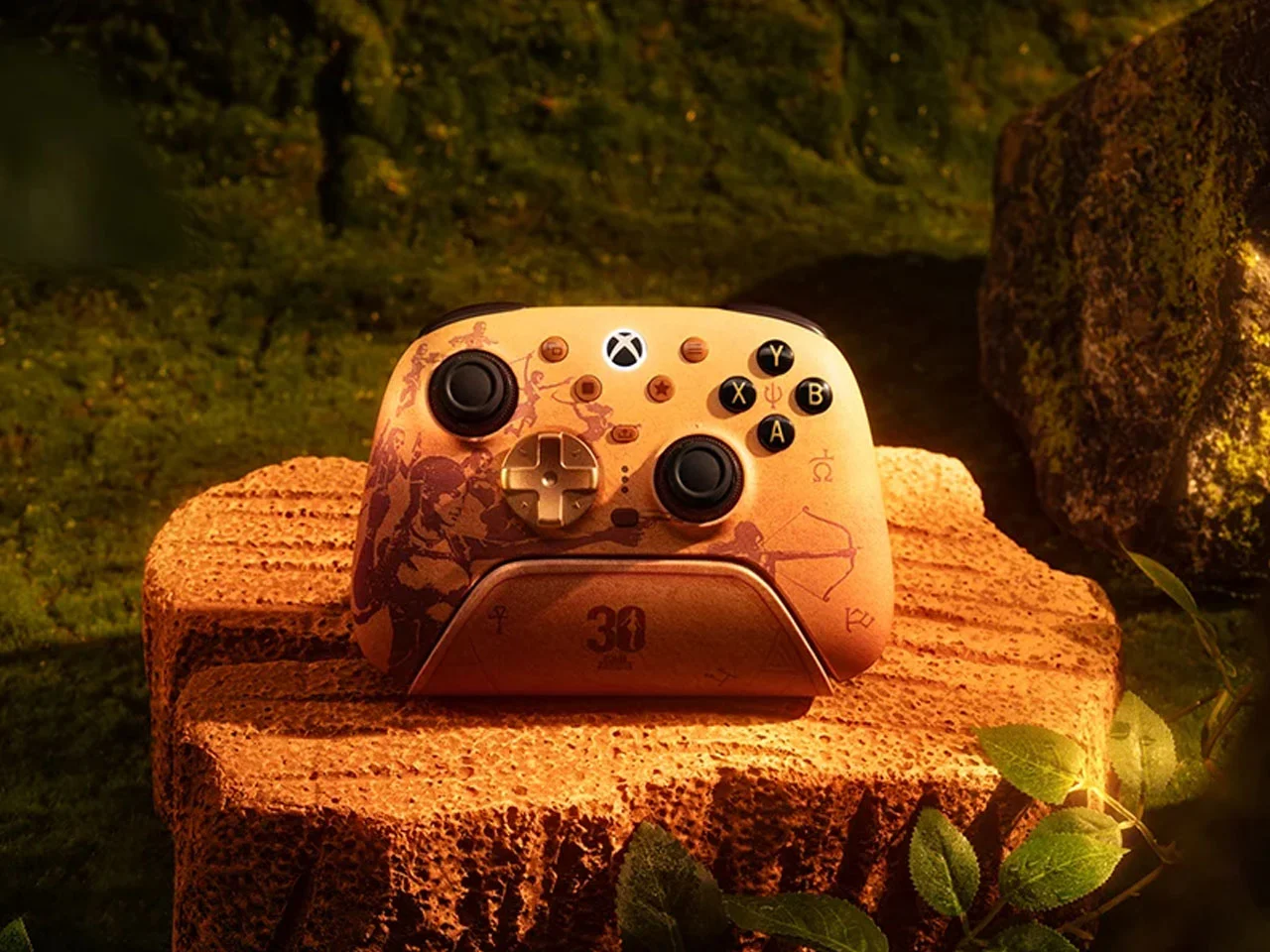
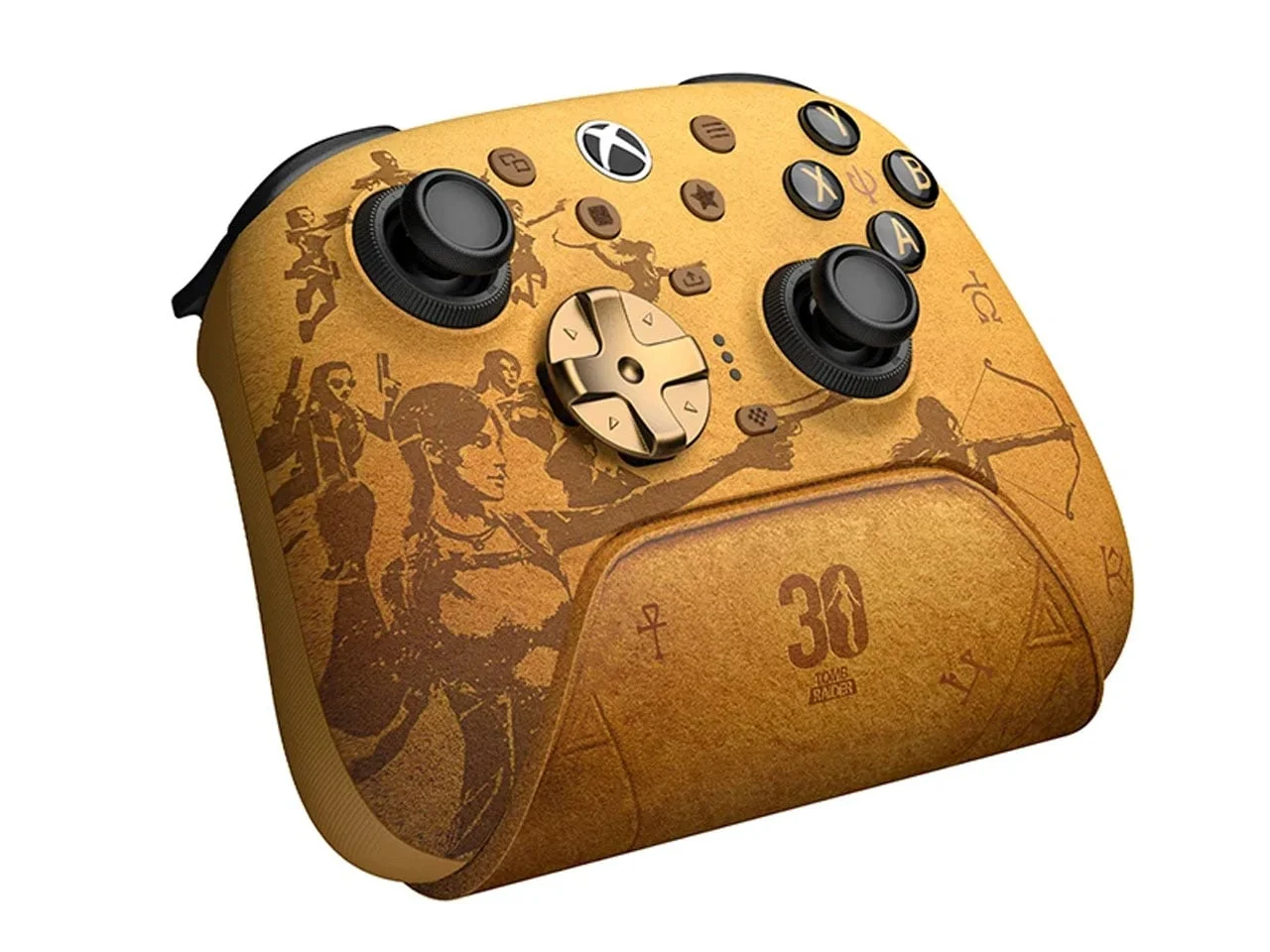
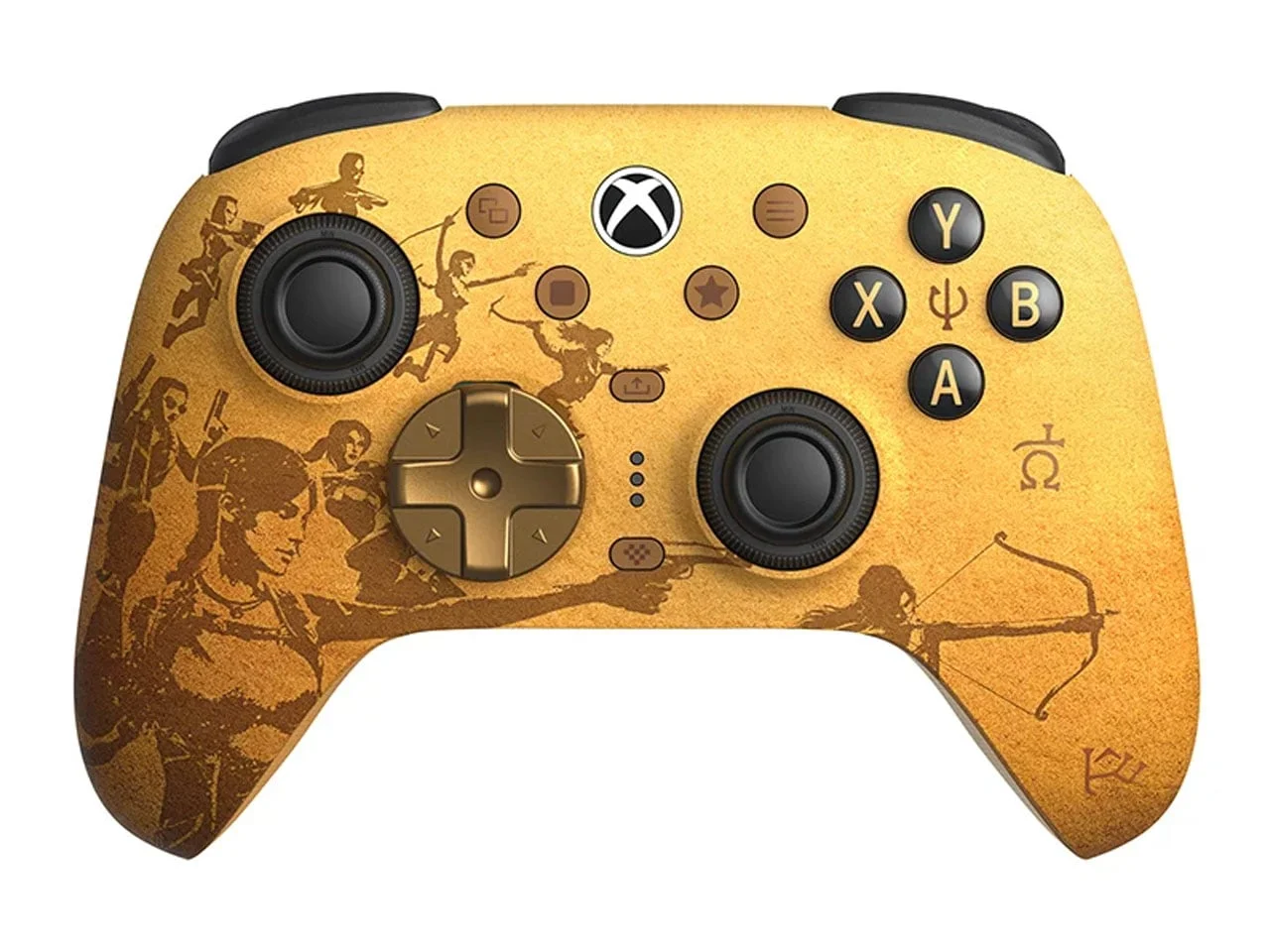
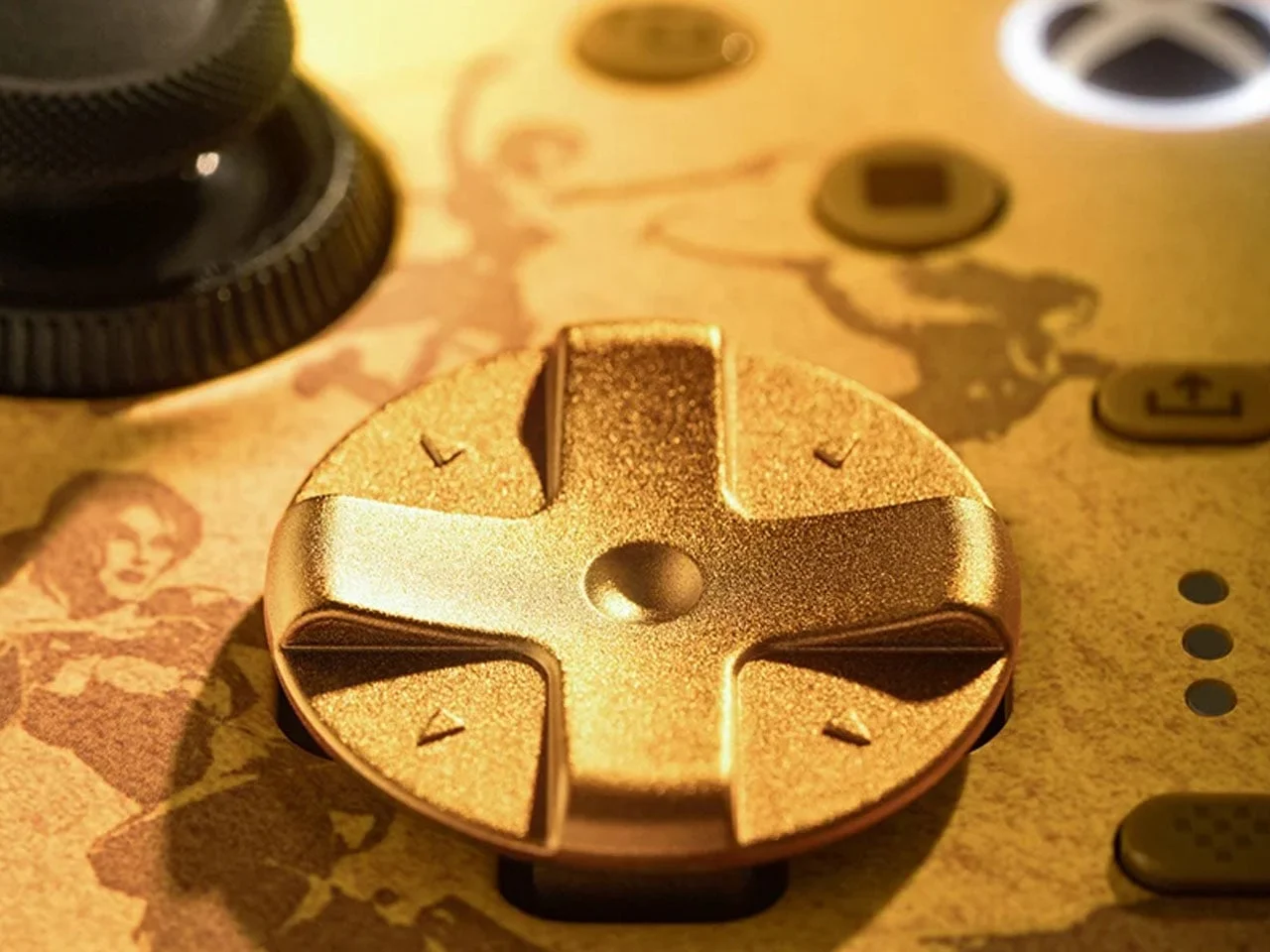
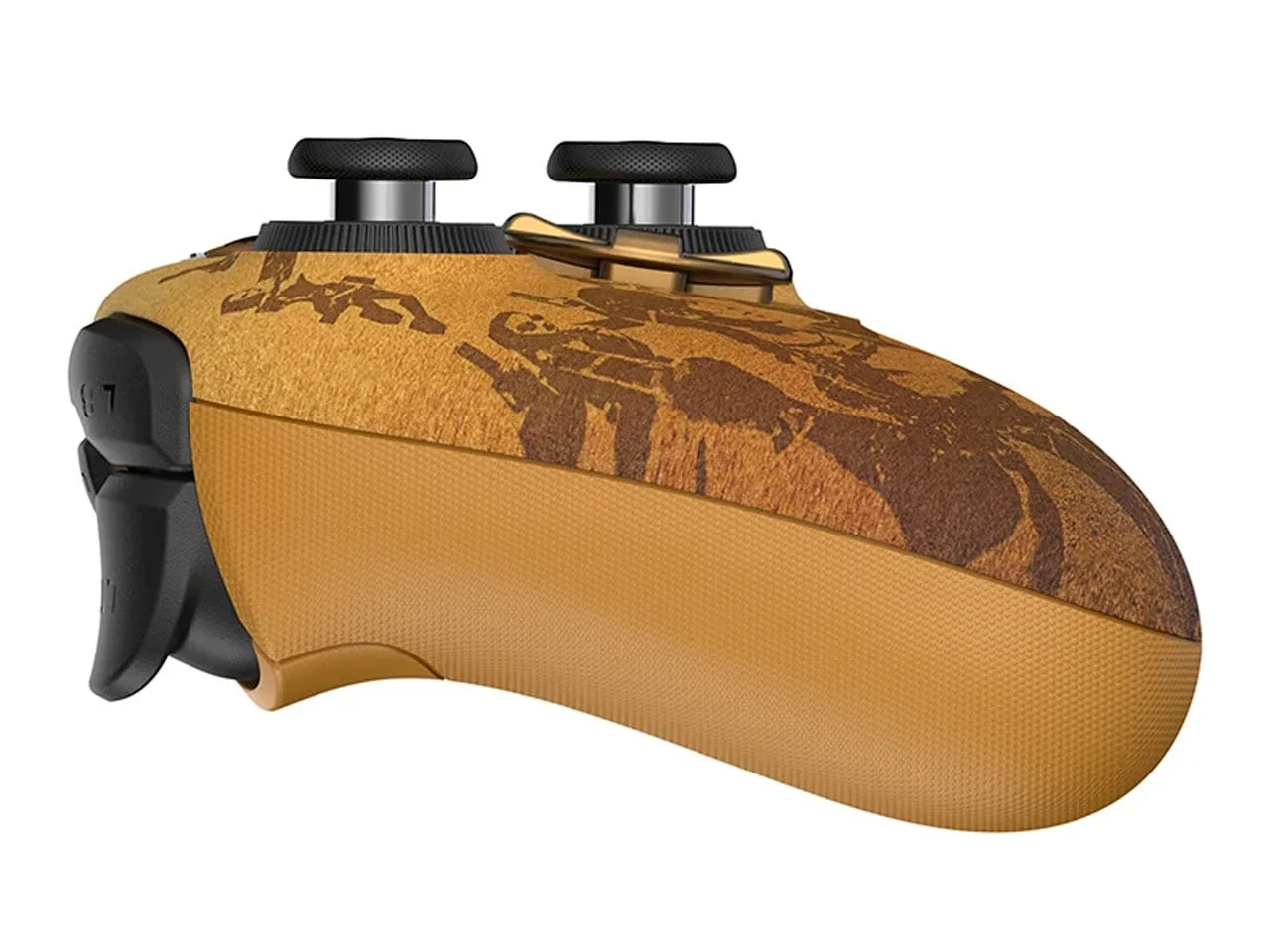
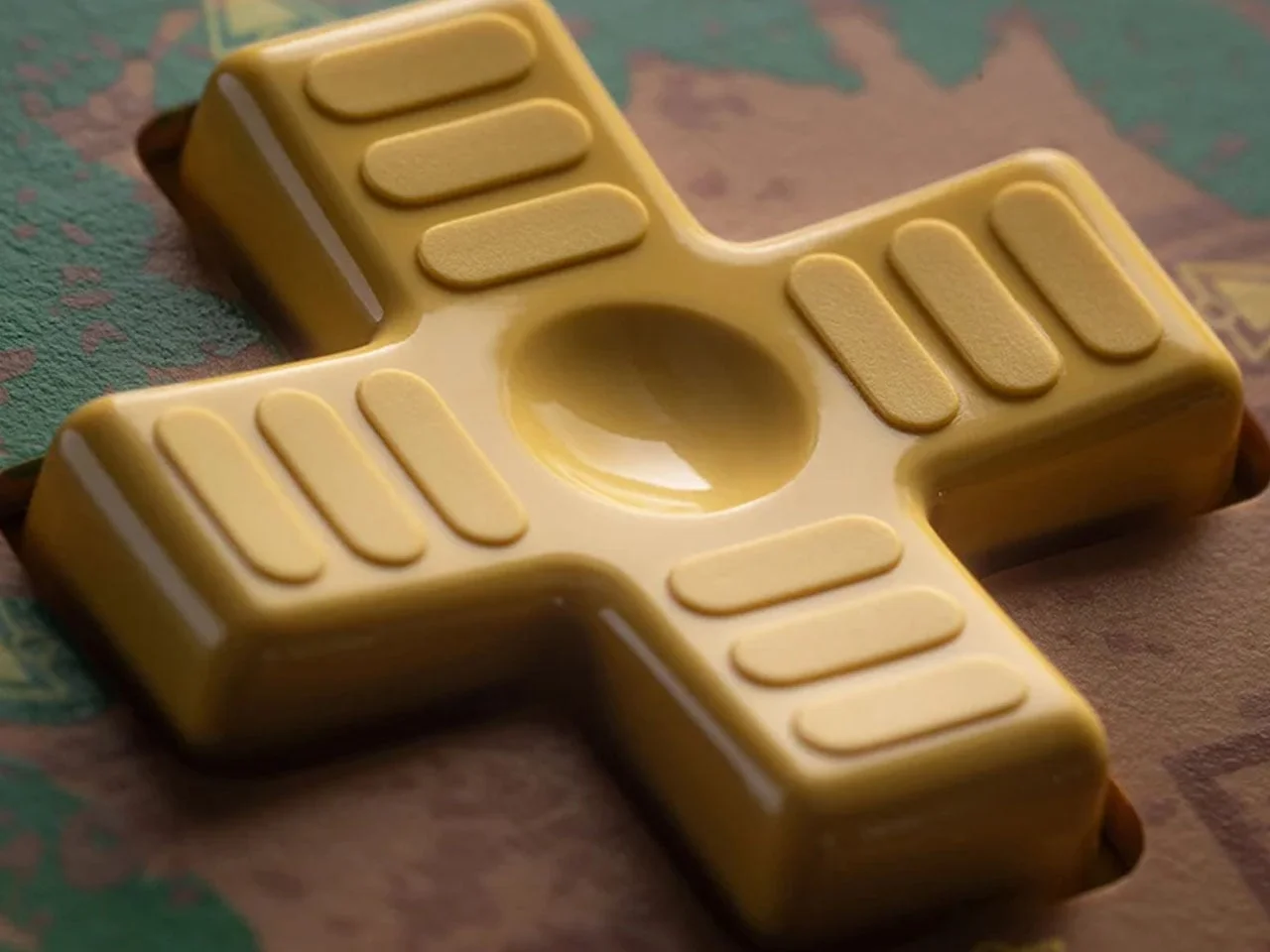
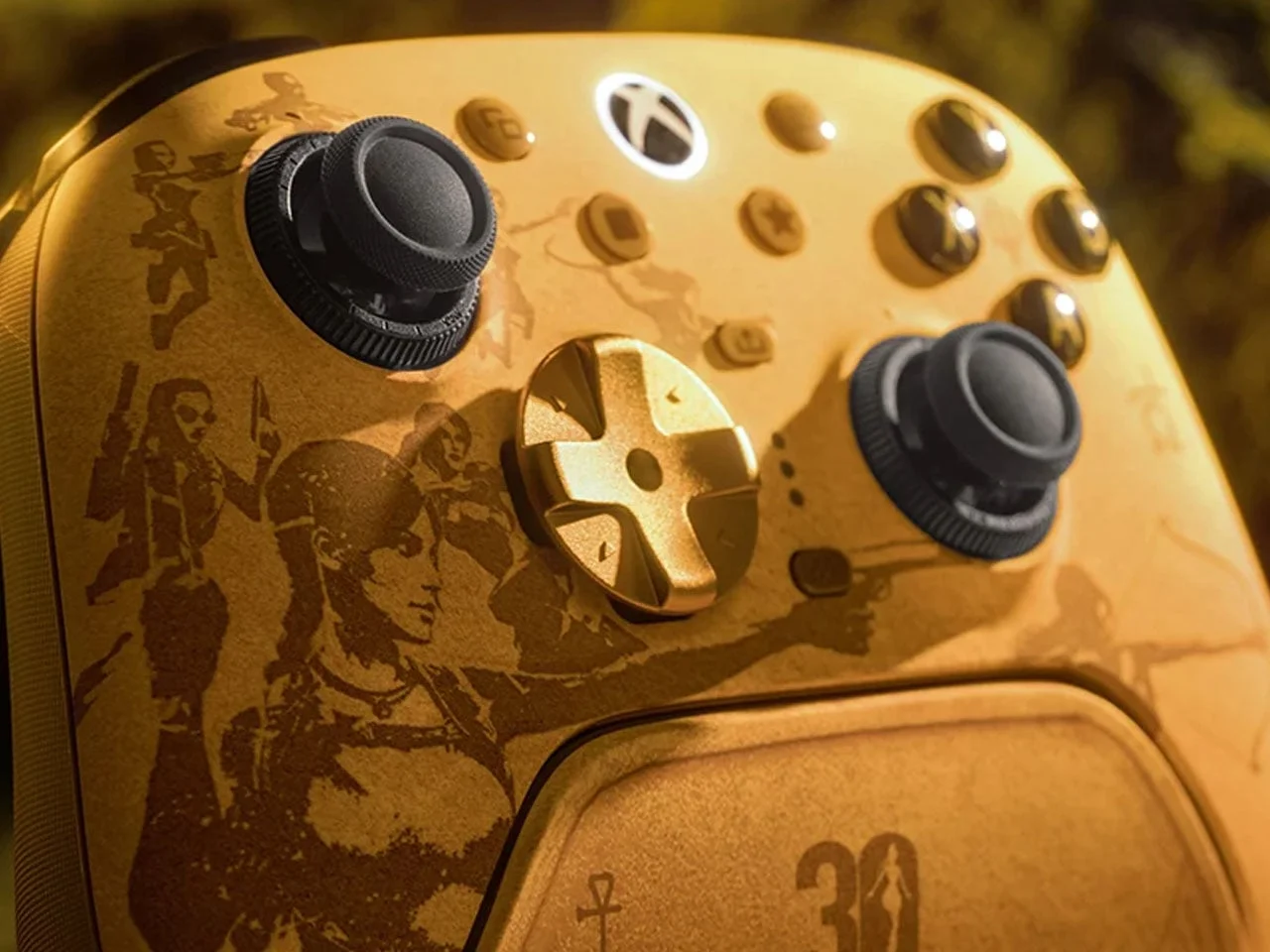
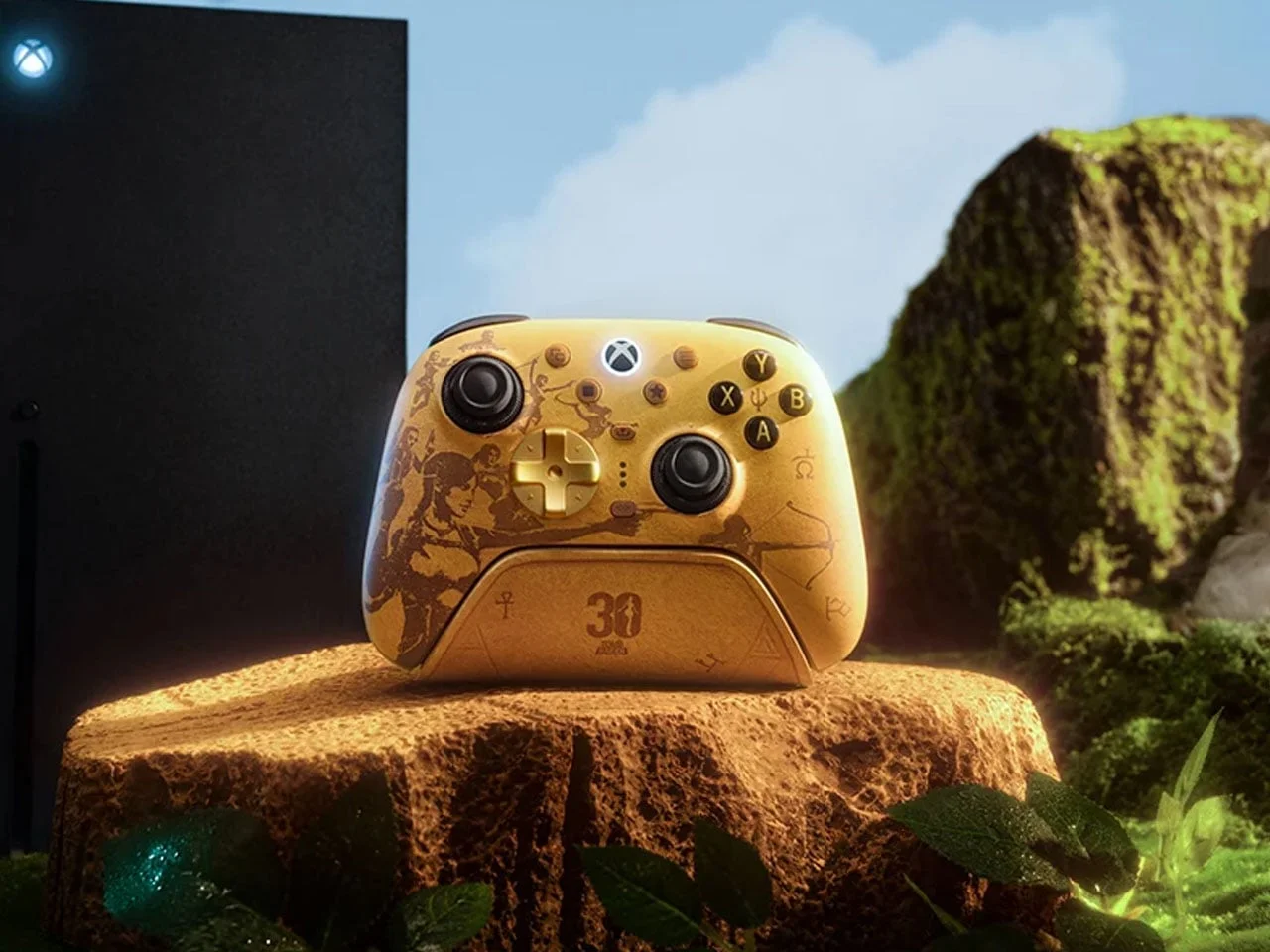
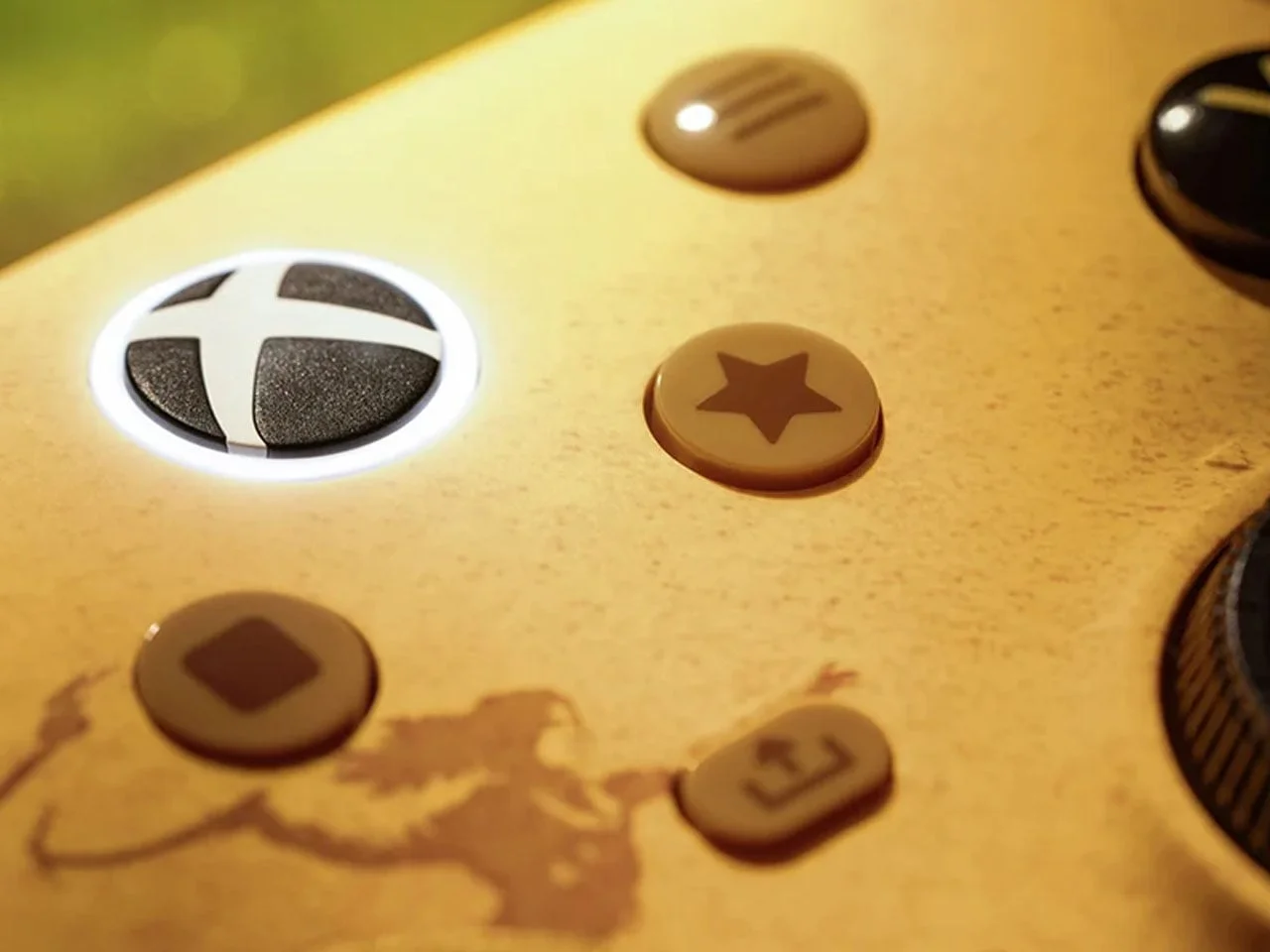
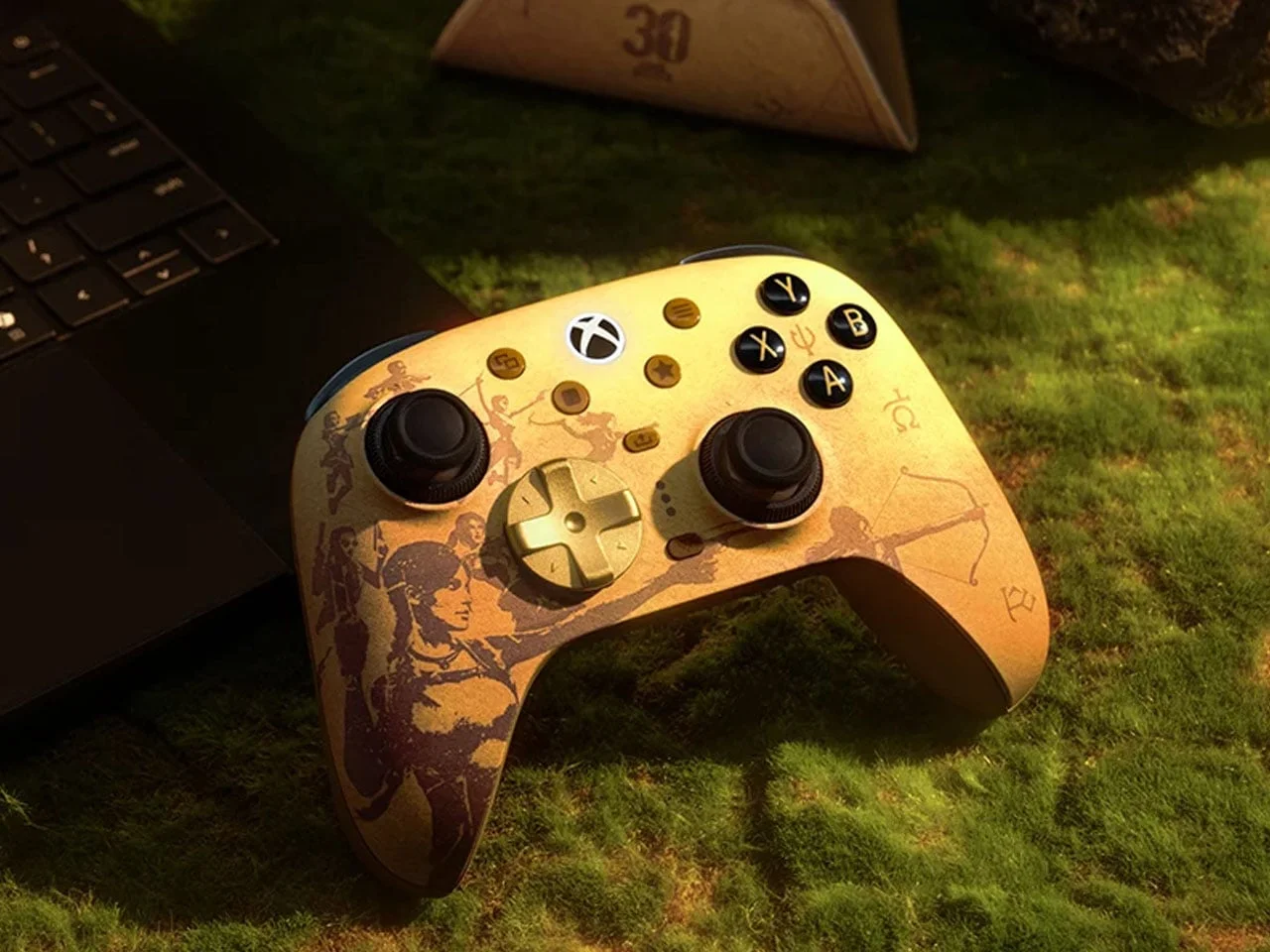
The Ultimate 3 has a gold-coloured finish with silhouettes of Lara Croft from different eras. Black controls break up the palette, while a gold-plated zinc-alloy D-pad adds a metallic accent. Its matching charging dock carries the anniversary branding.
The gold finish makes the Ultimate 3’s celebration explicit: the controller turns the character’s changing visual identity into a repeating graphic. The dark controls keep that treatment from becoming a single uninterrupted block of gold, and the metal D-pad adds a material detail where a player’s thumb will regularly land. That said, the design’s appeal will depend on whether you want a controller that announces its franchise tie-in even when it’s sitting on its dock.
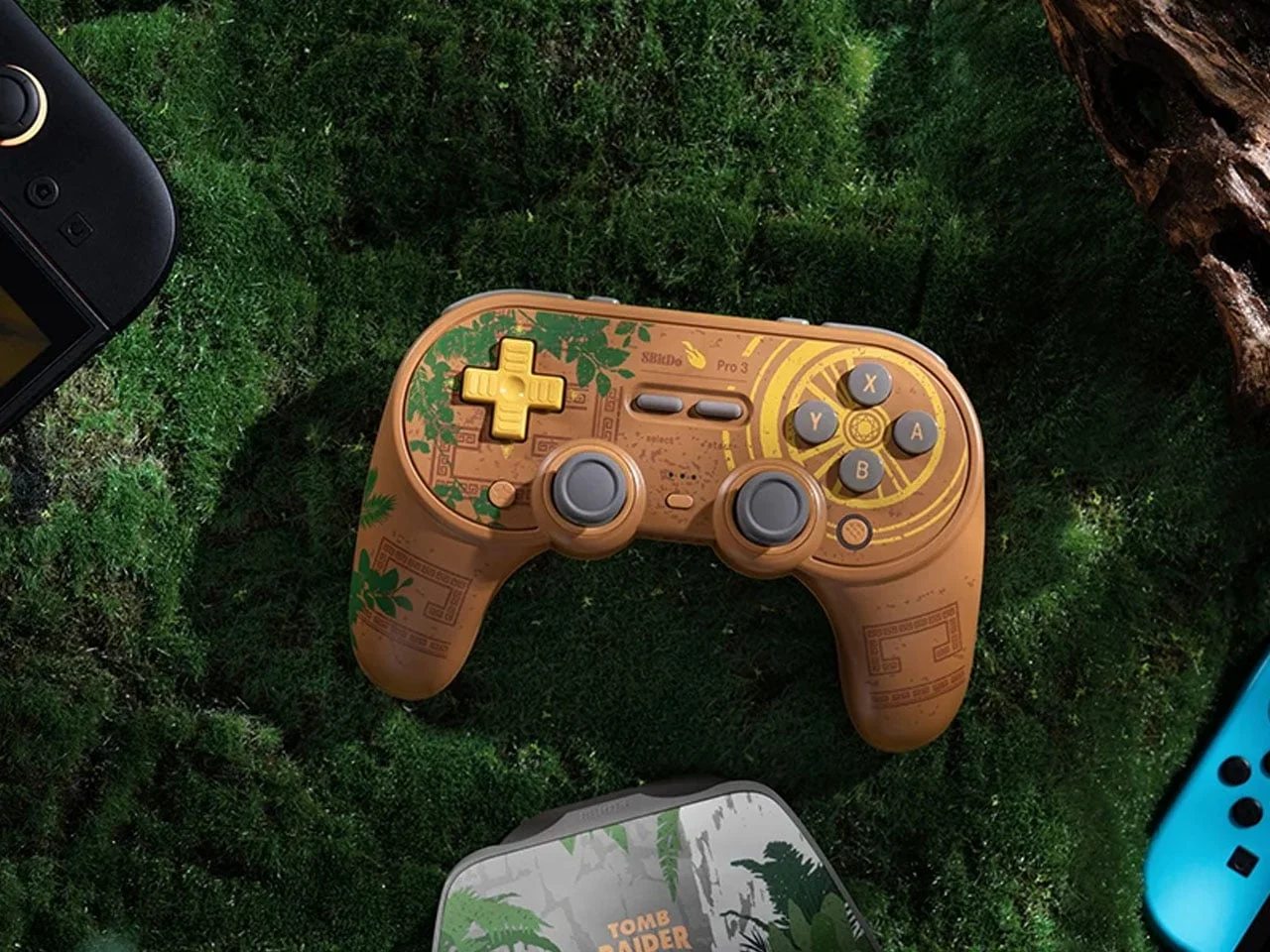
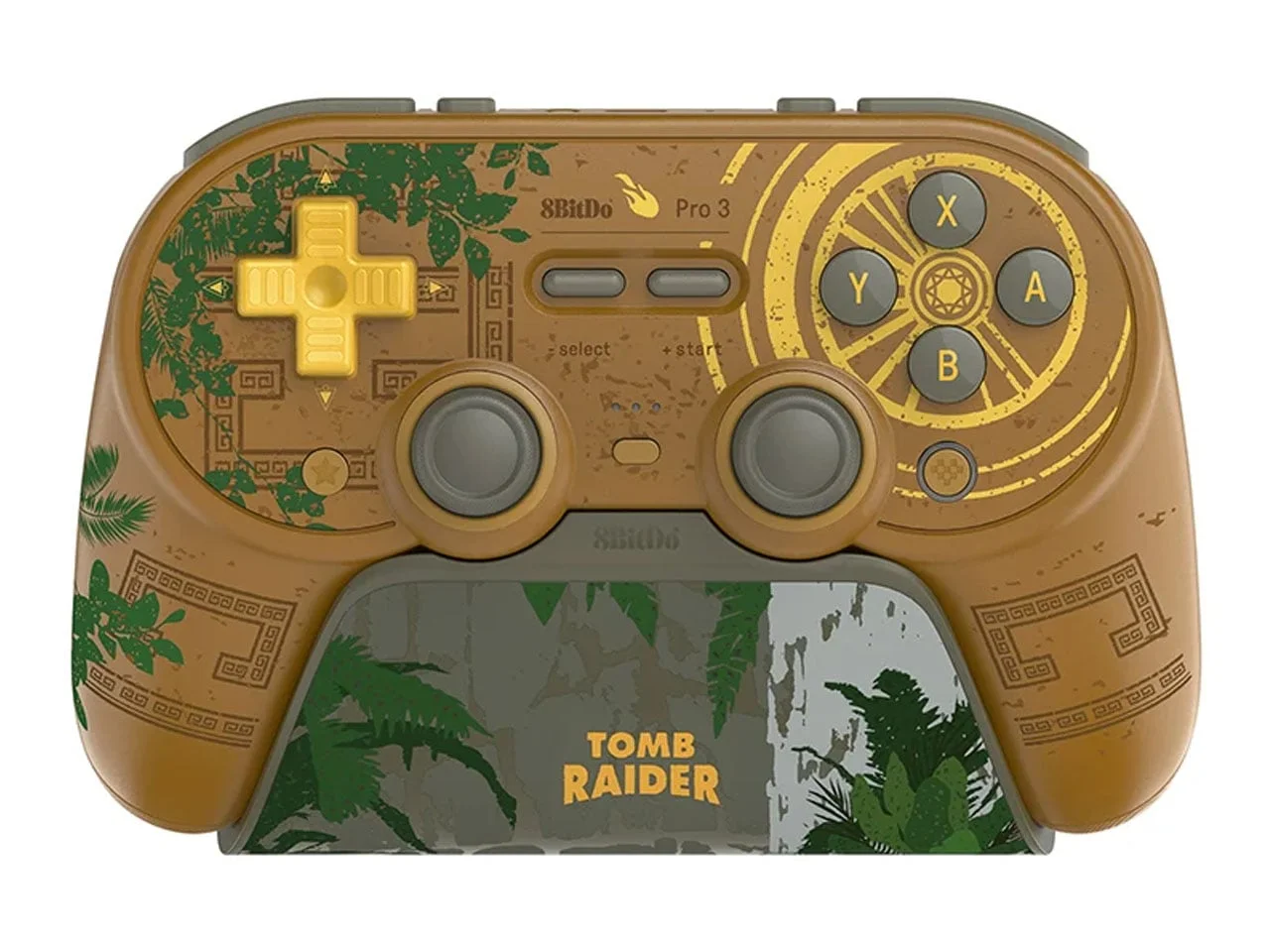
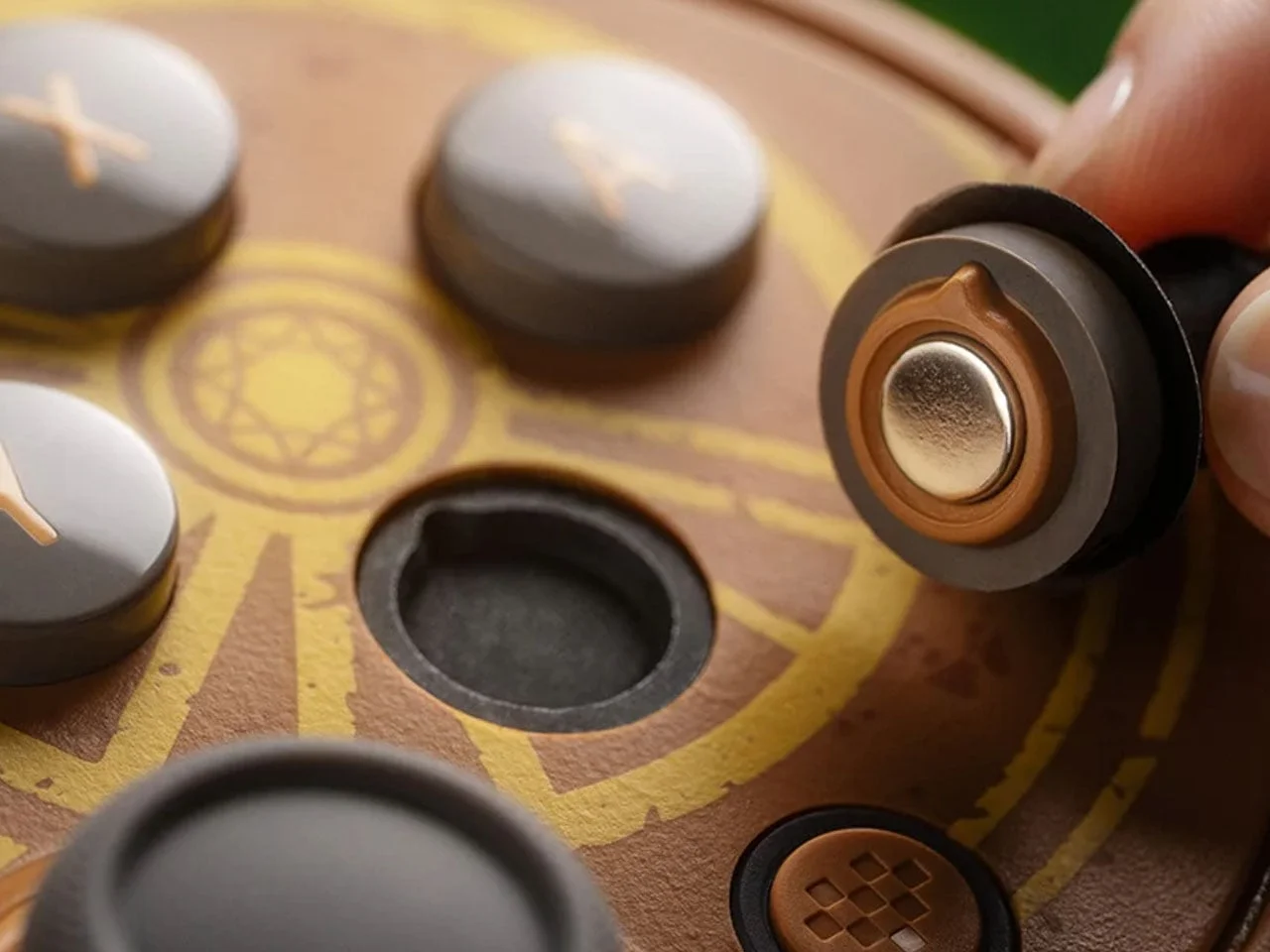
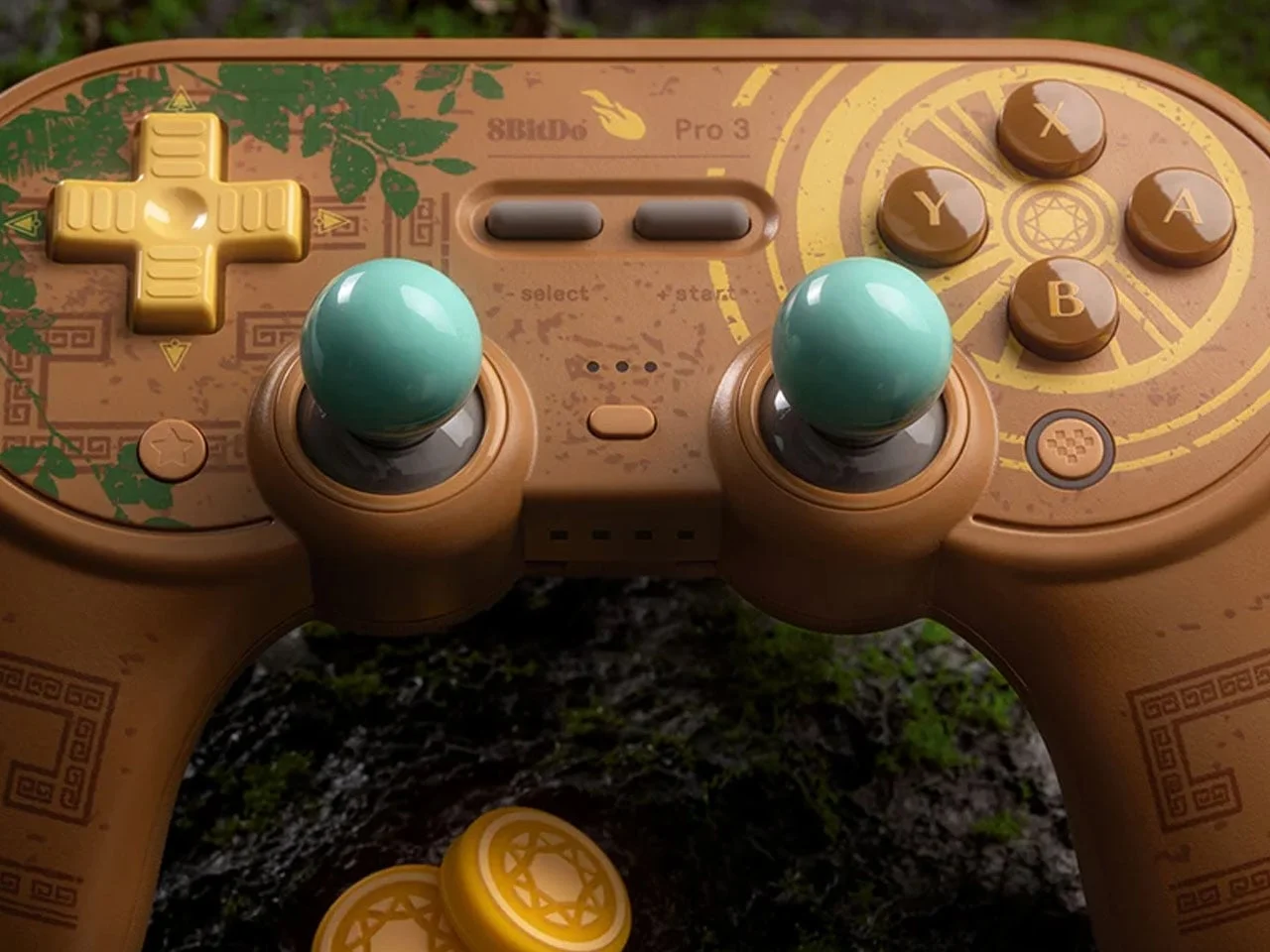
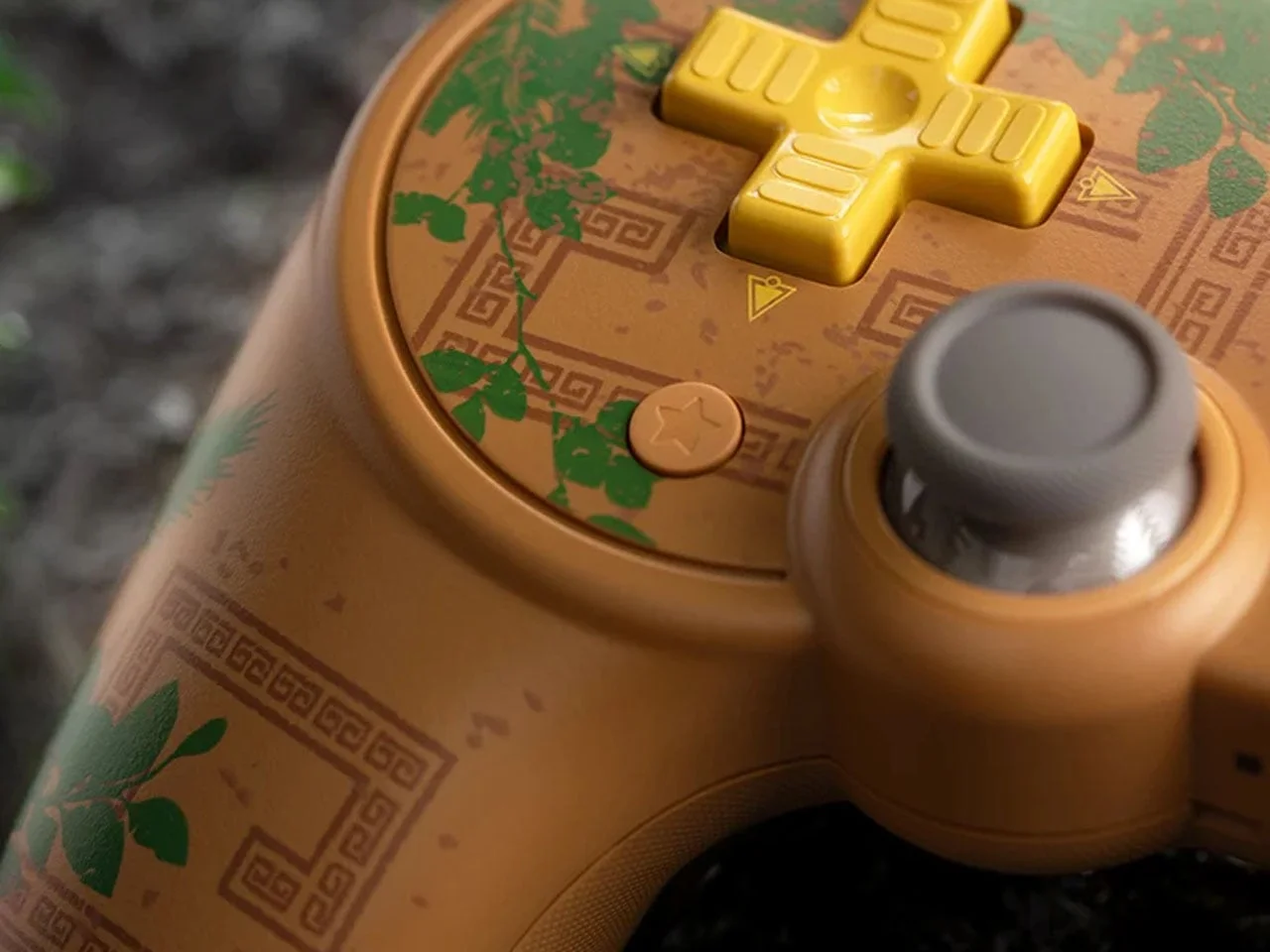
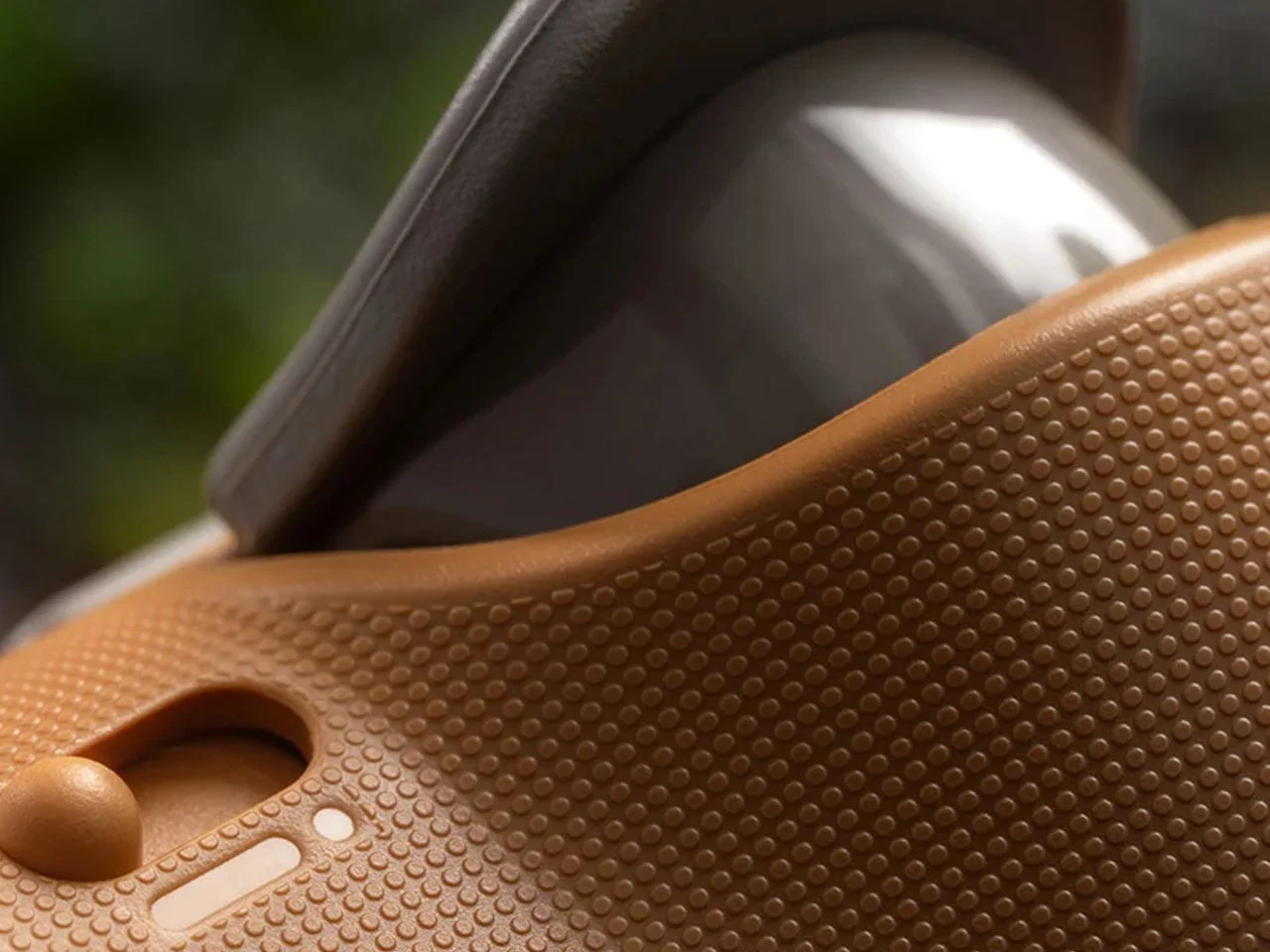
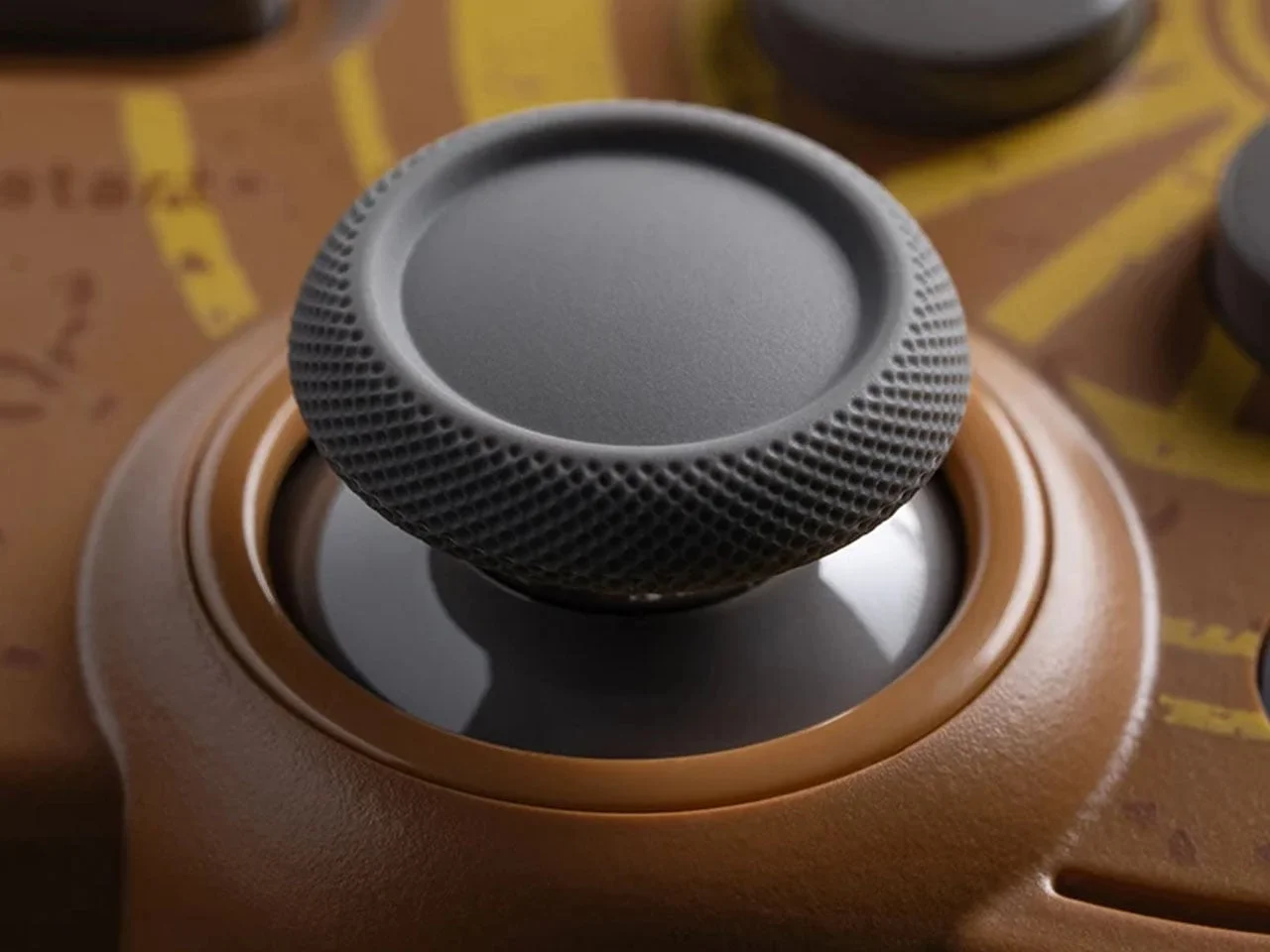
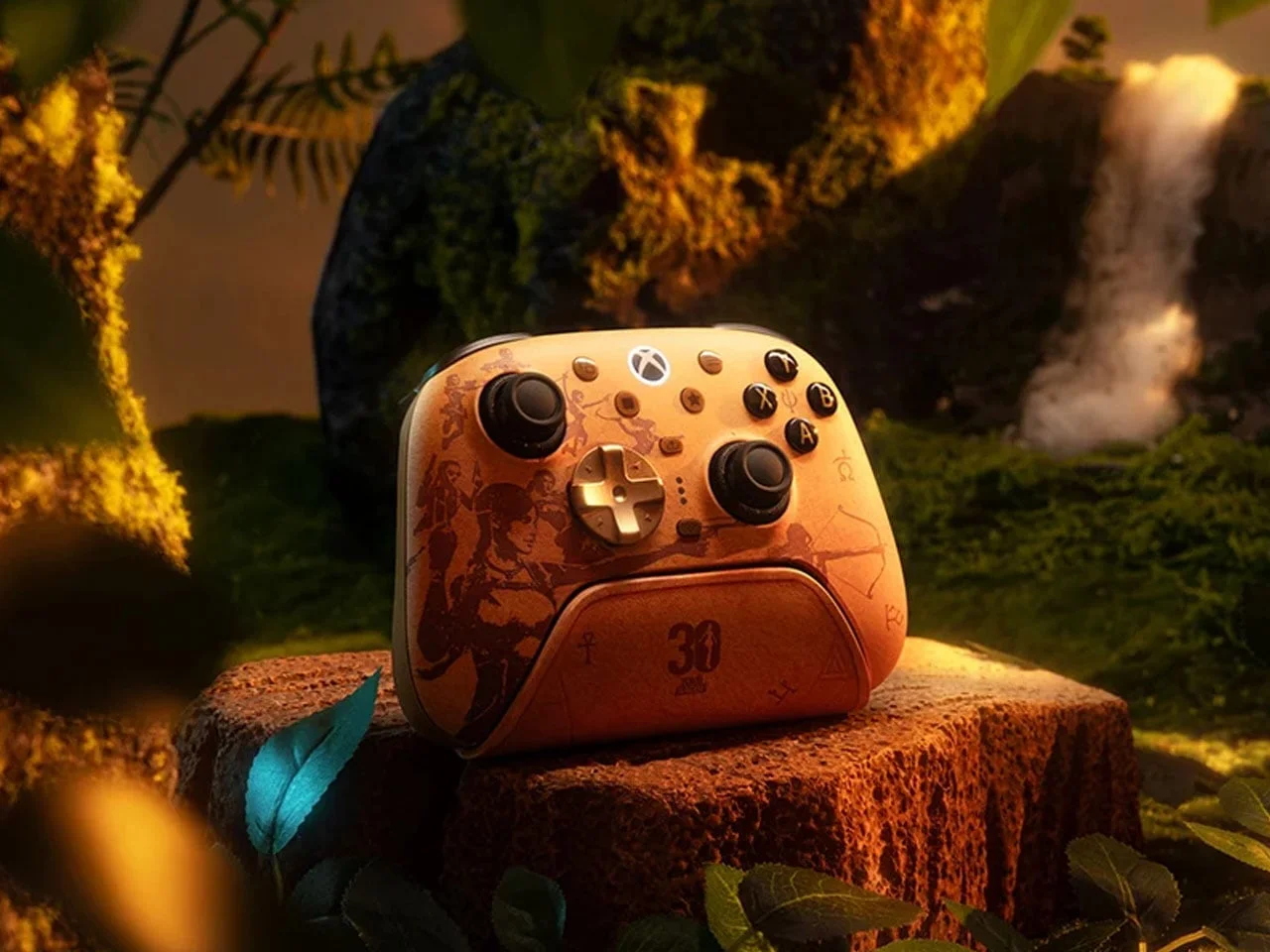
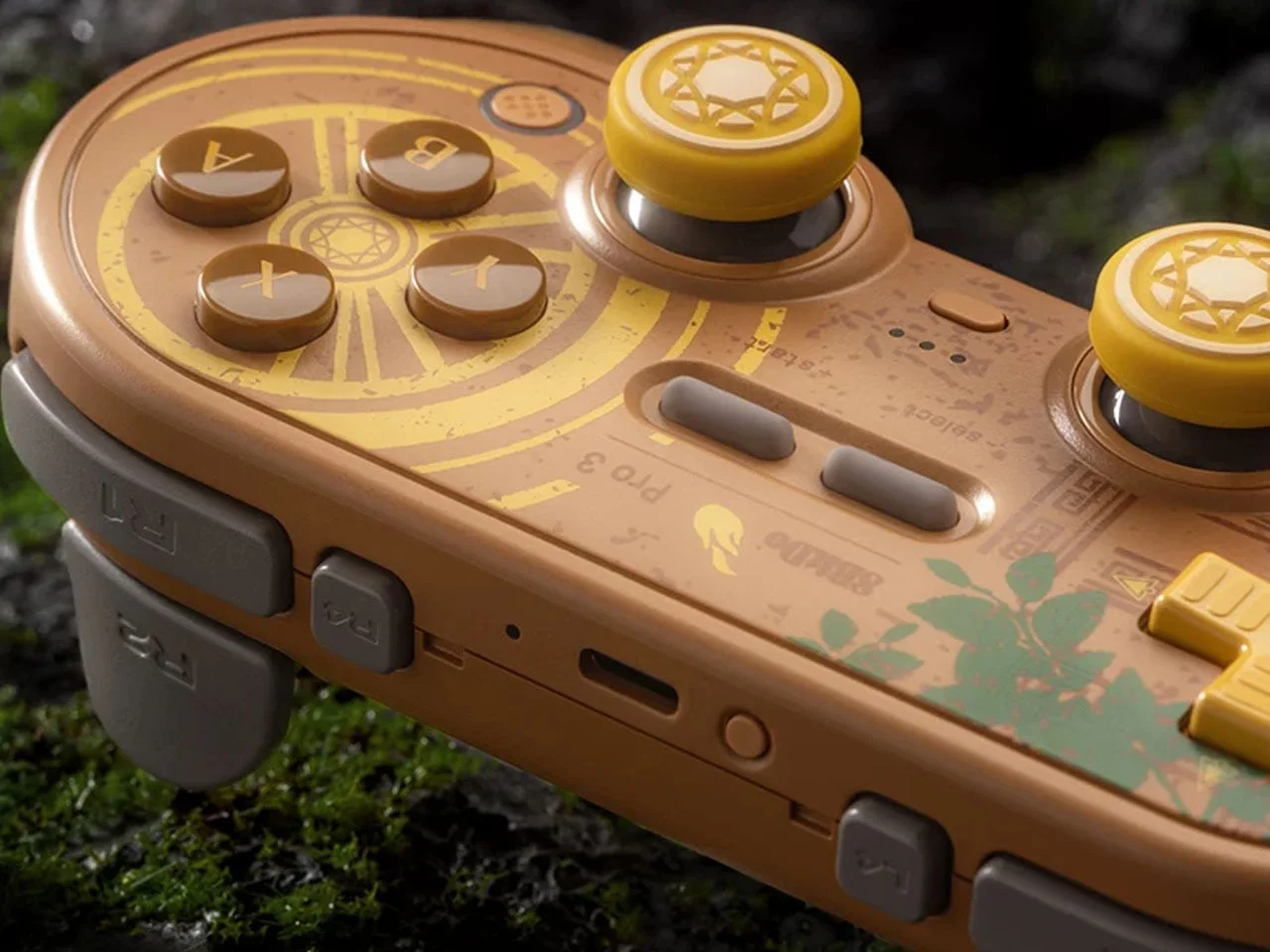
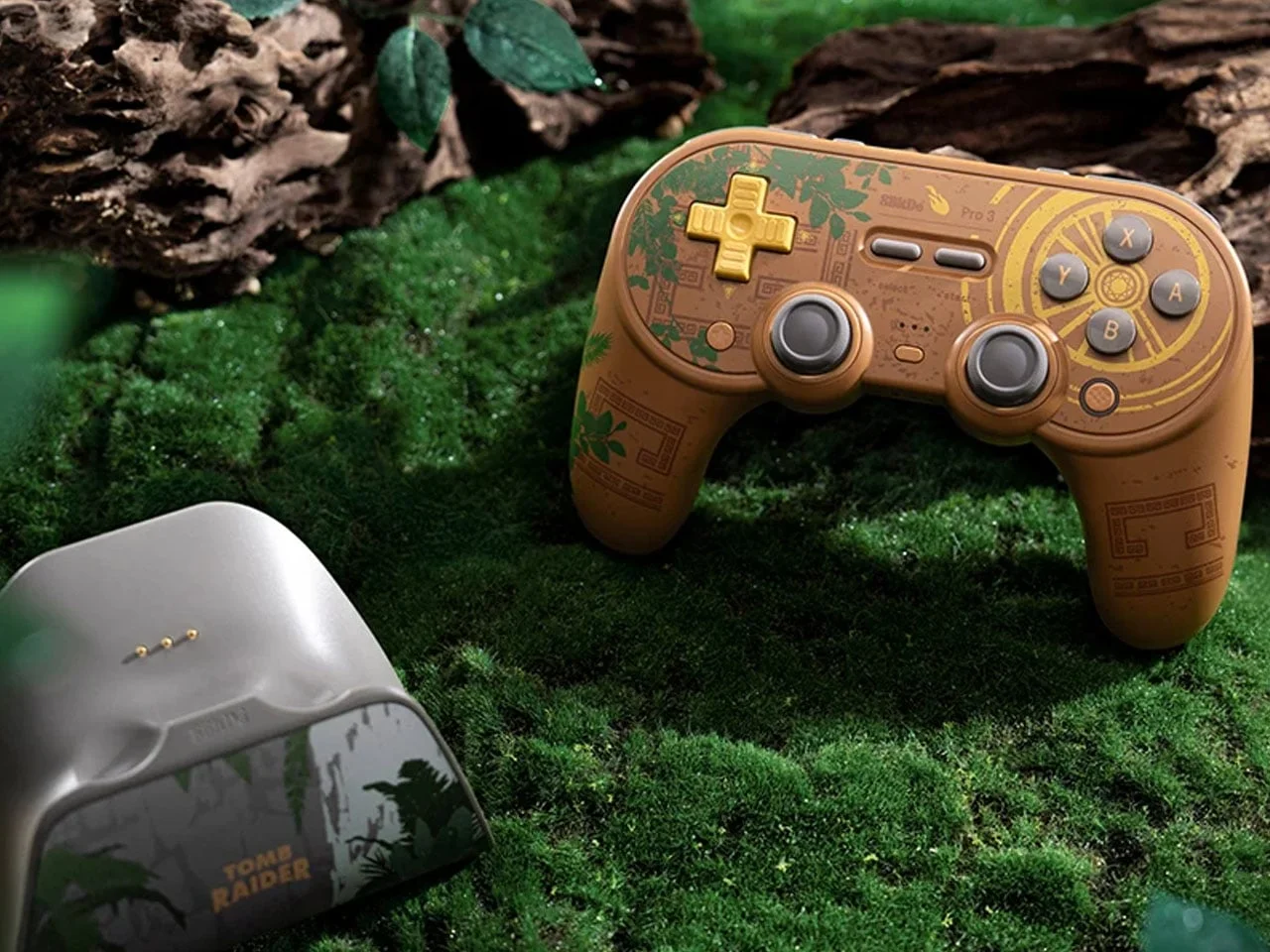
The Pro 3 looks to the Lost Valley, the jungle setting in the original 1996 game. Its sandstone-coloured body features vegetation, ancient symbols and geometric patterns. The themed dock continues the design, and interchangeable joystick caps let players adjust the look.
These references give the two editions different moods: the Ultimate 3 points toward Lara herself, while the Pro 3 builds its identity around a place from the game. The interchangeable caps are a modest but practical touch, since they let owners alter the controller’s appearance without changing its basic layout. Neither design changes how a game plays, of course. The hardware has to earn its place after the nostalgia has done its work.
Magnetic controls, with model-specific extras
Both gamepads pair TMR joysticks with Hall-effect triggers. These sensors use magnetic fields rather than the electrical contacts found in conventional potentiometer sticks, which can reduce wear-related faults such as one common cause of stick drift. They can’t prevent every kind of mechanical failure.
The distinction is useful, but it shouldn’t be mistaken for a guarantee against drift or wear. Magnetic sensing avoids one failure mechanism associated with contact-based sticks; it doesn’t make every moving part immune to damage or deterioration. This is more significant than it looks for a controller pitched as a long-term collectible: owners may want to use it regularly, not just display it, and the sensing technology gives the hardware a practical selling point beyond its finish.
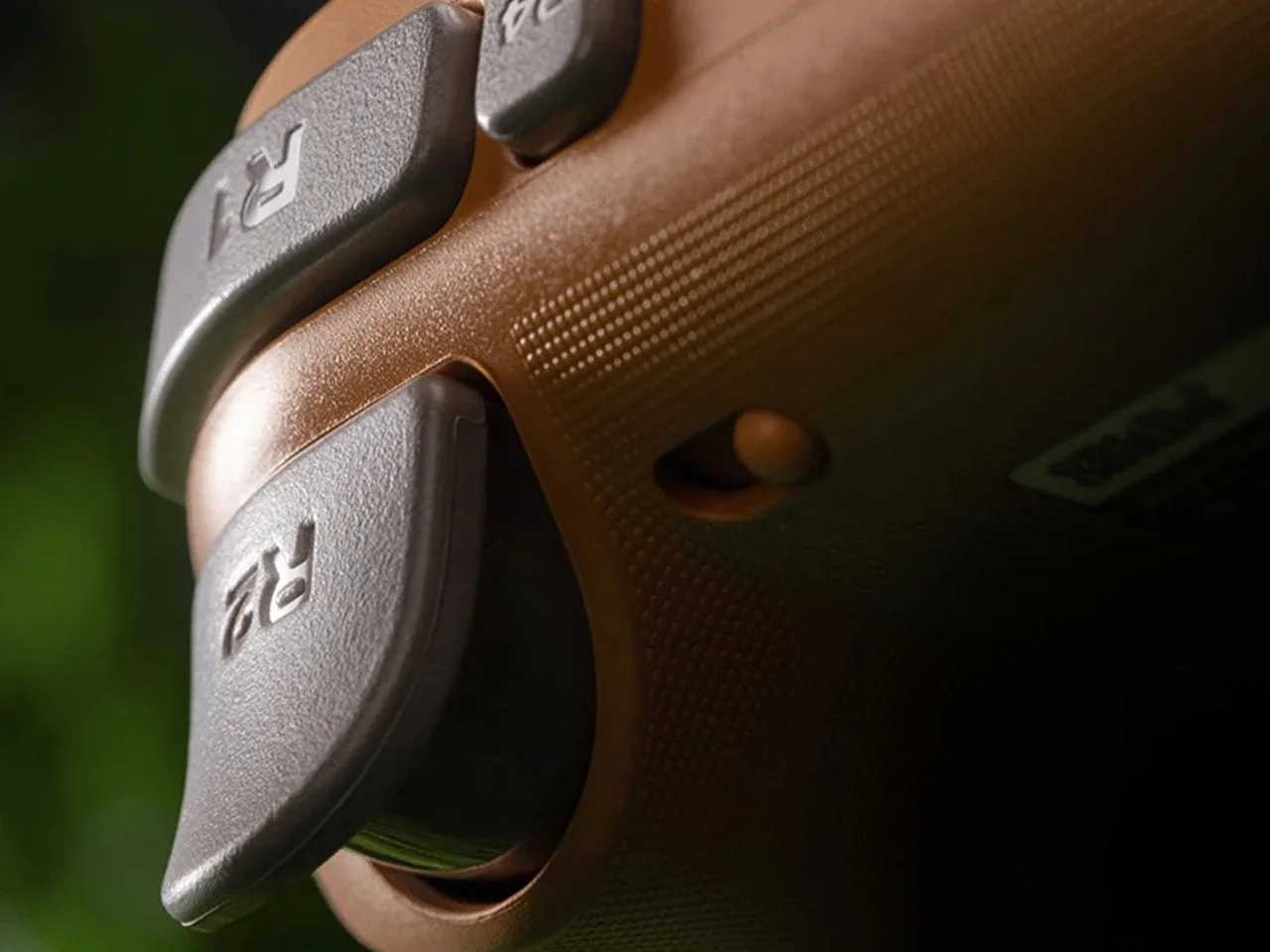
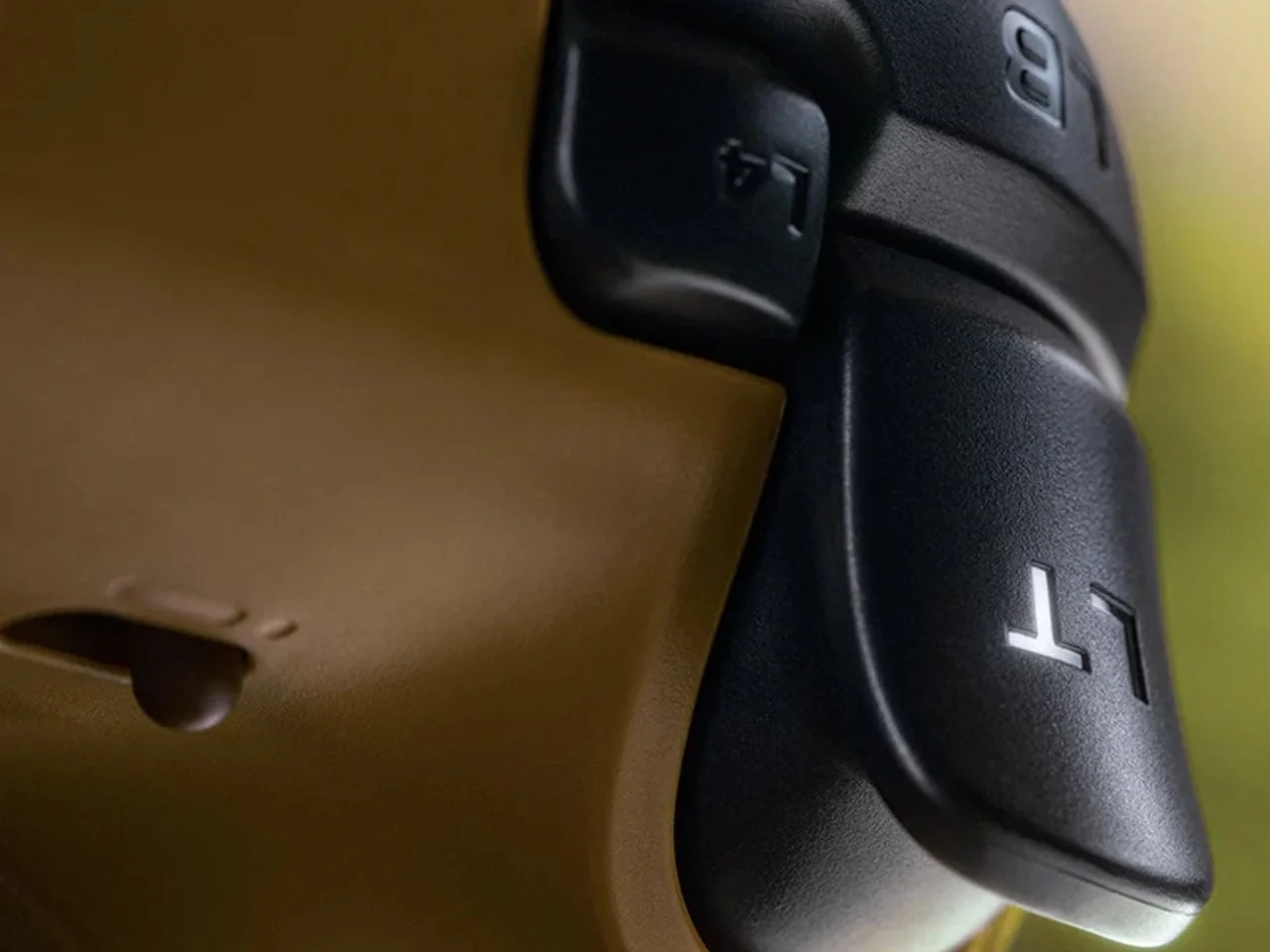
The Ultimate 3 adds adjustable joystick tension and Hall-effect impulse triggers with two travel-stop settings. Shorter trigger travel can suit quick shooter inputs, while longer movement allows finer control in racing games. There are also two programmable rear buttons, L4 and R4 shoulder buttons, and a 3.5mm headphone jack. 8BitDo reports polling rates up to 1,000Hz on compatible Windows PCs. The 1,000mAh rechargeable battery is rated for up to 20 hours.
Those options give players more ways to tune the controller around a game or personal preference, though the benefits depend on taking time to configure them. Short trigger travel is designed to reduce the distance between a press and an input; longer travel gives more room to modulate a racing control. The extra rear and shoulder buttons can keep certain commands within reach, but they also add complexity for players who prefer a familiar, uncluttered layout. The reported polling rate is specific to compatible Windows PCs, so it shouldn’t be read as a blanket figure for every connection or platform.
The Pro 3 uses a symmetrical stick layout, magnetic ABXY buttons that can be swapped, selectable trigger modes and six-axis motion controls on compatible Nintendo Switch and Steam platforms. Rear and shoulder buttons add further input options. In the box are the themed charging dock, a 2.4GHz wireless adapter, USB cable, button puller and replacement joystick caps. Both models can be configured in 8BitDo software, with available settings varying by platform.
The Pro 3’s swappable buttons and symmetrical sticks make it the more adaptable option for players moving between supported systems or who want to change the button arrangement. Motion controls are limited to compatible Switch and Steam use, which makes platform details worth checking before purchase. And this is the part most people overlook: a feature list only helps when the relevant game and connection support it. The included adapter and button puller also signal that customization is part of the package, though some owners will value those extras more than others.
Platform support and pricing
The Ultimate 3 connects to Xbox Series X|S, Xbox One and Windows by USB or 2.4GHz wireless. Bluetooth support is listed for compatible Android and Apple devices. The Pro 3 supports Nintendo Switch, Switch 2, Windows, SteamOS, Android and Apple devices, with connection methods dependent on the platform. Neither model is listed as natively compatible with PlayStation 5.
That distinction gives the Pro 3 a wider platform list on paper, while the Ultimate 3 is the more direct fit for Xbox users. Connection methods vary, so a platform appearing in the support list doesn’t mean every wireless option works everywhere. If you’re working across several devices, that caveat deserves a closer look before you treat one controller as a universal replacement.
In the US, the Ultimate 3 costs $119.99 and the Pro 3 $79.99. Those prices are $20 and $10 above the respective standard versions. UK availability is scheduled for November 13, 2026, at £94.99 for the Ultimate 3 and £74.99 for the Pro 3. The main choice is clear: the Ultimate 3 puts more adjustment and input options in an Xbox-oriented package, while the Pro 3 offers broader platform support at a lower price.
The premiums buy themed finishes and, depending on the model, a bundle of hardware features that may matter independently of the Tomb Raider branding. The Ultimate 3 costs more, but its adjustable sticks, trigger settings and extra inputs give that price a functional case for players who’ll use them. The Pro 3 is the less expensive entry and has broader listed support, though its value still depends on whether its button swapping and motion controls fit your devices. The numbers here are underwhelming if you’re paying only for a collectible finish; they’re easier to justify if the controller’s features match your setup.
What the anniversary editions signal
These controllers show how anniversary hardware can serve two audiences at once: fans drawn to a familiar series and players looking for specific control features. The design work gives each edition a clear link to Tomb Raider, while magnetic sensing, programmable inputs and platform support give buyers reasons to consider the devices as everyday gamepads. The mix is sensible, but it also makes the decision more demanding than choosing a colourway.
The key question is whether the added controls and compatibility suit your actual games and devices. A collector may be content with the visual references; a regular player will have to weigh layout, connection options, battery rating and price. Nostalgia gets attention. The details decide whether these controllers stay in rotation.
The post 8bitdo celebrates three decades of Tomb Raider with two controllers built for nostalgic gaming first appeared on Yanko Design.

Discussion
Sign in to join the discussion.