Saudi Arabia's CEER introduces the Exobot series, a lineup of futuristic EVs challenging established players with striking designs and impressive specs.
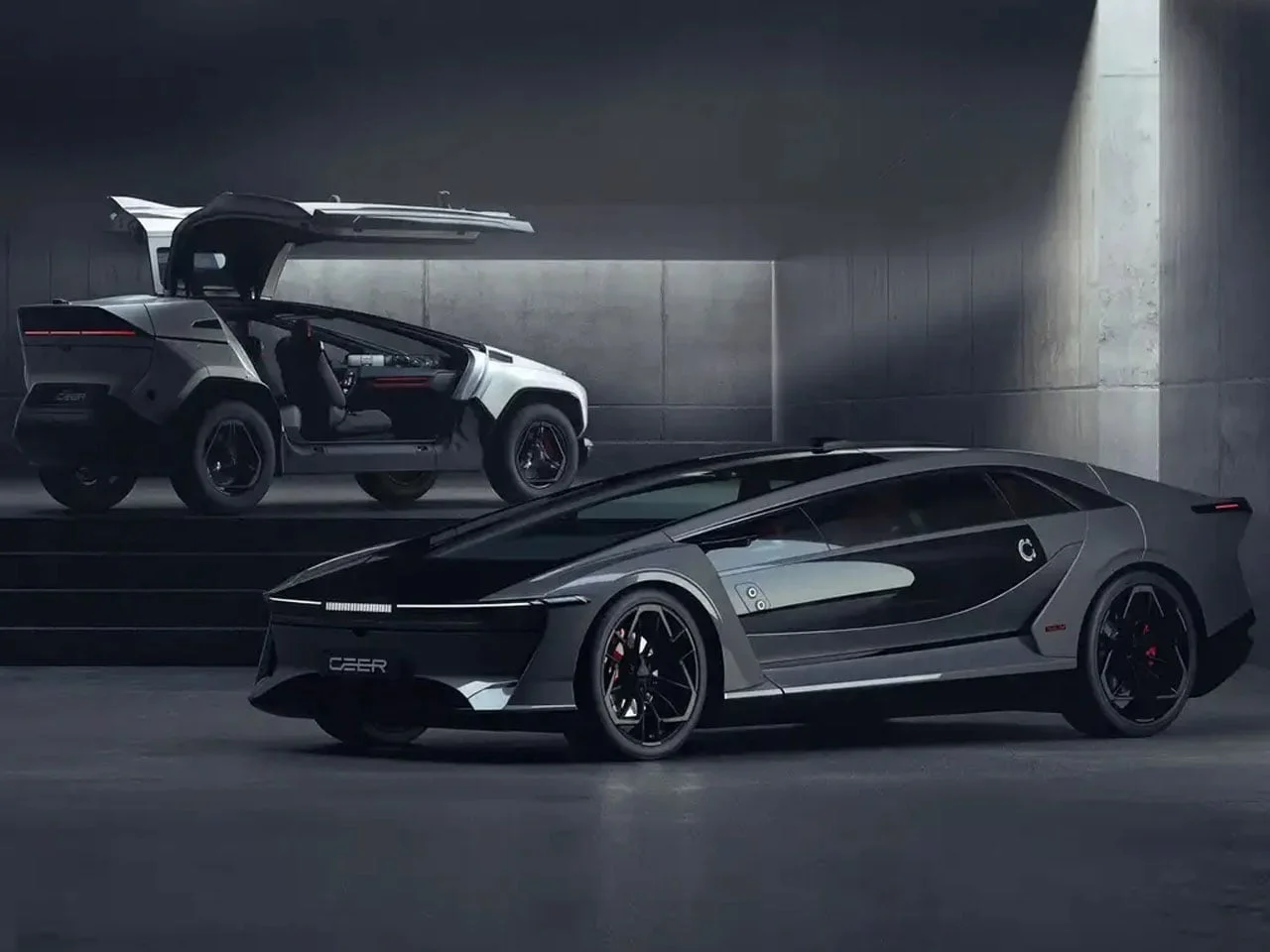
CEER Launches Exobot Series
In a noteworthy development for the automotive sector, Saudi Arabia’s Crown Prince Mohammed Bin Salman, alongside the Public Investment Fund (PIF), has established CEER, the Middle East's first electric vehicle (EV) brand. The launch of CEER is a strategic move aimed at diversifying the nation's economy, which has heavily relied on oil for decades. This initiative not only positions Saudi Arabia as a contender in the EV market but also aligns with the country's Vision 2030 goals, which emphasize sustainability and technological advancement. The company has debuted its inaugural Exobot series, which includes a high-performance SUV and sedan tailored to compete with established powerhouses in the EV market.
Design and Aesthetic Inspiration
The Exobot lineup is brought to life through the vision of Rob Melville, formerly of McLaren, who has designed these vehicles to evoke a Sci-Fi aesthetic. This design philosophy goes beyond mere visual attraction; it's rooted in engineering that prioritizes aerodynamics and functionality. Both the SUV and sedan share a striking design language that emphasizes low-slung fronts and a tapered rear—a nod to classic automotive styles while paving the way for modern advancements. This design approach, featuring an expansive windshield that extends into an open-air feel, is unprecedented in production vehicles. Such creativity not only seeks to attract buyers with unique visual appeal but also resonates emotionally with those who dream about the future of driving.
Dimensions and Specifications
The sedan outshines the Tesla Model S, measuring 5,260mm in length and 1,428mm in height, although it remains shorter than the Mercedes-Benz EQS. CEER claims a range of 416 miles for the sedan, depending on the variant—an ambitious target that could heighten consumer interest. These specs suggest that CEER aims to challenge the status quo established by current leaders in the EV space. It promises jaw-dropping performance with 850 horsepower in the standard trim, allowing acceleration from 0-62 mph in just 2.6 seconds. In contrast, the top trim ramps up to 1,111 horsepower, hitting 0-60 mph in a blistering 2.1 seconds, while an electronically limited top speed caps at 155 mph. Charging capabilities are equally impressive, with an 800-volt platform enabling rapid charging from 10% to 80% in merely 30 minutes, potentially setting a new benchmark for fast-charging EVs.
Performance Features of the SUV
The Exobot crossover SUV spans 5,016mm in length, 2,101mm in width, and 1,693mm in height, built on a 3,200mm wheelbase. With dimensions that suggest both spaciousness and stability, it's designed for both city driving and off-road adventures. It boasts a claimed NEDC range of 348 miles, a competitive figure that reflects ongoing improvements in battery technology. What’s more, it mirrors the sedan's performance specs. Striking features include yoke-style steering and a giant 8K display that stretches across the windshield—an eye-catching feature that could change how drivers interact with their vehicles. The central console houses a vertical 10.4-inch touchscreen for an intuitive user experience. For rear passengers, a dedicated multimedia display ensures everyone remains entertained on longer journeys.
Forward-Thinking Features and Technology
Both models are equipped with advanced technology, such as steer-by-wire systems and rear-wheel steering—making tight maneuvers like parallel parking a breeze. This tech not only enhances driving dynamics but also promotes safety, an increasingly critical consideration for consumers. The innovative gull-wing doors, inspired by the falcon, not only allow for enhanced accessibility but also create a dramatic entrance, serving as a visual representation of the brand's ambitions. In a market increasingly focused on user experience, these features may well define the consumer's first impression.
Market Entry and Future Expectations
CEER anticipates initiating sales in early 2027, with the first deliveries expected by March. The timeline indicates a carefully laid plan to ensure quality and market readiness. Initially, the Exobot sedan and SUV will roll out in limited First Edition versions, targeted exclusively within Gulf markets. This focus allows the brand to fine-tune its offerings based on regional preferences and market responses. Customized Plus trims are intended for release later, catering to a broader audience and further enhancing market penetration. Price points remain undisclosed, sparking curiosity about how these advanced vehicles will fare against competitors in the burgeoning EV industry. It raises the question: can CEER capture consumer interest while maintaining competitive pricing?
Implications and Future Outlook
As Saudi Arabia positions itself as a rising force in the global automotive arena, the Exobot series sets a bold standard for upcoming electric vehicle offerings. The emphasis on high performance and striking design shows that CEER is not just aiming to participate in the EV market; they're looking to redefine it. If you're working in this space, you should watch closely. The Exobot series may signal a shift in consumer expectations, demanding not only extended ranges and rapid charging but also an emotional connection to the vehicles themselves. And this is the part most people overlook: making the ultimate EV isn't just about performance specs; it’s about how that vehicle makes you feel.


Discussion
Sign in to join the discussion.